Letter Subpoena Sample With The Philippines
Description
Get your form ready online
Our built-in tools help you complete, sign, share, and store your documents in one place.
Make edits, fill in missing information, and update formatting in US Legal Forms—just like you would in MS Word.
Download a copy, print it, send it by email, or mail it via USPS—whatever works best for your next step.
Sign and collect signatures with our SignNow integration. Send to multiple recipients, set reminders, and more. Go Premium to unlock E-Sign.
If this form requires notarization, complete it online through a secure video call—no need to meet a notary in person or wait for an appointment.
We protect your documents and personal data by following strict security and privacy standards.

Make edits, fill in missing information, and update formatting in US Legal Forms—just like you would in MS Word.

Download a copy, print it, send it by email, or mail it via USPS—whatever works best for your next step.

Sign and collect signatures with our SignNow integration. Send to multiple recipients, set reminders, and more. Go Premium to unlock E-Sign.

If this form requires notarization, complete it online through a secure video call—no need to meet a notary in person or wait for an appointment.

We protect your documents and personal data by following strict security and privacy standards.
Looking for another form?
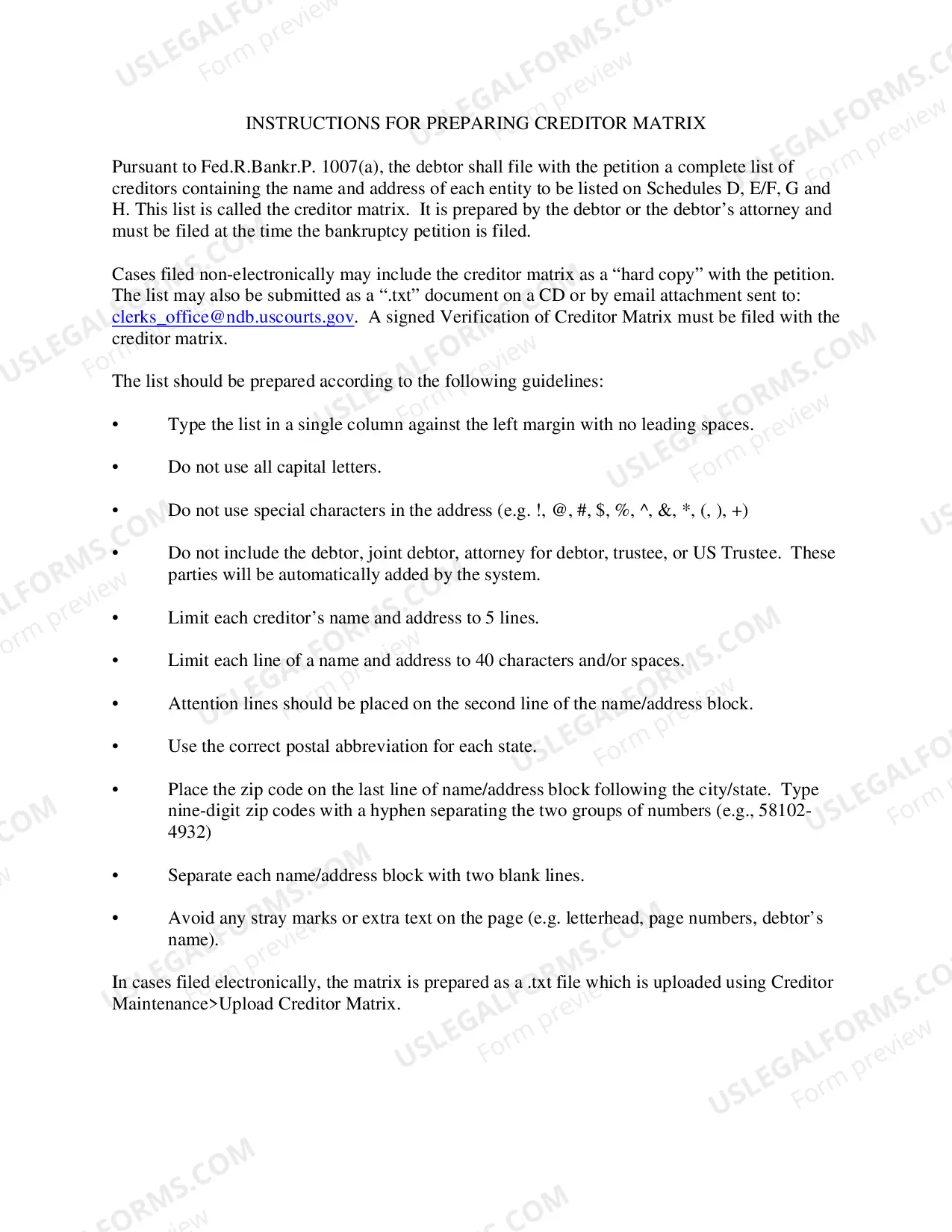
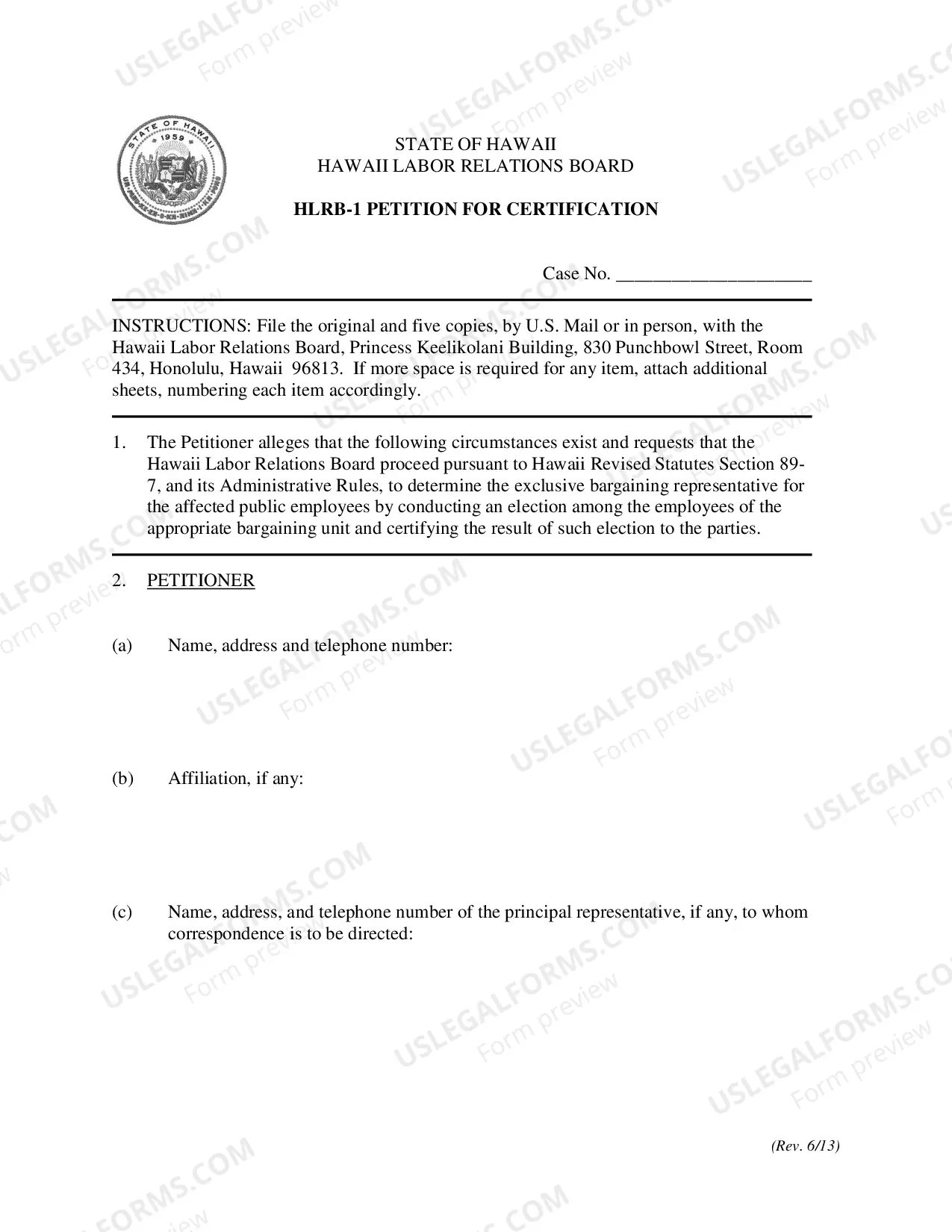
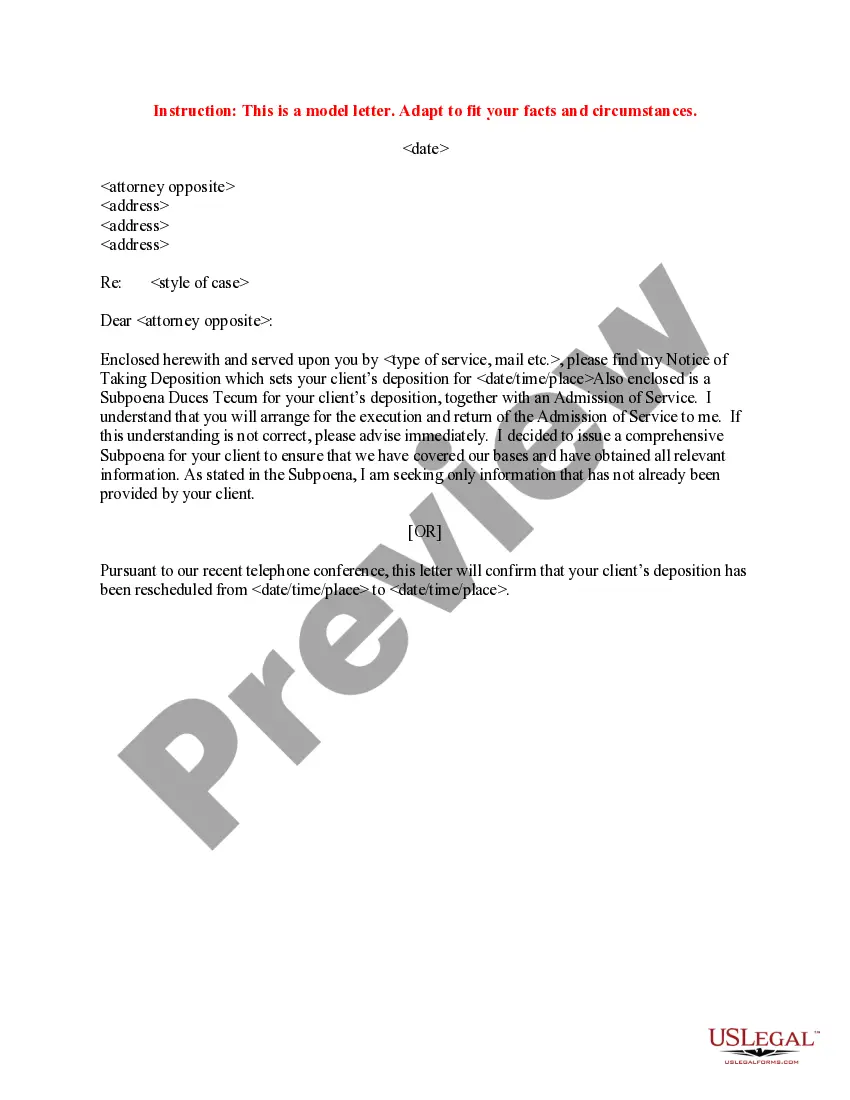
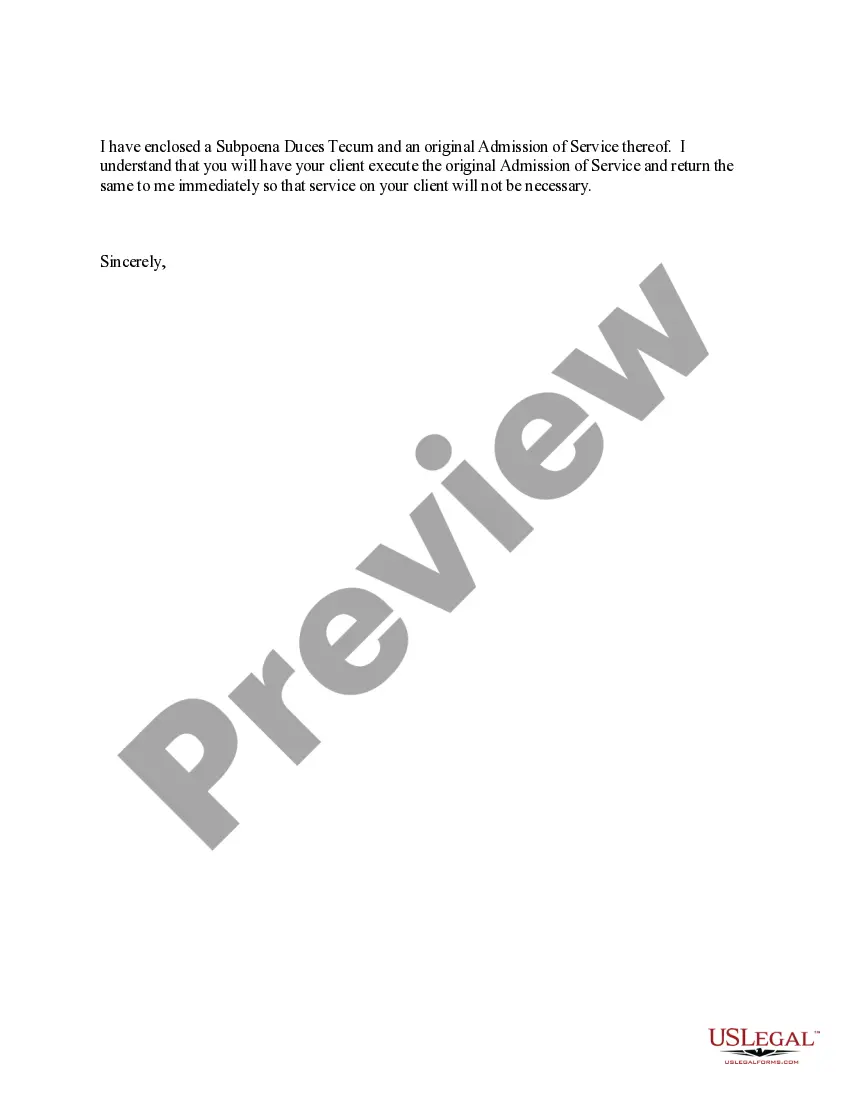
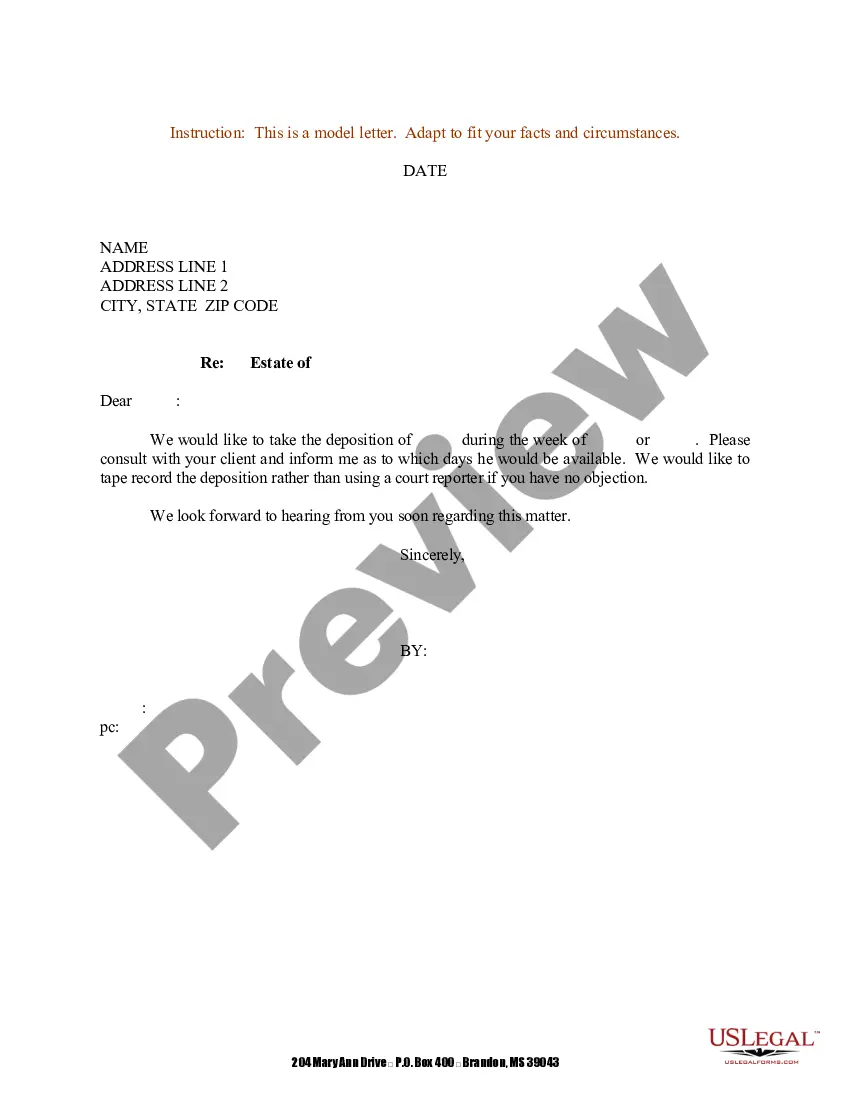
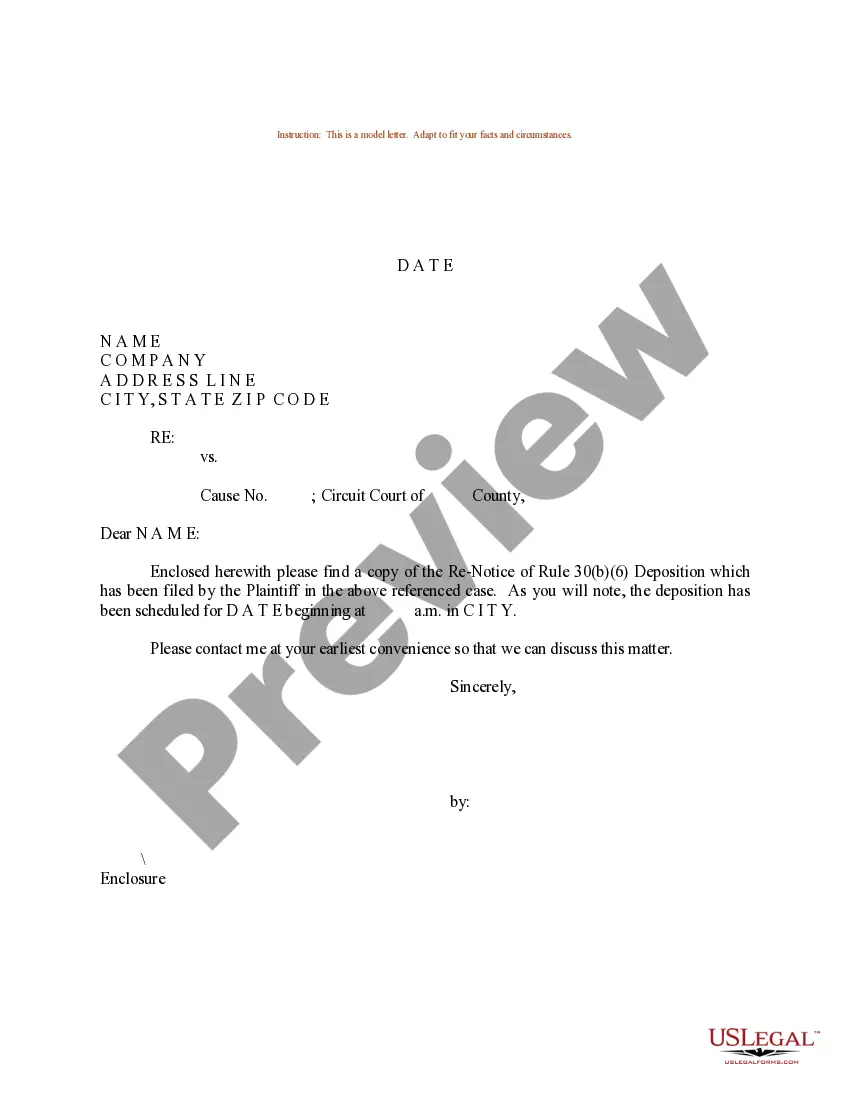
How to fill out Discovery - Sample Letter To Opposing Counsel Regarding Deposition And Subpoena Duces Tecum?
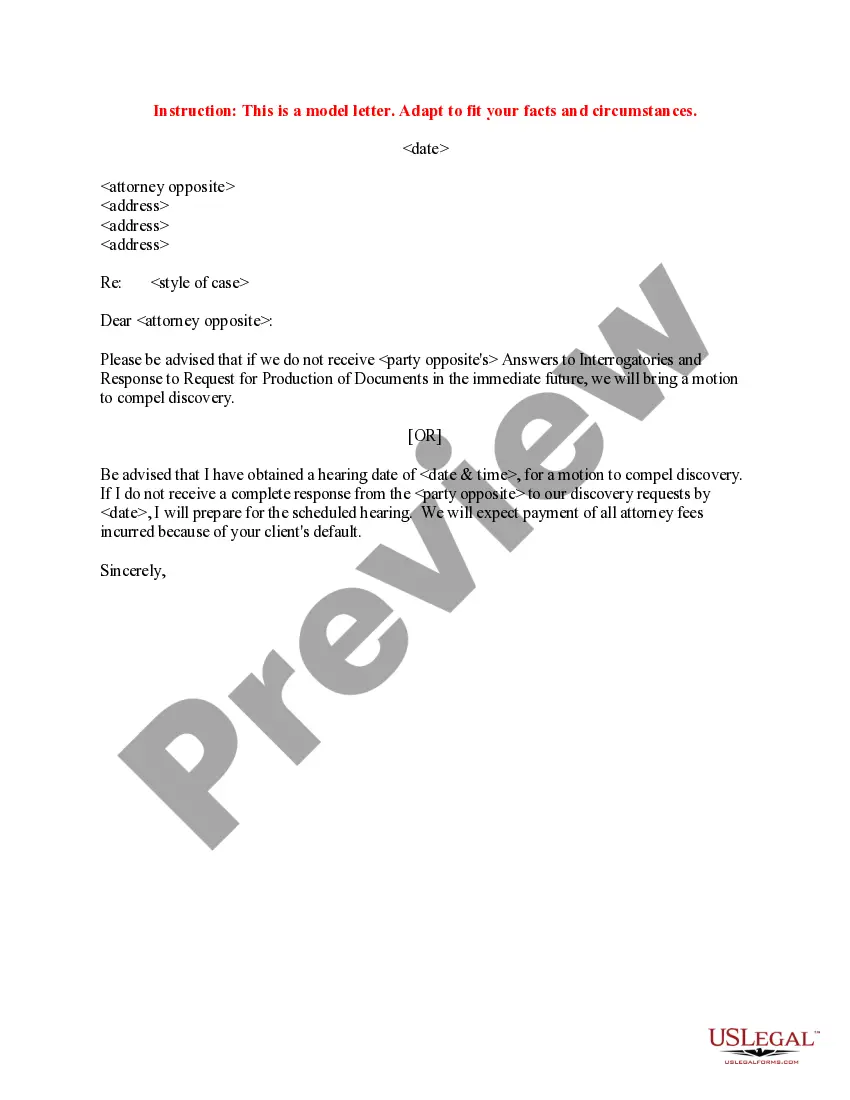
The Document Subpoena Example With The Philippines displayed on this page is a versatile official template created by expert attorneys in accordance with federal and local laws.
For over 25 years, US Legal Forms has served individuals, entities, and lawyers with more than 85,000 authenticated, state-specific forms for every business and personal situation. It’s the quickest, easiest, and most reliable method to acquire the documents you require, as the service ensures bank-level data security and anti-malware safeguards.
Re-download your documents whenever needed. Access the My documents tab in your profile to retrieve any previously saved forms. Register for US Legal Forms to have verified legal templates for all of life's situations readily available.
- Look for the document you require and examine it.
- Scan the file you searched and preview it or verify the form description to ensure it meets your needs. If it does not, use the search bar to find the suitable one. Click Buy Now once you have found the template you require.
- Choose the pricing plan that fits you and register for an account.
- Utilize PayPal or a credit card for quick payment. If you already possess an account, Log In and check your subscription to proceed.
- Opt for the format you desire for your Document Subpoena Example With The Philippines (PDF, Word, RTF) and save the sample to your device.
- Print the template to fill it out manually. Alternatively, use an online multifunctional PDF editor to swiftly and precisely complete and sign your form with an eSignature.
Form popularity
FAQ
In the Philippines, a subpoena must typically be served at least five days before the scheduled hearing. This timeframe allows the recipient adequate time to prepare. Utilize a letter subpoena sample with the Philippines to ensure you meet the required deadlines and format for service.
Filing a subpoena in the Philippines requires you to submit necessary documents to the local court. You'll need to ensure all details are correct and that you're requesting relevant information. A letter subpoena sample with the Philippines can help you format your request correctly, ultimately simplifying the entire filing process.
Mailing a subpoena involves sending a physical copy to the recipient through a reliable postal service. It's essential to include all necessary details, such as the date, time, and location for compliance. Using a letter subpoena sample with the Philippines can guide you in creating a comprehensive mailing document.
To file a subpoena in the Philippines, you typically need to prepare a written request at the appropriate court. This involves detailing the case information and the specific documents or testimony you seek. Consider using a letter subpoena sample with the Philippines as your template to streamline the process, ensuring everything is in order.
Receiving a subpoena can be overwhelming, and often, it's a good idea to consult a lawyer. A legal expert can help you understand your rights and obligations regarding the subpoena. Additionally, if you need to draft a letter subpoena sample with the Philippines context, having legal guidance can ensure accuracy and compliance with local laws.
There are mainly two types of subpoenas: one for testimony and one for documents. As mentioned earlier, subpoena ad testificandum is for testimonies, while subpoena duces tecum is for document production. Understanding these types is important when you're crafting a letter subpoena sample with the Philippines. For more assistance in navigating these legalities, visit USLegalForms for examples and templates that suit your needs.
In the Philippines, serving a subpoena via email is generally not permitted. The law typically requires personal service or delivery through registered mail. However, understanding the nuances of legal procedures can enhance your approach; thus, creating a letter subpoena sample with the Philippines accurately reflects these requirements. To streamline the process, you might explore USLegalForms, which helps you understand proper serving techniques.
In the Philippines, a subpoena is typically issued before a warrant is needed, allowing for the collection of evidence through lawful means. If individuals comply with the subpoena, you may not need to pursue a warrant. This process highlights the importance of drafting an effective letter subpoena sample with the Philippines. If you're unsure about the number of efforts required, consulting with a legal expert can clarify your options.
Filling out a subpoena for records involves specifying the details of the requesting party, the recipient, and the documents needed. You should clearly state the purpose of the subpoena to avoid confusion. Additionally, incorporate the relevant information into a letter subpoena sample with the Philippines to ensure that it meets legal standards. If you seek a template or further assistance, USLegalForms can provide you with user-friendly forms tailored to your needs.
In the Philippines, subpoenas primarily fall into two categories: subpoena ad testificandum, which requires an individual to testify, and subpoena duces tecum, which compels the production of documents. It’s essential to understand these differences when drafting a letter subpoena sample with the Philippines. Knowing the appropriate type helps ensure you gather the necessary records and testimonies for your case. For more guidance, consider using a reliable platform like USLegalForms to obtain well-structured subpoenas.