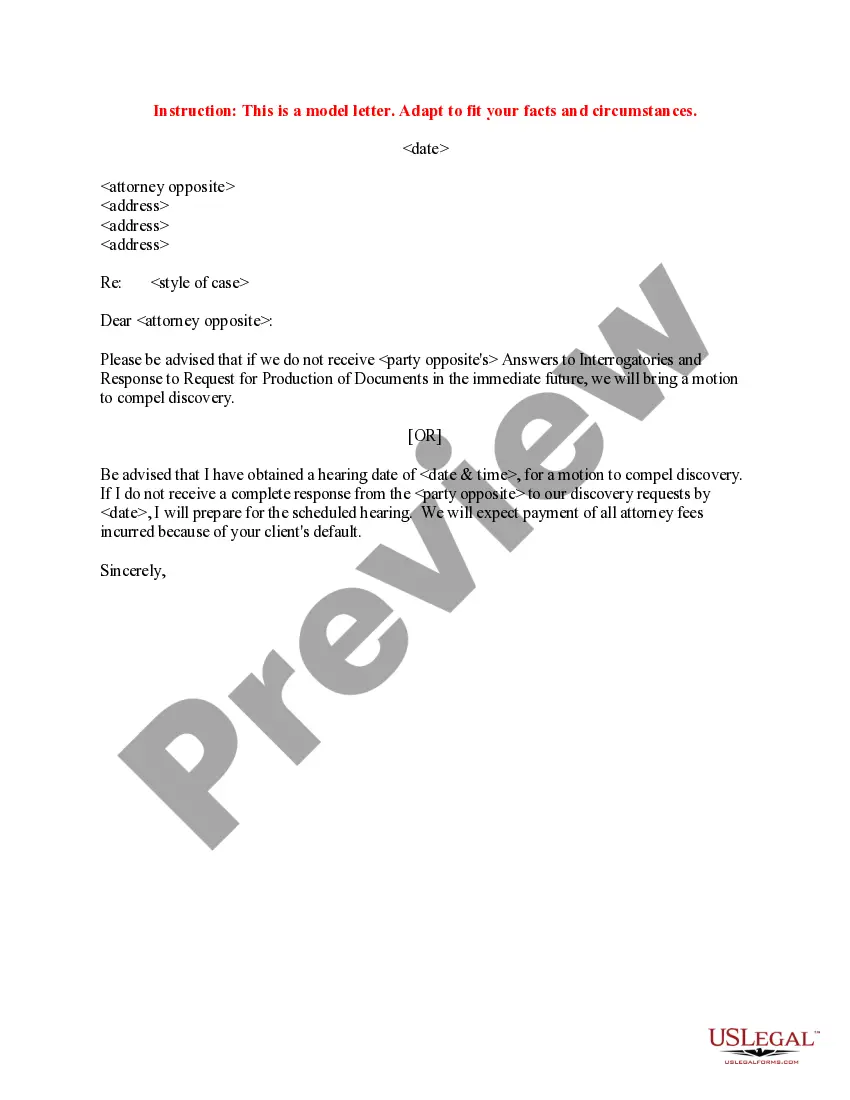
Discovery Demand Letter Without Prejudice
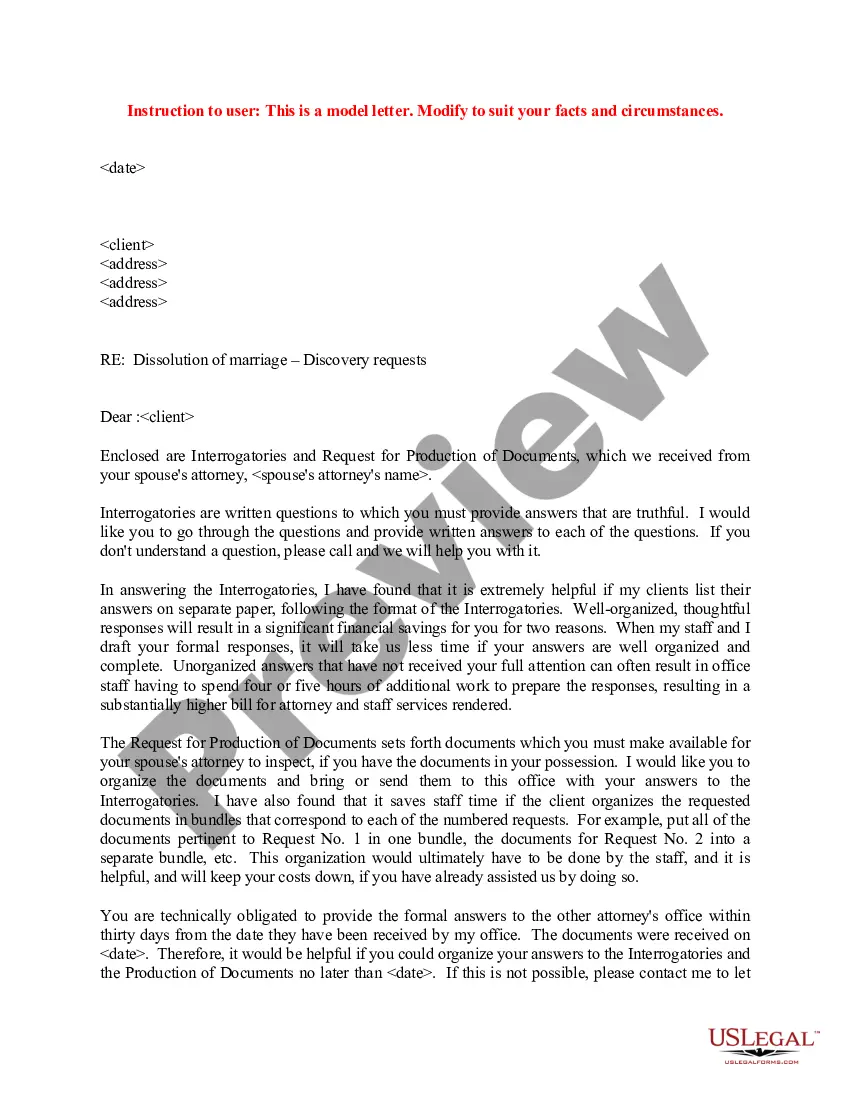
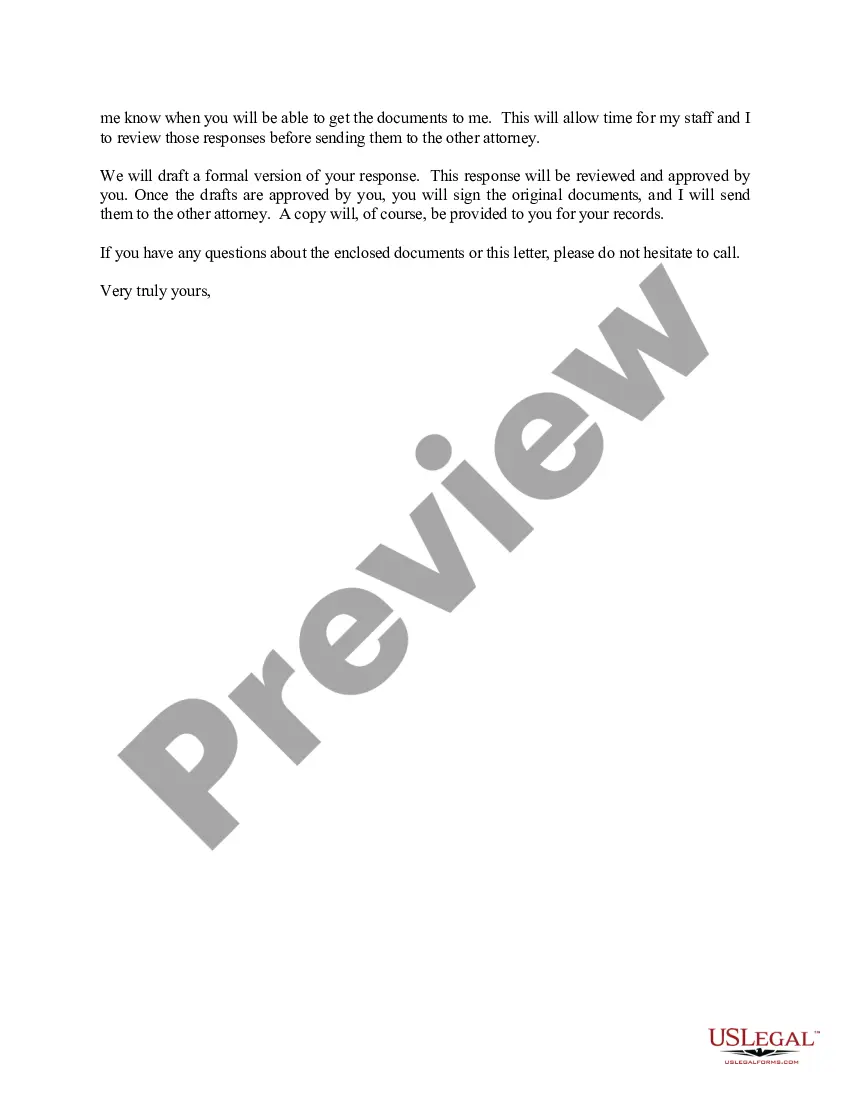
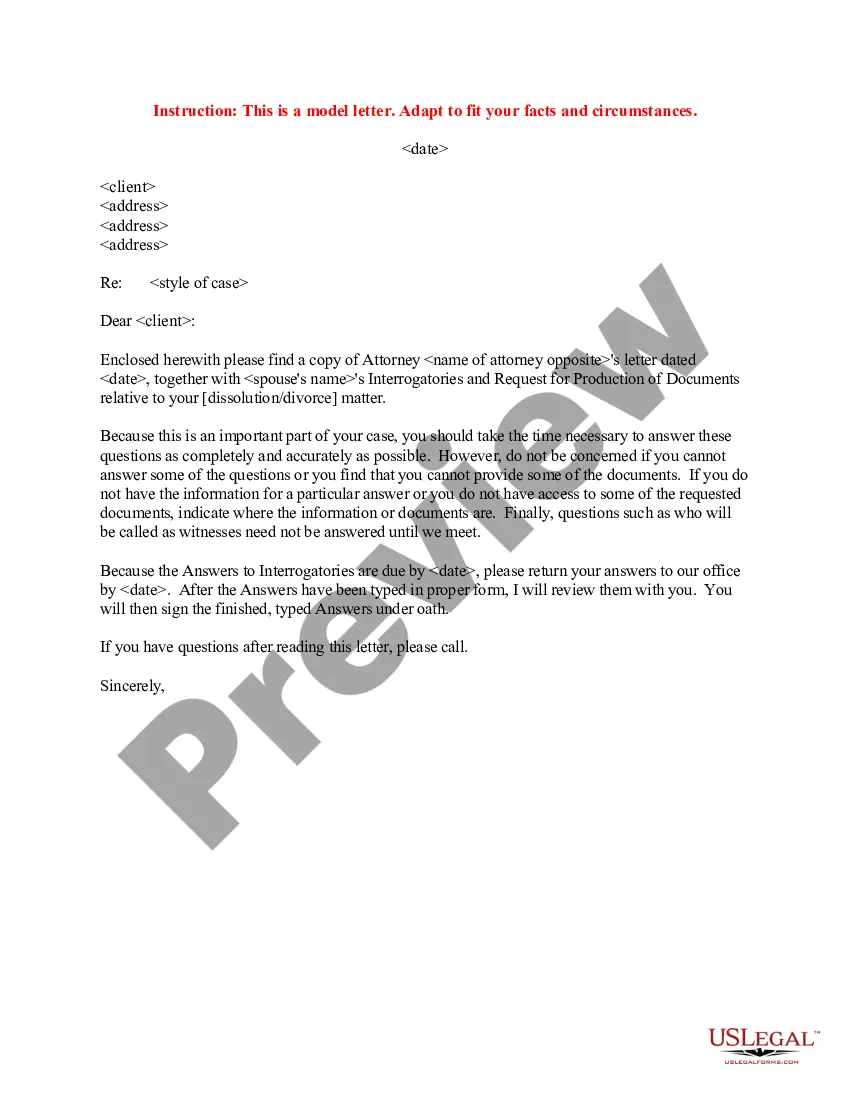
Description

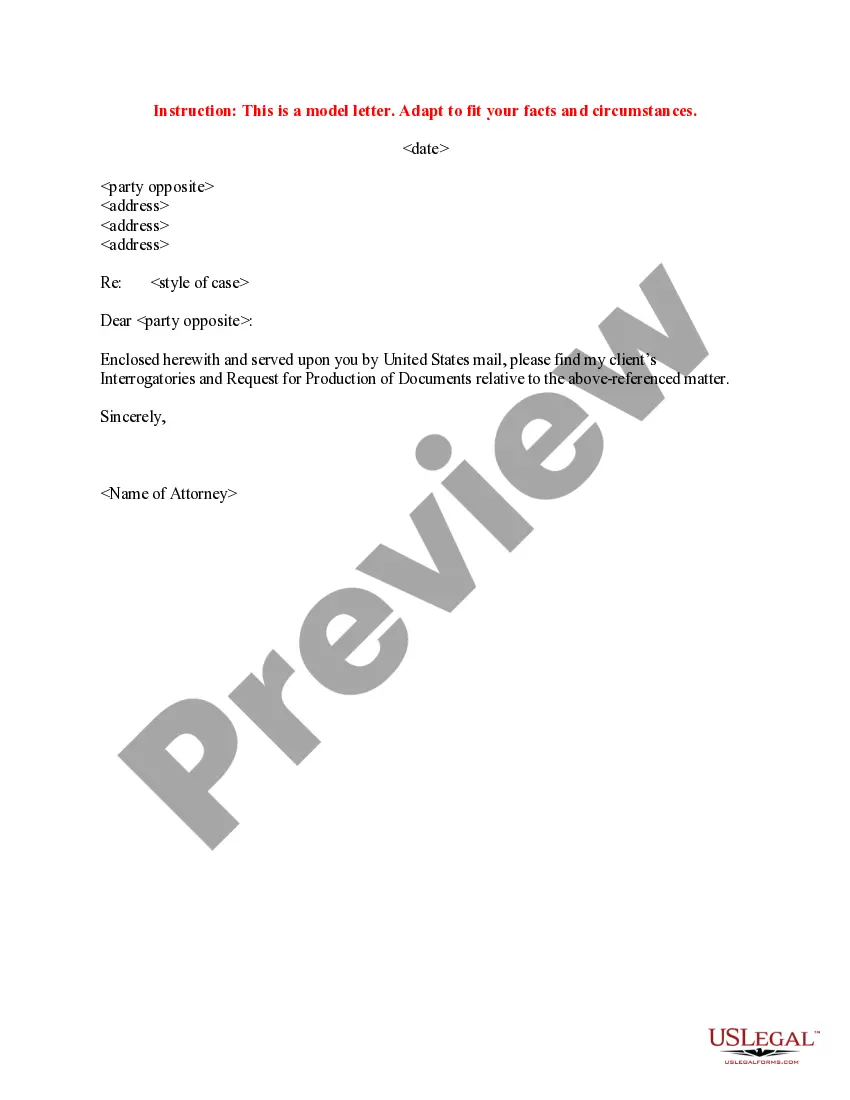
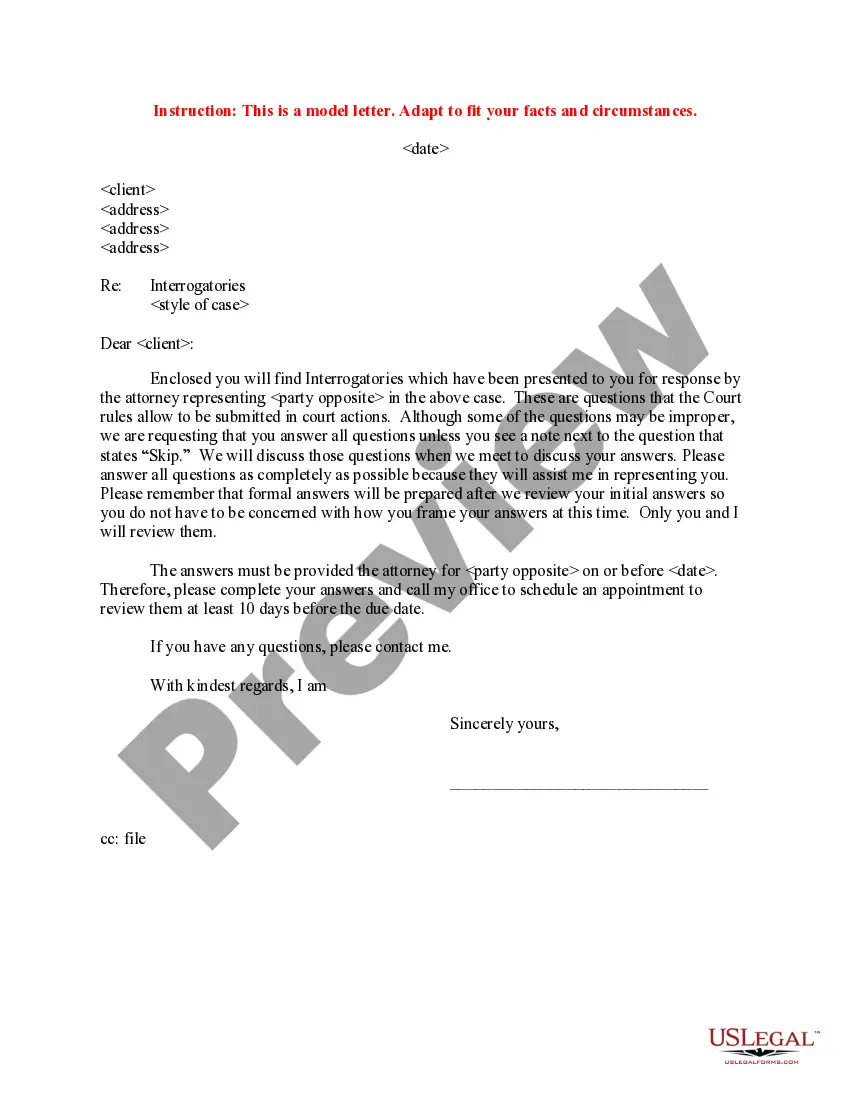
Get your form ready online
Our built-in tools help you complete, sign, share, and store your documents in one place.
Make edits, fill in missing information, and update formatting in US Legal Forms—just like you would in MS Word.
Download a copy, print it, send it by email, or mail it via USPS—whatever works best for your next step.
Sign and collect signatures with our SignNow integration. Send to multiple recipients, set reminders, and more. Go Premium to unlock E-Sign.
If this form requires notarization, complete it online through a secure video call—no need to meet a notary in person or wait for an appointment.
We protect your documents and personal data by following strict security and privacy standards.

Make edits, fill in missing information, and update formatting in US Legal Forms—just like you would in MS Word.

Download a copy, print it, send it by email, or mail it via USPS—whatever works best for your next step.

Sign and collect signatures with our SignNow integration. Send to multiple recipients, set reminders, and more. Go Premium to unlock E-Sign.

If this form requires notarization, complete it online through a secure video call—no need to meet a notary in person or wait for an appointment.

We protect your documents and personal data by following strict security and privacy standards.
Looking for another form?







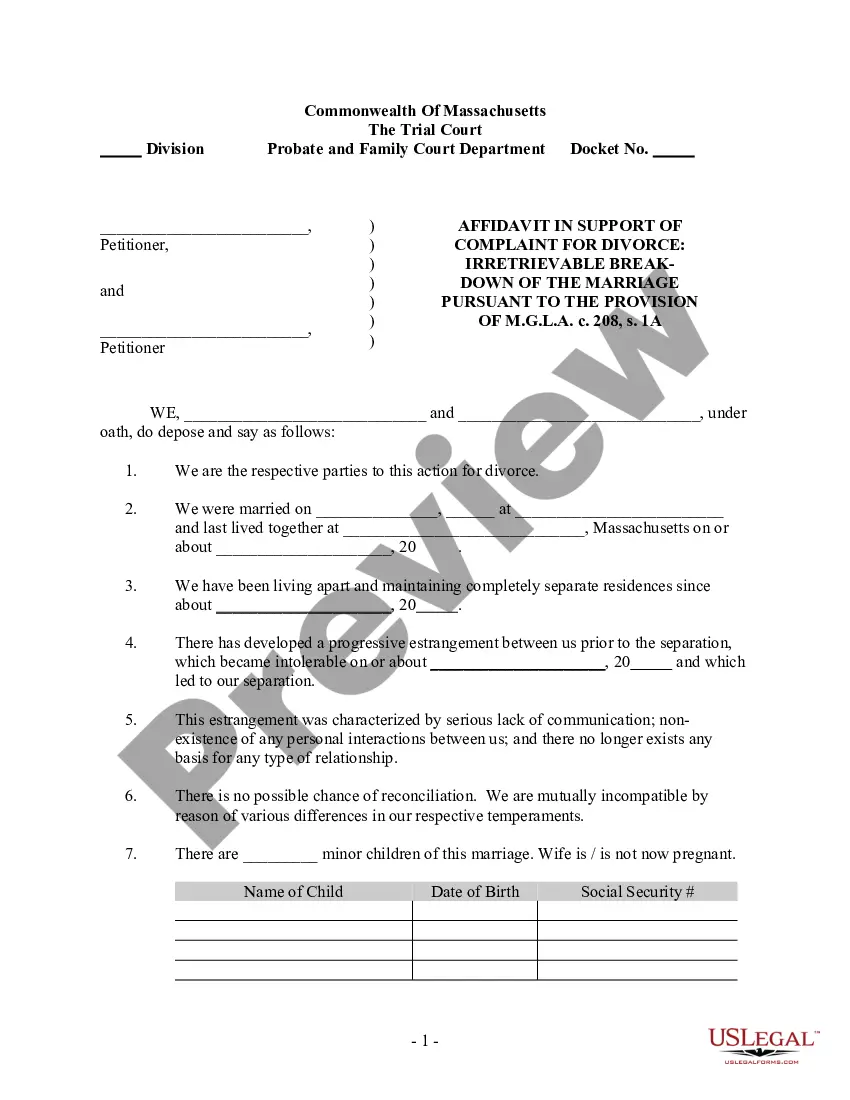


How to fill out Sample Letter To Client Instructing On Answering Discovery?
Creating legal documents from the beginning can occasionally be daunting.
Certain situations may require extensive research and significant financial investment.
If you are in search of a more straightforward and cost-effective method for preparing a Discovery Demand Letter Without Prejudice or other documents without unnecessary complications, US Legal Forms is always available to assist you.
Our online repository of over 85,000 current legal documents encompasses nearly every aspect of your financial, legal, and personal matters.
Review the document preview and descriptions to ensure you are locating the form you seek. Confirm that the selected form meets the requirements of your state and county. Choose the most suitable subscription option to purchase the Discovery Demand Letter Without Prejudice. Download the form, then fill it out, sign, and print it. US Legal Forms boasts an impeccable reputation and over 25 years of expertise. Join us now and simplify document execution into a seamless process!
- With just a few clicks, you can swiftly obtain state- and county-compliant forms carefully assembled for you by our legal professionals.
- Utilize our platform whenever you require trusted and dependable services that enable you to quickly find and download the Discovery Demand Letter Without Prejudice.
- If you are already familiar with our services and have set up an account with us previously, simply Log In to your account, find the form, and download it or access it again anytime in the My documents section.
- Not registered yet? No worries. Setting it up takes only a few minutes, allowing you to browse the catalog.
- However, before proceeding to download the Discovery Demand Letter Without Prejudice, adhere to these suggestions.
Form popularity
FAQ
With prejudice means that you can't file a new civil case against this defendant about the same issues you put in the Complaint you filed. The dismissal is final. The case is over and done with.
Whereas a case that is dismissed ?with prejudice? is dismissed permanently, a case that is dismissed ?without prejudice? is only dismissed temporarily. This temporary dismissal means that the plaintiff is allowed to re-file charges, alter the claim, or bring the case to another court.
A without prejudice clause in a contract ensures that each party in the contract maintains their legal rights and privileges. Neither party will have a loss of rights.
A dismissal with prejudice means that the ruling is the final judgment in the case. The dismissal prohibits the prosecutor from refiling the charges. In a dismissal without prejudice, the prosecutor can refile the charges (or file new charges based on the same circumstances) at some future time.
In general terms, the Without Prejudice Rule operates to exclude genuinely without prejudice communications from evidence in the current or subsequent proceedings between the parties to the dispute and between different parties to the dispute (e.g. in tripartite litigation).