Termination Trust Trustee Without Consent
Description


Get your form ready online
Our built-in tools help you complete, sign, share, and store your documents in one place.
Make edits, fill in missing information, and update formatting in US Legal Forms—just like you would in MS Word.
Download a copy, print it, send it by email, or mail it via USPS—whatever works best for your next step.
Sign and collect signatures with our SignNow integration. Send to multiple recipients, set reminders, and more. Go Premium to unlock E-Sign.
If this form requires notarization, complete it online through a secure video call—no need to meet a notary in person or wait for an appointment.
We protect your documents and personal data by following strict security and privacy standards.

Make edits, fill in missing information, and update formatting in US Legal Forms—just like you would in MS Word.

Download a copy, print it, send it by email, or mail it via USPS—whatever works best for your next step.

Sign and collect signatures with our SignNow integration. Send to multiple recipients, set reminders, and more. Go Premium to unlock E-Sign.

If this form requires notarization, complete it online through a secure video call—no need to meet a notary in person or wait for an appointment.

We protect your documents and personal data by following strict security and privacy standards.
Looking for another form?









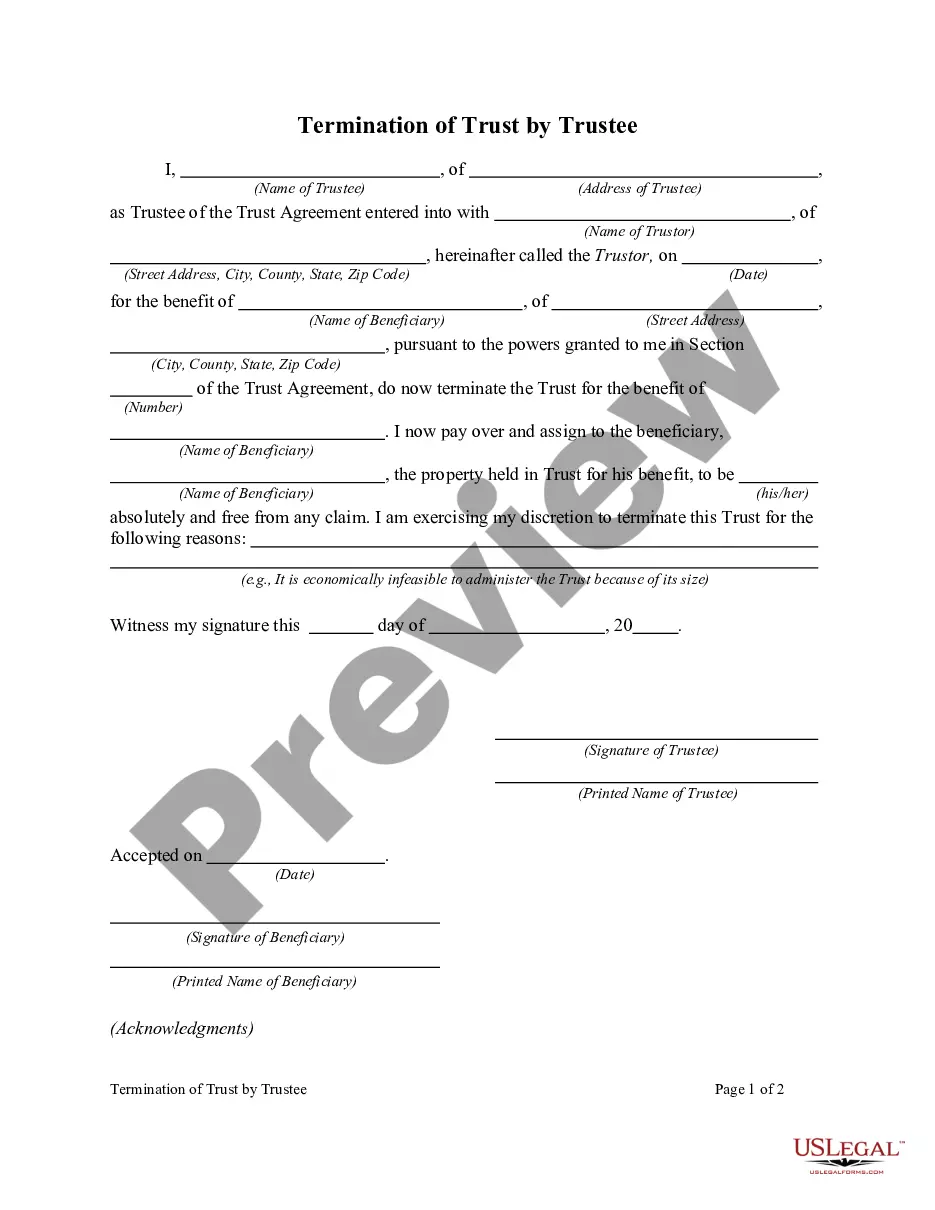
How to fill out Termination Of Trust By Trustee?
Handling legal documents and processes can be a lengthy addition to your entire day.
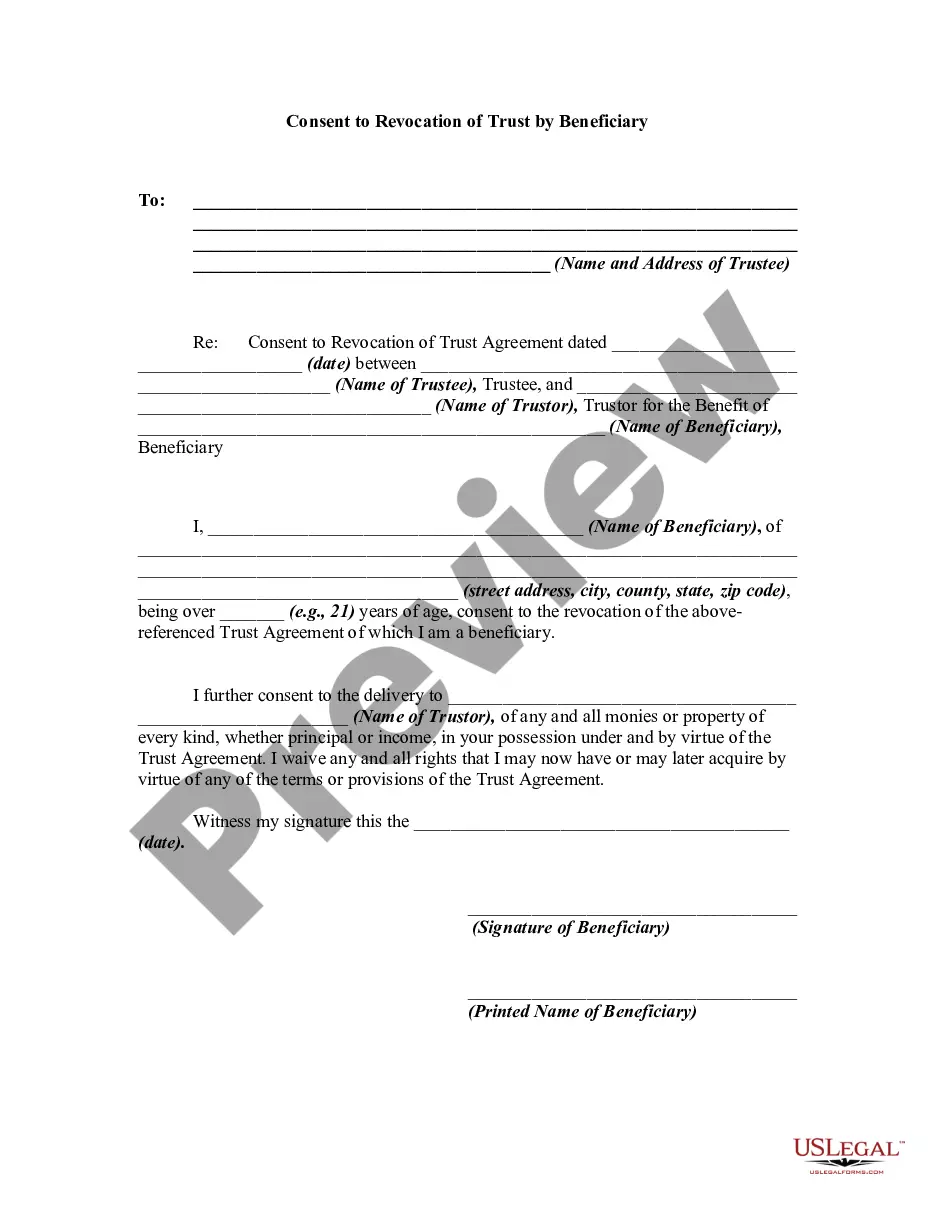
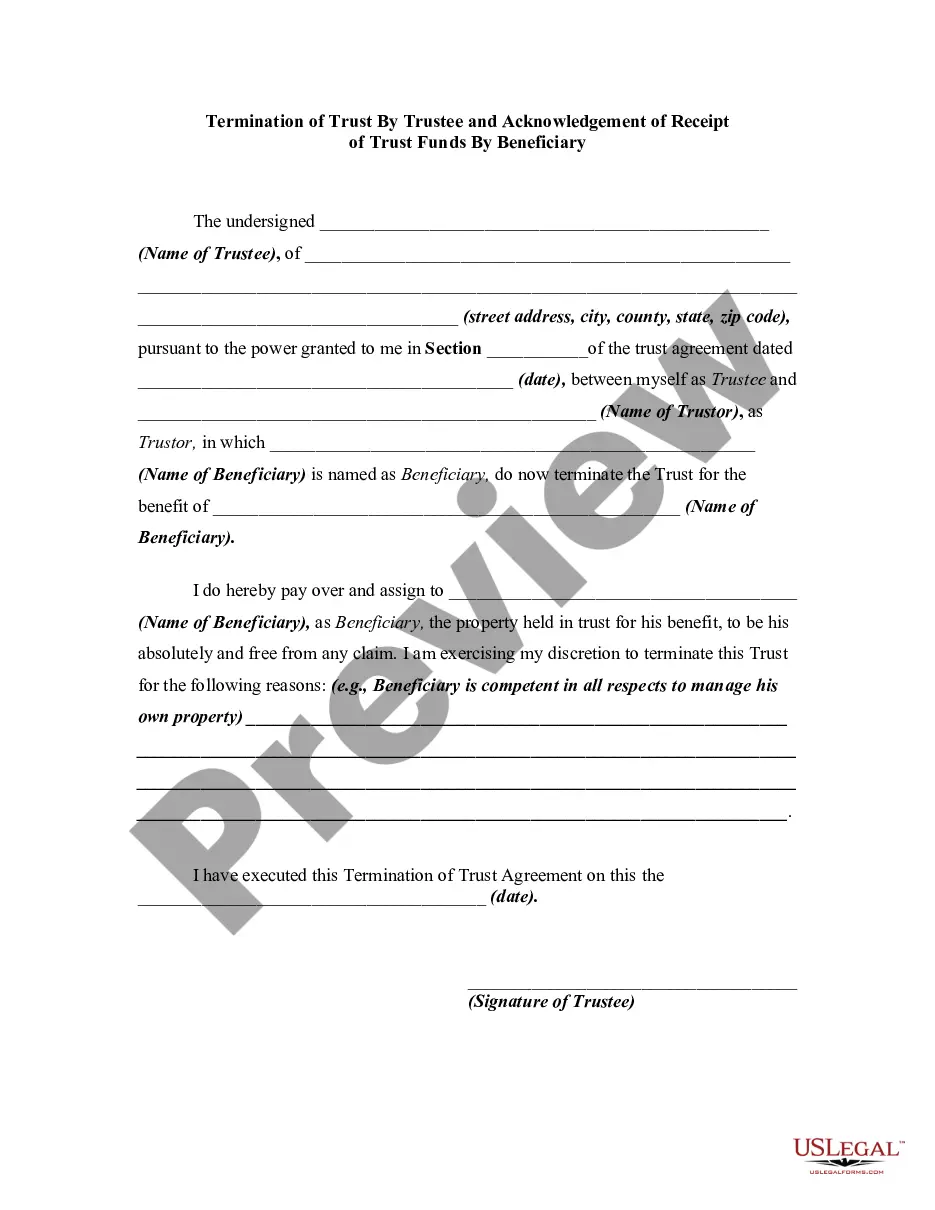
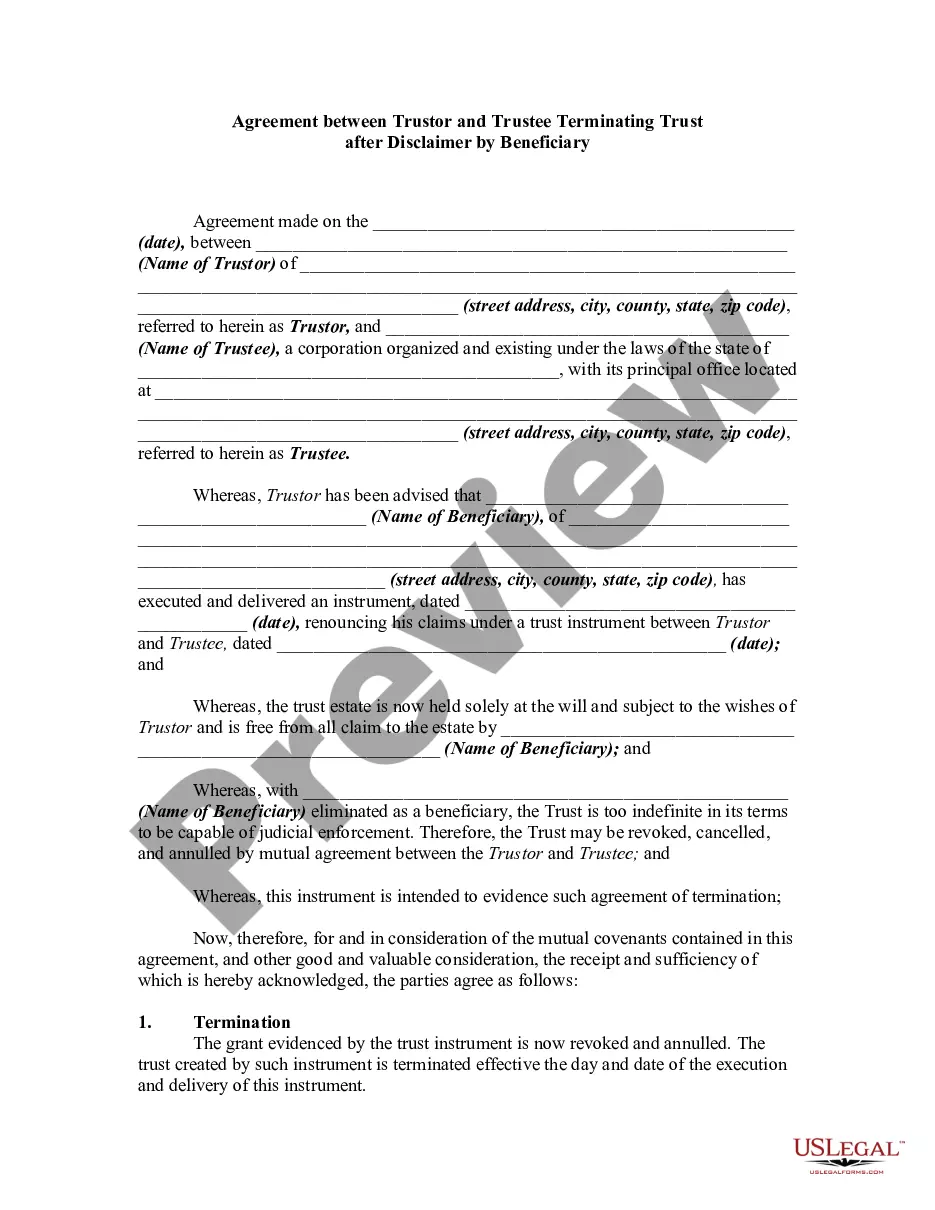
Termination Trust Trustee Without Consent and similar forms generally necessitate that you search for them and determine the optimal method to fill them out accurately.
Consequently, if you are managing financial, legal, or personal issues, utilizing a thorough and effective online directory of forms at your fingertips will be extremely beneficial.
US Legal Forms is the premier online platform for legal templates, featuring over 85,000 state-specific forms and various tools to help you complete your documents swiftly.
Is this your first experience with US Legal Forms? Register and establish your account in a few moments, and you will gain access to the form directory and Termination Trust Trustee Without Consent. Then, follow the steps below to finalize your form: Ensure you have located the appropriate form by utilizing the Preview feature and reviewing the form details. Select Buy Now once ready, and choose the subscription plan that suits your requirements. Click Download, then fill in, eSign, and print the document. US Legal Forms has twenty-five years of experience aiding clients in managing their legal documents. Find the form you need today and simplify any procedure effortlessly.
- Explore the collection of relevant documents available to you with just a single click.
- US Legal Forms provides state- and county-specific forms accessible at any time for downloading.
- Safeguard your document management processes with a high-quality service that allows you to create any form in minutes without any additional or concealed fees.
- Simply Log In to your account, locate Termination Trust Trustee Without Consent, and download it immediately from the My documents section.
- You can also retrieve previously saved forms.
Form popularity
FAQ
Firing a trustee can be a complex process, especially when considering the termination trust trustee without consent. If the trust document does not clearly outline the procedure for removal, you may face legal challenges. Additionally, if the trustee does not agree to their termination, you might need to seek court intervention. Using a platform like US Legal Forms can help simplify this process, providing you with the necessary legal forms and guidance.
A trustee can terminate a trust by following the terms outlined in the trust document or by obtaining court approval if the document is unclear. Typically, this involves settling all outstanding debts and distributing the remaining assets to the beneficiaries. If you are considering the process of termination trust trustee without consent, seeking legal guidance can help clarify your responsibilities and ensure compliance with applicable laws. US Legal Forms offers templates and information to assist in this transition.
Yes, you can remove a trustee without their consent in specific situations, especially when there is just cause. If the trustee's actions harm the trust or its beneficiaries, legal action may be necessary to effectuate their removal. Courts often support moves to terminate a trust trustee without consent when it serves the best interests of those involved. Engaging with legal resources can ensure you follow the correct procedures.
Removing a trustee can be a complex process, often requiring court intervention. While some situations allow for a straightforward removal, others may involve lengthy legal procedures. If you wish to pursue termination of a trust trustee without consent, consulting with a legal expert can clarify your options and streamline the process. Platforms like US Legal Forms provide essential resources to guide you through the necessary steps.
A trustee can be removed under several circumstances, including failure to act in the best interest of the beneficiaries, misconduct, or incapacity. If a trustee engages in self-dealing or mismanages trust assets, beneficiaries may seek removal. In some cases, state laws allow for the removal of a trustee without consent, particularly if the trust's terms support such action. Understanding the legal grounds for removal can help you navigate the process effectively.
If a trustee does not uphold these responsibilities and breaches their duty, the beneficiaries can take legal action. They may petition the court to terminate the trust and distribute its assets. The court then decides whether the trustee has indeed acted improperly and if so, may order the dissolution of the trust.
A Trustee Resignation is when a trustee steps down from their position and is no longer responsible for managing a trust. The resignation may be voluntary or involuntary and can occur for various reasons, including retirement, illness, or conflict with beneficiaries.
Instead, in most cases, an irrevocable trust can only be dissolved by court order. The details of dissolving an irrevocable trust differ widely between states and jurisdictions. However, typically you will need to get approval from the trust's beneficiaries and potentially its trustees as well.
Can a trustee be forced to resign? No, a trustee generally cannot be forced to resign. However, a trustee can be non-consensually removed through court processes in some situations. Sometimes, when trustees are facing removal, they will resign voluntarily to avoid the potential costs and consequences of going to trial.
Trustees must generally provide written notice of their resignation to the trust's beneficiaries and co-trustees. The trust agreement or state law may specify additional notice requirements or timeframes.