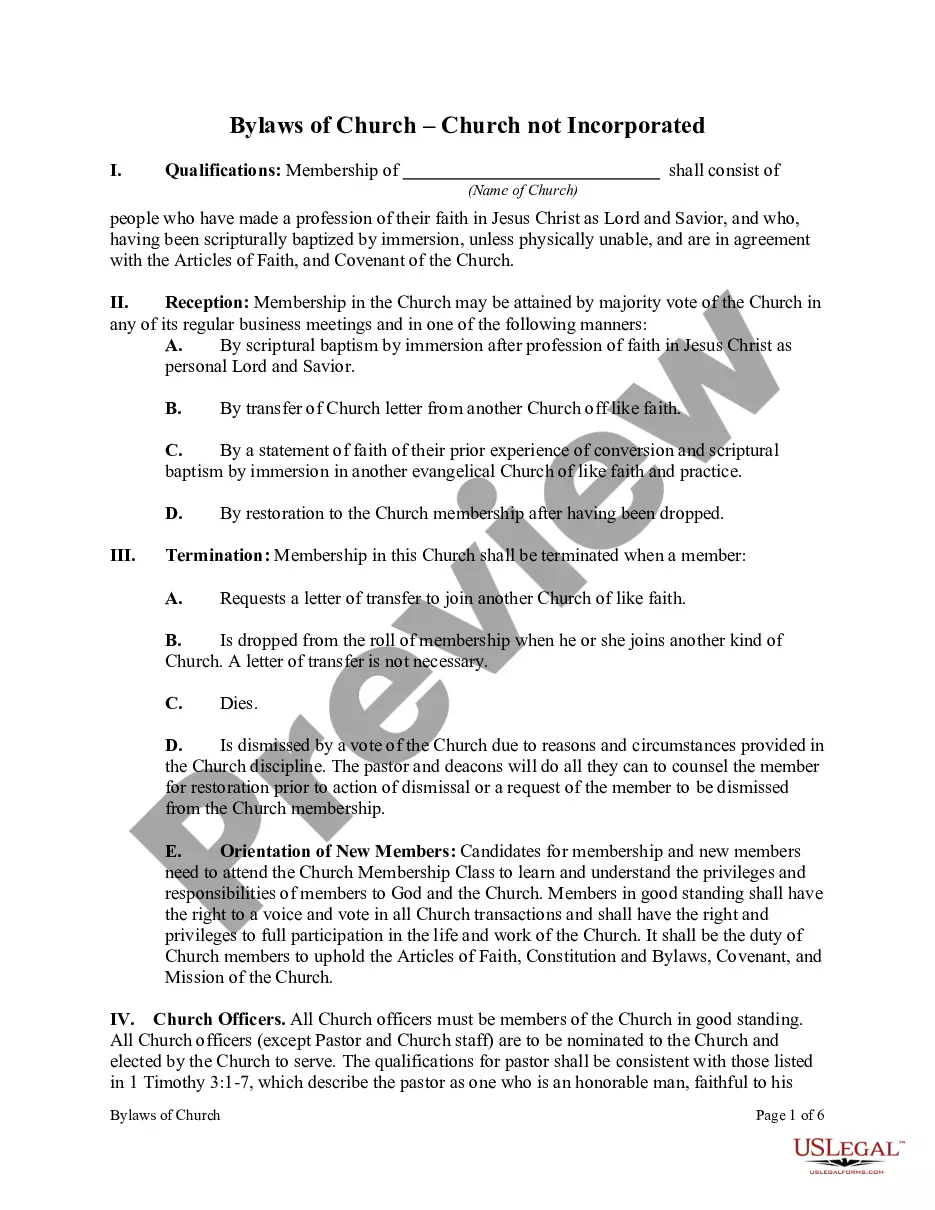
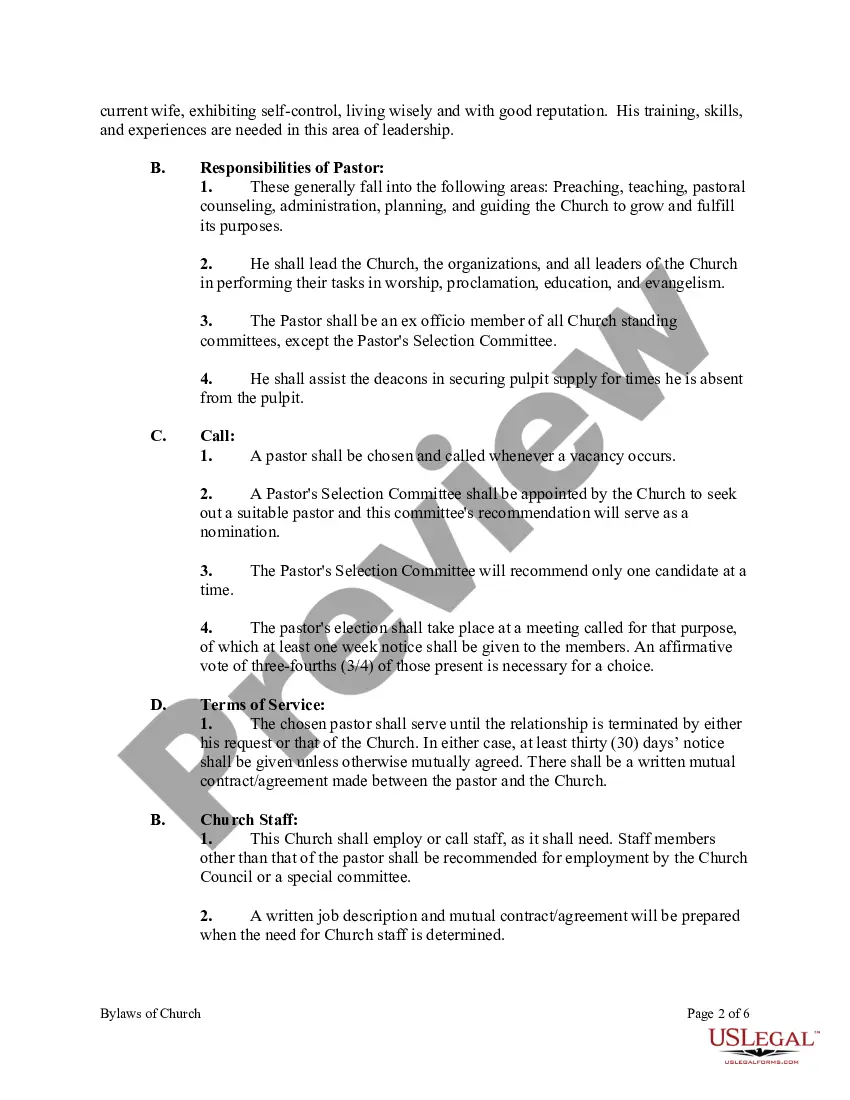
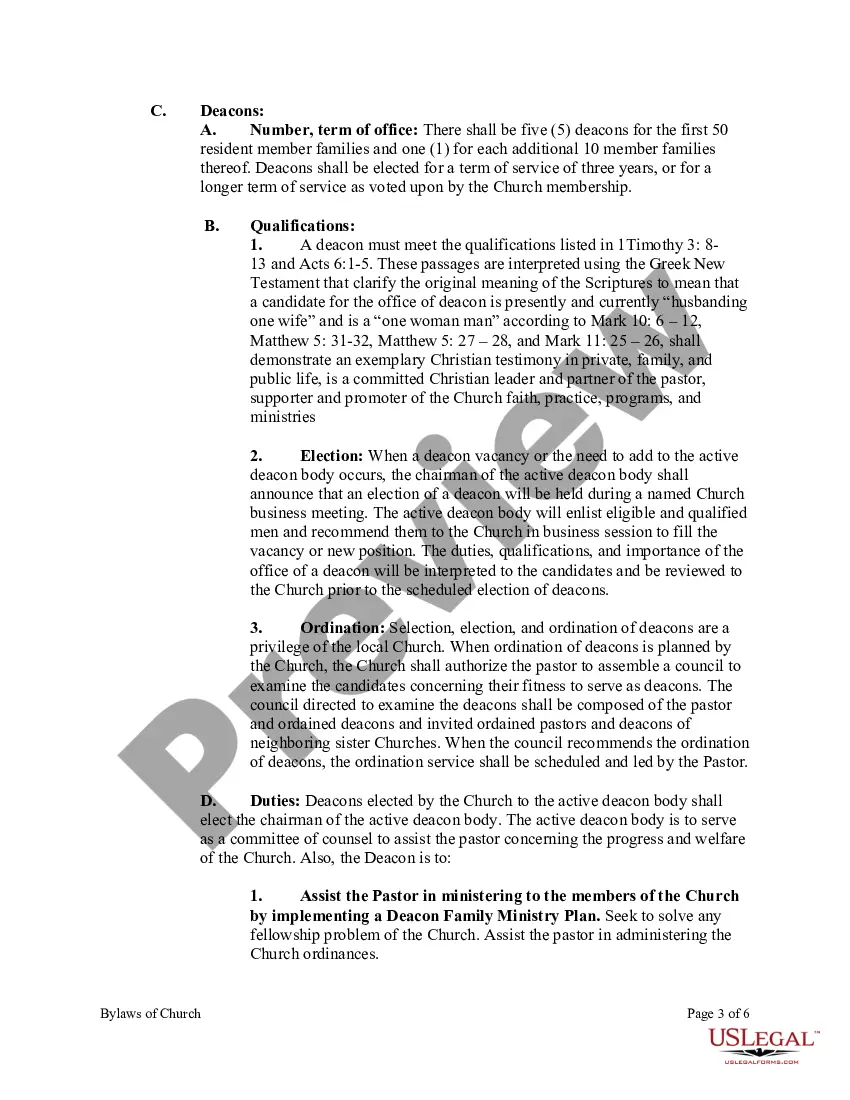
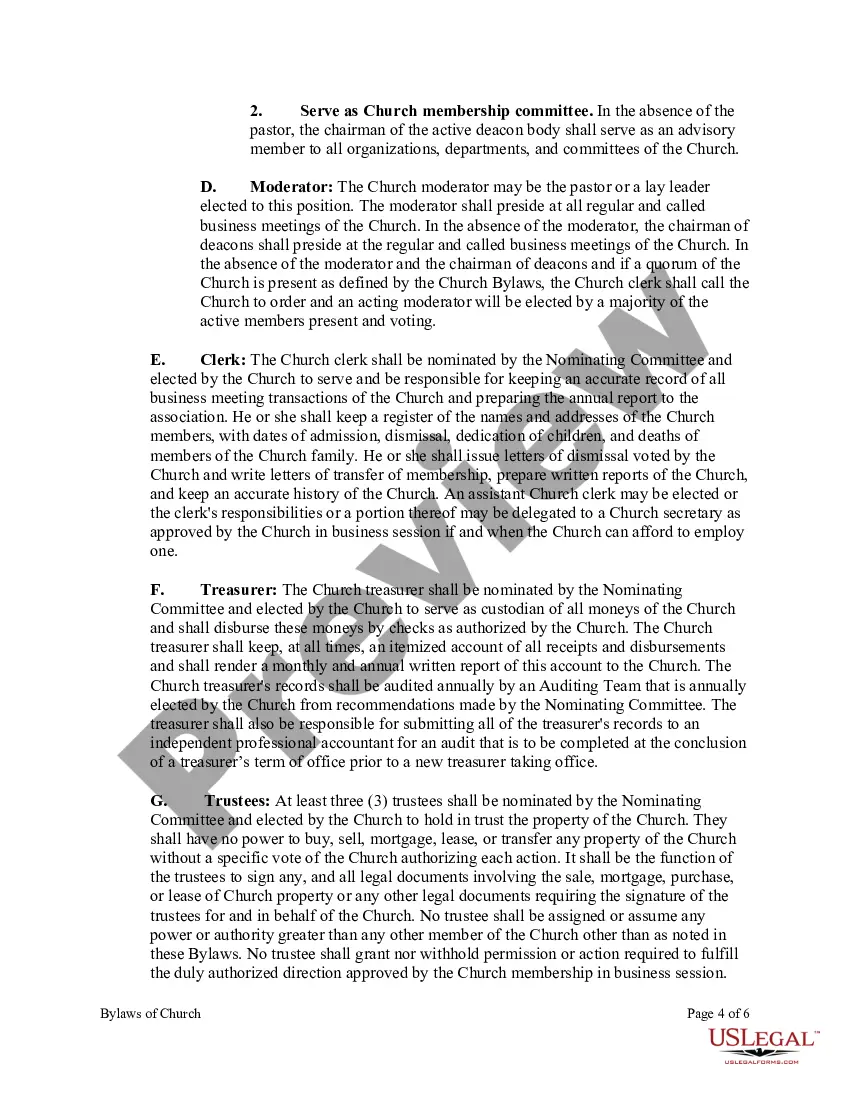
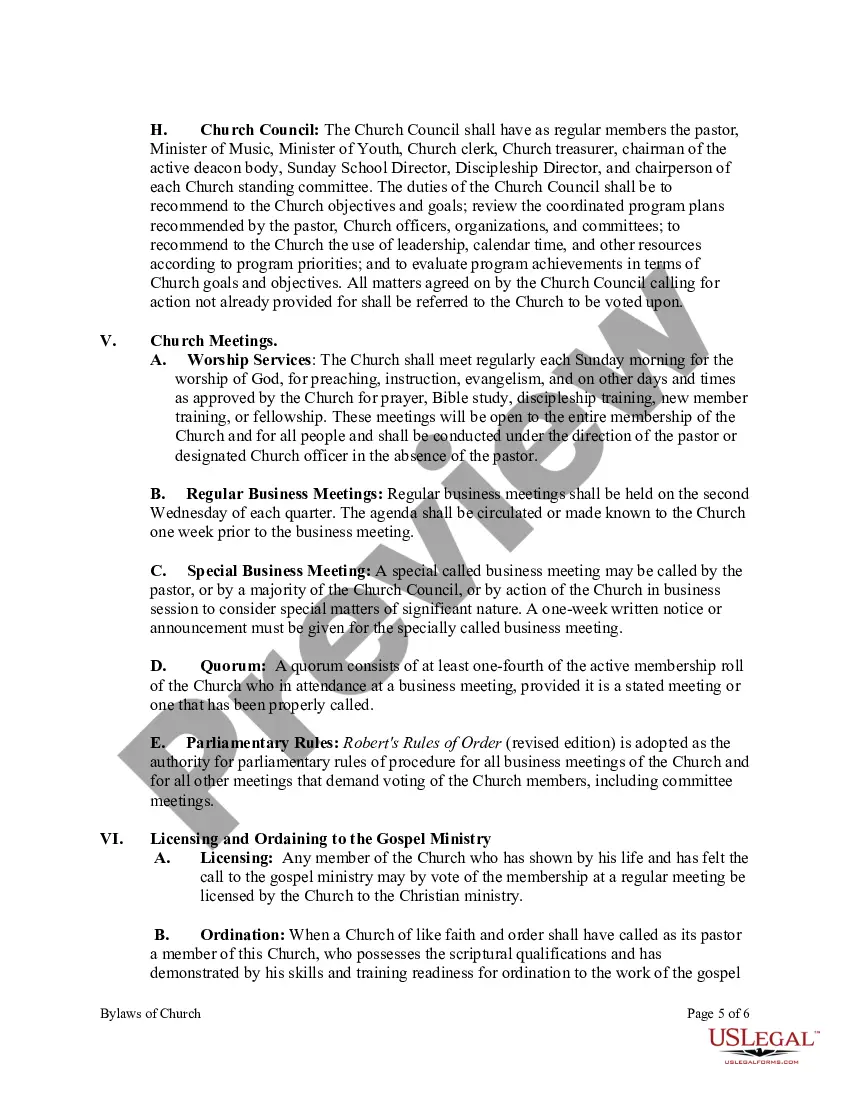
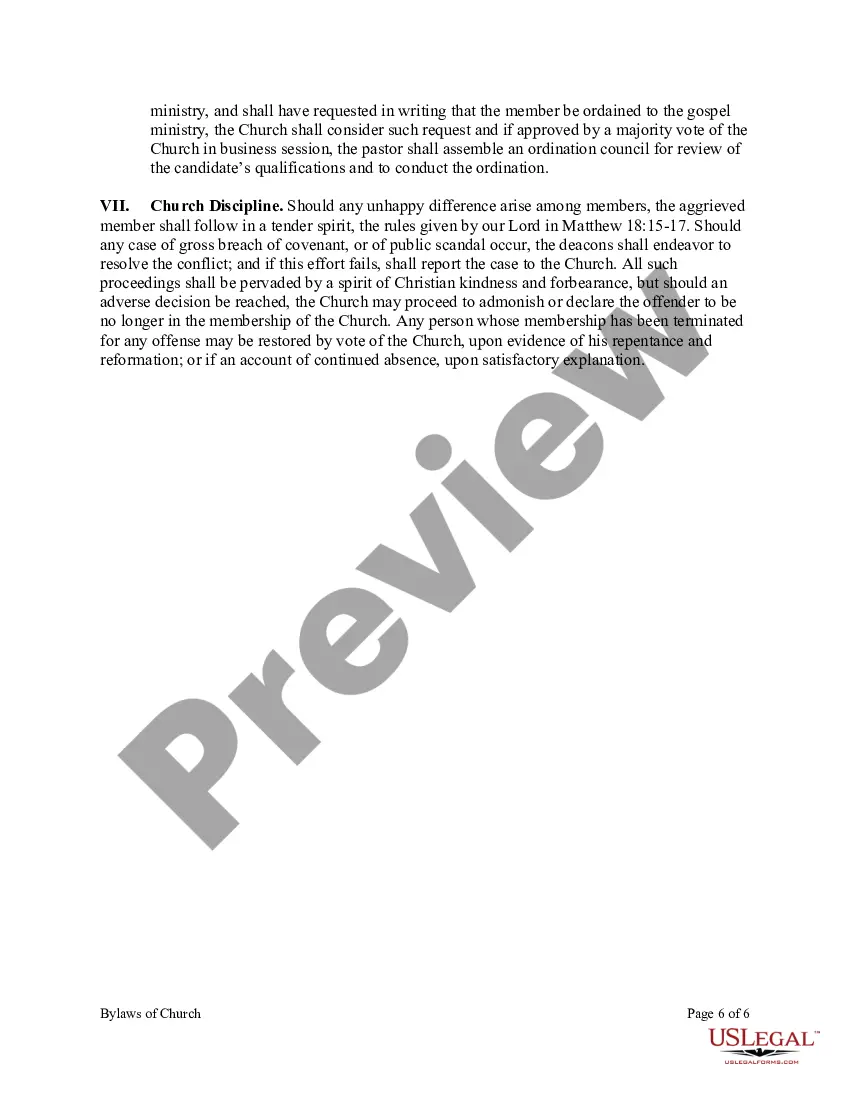
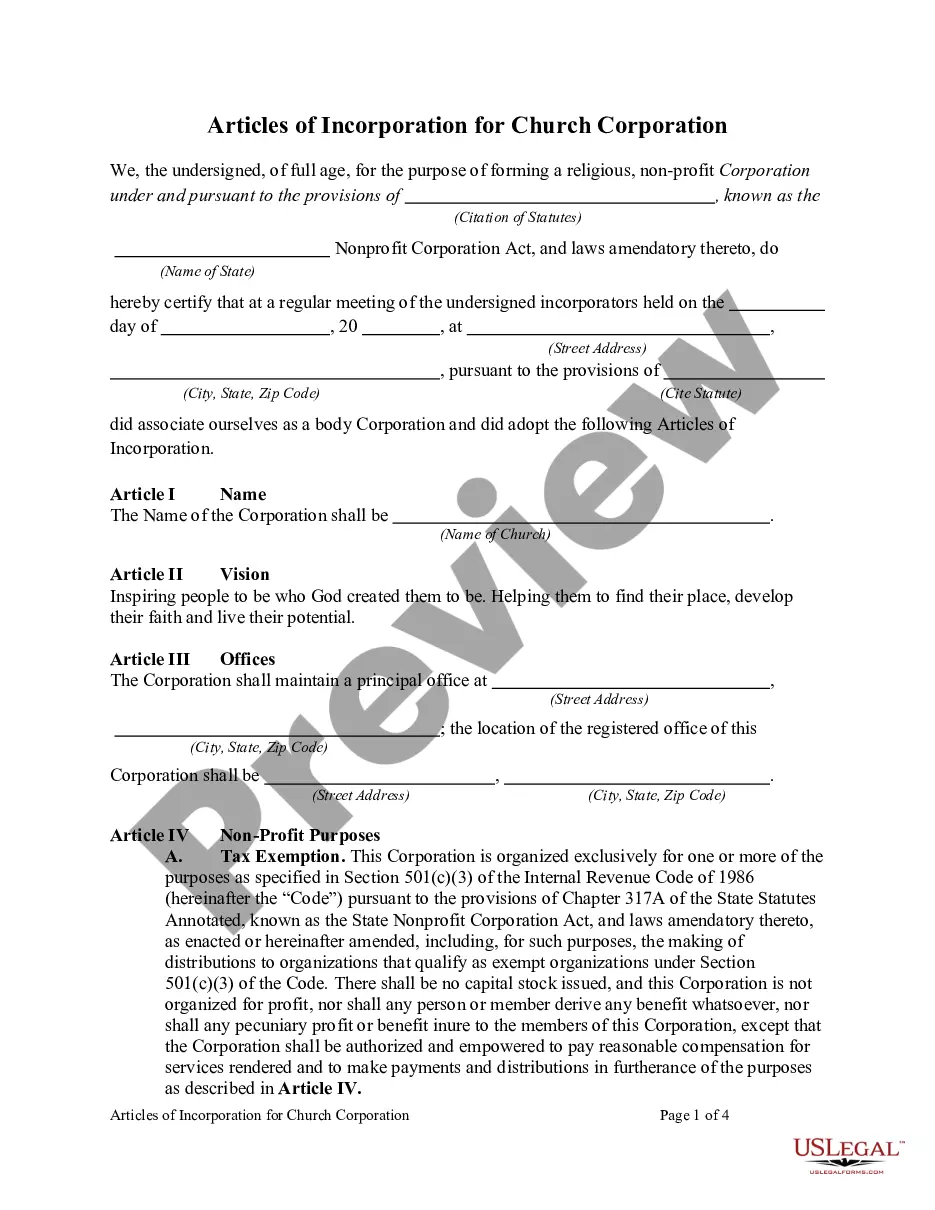
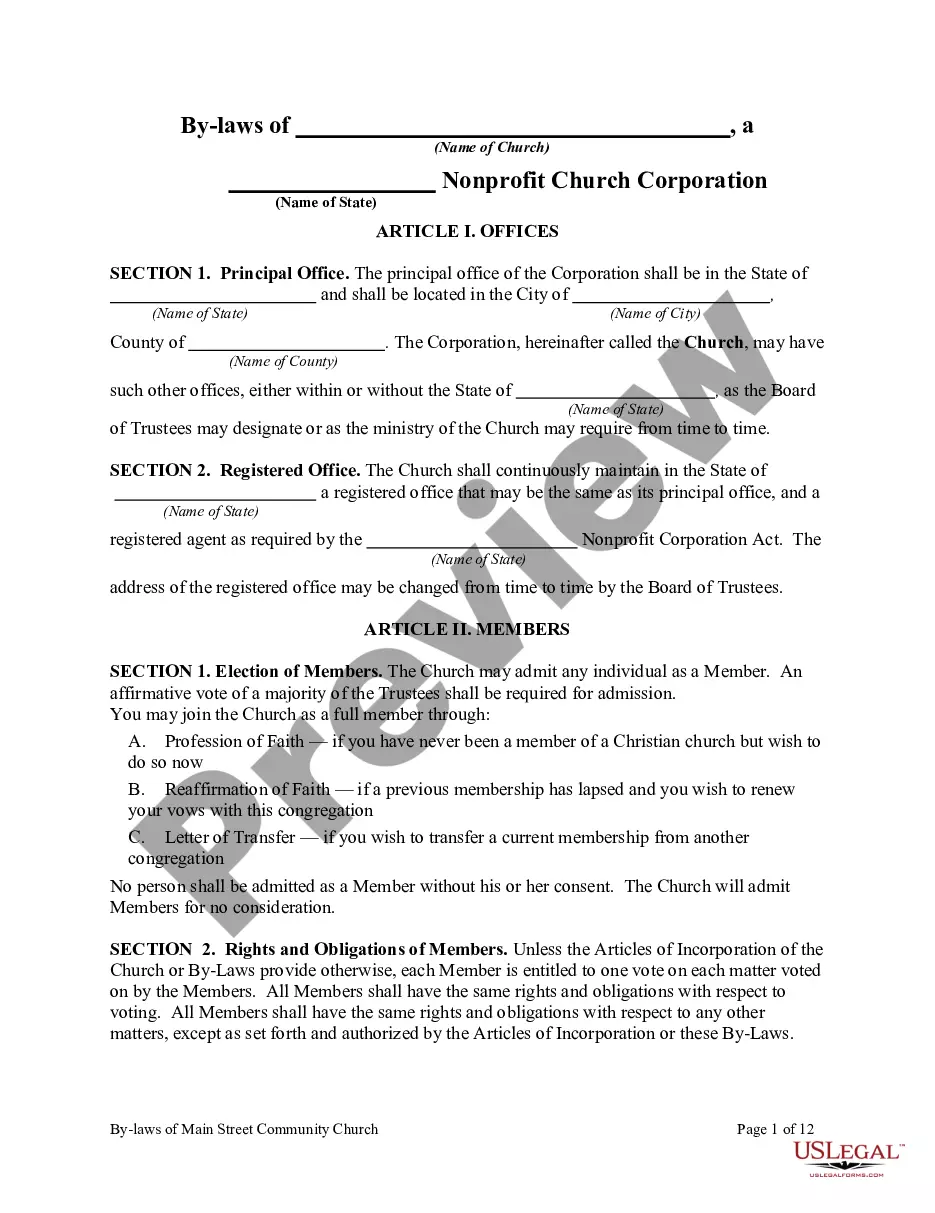
Church Bylaws Examples For A School
Description
Get your form ready online
Our built-in tools help you complete, sign, share, and store your documents in one place.
Make edits, fill in missing information, and update formatting in US Legal Forms—just like you would in MS Word.
Download a copy, print it, send it by email, or mail it via USPS—whatever works best for your next step.
Sign and collect signatures with our SignNow integration. Send to multiple recipients, set reminders, and more. Go Premium to unlock E-Sign.
If this form requires notarization, complete it online through a secure video call—no need to meet a notary in person or wait for an appointment.
We protect your documents and personal data by following strict security and privacy standards.

Make edits, fill in missing information, and update formatting in US Legal Forms—just like you would in MS Word.

Download a copy, print it, send it by email, or mail it via USPS—whatever works best for your next step.

Sign and collect signatures with our SignNow integration. Send to multiple recipients, set reminders, and more. Go Premium to unlock E-Sign.

If this form requires notarization, complete it online through a secure video call—no need to meet a notary in person or wait for an appointment.

We protect your documents and personal data by following strict security and privacy standards.
Looking for another form?



How to fill out Bylaws Of Church - Church Not Incorporated?
- If you're a returning user, log in to your US Legal Forms account and download the appropriate template by clicking the Download button. Ensure your subscription is active; renew it if necessary.
- For first-time users, start by reviewing the Preview mode and form descriptions. Confirm that you’ve selected the correct template compliant with your local jurisdiction standards.
- If adjustments are needed, use the Search tab to find alternative forms. Once a suitable option is located, proceed to the next step.
- Purchase the document by clicking the Buy Now button and selecting a subscription plan of your choice. You will need to create an account to gain access to the extensive library.
- Complete your transaction by entering your payment details via credit card or your PayPal account.
- Download the form to your device. You can also find it anytime in the My Forms section of your profile.
US Legal Forms not only provides a vast selection of over 85,000 legal documents but also ensures you have access to premium experts for precise completion, guaranteeing your documents are legally sound.
Start creating your church bylaws today with US Legal Forms and build a stronger foundation for your school. Don’t wait, begin your process now!
Form popularity
FAQ
The primary purpose of bylaws is to establish clear rules for governance and decision-making within an organization. They provide a framework that guides operations, ensuring consistency and transparency. Leveraging church bylaws examples for a school can enhance this framework, especially in fostering a positive learning environment aligned with your church’s mission.
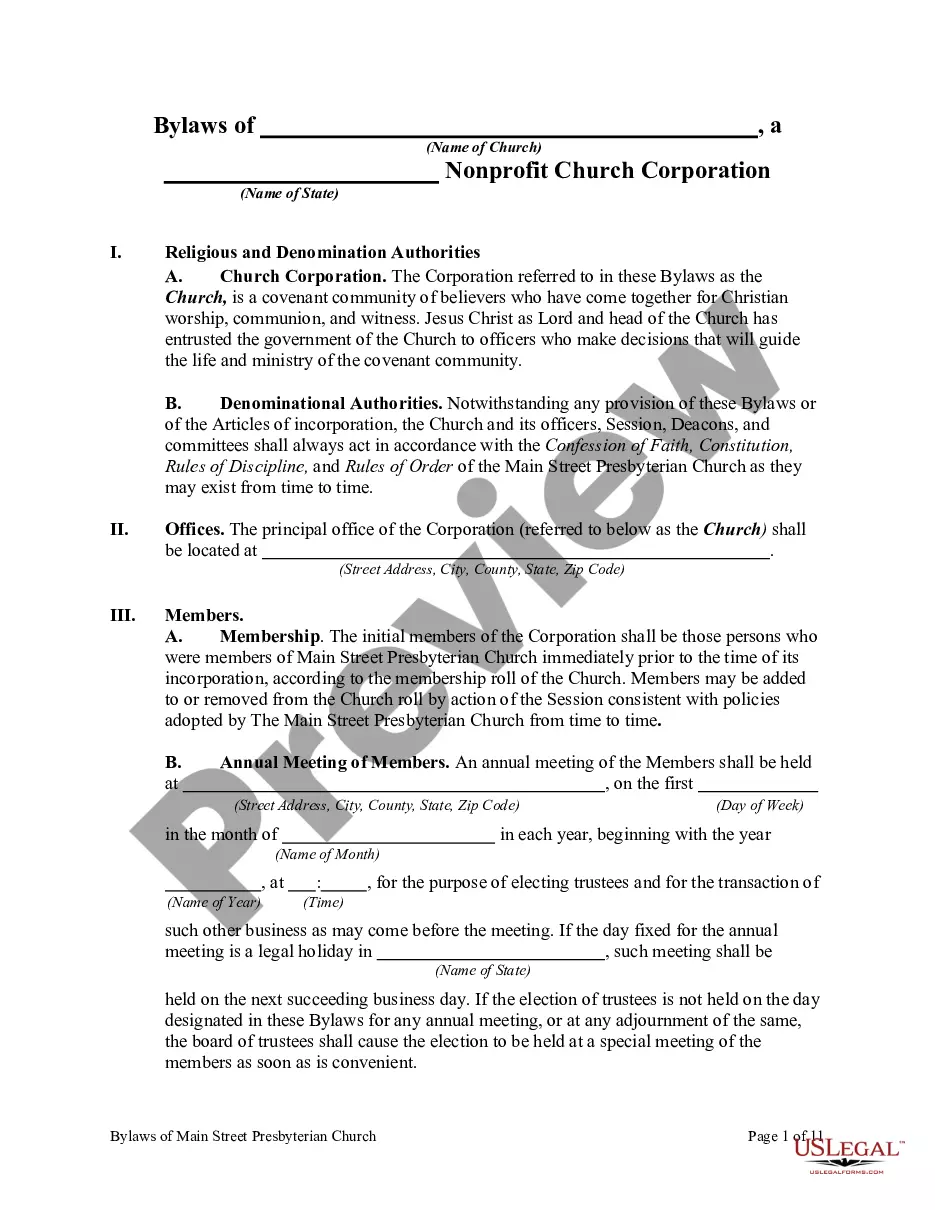
Bylaws are the written rules that govern the internal affairs of an organization, such as a church or a school. They define the roles of leadership, membership requirements, and procedures for meetings. Exploring church bylaws examples for a school can help clarify these concepts and provide a practical framework for your institution.
Yes, a church can own and operate a school as long as it adheres to applicable laws and regulations. Many churches establish educational institutions to provide their community with quality education rooted in their values. By reviewing church bylaws examples for a school, churches can craft effective governance structures to support their educational mission.
To write bylaws, start by outlining the purpose and structure of your organization. Next, define roles and responsibilities while incorporating rules for meetings and decision-making processes. Research church bylaws examples for a school to draw inspiration and ensure your bylaws effectively meet your church’s educational objectives.
Church bylaws govern the internal workings and administration of the church. They establish rules around membership, leadership roles, and meeting procedures. Utilizing church bylaws examples for a school can help articulate these essential functions and ensure smooth operations while focusing on the educational mission of the institution.
Bylaws should maintain clarity and focus on governance rather than detailed operational procedures. Avoid including personal opinions, detailed job descriptions, or overly specific processes. Instead, refer to church bylaws examples for a school to highlight essential regulations while ensuring that the bylaws remain functional and flexible.
A local bylaw can include various restrictions or guidelines that govern the operations within a specific area. For instance, a bylaw might outline rules for noise levels during church activities or specify the use of communal spaces for educational events. By using well-crafted church bylaws examples for a school, you can provide effective guidelines suited to your community's needs.
In most cases, churches are not legally mandated to have bylaws. However, having bylaws greatly benefits an organization by establishing clear governance structures. They outline procedures for decision-making and conflict resolution, which can prevent misunderstandings. To explore useful frameworks, check out Church bylaws examples for a school that illustrate how other institutions manage their governance.
Churches are generally classified as private property, although they can have specific public access rights. This classification affects how laws apply to them, including zoning and liability issues. Understanding the distinction can aid churches in complying with various regulations. It may also be helpful to refer to Church bylaws examples for a school when considering property usage and rights.
Creating church bylaws involves several steps, beginning with researching existing examples. Look at Church bylaws examples for a school to see what others have implemented. Draft your document, focusing on key areas like mission, governance, and member roles. Consultation with church members and legal professionals can also provide valuable insights for creating comprehensive and effective bylaws.