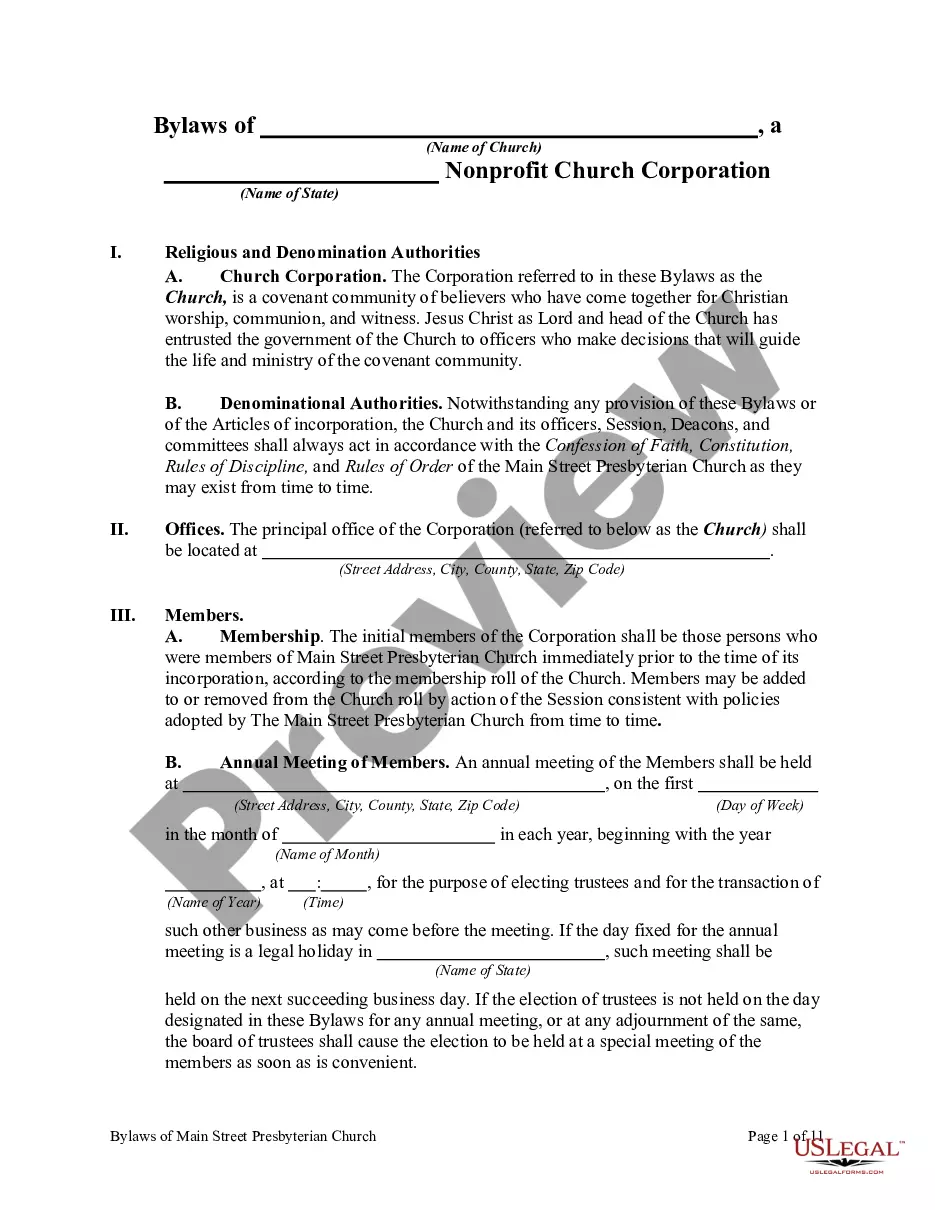
Church And Law
Description
Get your form ready online
Our built-in tools help you complete, sign, share, and store your documents in one place.
Make edits, fill in missing information, and update formatting in US Legal Forms—just like you would in MS Word.
Download a copy, print it, send it by email, or mail it via USPS—whatever works best for your next step.
Sign and collect signatures with our SignNow integration. Send to multiple recipients, set reminders, and more. Go Premium to unlock E-Sign.
If this form requires notarization, complete it online through a secure video call—no need to meet a notary in person or wait for an appointment.
We protect your documents and personal data by following strict security and privacy standards.

Make edits, fill in missing information, and update formatting in US Legal Forms—just like you would in MS Word.

Download a copy, print it, send it by email, or mail it via USPS—whatever works best for your next step.

Sign and collect signatures with our SignNow integration. Send to multiple recipients, set reminders, and more. Go Premium to unlock E-Sign.

If this form requires notarization, complete it online through a secure video call—no need to meet a notary in person or wait for an appointment.

We protect your documents and personal data by following strict security and privacy standards.
Looking for another form?




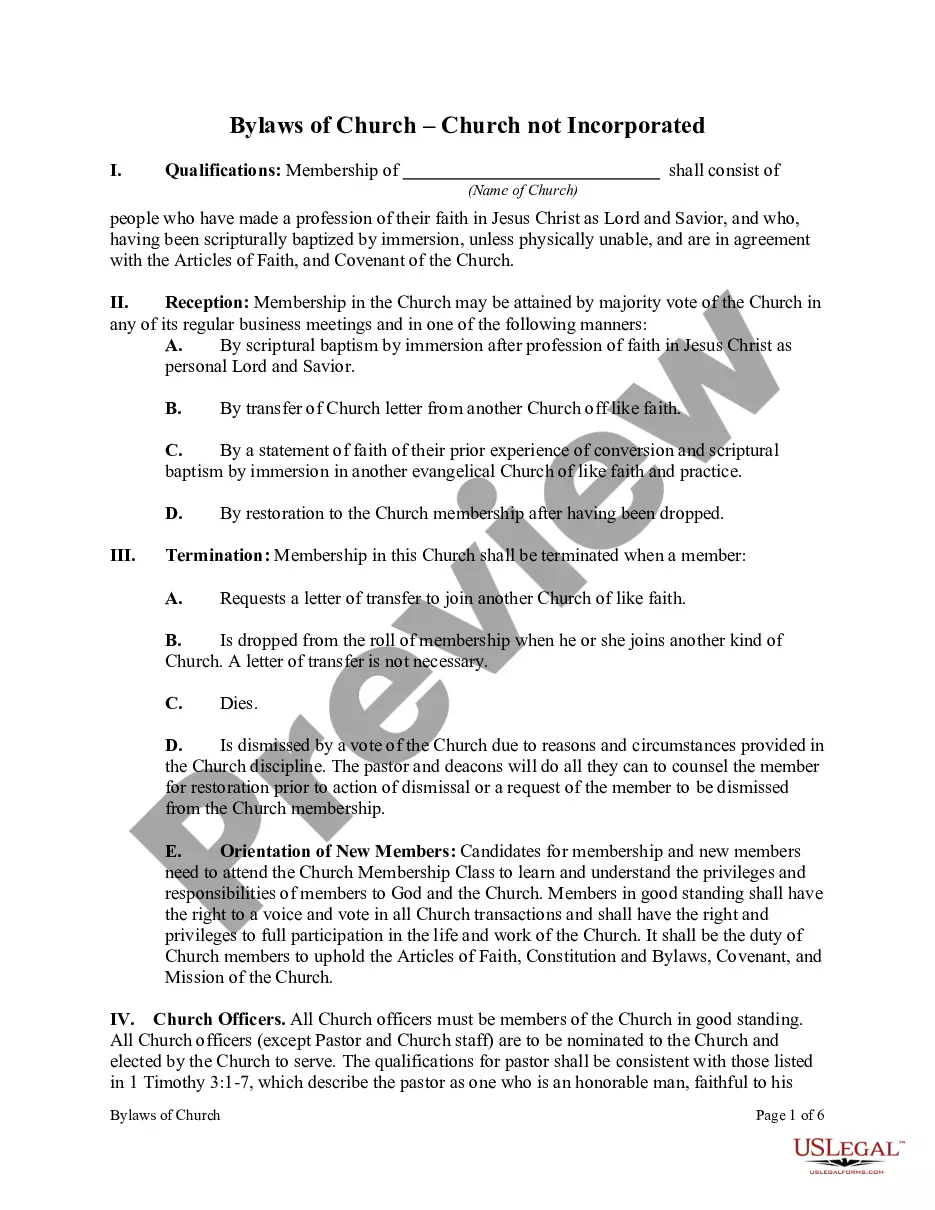
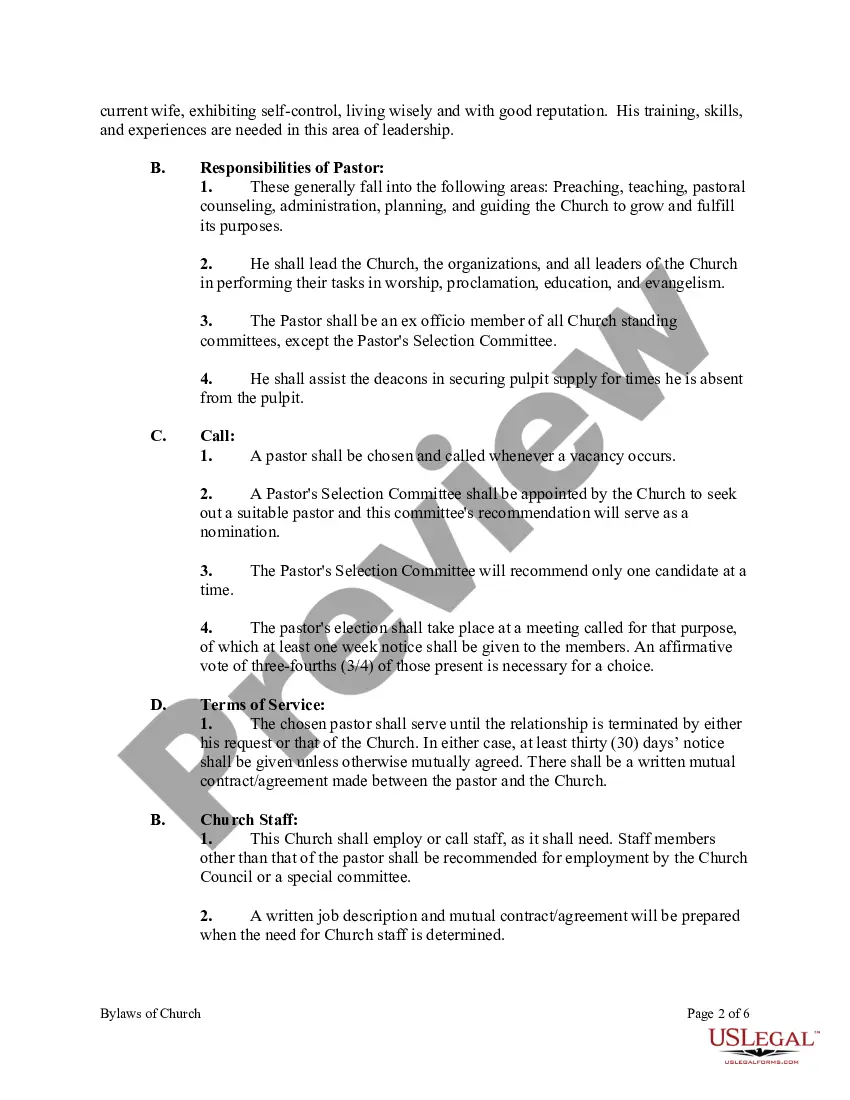
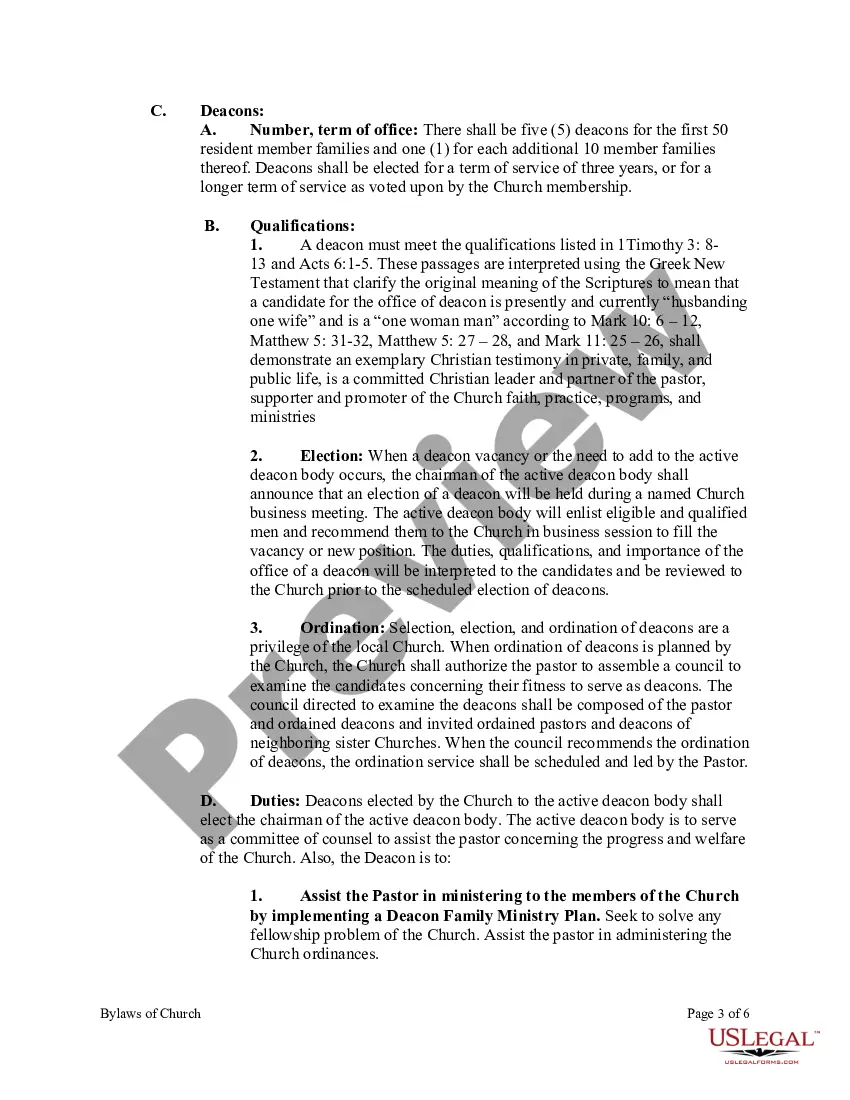
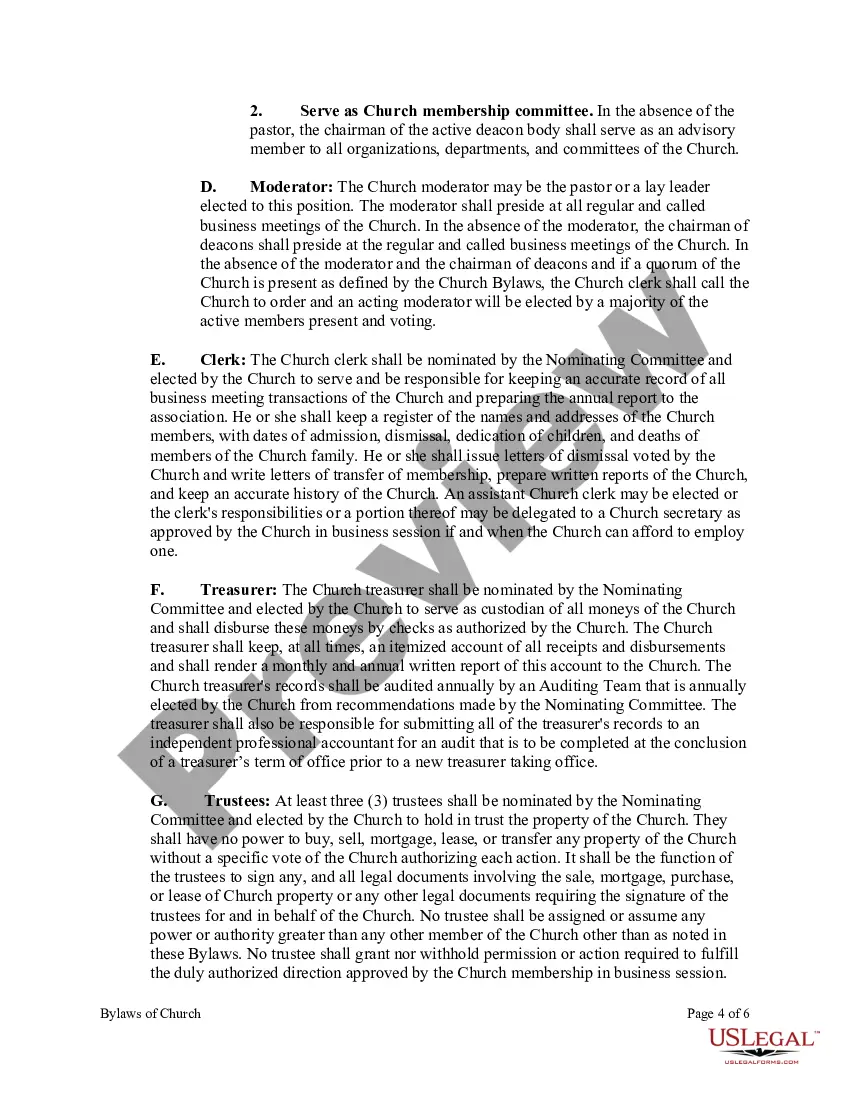
How to fill out Bylaws Of Church - Church Not Incorporated?
- If you’re a returning user, log in to your account and confirm your subscription is active. Then, find the document you need and click the Download button.
- For new users, start by browsing the extensive library. Review the descriptions and ensure the form meets your specific legal and jurisdictional requirements.
- If necessary, use the Search feature to find alternative templates that fit your criteria.
- Select your desired document and click the Buy Now button. Choose the subscription option that works best for you.
- Complete your purchase by entering your credit card information or opting for PayPal for easy payment.
- Download your selected form to your device. Access it anytime through the My Forms section in your account.
By utilizing US Legal Forms, you gain access to a robust collection of over 85,000 easily editable legal forms, making it simpler to manage church-related documentation. Plus, the platform connects users with premium experts to ensure your documents are legally sound.
Take control of your legal document needs today! Visit US Legal Forms to streamline your process and ensure compliance with the law.
Form popularity
FAQ
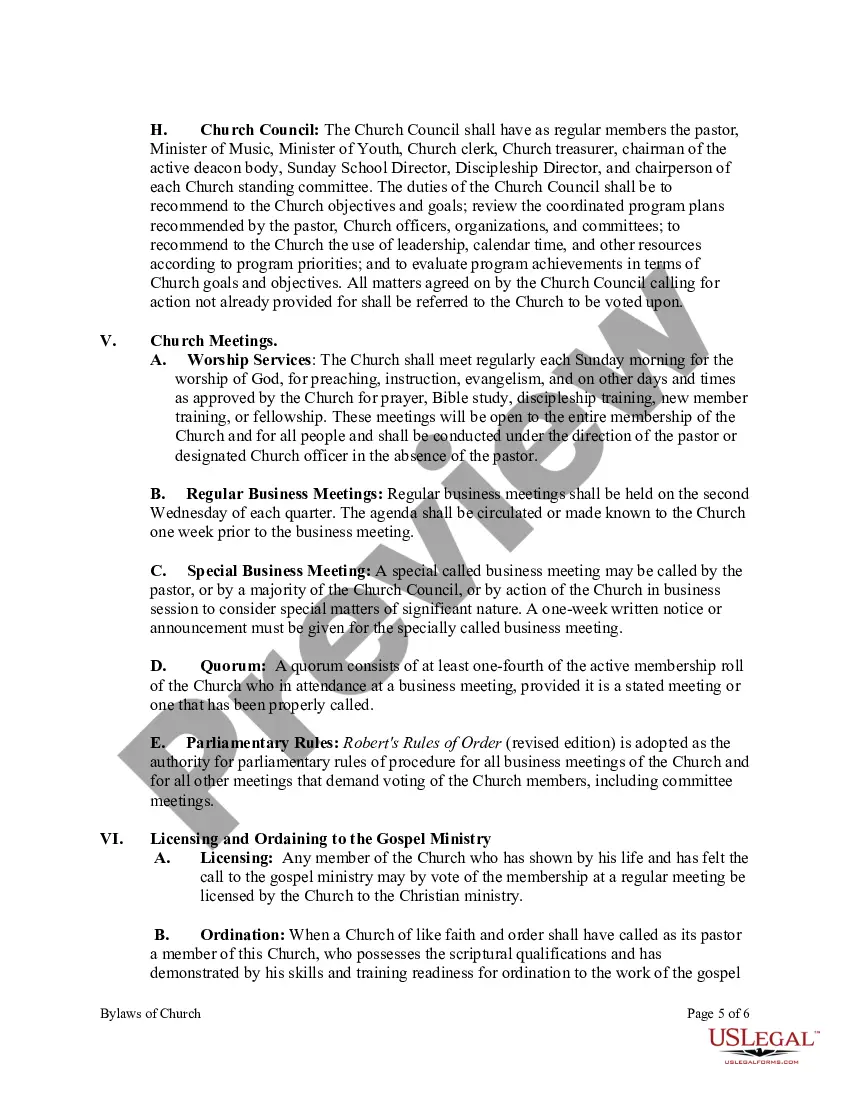
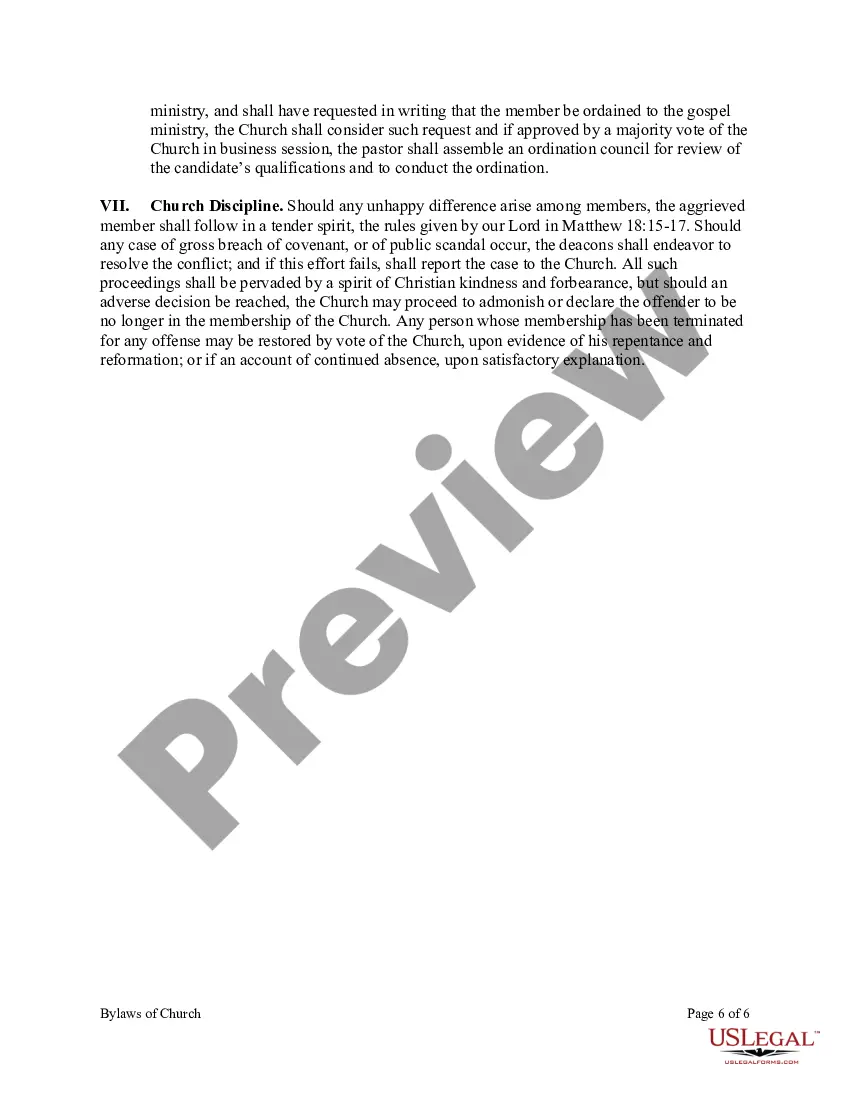
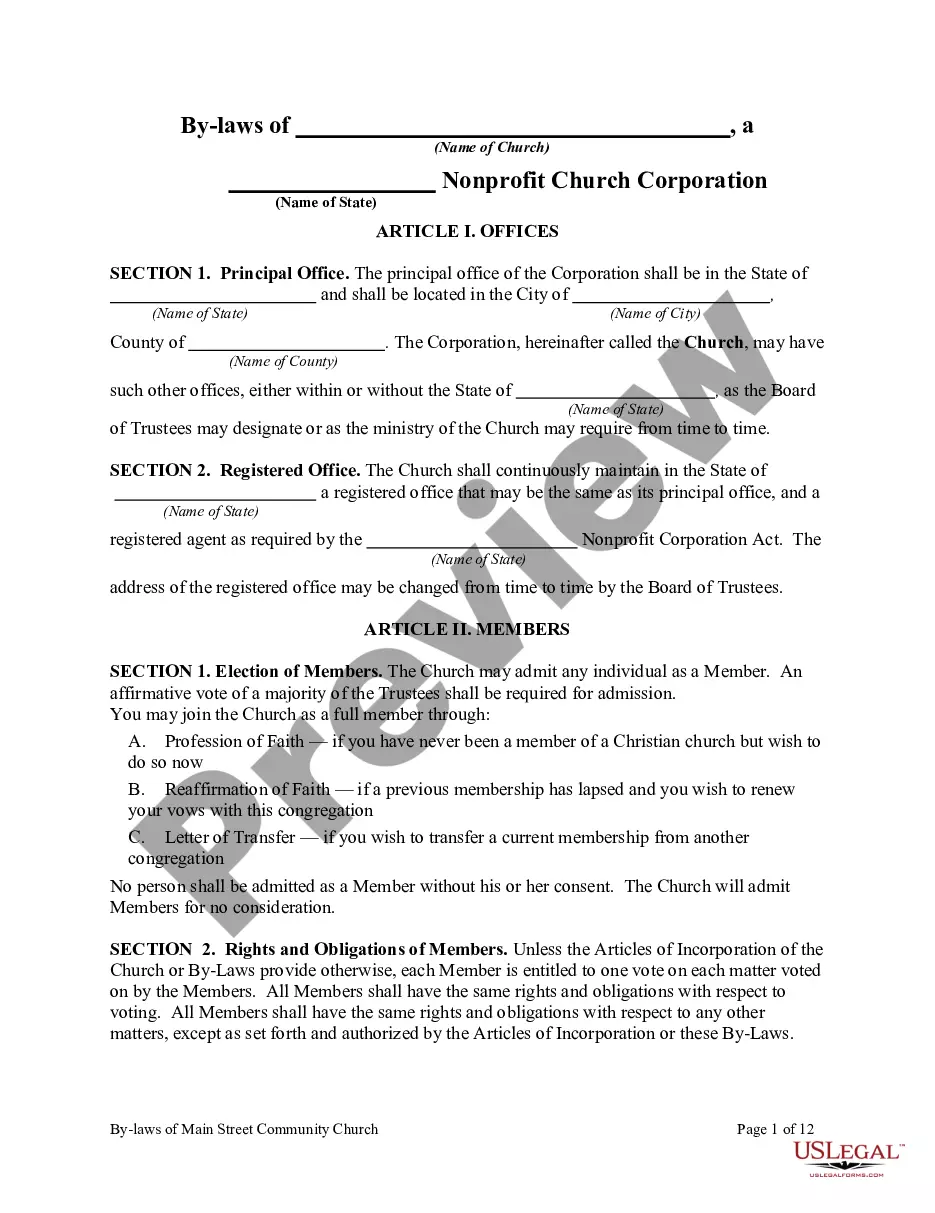
The bylaws of a church are the internal rules that govern its organization and operation. They define the roles of church officers, procedures for meetings, and guidelines for membership and amendments. These bylaws play a critical role in ensuring that the church operates in accordance with church and law. To create effective bylaws, consider exploring the templates and resources available at US Legal Forms for expert guidance.
An example of church law can be the regulations surrounding the establishment of a church's tax-exempt status under Section 501(c)(3) of the Internal Revenue Code. This law requires churches to operate primarily for religious purposes and prohibits them from engaging in political campaigning. Understanding these laws is vital for churches to maintain compliance with church and law. Resources like US Legal Forms can assist you in navigating these legal requirements.
The proper way to write bylaws includes starting with a clear statement of the organization's name and purpose. Next, detail the procedures for membership, decision-making, and officer duties. Remember to address how amendments can be made, keeping church and law in mind throughout the process. For a comprehensive approach, consider using templates from US Legal Forms, which can provide clarity and structure.
Writing bylaws for a church involves outlining the church's purpose, governance structure, membership rules, and meeting protocols. Clearly defining these elements ensures that the church operates smoothly and in accordance with church and law. It's essential to draft bylaws that reflect the church's values and mission while remaining compliant with state and federal regulations. Utilizing resources from US Legal Forms can simplify this process.
An example of a church law is the requirement for a church to adhere to its own established bylaws, which outline the governance of the church. Church and law intersect here, as these bylaws must align with state regulations governing nonprofit organizations. Additionally, churches must respect laws related to zoning, employment, and tax compliance. You can find detailed templates for drafting bylaws on platforms like US Legal Forms.
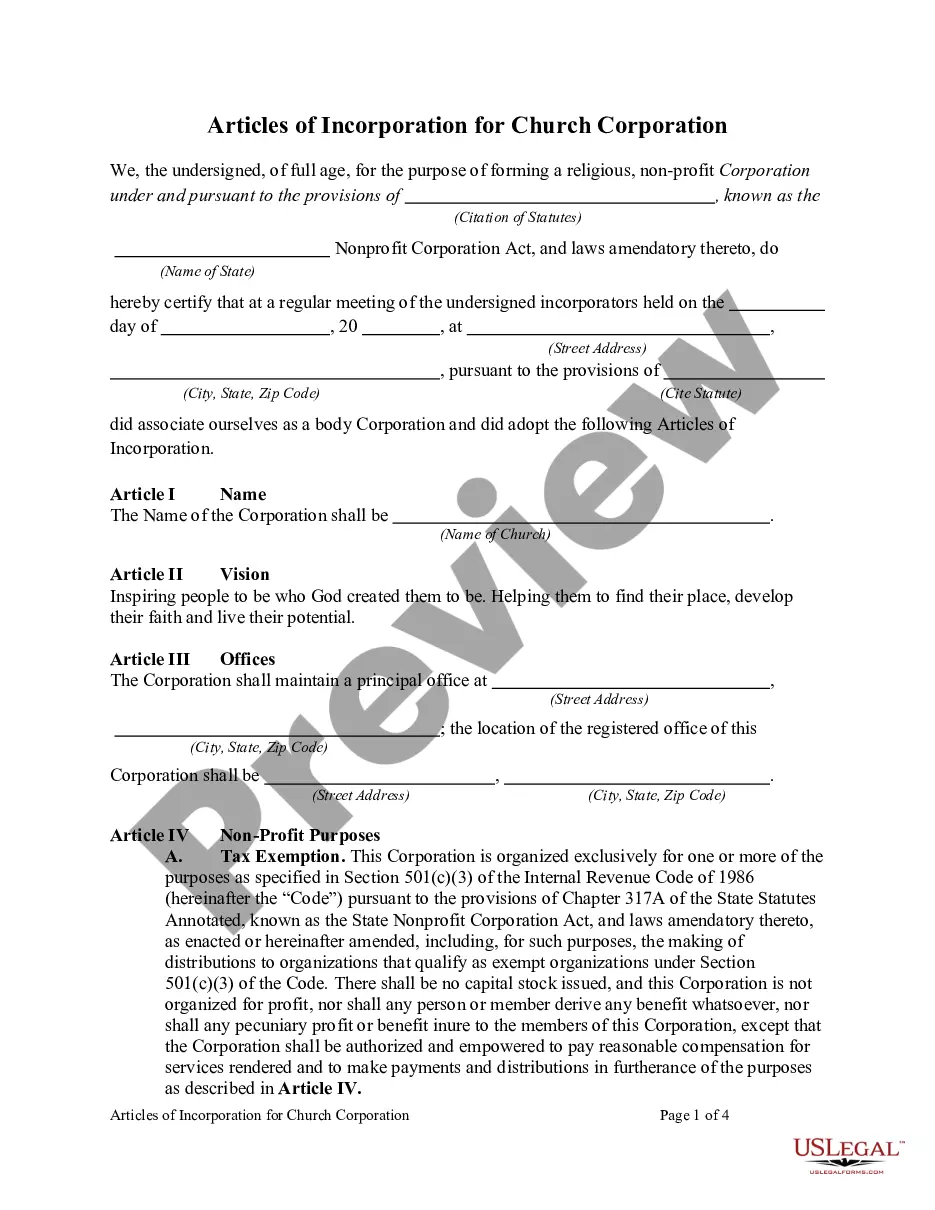
The legal structure of a church typically consists of a governing body, such as a board of directors or trustees. Churches can be organized as nonprofit corporations or unincorporated associations, which helps them adhere to church and law regulations. Establishing this structure is crucial for ensuring compliance, limiting liability, and securing tax-exempt status. Make sure to consult resources like US Legal Forms for guidance on the necessary legal documents.
Churches often operate under their own set of rules and regulations, which can be influenced by religious doctrine. However, they must still adhere to the laws of the state and federal government. Understanding the intersection of church governance and civil law is essential for any church to maintain legal status and function effectively. Consulting with legal professionals who specialize in church and law can provide invaluable guidance.
Yes, many churches hire attorneys to navigate the complexities of church and law. Legal counsel can assist with various matters, including forming the church, ensuring compliance with regulations, and handling disputes. By having an attorney, churches can focus on their mission, knowing legal issues are being managed by a professional.
While not always legally required, having bylaws is highly recommended for churches. Bylaws provide clear guidelines on governance, membership, and decision-making processes, which can help prevent disputes. They also demonstrate the church's commitment to transparency and accountability under church and law. Drafting bylaws can be facilitated through platforms like USLegalForms, ensuring compliance with legal standards.
A legal church typically must be organized and operated exclusively for religious purposes. To qualify as a church under the law, it generally needs to have the appropriate structure, such as a governing body, regular worship services, and a defined membership. Additionally, achieving tax-exempt status is crucial for operating as a legal church, highlighting the importance of understanding church and law requirements.