Employment Law Definition
Description
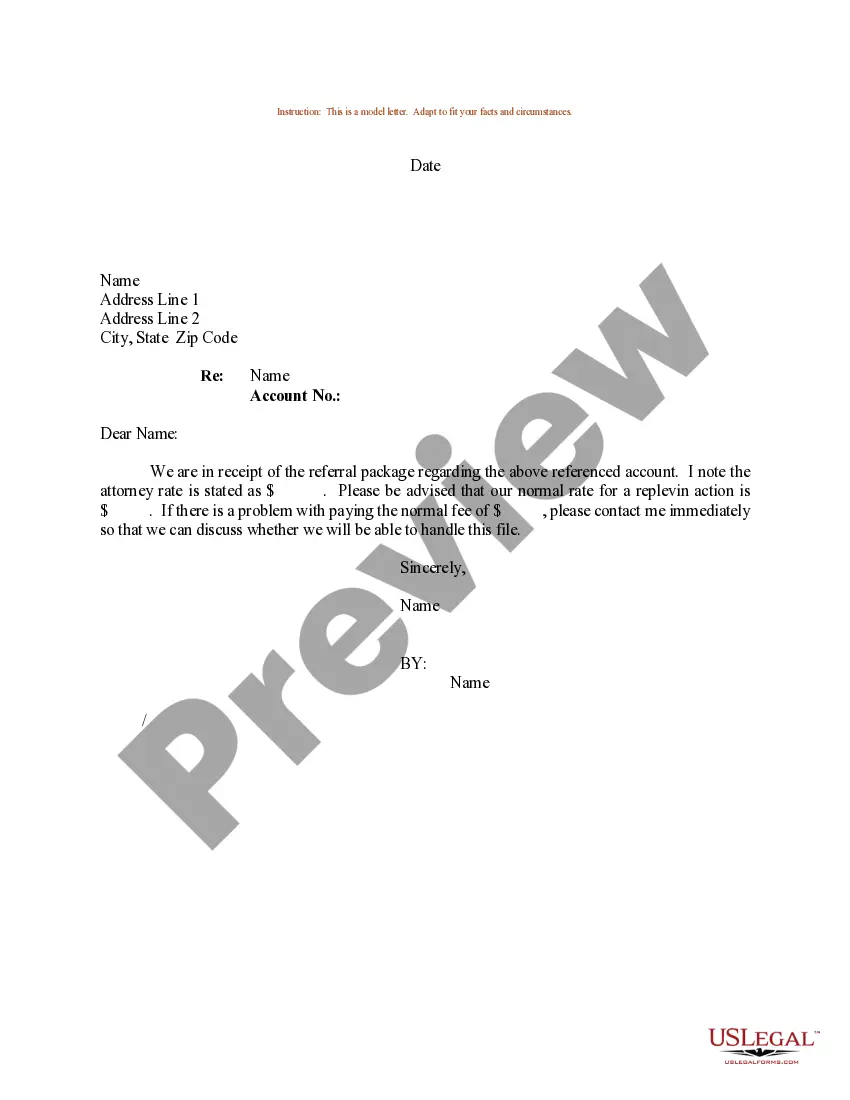
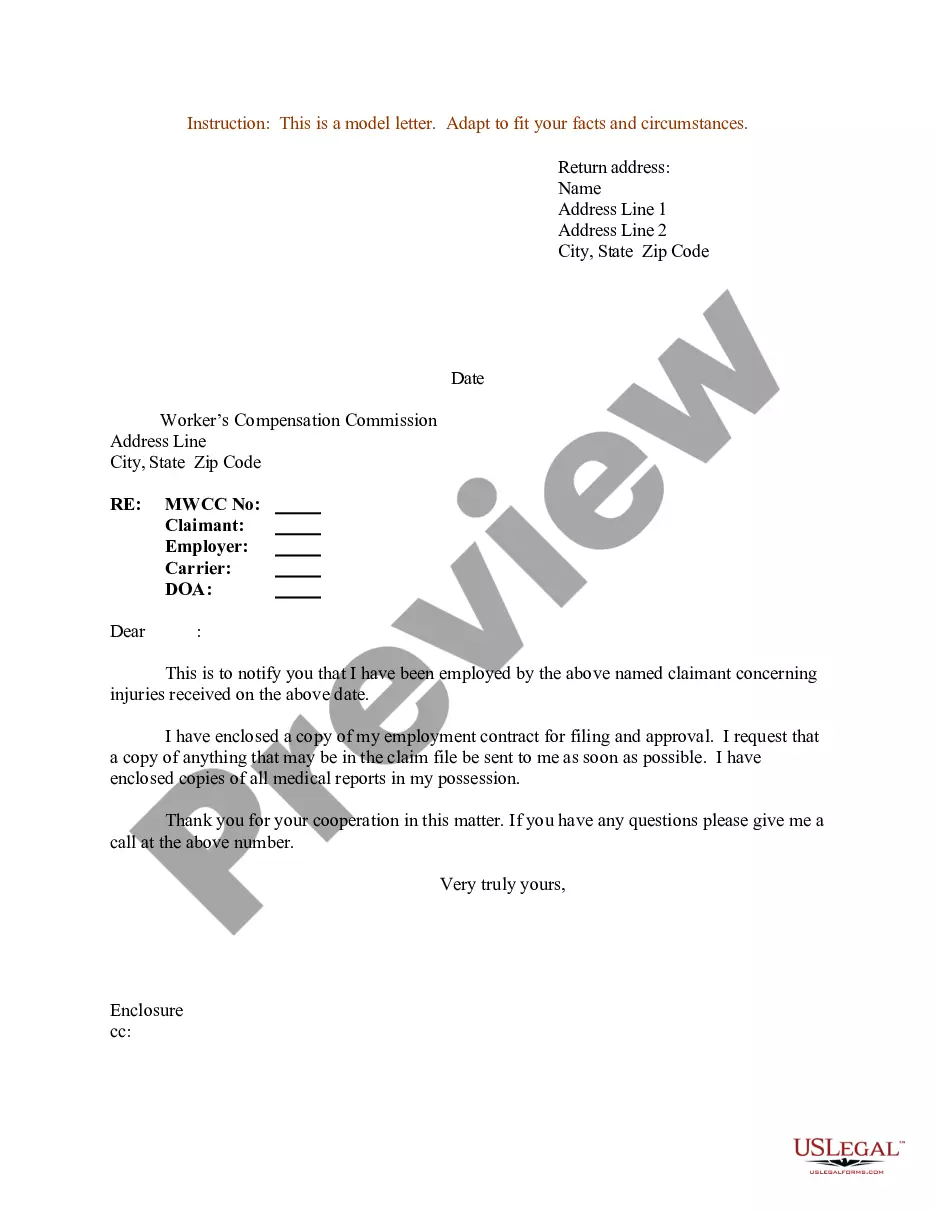
Get your form ready online
Our built-in tools help you complete, sign, share, and store your documents in one place.
Make edits, fill in missing information, and update formatting in US Legal Forms—just like you would in MS Word.
Download a copy, print it, send it by email, or mail it via USPS—whatever works best for your next step.
Sign and collect signatures with our SignNow integration. Send to multiple recipients, set reminders, and more. Go Premium to unlock E-Sign.
If this form requires notarization, complete it online through a secure video call—no need to meet a notary in person or wait for an appointment.
We protect your documents and personal data by following strict security and privacy standards.

Make edits, fill in missing information, and update formatting in US Legal Forms—just like you would in MS Word.

Download a copy, print it, send it by email, or mail it via USPS—whatever works best for your next step.

Sign and collect signatures with our SignNow integration. Send to multiple recipients, set reminders, and more. Go Premium to unlock E-Sign.

If this form requires notarization, complete it online through a secure video call—no need to meet a notary in person or wait for an appointment.

We protect your documents and personal data by following strict security and privacy standards.
Looking for another form?
How to fill out Sample Letter For Legal Representation?
Creating legal documents from the ground up can frequently seem daunting.
Certain instances may require extensive research and significant financial investment.
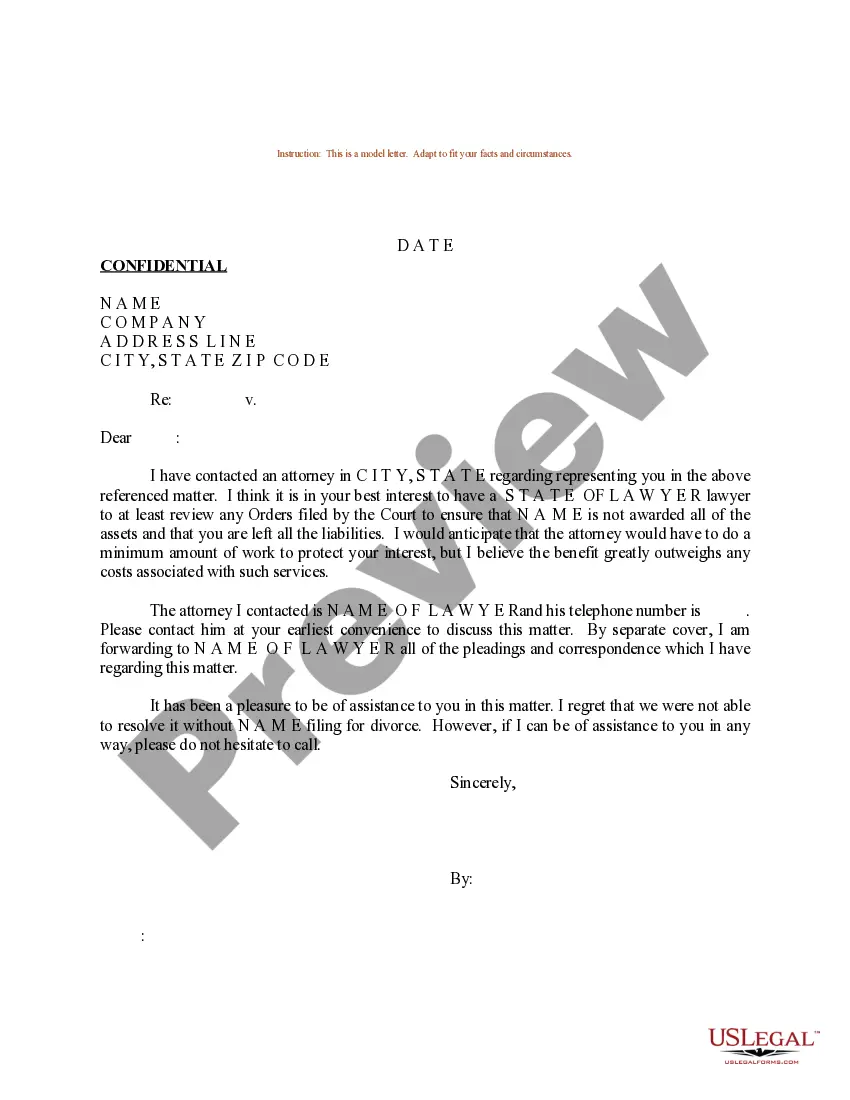
If you seek a more straightforward and budget-friendly method for preparing Employment Law Definitions or any other documents without excessive complications, US Legal Forms is always available to assist you.
Our online repository of over 85,000 current legal forms covers nearly every facet of your financial, legal, and personal matters. With just a few clicks, you can swiftly obtain state- and county-specific templates meticulously crafted for you by our legal professionals.
Review the form preview and descriptions to ensure you have the correct document you are seeking. Verify that the selected form aligns with the regulations and laws of your state and county. Choose the ideal subscription plan to obtain the Employment Law Definition. Download the document, then complete, sign, and print it out. US Legal Forms has a solid reputation and over 25 years of experience. Join us today and simplify your document execution process!
- Utilize our platform whenever you require dependable and trustworthy services that enable you to swiftly find and download the Employment Law Definition.
- If you are familiar with our services and have previously signed up with us, simply Log In to your account, choose the form, and download it or re-download it later in the My documents section.
- Not signed up yet? No worries. It requires minimal time to register and browse the library.
- Before proceeding to download the Employment Law Definition, adhere to these recommendations.
Form popularity
FAQ
Employment law is a broad area encompassing all areas of the employer/employee relationship. Employment law consists of thousands of federal and state statutes, administrative regulations, and judicial decisions. Many employment laws (such as minimum wage regulations) were enacted as protective labor legislation.
Key Takeaways Terms of employment are the benefits and responsibilities that an employee agrees to when they accept a job. Terms may include things like salary, benefits, retirement, company policies, termination, and non-compete agreements.
The Fair Labor Standards Act (FLSA) establishes minimum wage, overtime pay, recordkeeping, and child labor standards affecting full-time and part-time workers in the private sector and in Federal, State, and local governments.
The marketplace and the law hold the most sway in determining a company's conditions of employment. In the free market, employers who compete to hire employees from a limited talent pool must provide appealing conditions of employment to attract and retain them, such as a competitive compensation package.
The U.S. Department of Labor (DOL) administers and enforces most federal employment laws, including those covering wages and hours of work, safety and health standards, employee health and retirement benefits, and federal contracts.