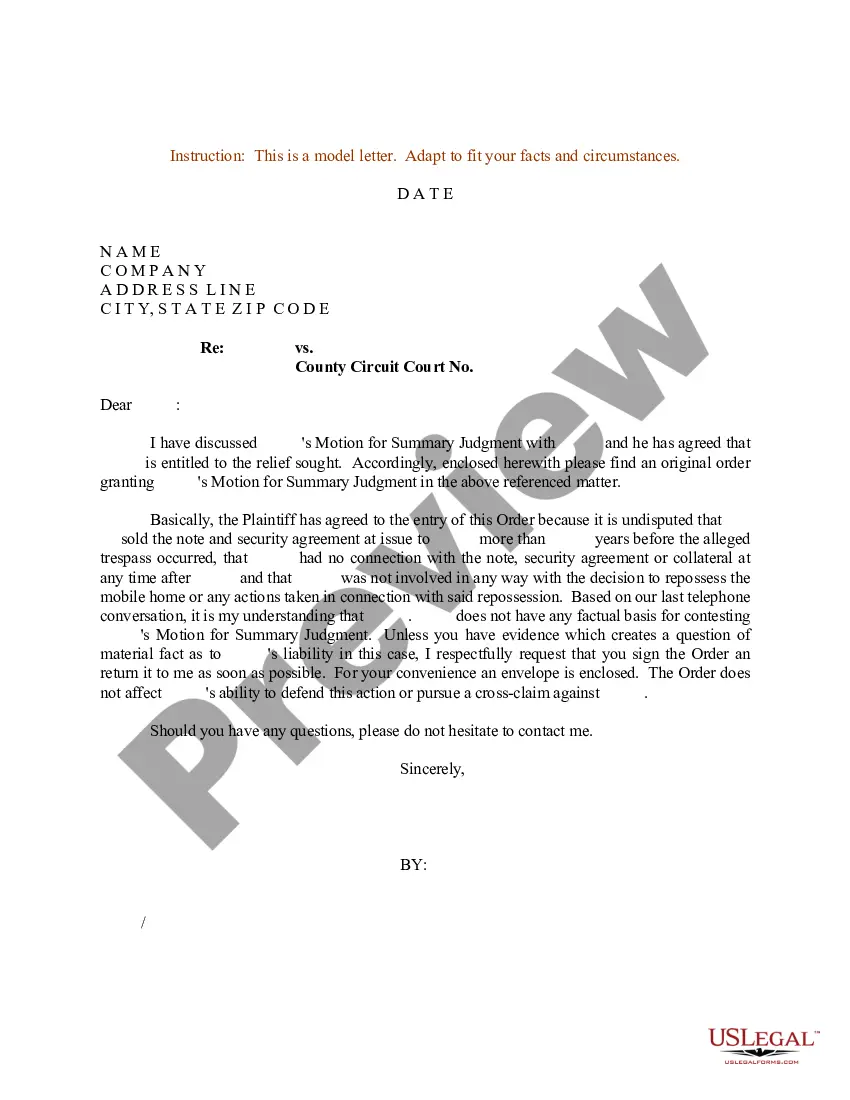
A Motion Of Judgment
Description
Get your form ready online
Our built-in tools help you complete, sign, share, and store your documents in one place.
Make edits, fill in missing information, and update formatting in US Legal Forms—just like you would in MS Word.
Download a copy, print it, send it by email, or mail it via USPS—whatever works best for your next step.
Sign and collect signatures with our SignNow integration. Send to multiple recipients, set reminders, and more. Go Premium to unlock E-Sign.
If this form requires notarization, complete it online through a secure video call—no need to meet a notary in person or wait for an appointment.
We protect your documents and personal data by following strict security and privacy standards.

Make edits, fill in missing information, and update formatting in US Legal Forms—just like you would in MS Word.

Download a copy, print it, send it by email, or mail it via USPS—whatever works best for your next step.

Sign and collect signatures with our SignNow integration. Send to multiple recipients, set reminders, and more. Go Premium to unlock E-Sign.

If this form requires notarization, complete it online through a secure video call—no need to meet a notary in person or wait for an appointment.

We protect your documents and personal data by following strict security and privacy standards.
Looking for another form?









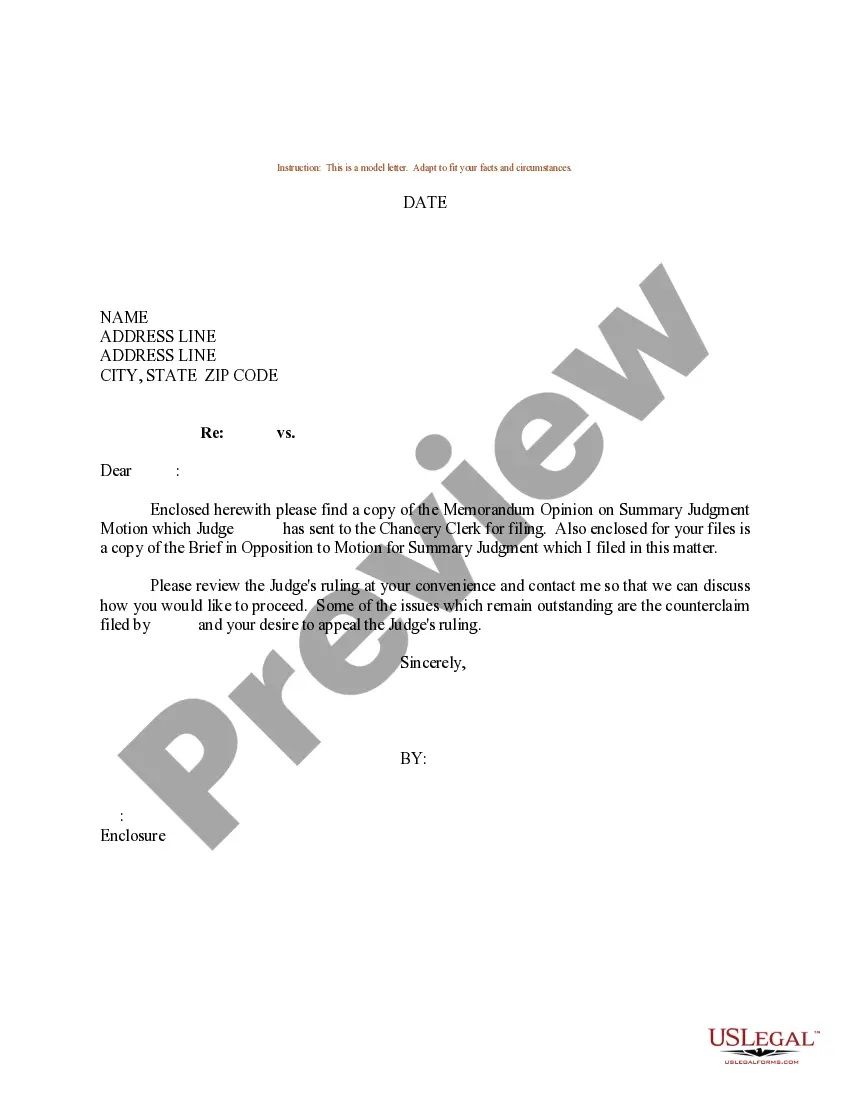
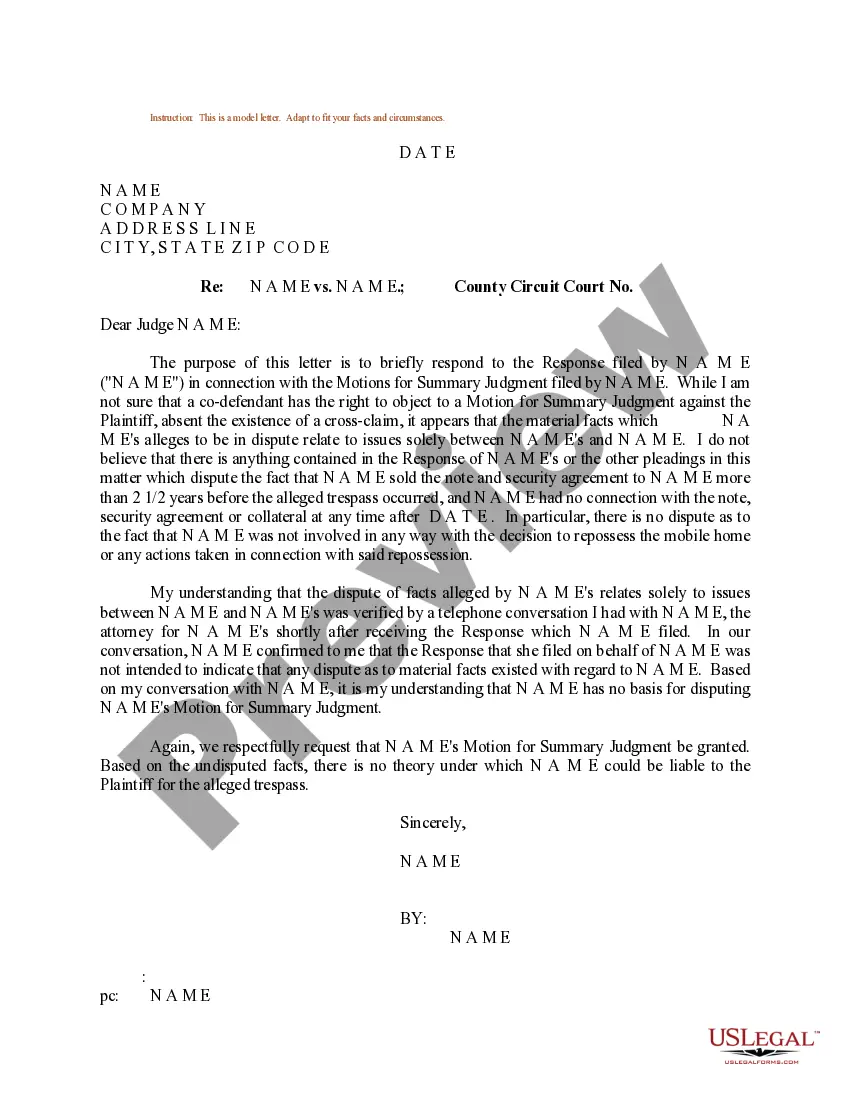
How to fill out Sample Letter For Motion For Summary Judgment?
Regardless of whether for commercial intentions or personal issues, everyone must handle legal circumstances eventually in their lifetime. Finalizing legal documents necessitates meticulous consideration, beginning with choosing the appropriate form template. For example, if you select an incorrect version of a Motion of Judgment, it will be rejected upon submission. Hence, it is crucial to acquire a trustworthy source of legal documents like US Legal Forms.
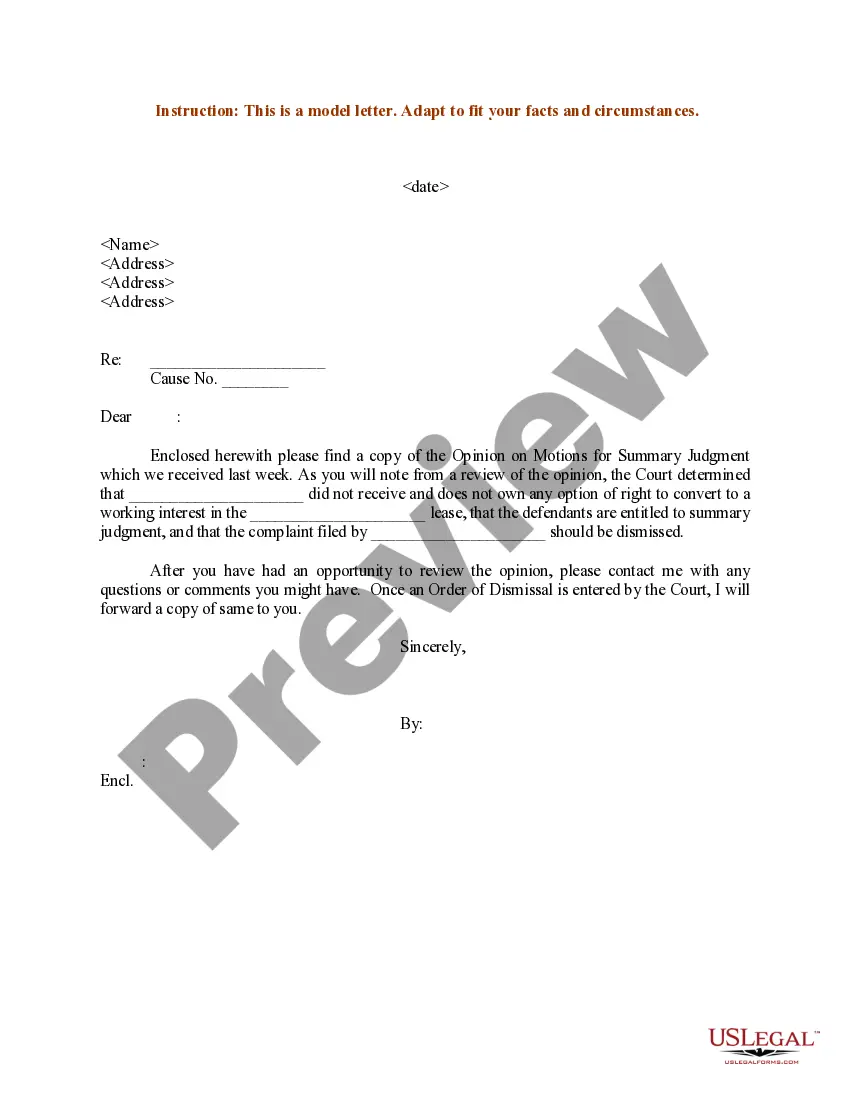
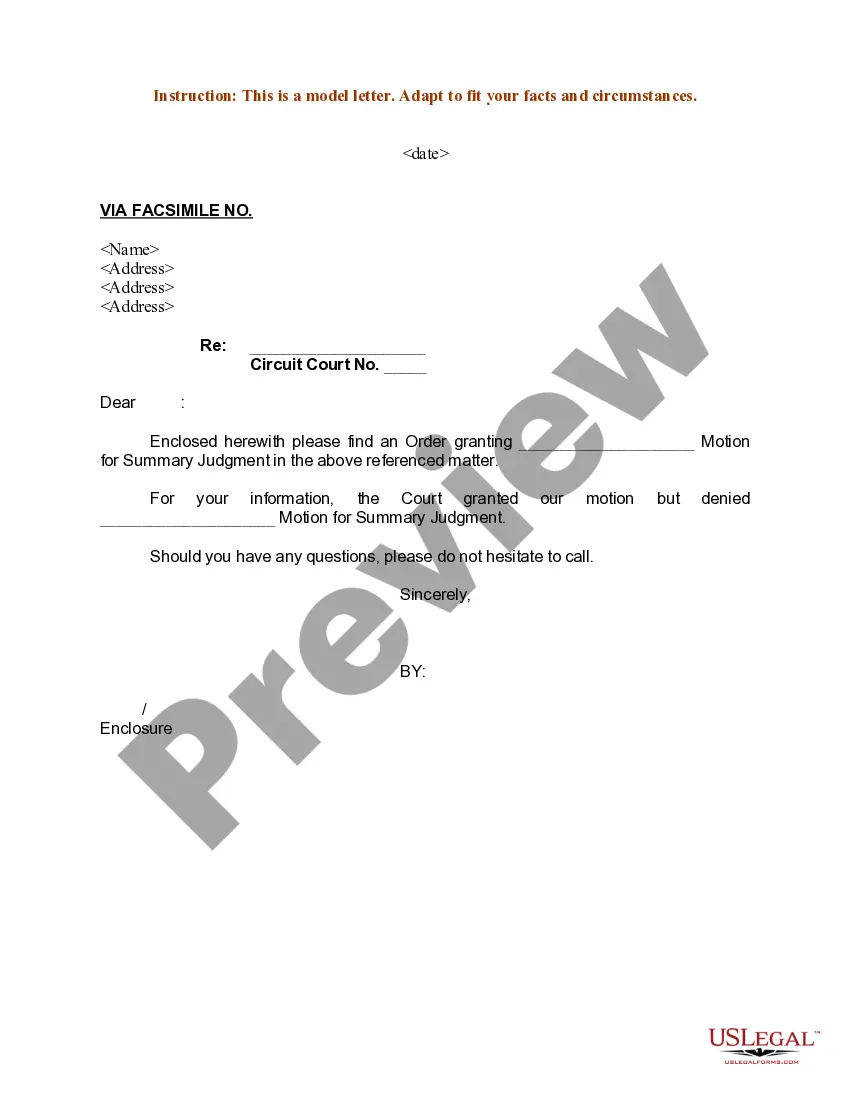
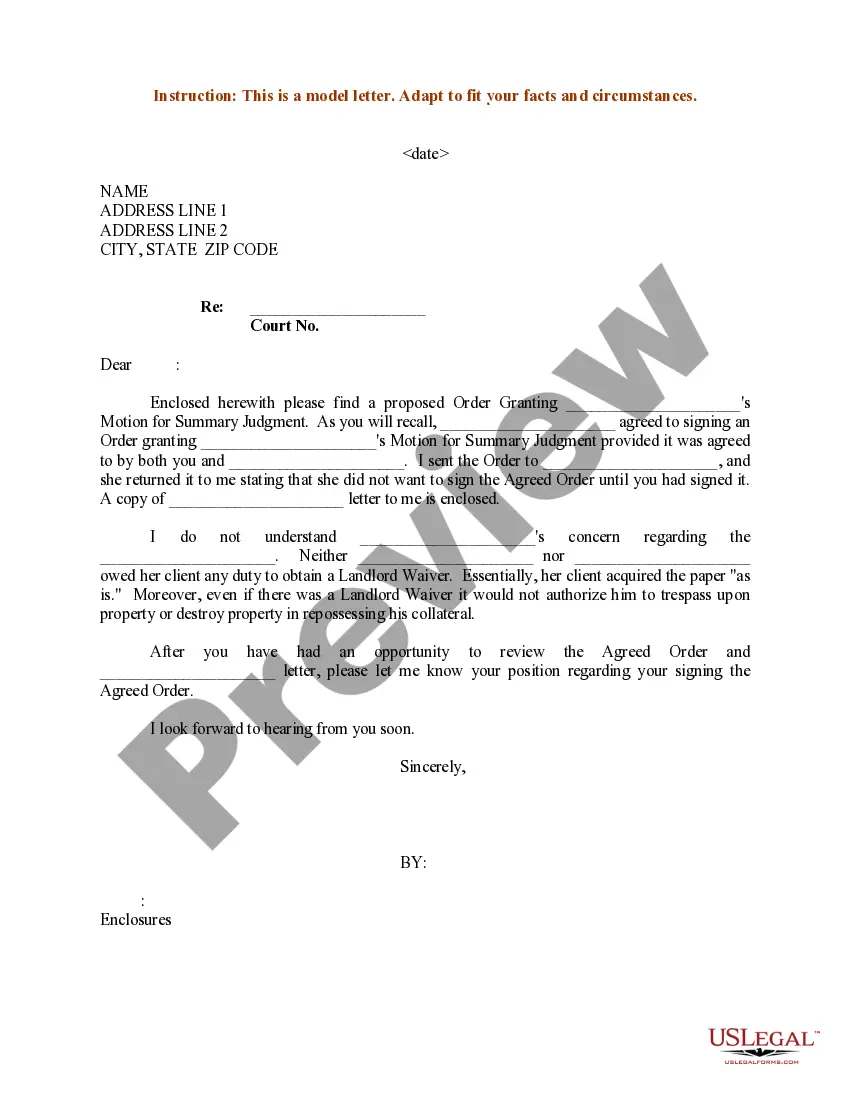
If you need to obtain a Motion of Judgment template, follow these straightforward steps: Find the template you require using the search bar or catalog navigation. Review the form’s details to confirm it aligns with your case, state, and area. Click on the form’s preview to examine it. If it is the wrong form, return to the search feature to find the Motion of Judgment template you need. Obtain the template if it suits your needs. If you possess a US Legal Forms account, click Log in to access previously saved documents in My documents. Should you not have an account yet, you can acquire the form by clicking Buy now. Select the suitable pricing option. Complete the account registration form. Choose your payment method: use a credit card or PayPal account. Select the document format you desire and download the Motion of Judgment. Once downloaded, you can fill out the form with the aid of editing software or print it and complete it manually.
Should you not have an account yet, you can acquire the form by clicking Buy now. Select the suitable pricing option. Complete the account registration form. Choose your payment method: use a credit card or PayPal account. Select the document format you desire and download the Motion of Judgment. Once downloaded, you can fill out the form with the aid of editing software or print it and complete it manually.
- Regardless of whether for commercial intentions or personal issues, everyone must handle legal circumstances eventually in their lifetime.
- Finalizing legal documents necessitates meticulous consideration, beginning with choosing the appropriate form template.
- For example, if you select an incorrect version of a Motion of Judgment, it will be rejected upon submission.
- Hence, it is crucial to acquire a trustworthy source of legal documents like US Legal Forms.
- If you need to obtain a Motion of Judgment template, follow these straightforward steps.
- Find the template you require using the search bar or catalog navigation.
- Review the form’s details to confirm it aligns with your case, state, and area.
- Click on the form’s preview to examine it.
- If it is the wrong form, return to the search feature to find the Motion of Judgment template you need.
- Obtain the template if it suits your needs.
- If you possess a US Legal Forms account, click Log in to access previously saved documents in My documents.
Form popularity
FAQ
A motion of judgment requires compelling evidence to support your claims. This typically includes affidavits, documents, and any other materials that substantiate your position. It's essential to demonstrate that there are no genuine disputes over material facts, as the judge will rely on this evidence to make a ruling. Utilizing US Legal Forms can guide you in preparing the necessary documentation effectively.
When starting a motion of judgment, you can begin by addressing the court respectfully and clearly stating your request. For instance, you might say, 'Your Honor, I respectfully request that the court grant a motion for judgment in favor of my client based on the evidence presented.' This introduction sets the tone for your argument and establishes your position right from the start.
A motion of judgment refers to a formal request made to a court to rule in favor of one party based on the evidence presented. This legal action typically occurs after the discovery phase in a case, where parties seek to resolve disputes without going to trial. Essentially, it asks the judge to determine that there are no material facts in dispute, allowing for a judgment to be entered based on the law.
Judges may grant partial summary judgment. For example, a judge might rule on some factual issues, but leave others for trial. Alternately, a judge might grant summary judgment regarding liability, but still hold a trial to determine damages.
The chance of success in these cases is less than 10% [1]. Another study found that summary judgment is mostly granted in Title VII cases, for example, cases involving equal pay or employment discrimination [2]. When it comes to federal cases, summary judgments are filed in 17% of total cases.
There are several different types of post-judgment motions, but the most common are motions for new trial, motions to vacate, and motions to set-aside. Motions for new trial, motions to vacate, and motions to set-aside are the three most common post-judgment motions.
Be as persuasive as possible as you write your motion in a sequential, logical format. Express your ideas clearly, and make sure you outline what steps are necessary and how they will help your case. Use facts of the case whenever you can to avoid baseless emotional appeals.
General format - each motion generally consists of a case caption, a title that briefly identifies the relief sought, a series of numbered paragraphs that explains -- in a logical way -- why you are entitled to that relief, a prayer for relief, a signature block, a certification that a copy of the motion was sent to ...