Release Of Executor Form With Power Of Attorney
Description
Get your form ready online
Our built-in tools help you complete, sign, share, and store your documents in one place.
Make edits, fill in missing information, and update formatting in US Legal Forms—just like you would in MS Word.
Download a copy, print it, send it by email, or mail it via USPS—whatever works best for your next step.
Sign and collect signatures with our SignNow integration. Send to multiple recipients, set reminders, and more. Go Premium to unlock E-Sign.
If this form requires notarization, complete it online through a secure video call—no need to meet a notary in person or wait for an appointment.
We protect your documents and personal data by following strict security and privacy standards.

Make edits, fill in missing information, and update formatting in US Legal Forms—just like you would in MS Word.

Download a copy, print it, send it by email, or mail it via USPS—whatever works best for your next step.

Sign and collect signatures with our SignNow integration. Send to multiple recipients, set reminders, and more. Go Premium to unlock E-Sign.

If this form requires notarization, complete it online through a secure video call—no need to meet a notary in person or wait for an appointment.

We protect your documents and personal data by following strict security and privacy standards.
Looking for another form?
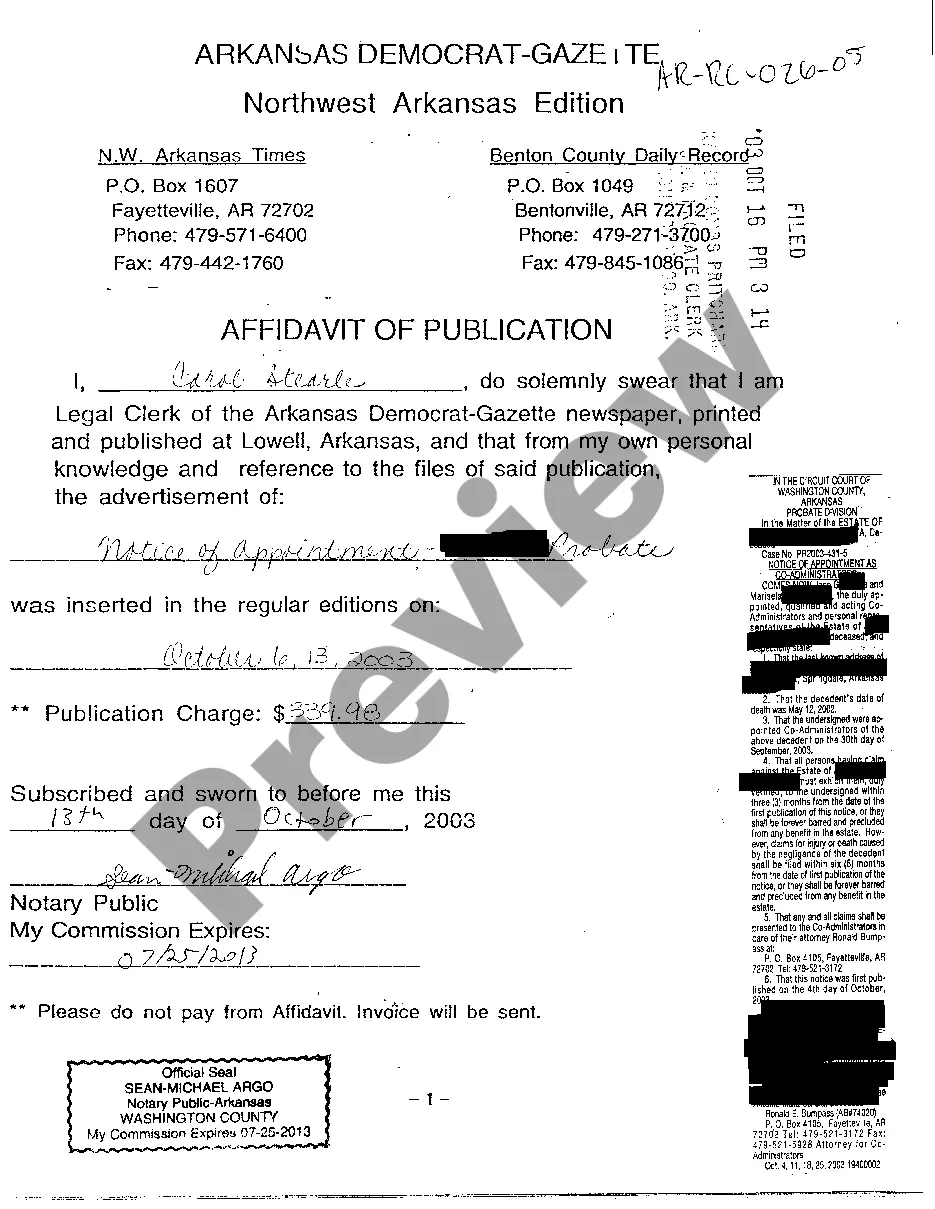
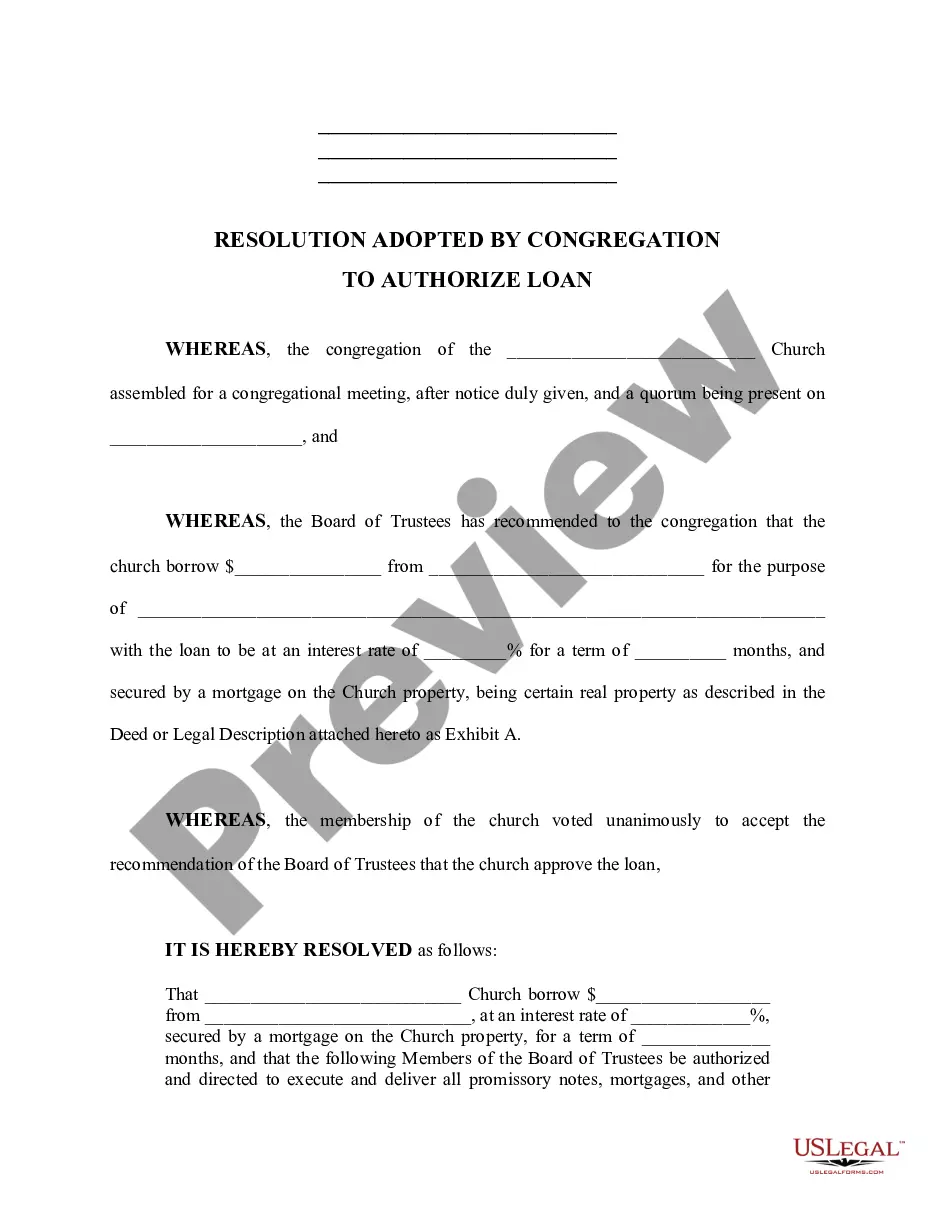

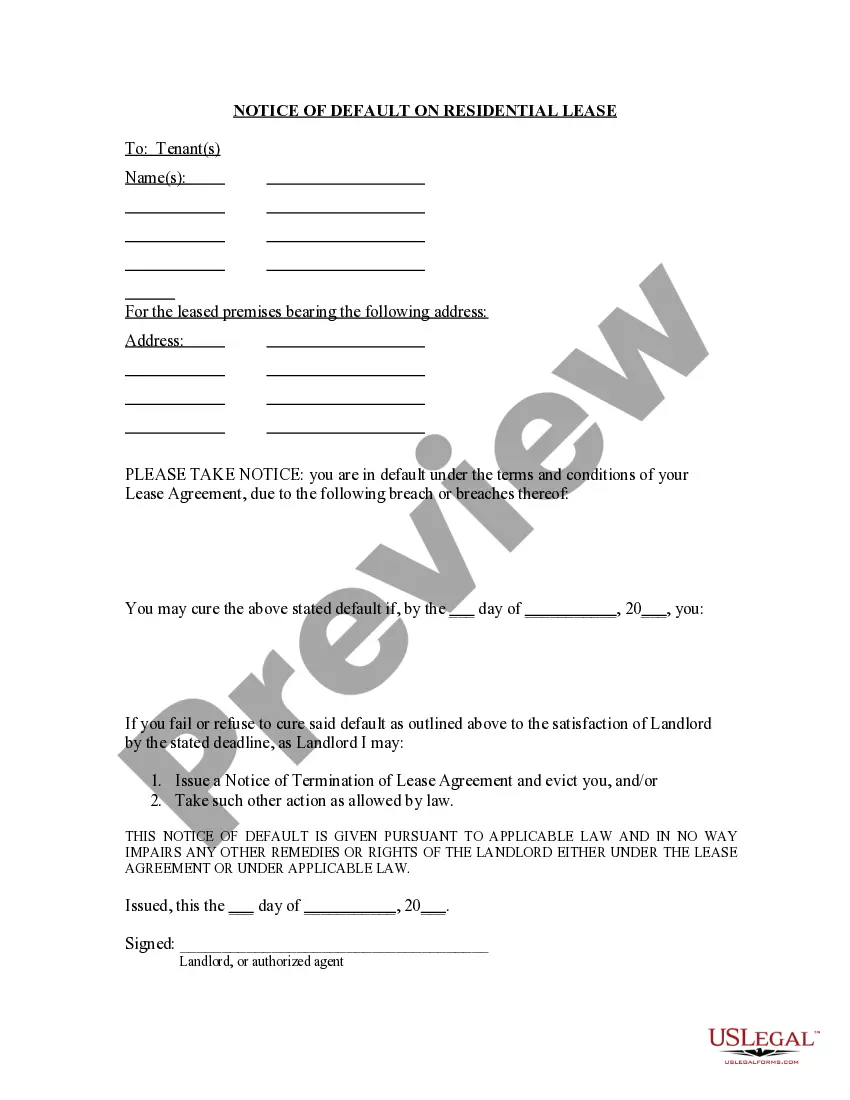
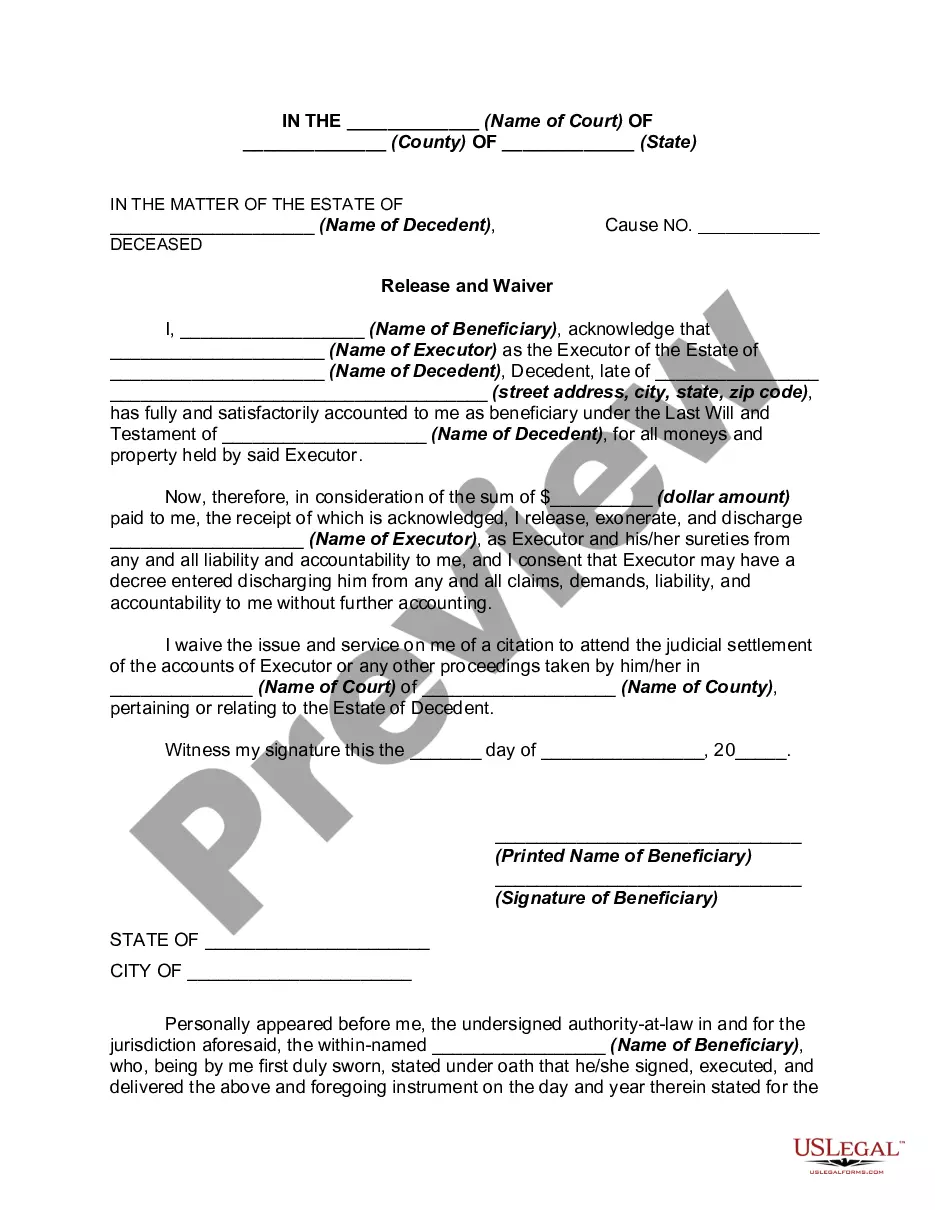
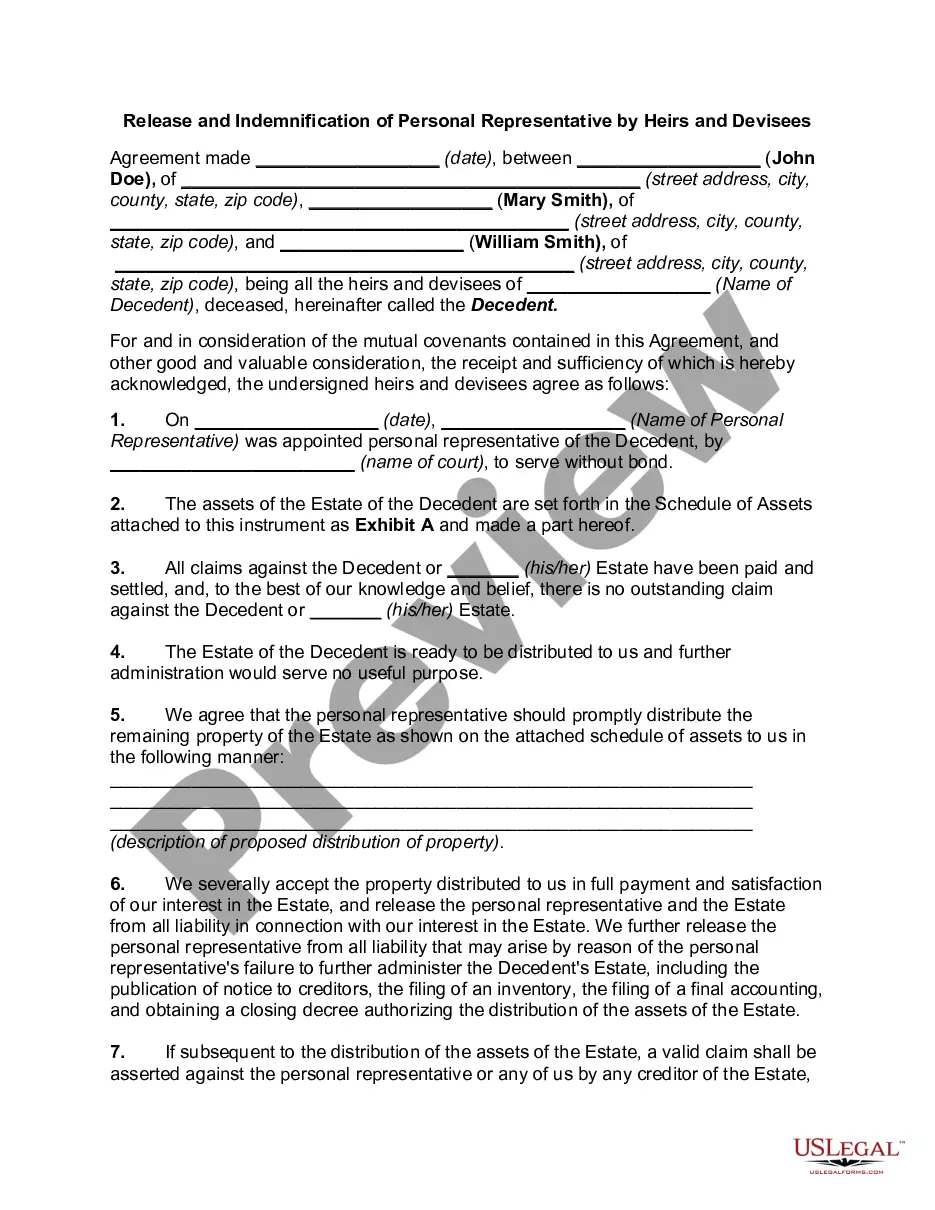
How to fill out Release And Exoneration Of Executor On Distribution To Beneficiary Of Will And Waiver Of Citation Of Final Settlement?
Identifying a reliable source for obtaining the latest and pertinent legal templates constitutes a significant portion of navigating bureaucracy.
Selecting the appropriate legal documents necessitates accuracy and careful attention to specifics, which is why it is crucial to acquire samples of Release Of Executor Form With Power Of Attorney solely from credible sources, such as US Legal Forms. An incorrect template will consume your time and delay your situation.
Eliminate the complications associated with your legal paperwork. Discover the comprehensive US Legal Forms library to locate legal templates, assess their applicability to your situation, and download them instantly.
- Utilize the library navigation or search function to find your sample.
- Access the form’s description to verify its compliance with your state and locality.
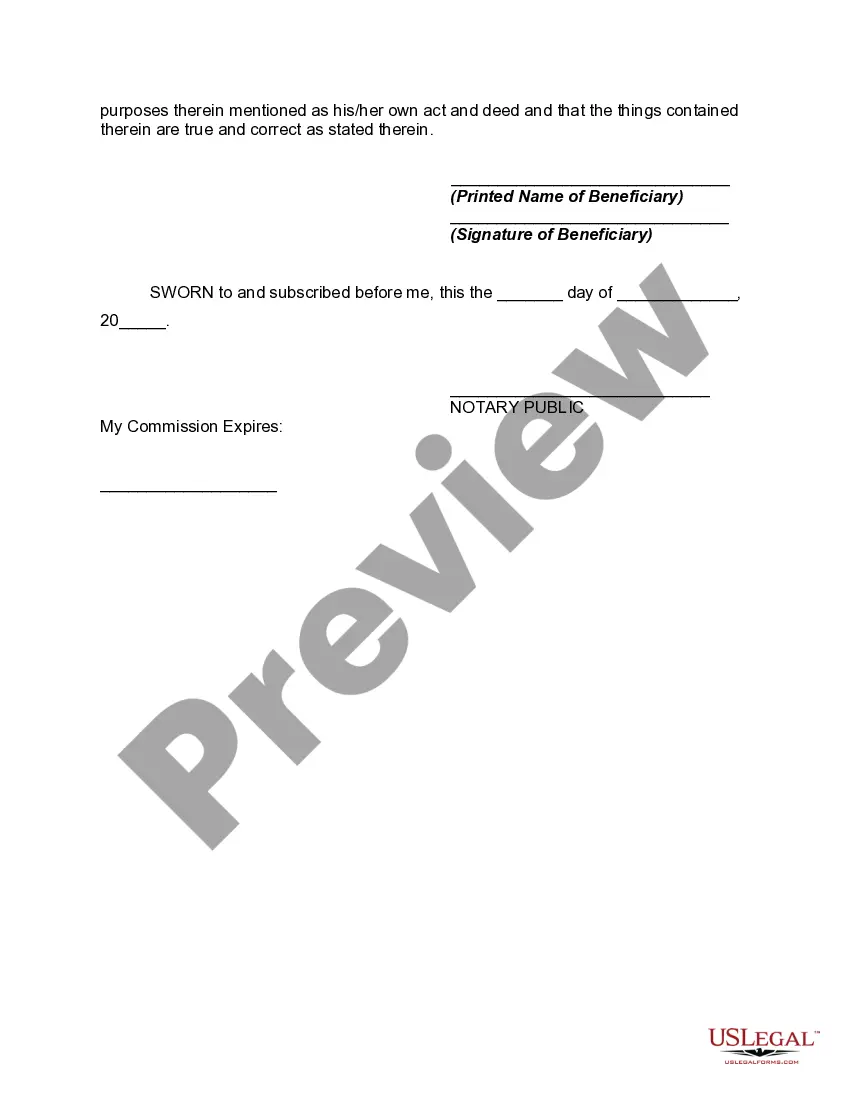
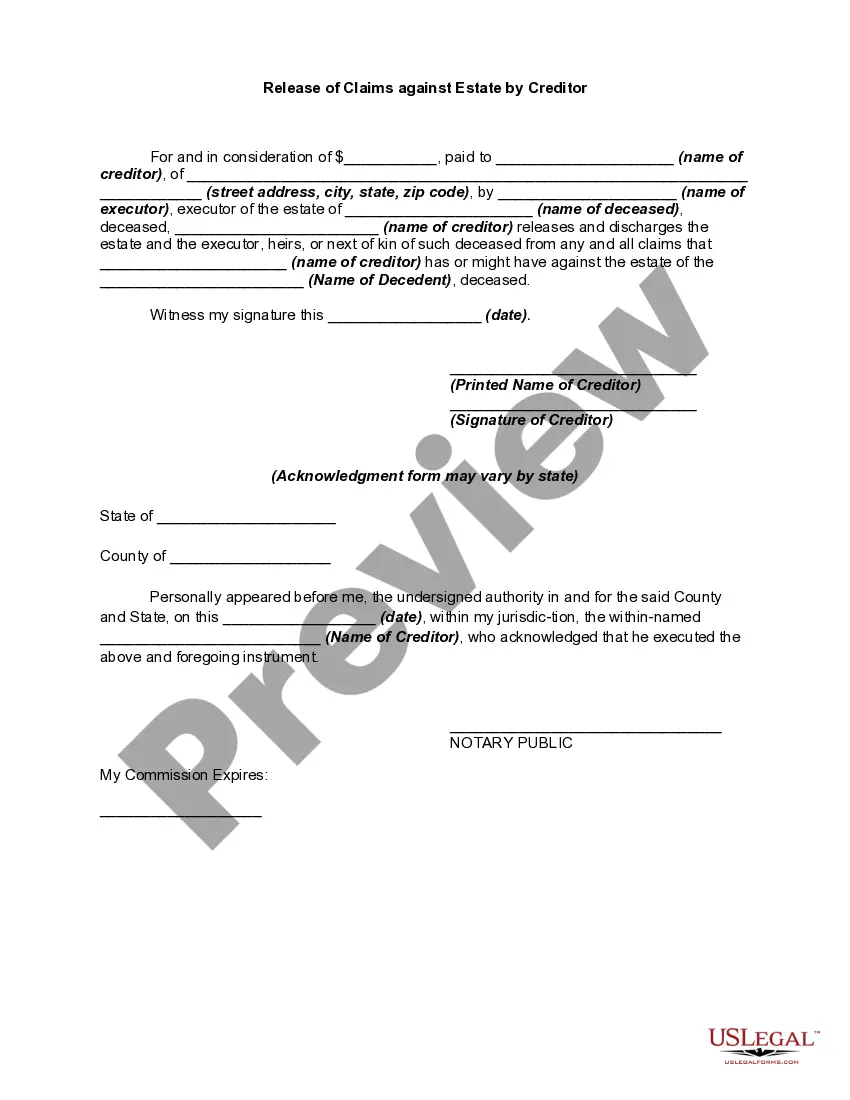
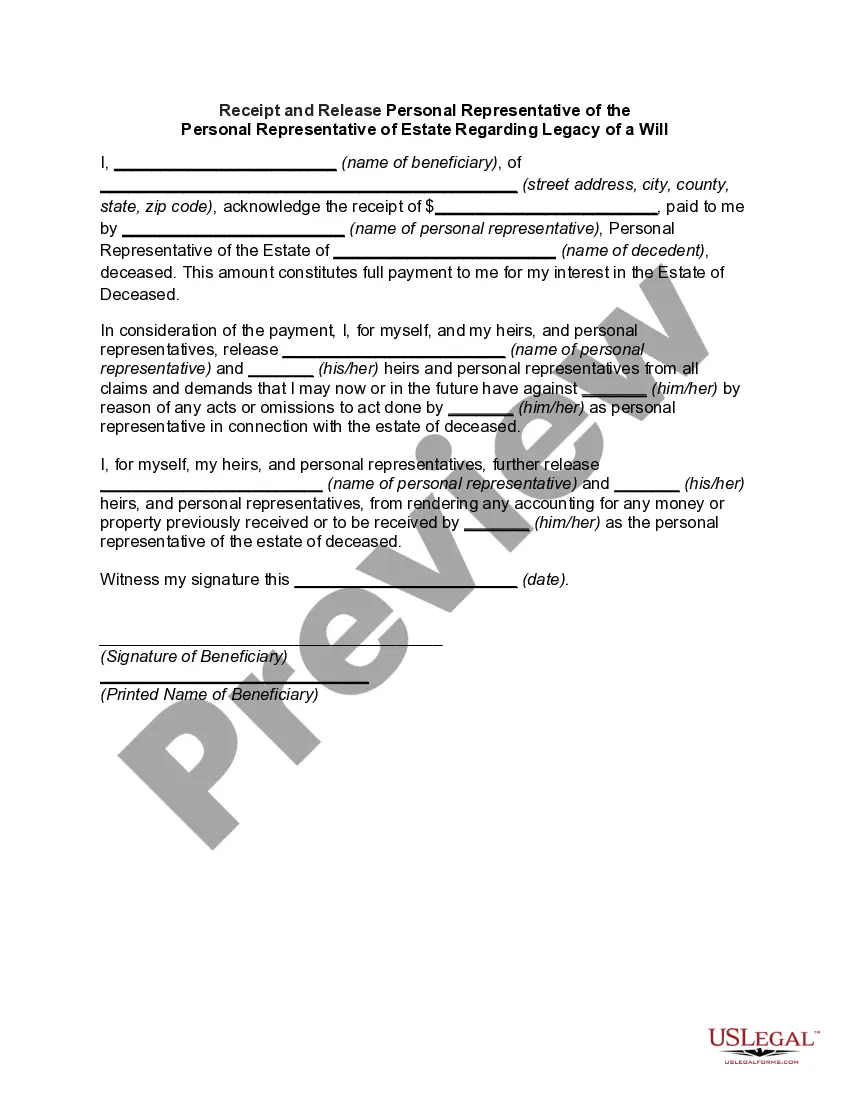
- Examine the form preview, if accessible, to confirm that it is the exact document you need.
- Return to the search and look for the suitable template if the Release Of Executor Form With Power Of Attorney does not fit your specifications.
- Once you are confident about the form’s applicability, download it.
- As an authorized user, click Log in to verify and access your chosen forms in My documents.
- If you haven't created an account yet, click Buy now to acquire the form.
- Select the pricing option that suits your needs.
- Proceed with the registration process to complete your purchase.
- Finalize your transaction by opting for a payment method (credit card or PayPal).
- Choose the file format for downloading Release Of Executor Form With Power Of Attorney.
- After obtaining the form on your device, you may edit it with the editor or print it out to complete manually.
Form popularity
FAQ
Here are some things to consider when drafting a letter to your executor or trustee. Your thoughts about wealth. Share your story about how you came to the assets that you are leaving in your will. How was your wealth created, what do you value and what are your long-term goals for your wealth?
How an estate should be distributed under a will. Pay the debts of the estate first. ... Ask each beneficiary to acknowledge receipt of the gift. ... Transferring company shares. ... Transferring real property. ... Draw up the accounts of the estate. ... Other claims on the estate. ... Finishing up. ... Succession on intestacy.
The main difference between a power of attorney and an executor is that a power of attorney is responsible for representing the wishes of the individual who granted the power of attorney, whereas an executor is responsible for carrying out the will of the deceased.
A letter of instruction has no legal authority, but it can provide an easy-to-understand explanation of a person's overall estate plan to their executor. A good letter of instruction should contain the following information: A complete list of all assets.
Build context about how you created your wealth, why you think it's important to save money and what you value. That way, your executor will understand what's important to you, even after you're gone, and help to achieve your long-term goals.