New York State Beneficiary Laws Without A Will
Description
Get your form ready online
Our built-in tools help you complete, sign, share, and store your documents in one place.
Make edits, fill in missing information, and update formatting in US Legal Forms—just like you would in MS Word.
Download a copy, print it, send it by email, or mail it via USPS—whatever works best for your next step.
Sign and collect signatures with our SignNow integration. Send to multiple recipients, set reminders, and more. Go Premium to unlock E-Sign.
If this form requires notarization, complete it online through a secure video call—no need to meet a notary in person or wait for an appointment.
We protect your documents and personal data by following strict security and privacy standards.

Make edits, fill in missing information, and update formatting in US Legal Forms—just like you would in MS Word.

Download a copy, print it, send it by email, or mail it via USPS—whatever works best for your next step.

Sign and collect signatures with our SignNow integration. Send to multiple recipients, set reminders, and more. Go Premium to unlock E-Sign.

If this form requires notarization, complete it online through a secure video call—no need to meet a notary in person or wait for an appointment.

We protect your documents and personal data by following strict security and privacy standards.
Looking for another form?

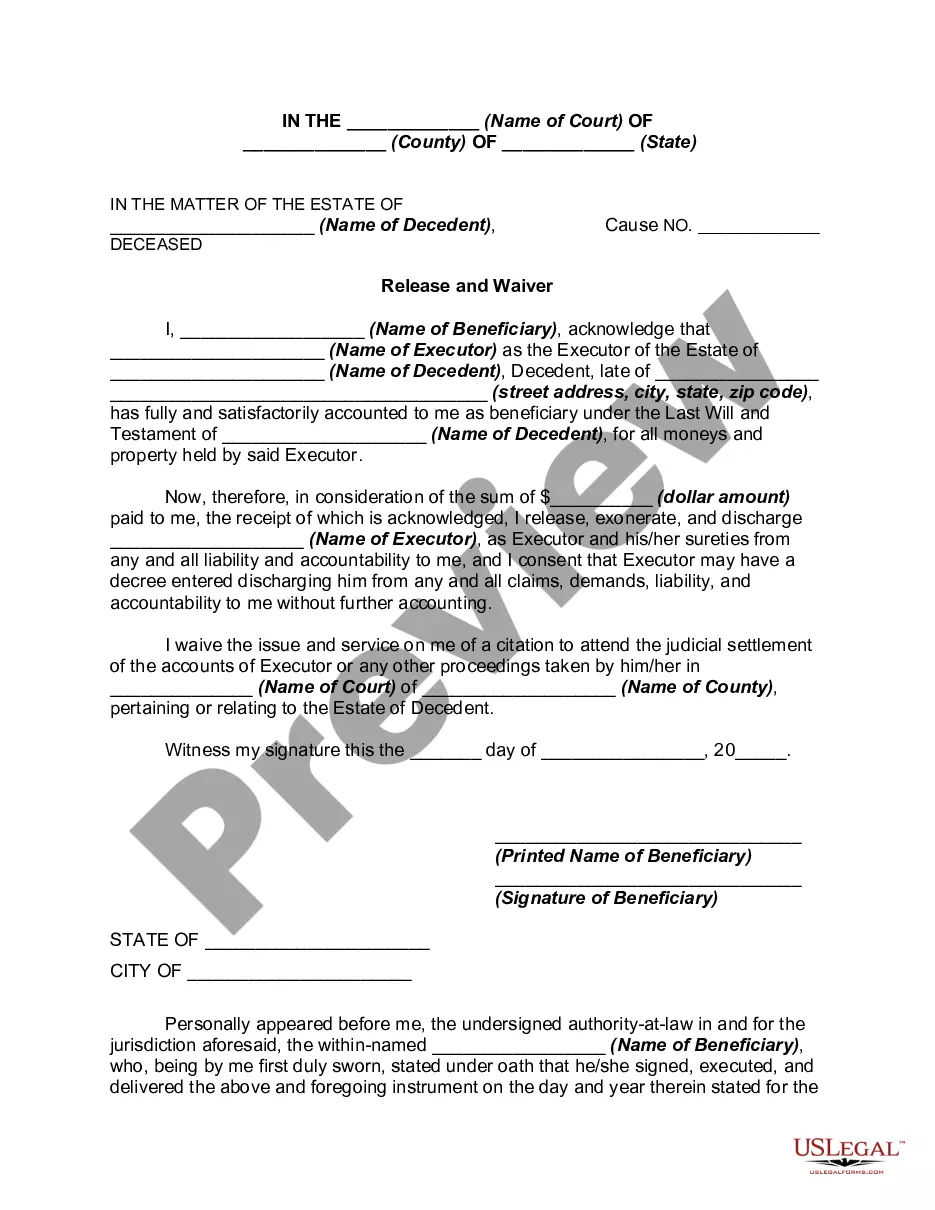
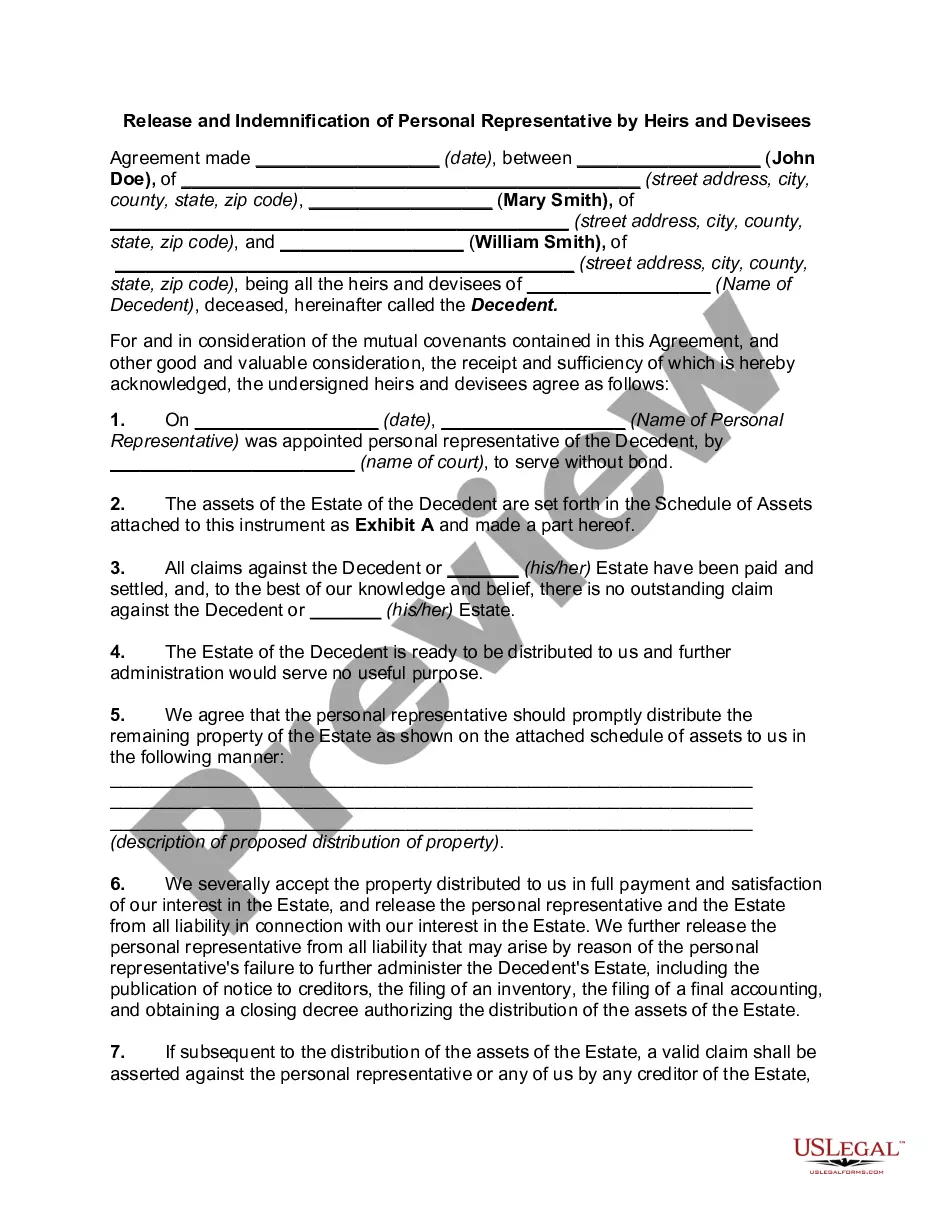
How to fill out Release And Exoneration Of Executor On Distribution To Beneficiary Of Will And Waiver Of Citation Of Final Settlement?
The New York State Beneficiary Regulations Without A Will you observe on this page is a reusable official template composed by expert attorneys in accordance with federal and local laws and guidelines.
For over 25 years, US Legal Forms has supplied individuals, entities, and lawyers with more than 85,000 authenticated, state-specific documents for any business and personal situation.
Fill out and sign the documents. Print the template to complete it manually. Alternatively, use an online multi-functional PDF editor to quickly and accurately fill out and sign your form with a legally-binding electronic signature. Download your documents again. Utilize the same document again whenever necessary. Access the My documents tab in your profile to redownload any previously saved forms. Register for US Legal Forms to have verified legal templates for all of life's situations at your fingertips.
- Look for the document you need and review it.
- Browse through the file you searched and preview it or check the form description to confirm it meets your requirements. If it does not, use the search function to find the correct one. Click Buy Now once you have found the template you need.
- Choose and sign in.
- Select the pricing option that fits you and create an account. Use PayPal or a credit card to make a quick payment. If you already possess an account, Log In and check your subscription to proceed.
- Obtain the editable template.
- Select the format you desire for your New York State Beneficiary Regulations Without A Will (PDF, Word, RTF) and save the sample on your device.
Form popularity
FAQ
The order of inheritance in New York follows a specific hierarchy defined by the New York state beneficiary laws without a will. First, your spouse and children inherit your estate. If there are no immediate family members, your parents inherit next, followed by siblings. If no relatives exist, the state could claim your assets, emphasizing the importance of having a will to ensure your wishes are fulfilled. Using resources like US Legal Forms can help you establish a clear estate plan to avoid such situations.
In New York, if you pass away without a will, the New York state beneficiary laws without a will dictate that your estate will be distributed according to state law. Typically, your assets will first go to your spouse and children. If you have no spouse or children, your assets may go to your parents, siblings, or more distant relatives. Understanding these laws can be complex, but platforms like US Legal Forms can help clarify the process and guide you through the necessary steps.
The default beneficiary, if someone dies without a will, is typically the closest living relative as defined by state law. In New York, this usually means the spouse or children, but it may extend to parents or siblings if necessary. Knowing the default beneficiary under New York state beneficiary laws without a will is crucial for understanding how assets will be distributed. To ensure you are prepared, using tools from USLegalForms can help you understand your rights and options.
In situations where a person dies without a will, the state’s intestacy laws direct the distribution of their estate. In New York, the spouse often inherits first, followed by children, depending on circumstances. If there are no direct descendants or spouse, other family members may receive shares based on New York state beneficiary laws without a will. To navigate these laws effectively, consider consulting resources like USLegalForms for guidance.
When someone dies without a will in the USA, state laws determine who inherits their assets. Typically, immediate family members, such as a spouse and children, are prioritized under New York state beneficiary laws without a will. If there are no immediate relatives, the inheritance may extend to other relatives like parents or siblings. Understanding these laws can be complex, so using a platform like USLegalForms can help clarify your specific situation.
If there is no will in New York, the distribution of assets follows intestacy laws, which outline who inherits. Generally, a surviving spouse receives the largest share, followed by children, parents, and siblings. The specific distribution can vary based on the family structure and existing relationships. Familiarizing yourself with New York state beneficiary laws without a will can provide clarity, and platforms like US Legal Forms offer valuable tools to help you understand and manage these situations.
When someone dies without a will in New York, the state's intestacy laws come into play. These laws dictate how the deceased's assets will be distributed among their heirs. Typically, the surviving spouse and children receive priority, while other relatives may inherit if no immediate family exists. Understanding New York state beneficiary laws without a will is crucial for those navigating this process, and using resources like US Legal Forms can simplify your experience.