New York State Beneficiary Laws With Inheritance
Description
Get your form ready online
Our built-in tools help you complete, sign, share, and store your documents in one place.
Make edits, fill in missing information, and update formatting in US Legal Forms—just like you would in MS Word.
Download a copy, print it, send it by email, or mail it via USPS—whatever works best for your next step.
Sign and collect signatures with our SignNow integration. Send to multiple recipients, set reminders, and more. Go Premium to unlock E-Sign.
If this form requires notarization, complete it online through a secure video call—no need to meet a notary in person or wait for an appointment.
We protect your documents and personal data by following strict security and privacy standards.

Make edits, fill in missing information, and update formatting in US Legal Forms—just like you would in MS Word.

Download a copy, print it, send it by email, or mail it via USPS—whatever works best for your next step.

Sign and collect signatures with our SignNow integration. Send to multiple recipients, set reminders, and more. Go Premium to unlock E-Sign.

If this form requires notarization, complete it online through a secure video call—no need to meet a notary in person or wait for an appointment.

We protect your documents and personal data by following strict security and privacy standards.
Looking for another form?









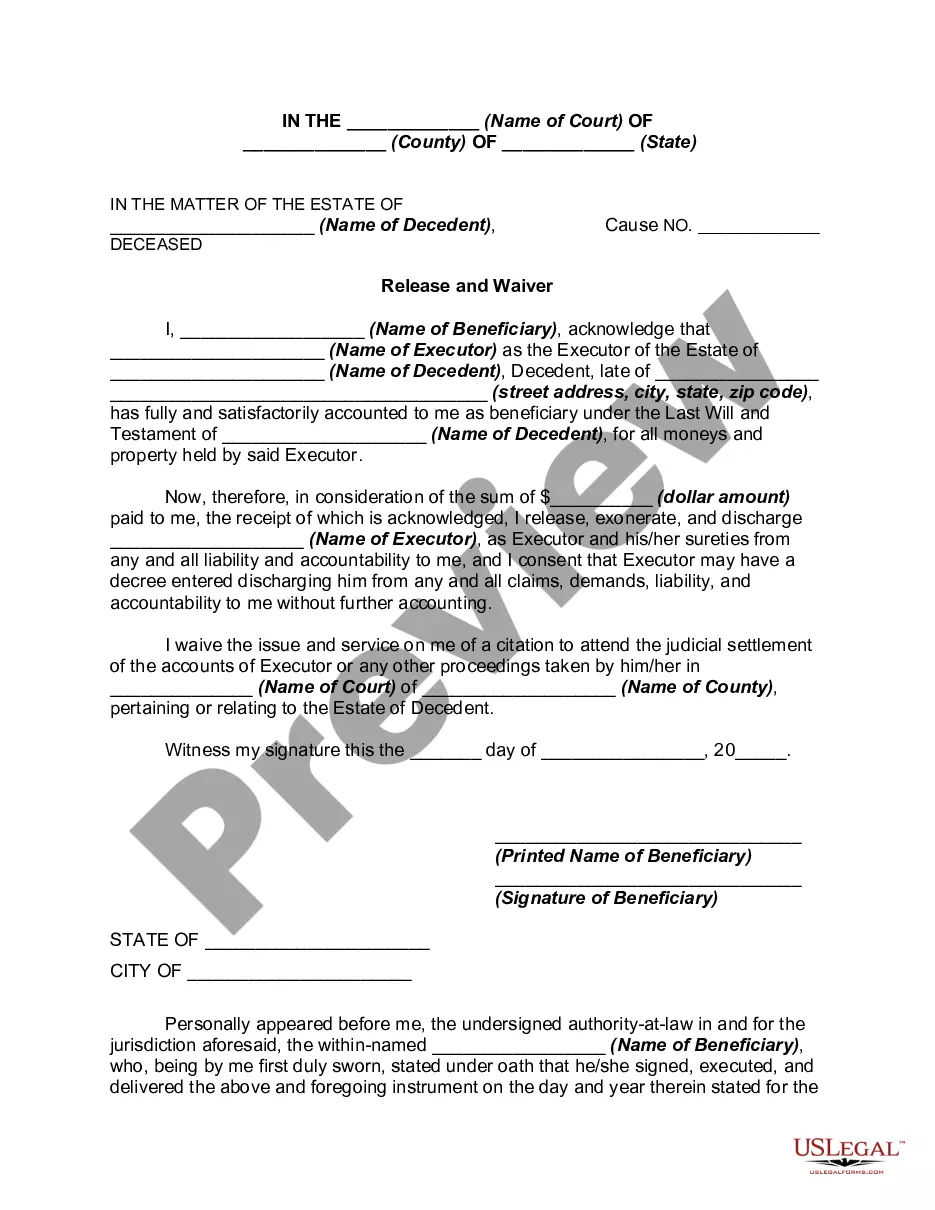
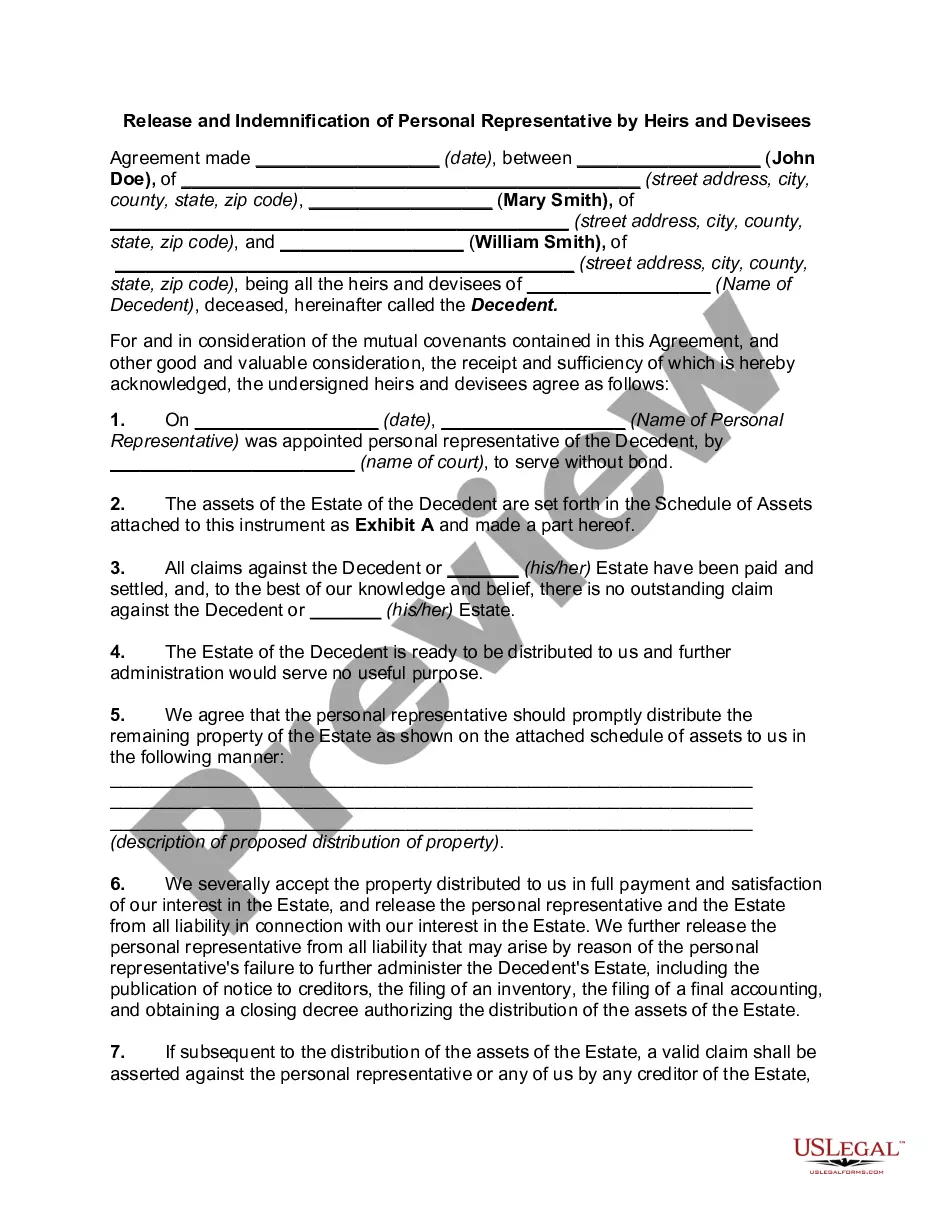
How to fill out Release And Exoneration Of Executor On Distribution To Beneficiary Of Will And Waiver Of Citation Of Final Settlement?
Regardless of whether for corporate reasons or personal issues, everyone encounters legal matters at some stage in their lives. Completing legal documents requires meticulous consideration, starting with choosing the appropriate form template.
For instance, if you select an incorrect version of a New York State Beneficiary Laws With Inheritance, it will be rejected once you submit it. Thus, it is crucial to obtain a reliable source of legal documents like US Legal Forms.
With an extensive US Legal Forms catalog available, you no longer need to waste time searching for the right template online. Utilize the library’s straightforward navigation to find the ideal form for any situation.
- Obtain the template you require by using the search box or catalog navigation.
- Review the form’s details to confirm it fits your circumstances, state, and area.
- Click on the form’s preview to examine it.
- If it is the wrong document, return to the search feature to find the New York State Beneficiary Laws With Inheritance template you need.
- Acquire the template when it aligns with your requirements.
- If you have a US Legal Forms account, simply click Log in to access previously stored documents in My documents.
- If you do not have an account yet, you can download the form by clicking Buy now.
- Select the appropriate pricing option.
- Complete the profile registration form.
- Choose your payment method: you can use a credit card or PayPal account.
- Select the document format you desire and download the New York State Beneficiary Laws With Inheritance.
- After it is saved, you can complete the form using editing software or print it out and fill it in by hand.
Form popularity
FAQ
In New York, an heir generally has seven months from the date of the probate to claim their inheritance, as outlined by New York state beneficiary laws with inheritance. However, this timeline can vary depending on specific circumstances, such as whether the estate is being contested. It is crucial for heirs to act promptly to ensure they do not miss their opportunity. For assistance in understanding these timelines and filing necessary claims, US Legal Forms provides comprehensive legal forms and guidance.
Yes, under New York state beneficiary laws with inheritance, a beneficiary can lose their inheritance under certain circumstances. If the beneficiary engages in unlawful activities, such as fraud or undue influence over the deceased, they may be disqualified from receiving their share. Additionally, if a beneficiary contests the will and is unsuccessful, they could potentially forfeit their rights. For those navigating these complex situations, US Legal Forms offers resources and documents to help clarify rights and responsibilities.
An inheritance letter typically outlines the details of the deceased's estate and specifies the assets designated for each beneficiary. The letter should include the deceased's name, the date of death, a list of assets, and the beneficiaries' names. Using a platform like USLegalForms can help you create a clear and legally compliant inheritance letter, ensuring you follow New York State beneficiary laws with inheritance.
In New York, you can inherit any amount without being subject to state inheritance tax. The focus shifts to federal estate tax, which applies only to larger estates exceeding a specific value. Staying informed about these tax laws ensures that beneficiaries are prepared for any potential obligations.
You can inherit any amount in New York State without paying state inheritance taxes, as the state does not levy such taxes. However, keep in mind that federal estate taxes may apply depending on the size of the estate. It is wise to seek guidance from a professional to clarify any tax implications you might face.
In New York, you can inherit any amount without incurring state inheritance taxes, as the state does not impose such taxes. However, federal estate taxes may apply if the estate exceeds a certain threshold, which is set annually. It's essential to consult with a tax professional to navigate these aspects effectively, especially under New York State beneficiary laws with inheritance.
New York State beneficiary laws with inheritance dictate how assets are distributed when someone passes away. If there is no will, the state laws govern the distribution based on familial relationships. Additionally, certain assets, such as jointly owned property, may pass directly to surviving owners. Familiarizing yourself with these rules ensures you understand your entitlements.
In New York State, the order of inheritance follows specific beneficiary laws with inheritance. If a person dies without a will, their estate goes to their closest relatives. Spouses and children receive priority, followed by parents, siblings, and then more distant relatives. Understanding these laws helps beneficiaries know their rights.