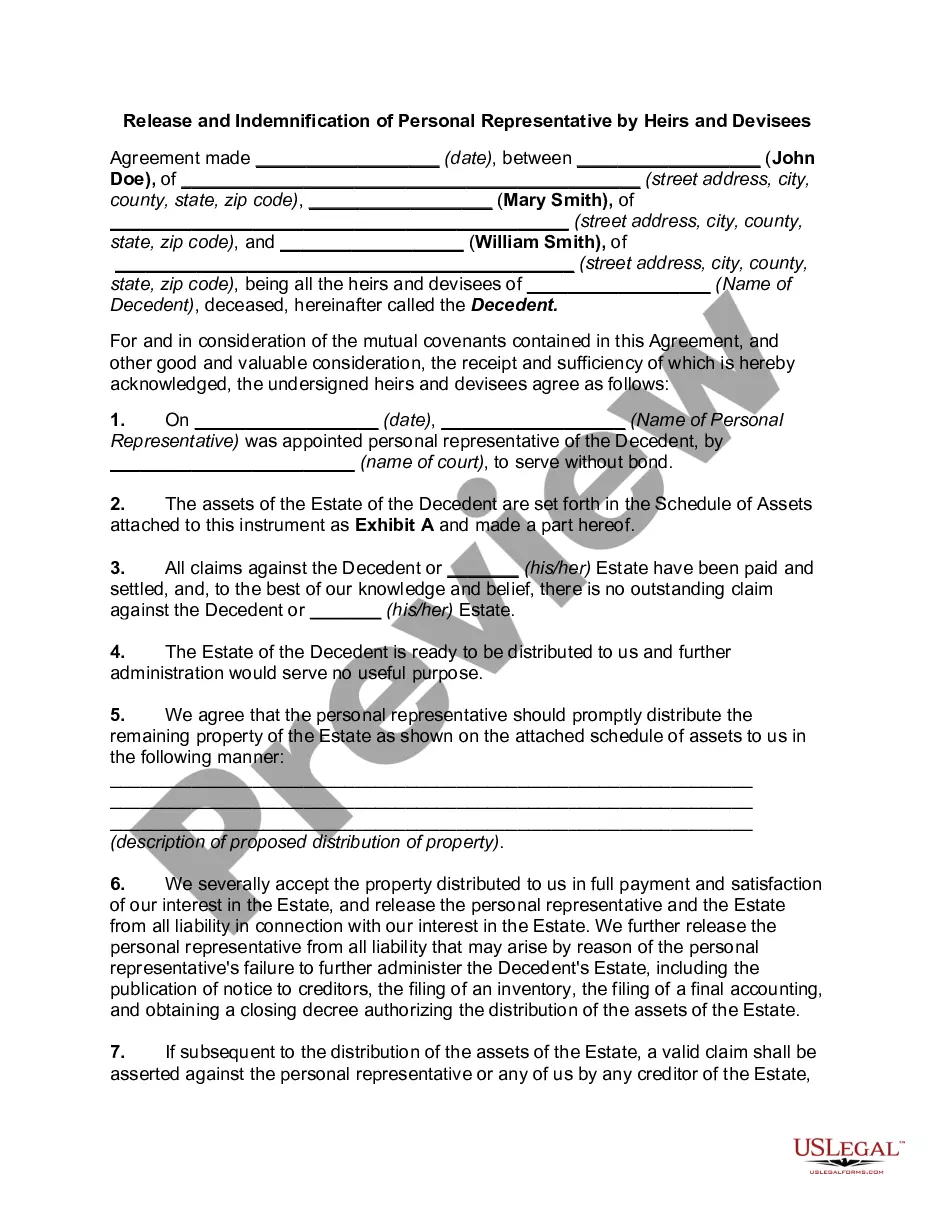
Name Executor Estate For Deceased
Description
Get your form ready online
Our built-in tools help you complete, sign, share, and store your documents in one place.
Make edits, fill in missing information, and update formatting in US Legal Forms—just like you would in MS Word.
Download a copy, print it, send it by email, or mail it via USPS—whatever works best for your next step.
Sign and collect signatures with our SignNow integration. Send to multiple recipients, set reminders, and more. Go Premium to unlock E-Sign.
If this form requires notarization, complete it online through a secure video call—no need to meet a notary in person or wait for an appointment.
We protect your documents and personal data by following strict security and privacy standards.

Make edits, fill in missing information, and update formatting in US Legal Forms—just like you would in MS Word.

Download a copy, print it, send it by email, or mail it via USPS—whatever works best for your next step.

Sign and collect signatures with our SignNow integration. Send to multiple recipients, set reminders, and more. Go Premium to unlock E-Sign.

If this form requires notarization, complete it online through a secure video call—no need to meet a notary in person or wait for an appointment.

We protect your documents and personal data by following strict security and privacy standards.
Looking for another form?






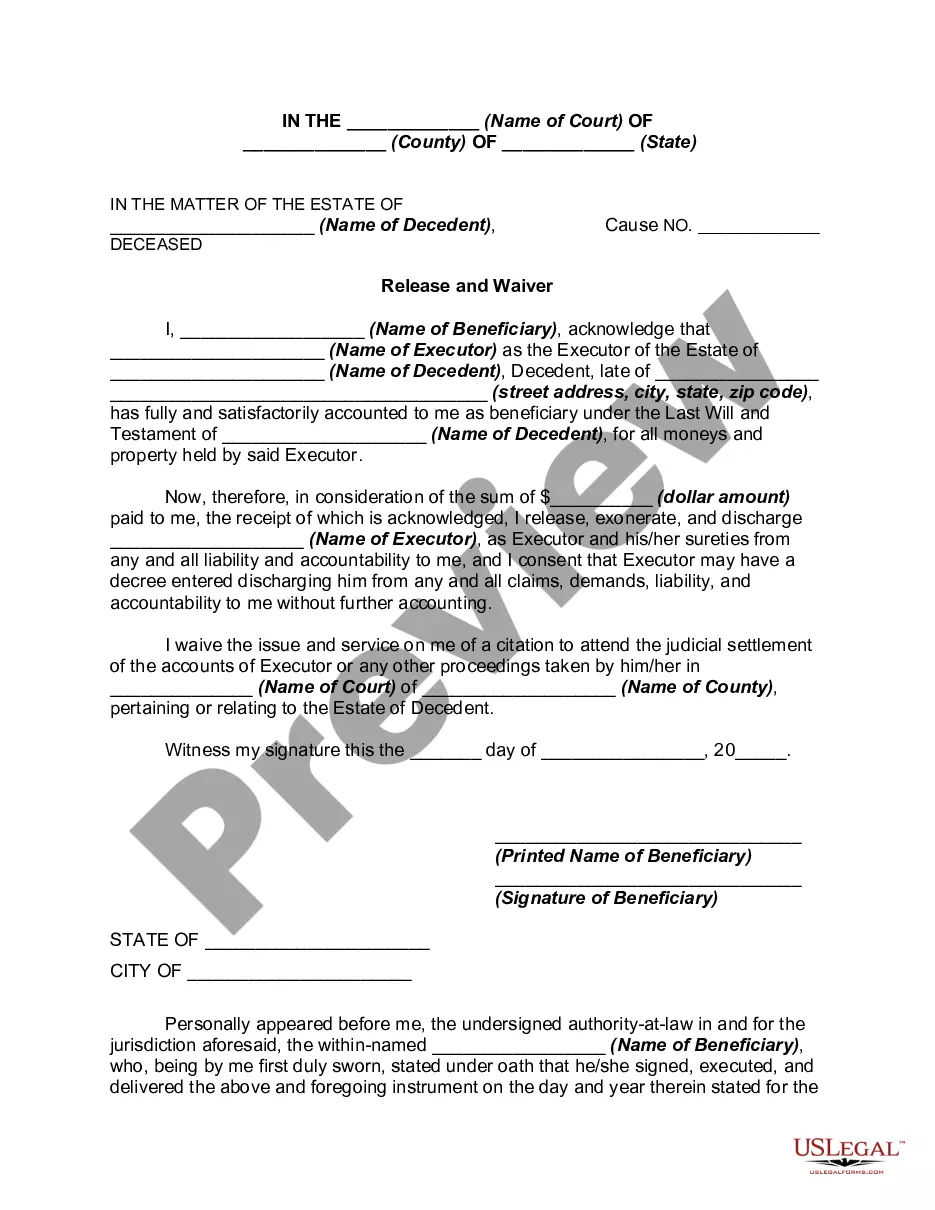
How to fill out Release And Exoneration Of Executor On Distribution To Beneficiary Of Will And Waiver Of Citation Of Final Settlement?
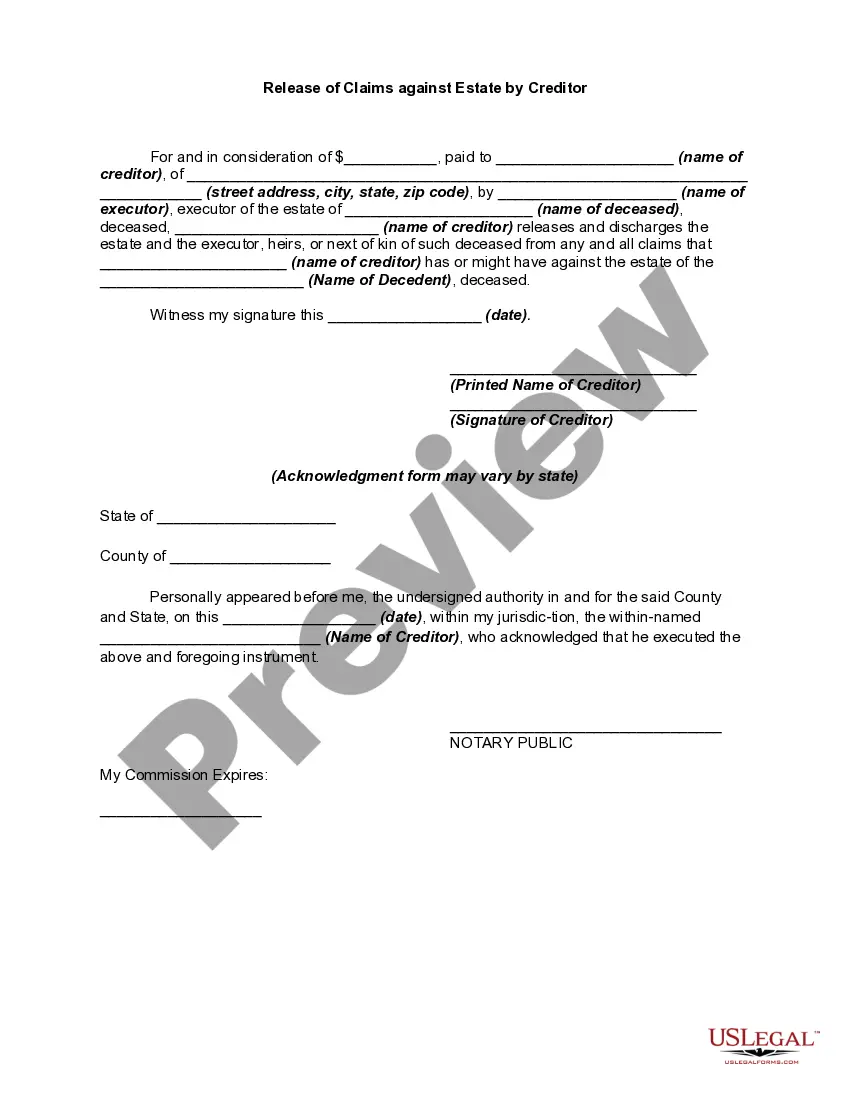
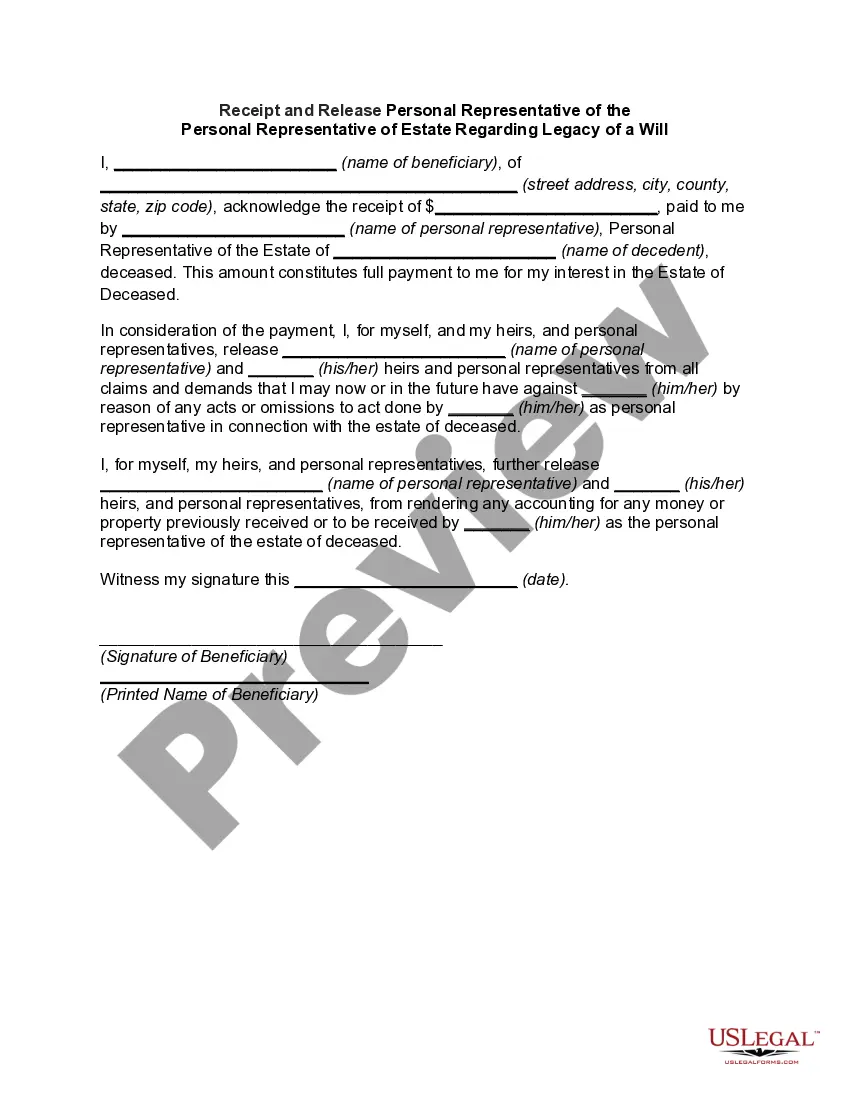
The Title Executor Estate For Deceased displayed on this webpage is a versatile official document crafted by experienced attorneys in accordance with national and regional statutes.
For over 25 years, US Legal Forms has supplied individuals, entities, and legal experts with more than 85,000 confirmed, state-specific templates for any commercial and personal circumstance. It’s the fastest, most uncomplicated, and most reliable method to secure the forms you require, as the service assures the utmost level of data protection and anti-malware safeguards.
Register for US Legal Forms to have verified legal templates for all of life's events readily available.
- Locate the form you need and examine it.
- Browse the example you found and review it or verify the form details to confirm it meets your needs. If it doesn't, use the search functionality to find the appropriate one. Hit Buy Now once you have identified the template you require.
- Register and sign in.
- Choose the payment plan that fits you and set up an account. Utilize PayPal or a credit card to complete your payment quickly. If you already possess an account, Log In and review your subscription to continue.
- Obtain the editable template.
- Select the format you prefer for your Title Executor Estate For Deceased (PDF, DOCX, RTF) and download the example onto your device.
- Fill out and sign the document.
- Print the template to fill it out manually. Alternatively, use an online all-in-one PDF editor to swiftly and precisely complete and sign your form with a valid signature.
- Re-download your documents if needed.
- Use the same document again whenever required. Access the My documents section in your profile to redownload any previously acquired templates.
Form popularity
FAQ
If the deceased individual had a will, then typically, the will names someone to be the executor. However, Safi pointed out, if someone passes away without a will, then one of their close family members can apply to the court to become the executor of the estate before legally administering it.
All beneficiaries do not need to formally approve estate accounts; however, it is best practice for the Executor(s) and main beneficiaries to sign the estate accounts to show a legal agreement across all parties. Nevertheless, the beneficiaries are entitled to receive a copy of them and review the information.
People usually designate one person to serve as the executor of their will, but it is also possible to designate two or more co-executors. Most lawyers advise that one executor is best, as it avoids potential disputes, but there are situations where it may make sense to appoint co-executors.
First, the person who makes the will, also known as the testator, can name an individual to be the executor. The testator would stipulate this appointment in the will. Once the testator passes away, the named executor may have to submit a petition to the appropriate probate court to be confirmed as the executor.
Having a professional such as a lawyer or an accountant or a corporate trustee work together with a family member can be optimal, says Guerriero. ?The family member can tend to the soft side of the estate such as how to handle the distribution of personal items,? says Guerriero.