Juvenile Records In Virginia
Description
Get your form ready online
Our built-in tools help you complete, sign, share, and store your documents in one place.
Make edits, fill in missing information, and update formatting in US Legal Forms—just like you would in MS Word.
Download a copy, print it, send it by email, or mail it via USPS—whatever works best for your next step.
Sign and collect signatures with our SignNow integration. Send to multiple recipients, set reminders, and more. Go Premium to unlock E-Sign.
If this form requires notarization, complete it online through a secure video call—no need to meet a notary in person or wait for an appointment.
We protect your documents and personal data by following strict security and privacy standards.

Make edits, fill in missing information, and update formatting in US Legal Forms—just like you would in MS Word.

Download a copy, print it, send it by email, or mail it via USPS—whatever works best for your next step.

Sign and collect signatures with our SignNow integration. Send to multiple recipients, set reminders, and more. Go Premium to unlock E-Sign.

If this form requires notarization, complete it online through a secure video call—no need to meet a notary in person or wait for an appointment.

We protect your documents and personal data by following strict security and privacy standards.
Looking for another form?

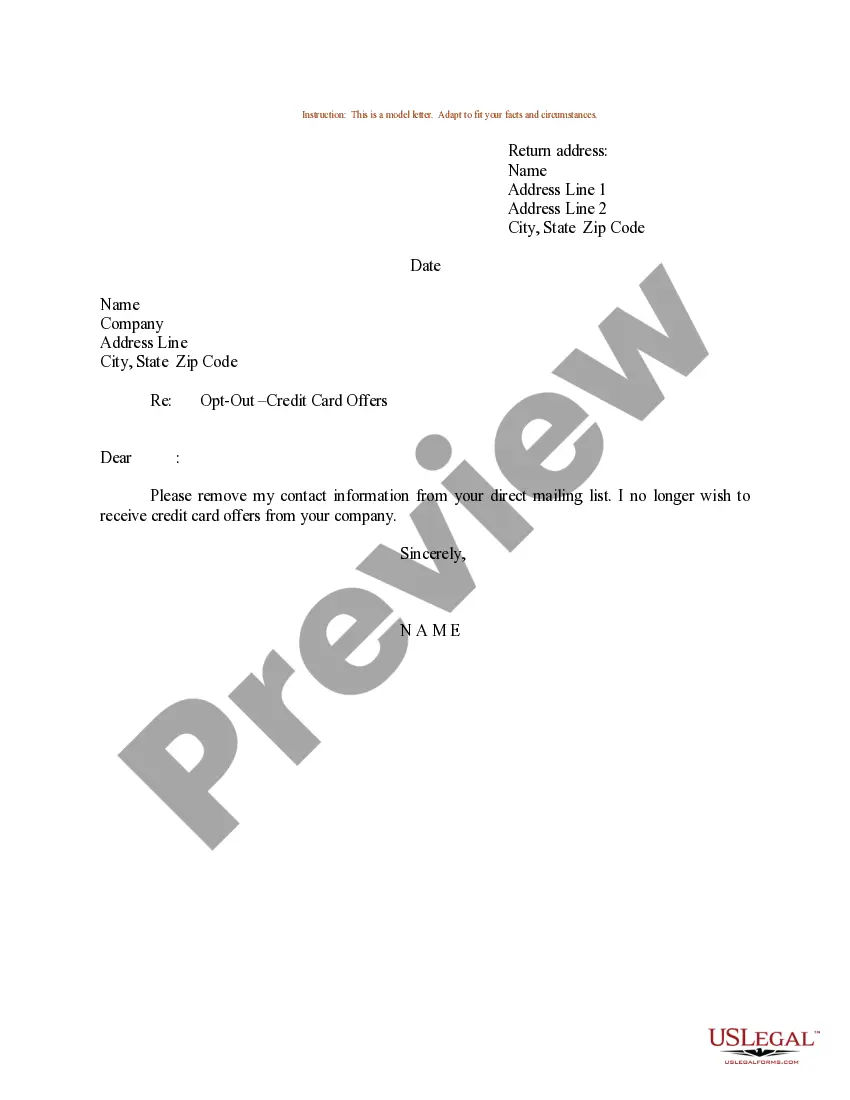





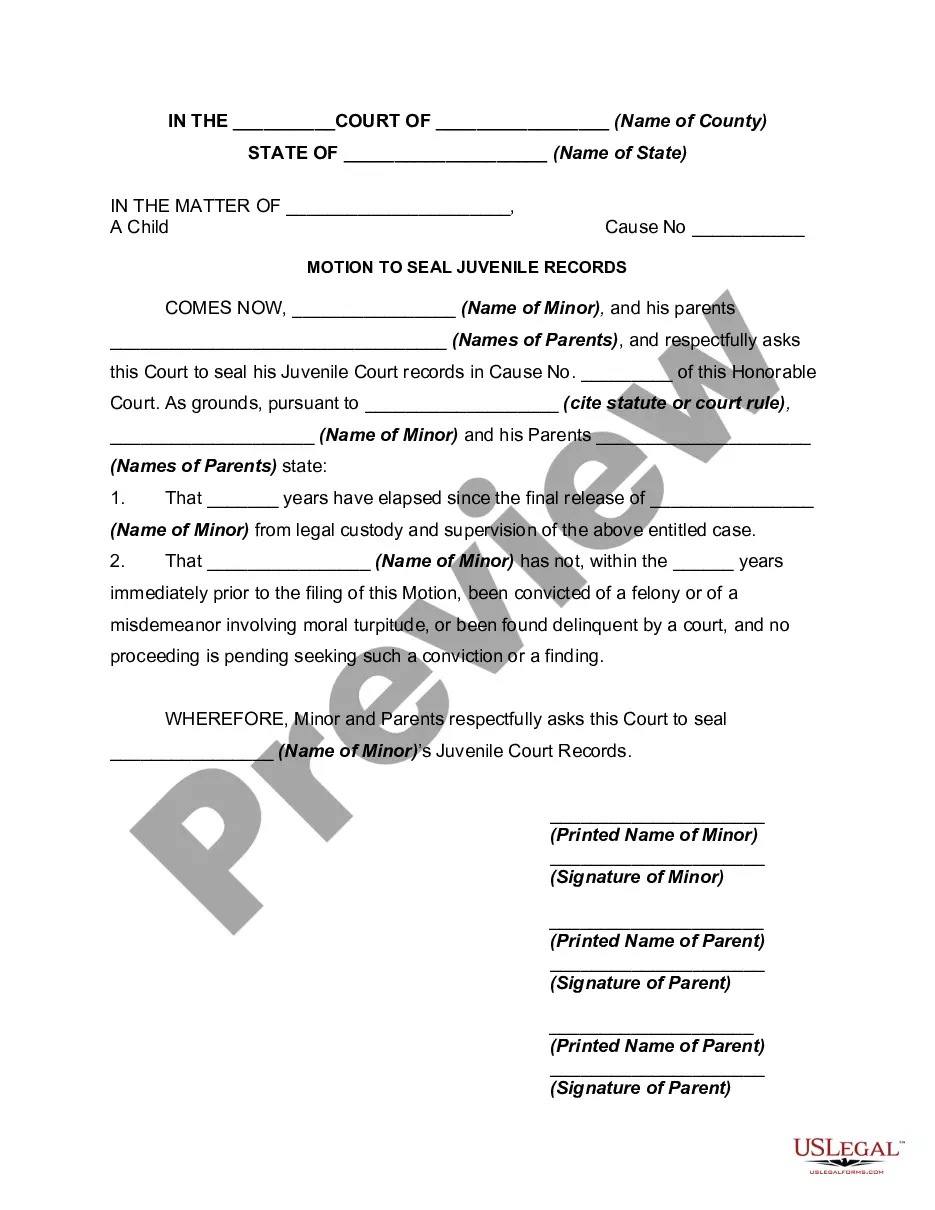
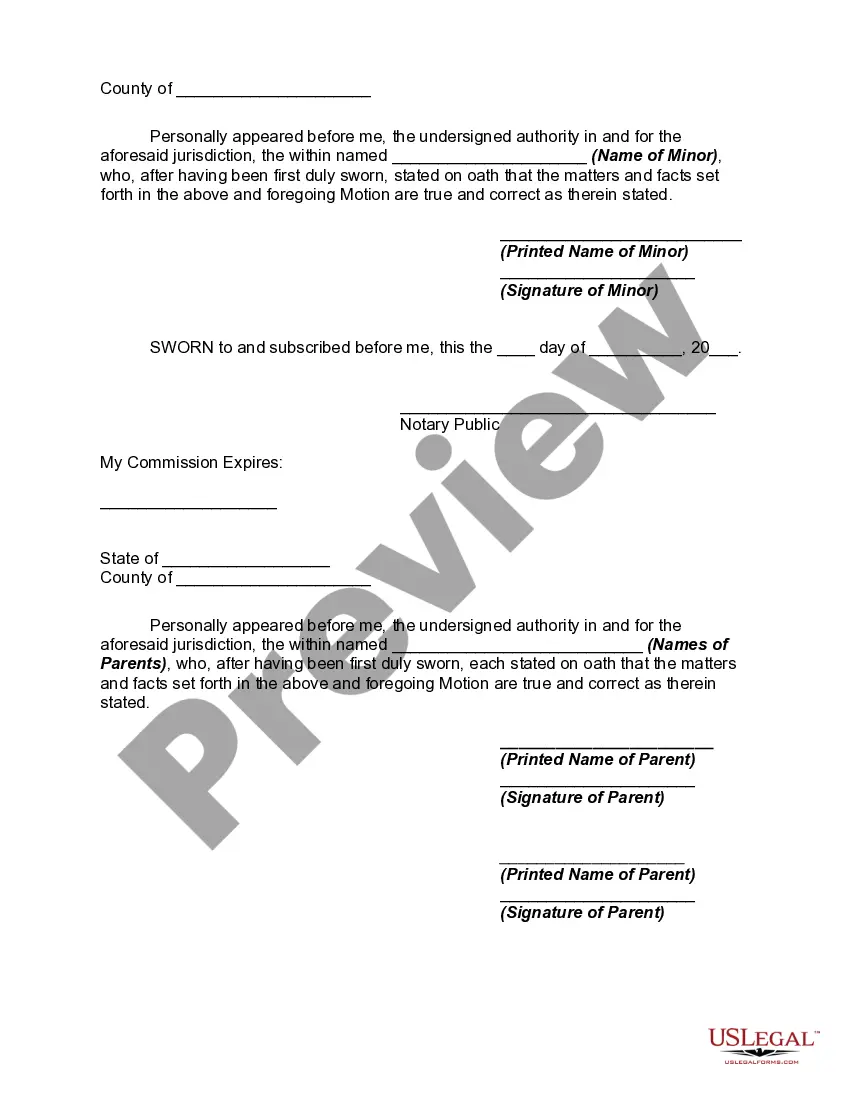
How to fill out Motion To Seal Juvenile Records?
Securing a reliable source for obtaining the latest and pertinent legal templates is a significant portion of dealing with bureaucracy.
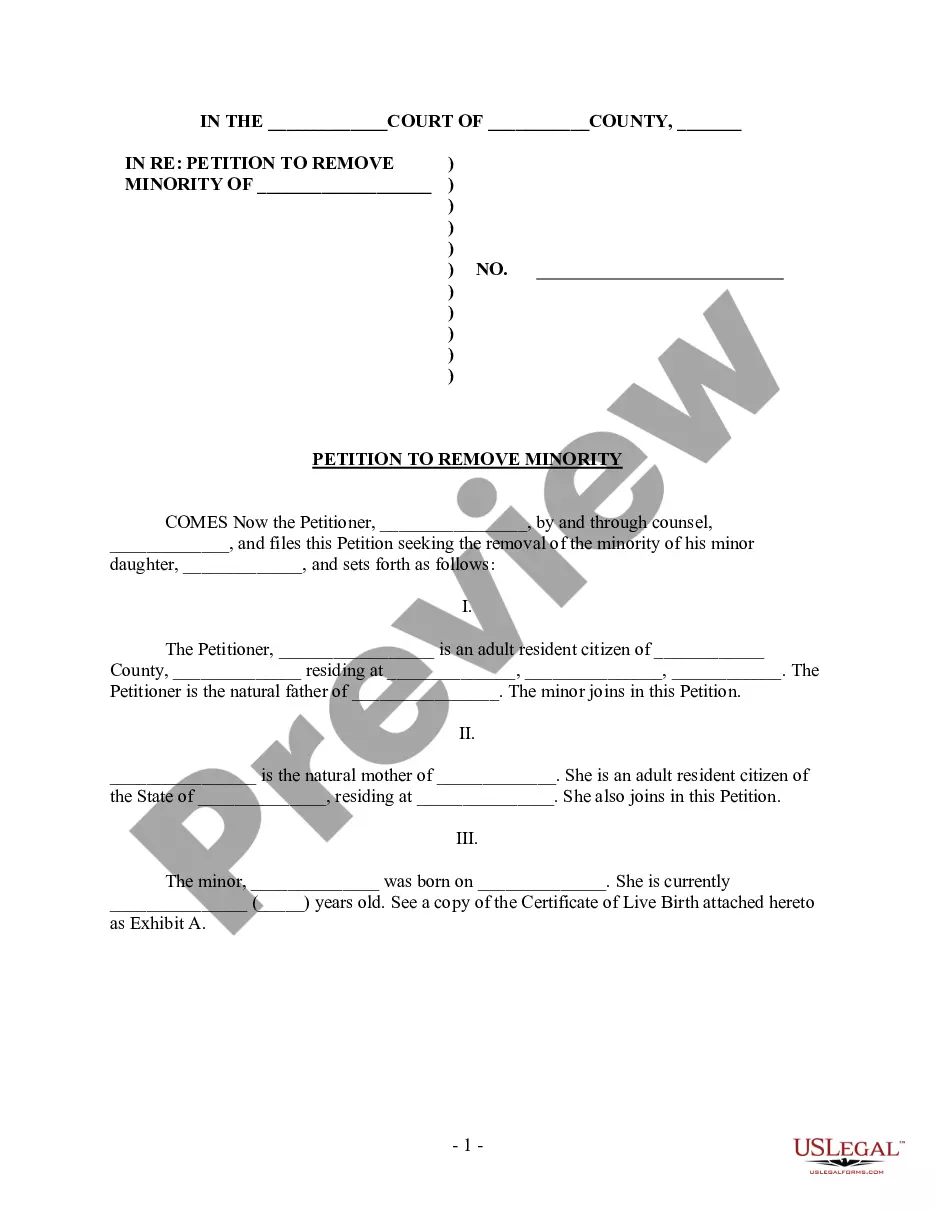
Locating the appropriate legal documents requires precision and meticulousness, which is why it is essential to acquire samples of Juvenile Records In Virginia exclusively from reputable sources, such as US Legal Forms. An incorrect template can squander your time and delay your current situation. With US Legal Forms, there is little to be concerned about. You can access and review all the details regarding the document's application and significance for your situation, as well as in your state or county.
Once you have the form on your device, you can modify it using the editor or print it to complete it manually. Eliminate the hassle associated with your legal documentation. Explore the extensive collection of US Legal Forms where you can find legal templates, assess their relevance to your situation, and download them instantly.
- Utilize the library navigation or search feature to find your template.
- Examine the form's details to confirm it meets the criteria of your state and locality.
- Preview the form, if possible, to verify that it is the one you need.
- Return to the search to locate the suitable template if the Juvenile Records In Virginia does not meet your requirements.
- If you are confident about the form's applicability, download it.
- As an authorized user, click Log in to verify and access your selected templates in My documents.
- If you do not yet possess an account, click Buy now to purchase the form.
- Choose the payment plan that aligns with your needs.
- Proceed to register to finalize your purchase.
- Complete your transaction by selecting a payment method (credit card or PayPal).
- Choose the file format for downloading Juvenile Records In Virginia.
Form popularity
FAQ
Where the individual is under 18 years of age at the time of the request, it must be made by their parent or legal guardian. Certain other bodies may be entitled to inspect DJJ records in ance with § 16.1-300 of the Code of Virginia.
In most cases, records are destroyed once the minor turns 19 and at least five years have passed since the final hearing. One major difference is if the minor has committed a crime that would be a felony if they were an adult. In that case, the records remain public.
Court records are automatically destroyed annually if the juvenile is at least age 19 and five years have elapsed since the last hearing in any juvenile case.
Such records or files shall not be open to public inspection except in the case of a juvenile fourteen years of age or older who is charged with a ?violent juvenile felony.? Such records and files may be inspected only by those person or agencies as set out in Va. Code § 16.1-301.