Executor Petition Estate For Trust
Description
Get your form ready online
Our built-in tools help you complete, sign, share, and store your documents in one place.
Make edits, fill in missing information, and update formatting in US Legal Forms—just like you would in MS Word.
Download a copy, print it, send it by email, or mail it via USPS—whatever works best for your next step.
Sign and collect signatures with our SignNow integration. Send to multiple recipients, set reminders, and more. Go Premium to unlock E-Sign.
If this form requires notarization, complete it online through a secure video call—no need to meet a notary in person or wait for an appointment.
We protect your documents and personal data by following strict security and privacy standards.

Make edits, fill in missing information, and update formatting in US Legal Forms—just like you would in MS Word.

Download a copy, print it, send it by email, or mail it via USPS—whatever works best for your next step.

Sign and collect signatures with our SignNow integration. Send to multiple recipients, set reminders, and more. Go Premium to unlock E-Sign.

If this form requires notarization, complete it online through a secure video call—no need to meet a notary in person or wait for an appointment.

We protect your documents and personal data by following strict security and privacy standards.
Looking for another form?



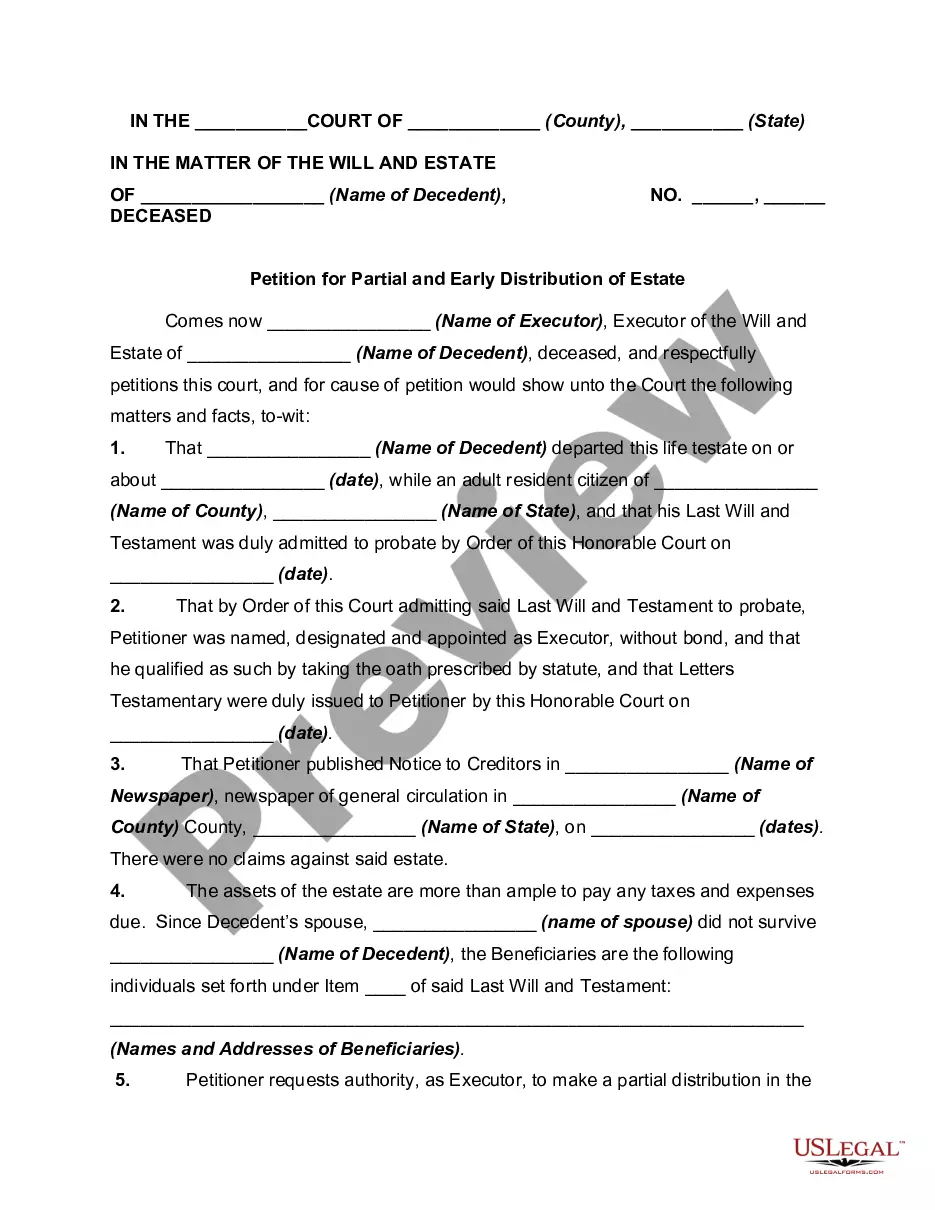
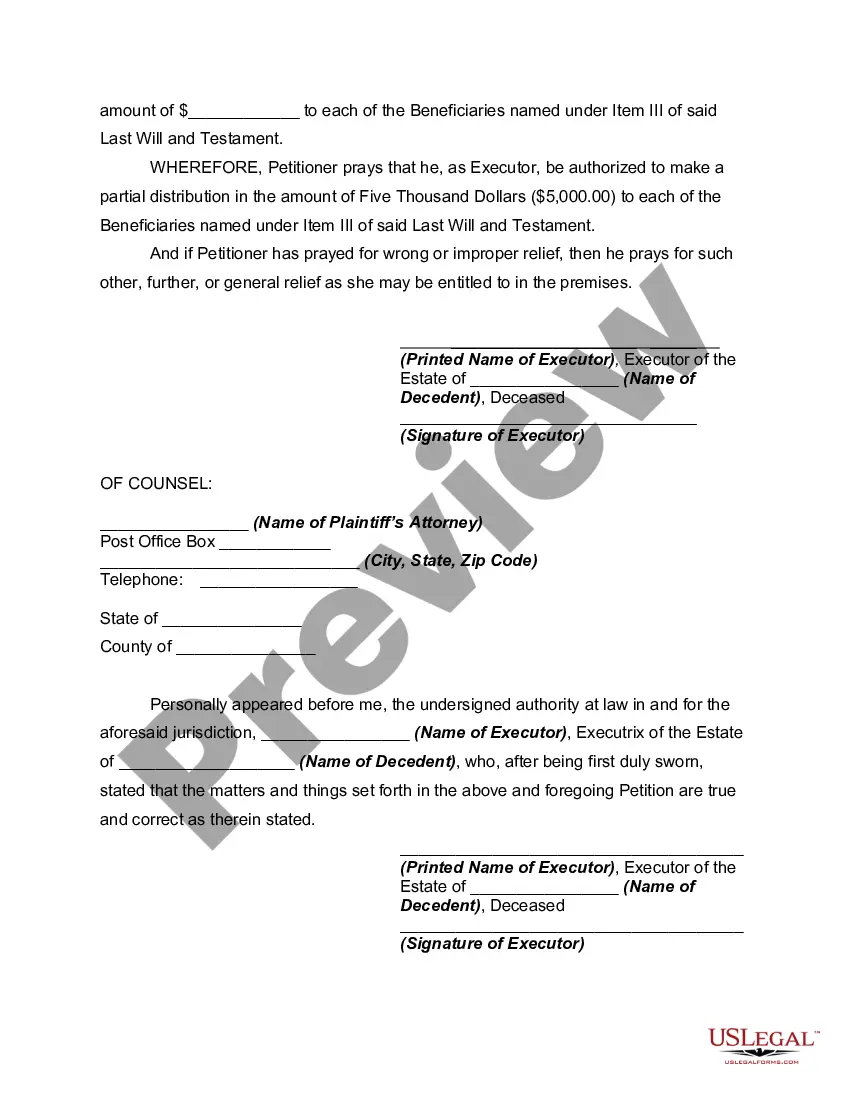
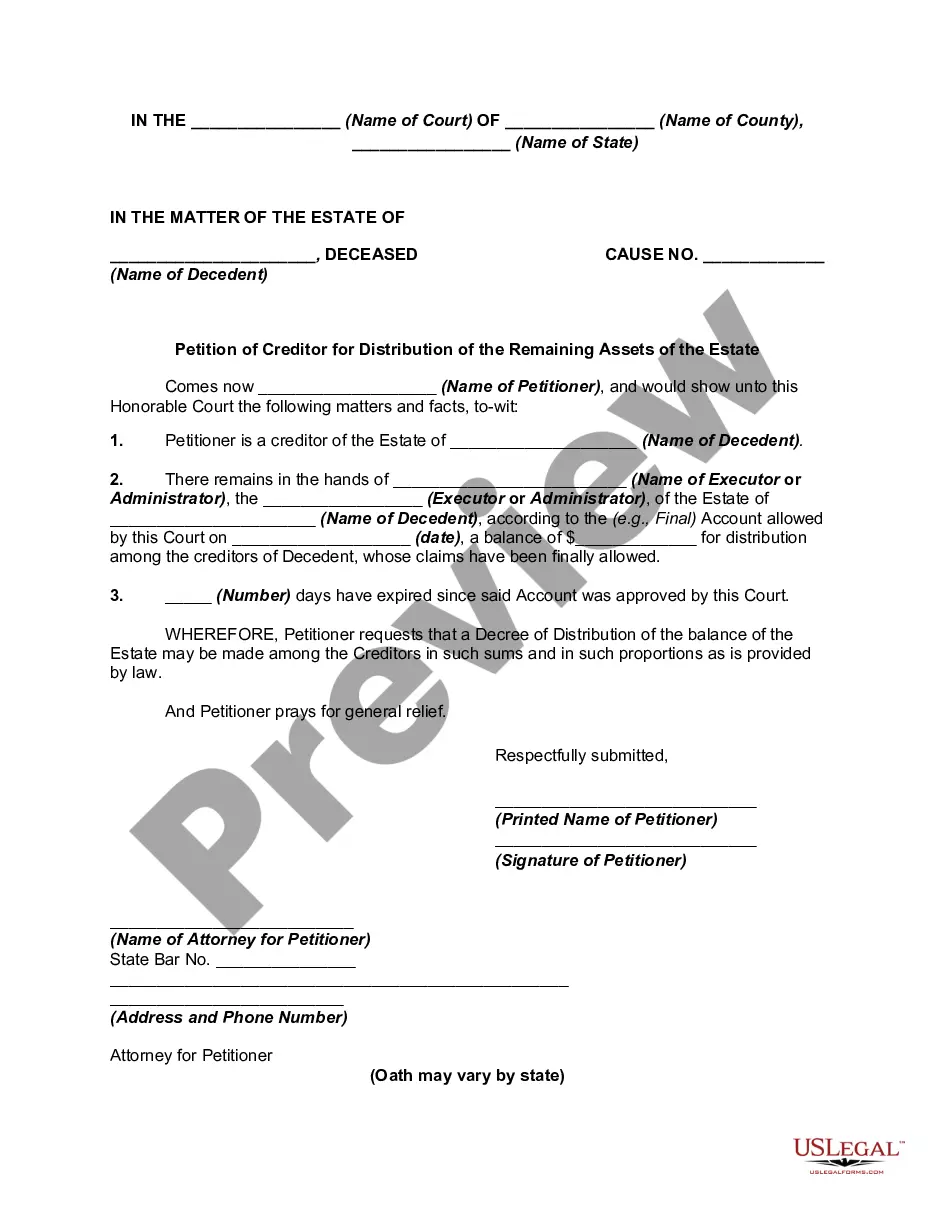
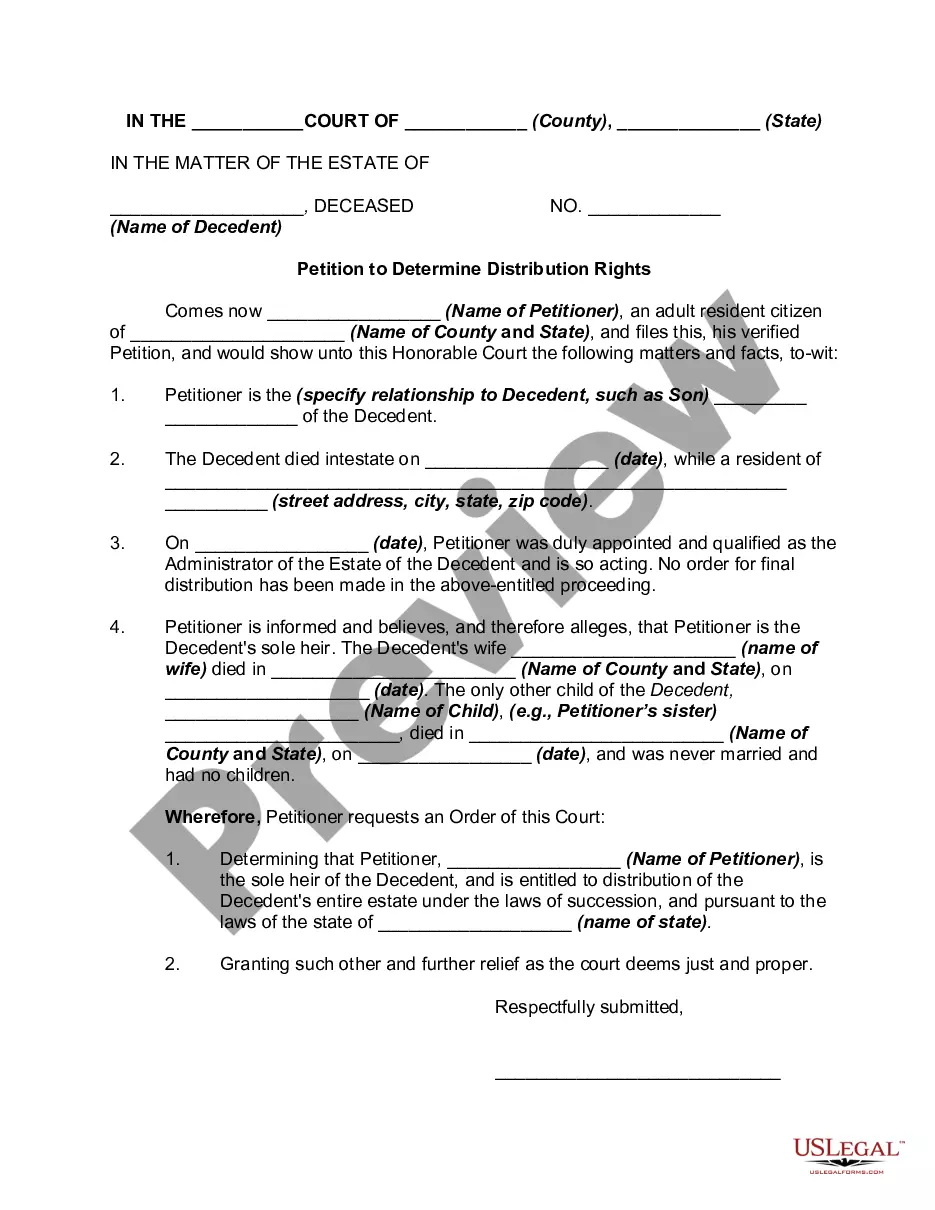
How to fill out Petition For Partial And Early Distribution Of Estate?
Legal administration can be exasperating, even for the most seasoned professionals.
When you are looking for an Executor Petition Estate For Trust and don't have the time to devote to finding the right and current version, the process can be stress-inducing.
Gain access to a repository of articles, guides, handbooks, and materials relevant to your situation and needs.
Save effort and time searching for the documents you need, and use US Legal Forms’ sophisticated search and Review feature to find Executor Petition Estate For Trust and download it.
Enjoy the US Legal Forms online repository, backed by 25 years of expertise and trustworthiness. Transform your daily document management into a smooth and user-friendly process today.
- If you have a monthly subscription, Log In to your US Legal Forms account, search for the form, and download it.
- Check the My documents tab to view the documents you have already downloaded and manage your folders as you wish.
- If it is your first time with US Legal Forms, create an account and gain unrestricted access to all the benefits of the library.
- Here are the steps to follow once you have acquired the form you need.
- Verify it is the correct form by previewing it and reviewing its details.
- Access state- or county-specific legal and business documents.
- US Legal Forms addresses any requirements you might have, from individual to business paperwork, all in a single location.
- Utilize cutting-edge tools to complete and manage your Executor Petition Estate For Trust.
Form popularity
FAQ
The role of a trustee is different than the role of an estate executor. An executor manages a deceased person's estate to distribute his or her assets ing to the will. A trustee, on the other hand, is responsible for administering a trust. What Is The Difference Between Executor, Trustee & Guardian? Surprenant & Beneski, PC ? estate-planning Surprenant & Beneski, PC ? estate-planning
Executors are bound to the terms of the will, which means that they are not permitted to change beneficiaries. The beneficiaries who were named by the decedent will remain beneficiaries so long as the portions of the will in which they appear are not invalidated through a successful will contest.
A Letter of Appointment of Executor helps prove you have been put in charge of someone's estate after they have passed away. As Executor, you've been given the duty to manage the estate and carry out the directions of the will; however, a court may require official documentation.
Sometimes, it might make sense to name a single person as both the executor and trustee, or to make sure that both parties get along with each other since they'll likely have to work together to settle the estate.
If you have a trust and funded it with most of your assets during your lifetime, your successor Trustee will have comparatively more power than your Executor. ?Attorney-in-Fact,? ?Executor? and ?Trustee? are designations for distinct roles in the estate planning process, each with specific powers and limitations.