Executor Estate State Without Will
Description
Get your form ready online
Our built-in tools help you complete, sign, share, and store your documents in one place.
Make edits, fill in missing information, and update formatting in US Legal Forms—just like you would in MS Word.
Download a copy, print it, send it by email, or mail it via USPS—whatever works best for your next step.
Sign and collect signatures with our SignNow integration. Send to multiple recipients, set reminders, and more. Go Premium to unlock E-Sign.
If this form requires notarization, complete it online through a secure video call—no need to meet a notary in person or wait for an appointment.
We protect your documents and personal data by following strict security and privacy standards.

Make edits, fill in missing information, and update formatting in US Legal Forms—just like you would in MS Word.

Download a copy, print it, send it by email, or mail it via USPS—whatever works best for your next step.

Sign and collect signatures with our SignNow integration. Send to multiple recipients, set reminders, and more. Go Premium to unlock E-Sign.

If this form requires notarization, complete it online through a secure video call—no need to meet a notary in person or wait for an appointment.

We protect your documents and personal data by following strict security and privacy standards.
Looking for another form?
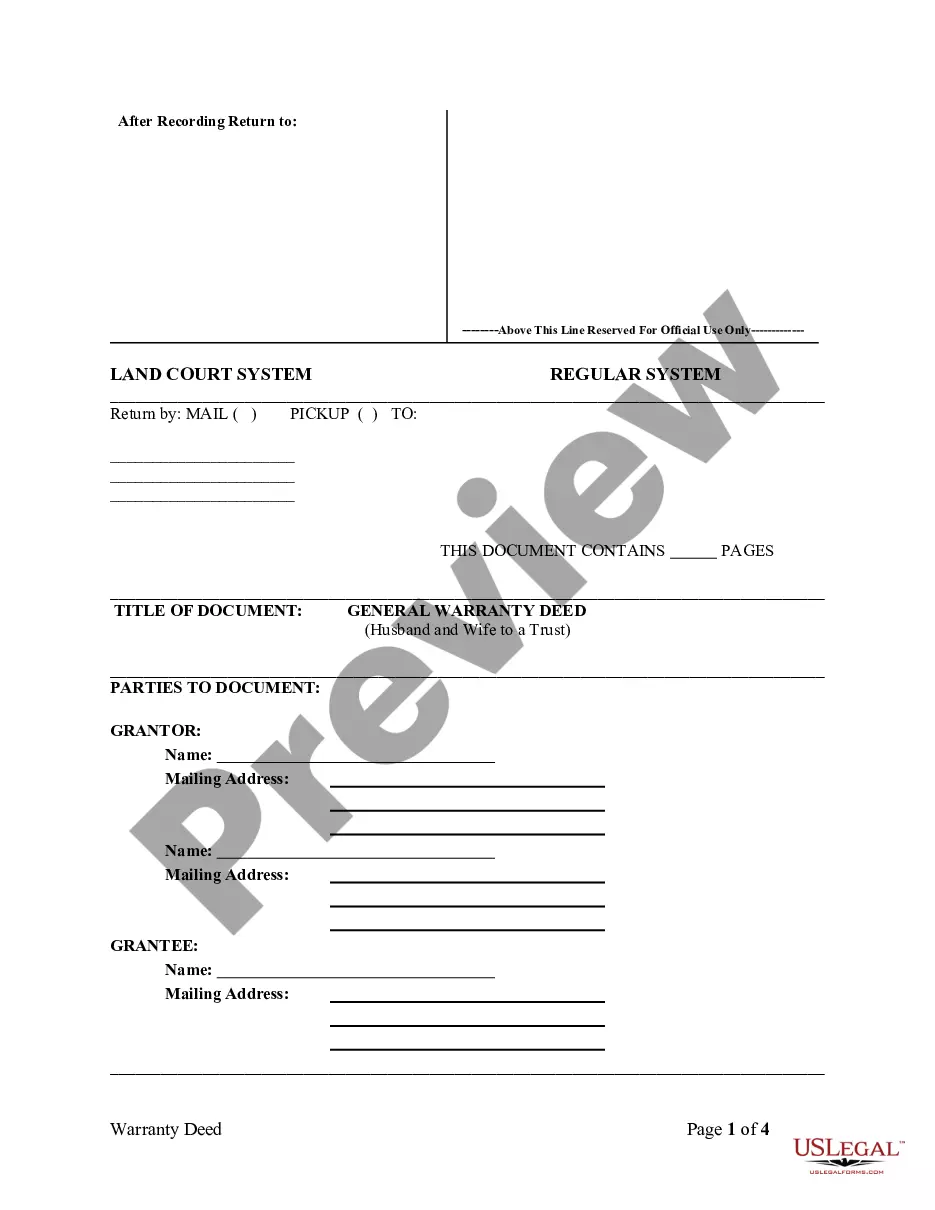
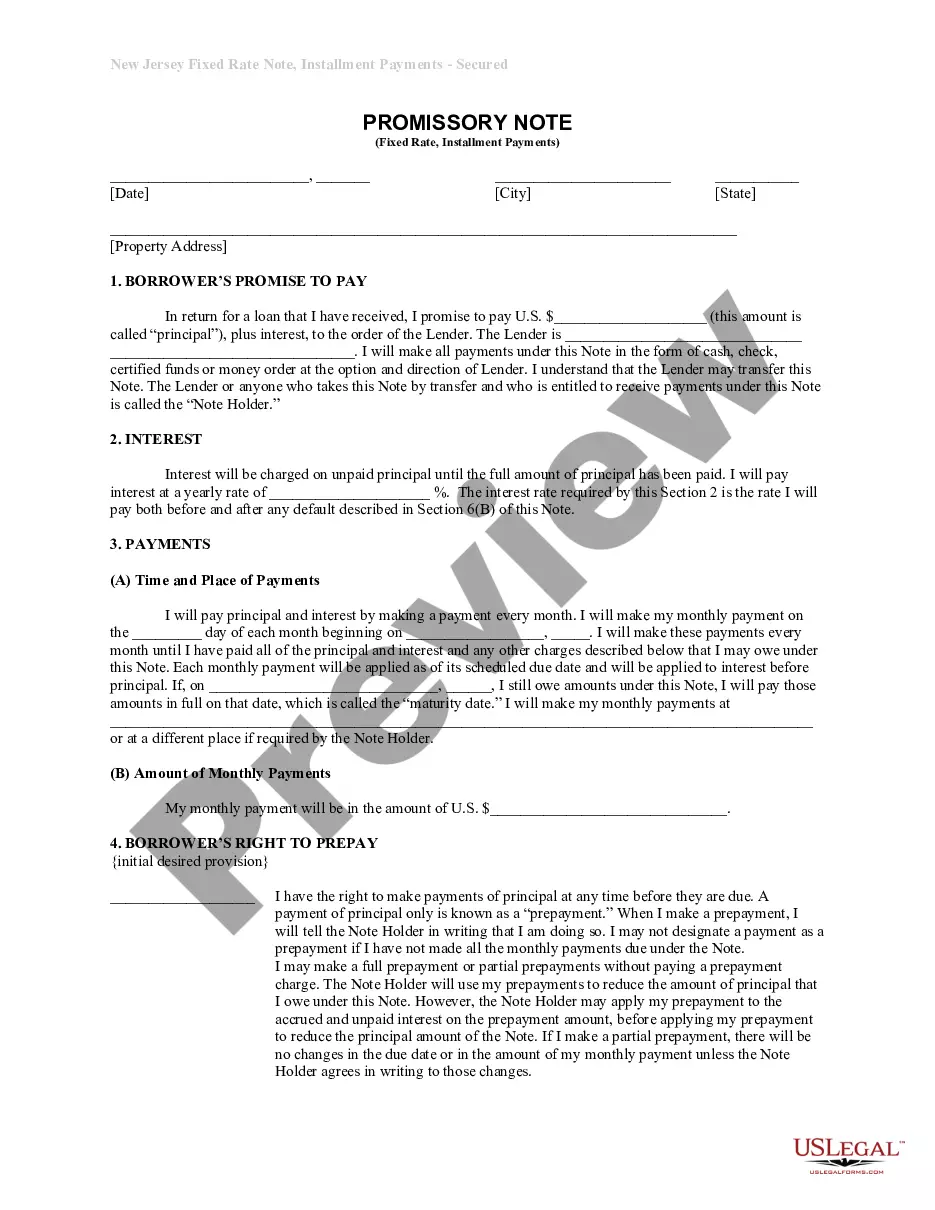
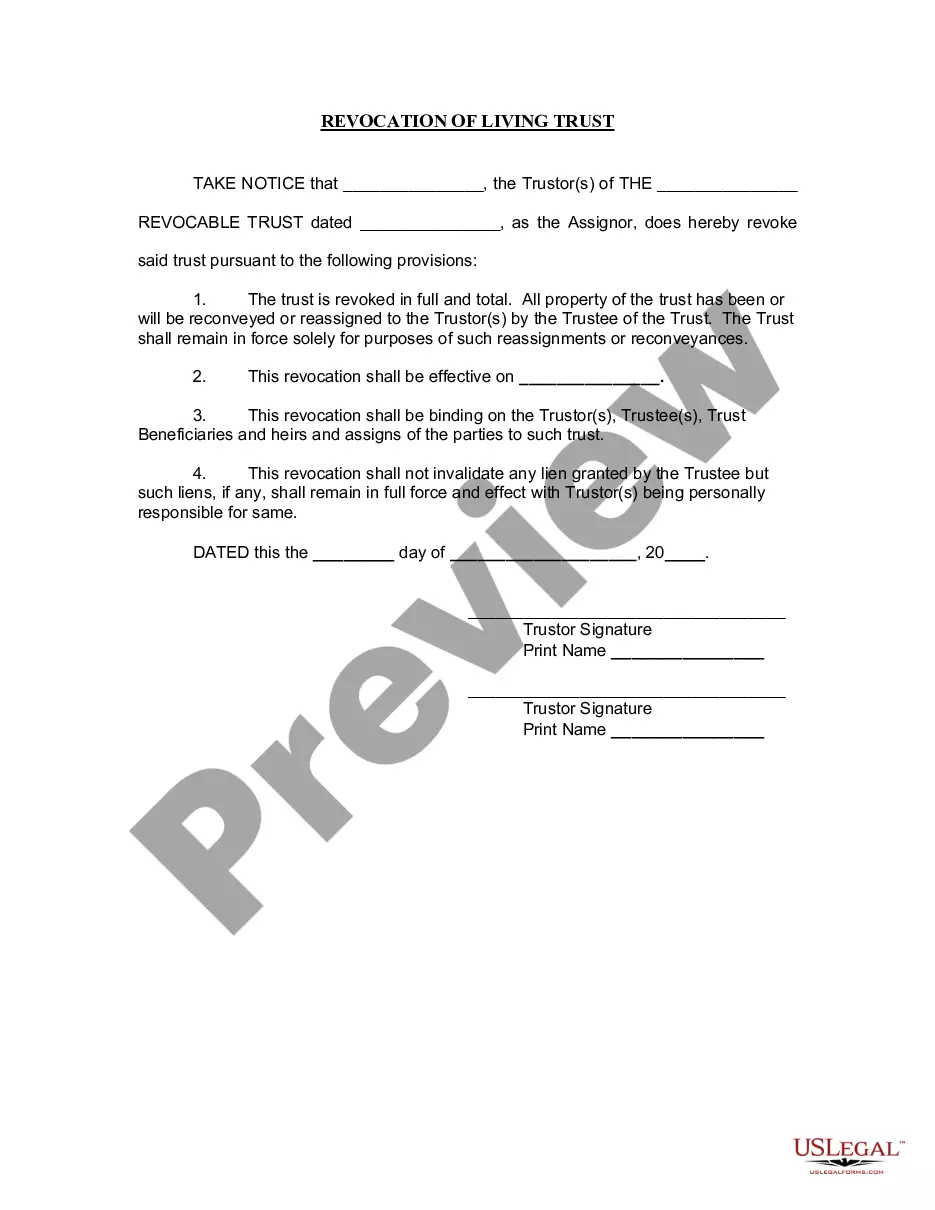
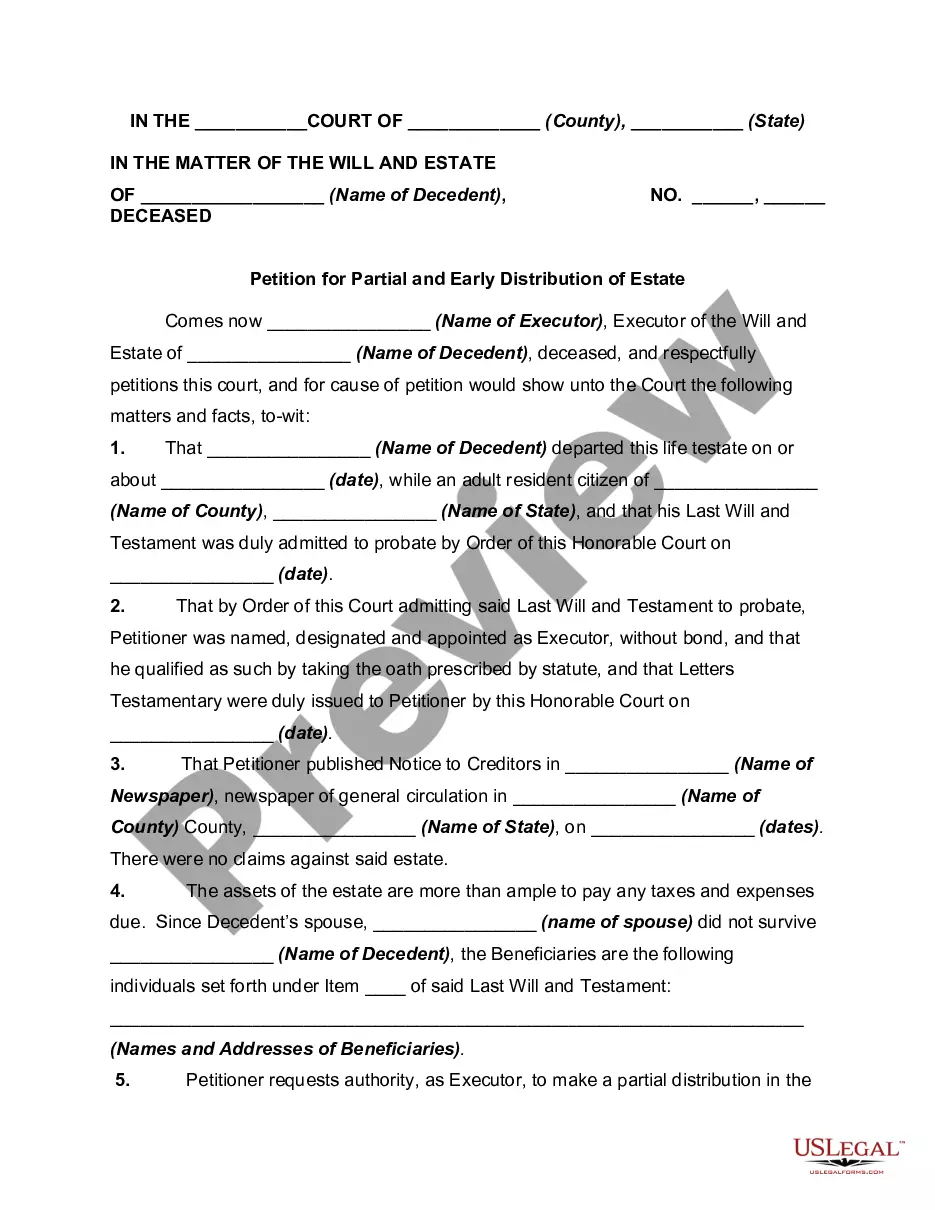
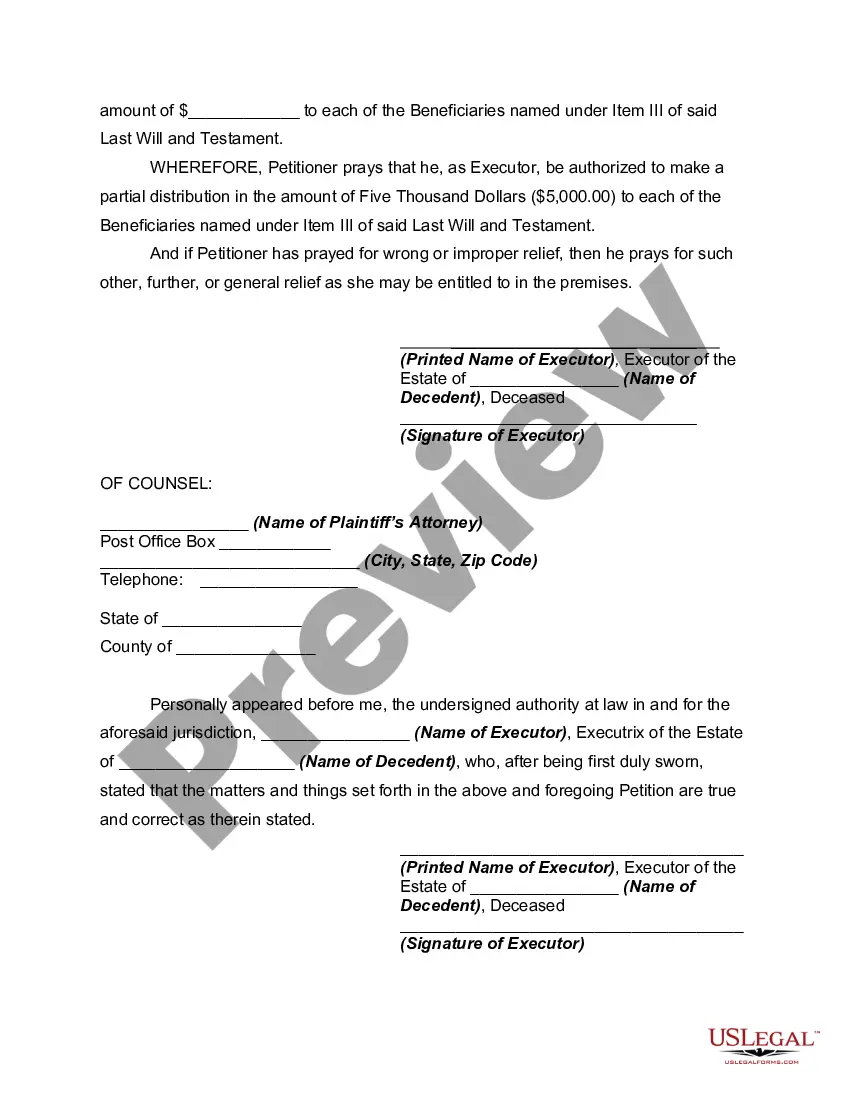
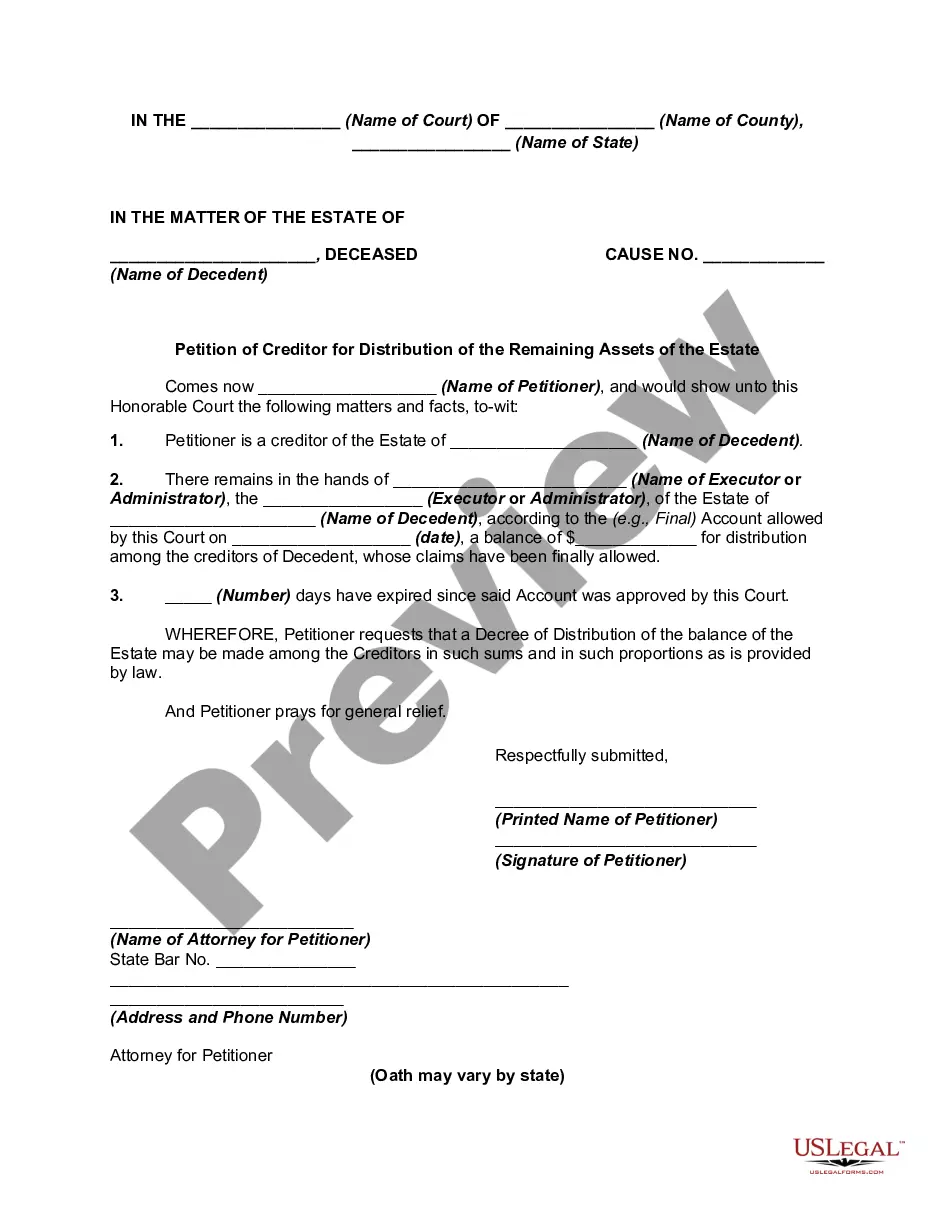
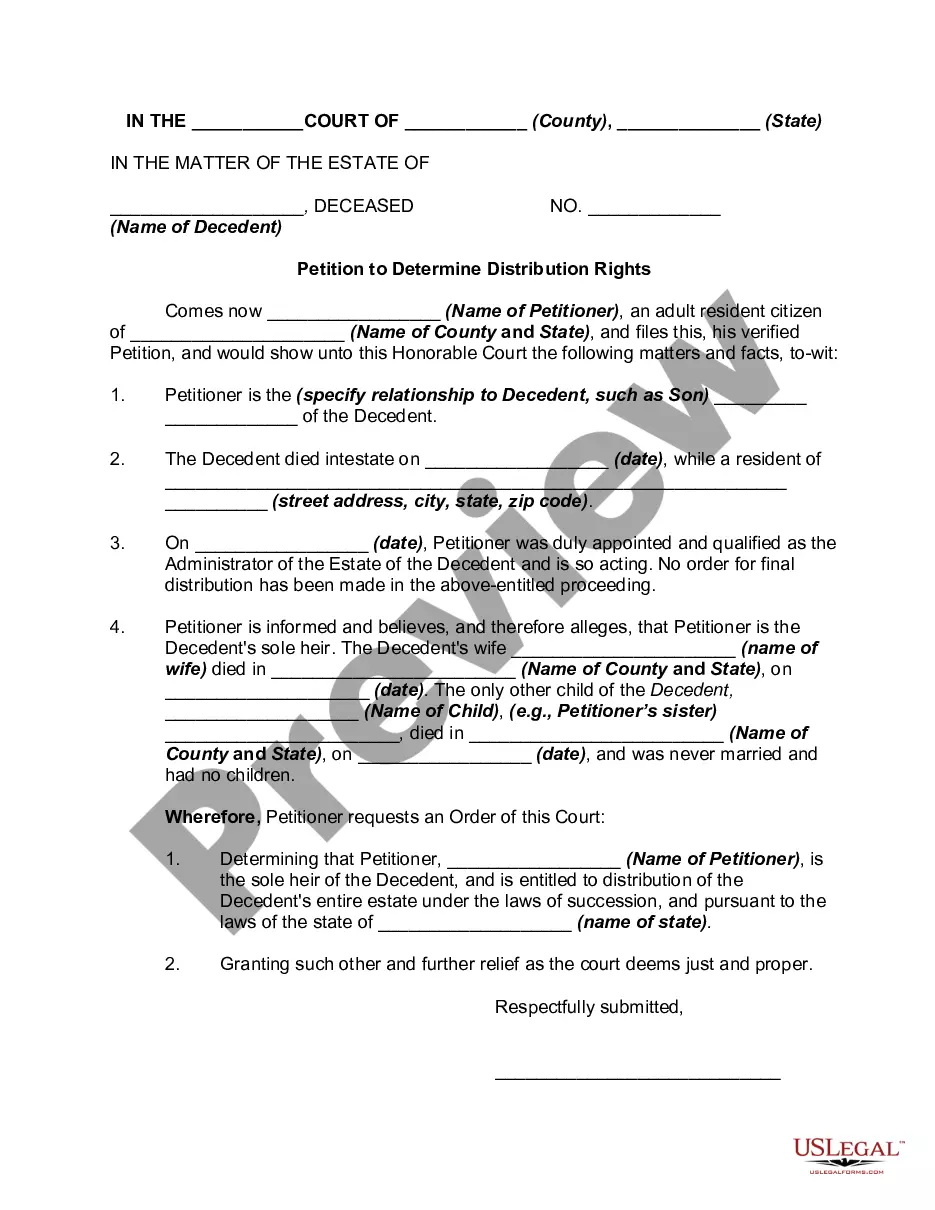
How to fill out Petition For Partial And Early Distribution Of Estate?
The Executor Estate State Without Will displayed on this site is a versatile legal template crafted by experienced attorneys in accordance with federal and state laws.
For over 25 years, US Legal Forms has assisted individuals, businesses, and lawyers with more than 85,000 validated, state-specific documents for any company and personal event. It’s the quickest, simplest, and most reliable method to acquire the documentation you require, as the service ensures bank-level data security and anti-malware safeguards.
Join US Legal Forms to have verified legal templates for all of life's situations readily available.
- Search for the document you need and review it.
- Browse through the document you searched and preview it or check the form description to confirm it meets your requirements. If it does not, use the search function to locate the appropriate one. Click Buy Now once you have found the template you need.
- Subscribe and sign in.
- Select the pricing option that is right for you and create an account. Use PayPal or a credit card to make a swift payment. If you already hold an account, Log In and verify your subscription to continue.
- Obtain the editable template.
- Choose the format you prefer for your Executor Estate State Without Will (PDF, Word, RTF) and save the document on your device.
- Fill out and sign the document.
- Print the template to manually complete it. Alternatively, use an online multifunctional PDF editor to swiftly and accurately fill out and sign your form with a valid signature.
- Download your files once more.
- Utilize the same document again whenever needed. Access the My documents tab in your profile to redownload any previously acquired forms.
Form popularity
FAQ
An executor of an estate without a will must adhere to intestacy laws, which dictate how assets are distributed. They are responsible for gathering estate assets, paying debts, and filing necessary legal documents. Additionally, they may need to manage the estate for a period before final distribution to beneficiaries. Resources from uslegalforms can simplify this process, guiding you through necessary steps.
In an estate state without a will, if there is no designated executor, the court appoints an administrator to manage the estate. Typically, this person is a close relative or someone with a legal interest in the estate. Their role remains similar to that of an executor, ensuring that assets are handled according to state laws. You can find resources on platforms like uslegalforms to assist with this process.
If an executor in an estate state without a will does nothing, the estate may face delays in settling. Creditors can file claims, and beneficiaries may not receive their rightful inheritance on time. Additionally, the court may intervene and appoint an administrator to take over the estate. This can lead to added legal complications and costs that could have been avoided with active management.
The time it takes to be appointed executor in an estate state without a will can vary from a few weeks to several months, depending on your locality's laws and the complexity of the estate. The process includes filing the necessary documents, attending court hearings, and waiting for court approval. Using platforms like UsLegalForms can simplify this process, helping you prepare and file the correct paperwork efficiently.
An executor cannot generally override a power of attorney once they have been appointed in the estate state without a will. A power of attorney grants authority to a specific individual to manage affairs while the person is alive, but this role typically ends upon death. Therefore, an executor must respect previous decisions made through a power of attorney before assuming their duties.
In an estate without a will, the court typically holds the appointed administrator accountable for their actions. The probate court supervises the estate's administration and ensures that all processes comply with the law. Additionally, interested parties, such as beneficiaries, can raise concerns about mismanagement or misconduct, further keeping the executor accountable.
When an estate is in a state without a will, the appointed administrator assumes many responsibilities similar to an executor. This includes managing the deceased's assets, paying debts, and distributing the remaining property according to local laws. However, their authority is still subject to oversight by the probate court, which ensures that they act in the best interest of the estate.
In the case of an estate state without a will, the court usually appoints an administrator based on state laws. This individual does not have the right to take everything; rather, they must distribute the assets according to intestacy laws. These laws dictate how property is divided among heirs, ensuring fairness and legality even without a written will.
To file for executor of an estate without a will, you must first determine the appropriate probate court in your jurisdiction. Next, gather all necessary documents, including death certificates and information about the deceased's assets. After this, you can submit a petition to the court to appoint an administrator, who will serve a similar role as an executor in the estate state without a will.
Proving an executor of estate without a will can involve demonstrating your relationship to the deceased and showing that there are no existing documents outlining a different executor. You will need to gather evidence such as death certificates and any supporting letters from family members or other beneficiaries. It is also wise to present this information to the probate court, which will make the final decision on the executor appointment. Platforms like US Legal Forms can provide you with the necessary documents to facilitate this process smoothly.