Distribution Probate With A Function
Description
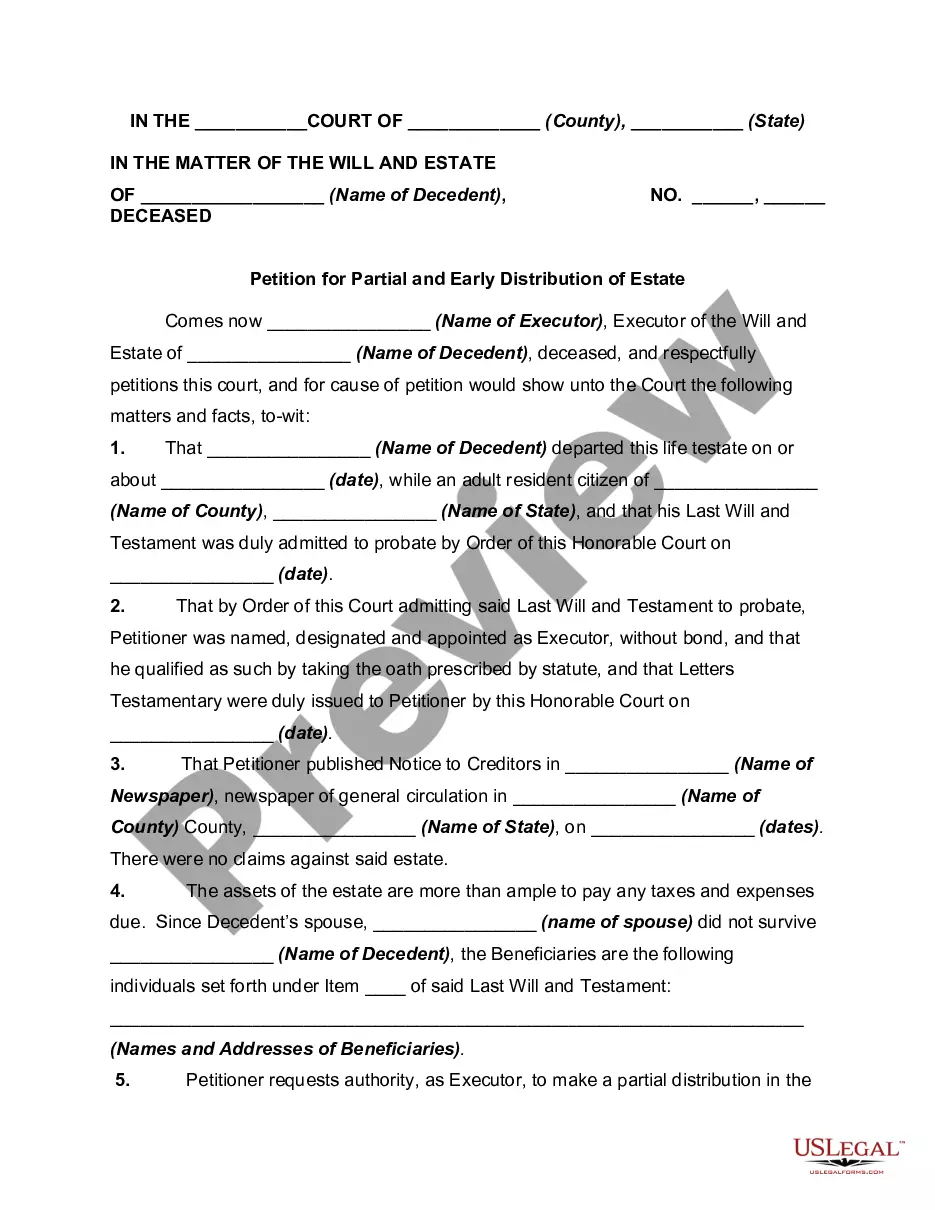
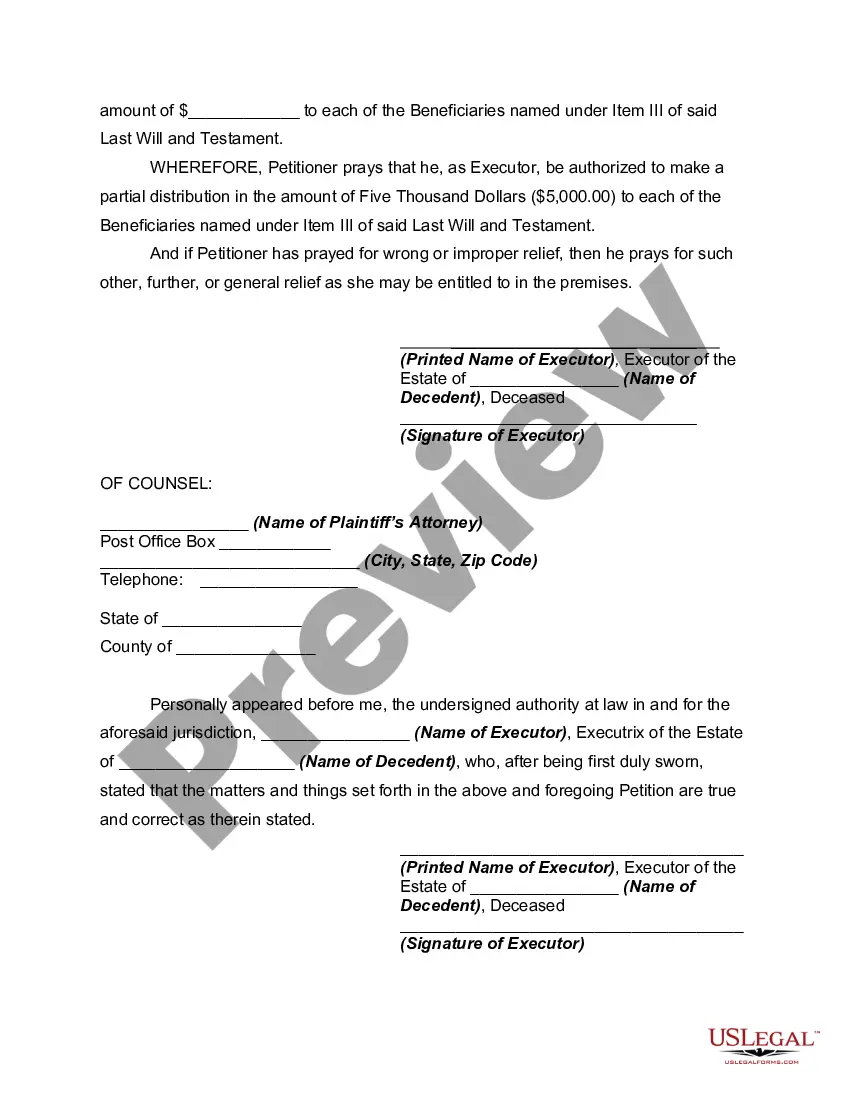
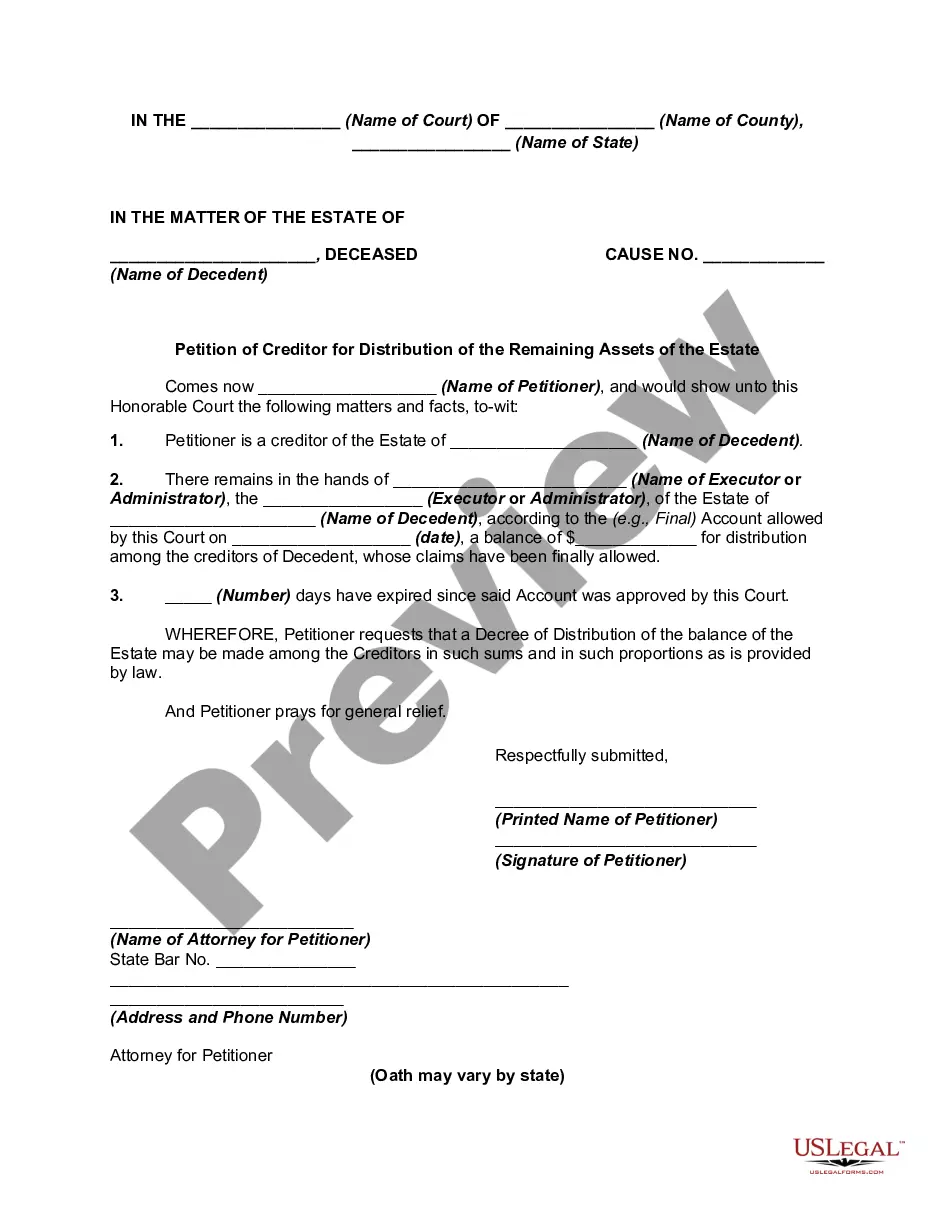
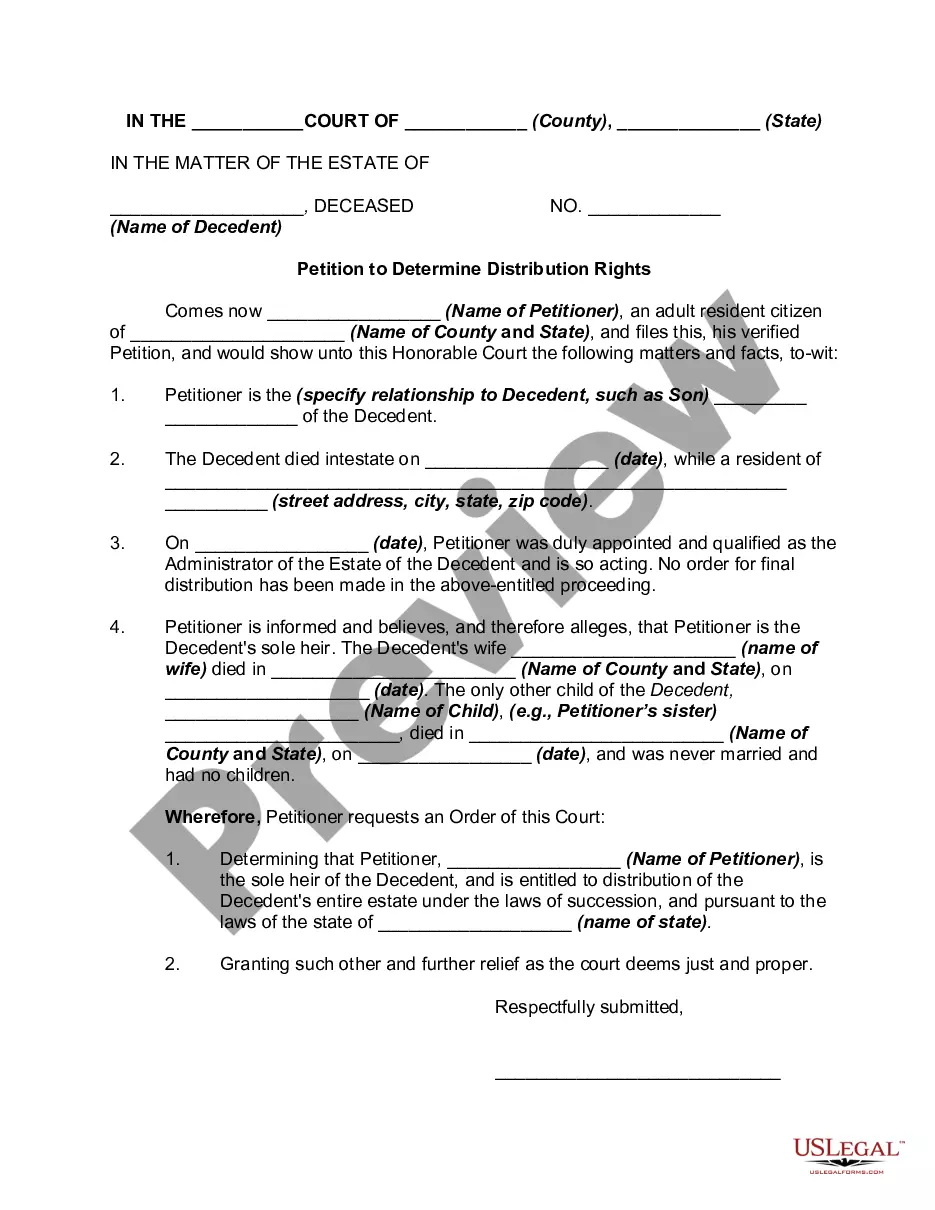
Get your form ready online
Our built-in tools help you complete, sign, share, and store your documents in one place.
Make edits, fill in missing information, and update formatting in US Legal Forms—just like you would in MS Word.
Download a copy, print it, send it by email, or mail it via USPS—whatever works best for your next step.
Sign and collect signatures with our SignNow integration. Send to multiple recipients, set reminders, and more. Go Premium to unlock E-Sign.
If this form requires notarization, complete it online through a secure video call—no need to meet a notary in person or wait for an appointment.
We protect your documents and personal data by following strict security and privacy standards.

Make edits, fill in missing information, and update formatting in US Legal Forms—just like you would in MS Word.

Download a copy, print it, send it by email, or mail it via USPS—whatever works best for your next step.

Sign and collect signatures with our SignNow integration. Send to multiple recipients, set reminders, and more. Go Premium to unlock E-Sign.

If this form requires notarization, complete it online through a secure video call—no need to meet a notary in person or wait for an appointment.

We protect your documents and personal data by following strict security and privacy standards.
Looking for another form?
How to fill out Petition For Partial And Early Distribution Of Estate?
- Log in to your US Legal Forms account if you're a returning user and ensure your subscription is active. If needed, renew your subscription before proceeding.
- For first-time users, start by checking the Preview mode and description of the desired form to confirm it meets your local jurisdiction requirements.
- If you need a different form, use the Search tab above to locate the appropriate one that suits your needs effectively.
- Once you find the correct document, click on the Buy Now button to select your preferred subscription plan, and create an account to access all resources.
- Complete your purchase by providing your payment details through a credit card or PayPal.
- Download the form onto your device and you will also find it under the My Forms section of your profile for future access.
With US Legal Forms, you have access to an extensive library of more than 85,000 legal documents that are easy to fill out and modify. Additionally, you can consult with premium experts for help in completing these forms, which means you can ensure that your documents are precise and legally sound.
Ready to simplify your legal form needs? Explore US Legal Forms today and empower yourself with the right tools for efficient probate distribution!
Form popularity
FAQ
The order for final distribution typically starts with settling unavoidable debts and costs related to the estate. Following this, assets are allocated to beneficiaries in accordance with the will or state inheritance laws. If disputes arise, legal intervention may be necessary. Utilizing effective distribution probate with a function can help clarify this order and ensure compliance with legal requirements, making it easier for you as an executor.
The order of final distribution follows a specific legal protocol, which often begins with settling debts, taxes, and expenses of the estate. After these obligations are fulfilled, the remaining assets are distributed among beneficiaries as outlined in the will. If there's no will, state laws dictate the distribution order. Using tools like distribution probate with a function can streamline this process, making it transparent and efficient for all parties.
Final distribution refers to the last phase in the probate process, where estate assets are transferred to beneficiaries. During this stage, an executor accounts for all debts and expenses before distributing the remaining assets. This process ensures that everyone receives their share, providing closure for all involved. Employing distribution probate with a function simplifies this complex task, ensuring fairness and compliance.
To distribute items from an estate, you must follow the steps outlined in the probate process. First, gather all relevant documents, including the will and asset lists. Next, inventory items and appraise their value. Finally, execute the distribution probate with a function by ensuring that each beneficiary receives their rightful share according to the will or state law.
The distribution of the estate refers to how the deceased's assets are allocated after their passing. This process involves identifying assets, paying off debts, and transferring ownership to rightful heirs or beneficiaries. It ensures that every item and monetary value is accounted for and passed to the designated individuals. Platforms such as USLegalForms offer tools to streamline the distribution probate with a function, making it easier for families to navigate this sensitive time.
After probate, funds are distributed according to the deceased's will or state law if there is no will. The executor manages the distribution process, ensuring all debts and taxes are settled first. Once these obligations are cleared, the executor allocates the remaining assets to beneficiaries, following the terms laid out in the will. Utilizing platforms like USLegalForms can simplify the distribution probate with a function, making the process clear and efficient.
When an executor fails to distribute the estate, it can lead to significant delays in the probate process. This situation may result in frustration among beneficiaries, as they depend on the timely receipt of their inheritance. It's essential to understand that the law requires executors to act in the best interest of the estate and its beneficiaries. In cases like this, using USLegalForms can provide resources and guidance on distribution probate with a function, ensuring that you and your loved ones understand your rights.
Assets such as bank accounts with payable-on-death designations and trust funds do not go through probate. These provisions allow assets to pass directly to beneficiaries without court intervention. By identifying these assets, you can simplify the distribution probate with a function, providing peace of mind for both you and your heirs.
Filling out probate paperwork can be straightforward if you follow a structured process. Begin by gathering necessary documents, including the death certificate and a list of assets. UsLegalForms offers user-friendly templates and guidance, streamlining the probate paperwork process for successful distribution probate with a function, ensuring your estate matters are handled efficiently.
Most real estate holdings, unless placed in a living trust, will pass through probate. Additionally, bank accounts solely held in your name typically require probate for distribution. Recognizing which assets pass through probate is essential for effective distribution and can help prevent complications for your estate.