Unlawful Detainer
Description
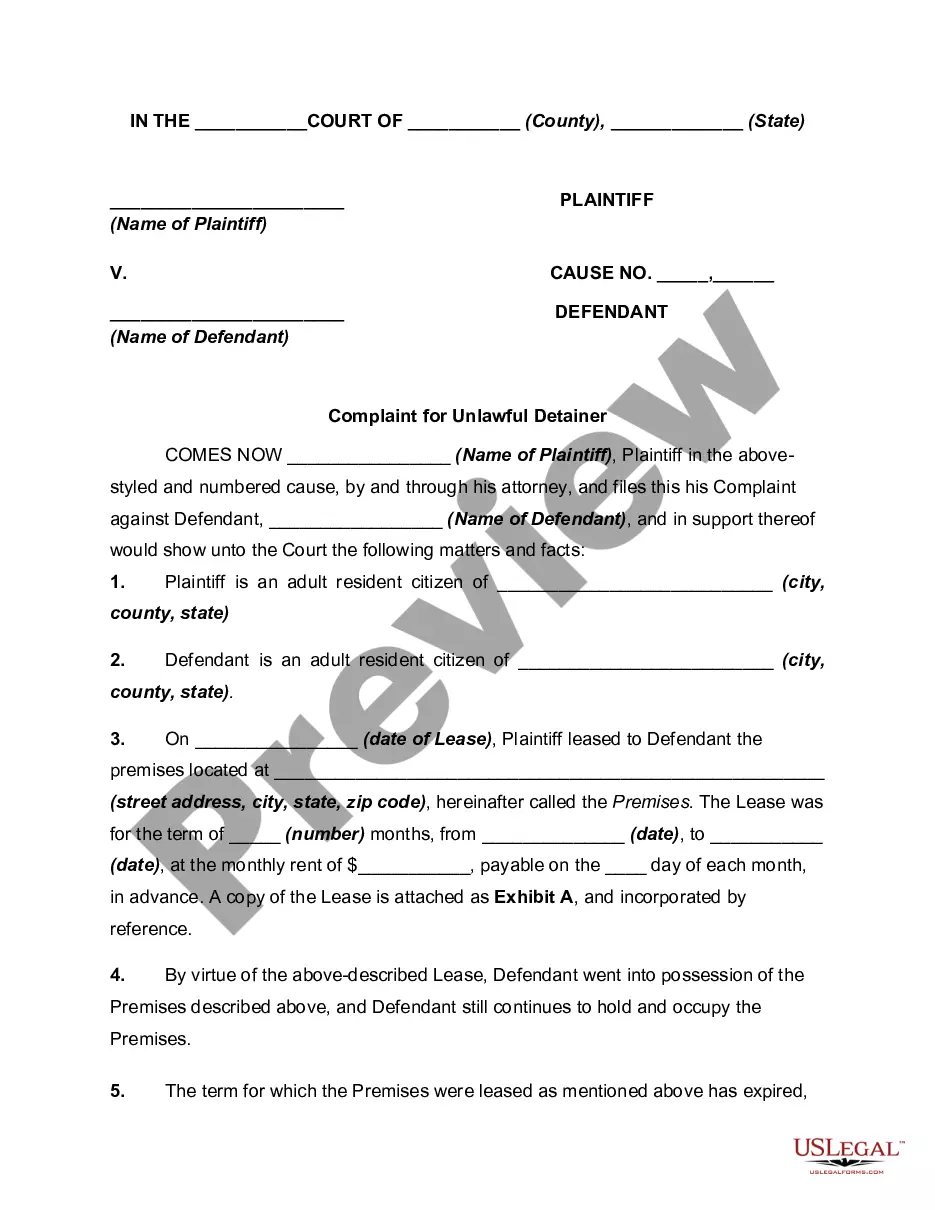
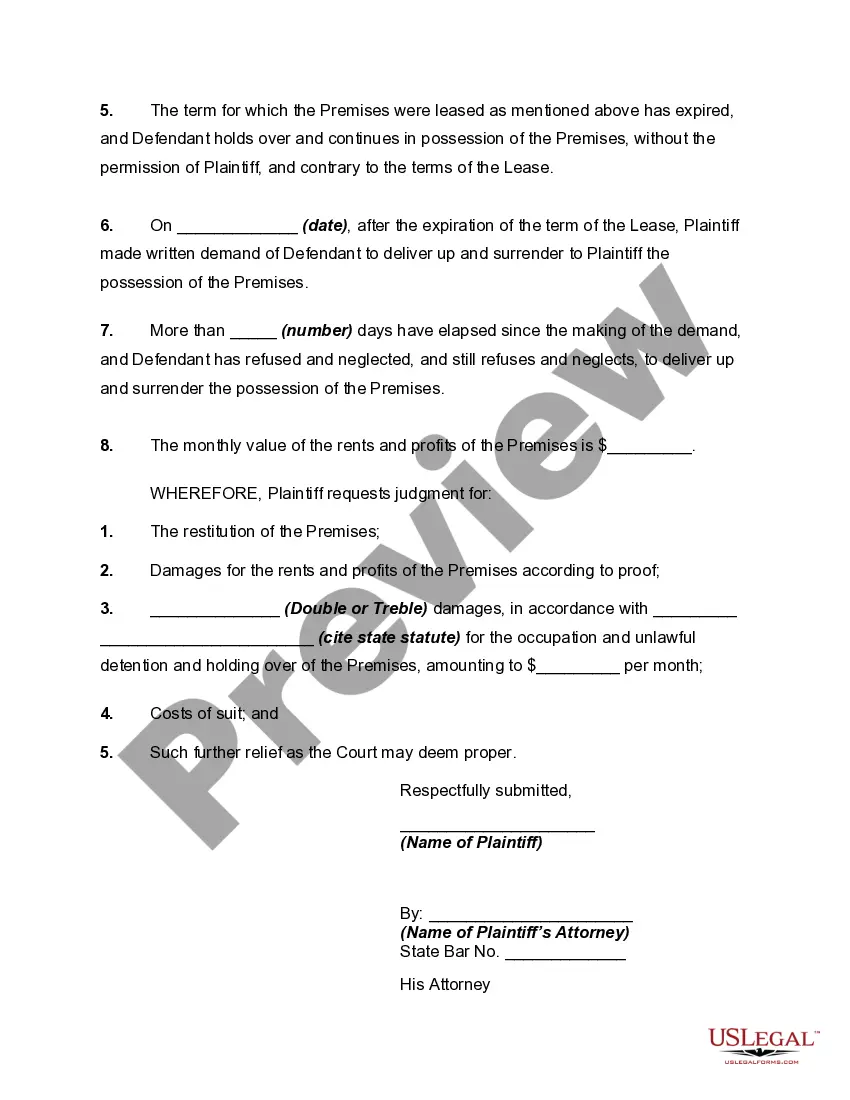
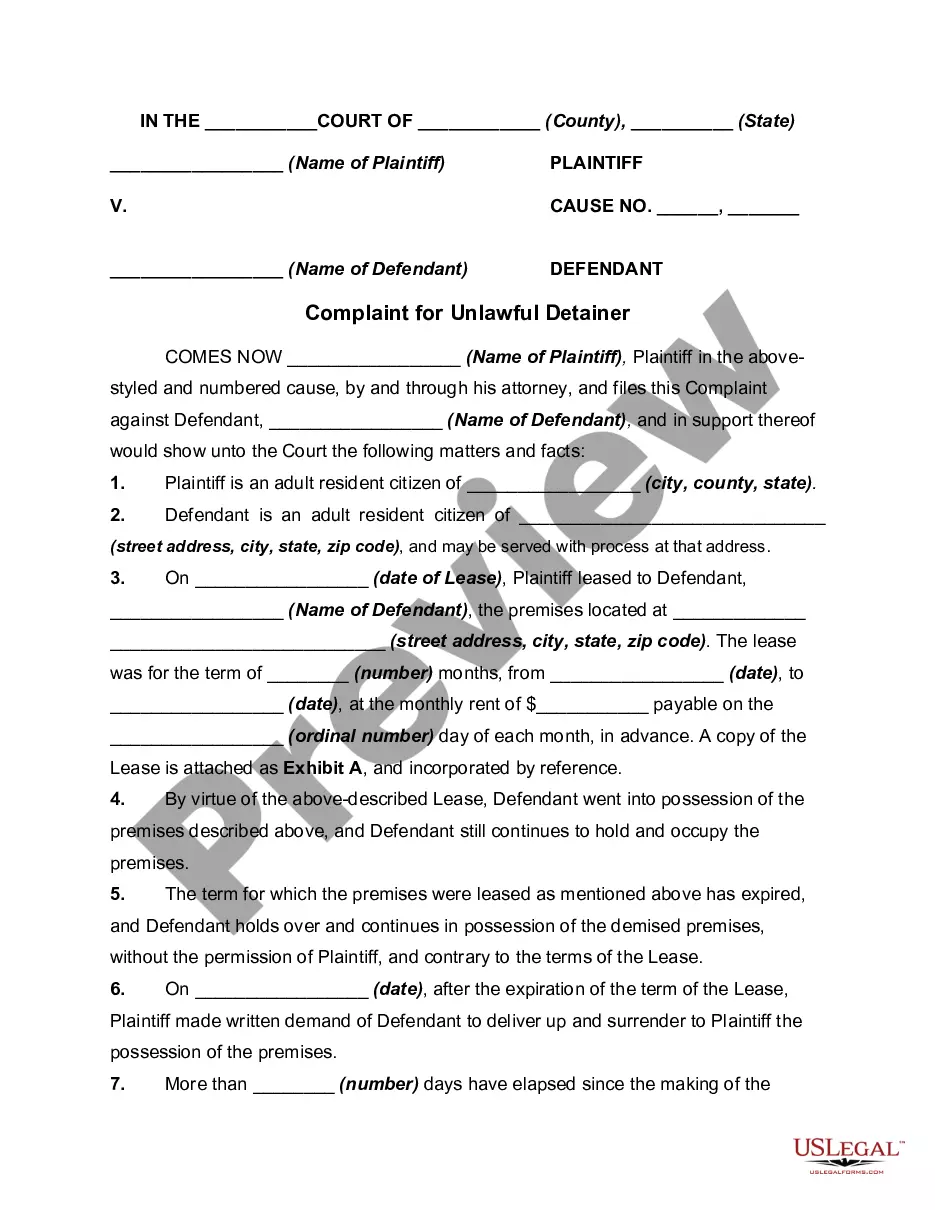
Get your form ready online
Our built-in tools help you complete, sign, share, and store your documents in one place.
Make edits, fill in missing information, and update formatting in US Legal Forms—just like you would in MS Word.
Download a copy, print it, send it by email, or mail it via USPS—whatever works best for your next step.
Sign and collect signatures with our SignNow integration. Send to multiple recipients, set reminders, and more. Go Premium to unlock E-Sign.
If this form requires notarization, complete it online through a secure video call—no need to meet a notary in person or wait for an appointment.
We protect your documents and personal data by following strict security and privacy standards.

Make edits, fill in missing information, and update formatting in US Legal Forms—just like you would in MS Word.

Download a copy, print it, send it by email, or mail it via USPS—whatever works best for your next step.

Sign and collect signatures with our SignNow integration. Send to multiple recipients, set reminders, and more. Go Premium to unlock E-Sign.

If this form requires notarization, complete it online through a secure video call—no need to meet a notary in person or wait for an appointment.

We protect your documents and personal data by following strict security and privacy standards.
Looking for another form?



How to fill out Complaint For Unlawful Detainer - Residential Tenant Holding Over After Expiration Of Term?
- If you already have an account, log in and verify your subscription is active. Download your required forms by clicking the Download button.
- If you are a new user, start by checking the preview and description of the unlawful detainer forms. Ensure it meets your local jurisdiction needs.
- If the form isn’t right, utilize the Search feature to find an appropriate template that fits your requirements.
- After selecting the correct document, click the Buy Now button to choose a subscription plan that suits your needs. Register for an account to gain access to the library.
- Complete the payment process by entering your credit card details or using PayPal for subscription access.
- Once your purchase is processed, download your form to your device. You can also access your documents anytime in the My Forms section.
By following these steps, you effortlessly ensure that your unlawful detainer forms are correctly obtained and easily accessible. US Legal Forms not only provides an extensive collection of over 85,000 fillable legal documents but also connects you with legal experts.
Start your journey towards getting the legal documents you need today. Explore US Legal Forms for all your document needs.
Form popularity
FAQ
An unfair eviction occurs when a landlord improperly removes a tenant from their property without following the proper legal procedures. This might include not providing adequate notice, attempting to evict for discriminatory reasons, or failing to follow local landlord-tenant laws. Understanding what constitutes unfair eviction is crucial for both landlords and tenants. Having resources from US Legal Forms can help clarify these legal standards.
To successfully win an unlawful detainer case, you need to gather all pertinent evidence that supports your claim. This may include your rental agreement, communication with your landlord, and proof of rent payments. It is crucial to understand the legal basis for your defense, whether it involves improper eviction notice or retaliation. Utilizing platforms like US Legal Forms can greatly assist you in managing the forms and filings needed to strengthen your case.
Winning in court for eviction involves thorough preparation and a solid understanding of the unlawful detainer process. First, ensure all legal notices and procedures were properly executed by the landlord. Secondly, present undeniable evidence that reaffirms your position, such as payment receipts and correspondence regarding your tenancy. Using resources like US Legal Forms can help you navigate this complex landscape effectively.
Yes, a tenant can successfully contest an unlawful detainer in California. Tenants may defend themselves by proving that the landlord did not follow proper legal procedures or that they have made all necessary rent payments. Additionally, tenants could argue that the eviction is retaliatory or discriminatory. Having a strong defense can significantly improve a tenant's chances of winning their unlawful detainer case.
In California, the landlord typically holds the burden of proof in an unlawful detainer case. This means the landlord must provide sufficient evidence to demonstrate that the tenant has failed to uphold their rental agreement. The evidence usually includes lease agreements, payment records, and notices. Tenants can counter this by presenting their own evidence, which is why understanding the unlawful detainer process is essential.
The eviction process in Washington state can vary widely, but it generally takes about four to six weeks from the notice issuance to the court’s decision. Initially, landlords must provide a written notice to the tenant, followed by a court filing if there is no compliance. Afterward, if the court rules in favor of the landlord, it can take additional time to schedule the actual eviction. Knowing this timeline can help landlords prepare and respond appropriately.
An eviction notice is a formal document informing a tenant of the intent to evict them, typically due to lease violations or non-payment. In contrast, an unlawful detainer refers to the legal process initiated after the eviction notice has been served and the tenant has not vacated. This distinction is significant as it denotes the transition from a warning to legal action. Understanding these differences can empower you to act effectively.
After an unlawful detainer judgment is granted, the next step involves executing the eviction. Typically, a landlord can request a writ of restitution from the court, allowing them to regain possession of the property. Following this, law enforcement may assist in removing the tenant if they do not leave voluntarily. It’s essential for landlords to ensure compliance with all legal protocols during this stage.
Vermont's eviction process is governed by specific statutes that must be followed closely. A landlord must give the tenant adequate notice, usually 30 days, before filing for an unlawful detainer. If the tenant fails to vacate after the notice period, the landlord may take legal action to seek an eviction through the court system. This approach helps maintain fairness in housing disputes.
In Minnesota, the unlawful detainer process follows particular regulations to protect both landlords and tenants. A landlord must provide a written notice to the tenant, stating the reason for eviction, and allowing them time to respond or vacate the premises. If the tenant does not comply, the landlord can file a formal eviction action in court. This process ensures that all parties have a fair chance to present their case.