Third Party Beneficiary In Florida
Description



Get your form ready online
Our built-in tools help you complete, sign, share, and store your documents in one place.
Make edits, fill in missing information, and update formatting in US Legal Forms—just like you would in MS Word.
Download a copy, print it, send it by email, or mail it via USPS—whatever works best for your next step.
Sign and collect signatures with our SignNow integration. Send to multiple recipients, set reminders, and more. Go Premium to unlock E-Sign.
If this form requires notarization, complete it online through a secure video call—no need to meet a notary in person or wait for an appointment.
We protect your documents and personal data by following strict security and privacy standards.

Make edits, fill in missing information, and update formatting in US Legal Forms—just like you would in MS Word.

Download a copy, print it, send it by email, or mail it via USPS—whatever works best for your next step.

Sign and collect signatures with our SignNow integration. Send to multiple recipients, set reminders, and more. Go Premium to unlock E-Sign.

If this form requires notarization, complete it online through a secure video call—no need to meet a notary in person or wait for an appointment.

We protect your documents and personal data by following strict security and privacy standards.
Looking for another form?





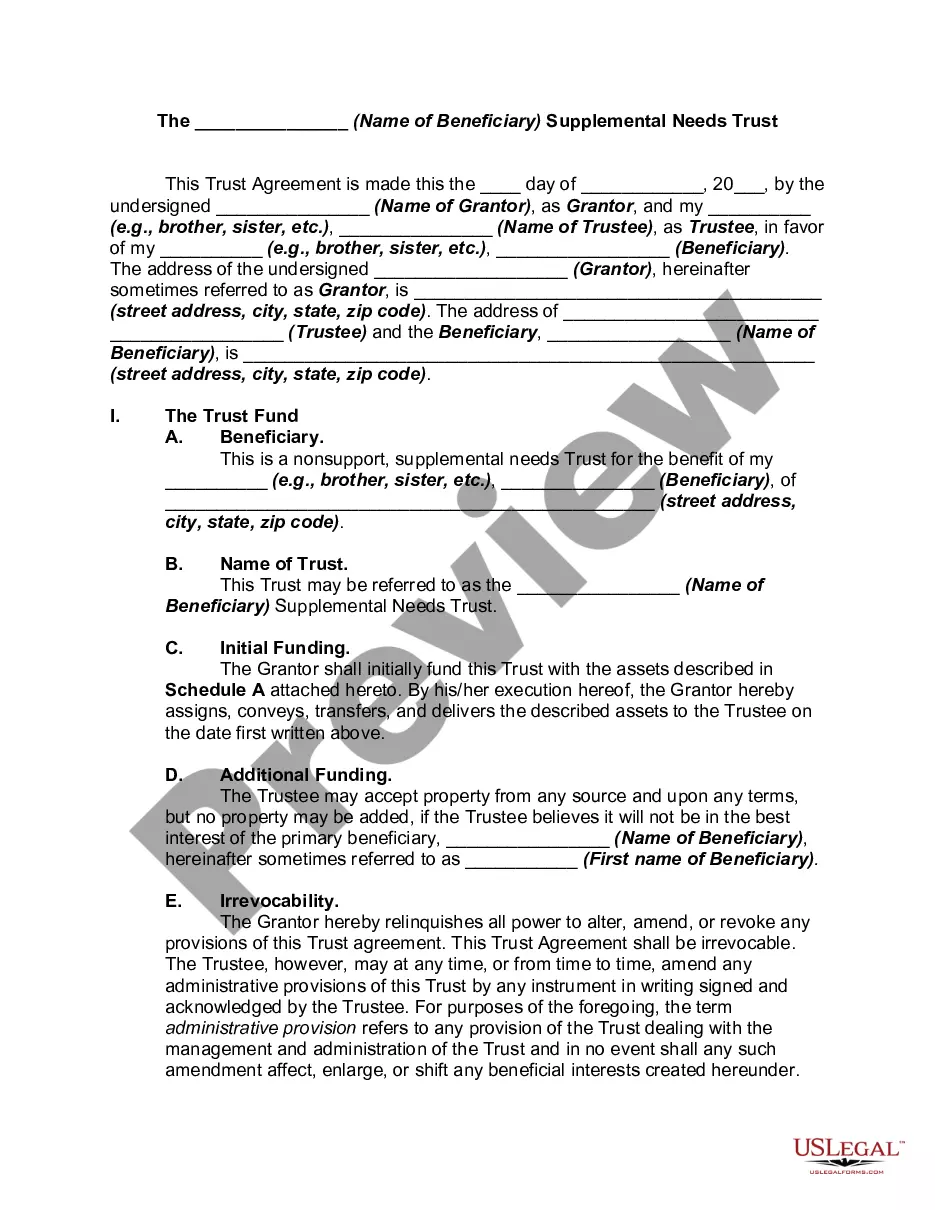
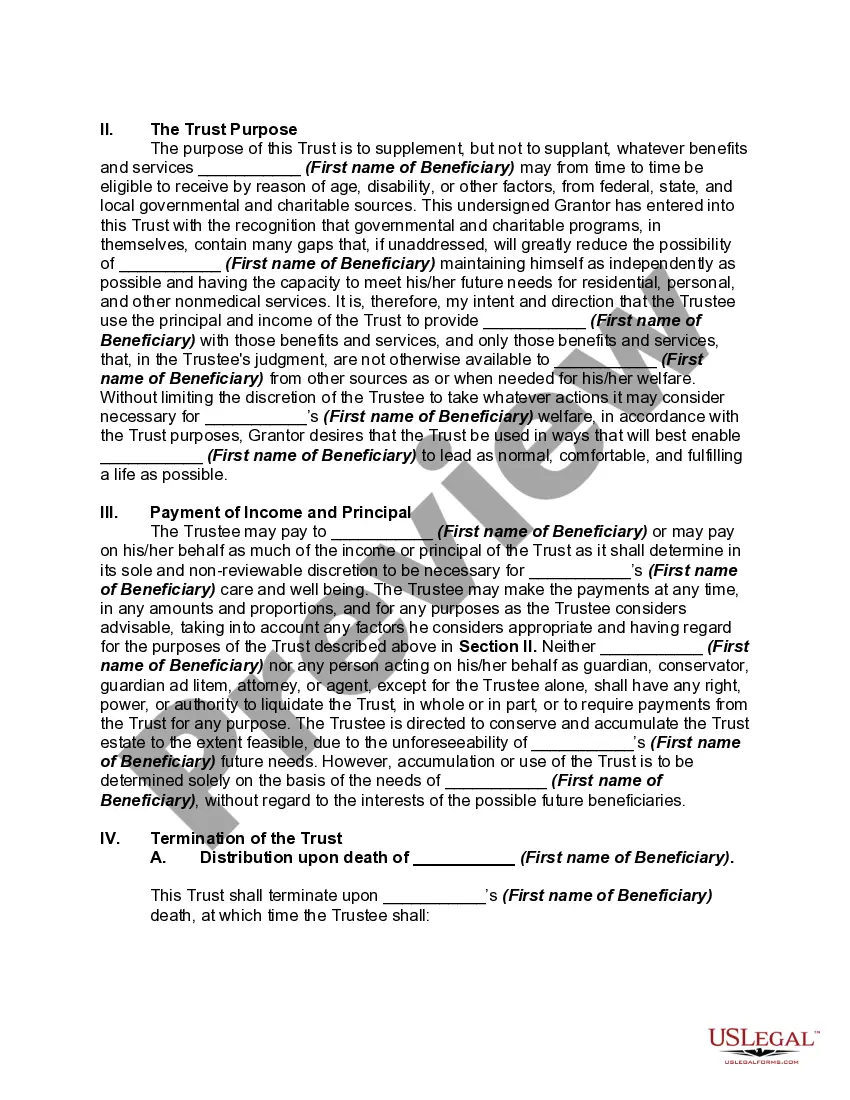
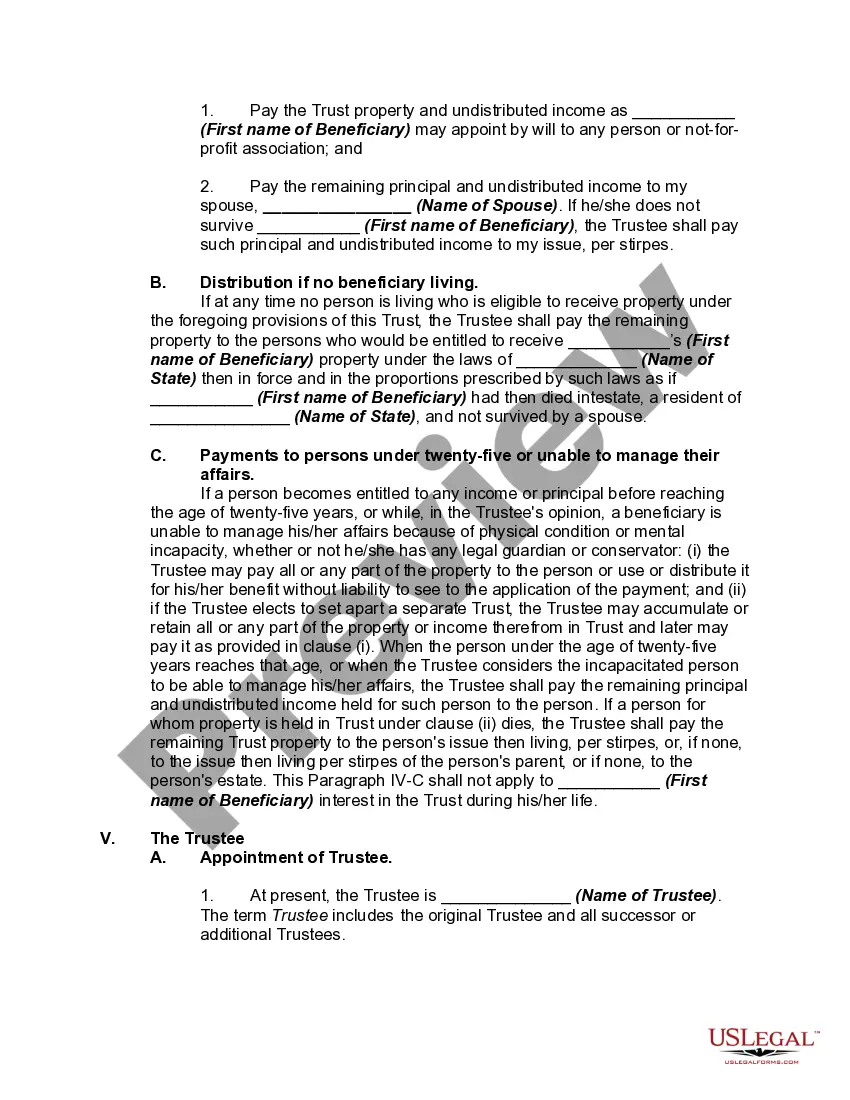
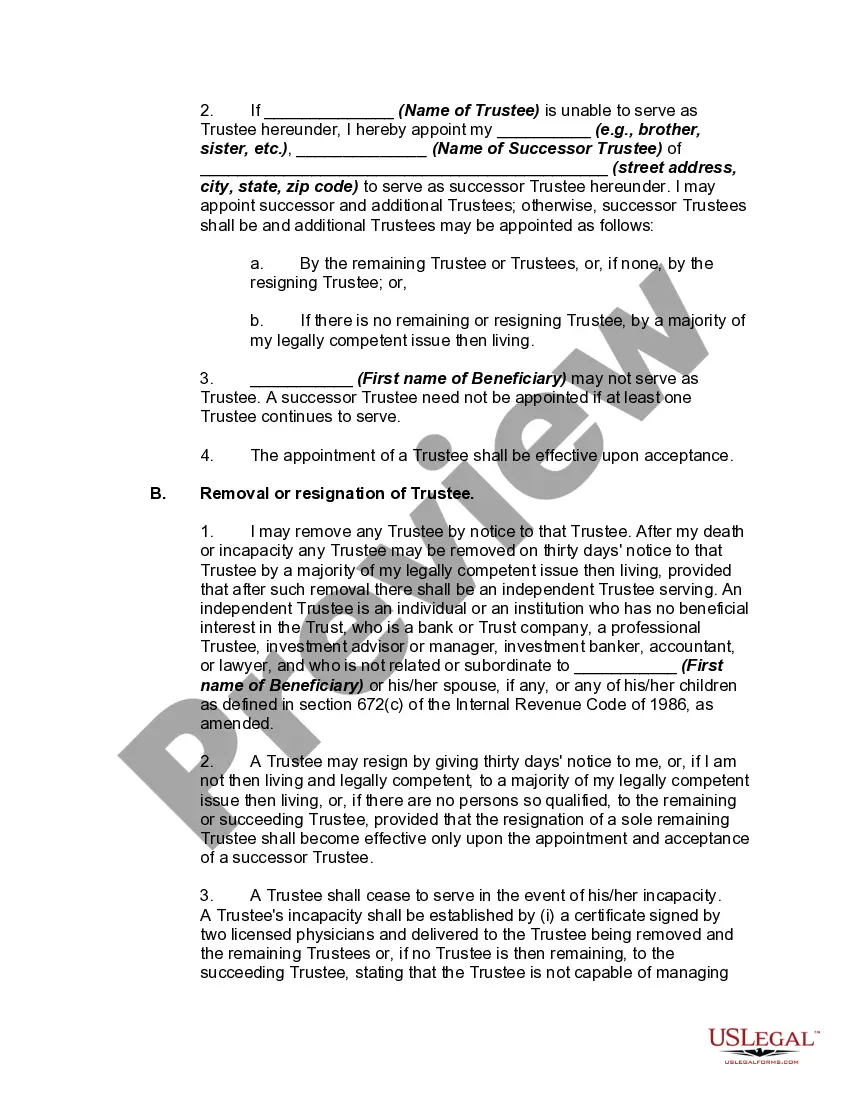
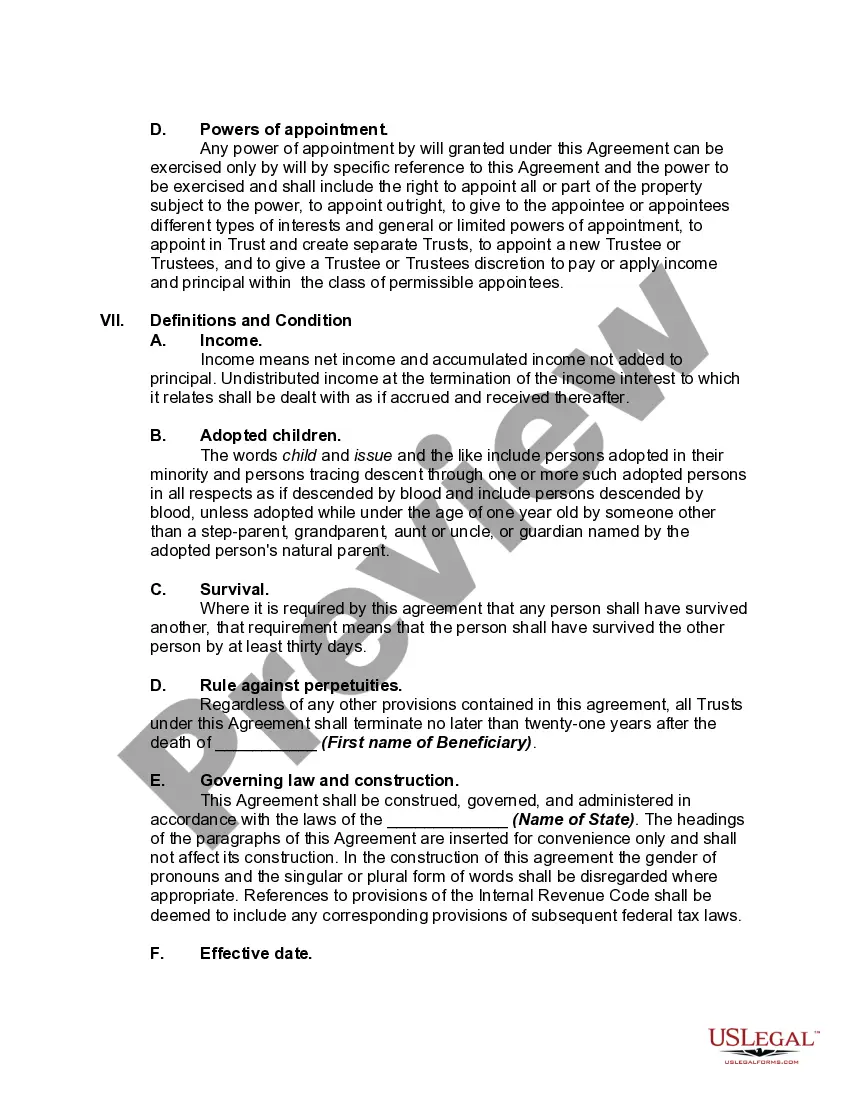
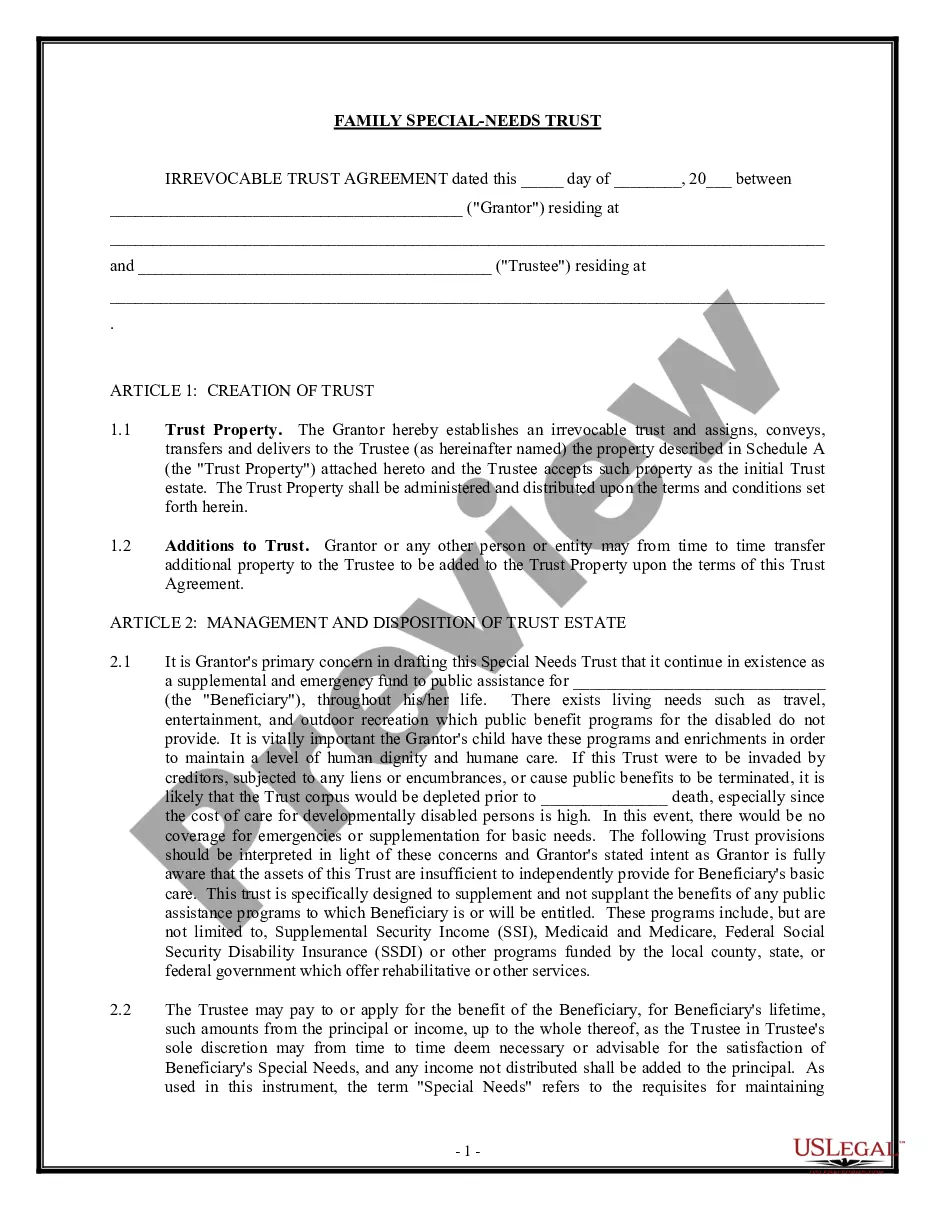
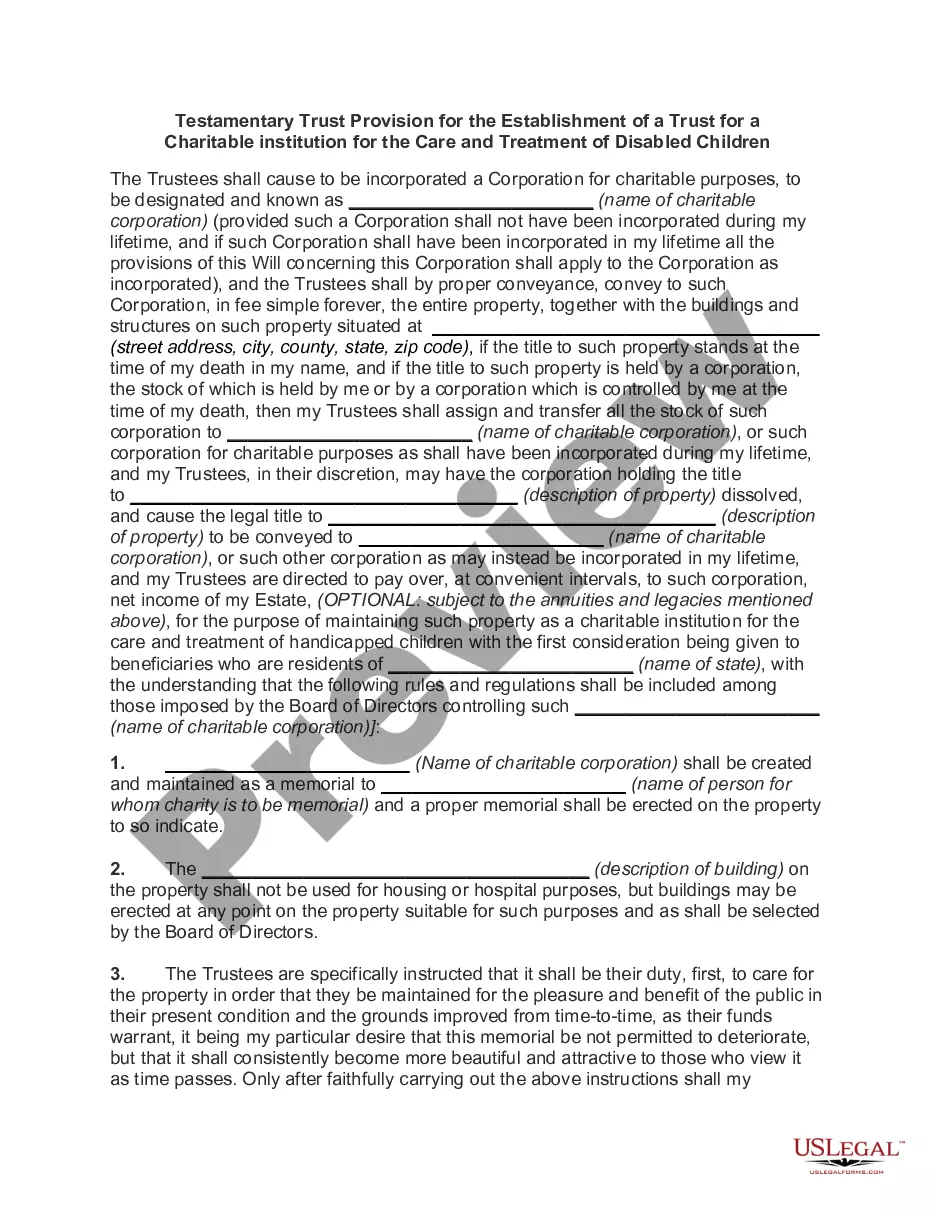
How to fill out Supplemental Needs Trust For Third Party - Disabled Beneficiary?
It’s clear that you cannot transform into a legal expert instantly, nor can you swiftly understand how to adequately prepare Third Party Beneficiary In Florida without possessing a particular skill set.
Creating legal documents is a lengthy process that necessitates specific training and ability. Thus, why not assign the task of preparing the Third Party Beneficiary In Florida to experts.
With US Legal Forms, one of the largest collections of legal documents, you have access to everything from court forms to templates for internal business correspondence. We recognize the significance of compliance and adherence to both federal and local regulations. Consequently, on our platform, all documents are tailored to location and current.
You can regain access to your forms from the My documents section at any time. If you’re a current customer, you can simply Log In, and locate and download the template from the same section.
Regardless of the intention of your forms—be it financial, legal, or personal—our platform has you covered. Experience US Legal Forms today!
- Locate the form you seek by utilizing the search feature at the top of the webpage.
- Preview it (if this feature is available) and review the accompanying description to see whether Third Party Beneficiary In Florida is what you're looking for.
- Restart your search if you require any different form.
- Create a free account and choose a subscription plan to acquire the form.
- Select Buy now. Once the purchase is finalized, you can obtain the Third Party Beneficiary In Florida, fill it out, print it, and deliver or mail it to the specified individuals or organizations.
Form popularity
FAQ
The third-party primary beneficiary rule in Florida states that a third party must be explicitly intended to receive benefits from a contract. Only intended beneficiaries can enforce their rights under the contract. This rule helps clarify expectations and responsibilities among the parties involved. Understanding this rule is critical when drafting or reviewing contracts.
The rules for third-party beneficiaries in Florida clarify who can enforce contract terms. Generally, an intended beneficiary has the right to seek enforcement, while an incidental beneficiary does not. Clear identification of beneficiaries in the contract is crucial for legal enforceability. This knowledge can help avoid disputes and ensure rightful claims.
In the context of contracts, third-party obligations refer to the responsibilities that either the original parties or third parties owe to each other. In Florida, a third-party beneficiary may have obligations that stem from the contract terms. Understanding these obligations protects the rights of all involved parties. It's essential to refer to the contract for specific details.
?A party is an intended beneficiary only if the parties to the contract clearly express, or the contract itself expresses, an intent to primarily and directly benefit the third party or a class of persons to which that party claims to belong.? Dingle v. Dellinger, 134 So. 3d 484 (Fla.
Therefore, the third party does not have any legal rights under the contract and cannot sue to enforce its terms. An example of an incidental beneficiary would be a construction company hired by a property owner to build a new house.
A promisee is a party who pays consideration to obtain the promisor's promise. For instance, a mother purchased medical insurance for her son from an insurance company; the mother is the promisee, the son is the third-party beneficiary and the company is the promisor.
party beneficiary is either a donee or a creditor. A donee beneficiary benefits from a contract gratuitously, not in exchange for a service he/she/it has provided. For example, assume that you enter into a contract with Ed, a painter, providing that Ed will paint Uncle Pete's home.
A donee beneficiary is when a contract is made expressly for giving a gift to a third party, the third party is known as the donee beneficiary. The most common donee beneficiary contract is a life insurance policy.