Third Party Beneficiary In California
Description




Get your form ready online
Our built-in tools help you complete, sign, share, and store your documents in one place.
Make edits, fill in missing information, and update formatting in US Legal Forms—just like you would in MS Word.
Download a copy, print it, send it by email, or mail it via USPS—whatever works best for your next step.
Sign and collect signatures with our SignNow integration. Send to multiple recipients, set reminders, and more. Go Premium to unlock E-Sign.
If this form requires notarization, complete it online through a secure video call—no need to meet a notary in person or wait for an appointment.
We protect your documents and personal data by following strict security and privacy standards.

Make edits, fill in missing information, and update formatting in US Legal Forms—just like you would in MS Word.

Download a copy, print it, send it by email, or mail it via USPS—whatever works best for your next step.

Sign and collect signatures with our SignNow integration. Send to multiple recipients, set reminders, and more. Go Premium to unlock E-Sign.

If this form requires notarization, complete it online through a secure video call—no need to meet a notary in person or wait for an appointment.

We protect your documents and personal data by following strict security and privacy standards.
Looking for another form?







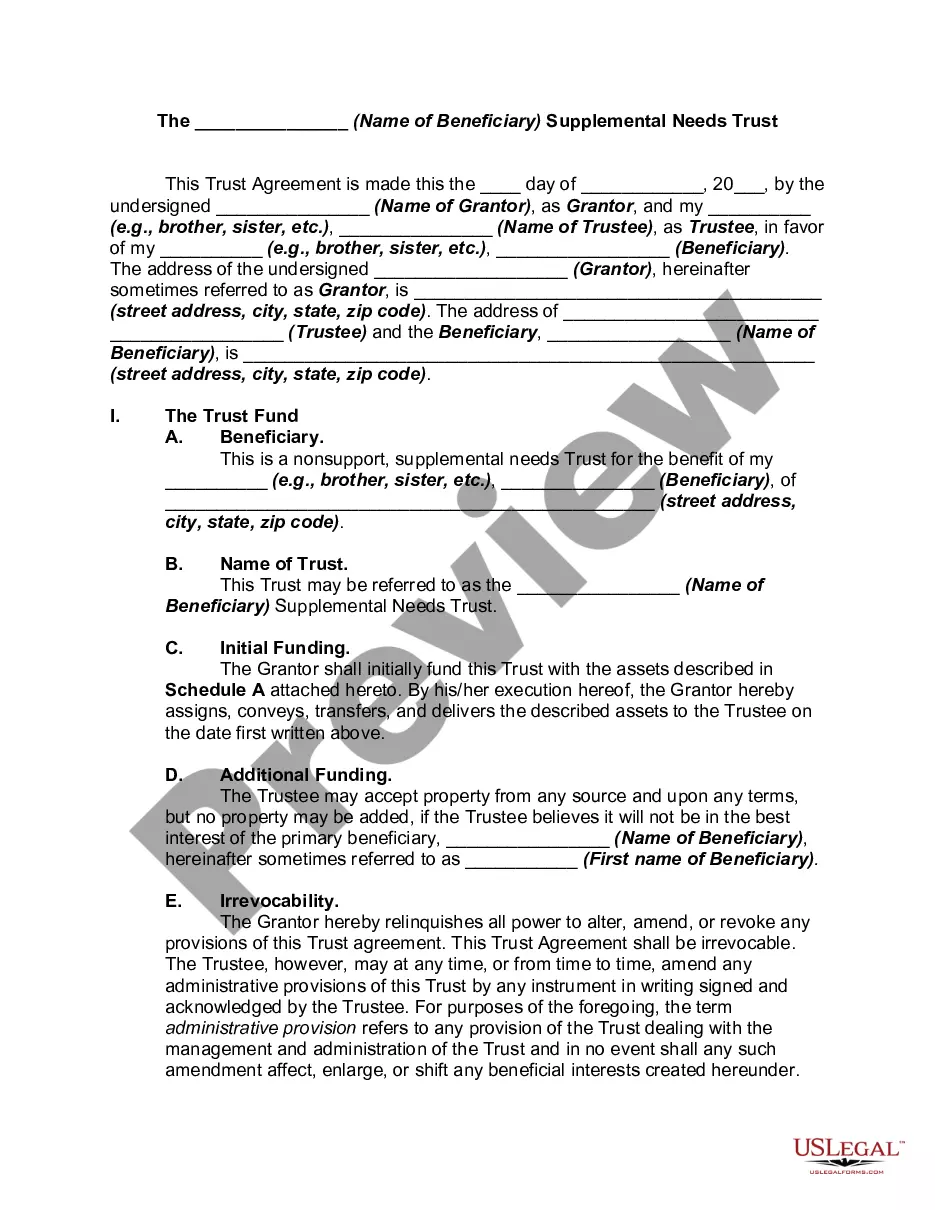
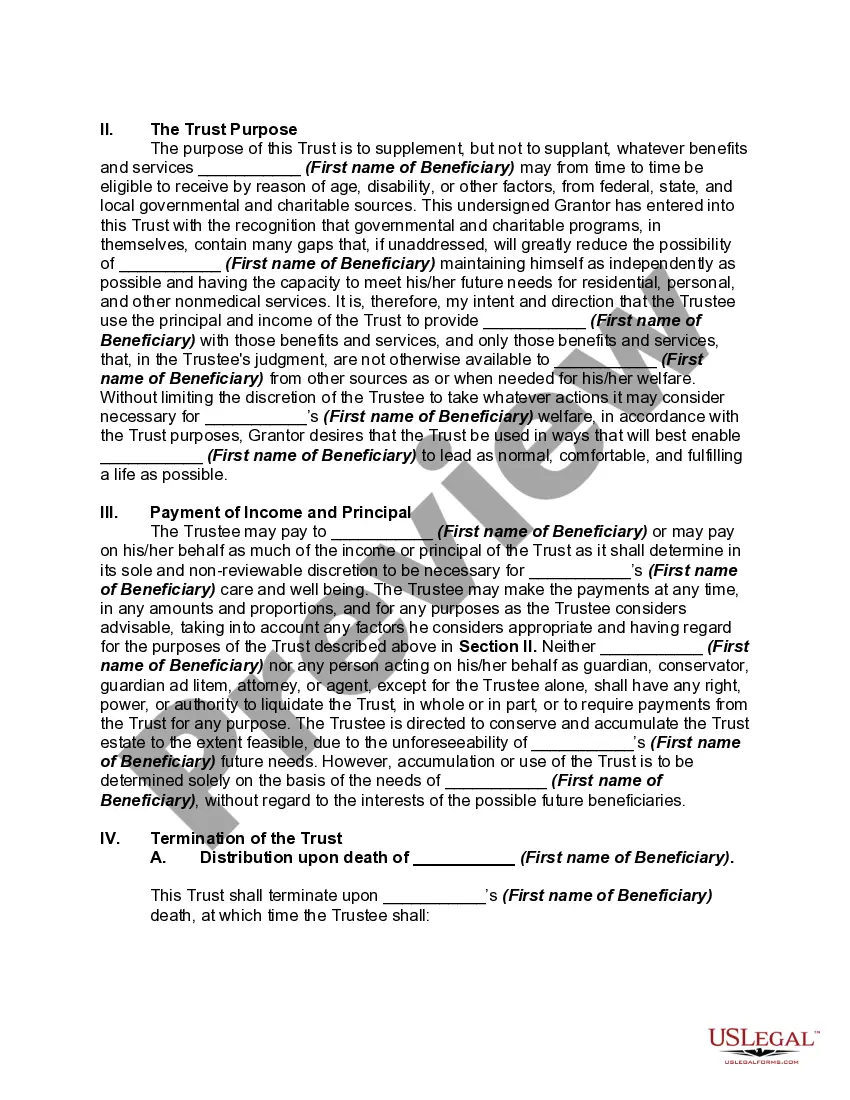
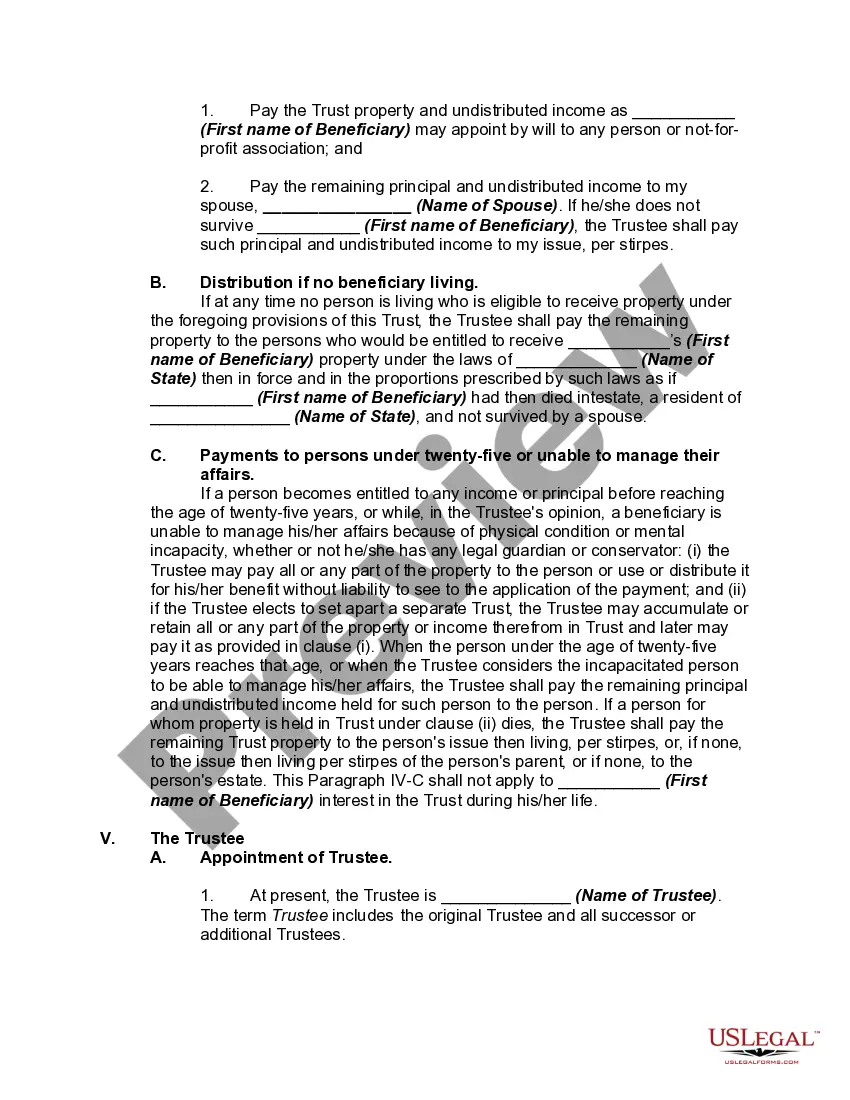
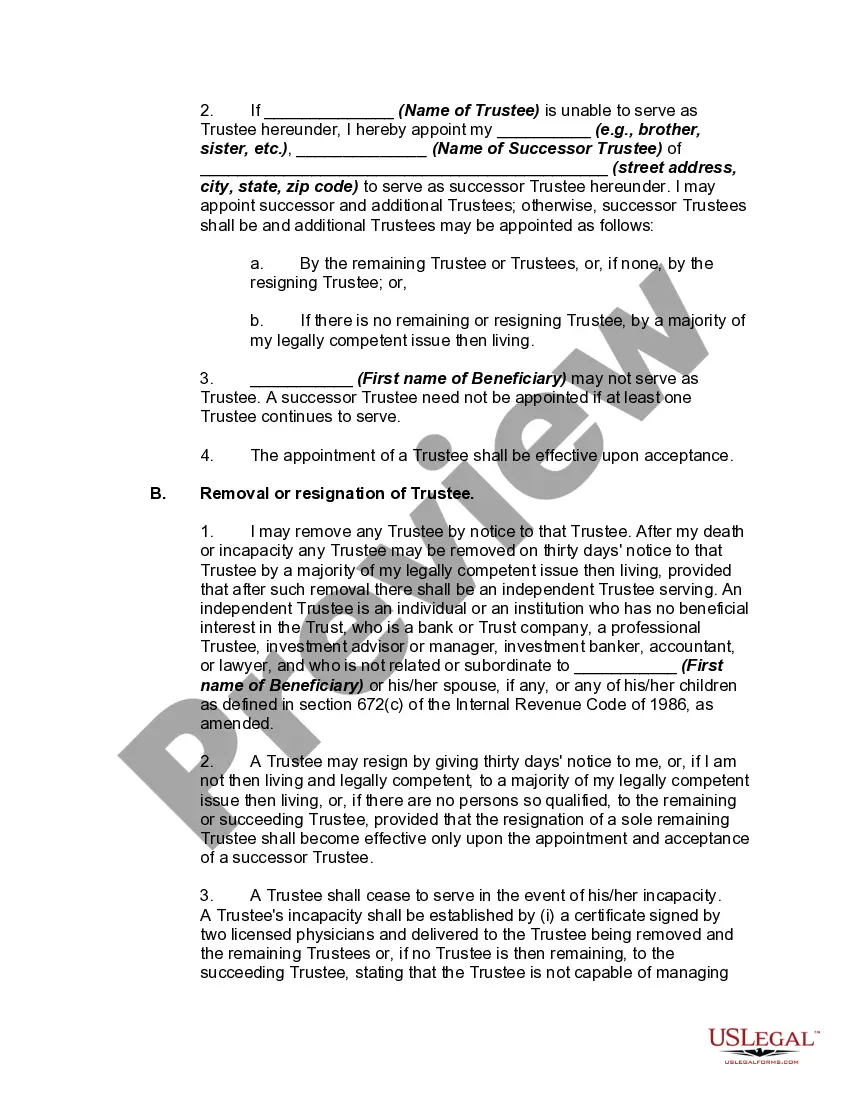
How to fill out Supplemental Needs Trust For Third Party - Disabled Beneficiary?
Creating legal documents from the ground up can frequently be daunting.
Certain scenarios may require extensive investigation and significant financial commitment.
If you’re looking for an easier and more budget-friendly method for drafting Third Party Beneficiary In California or any other paperwork without unnecessary complications, US Legal Forms is always available to assist you.
Our online repository of more than 85,000 current legal documents caters to nearly every aspect of your financial, legal, and personal matters.
Before proceeding to download the Third Party Beneficiary In California, keep these recommendations in mind: Review the document preview and descriptions to confirm you have located the correct form. Ensure that the selected document complies with your state and county's laws and regulations. Opt for the appropriate subscription plan to purchase the Third Party Beneficiary In California. Download the document. Then complete, sign, and print it out. US Legal Forms has a strong reputation and over 25 years of experience. Join us today to make document completion straightforward and efficient!
- With just a few taps, you can promptly obtain state- and county-compliant forms meticulously prepared by our legal professionals.
- Utilize our platform whenever you require trusted and dependable services to smoothly locate and retrieve the Third Party Beneficiary In California.
- If you're familiar with our services and have previously created an account, simply Log In, choose the template, and download it or re-download it later from the My documents section.
- Not registered yet? No problem. It only takes a few minutes to sign up and browse the library.
Form popularity
FAQ
Third-party obligations refer to the responsibilities or duties that a third party may have under a contract in California. While third parties typically cannot be held liable for breaches of contract, they may still have certain obligations if explicitly stated. Understanding these nuances can prevent misunderstandings and legal complications. If you find yourself in a complex situation, seeking guidance from platforms like US Legal Forms can be beneficial.
The third-party beneficiary must be referred to or named in the contract and the intent to provide a benefit to this third party must be irrevocable. (A typical example: a father pays tuition and enrolls his son in a college, signing the enrollment forms since his son is out of the country in the military.
Third party beneficiary may enforce. Civil Code §1559 codifies the common law principle that a third party for whose benefit a contract has been made may enforce the contract if it has not been rescinded.
If the beneficiary is a donee beneficiary, they cannot ask for delivery of a promised gift, but only for recovery under equitable principles of justice. However, there is an exception that the creditor beneficiary can sue on the debt, which is the original obligation, for getting debts paid by promisee.
"Under California law third party beneficiaries of contracts have the right to enforce the terms of the contract under Civil Code section 1559 which provides: 'A contract, made expressly for the benefit of a third person, may be enforced by him at any time before the parties thereto rescind it.
For instance, a mother purchased medical insurance for her son from an insurance company; the mother is the promisee, the son is the third-party beneficiary and the company is the promisor.