Damaging A Leased Car
Description
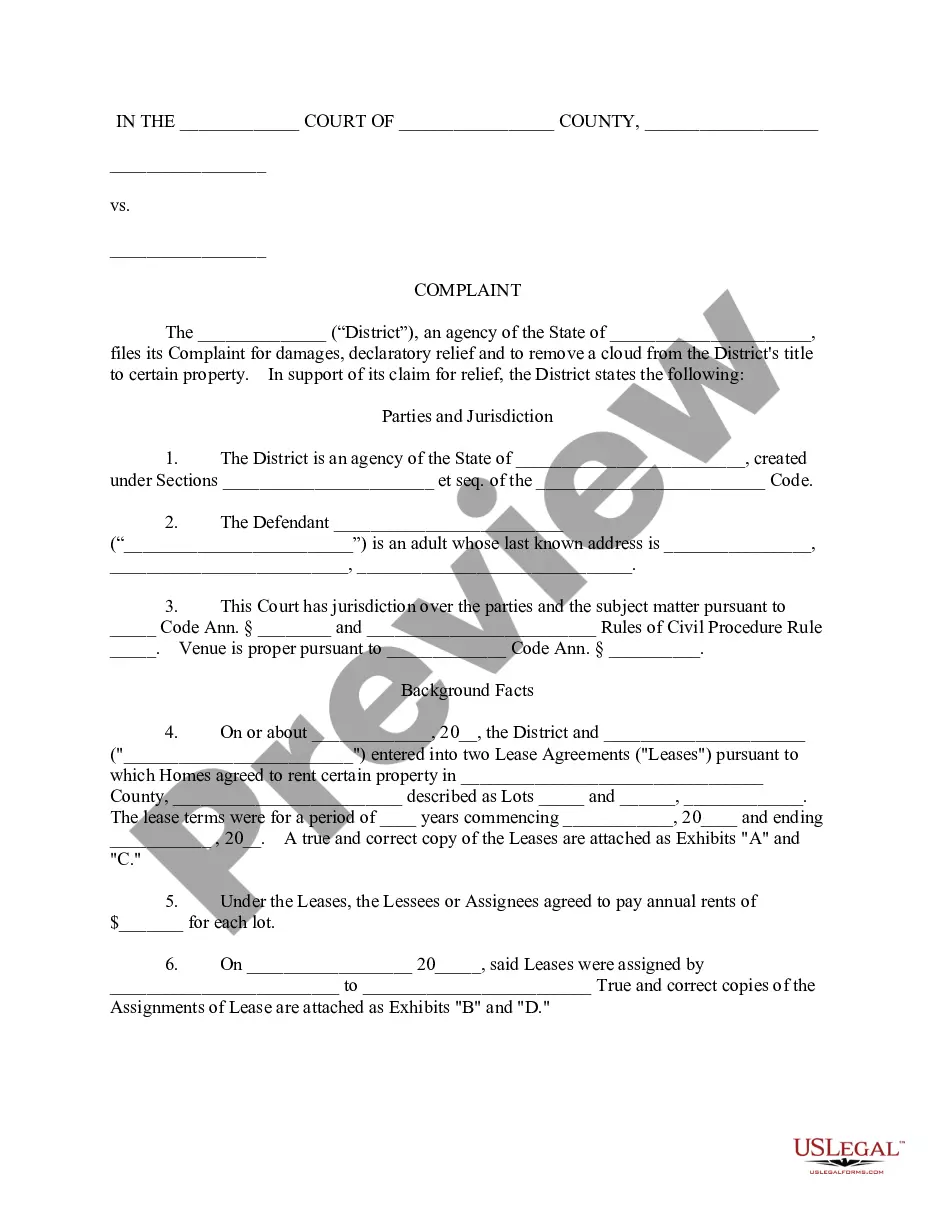
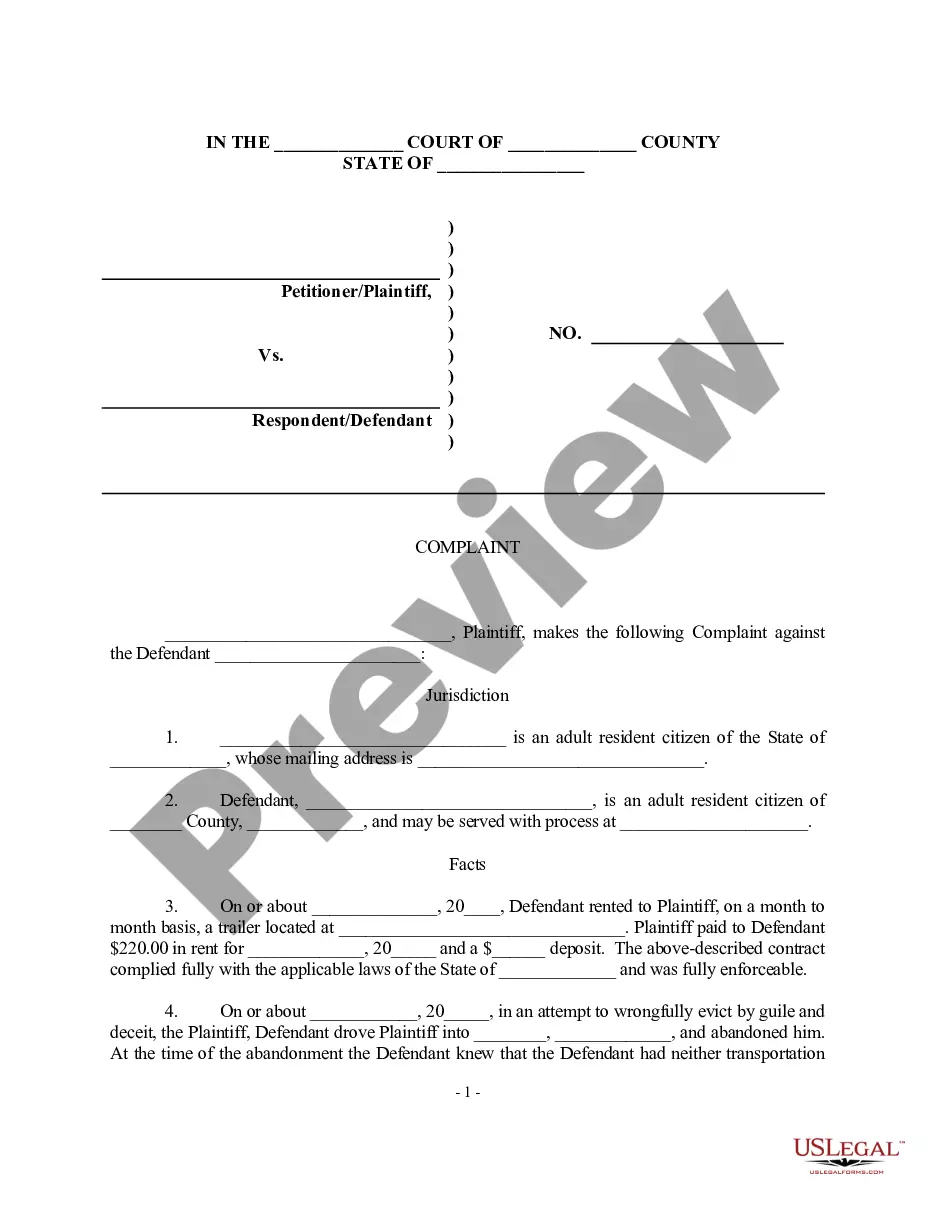
Get your form ready online
Our built-in tools help you complete, sign, share, and store your documents in one place.
Make edits, fill in missing information, and update formatting in US Legal Forms—just like you would in MS Word.
Download a copy, print it, send it by email, or mail it via USPS—whatever works best for your next step.
Sign and collect signatures with our SignNow integration. Send to multiple recipients, set reminders, and more. Go Premium to unlock E-Sign.
If this form requires notarization, complete it online through a secure video call—no need to meet a notary in person or wait for an appointment.
We protect your documents and personal data by following strict security and privacy standards.

Make edits, fill in missing information, and update formatting in US Legal Forms—just like you would in MS Word.

Download a copy, print it, send it by email, or mail it via USPS—whatever works best for your next step.

Sign and collect signatures with our SignNow integration. Send to multiple recipients, set reminders, and more. Go Premium to unlock E-Sign.

If this form requires notarization, complete it online through a secure video call—no need to meet a notary in person or wait for an appointment.

We protect your documents and personal data by following strict security and privacy standards.
Looking for another form?
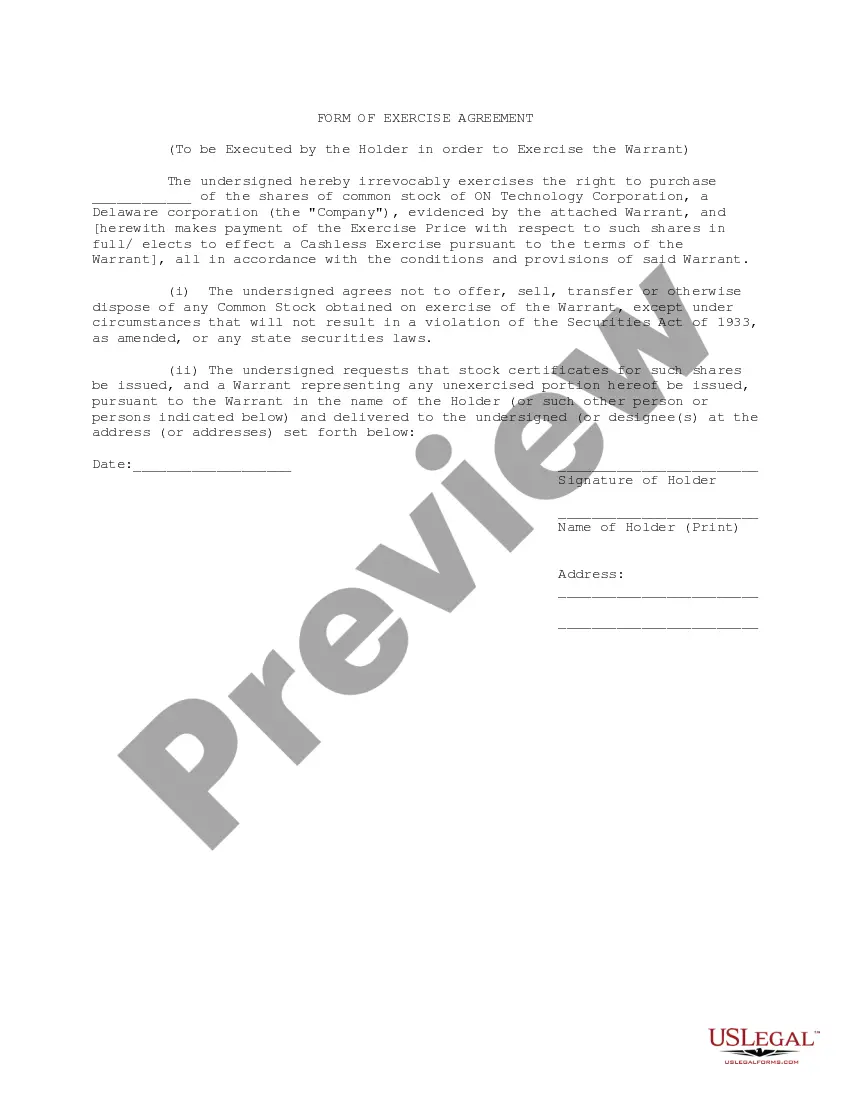
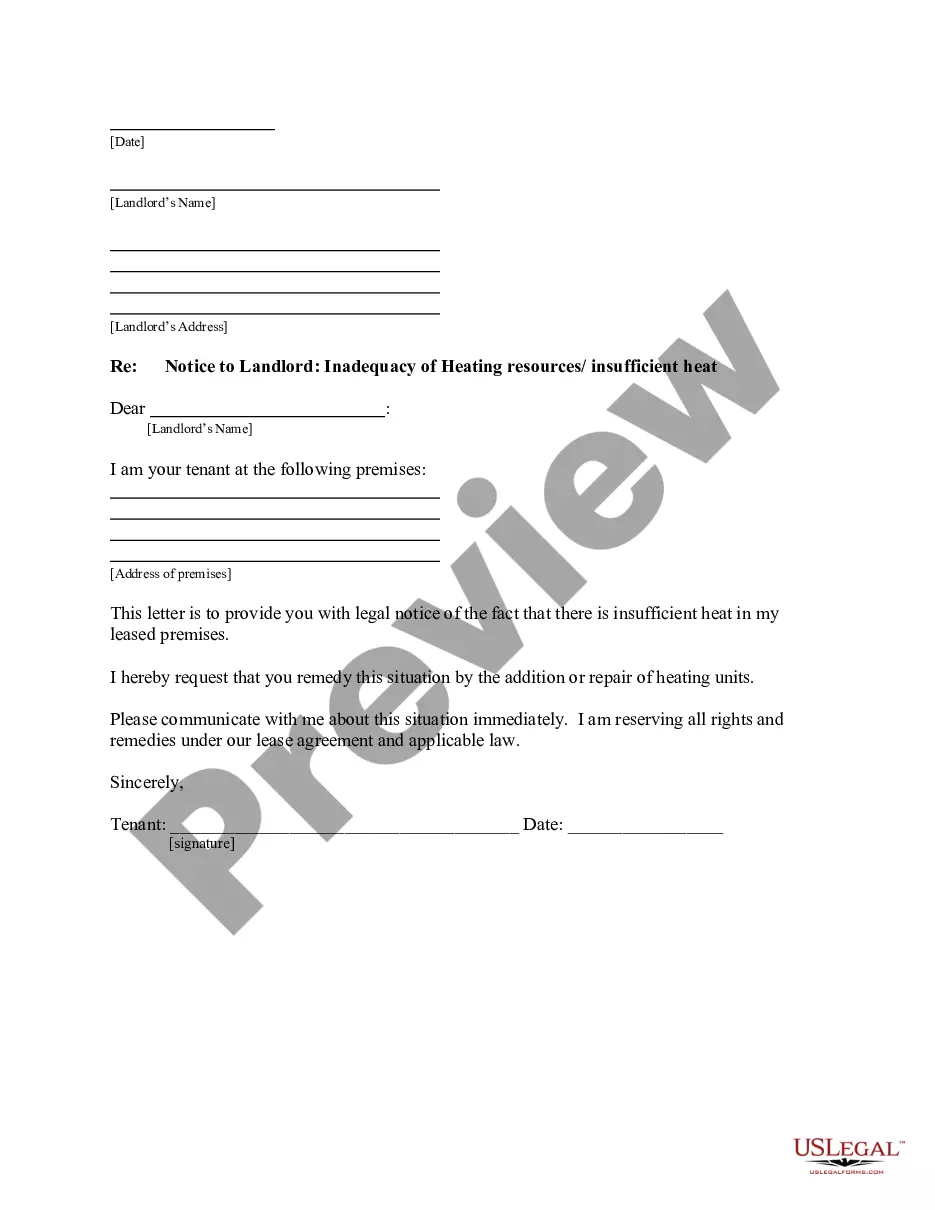
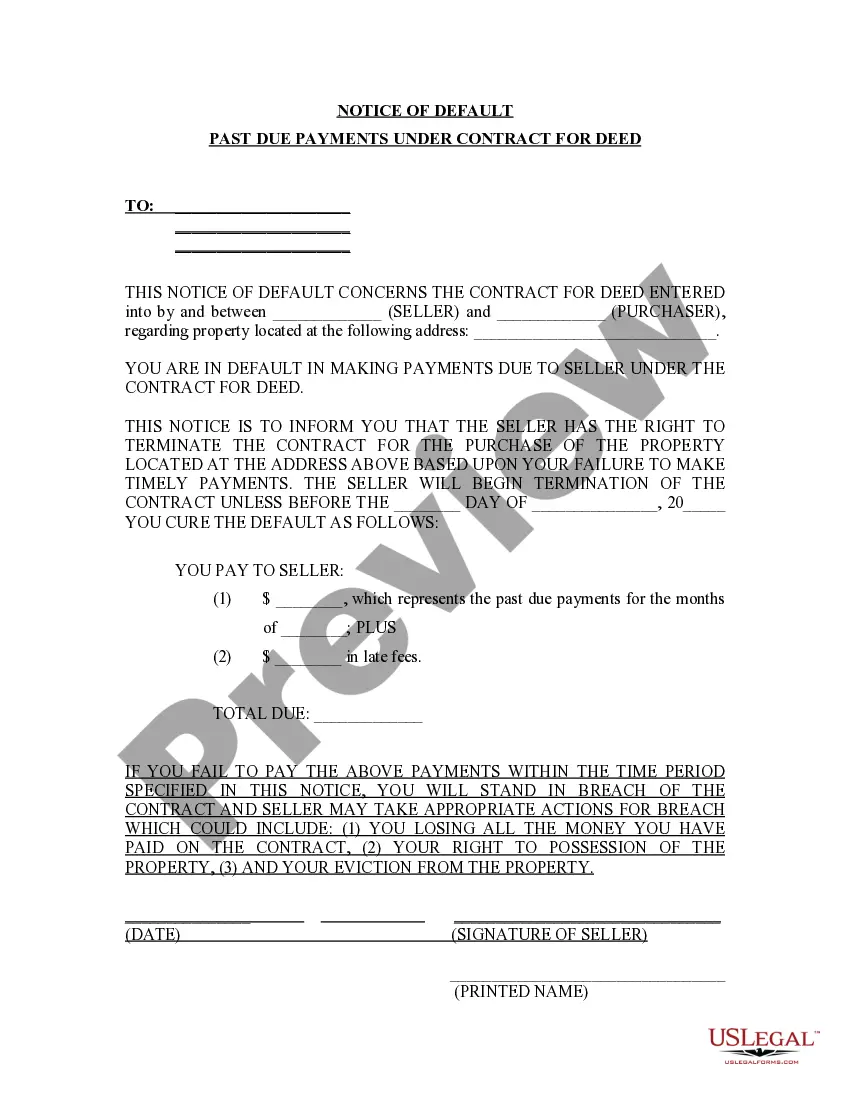
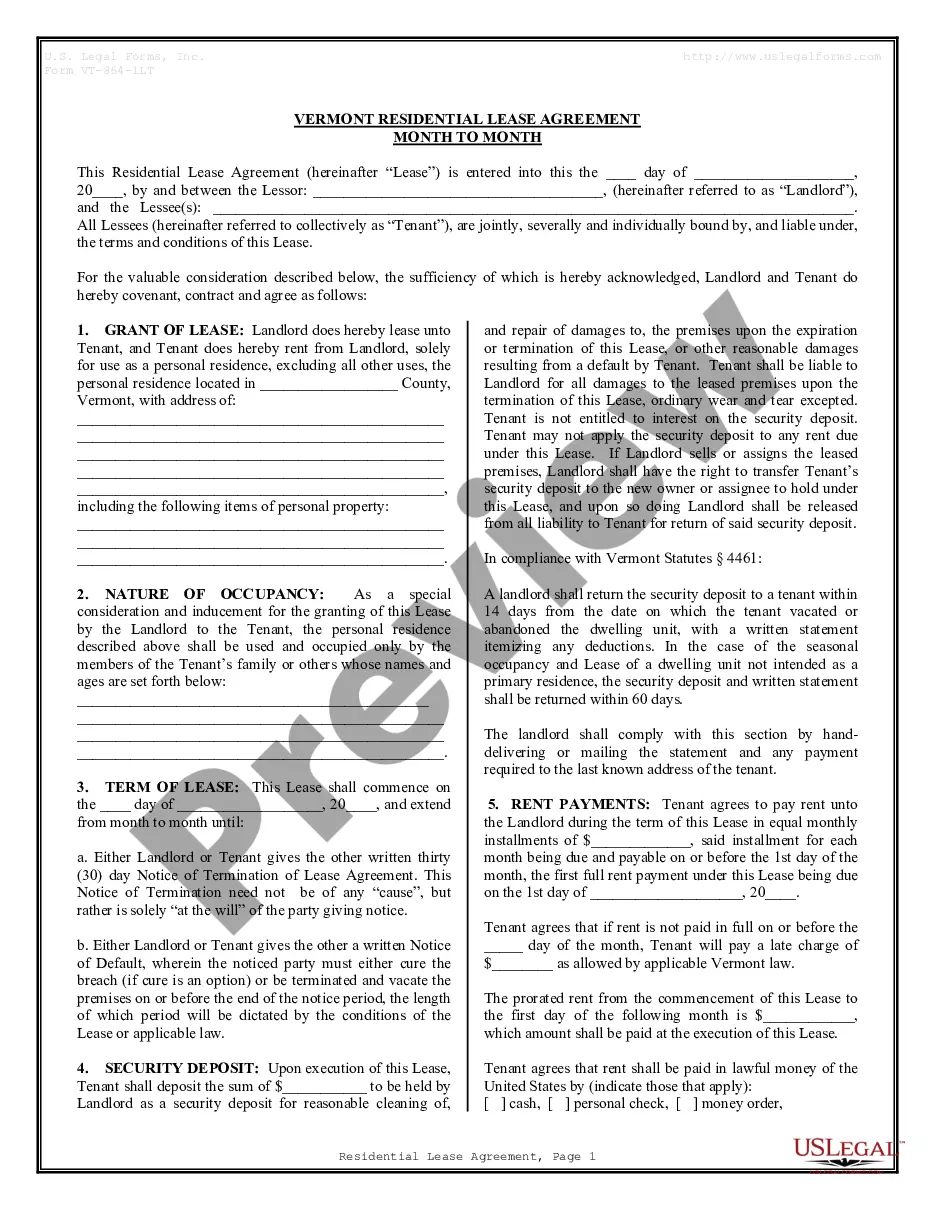
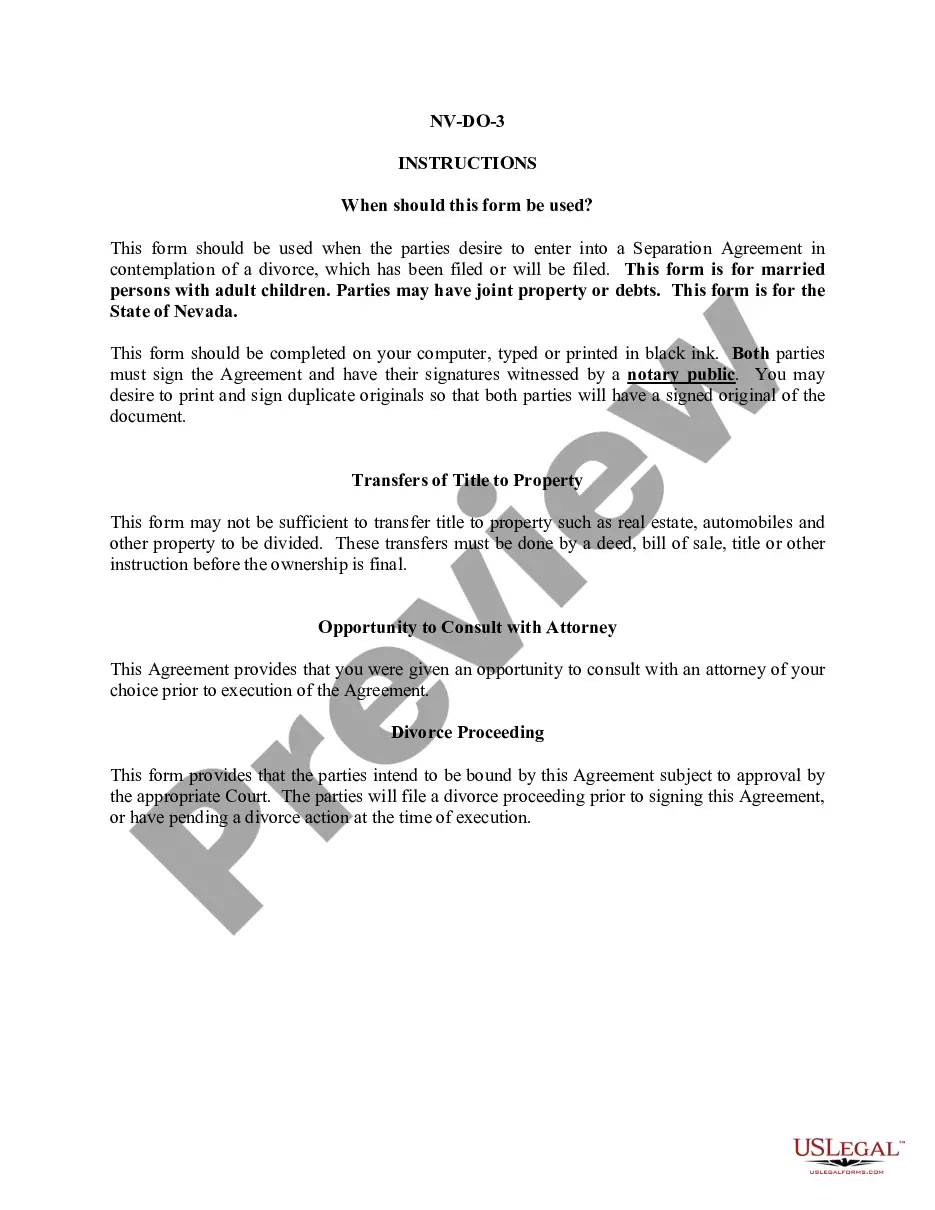

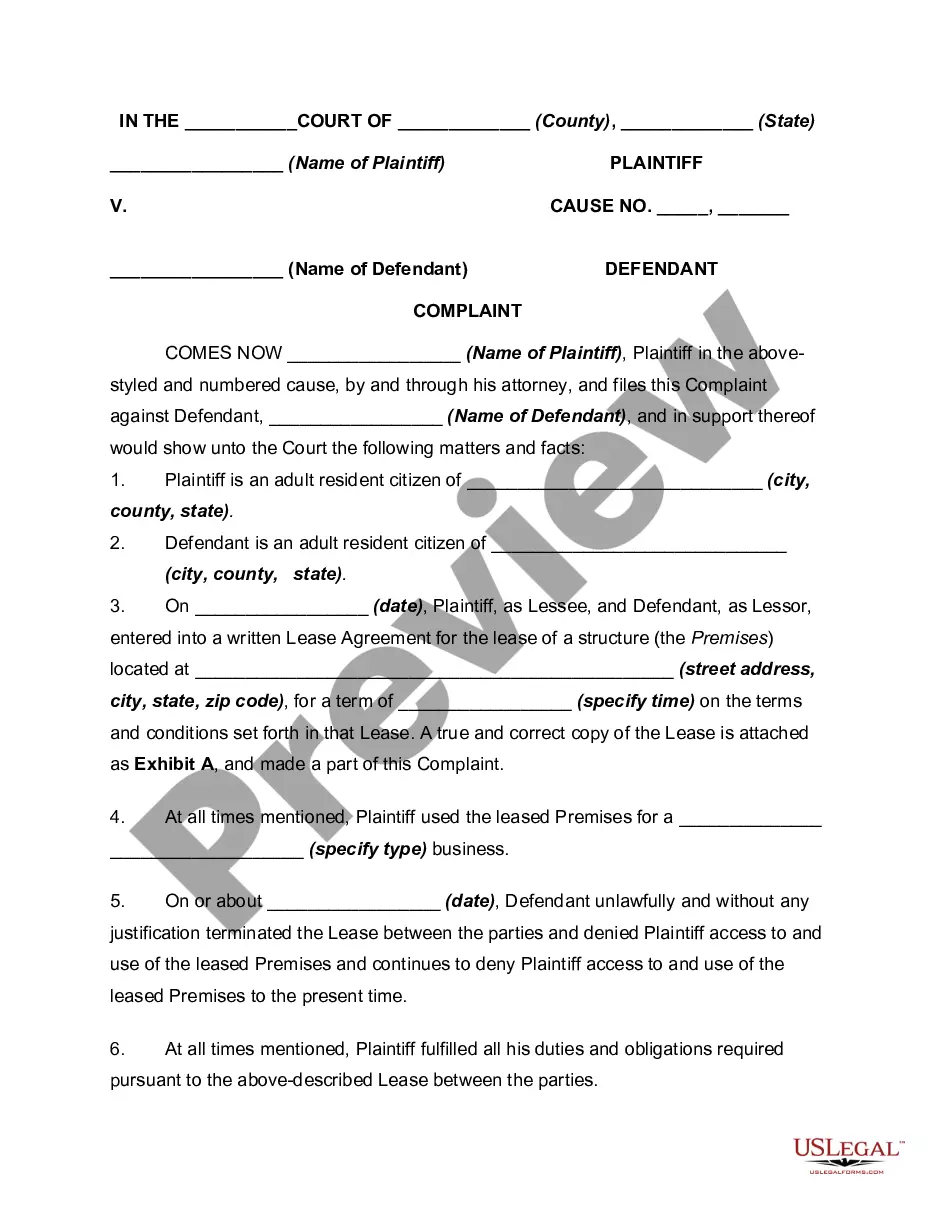
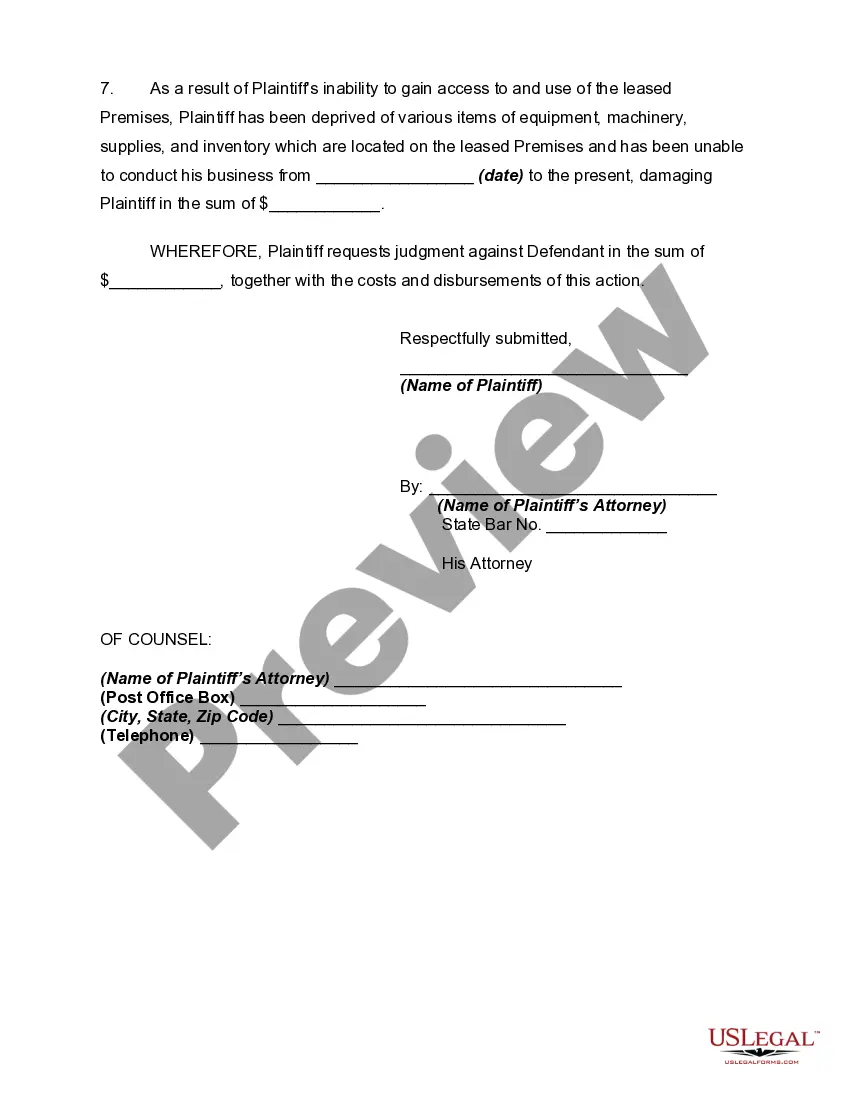
How to fill out Complaint - Damages For Wrongful Termination Of Lease?
Legal oversight may be daunting, even for skilled professionals.
When you are on the lookout for a Damaged A Leased Vehicle and lack the time to spend searching for the right and current version, the processes may be challenging.
Benefit from a valuable resource compilation of articles, guidelines, manuals, and materials related to your situation and needs.
Save time and energy searching for the documents you require, and utilize US Legal Forms’ sophisticated search and Preview feature to locate Damaged A Leased Vehicle and acquire it.
Confirm that the template is authorized in your state or county. Select Buy Now once you're ready. Choose a monthly subscription plan. Opt for the format you require, and Download, complete, sign, print, and send out your documents. Take advantage of the US Legal Forms online library, backed with 25 years of experience and reliability. Transform your everyday document management into a simple and user-friendly process today.
- If you have a subscription, Log In to your US Legal Forms account, search for the document, and obtain it.
- Check the My documents tab to review the documents you've previously saved and manage your files as you prefer.
- If this is your initial experience with US Legal Forms, set up a free account and gain unlimited access to all advantages of the library.
- Here are the steps to take after accessing the form you need.
- Ensure it is the correct form by previewing it and reviewing its description.
- Access state- or county-specific legal and business documents.
- US Legal Forms meets any requirements you might have, from personal to business paperwork, all in one location.
- Utilize advanced tools to complete and manage your Damaged A Leased Vehicle.
Form popularity
FAQ
When you damage a leased car, the process generally involves notifying the leasing company and assessing the damage. The company will evaluate the extent of the damage and inform you about potential fees. Depending on your lease agreement, you may bear the repair costs and could face penalties upon returning the vehicle. Being proactive in maintaining the car can minimize these issues.
In most cases, if you damage a leased car, you, as the lessee, are responsible for any repairs. This responsibility means that you will need to cover the costs of fixing damages, whether they are minor or significant. Understanding this can help you budget appropriately for upkeep and repairs during the lease term. Always read your leasing agreement to clarify repair responsibilities.
Body damage plays a critical role in reducing the resale value of a car, especially when damaging a leased car. Depending on the severity and location of the damage, it can decrease the vehicle's value significantly. For instance, moderate dents or scratches can diminish value by several hundred to thousands of dollars. It’s important to consider these factors when leasing a vehicle and maintaining it.
If you find yourself in a situation involving damaging a leased car and breaking the lease agreement, you may face significant penalties. Typically, these penalties can include early termination fees and payment of remaining lease payments. Moreover, the leasing company may seek to recover costs associated with repairing the car. Knowing these potential consequences can help you make informed decisions.
When considering damaging a leased car, it’s essential to know what constitutes acceptable damage as defined by Leaseplan. Generally, minor scratches, small dents, and normal wear and tear fall under acceptable categories. However, excessive damage, such as significant dents or large scratches, may incur additional fees. Always refer to your lease agreement for specific terms regarding acceptable damage.
If you scratch your leased car, you may face repair expenses or charges during the lease return. Most lease agreements define acceptable wear and tear, which typically excludes significant scratches. It's wise to document the scratch and seek an estimate for repairs to understand potential costs. Being proactive about scratching your leased car can help you manage any fees more effectively.
If you are unhappy with your leased car, first check your lease agreement for any early termination clauses. It might be possible to transfer your lease or trade it for another vehicle. Alternatively, consider contacting your leasing company to discuss options that may help with your dissatisfaction. Remember, taking action early can mitigate issues related to damaging a leased car in the long run.
Yes, you should report any damage to a leased car promptly. Failing to report damages could lead to additional fees when your lease concludes. Transparency during the lease term is key, as it allows the leasing company to make informed decisions. This practice will ultimately help you avoid unexpected charges related to damaging a leased car.
When you damage a leased car, the damage is typically assessed at the end of your lease term. Most lease agreements include a condition clause that specifies allowable wear and tear. If the damage exceeds this allowance, you may face extra charges. Therefore, it's crucial to understand your lease terms regarding damaging a leased car.
Damage on a leased car is typically evaluated upon return, where the leasing company assesses any wear and tear. You may be held liable for costs associated with repairs if they exceed normal usage, leading to added fees. Being proactive about repairs can prevent issues related to damaging a leased car when your lease term ends.