Writ In Legal Definition
Description


Get your form ready online
Our built-in tools help you complete, sign, share, and store your documents in one place.
Make edits, fill in missing information, and update formatting in US Legal Forms—just like you would in MS Word.
Download a copy, print it, send it by email, or mail it via USPS—whatever works best for your next step.
Sign and collect signatures with our SignNow integration. Send to multiple recipients, set reminders, and more. Go Premium to unlock E-Sign.
If this form requires notarization, complete it online through a secure video call—no need to meet a notary in person or wait for an appointment.
We protect your documents and personal data by following strict security and privacy standards.

Make edits, fill in missing information, and update formatting in US Legal Forms—just like you would in MS Word.

Download a copy, print it, send it by email, or mail it via USPS—whatever works best for your next step.

Sign and collect signatures with our SignNow integration. Send to multiple recipients, set reminders, and more. Go Premium to unlock E-Sign.

If this form requires notarization, complete it online through a secure video call—no need to meet a notary in person or wait for an appointment.

We protect your documents and personal data by following strict security and privacy standards.
Looking for another form?


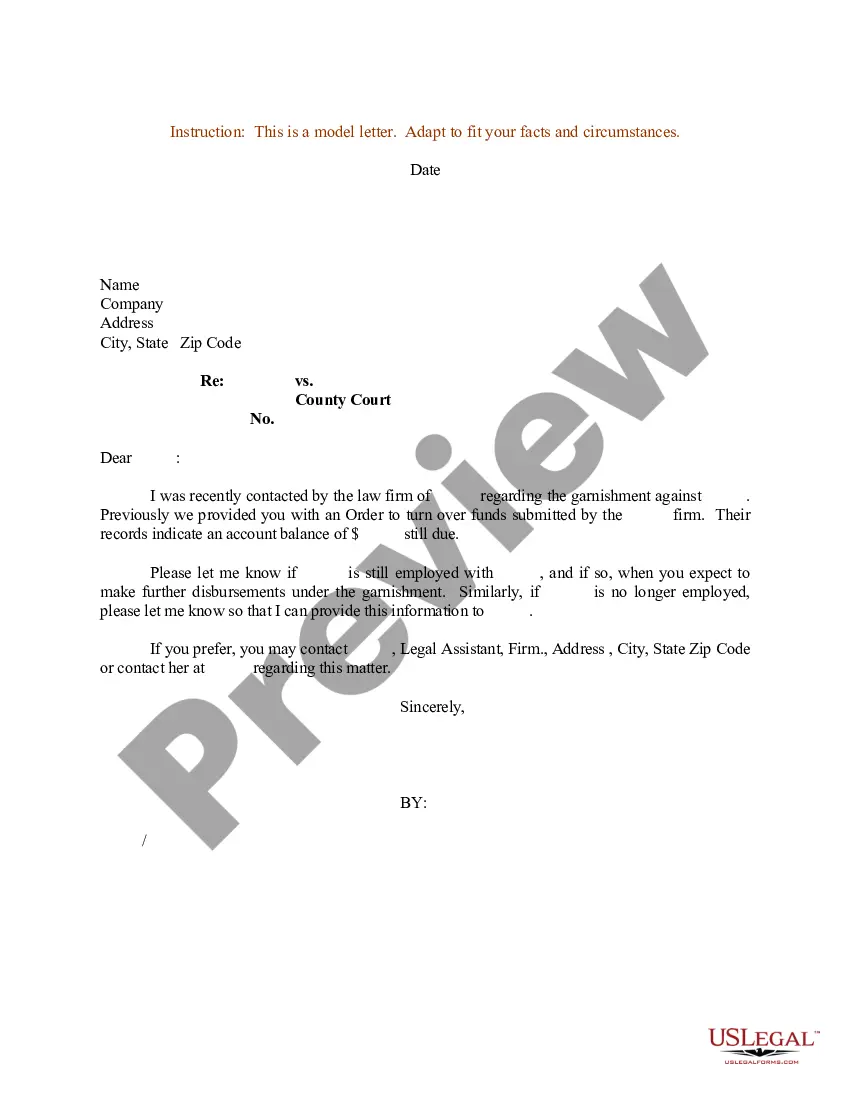
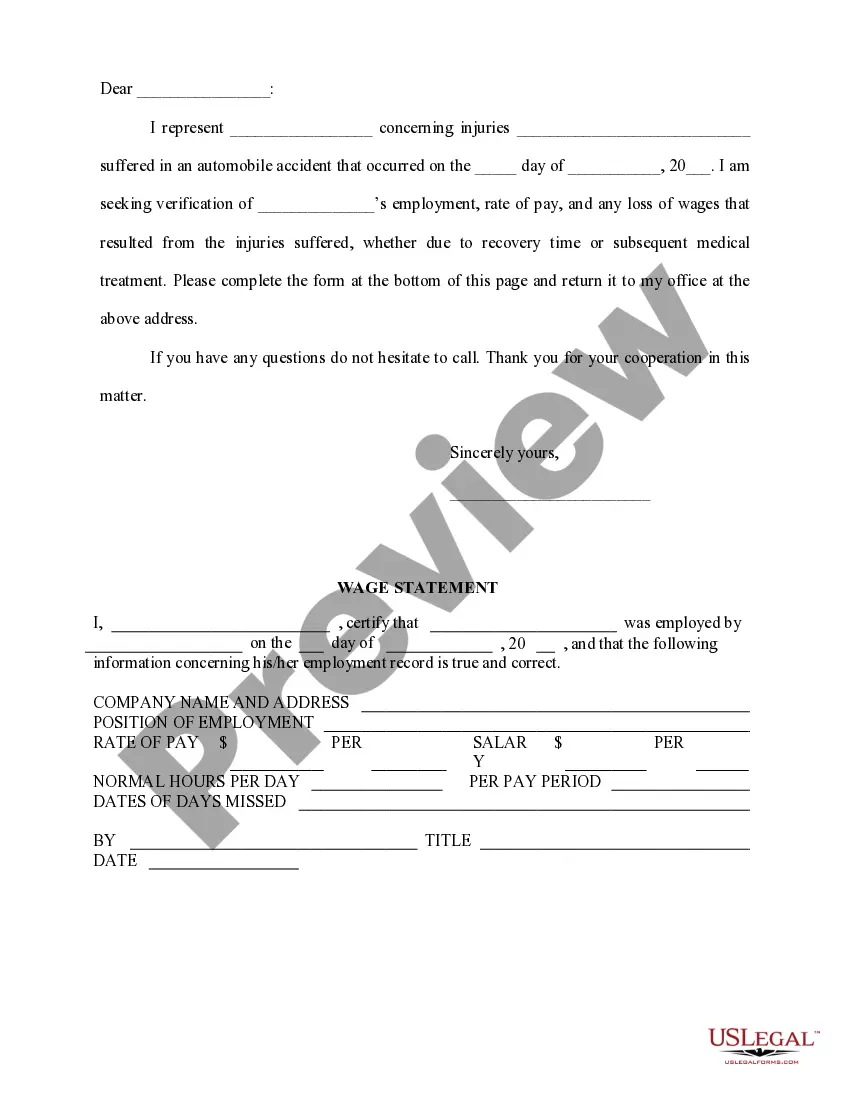
How to fill out Sample Letter For Writ Of Garnishment?
It's clear that you cannot become a legal specialist instantly, nor can you master how to swiftly draft Writ In Legal Definition without possessing a specialized skill set.
Producing legal documents is a lengthy process that demands specific training and expertise. So why not entrust the creation of the Writ In Legal Definition to the experts.
With US Legal Forms, which boasts one of the most comprehensive libraries of legal documents, you can find everything from court filings to templates for internal corporate communication. We understand the significance of compliance and adherence to both federal and local regulations. That’s why, on our website, all templates are location-specific and current.
You can access your documents again from the My documents tab anytime. If you are an existing client, you can easily Log In, and find and download the template from the same section.
No matter the intent behind your documentation—whether financial, legal, or personal—our platform is here to assist you. Give US Legal Forms a try today!
- Locate the form you require using the search bar located at the top of the page.
- Preview it (if this option is available) and examine the accompanying description to see if Writ In Legal Definition is what you need.
- If you’re looking for another template, begin your search anew.
- Create a free account and select a subscription plan to purchase the form.
- Click Buy now. Once the payment is complete, you can download the Writ In Legal Definition, complete it, print it, and send or dispatch it to the relevant individuals or organizations.
Form popularity
FAQ
A writ is essentially a legal order that directs an individual or entity to perform a specific act or refrain from doing something. It carries significant weight within the legal framework and facilitates the enforcement of rights. In grasping the term 'writ,' one deepens their comprehension of writ in legal definition, enhancing their understanding of the law's function.
The five types of writs are: Habeas Corpus. Mandamus. Prohibition. Certiorari. Quo-Warranto.
A writ of attachment is a court order demanding a debtor's property be seized prior to a judgment in the creditor's favor. A writ of attachment may be used in bankruptcy cases and in eviction cases (when a tenant will not leave on their own and will not pay rent).
Another example of a writ is the writ of seizure and sale is one example of a writ. When this writ is drafted by a court, it gives the petitioning party the right to take over ownership of a piece of property from someone else.
A writ is an order issued by a legal authority with administrative or judicial powers, typically a court.
There are three main types of writs: writs of mandate (sometimes called ?mandamus?), writs of prohibition, and writs of review (sometimes called ?certiorari?).