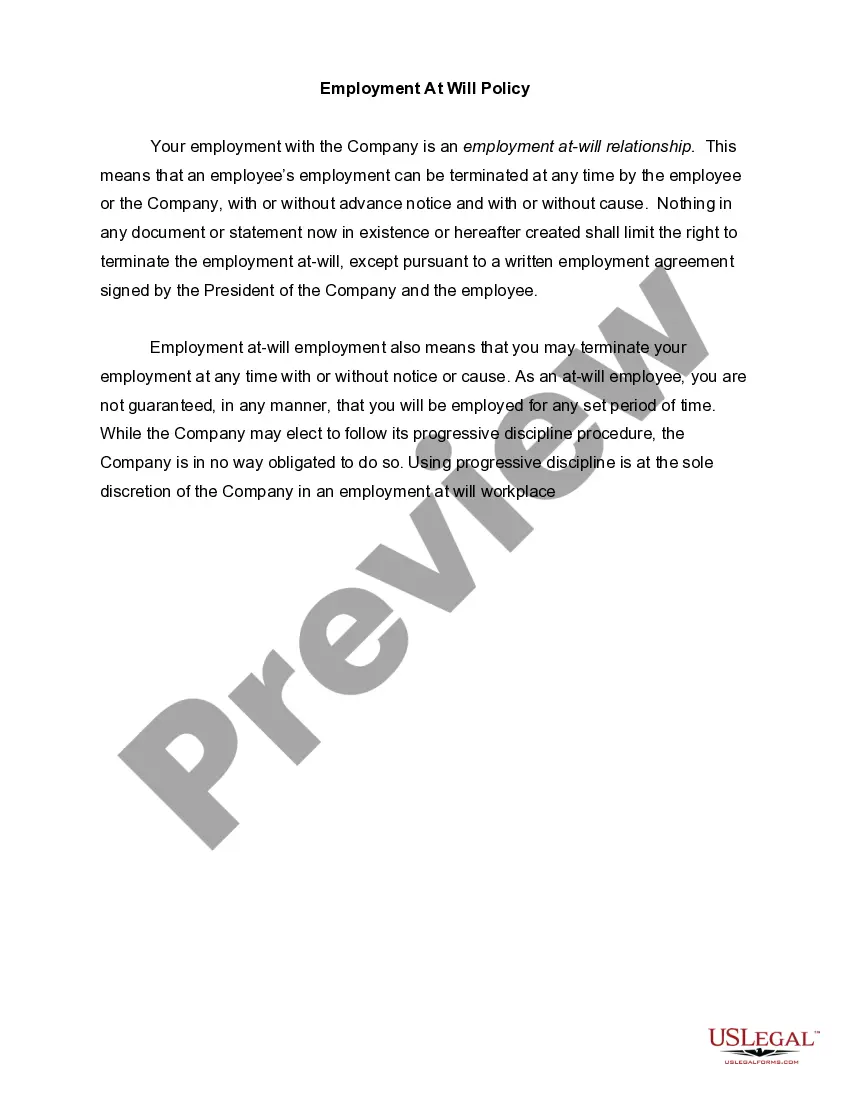
Employment Will Policy Statement For The Future
Description
Get your form ready online
Our built-in tools help you complete, sign, share, and store your documents in one place.
Make edits, fill in missing information, and update formatting in US Legal Forms—just like you would in MS Word.
Download a copy, print it, send it by email, or mail it via USPS—whatever works best for your next step.
Sign and collect signatures with our SignNow integration. Send to multiple recipients, set reminders, and more. Go Premium to unlock E-Sign.
If this form requires notarization, complete it online through a secure video call—no need to meet a notary in person or wait for an appointment.
We protect your documents and personal data by following strict security and privacy standards.

Make edits, fill in missing information, and update formatting in US Legal Forms—just like you would in MS Word.

Download a copy, print it, send it by email, or mail it via USPS—whatever works best for your next step.

Sign and collect signatures with our SignNow integration. Send to multiple recipients, set reminders, and more. Go Premium to unlock E-Sign.

If this form requires notarization, complete it online through a secure video call—no need to meet a notary in person or wait for an appointment.

We protect your documents and personal data by following strict security and privacy standards.
Looking for another form?

How to fill out Employment At Will Policy?
- If you have prior experience with US Legal Forms, simply log in to your account. Confirm your subscription is active before downloading the required form template.
- For first-time users, start by previewing the available forms. Analyze the descriptions to select the right document that meets your requirements and complies with local laws.
- If the desired template doesn't meet your needs, utilize the Search tab to find the correct form more suited to your requirements.
- Once you've identified the right document, click the 'Buy Now' button and select your preferred subscription plan. You will need to create an account to access the extensive library.
- Complete your purchase by entering your payment details, either via credit card or PayPal, to finalize the subscription.
- After the payment is processed, download your form directly to your device. You can easily access the document anytime from the My Forms section of your profile.
Utilizing US Legal Forms not only simplifies the process of obtaining legal documents but also guarantees precision, thanks to the assistance of premium experts available for help with form completion.
Start your journey towards a well-drafted employment will policy statement today with US Legal Forms and streamline your legal documentation process.
Form popularity
FAQ
The three major exceptions to the employment at-will doctrine include public policy exceptions, implied contract exceptions, and covenant of good faith exceptions. Public policy exceptions prohibit dismissal for reasons that violate state or federal laws, such as whistleblowing. Understanding these exceptions is vital when drafting an employment will policy statement for the future, as it fosters a fair work environment.
Writing an employment policy involves outlining key workplace practices and expectations that both management and employees must follow. Start by defining the purpose of the policy, detailing specific rules, and ensuring compliance with relevant laws. Utilizing a platform like US Legal Forms can simplify this process by providing templates tailored for creating a comprehensive employment will policy statement for the future.
A no future employment clause prevents an employee from seeking future employment with the company after separation. This clause is usually included in severance agreements to protect the company's interests. When developing an employment will policy statement for the future, it’s crucial to clearly communicate such clauses to avoid misunderstandings.
One exception to the employment at-will doctrine includes situations where an employee is dismissed for discriminatory reasons, such as race or gender. These laws protect workers and ensure they are treated fairly in the workplace. Highlighting these exceptions in an employment will policy statement for the future can improve workplace transparency and trust.
An at-will employment policy states that either the employer or employee can terminate the employment relationship at any time, for any reason, as long as it is not illegal. For example, a company may state that while they value employee contributions, they retain the right to dismiss any employee without prior notice. This aligns with an employment will policy statement for the future, reinforcing the flexibility of the employment relationship.
An accurate statement about employment at will is that it grants both employers and employees the right to terminate the relationship without cause or notice. However, this does not give employers the right to terminate employees for illegal reasons or to violate public policy. To maintain a transparent and compliant workplace, integrating this understanding into your employment will policy statement for the future is crucial.
The exceptions to the employment-at-will doctrine include public policy, implied contracts, and the covenant of good faith. These exceptions safeguard employees from unfair treatment and termination based on factors like discrimination or reporting legal violations. Highlighting these exceptions in your employment will policy statement for the future fosters a fair workplace environment and reinforces your commitment to legal compliance.
Writing an employment policy involves clearly defining the organization's expectations regarding behavior, performance, and workplace conduct. Be sure to cover the topics related to the employment-at-will doctrine and its exceptions to provide an understanding of the employment relationship. A well-crafted employment will policy statement for the future should reflect the company's values and comply with legal standards, and platforms like uslegalforms can assist in creating these documents.
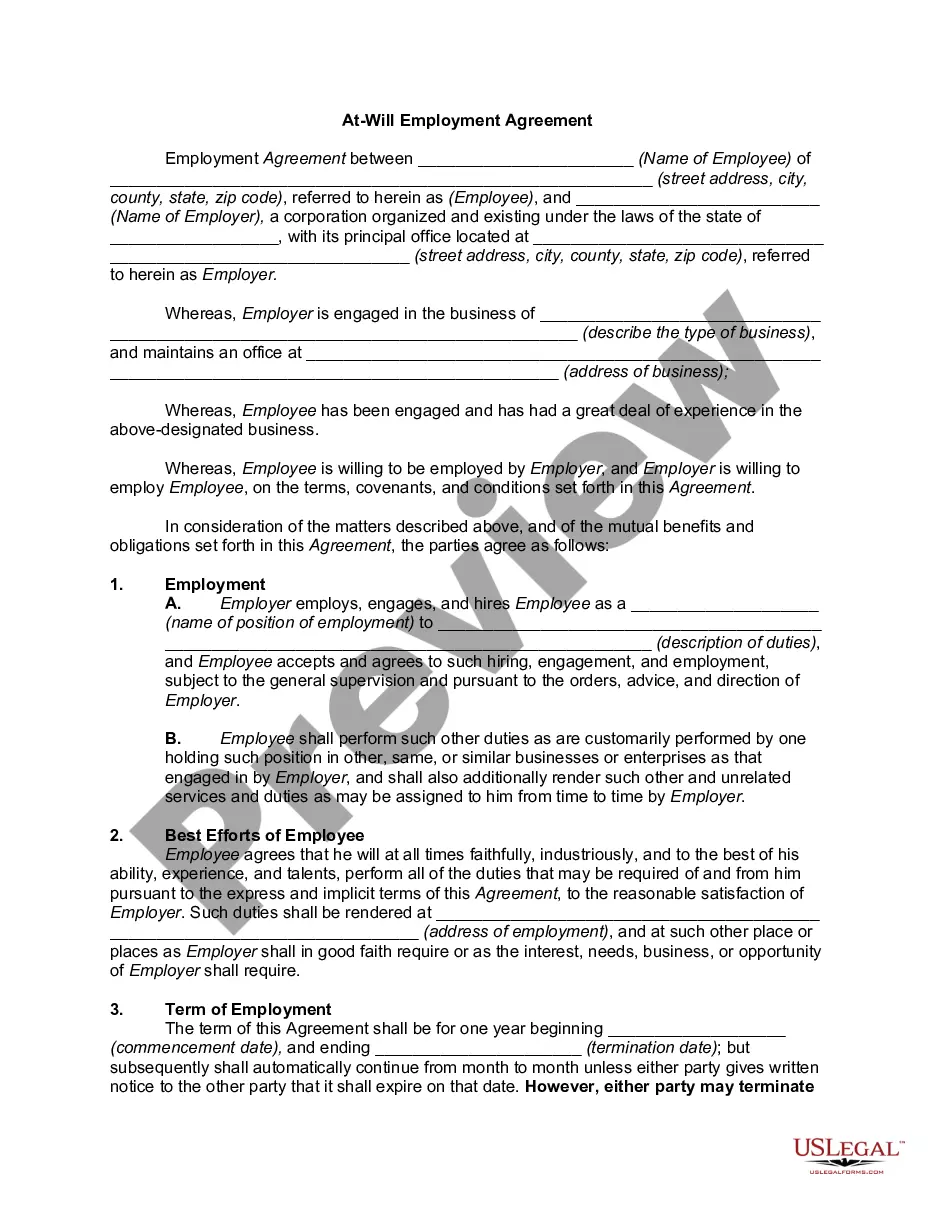
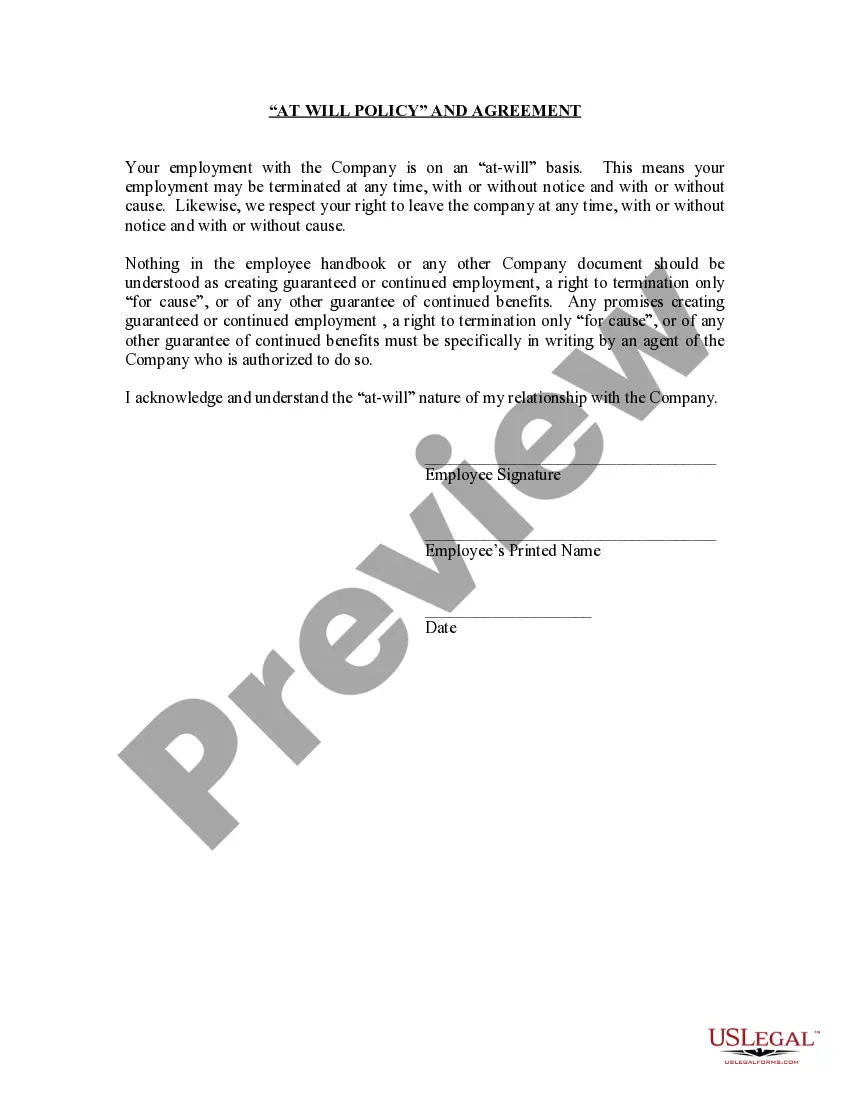
An employment at will acknowledgment is a document that clearly states the employment relationship is at will. This means either party can terminate the relationship at any time without cause. This acknowledgment helps prevent legal disputes and provides clarity for both employees and employers when forming an employment will policy statement for the future.
An exception to the employment-at-will doctrine commonly referenced is the implied contract exception. This can arise when an employer makes verbal promises or follows practices that imply a commitment to job security. Thus, when creating an employment will policy statement for the future, companies should clarify expectations and commitments to avoid misunderstandings.