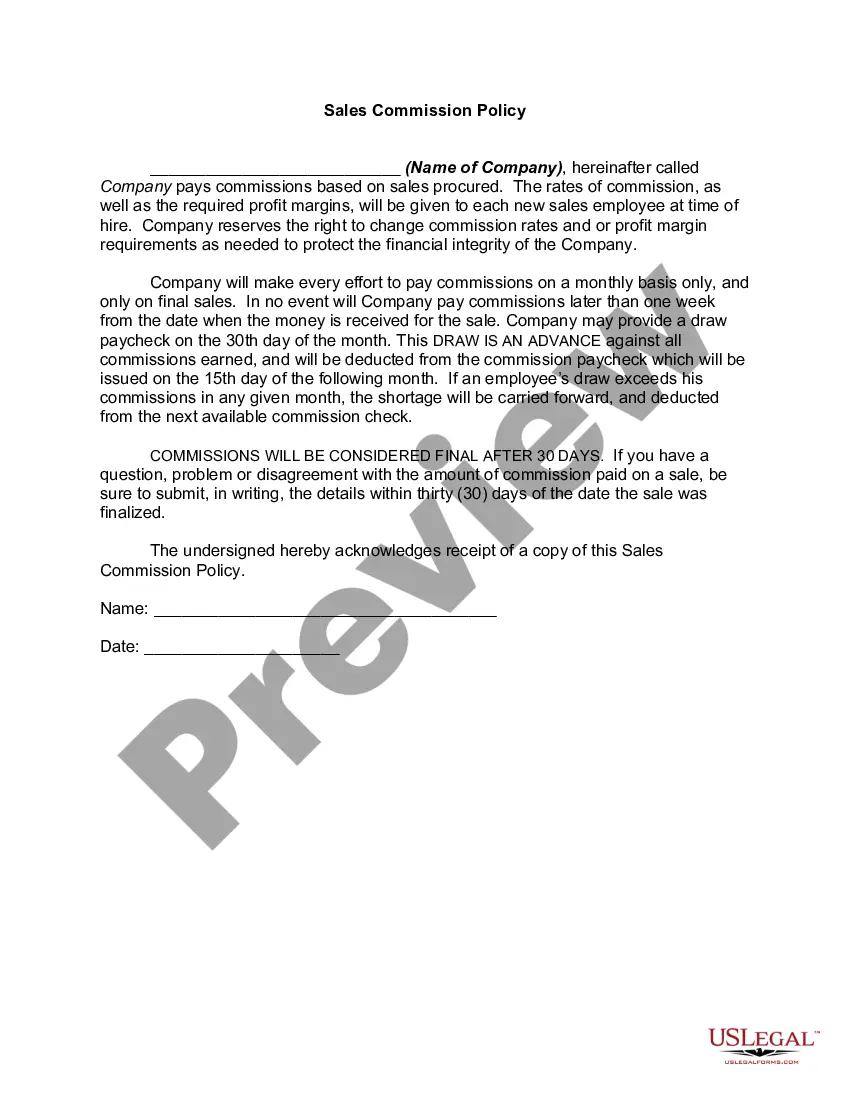
Commission Sample Statement For Court
Description
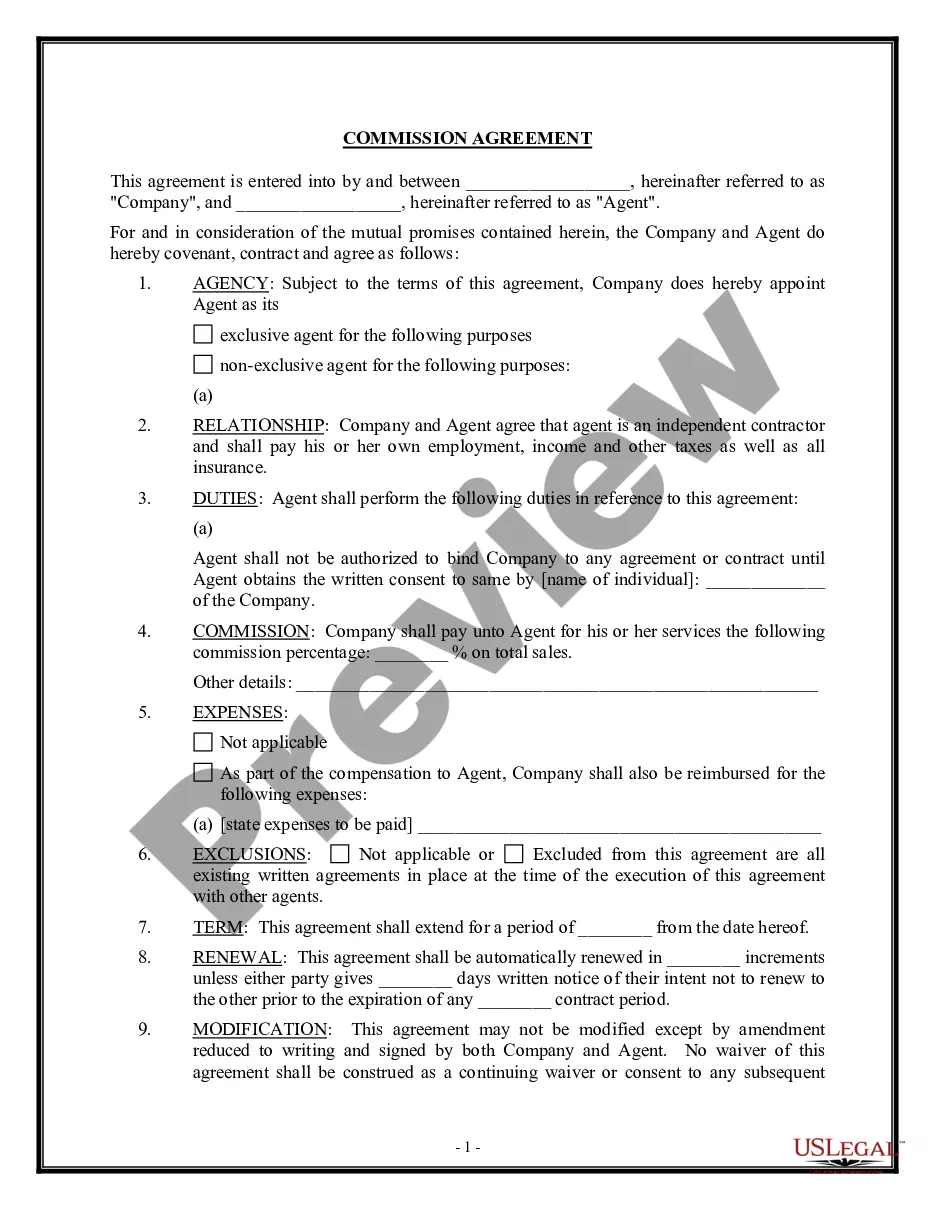
Get your form ready online
Our built-in tools help you complete, sign, share, and store your documents in one place.
Make edits, fill in missing information, and update formatting in US Legal Forms—just like you would in MS Word.
Download a copy, print it, send it by email, or mail it via USPS—whatever works best for your next step.
Sign and collect signatures with our SignNow integration. Send to multiple recipients, set reminders, and more. Go Premium to unlock E-Sign.
If this form requires notarization, complete it online through a secure video call—no need to meet a notary in person or wait for an appointment.
We protect your documents and personal data by following strict security and privacy standards.

Make edits, fill in missing information, and update formatting in US Legal Forms—just like you would in MS Word.

Download a copy, print it, send it by email, or mail it via USPS—whatever works best for your next step.

Sign and collect signatures with our SignNow integration. Send to multiple recipients, set reminders, and more. Go Premium to unlock E-Sign.

If this form requires notarization, complete it online through a secure video call—no need to meet a notary in person or wait for an appointment.

We protect your documents and personal data by following strict security and privacy standards.
Looking for another form?





How to fill out Sales Commission Policy?
Legal documents management can be daunting, even for the most experienced experts.
When you are in need of a Commission Sample Statement For Court and lack the time to seek the right and current version, the process can be overwhelming.
Access a repository of articles, guides, manuals, and resources related to your situation and needs.
Save time and effort while searching for the documents you require, utilizing US Legal Forms’ advanced search and Preview tool to obtain the Commission Sample Statement For Court.
Take advantage of the US Legal Forms online library, backed by 25 years of knowledge and reliability. Transform your daily document management into a seamless and user-friendly experience today.
- If you have a subscription, Log In to your US Legal Forms account, search for the document, and obtain it.
- Visit the My documents section to view the documents you have previously saved and manage your folders as you wish.
- If this is your initial experience with US Legal Forms, create a free account and enjoy unlimited access to all platform benefits.
- Here are the actions to take after downloading the document you need.
- Verify that this is the correct document by previewing it and reviewing its details.
- Confirm that the sample is acceptable in your state or county.
- Click Buy Now when you are prepared.
- Select a monthly subscription plan.
- Choose the format you need, and Download, fill it out, eSign, print, and submit your document.
- Access state- or county-specific legal and business documents.
- US Legal Forms meets all your requirements, ranging from personal to commercial paperwork, all available in one place.
- Use advanced features to complete and manage your Commission Sample Statement For Court.
Form popularity
FAQ
Civil provides that when issuing a commission for making a local investigation u/o 26, Rule 9 CPC the court shall define the points on which the Commissioner has to report. No point which can conveniently and ought to be substantiated by the parties by. evidence at the trial shall be referred to the Commissioner.
Commission is instruction or role given by the Court to a person to act on behalf of the Court and to do everything that the Court requires to deliver full and complete justice. Such person who carries out the commission is known as a Court commissioner.
By issuing a commission in a particular case, the Court performs an in - depth investigation where the Court deems necessary. Issuing of Commission can be made by the Court if it gets an application from the parties, stating the necessity for the same or sue - moto.
A Court may issue Commission for examination of witness under Rule 1 on ?Interrogatories or otherwise?. An order for examination of a witness on interrogatories is sometimes issued when examination of such witness should really be compliance. A commission can also be issued with the consent of the parties.
Commissions are of four kinds-to examine witnesses, to make local investigations, to examine accounts and to make partition of immoveable property. Most of the provisions for commissions to examine absent witnesses were adapted by the framers of the first Code (of 1859) from an Act of 18411.