Disclose Against Warranties
Description
Get your form ready online
Our built-in tools help you complete, sign, share, and store your documents in one place.
Make edits, fill in missing information, and update formatting in US Legal Forms—just like you would in MS Word.
Download a copy, print it, send it by email, or mail it via USPS—whatever works best for your next step.
Sign and collect signatures with our SignNow integration. Send to multiple recipients, set reminders, and more. Go Premium to unlock E-Sign.
If this form requires notarization, complete it online through a secure video call—no need to meet a notary in person or wait for an appointment.
We protect your documents and personal data by following strict security and privacy standards.

Make edits, fill in missing information, and update formatting in US Legal Forms—just like you would in MS Word.

Download a copy, print it, send it by email, or mail it via USPS—whatever works best for your next step.

Sign and collect signatures with our SignNow integration. Send to multiple recipients, set reminders, and more. Go Premium to unlock E-Sign.

If this form requires notarization, complete it online through a secure video call—no need to meet a notary in person or wait for an appointment.

We protect your documents and personal data by following strict security and privacy standards.
Looking for another form?

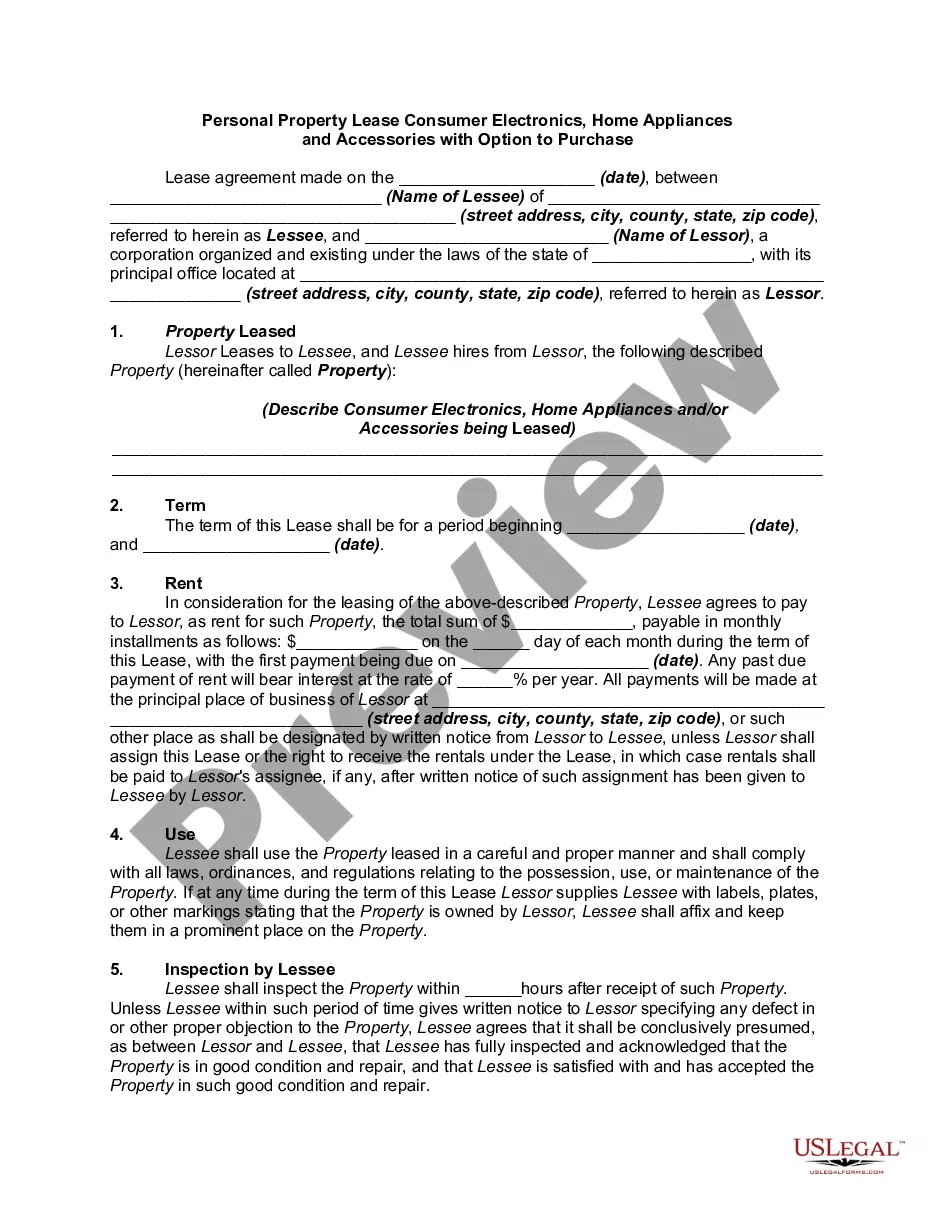





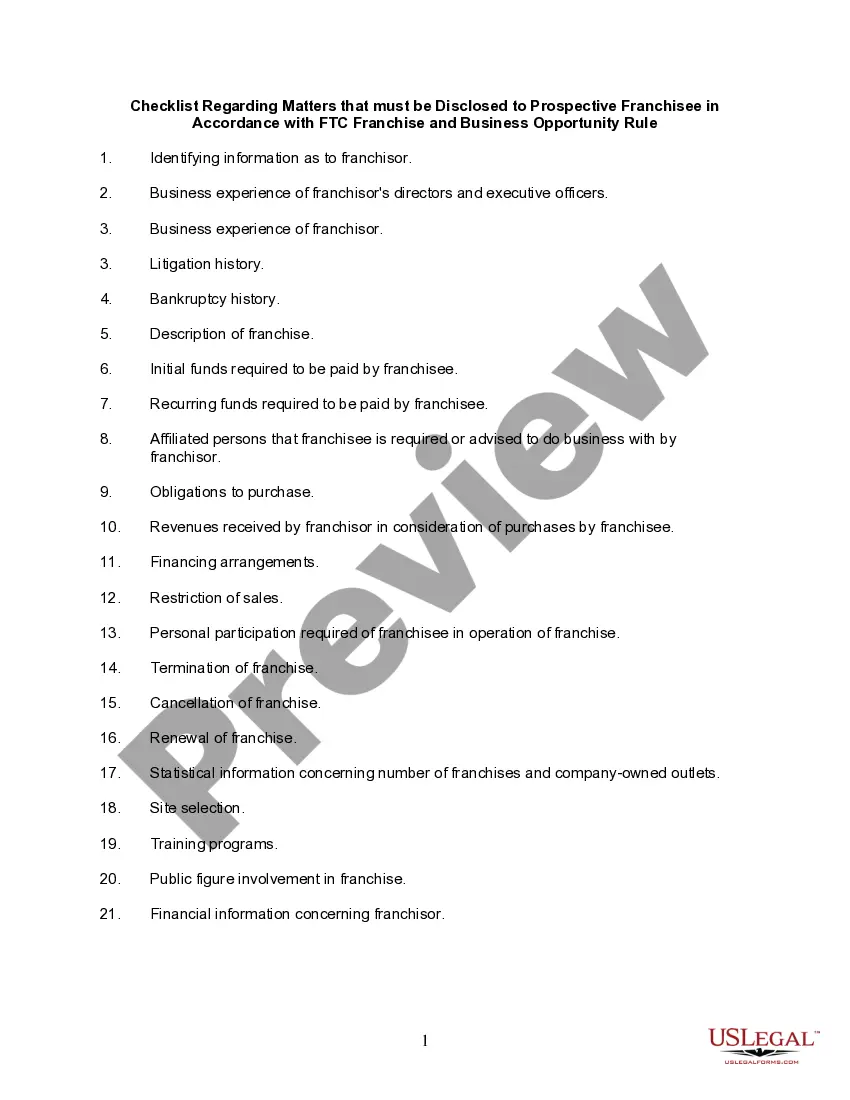
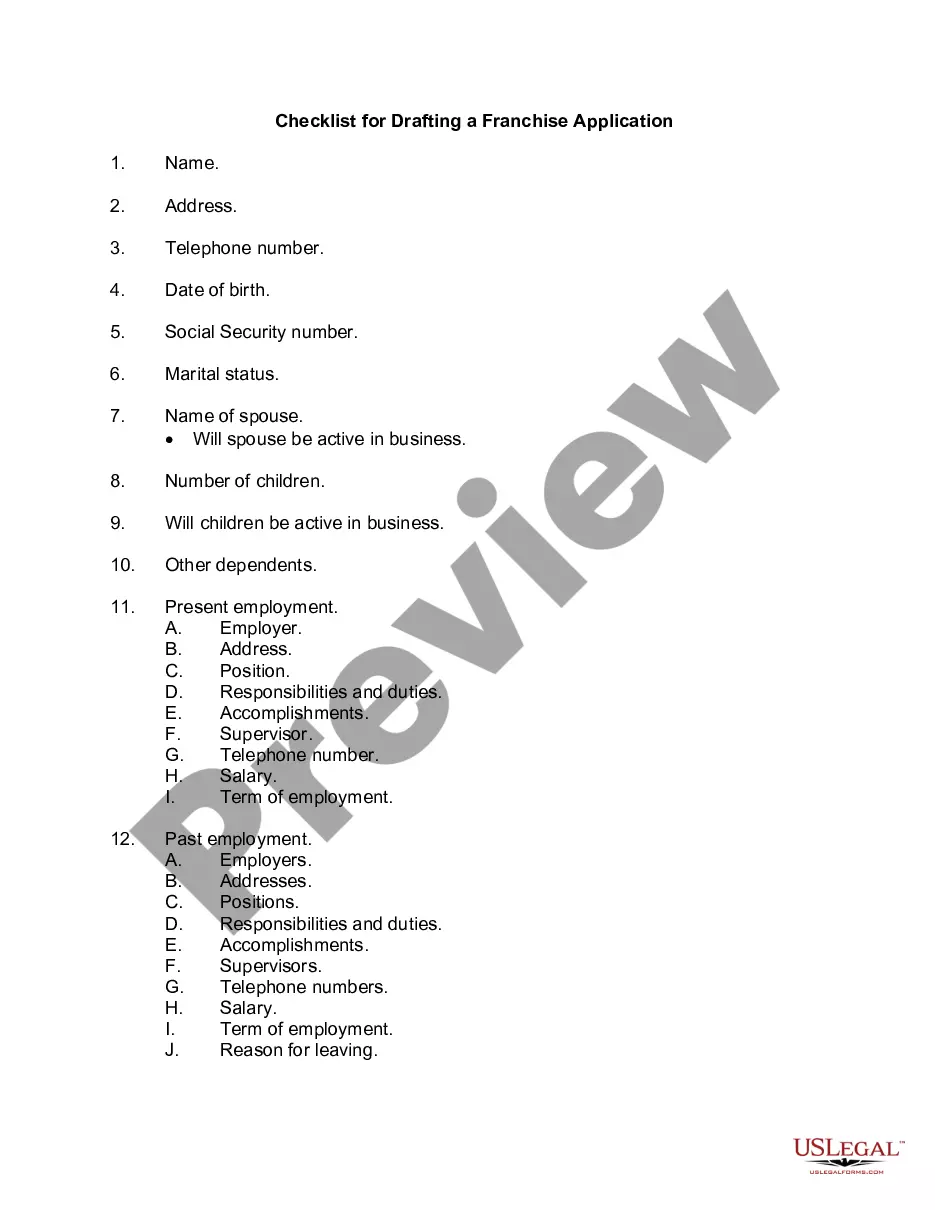
How to fill out Checklist Regarding Matters That Must Be Disclosed To Prospective Franchisee In Accordance With FTC Franchise And Business Opportunity Rule?
Identifying a primary location to obtain the latest and pertinent legal templates is part of the challenge of navigating bureaucracy.
Finding the right legal documents requires accuracy and careful attention, which is why it's essential to source Disclose Against Warranties samples only from reliable providers, like US Legal Forms. An incorrect template can consume your time and prolong your current situation. With US Legal Forms, you have minimal concerns.
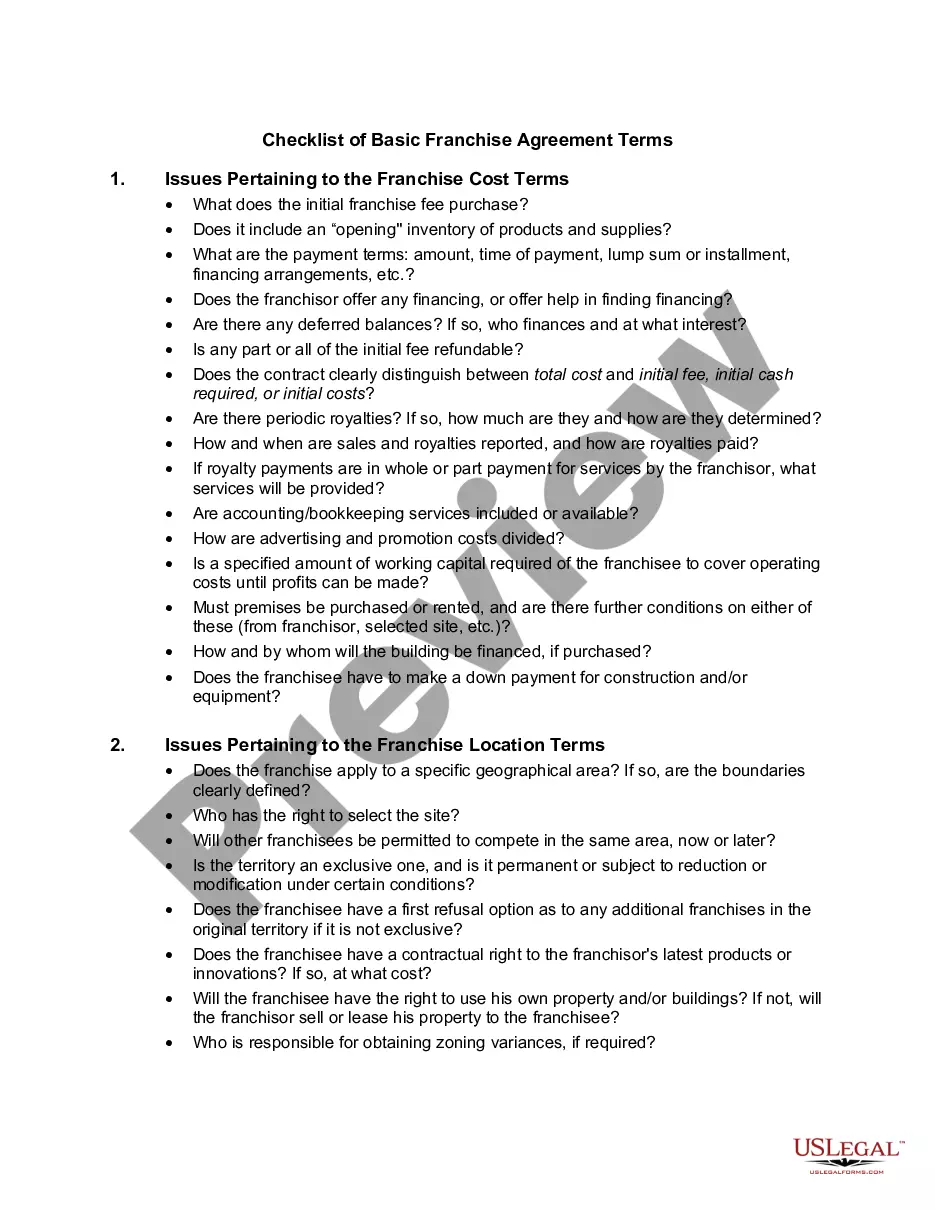
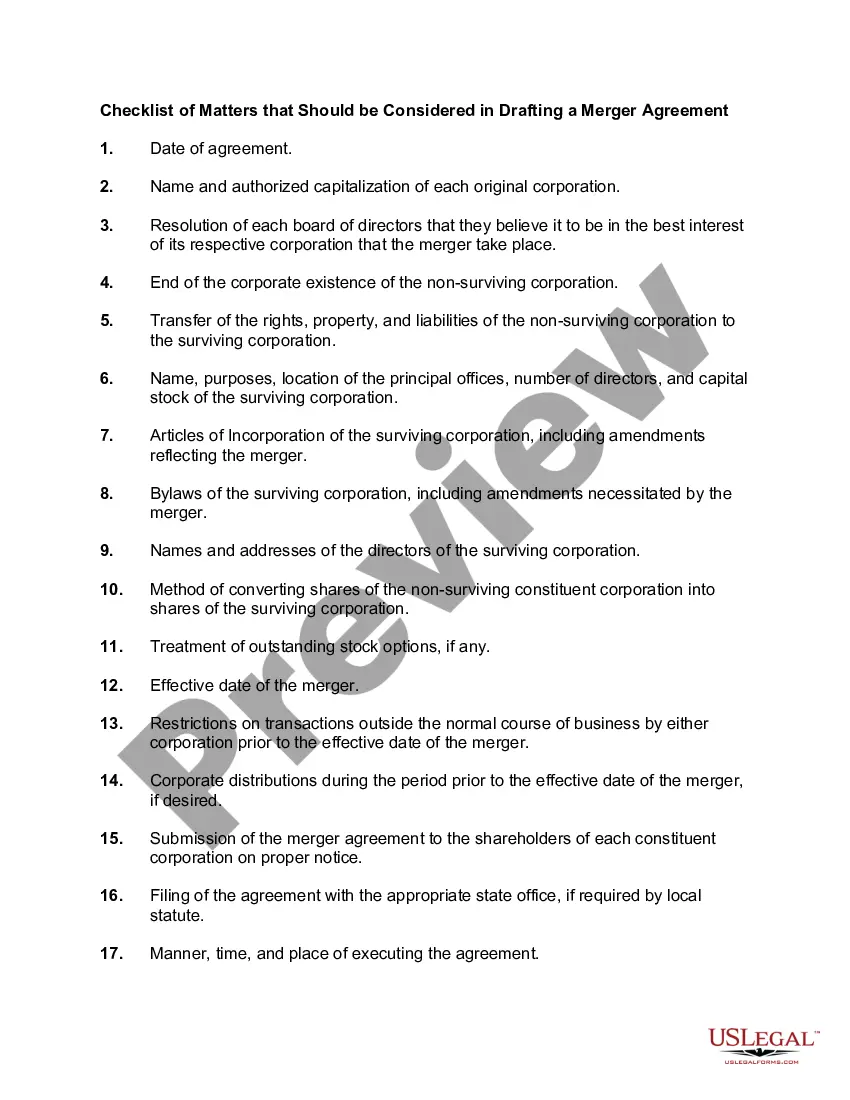
Remove the hassle associated with your legal documentation. Explore the comprehensive US Legal Forms library where you can find legal templates, verify their relevance to your situation, and download them immediately.
- Use the catalog navigation or search bar to locate your template.
- Review the description of the form to ensure it aligns with the requirements of your state and locality.
- Preview the form, if available, to confirm it is the document you seek.
- If the Disclose Against Warranties does not meet your criteria, return to the search to find the suitable document.
- Once you are certain about the form's applicability, download it.
- If you are a registered user, click Log in to verify and access your selected templates in My documents.
- If you do not possess an account yet, click Buy now to acquire the template.
- Choose the pricing plan that suits your requirements.
- Proceed to the registration to finalize your purchase.
- Complete your purchase by selecting a payment method (credit card or PayPal).
- Choose the document format for downloading Disclose Against Warranties.
- After obtaining the form on your device, you can modify it using the editor or print and fill it out by hand.
Form popularity
FAQ
As stated in Section 103 of Title 14 of Chapter 3 of Vermont probate laws, the individual with custody of the will has to file with a court within 30 days of learning about the death. You do not need to file a petition to open probate at the same time as filing, but you can complete both simultaneously.
A small estate may be commenced by filing: (1) a petition to open the estate; (2) a list of interested persons; (3) the filing fee; (4) an original death certificate; (5) an inventory sworn to by the petitioner, including information or estimates available at the time of filing; (6) an affidavit of paid and outstanding ...
Even without a statutory guideline on executor fees in Vermont, the common understanding among legal professionals suggests that an executor can expect to receive about 2-5% of the estate's value. However, this percentage can vary based on the specifics of the estate and the executor's duties.
Property That May Avoid Probate Property held in a trust3 Jointly held property (but not common property) Death benefits from insurance policies (unless payable to the estate)4 Property given away before you die. Assets in a pay-on-death account. Retirement accounts with a named beneficiary.
V.R.P.P. Rule 80.4, Delivery of Will by Custodian; Copy of Will Filed for Safekeeping. If the decedent (the person who died) did not own any real estate other than a timeshare and the estate is worth less than $45,000.00, you can use the small estate procedure to probate the estate.
To open an estate, you must file a petition along with an original will and any codicils (amendments), certified death certificate, list of interested parties, consents of all interested parties, bond, appointment of a resident agent, and the filing fee.
Go to the Probate Division in the county where the decedent lived at the time of death. The court will appoint the ?executor.? It is the executor's job to locate and gather all of the assets, and then pay debts and distribute property ing to the terms of a will. The probate court will supervise this process.