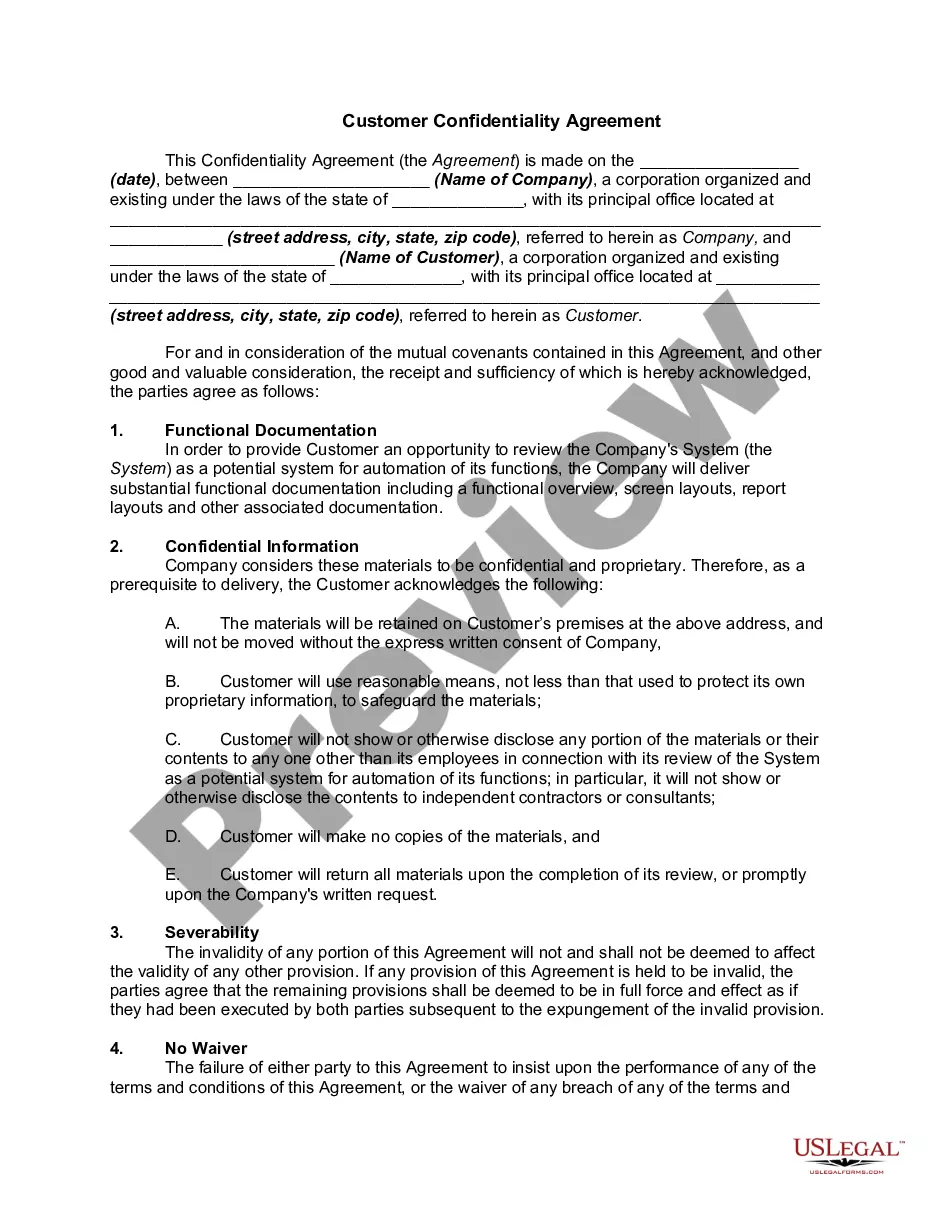
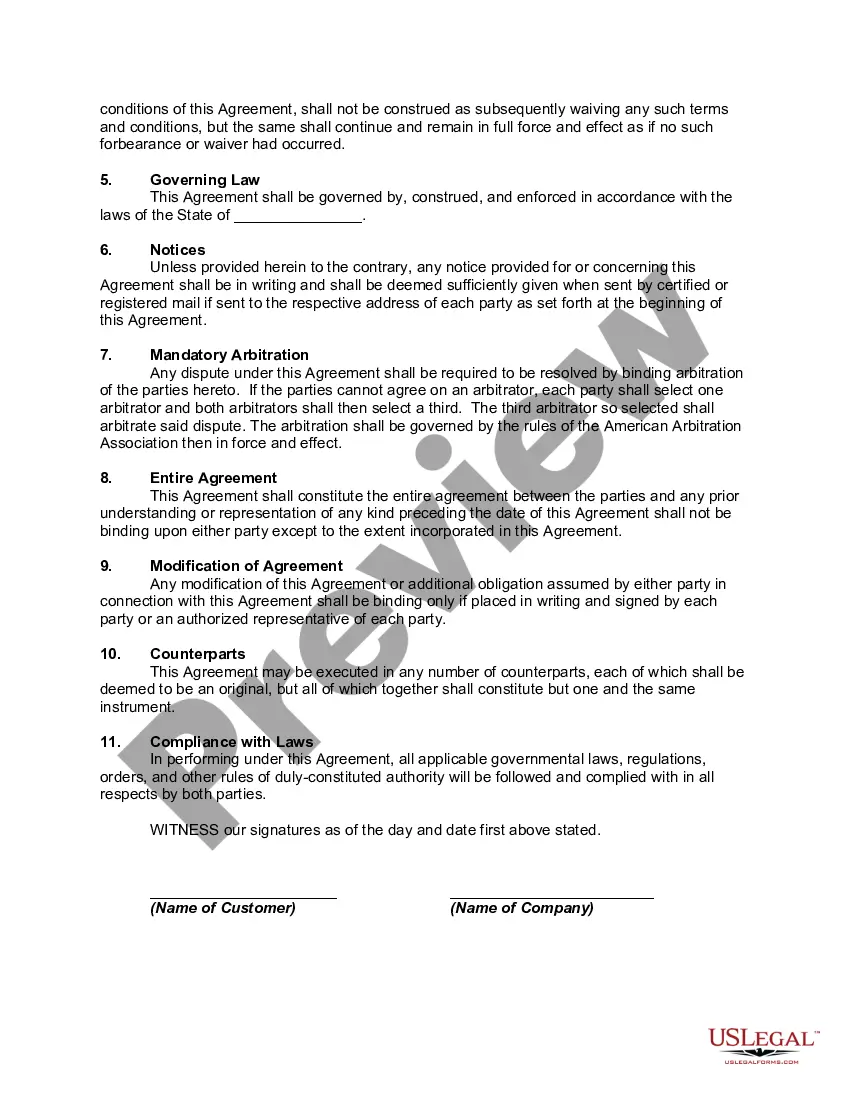
Confidentiality Agreement For Employees
Description
Get your form ready online
Our built-in tools help you complete, sign, share, and store your documents in one place.
Make edits, fill in missing information, and update formatting in US Legal Forms—just like you would in MS Word.
Download a copy, print it, send it by email, or mail it via USPS—whatever works best for your next step.
Sign and collect signatures with our SignNow integration. Send to multiple recipients, set reminders, and more. Go Premium to unlock E-Sign.
If this form requires notarization, complete it online through a secure video call—no need to meet a notary in person or wait for an appointment.
We protect your documents and personal data by following strict security and privacy standards.

Make edits, fill in missing information, and update formatting in US Legal Forms—just like you would in MS Word.

Download a copy, print it, send it by email, or mail it via USPS—whatever works best for your next step.

Sign and collect signatures with our SignNow integration. Send to multiple recipients, set reminders, and more. Go Premium to unlock E-Sign.

If this form requires notarization, complete it online through a secure video call—no need to meet a notary in person or wait for an appointment.

We protect your documents and personal data by following strict security and privacy standards.
Looking for another form?






How to fill out Customer Confidentiality Agreement?
Individuals frequently link legal documents with something intricate that solely a professional can handle.
In a certain respect, this is accurate, as formulating a Confidentiality Agreement For Employees necessitates an in-depth comprehension of subject matter standards, encompassing state and municipal legislation.
Nonetheless, with the US Legal Forms, the process has become simpler: pre-made legal templates for any personal and business circumstance tailored to state laws are compiled in a singular online collection and are currently available for everyone.
All templates in our library can be reused: once purchased, they are saved in your profile. You can access them whenever necessary through the My documents tab. Explore all the advantages of using the US Legal Forms platform. Subscribe today!
- US Legal Forms offers over 85k current forms organized by state and area of application, making it quick to search for a Confidentiality Agreement For Employees or any specific template.
- Previously registered users with an active subscription must sign in to their account and click Download to retrieve the form.
- New users will initially need to create an account and subscribe before they can download any legal documents.
- Here is a detailed guide on how to acquire the Confidentiality Agreement For Employees.
- Review the content of the page thoroughly to ensure it fulfills your requirements.
- Examine the form description or preview it via the Preview option.
- If the initial option doesn't satisfy you, locate another template using the Search field above.
- Select Buy Now once you discover the suitable Confidentiality Agreement For Employees.
- Choose a pricing plan that aligns with your requirements and finances.
- Create an account or Log In to move forward to the payment section.
- Complete your subscription payment using PayPal or a credit card.
- Pick the format for your template and click Download.
- Print your document or transfer it to an online editor for a faster completion.
Form popularity
FAQ
7 Things to Look for Before You Sign a Nondisclosure AgreementParties to the Agreement.Identification of What Information Is Confidential.Time Frame of the Agreement.Return of the Information.Obligations of the Recipient.Remedies for Breaches of Agreement.Other Clauses.
Typically, a legal professional writing the NDA will complete these steps:Step 1 - Describe the scope. Which information is considered confidential?Step 2 - Detail party obligations.Step 3 - Note potential exclusions.Step 4 - Set the term.Step 5 - Spell out consequences.
A confidentiality agreement is a standard written agreement that is used to protect the owner of an invention or idea for a new business. It is also an important document between two companies that are contemplating a merger or a commercial transaction that must be withheld from public knowledge.
"There are several key pieces of information that should be included in NDAs, or non-disclosure agreements. The most important items include customer lists, financial and profit margin information, product breakdowns, bestselling segments and sales scripting and messaging."
An employee confidentiality agreement, or non-disclosure agreement or an NDA, makes it crystal clear to an employee that he or she cannot under any circumstance, with the exception of prior written approval, disclose company secrets.