Discrimination Employer Sample Within Company
Description
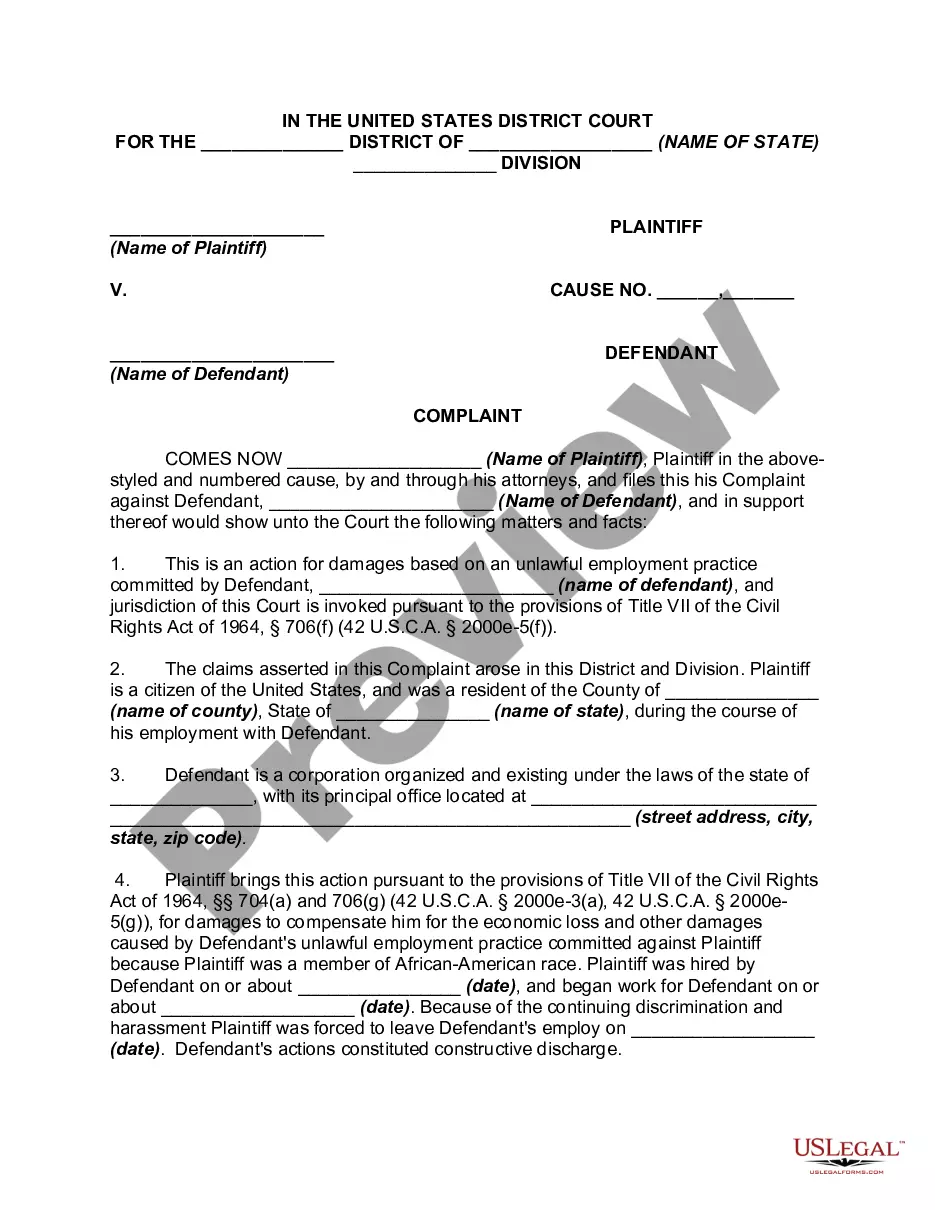



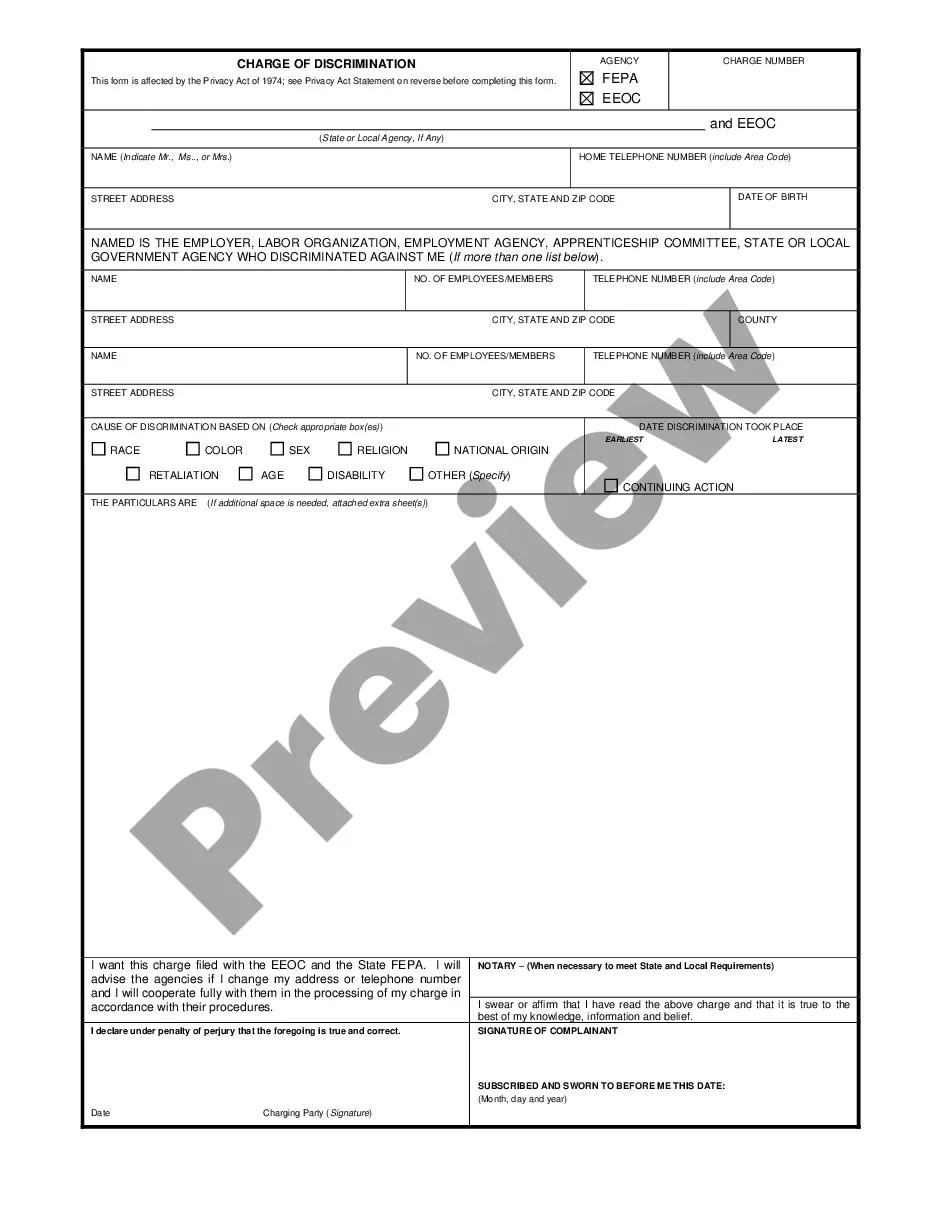



How to fill out Complaint For Racial Discrimination In Employment, Constructive Discharge And For Damages For Discrimination In Promotion By Employer - Equal Employment?
Whether for professional reasons or personal matters, everyone must handle legal issues at some point in their lives.
Completing legal documents requires meticulous care, starting with choosing the appropriate form template.
With an extensive US Legal Forms catalog available, you don’t need to waste time searching for the right template online. Use the library’s straightforward navigation to find the suitable template for any occasion.
- Obtain the template you require by utilizing the search bar or catalog browsing.
- Review the form’s description to confirm it suits your situation, state, and county.
- Click on the form’s preview to view it.
- If it is the incorrect form, return to the search option to locate the Discrimination Employer Sample Within Company template you need.
- Download the document once it fulfills your criteria.
- If you possess a US Legal Forms account, simply click Log in to access previously saved documents in My documents.
- If you do not have an account yet, you can acquire the form by clicking Buy now.
- Select the appropriate pricing option.
- Complete the account registration form.
- Choose your payment method: you can utilize a credit card or PayPal account.
- Select the file format you desire and download the Discrimination Employer Sample Within Company.
- Once downloaded, you can fill in the form using editing software or print it out and complete it manually.
Form popularity
FAQ
The 80% rule in discrimination refers to a guideline used to assess whether a company's hiring practices are discriminatory. Essentially, if the selection rate for a minority group is less than 80% of that for the majority group, it may indicate potential discrimination. This rule helps employers evaluate their hiring processes and ensure equity among applicants. Implementing such assessments can be streamlined with tools and templates available on platforms like US Legal Forms.
An example of discrimination in the workplace could be a manager who consistently overlooks qualified women for promotions in favor of less qualified male candidates. This behavior not only violates legal standards but also harms morale among employees. Such actions create an inequitable environment, leading to decreased productivity and trust. Addressing these issues with proper documentation and policies is vital, and platforms like US Legal Forms provide essential resources for this purpose.
A discriminatory statement refers to remarks that unfairly target individuals based on characteristics like race, gender, or age. For instance, saying 'We only hire young people for this role' clearly demonstrates age discrimination. It’s crucial to recognize such statements as they reflect a harmful mindset that can impact workplace culture. Understanding these examples helps companies develop better policies against discrimination.
An example of a discrimination statement could be: 'I believe I have been treated unfairly based on my age, as I was passed over for a promotion in favor of a younger colleague despite my qualifications.' Such a statement clearly identifies the issue and the basis for the claim. Utilizing a discrimination employer sample within company can help you frame your statement appropriately for your situation.
To write a powerful complaint letter, begin with a strong opening that captures attention. Organize your letter logically, presenting facts and emotions that support your case. Use a discrimination employer sample within company to ensure you include all necessary components. Finally, close with a clear request for action, reinforcing the importance of addressing your concerns.
When writing a complaint about discrimination, focus on being clear and factual. Describe the events as they happened, including dates and witnesses if possible. Referencing a discrimination employer sample within company can help you format your complaint properly. Ensure you state how the discrimination affected you and what you hope to achieve through your complaint.
To create a sample discrimination complaint letter, begin with your contact information and the date. Clearly address the letter to the appropriate person or department in your company. Outline the discriminatory actions you experienced, using the structure of a discrimination employer sample within company for clarity. Be concise, stick to the facts, and make your expectations known.
Reporting an employer for discrimination involves documenting your experiences and gathering any evidence. You should first check your company’s policies regarding discrimination. After that, you can file a report with the Equal Employment Opportunity Commission (EEOC) or equivalent state agency. If you need help formulating your report, a discrimination employer sample within company may guide you.
To write a complaint letter for discrimination, start by clearly stating the facts of your situation. Include specific examples of discriminatory behavior and how it affected you. You can reference a discrimination employer sample within company to structure your letter effectively. Make sure to express your desired outcome, whether it's a resolution, policy change, or another form of action.
An example of discrimination might be when an employer promotes a less qualified employee solely because of their gender, while overlooking a more qualified candidate of a different gender. This scenario illustrates a clear violation of equality principles within a workplace. Recognizing such behaviors is the first step towards fostering an inclusive environment. A discrimination employer sample within company policies can help illustrate what constitutes discrimination.