Discrimination Employer Sample For Employees
Description
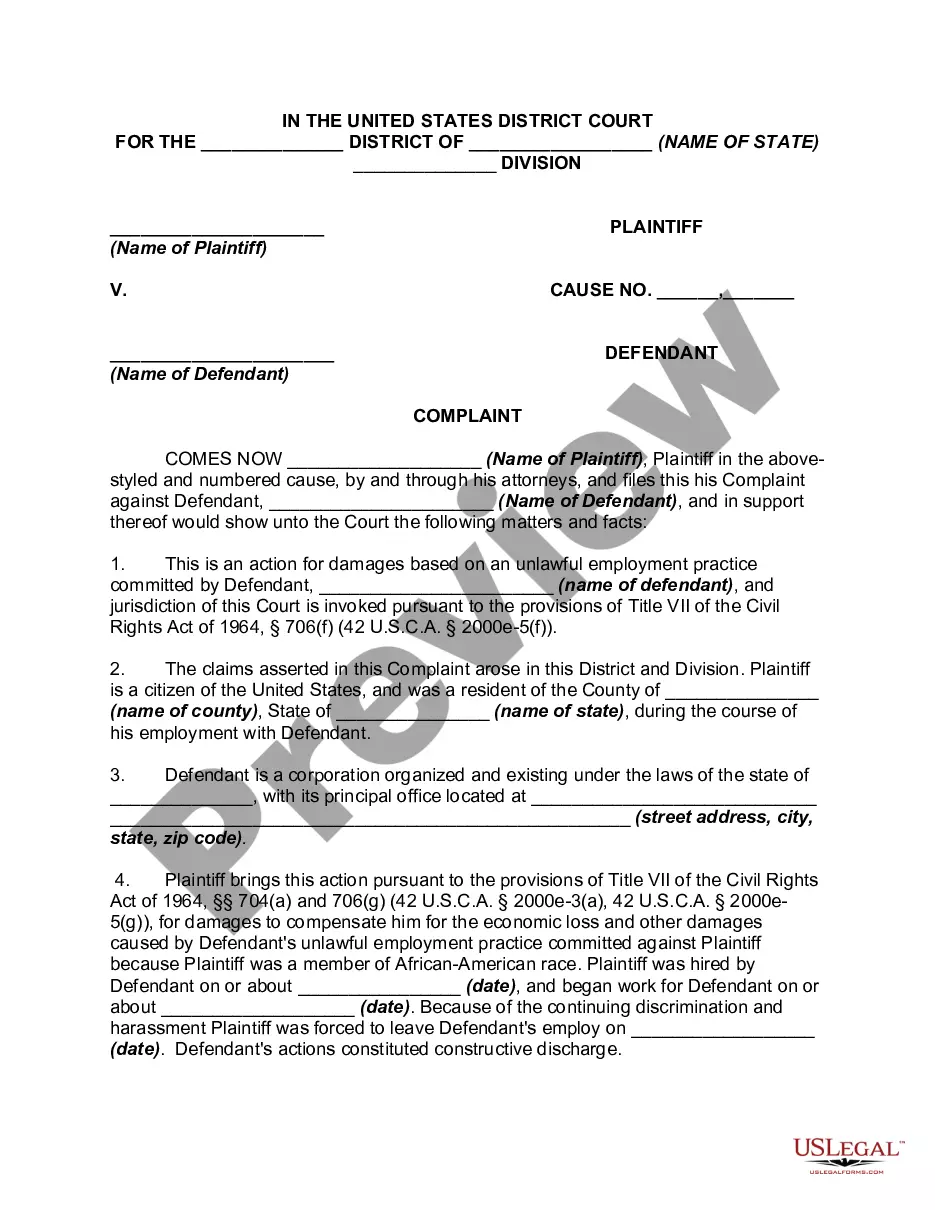



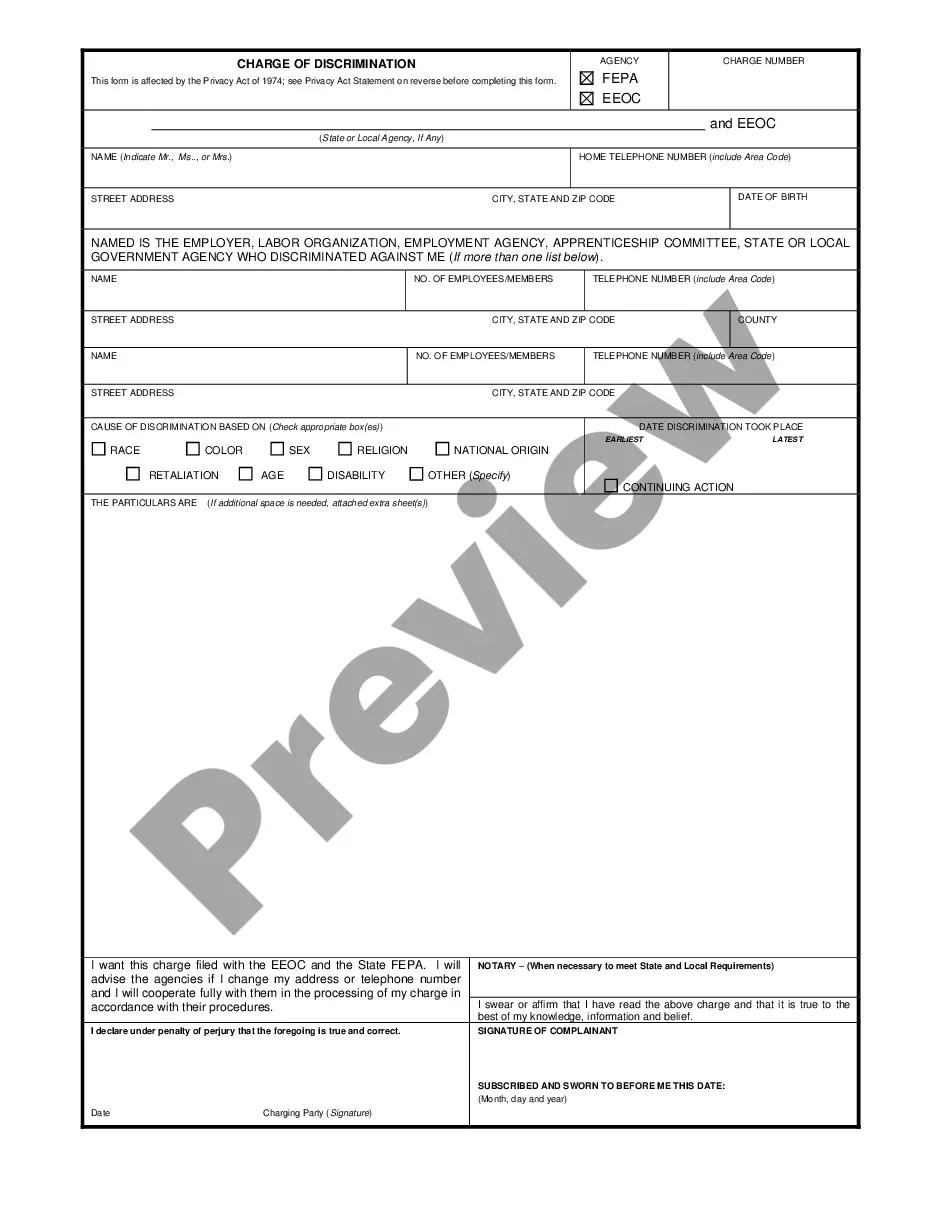






How to fill out Complaint For Racial Discrimination In Employment, Constructive Discharge And For Damages For Discrimination In Promotion By Employer - Equal Employment?
It’s clear that you cannot transform into a legal authority instantly, nor can you understand how to swiftly compose Discrimination Employer Sample For Employees without possessing a unique set of abilities.
Assembling legal documents is a lengthy task that necessitates specific education and expertise. So why not entrust the formulation of the Discrimination Employer Sample For Employees to the experts.
With US Legal Forms, one of the most extensive legal template repositories, you can find everything from court documents to templates for internal company correspondence.
You can regain access to your documents from the My documents tab at any moment. If you’re a current client, you can simply Log In, and find and download the template from the same section.
Regardless of the intent of your documentation—financial, legal, or personal—our website has you covered. Try US Legal Forms today!
- Explore the document you need using the search bar at the top of the webpage.
- Examine it (if this feature is available) and review the accompanying description to ascertain if Discrimination Employer Sample For Employees is suitable for your needs.
- Start your search anew if you require a different template.
- Create a free account and choose a subscription plan to acquire the form.
- Click Buy now. Once your purchase is confirmed, you can access the Discrimination Employer Sample For Employees, complete it, print it, and send or mail it to the specified individuals or organizations.
Form popularity
FAQ
The seven types of discrimination include age, disability, gender, race, religion, sexual orientation, and national origin. Each type has specific examples, such as an employer refusing to hire someone based on their age or failing to provide reasonable accommodations for a disability. Discrimination employer sample for employees highlights these issues, illustrating how unfair treatment can manifest in various forms. By understanding these types, you can better navigate your rights in the workplace.
Examples of employment discrimination encompass a wide range of unfair practices in the workplace. Discrimination employer sample for employees includes being denied a job due to your ethnicity or receiving a lower salary than colleagues for the same role. Other examples involve being overlooked for promotions or subjected to a hostile work environment because of your gender or sexual orientation. Awareness of these practices empowers you to advocate for your rights.
Employment discrimination occurs when an employer treats an employee unfairly based on specific characteristics. For instance, discrimination employer sample for employees may include actions based on race, gender, age, or disability. These examples illustrate how employees can face unjust treatment in hiring, promotions, or workplace conditions. Understanding these scenarios helps you recognize your rights and take appropriate action.
When writing a discrimination complaint letter, start by clearly stating the nature of the discrimination and providing specific examples. Include relevant details such as dates, witnesses, and any prior communications with HR. Utilizing a discrimination employer sample for employees can offer a clear framework, ensuring your letter is both comprehensive and effective.
Proving discrimination can be challenging, as it often requires establishing intent and a direct link between the discrimination and the adverse action. You need to compile substantial evidence to support your claims. However, using a discrimination employer sample for employees can simplify the process and help you present your case more effectively.
In a discrimination case, you'll generally need to present evidence that demonstrates a pattern of discriminatory behavior. This might include direct evidence, like discriminatory remarks, or circumstantial evidence, such as statistical data showing disparities. Utilizing a discrimination employer sample for employees can help structure your evidence clearly.
To prove discrimination, you need to gather evidence that shows unfair treatment based on protected characteristics like race, gender, or age. This might include emails, performance reviews, witness statements, or HR records. A discrimination employer sample for employees can guide you in documenting incidents effectively.
To write a discrimination statement, focus on articulating the core issues concisely. Start with a strong opening that identifies the type of discrimination and the affected individuals. Ensure that your statement is factual and straightforward, and you may find it useful to refer to a discrimination employer sample for employees as a guide to structure your thoughts effectively.
Writing a discrimination statement involves outlining the specific actions and policies that contribute to unfair treatment. Begin by identifying the affected group and the nature of the discrimination. Use clear language to express your concerns, and consider referencing a discrimination employer sample for employees to enhance your statement's clarity and impact.
A good sentence to illustrate discrimination could be: 'The company's policy inadvertently led to discrimination against employees based on their age.' This sentence not only highlights the issue but also emphasizes the need for awareness and corrective action. For more detailed examples, consider reviewing a discrimination employer sample for employees.