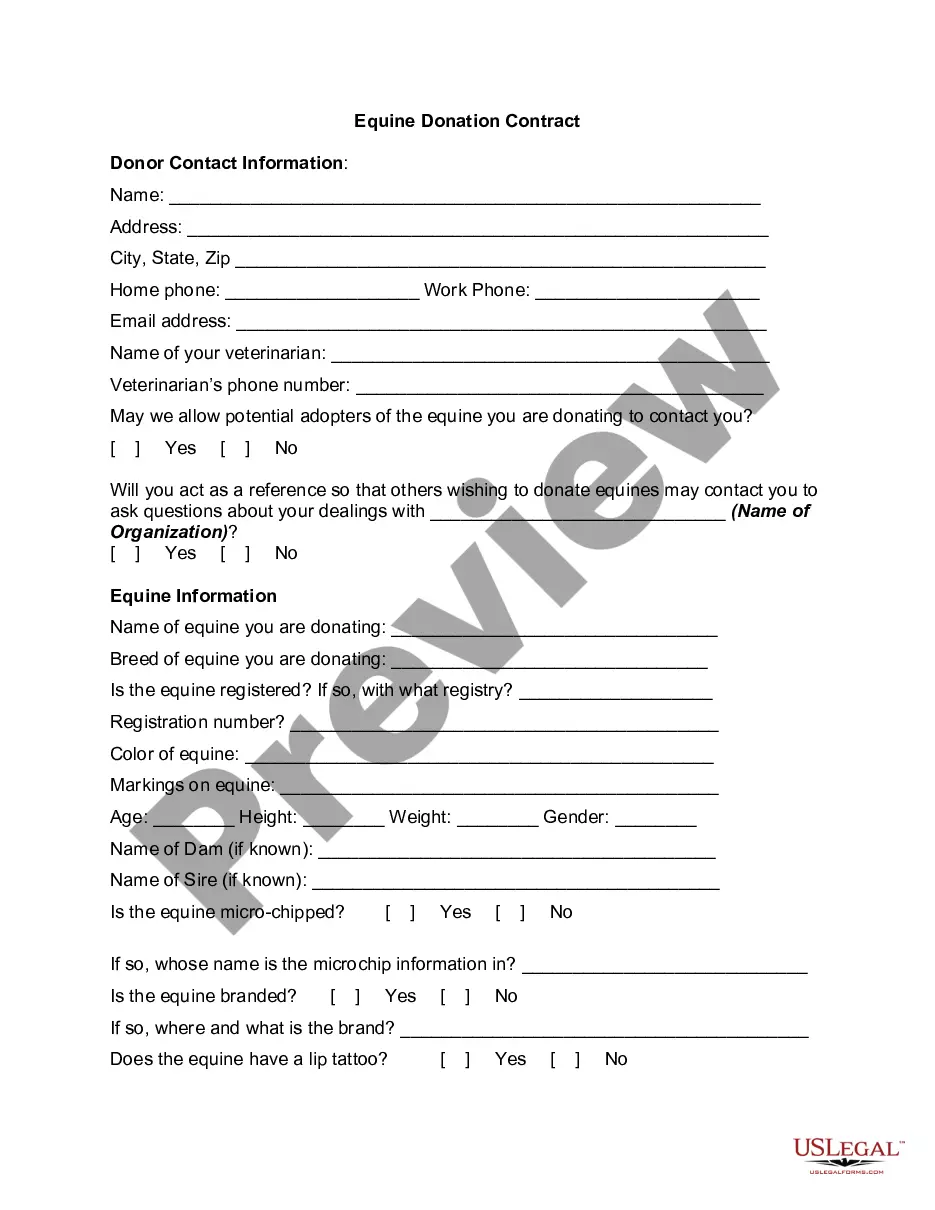
Equine Horse Contract With A Human Body
Description
Get your form ready online
Our built-in tools help you complete, sign, share, and store your documents in one place.
Make edits, fill in missing information, and update formatting in US Legal Forms—just like you would in MS Word.
Download a copy, print it, send it by email, or mail it via USPS—whatever works best for your next step.
Sign and collect signatures with our SignNow integration. Send to multiple recipients, set reminders, and more. Go Premium to unlock E-Sign.
If this form requires notarization, complete it online through a secure video call—no need to meet a notary in person or wait for an appointment.
We protect your documents and personal data by following strict security and privacy standards.

Make edits, fill in missing information, and update formatting in US Legal Forms—just like you would in MS Word.

Download a copy, print it, send it by email, or mail it via USPS—whatever works best for your next step.

Sign and collect signatures with our SignNow integration. Send to multiple recipients, set reminders, and more. Go Premium to unlock E-Sign.

If this form requires notarization, complete it online through a secure video call—no need to meet a notary in person or wait for an appointment.

We protect your documents and personal data by following strict security and privacy standards.
Looking for another form?






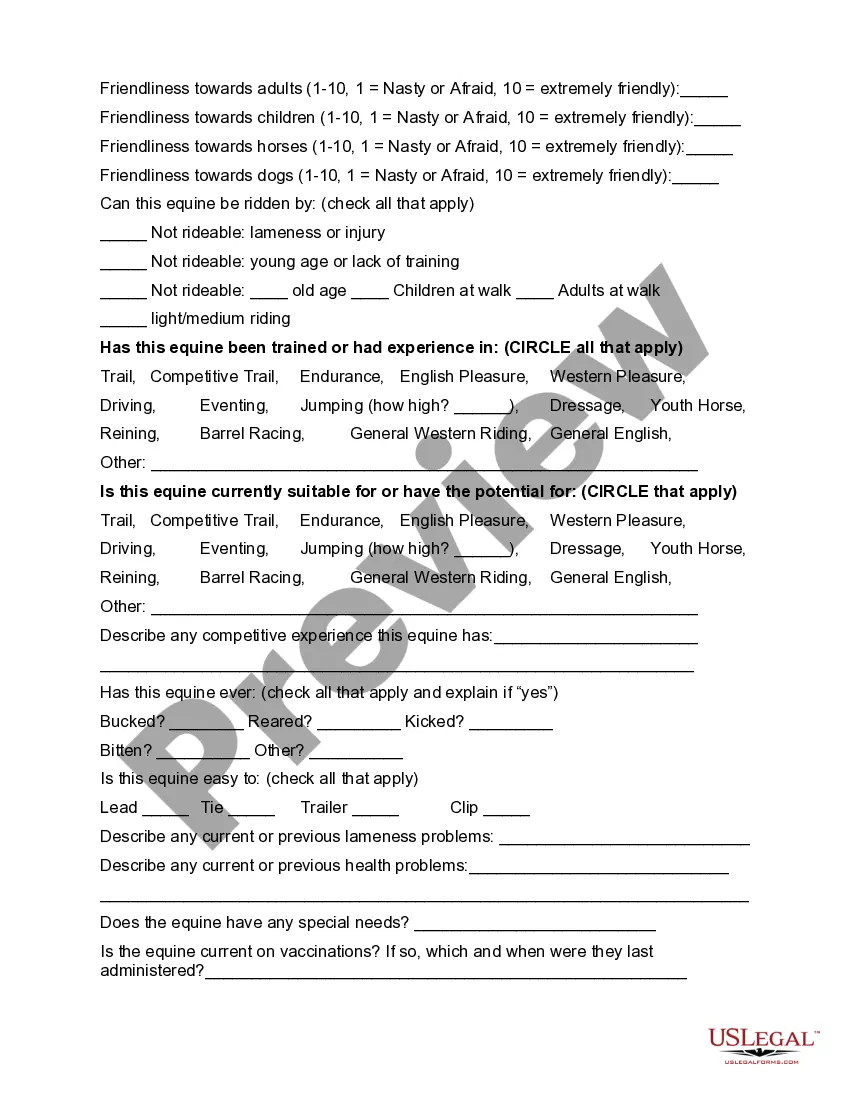
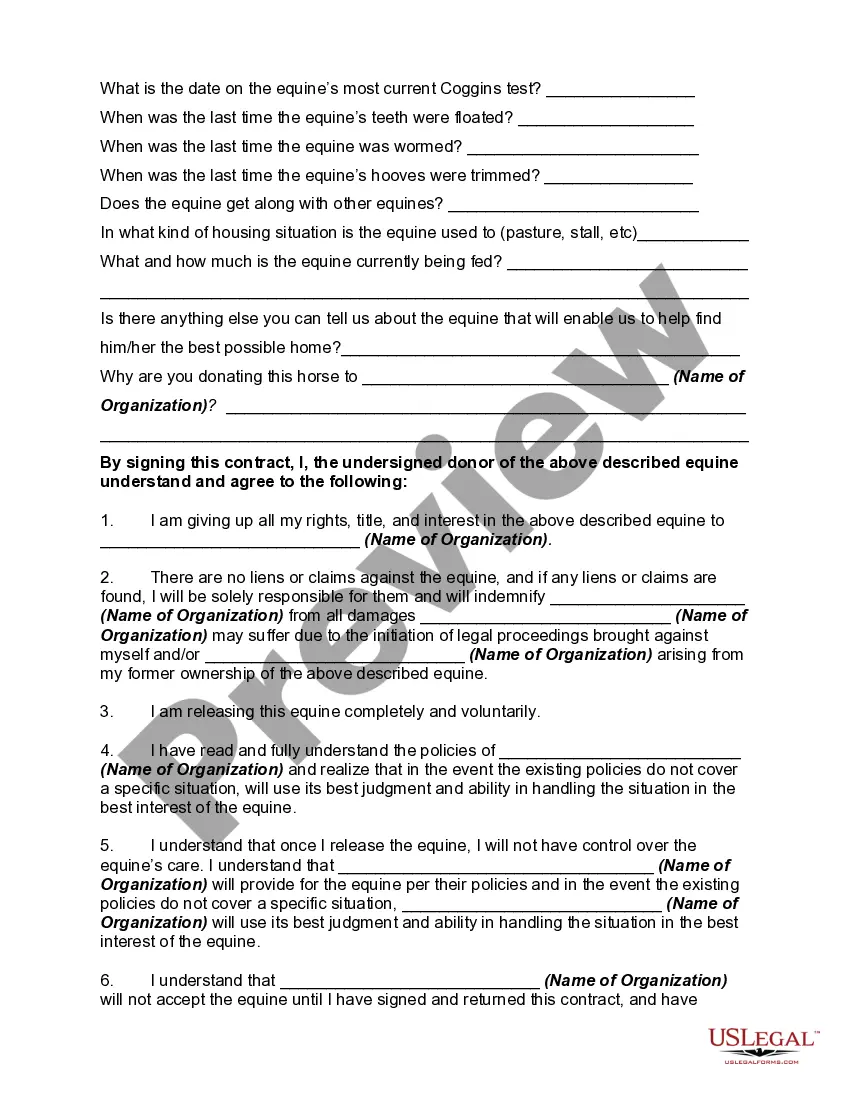
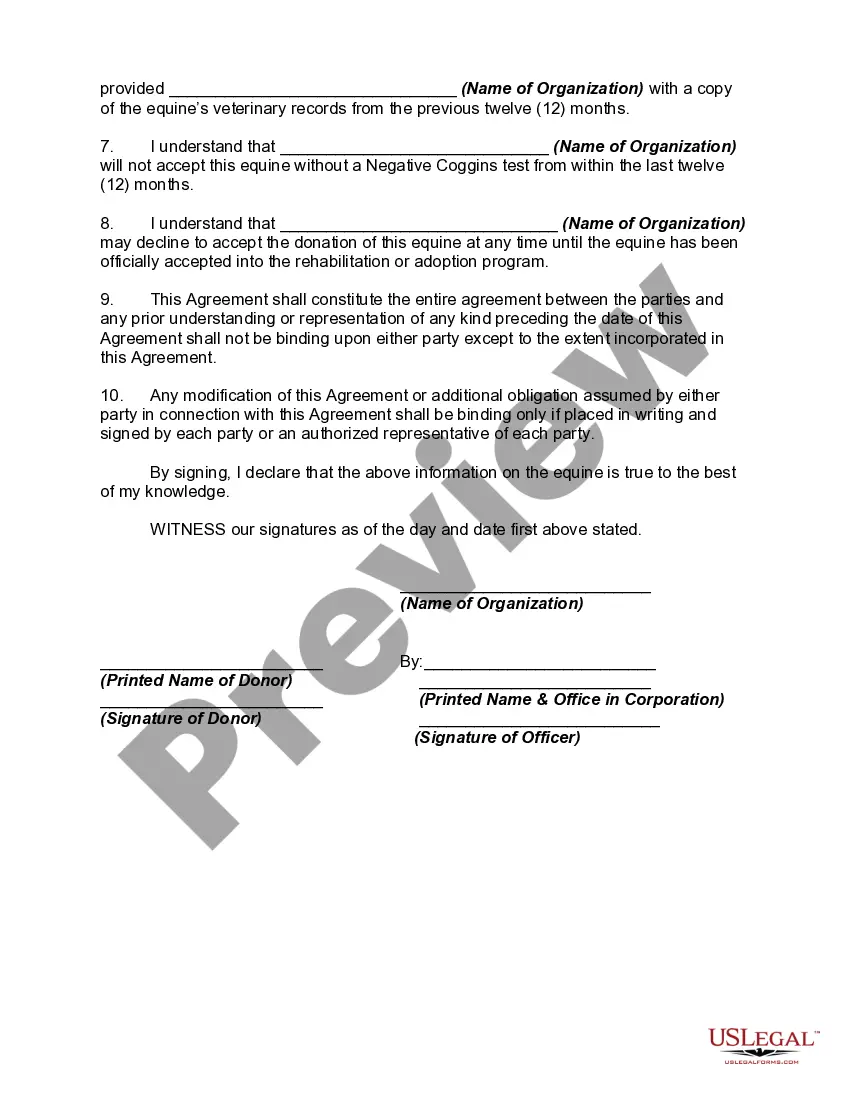
How to fill out Equine Or Horse Donation Contract?
- Log in to your existing US Legal Forms account or register if you’re a new user.
- Browse through the extensive form collection to find the equine horse contract that matches your requirements.
- Preview the form to ensure it meets your local legal needs and requirements.
- Select a subscription plan that fits your needs and proceed to purchase.
- Complete the payment using your preferred method.
- Download the completed form to your device for easy access and completion.
By following these simple steps, you can efficiently create a legally sound equine horse contract. US Legal Forms not only empowers individuals and attorneys but also provides access to premium experts for assistance, ensuring your document is precise and effective.
Ready to get started? Visit US Legal Forms today and make your legal documentation effortless!
Form popularity
FAQ
The agreement to sell a horse is often encapsulated in a document known as a bill of sale or an Equine horse contract with a human body. This agreement outlines the terms of the sale, including payment, health disclosures, and transfer of ownership. Both parties benefit from having the agreement in writing, as it protects their interests and promotes transparency throughout the transaction.
To sell a horse, you typically need a bill of sale and possibly an Equine horse contract with a human body. Additionally, if the horse is registered, you may need to transfer its registration papers. Gathering these documents before finalizing any sales will help avoid complications and ensure clarity for both parties.
The primary document required to sell a horse is a bill of sale, often formatted as an Equine horse contract with a human body. This agreement should list the specifics about the horse and the conditions of the sale. A clear, legally binding contract protects both the seller’s rights and the buyer’s expectations.
To sell or transport a horse, you need a bill of sale or an Equine horse contract with a human body. This document acts as proof of the sale and provides essential details regarding the horse in question. Additionally, if you are transporting the horse across state lines, check your state’s regulations for any additional paperwork required.
Yes, horses can form strong emotional bonds with humans. These connections can lead to improved communication and trust during training and riding. Understanding this bond can help you foster a better relationship with your horse, which is often outlined in an Equine horse contract with a human body, emphasizing the care and attention needed for both parties.
Selling a horse requires a few key elements, including a valid Equine horse contract with a human body. This contract should outline the terms of the sale and include details about the horse’s health, age, and training. You also need to provide proof of ownership, typically in the form of a bill of sale, to ensure a smooth transaction.
To claim ownership of a horse, you typically need a bill of sale or a contract that clearly states your ownership rights. An Equine horse contract with a human body can serve as this legal document. Ensure the contract is signed by both parties, reflecting the agreement regarding the horse's transfer. Additionally, maintaining records of registration can help solidify your ownership.
Certainly, horses are capable of forming strong attachments to humans. They thrive on companionship and often develop emotional bonds with their caretakers. When a horse shows preferences for specific people or exhibits anxiety during separation, these are clear indicators of attachment. Understanding this connection is fundamental for optimizing an equine horse contract with a human body, as it ensures that both the horse and handler engage in a mutually supportive relationship.
Yes, horses can express affection toward humans in various ways. They may nuzzle, whinny softly, or hang their heads over you, signaling comfort and contentment. These behaviors suggest that they feel safe and cherished in your presence. Recognizing these signs can be immensely beneficial when negotiating an equine horse contract with a human body, fostering a loving and respectful partnership.
You can identify a bond with your horse through several signs. When your horse seeks your company, follows you around, or shows relaxed body language around you, these indicate a connection. Additionally, moments of trust, such as allowing you to touch sensitive areas without flinching, demonstrate this growing relationship. Understanding the bond between a horse and human can enhance the equine horse contract with a human body, ensuring both parties feel valued and understood.