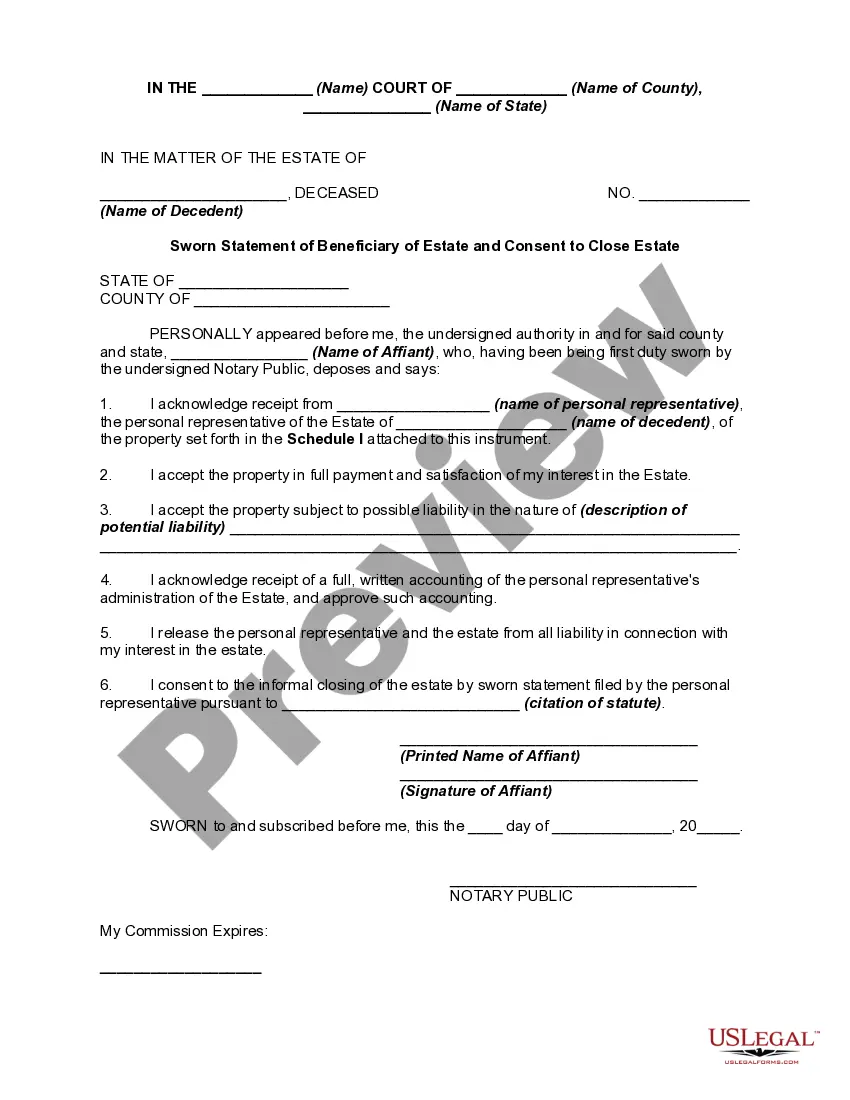
Estate Beneficiary Form
Description
Get your form ready online
Our built-in tools help you complete, sign, share, and store your documents in one place.
Make edits, fill in missing information, and update formatting in US Legal Forms—just like you would in MS Word.
Download a copy, print it, send it by email, or mail it via USPS—whatever works best for your next step.
Sign and collect signatures with our SignNow integration. Send to multiple recipients, set reminders, and more. Go Premium to unlock E-Sign.
If this form requires notarization, complete it online through a secure video call—no need to meet a notary in person or wait for an appointment.
We protect your documents and personal data by following strict security and privacy standards.

Make edits, fill in missing information, and update formatting in US Legal Forms—just like you would in MS Word.

Download a copy, print it, send it by email, or mail it via USPS—whatever works best for your next step.

Sign and collect signatures with our SignNow integration. Send to multiple recipients, set reminders, and more. Go Premium to unlock E-Sign.

If this form requires notarization, complete it online through a secure video call—no need to meet a notary in person or wait for an appointment.

We protect your documents and personal data by following strict security and privacy standards.
Looking for another form?




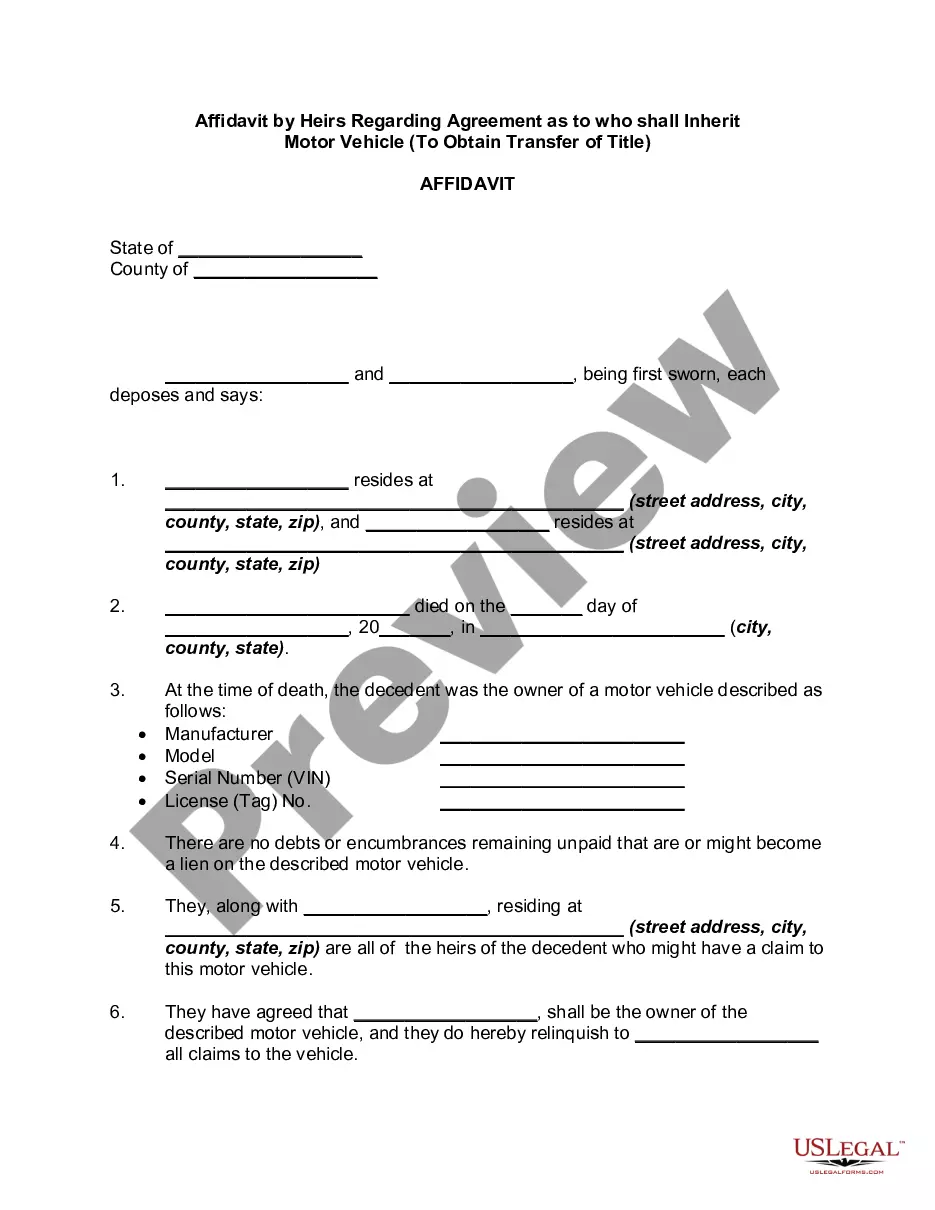
How to fill out Sworn Statement Of Beneficiary Of Estate And Consent To Close Estate - Uniform Probate Code?
Bureaucracy demands accuracy and meticulousness.
If you're not accustomed to completing forms like the Estate Beneficiary Form on a regular basis, it can result in some misunderstandings.
Selecting the correct template from the outset will ensure that your document submission proceeds smoothly, avoiding any hassle of resubmitting a form or starting the same task anew.
If you are not a subscribed user, finding the necessary template might involve a few extra steps.
- You can always find the suitable template for your documents in US Legal Forms.
- US Legal Forms is the largest online collection of forms that provides over 85 thousand templates across various fields.
- You can acquire the most current and relevant version of the Estate Beneficiary Form by simply searching for it on the site.
- Find, store, and download templates within your profile, or verify the description to confirm you have the correct one available.
- With a US Legal Forms account, it is simple to gather, save in one place, and navigate through the templates you have to access them quickly.
- When visiting the website, click the Log In button to Log In.
- Next, go to the My documents section, which contains your forms list.
- Review the descriptions of the forms and download the ones you require at any time.
Form popularity
FAQ
When you name your estate as a beneficiary, the assets will become part of the estate and will undergo the probate process before distribution. This process may delay access to your inheritance and incur additional costs. It is usually more beneficial to name specific individuals as beneficiaries. Using an estate beneficiary form can direct your assets more efficiently, ensuring timely distribution and lower costs.
Generally, you do not need to report inherited assets to the IRS as income; inheritances are not taxable in most cases. However, if the estate generated income prior to distribution, that income may need reporting. It’s wise to consult a tax professional regarding your specific situation. Having a clear estate beneficiary form can help track these assets and simplify your tax reporting.
The maximum amount you can inherit without incurring federal taxes is aligned with the federal estate tax exemption, which is $12.92 million in 2023. If your inheritance falls below this threshold, you generally won't owe federal taxes. However, state inheritance laws may differ, so it’s crucial to check for local regulations. To facilitate the distribution of your assets, consider utilizing an estate beneficiary form to detail your beneficiaries.
No, not all estates are required to file Form 706, the U.S. Estate (and Generation-Skipping Transfer) Tax Return. Only estates that exceed the federal estate tax exemption must file this form. By understanding when and if you need to file, you can better manage your estate planning. Utilizing an estate beneficiary form can help clarify your intentions regarding asset distribution, making this process smoother.
Form 1310 is a tax form used to claim a refund of an estate's taxes. This form is essential for an individual claim when the deceased estate has overpaid taxes. Completing this form ensures you can access any funds owed to the estate's beneficiaries. When preparing your estate beneficiary form, you may find that using other forms like the 1310 is useful for managing unclaimed refunds.
In 2023, you can inherit up to $12.92 million without facing federal estate taxes. This threshold may vary based on changes in tax laws, so you should stay informed. However, state laws may impose different limits, so it is essential to verify the rules in your state. Consider using an estate beneficiary form to simplify the process of designating beneficiaries.
To report inheritance to the IRS, you do not need a specific form, since inheritances are typically not considered taxable income. However, if you earn income from the inherited assets, you will report that on your tax return, often using Form 1040. Using an estate beneficiary form can help clarify your responsibilities and ensure proper documentation for future tax filings.
Generally, you do not need to report your inheritance as income on your federal tax return. However, you may need to report any income generated from inherited assets, such as property or investments. It is wise to utilize an estate beneficiary form to document the assets passed to you. This can lead to smoother tax reporting, so consider keeping thorough records.
Yes, a 1099-S form is required for inherited property if it is sold. This form reports the sale of real estate, including any inherited property. It’s crucial to use the estate beneficiary form to detail the beneficiaries of the estate, as this will assist in accurate tax reporting. Just be sure to consult a tax advisor for specific guidance based on your situation.
Yes, there is an IRS form for reporting inheritance. Typically, you may need to use IRS Form 706, which is the estate tax return. This form is necessary when the estate exceeds the federal estate tax exemption limit. Utilizing an estate beneficiary form can help ensure all heirs are properly informed and involved throughout this process.