Adverse Possessor Defendants Editable With Suitable Citation
Description
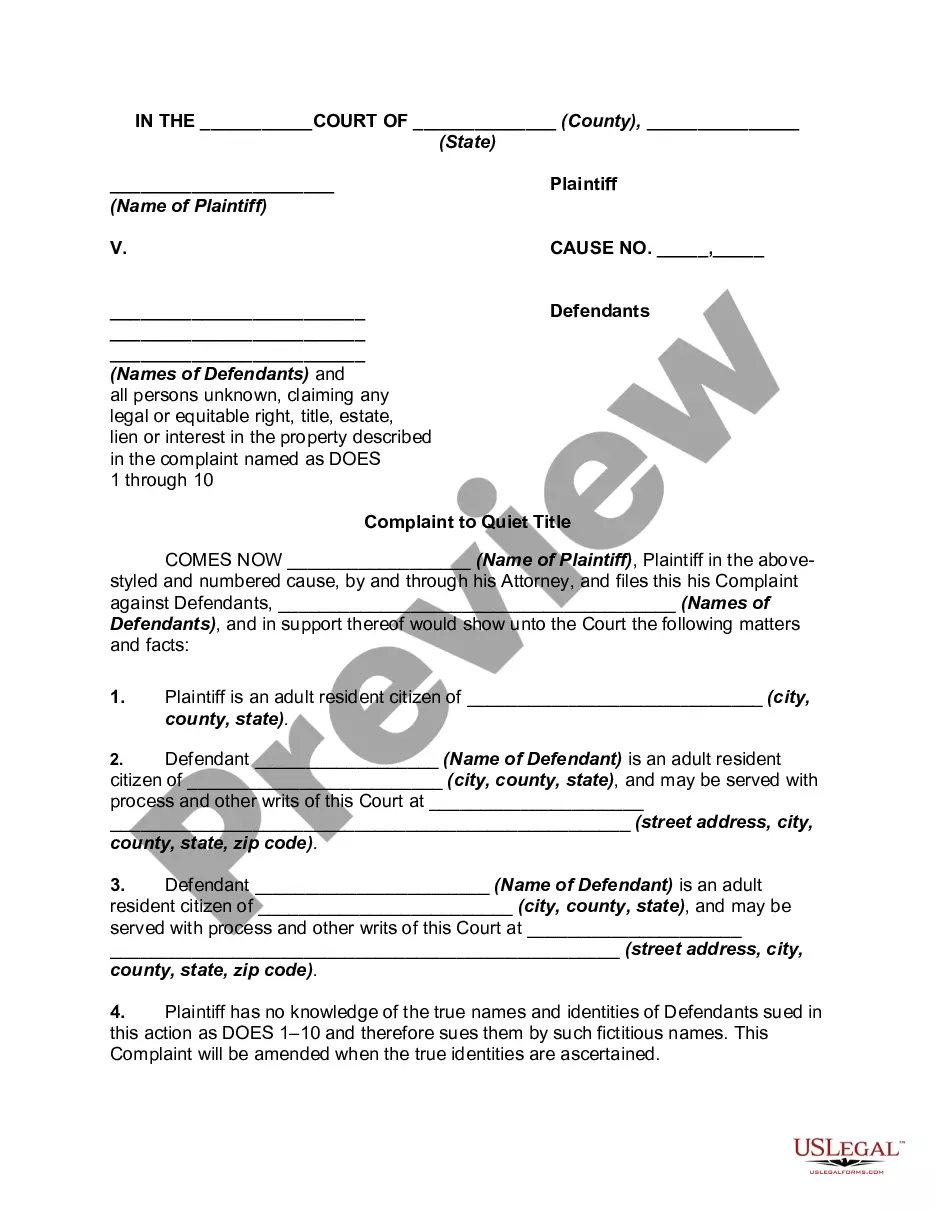
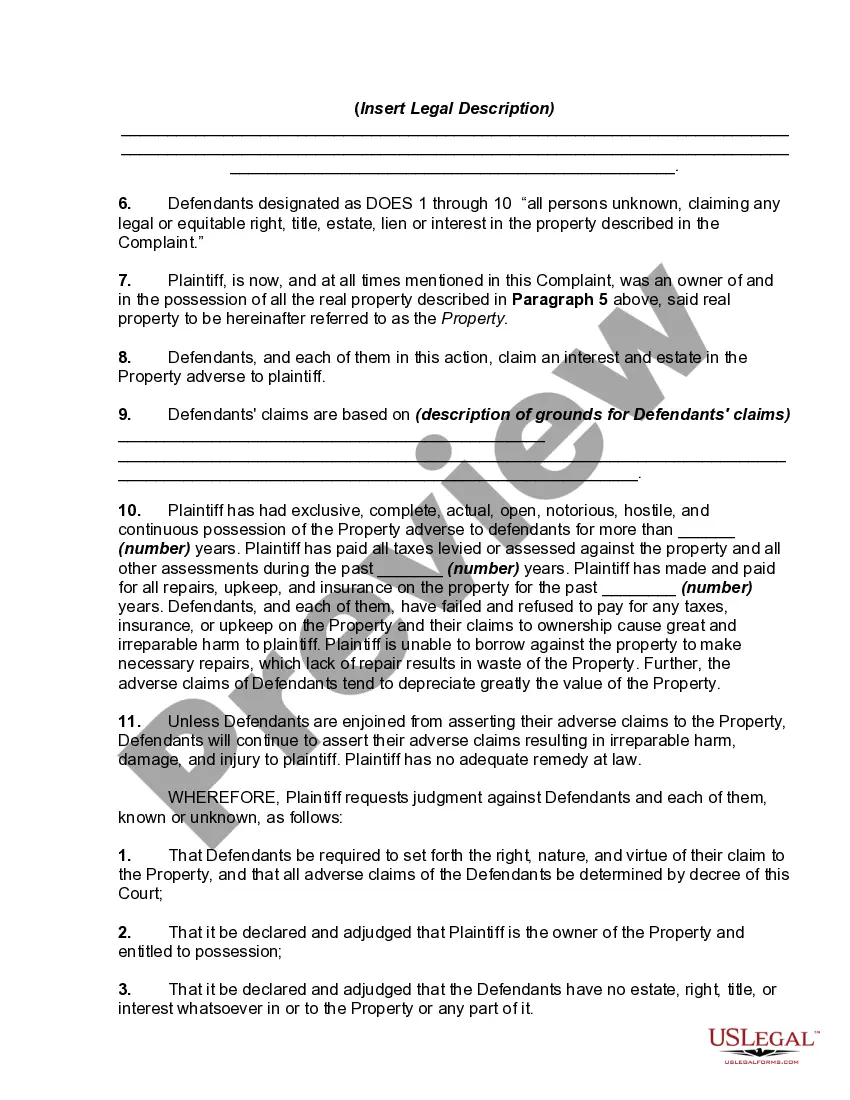
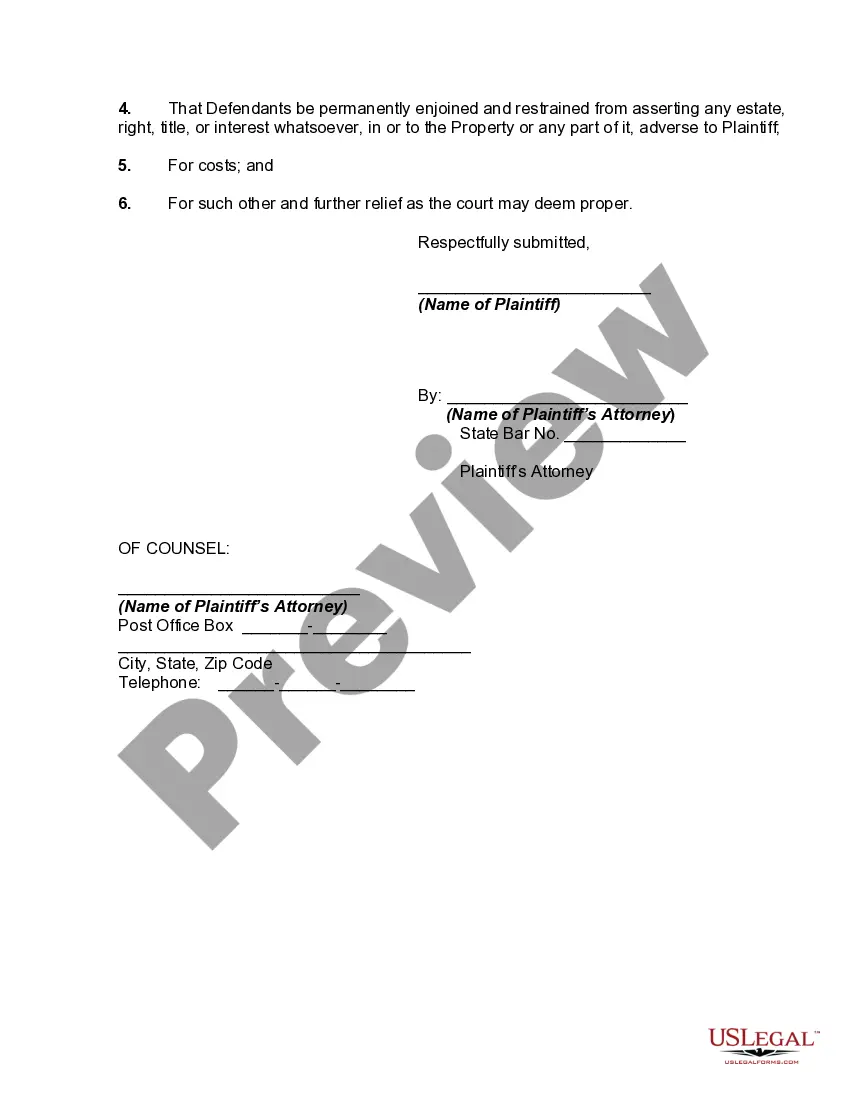
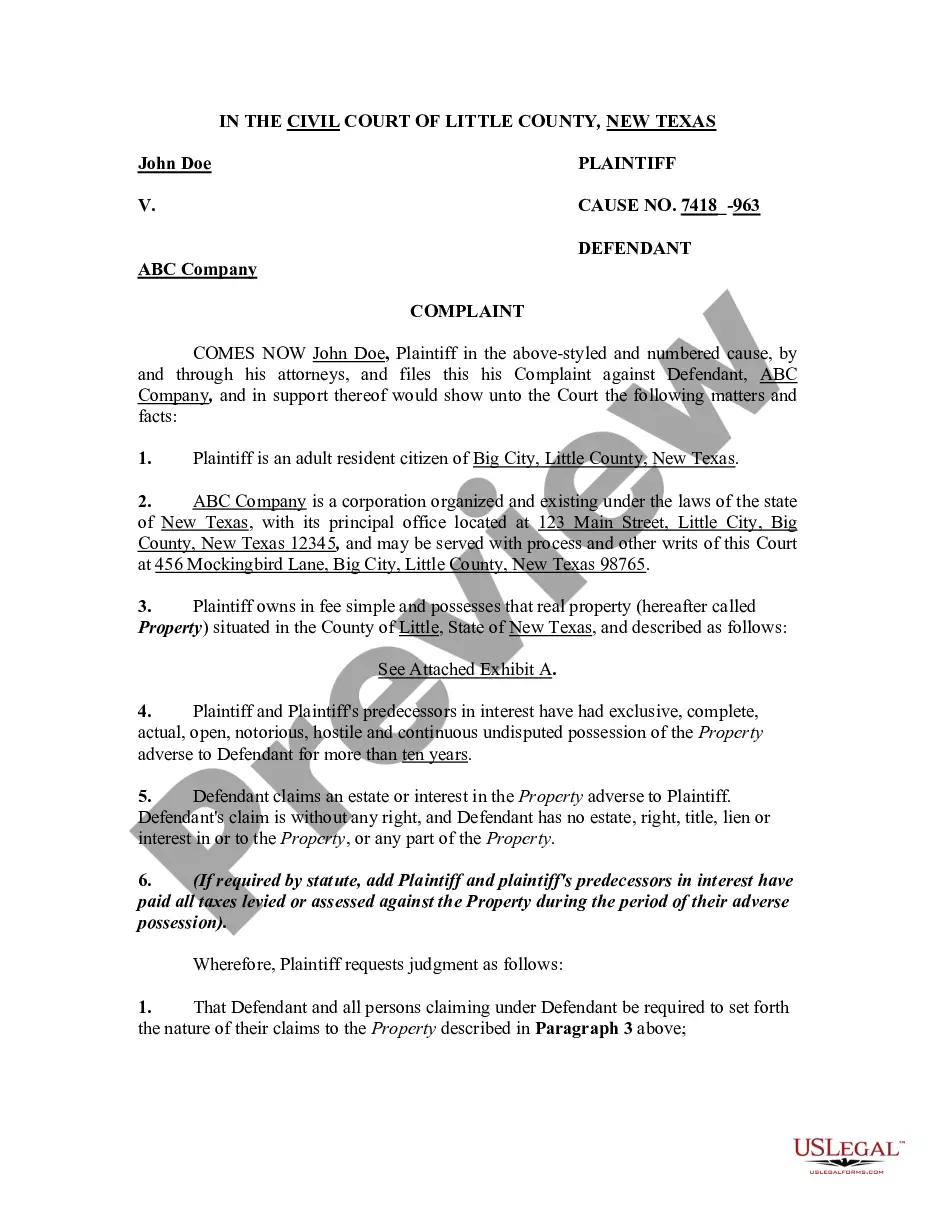

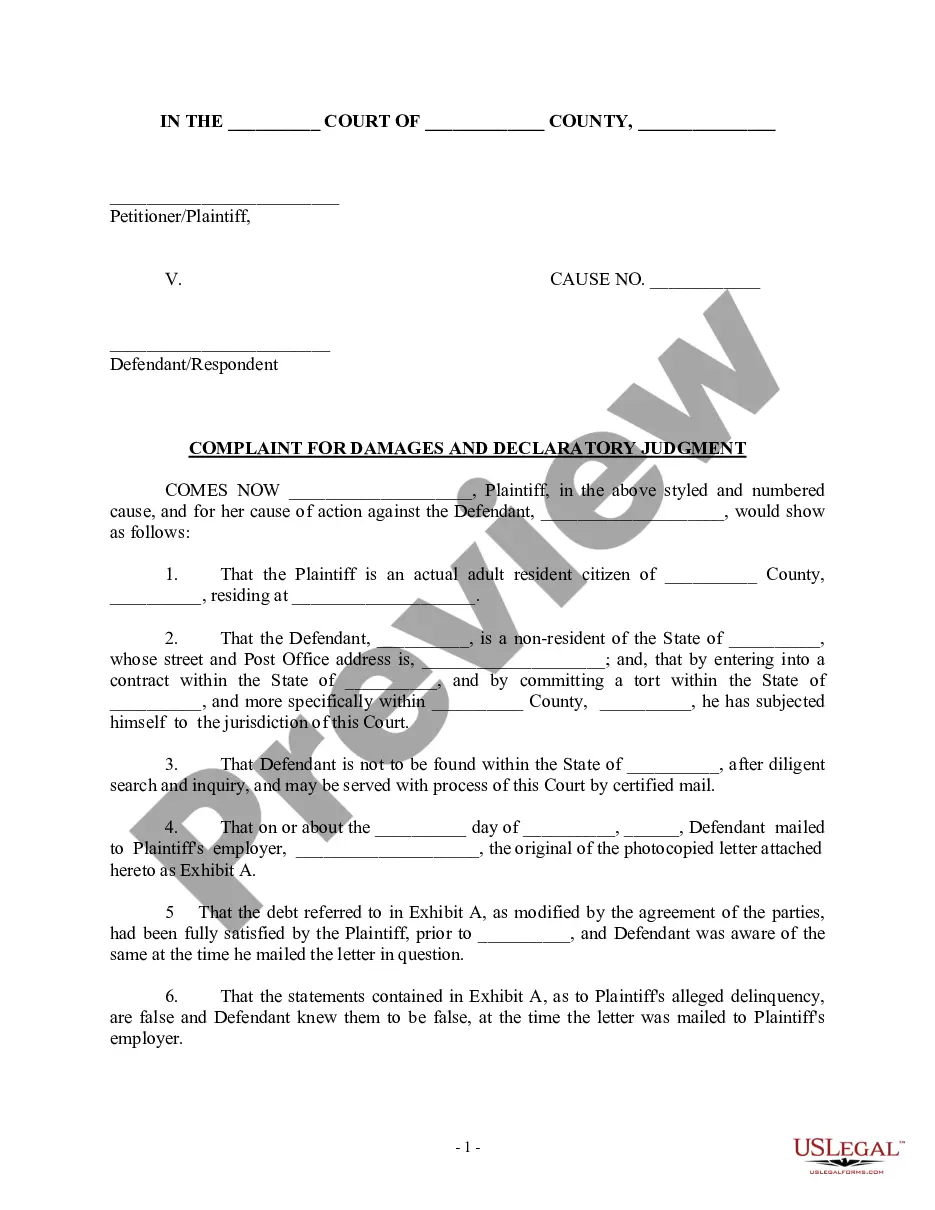

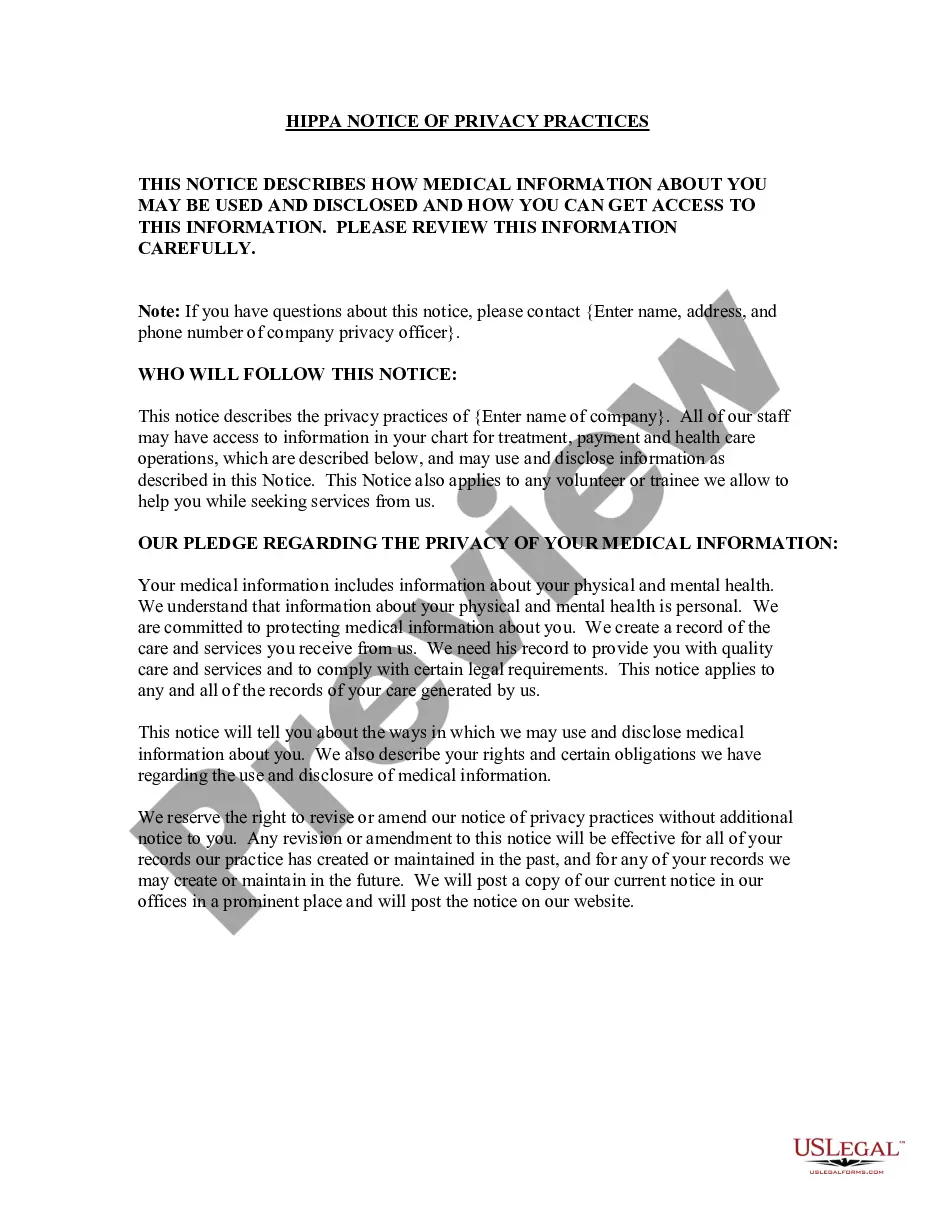
How to fill out Complaint To Quiet Title By Adverse Possessor With Unknown Defendants?
- Log into your US Legal Forms account if you're a returning user. Click the Download button to retrieve your desired form, ensuring your subscription is active. If it needs renewal, follow your payment plan accordingly.
- For first-time users, start by exploring the Preview mode and reading the form description carefully. Confirm that you've identified the correct document that aligns with your needs and local laws.
- Search for alternative templates if needed. Should you find any discrepancies, utilize the Search tab to locate the appropriate form that meets your specifications.
- Select the document you wish to purchase. Click on the Buy Now button and choose your subscription plan. You'll need to register an account to gain full access to the library's resources.
- Proceed with payment by entering your credit card information or using your PayPal account to finalize your subscription.
- After your purchase, download the form and save it to your device. You can also access it later in the My Forms section of your profile.
In conclusion, US Legal Forms stands as a powerful ally in the legal documentation process. Its robust collection and user-friendly interface empower users to create legally sound documents with ease.
Experience the benefits of US Legal Forms today and simplify your legal form needs!
Form popularity
FAQ
Public records can significantly support an adverse possession claim by documenting your continuous use and improvements made on the property. These records may include title searches, tax payment history, or permits for construction. As an adverse possessor defendants editable, having solid documentation enhances your case. Exploring resources like USLegalForms can help you assemble the necessary paperwork for your claim.
In Minnesota, the period required for an adverse possession claim is 15 years. During this time, the possessor must show clear and consistent use of the property, which establishes a claim against the true owner. Understanding these requirements is crucial for adverse possessor defendants editable looking to formalize their claim. Consulting local legal resources can help clarify details specific to your circumstances.
In New York, the requirements for an adverse possession claim include continuous possession for at least 10 years, actual possession, exclusive use, and open and notorious occupation of the property. You must demonstrate that your use of the property is visible and obvious, so the true owner could have noticed it. Understanding these requirements helps you as an adverse possessor defendants editable navigate your legal standing. Legal advice may clarify your specific situation further.
To record an adverse possession claim, you must typically file a legal action in your local court. This process often includes documenting proof of your possession, such as utility bills or property maintenance records. Your claim as an adverse possessor defendants editable needs to be presented clearly, showing continuous use over the required period. It is beneficial to consult legal resources like USLegalForms to guide you through this process.
An example of an adverse possession claim occurs when a person occupies and improves a piece of land that belongs to someone else, without the owner's permission. For instance, if you build a fence on a vacant lot and maintain it for a certain period, you may establish a claim. This situation highlights how adverse possessor defendants editable can assert rights over the property based on actual use. Relevant case law in your jurisdiction can provide more insight into specific scenarios.
You can describe the concept of adverse possession by saying, 'The property was claimed by the adverse possessor defendants after they openly used it for several years without permission from the original owner.' This sentence reflects the legal principle involving adverse possessor defendants, who can potentially gain ownership rights through continuous and unauthorized use. To ensure compliance with local laws, consider using resources from US Legal Forms for accurate guidance on adverse possession claims.
In California, the five requirements for adverse possession include: continuous possession for five years, open and notorious use, exclusive possession, hostile possession against the true owner, and payment of property taxes during the possession period. Meeting these criteria is essential for a successful claim. If you find yourself challenged by adverse possessor defendants, considering legal assistance can greatly aid your defense.
Defeating a claim of adverse possession can often hinge on several factors, such as lack of exclusivity, permission from the owner, or failure to meet the statutory period. Presenting evidence that shows any of these conditions is not met can effectively undermine the claimant's position. It is often beneficial to consult an attorney to navigate these complex legal waters.
Hostile evidence in adverse possession refers to actions taken by the possessor that openly challenge the rights of the true owner. For example, if a possessor has lived on the property without permission but has done so openly, it could bolster their claim. Understanding the nuances of what constitutes hostility is crucial if you aim to defend against adverse possessor defendants.
To stop someone from claiming adverse possession, you should immediately assert your ownership by taking legal action, such as filing a lawsuit or recording your ownership interest. Actively using and maintaining the property can also weaken their claim. Using resources like the UsLegalForms platform can guide you in drafting the necessary documents to secure your position against adverse possessor defendants.