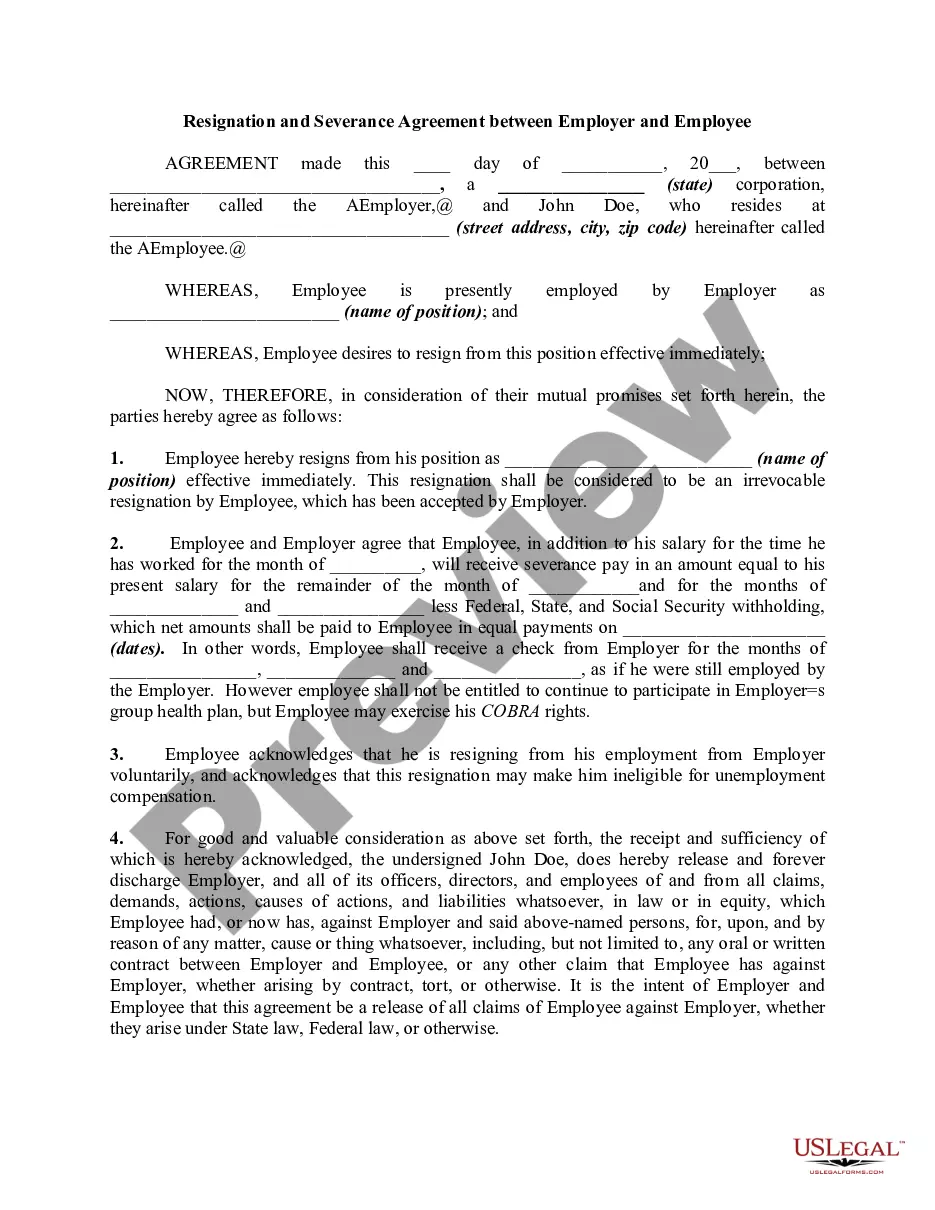
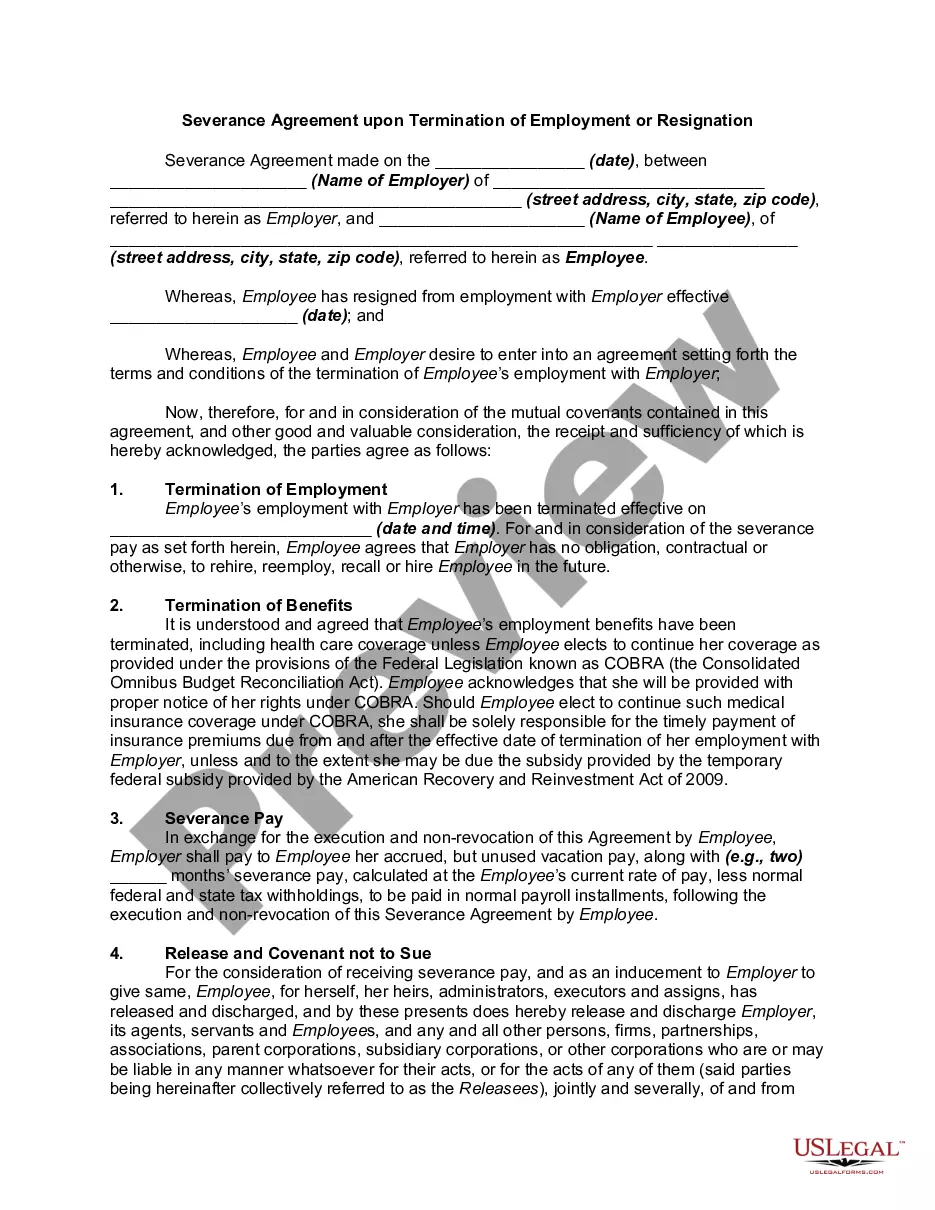
Severance Tax Withholding
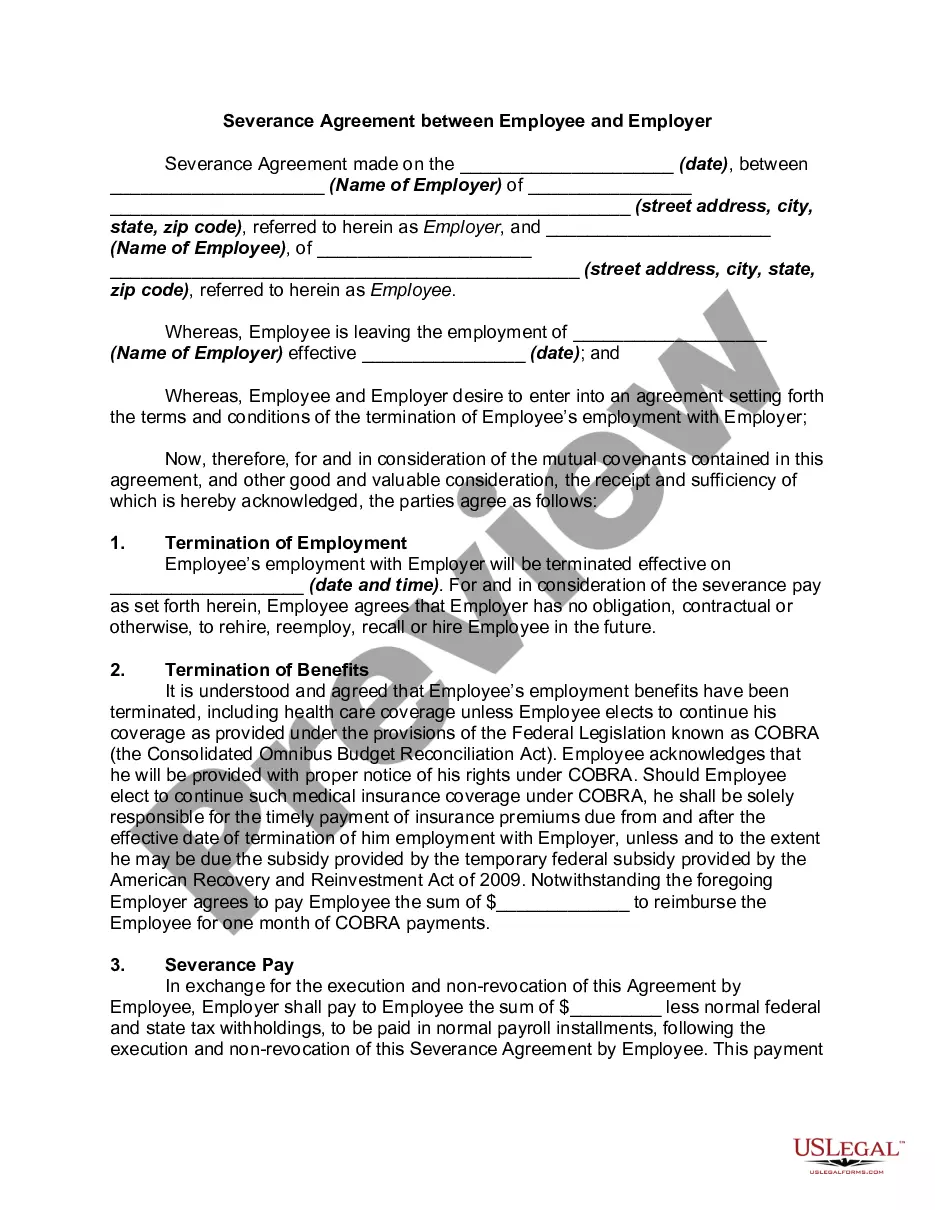
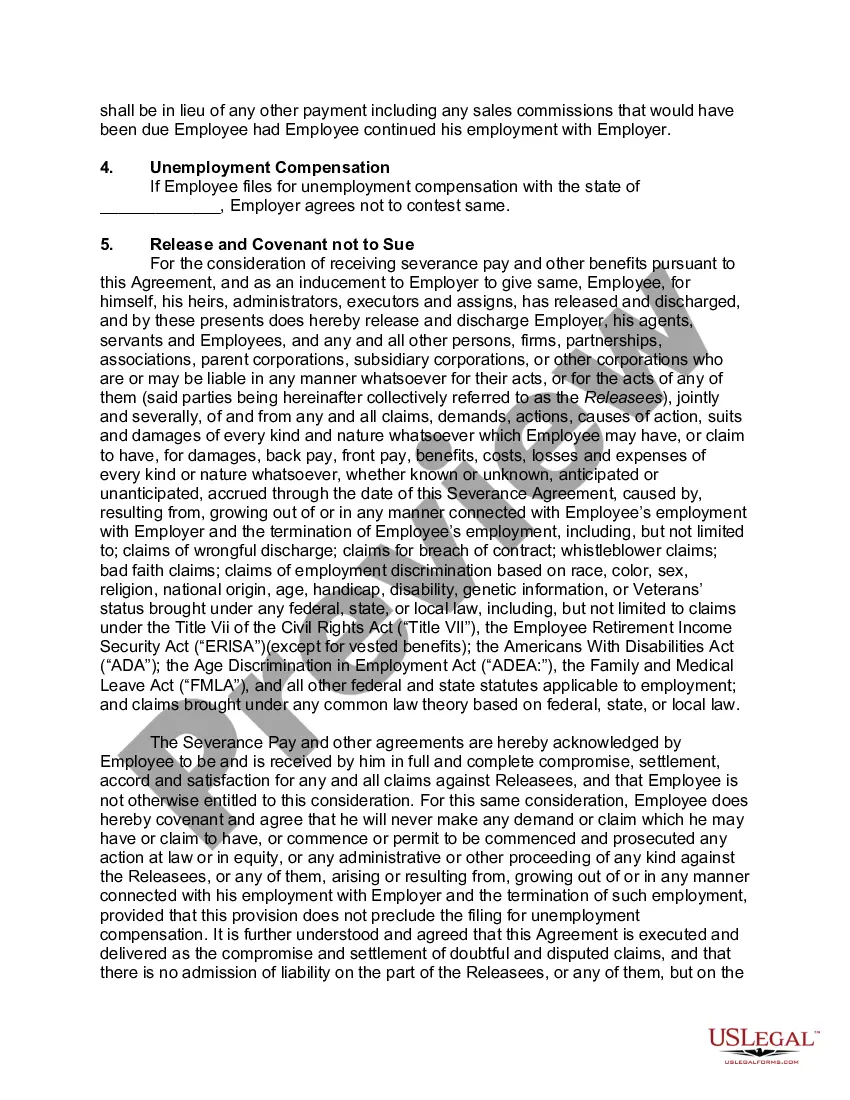
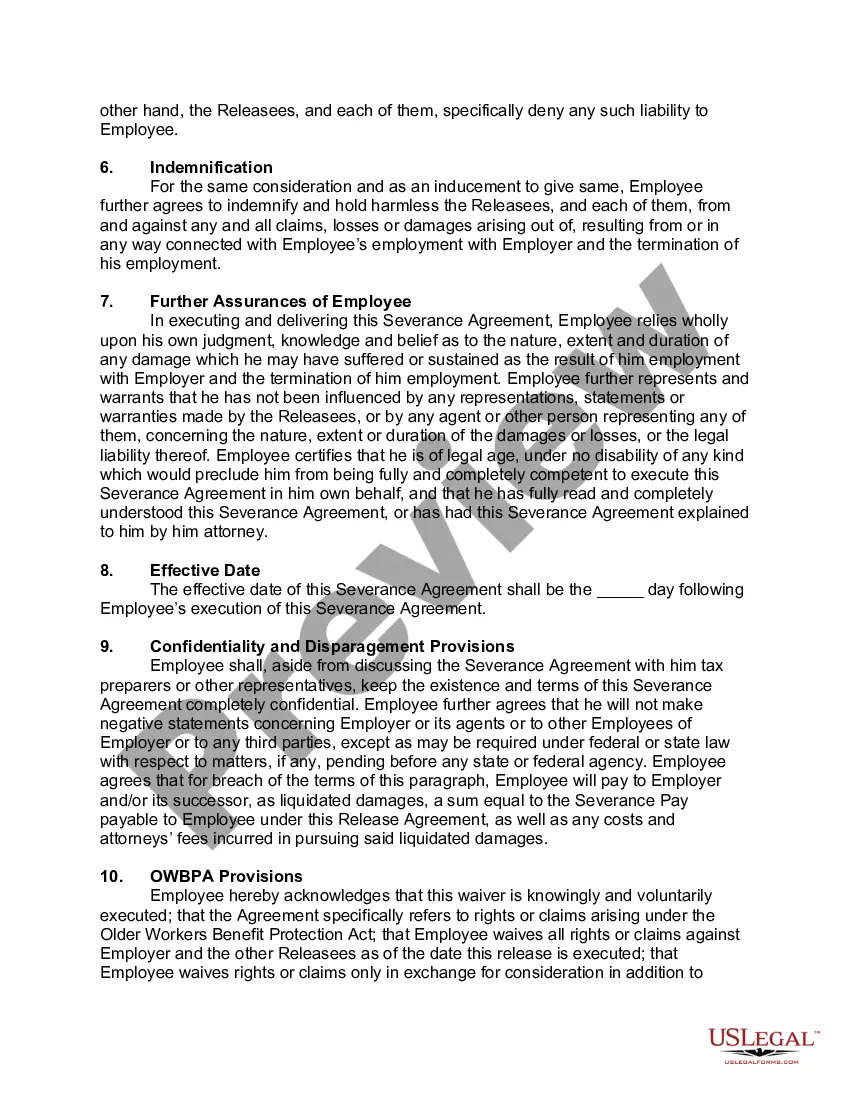
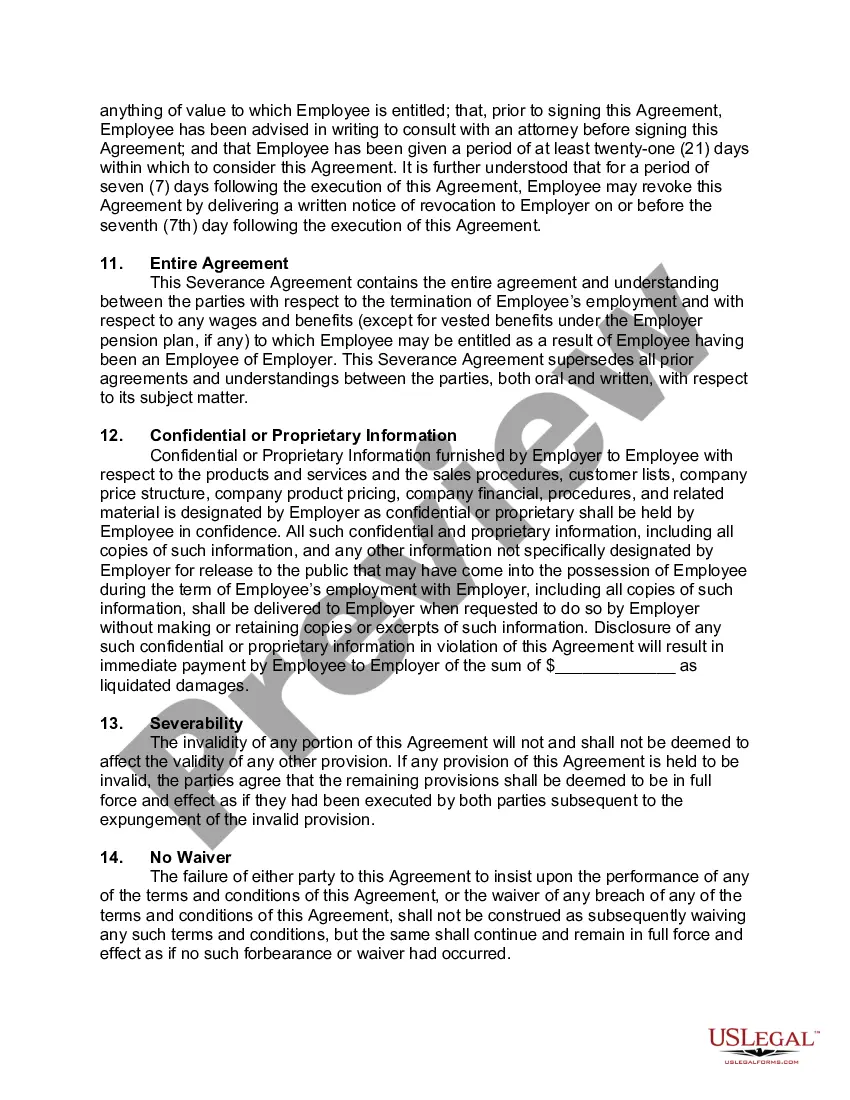
Description




Get your form ready online
Our built-in tools help you complete, sign, share, and store your documents in one place.
Make edits, fill in missing information, and update formatting in US Legal Forms—just like you would in MS Word.
Download a copy, print it, send it by email, or mail it via USPS—whatever works best for your next step.
Sign and collect signatures with our SignNow integration. Send to multiple recipients, set reminders, and more. Go Premium to unlock E-Sign.
If this form requires notarization, complete it online through a secure video call—no need to meet a notary in person or wait for an appointment.
We protect your documents and personal data by following strict security and privacy standards.

Make edits, fill in missing information, and update formatting in US Legal Forms—just like you would in MS Word.

Download a copy, print it, send it by email, or mail it via USPS—whatever works best for your next step.

Sign and collect signatures with our SignNow integration. Send to multiple recipients, set reminders, and more. Go Premium to unlock E-Sign.

If this form requires notarization, complete it online through a secure video call—no need to meet a notary in person or wait for an appointment.

We protect your documents and personal data by following strict security and privacy standards.
Looking for another form?










How to fill out Severance Agreement Between Employee And Employer?
- If you are a returning user, log in to your account and select the desired form template by clicking the Download button. Ensure your subscription is active and renew it if necessary.
- For new users, begin by exploring the Preview mode and reading the form description. Confirm that you have selected the right document that aligns with your specific requirements and jurisdiction.
- Should you find discrepancies or need a different form, utilize the Search tab to locate the correct template. If it meets your criteria, you can proceed.
- Make your purchase by clicking the Buy Now button. Choose a suitable subscription plan and create an account to access our extensive resources.
- Complete your payment via credit card or PayPal. Once your purchase is confirmed, you can easily download your form.
- Access your downloaded form any time by visiting the My Forms section of your profile.
Using US Legal Forms not only grants you access to a vast repository of over 85,000 legally vetted forms but also ensures that you can receive expert assistance in form completion.
Take control of your legal documentation today with US Legal Forms. Start your journey towards efficient severance tax withholding by signing up for an account now!
Form popularity
FAQ
Various employee benefits are not subject to FICA taxes, such as certain types of health insurance and qualified retirement plan contributions. Additionally, severance payments under specific conditions may not be included in FICA calculations. Understanding these exemptions can clarify your severance tax withholding requirements, helping you plan effectively. At US Legal Forms, we provide resources to help you navigate these complex tax scenarios with ease.
Generally, severance tax is not deductible as a personal expense. The Internal Revenue Service considers it a tax that is withheld rather than something you can claim for deductions. If you have specific situations or losses related to your severance, there may be other deductible expenses to consider. Always consult with a qualified tax advisor to explore any potential benefits concerning severance tax withholding.
Severance tax is typically not deductible on your federal tax return. Instead, the tax is withheld from your lump sum payout. However, it may be possible to claim other deductions that offset your overall tax bill. It's advisable to review your tax situation or discuss with an expert familiar with severance tax withholding to maximize your deductions.
To avoid taxes on a lump sum payout, consider spreading your income across multiple tax years. By doing this, you may lower your overall tax liability and take advantage of lower tax brackets. You might also explore strategies like contributing to retirement accounts or other tax-advantaged plans. Consulting a tax professional can provide tailored advice specific to your situation regarding severance tax withholding.
To fill out your tax withholding form accurately, start with your personal details, such as your name, address, and Social Security number. Next, select the appropriate exemptions based on your tax situation. Remember, when considering severance tax withholding, it is crucial to calculate any additional withholding you may need to account for severance payments. If you're unsure, our platform at US Legal Forms can help guide you through the process.
To minimize severance tax withholding, consider negotiating the terms of your severance agreement. You can request a payment schedule that aligns with your next employment or include tax-efficient benefits. Additionally, you might explore options like rolling over your severance into a retirement account to delay tax implications. Remember, consult with a tax professional to ensure you make informed decisions regarding your severance tax withholding.
In the United States, severance tax rates vary significantly by state and resource type. Generally, the rates may range from 0.1% to 15%, depending on local laws governing resource extraction. This variability means that it's vital to stay informed about the regulations in your specific state. Using services like US Legal Forms can provide up-to-date information on severance tax withholding obligations, ensuring compliance and proper tax handling.
Severance tax withholding is levied on the extraction of natural resources like oil, gas, and minerals. It serves as a means for states to collect revenue from businesses that remove these resources from the ground. Essentially, it represents a financial obligation that resource companies must meet for the privilege of extracting valuable commodities. US Legal Forms offers resources that can clarify how these taxes work and what they mean for both businesses and individuals.