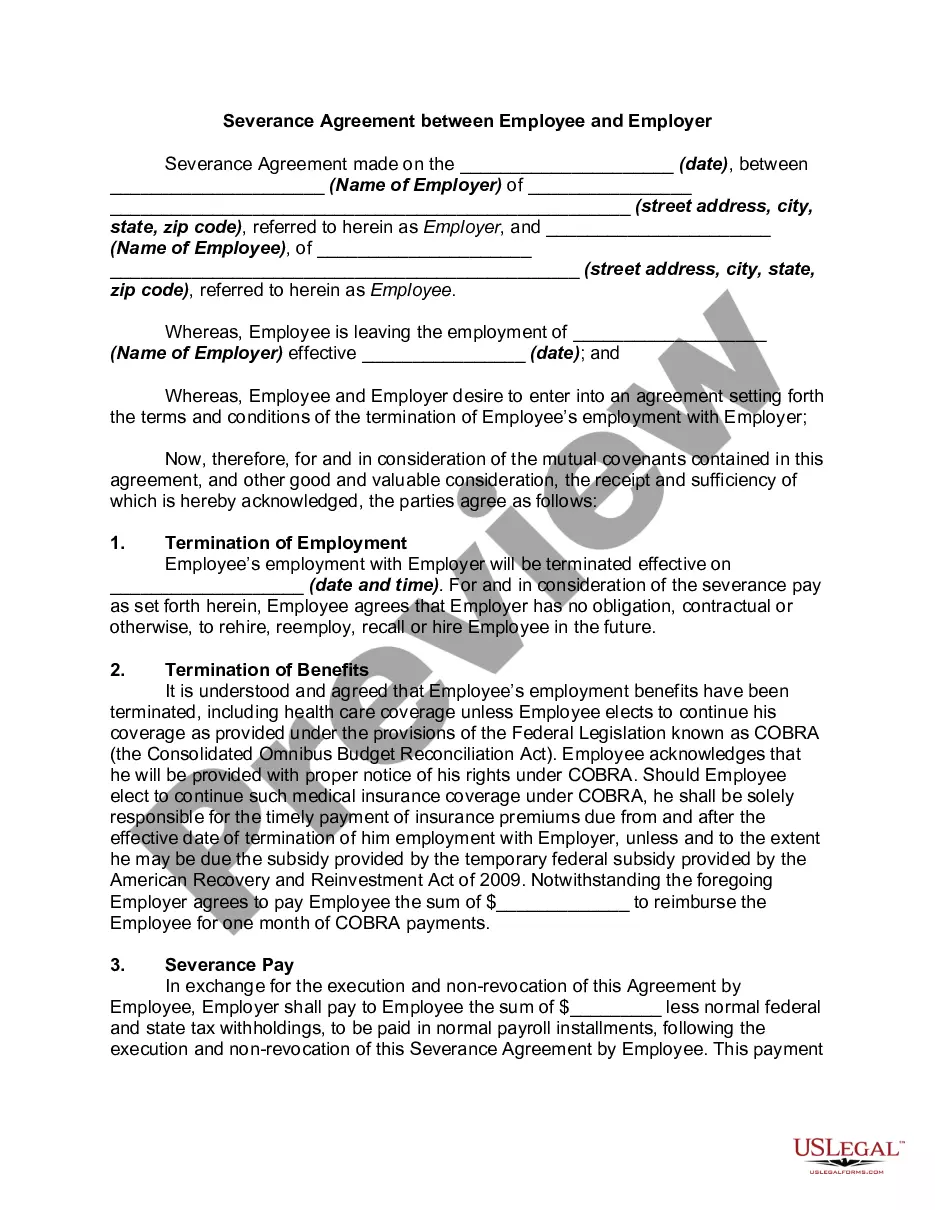
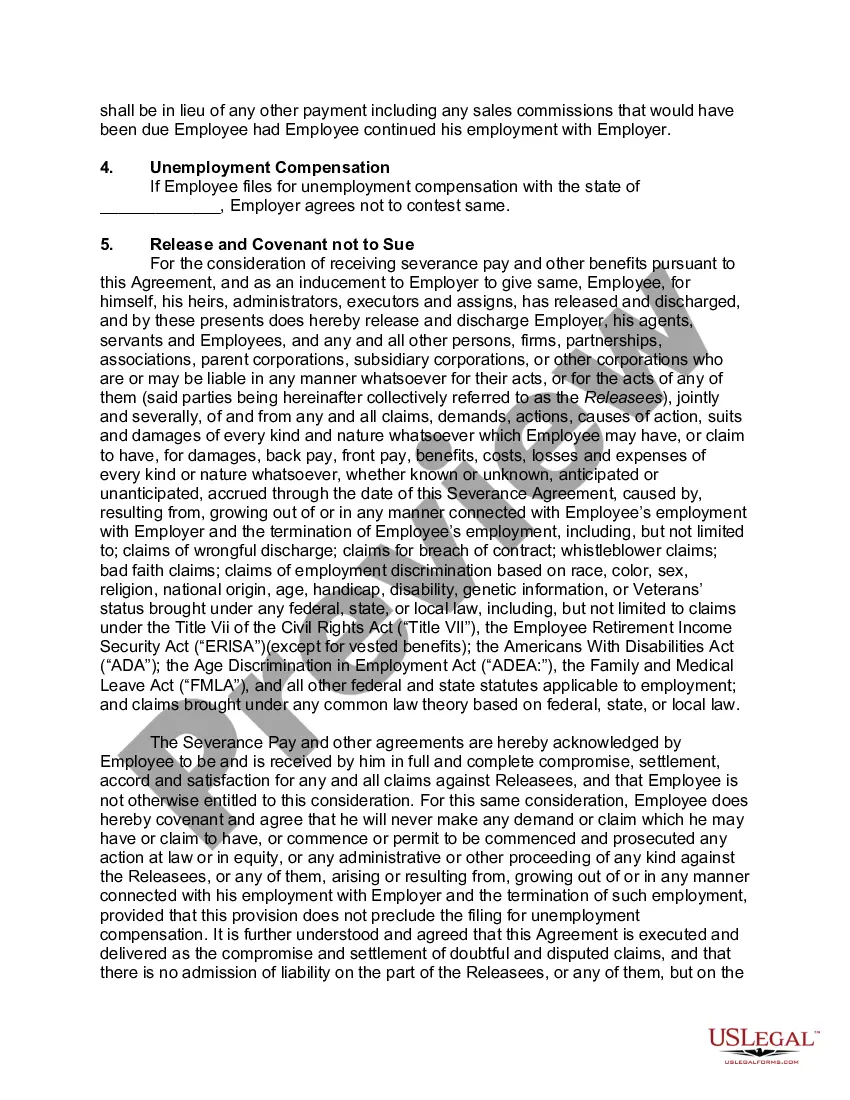
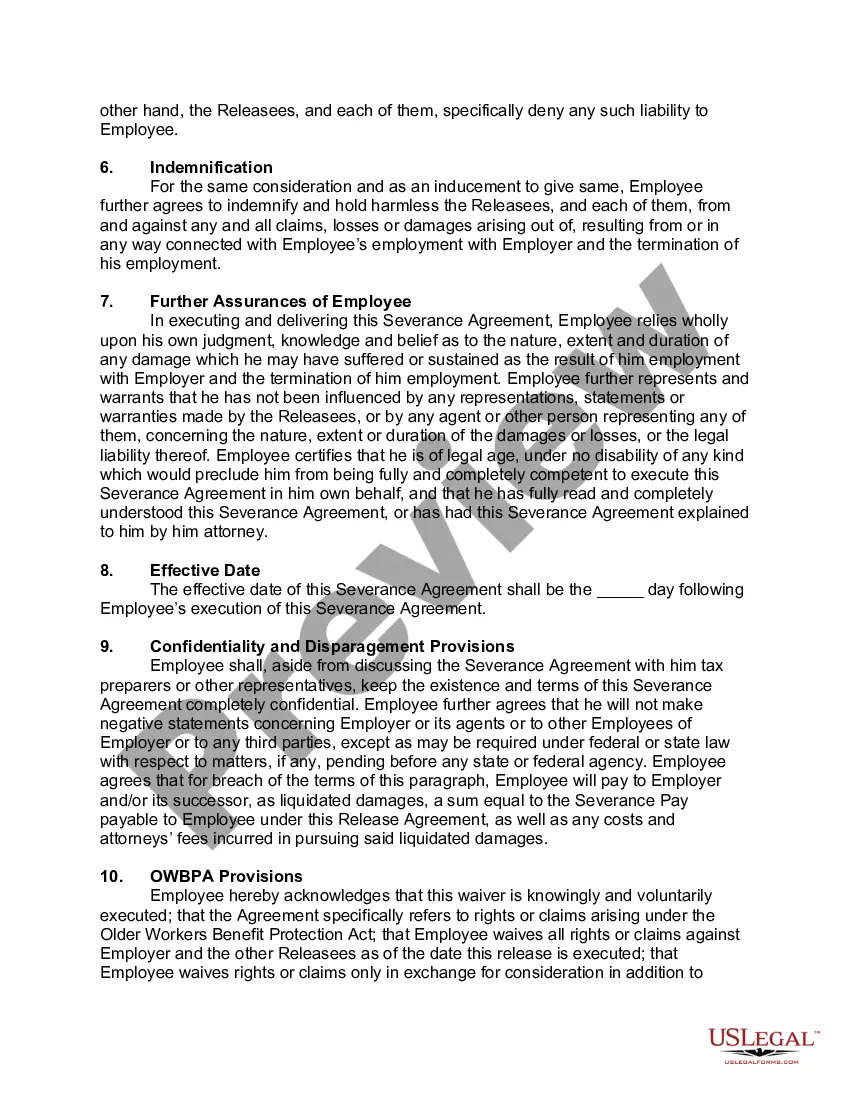
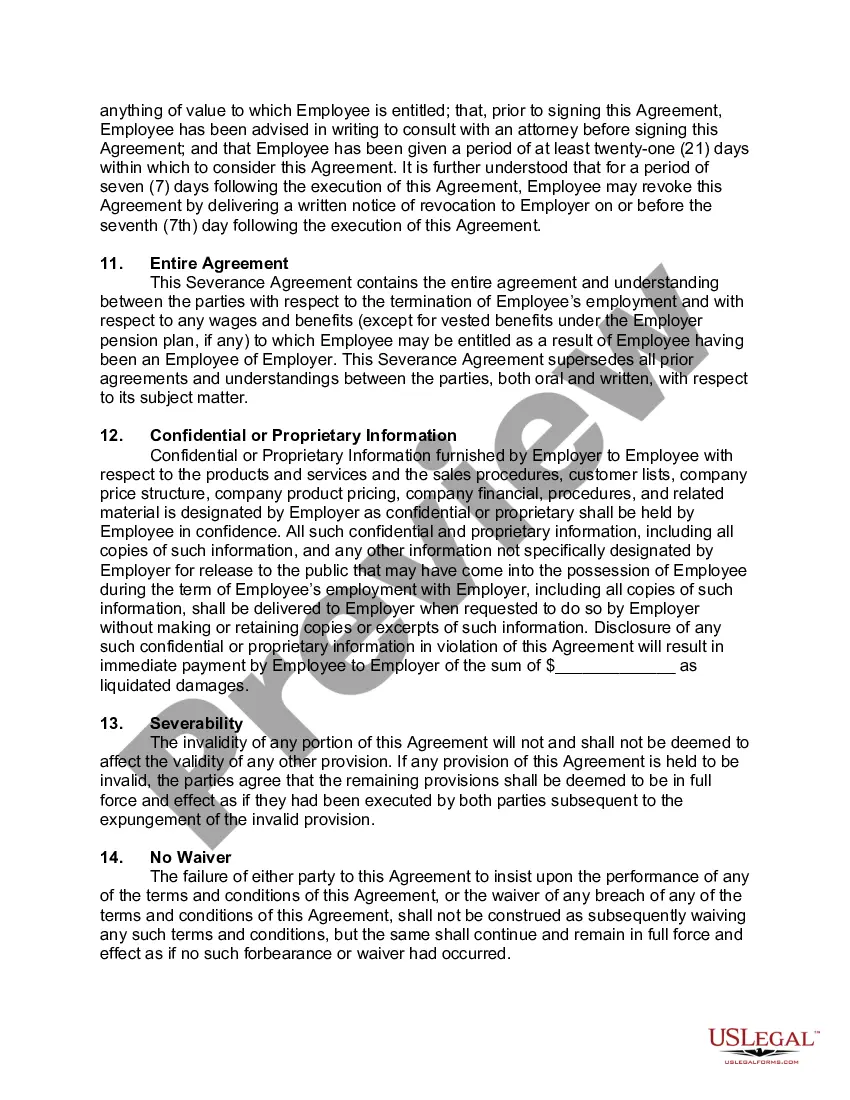
Severance Package With Non-compete
Description
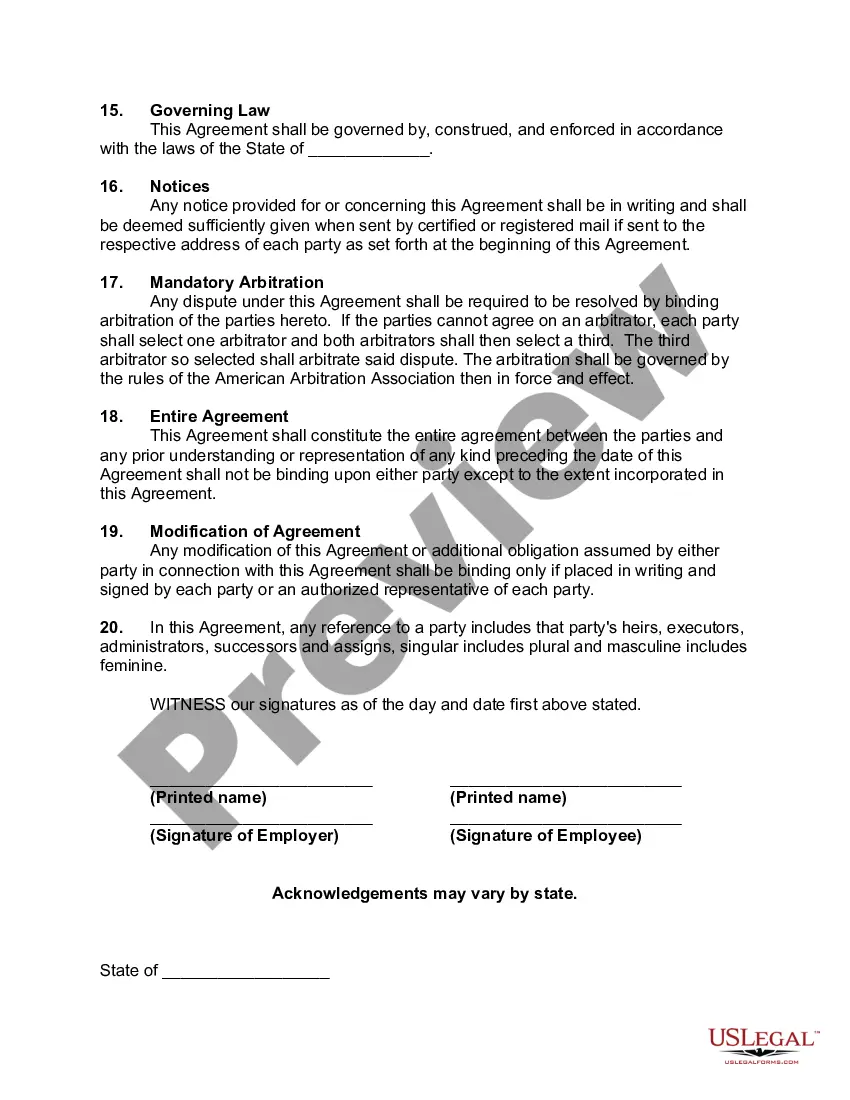
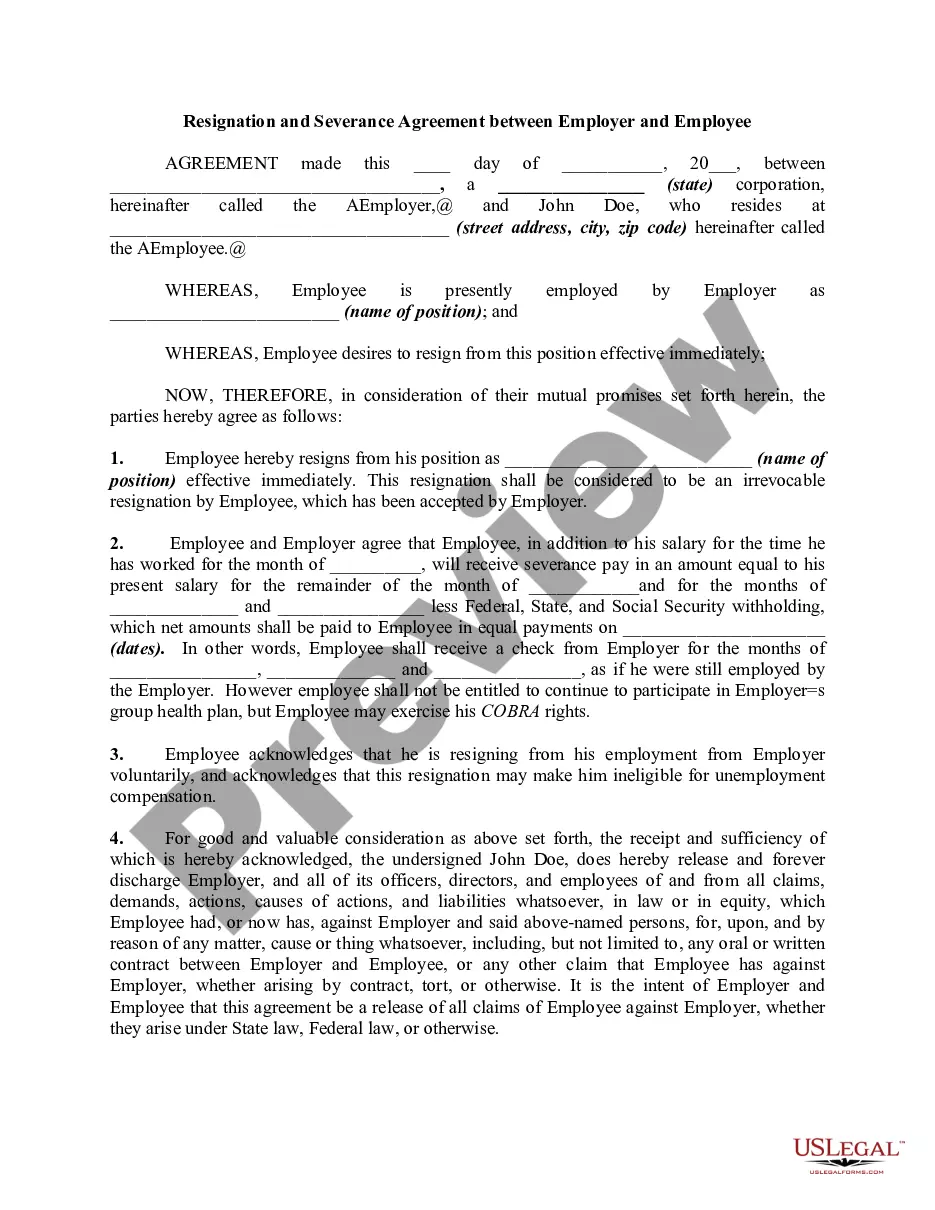
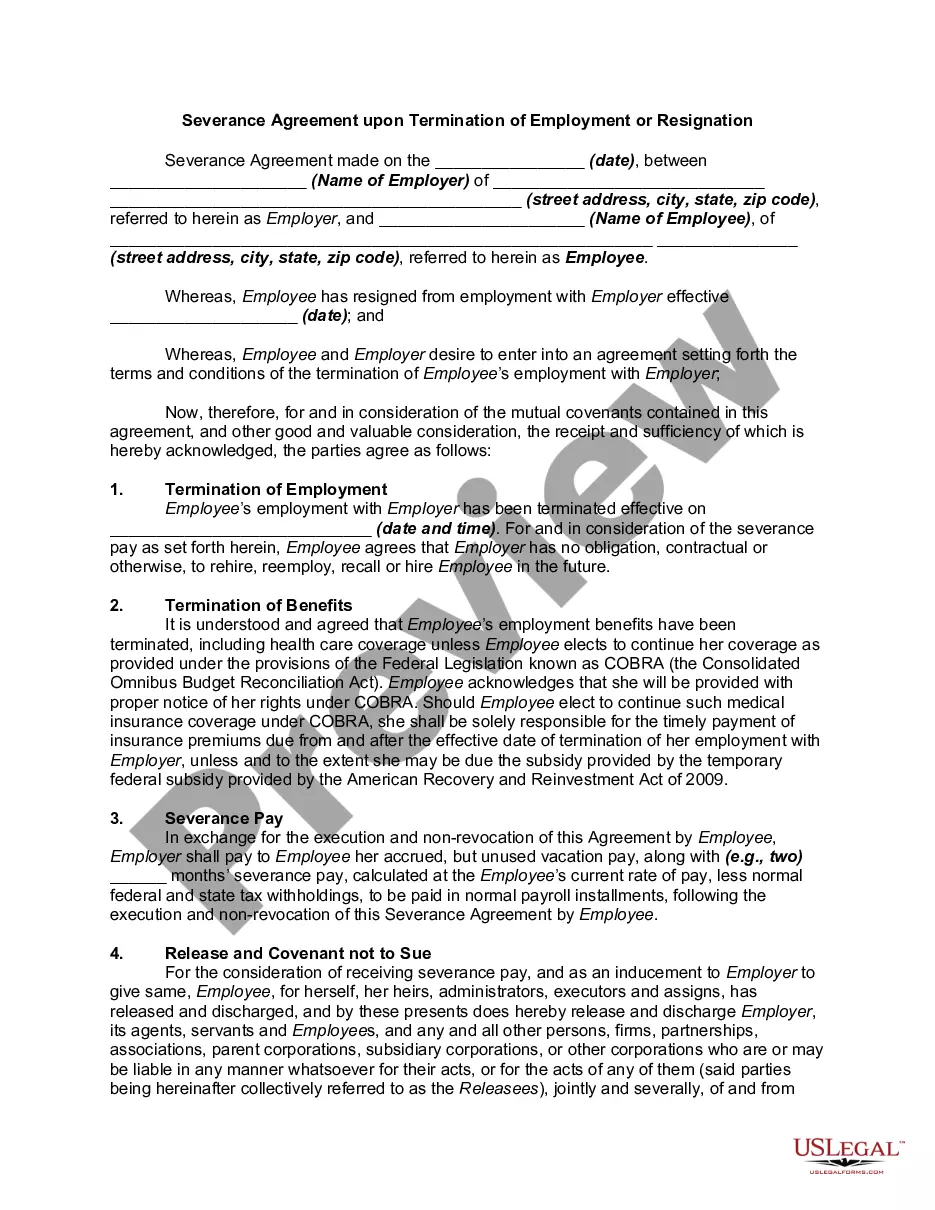
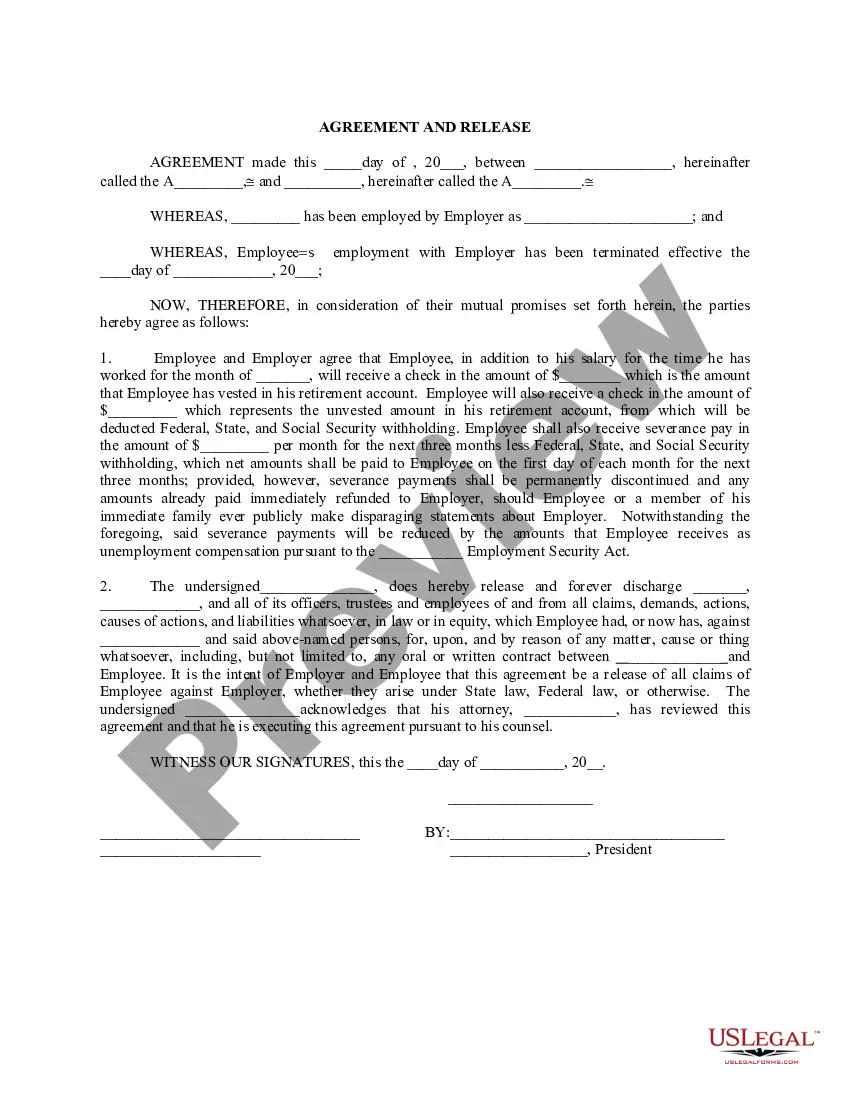
Get your form ready online
Our built-in tools help you complete, sign, share, and store your documents in one place.
Make edits, fill in missing information, and update formatting in US Legal Forms—just like you would in MS Word.
Download a copy, print it, send it by email, or mail it via USPS—whatever works best for your next step.
Sign and collect signatures with our SignNow integration. Send to multiple recipients, set reminders, and more. Go Premium to unlock E-Sign.
If this form requires notarization, complete it online through a secure video call—no need to meet a notary in person or wait for an appointment.
We protect your documents and personal data by following strict security and privacy standards.

Make edits, fill in missing information, and update formatting in US Legal Forms—just like you would in MS Word.

Download a copy, print it, send it by email, or mail it via USPS—whatever works best for your next step.

Sign and collect signatures with our SignNow integration. Send to multiple recipients, set reminders, and more. Go Premium to unlock E-Sign.

If this form requires notarization, complete it online through a secure video call—no need to meet a notary in person or wait for an appointment.

We protect your documents and personal data by following strict security and privacy standards.
Looking for another form?






How to fill out Severance Agreement Between Employee And Employer?
Whether for commercial reasons or for individual issues, everyone must manage legal circumstances at some point in their life.
Filling out legal documents requires meticulous focus, starting from choosing the correct form example.
After it is downloaded, you can complete the form using editing software or print it out and finish it by hand. With an extensive US Legal Forms catalog available, you do not have to waste time searching for the correct template online. Utilize the library’s straightforward navigation to find the suitable template for any situation.
- Obtain the template you need by using the search bar or catalog browsing.
- Review the form’s description to confirm it aligns with your situation, state, and county.
- Click on the form’s preview to inspect it.
- If it is the incorrect form, return to the search function to find the Severance Package With Non-compete template you need.
- Download the template if it fulfills your requirements.
- If you already possess a US Legal Forms account, simply click Log in to access previously saved documents in My documents.
- If you do not have an account yet, you can download the form by clicking Buy now.
- Select the appropriate pricing option.
- Complete the account registration form.
- Choose your payment method: utilize a credit card or PayPal account.
- Select the document format you prefer and download the Severance Package With Non-compete.
Form popularity
FAQ
The 70 rule for severance serves as a guiding framework for understanding the longevity of financial support after leaving an employer. It can be particularly useful when evaluating a severance package with non-compete conditions, allowing employees to plan their next steps effectively. This approach can empower individuals to make informed decisions about their finances and career transitions after an unexpected job change.
The rule of 70 for severance helps individuals gauge how their severance package with non-compete clauses may affect their future earnings. By applying this rule, employees can estimate how long it will take to reach a certain financial goal based on the compensation they receive. This method provides a clearer picture, especially when navigating complex severance agreements and ensuring that the terms align with their career aspirations.
The rule of 70 in employment refers to an estimation method used to assess the effect of salary growth or productivity improvements. Essentially, it suggests that you can divide 70 by the annual growth rate to determine how many years it will take for income or value to double. In the context of a severance package with non-compete agreements, understanding this rule can aid employees in evaluating their financial options and future opportunities.
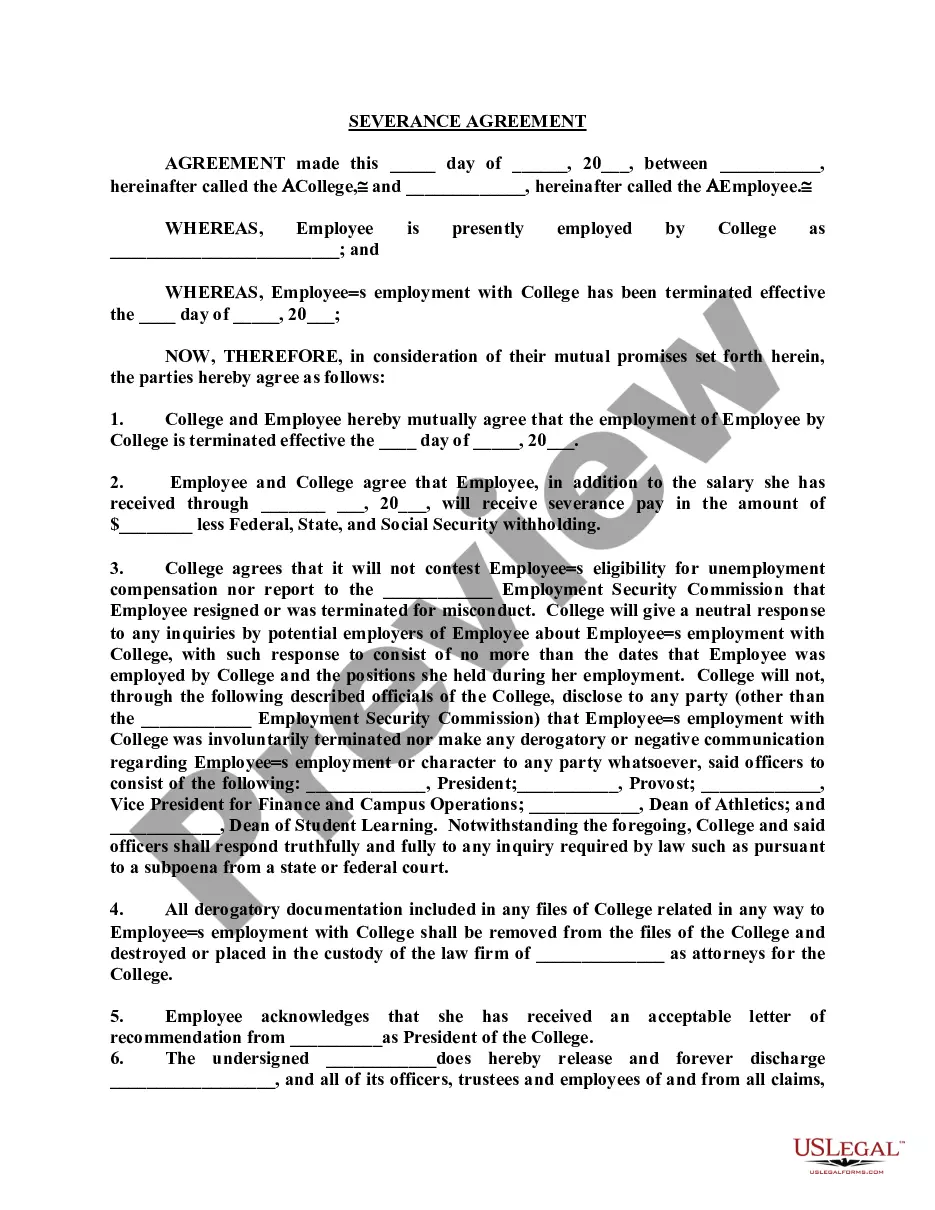
Certainly, a severance package can include a non-compete agreement as part of the terms of your departure. Companies often implement these agreements to protect their business interests. If your severance package with non-compete is presented to you, it is wise to review it thoroughly and consult legal advice to ensure you understand its implications.
Yes, non-compete agreements can still be valid even if you are laid off. The enforceability often depends on the stipulations outlined in the contract and the laws in your state. If you have any concerns, reconsidering your severance package with non-compete terms can provide clarity on your situation.
Termination does not necessarily void a non-compete agreement. In many cases, the terms remain intact and enforceable post-termination, assuming they meet the legal criteria. Employees should carefully read their severance package with non-compete documents to understand their obligations and rights after termination.
Non-compete agreements may still be enforceable after a layoff, but this varies by state laws. Many courts evaluate the conditions under which you were laid off and the reasonableness of the non-compete terms. If you’re facing a layoff, reviewing your severance package with non-compete is essential to assess any obligations.
Yes, a non-compete can still be enforced even if you are terminated. This enforcement largely depends on the terms of your employment contract and the local laws governing such agreements. Generally, courts will consider whether the non-compete is reasonable in scope and duration. Therefore, understanding your rights within a severance package with non-compete is crucial.
To obtain a severance package, clearly communicate your situation to your employer, focusing on your contributions and the value you brought to the company. Prepare to present your case, emphasizing any non-compete considerations as applicable. Building a positive dialogue can help facilitate a favorable outcome. Consider utilizing resources from US Legal Forms to understand your rights and strategies for negotiation.
Yes, businesses often include non-compete clauses in severance agreements to protect their interests. This can ensure that you do not join a competitor immediately after leaving the company. When negotiating your severance package with a non-compete, it is essential to seek terms that are fair and reasonable for your future career. Legal guidance can help you navigate these discussions.