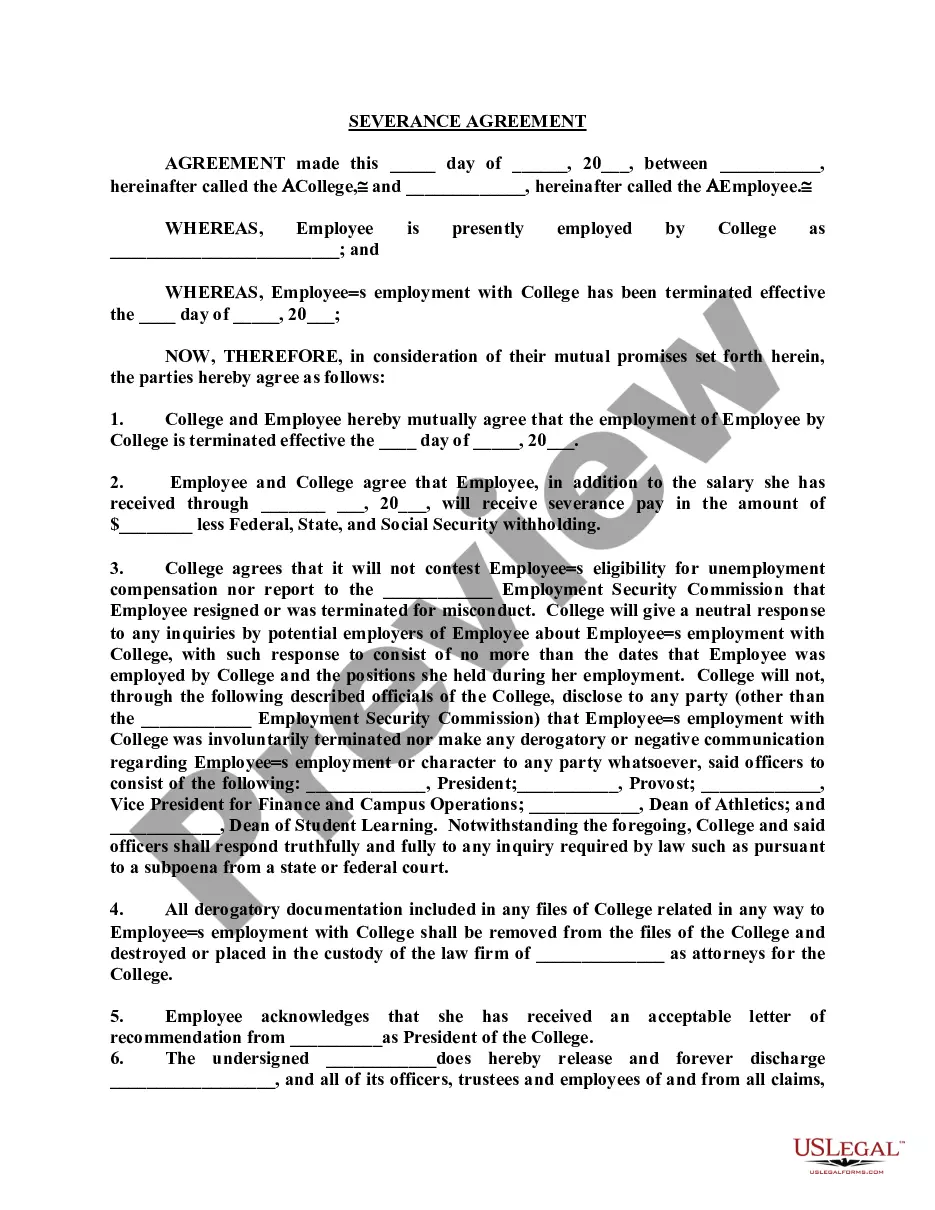
Severance Agreement Blank With 0
Description
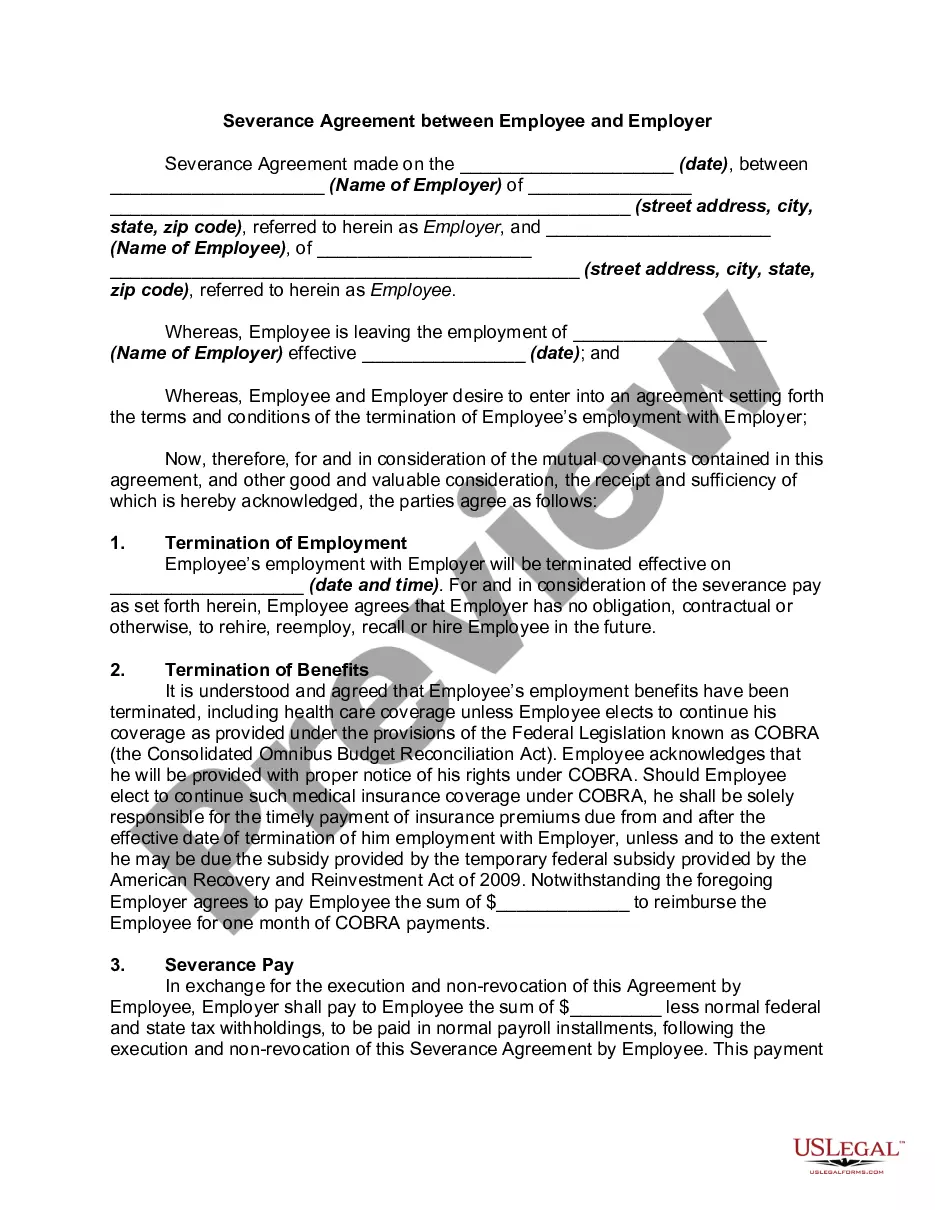
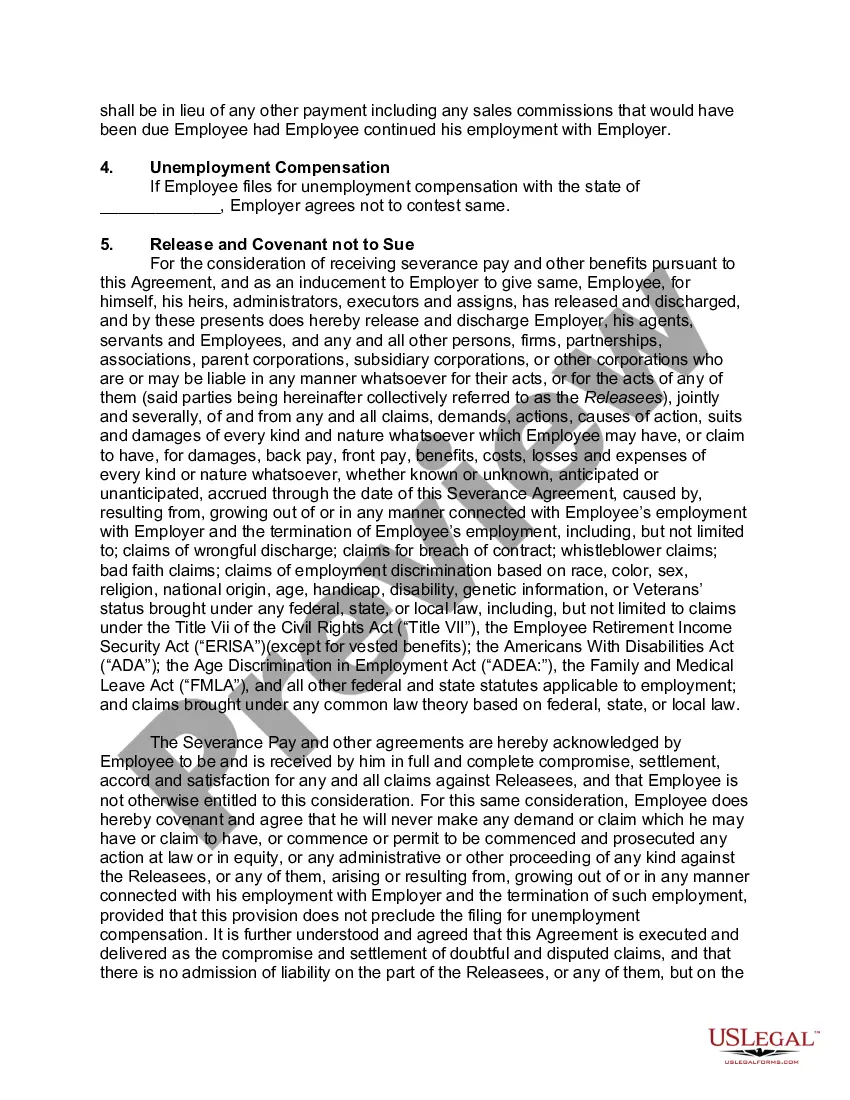
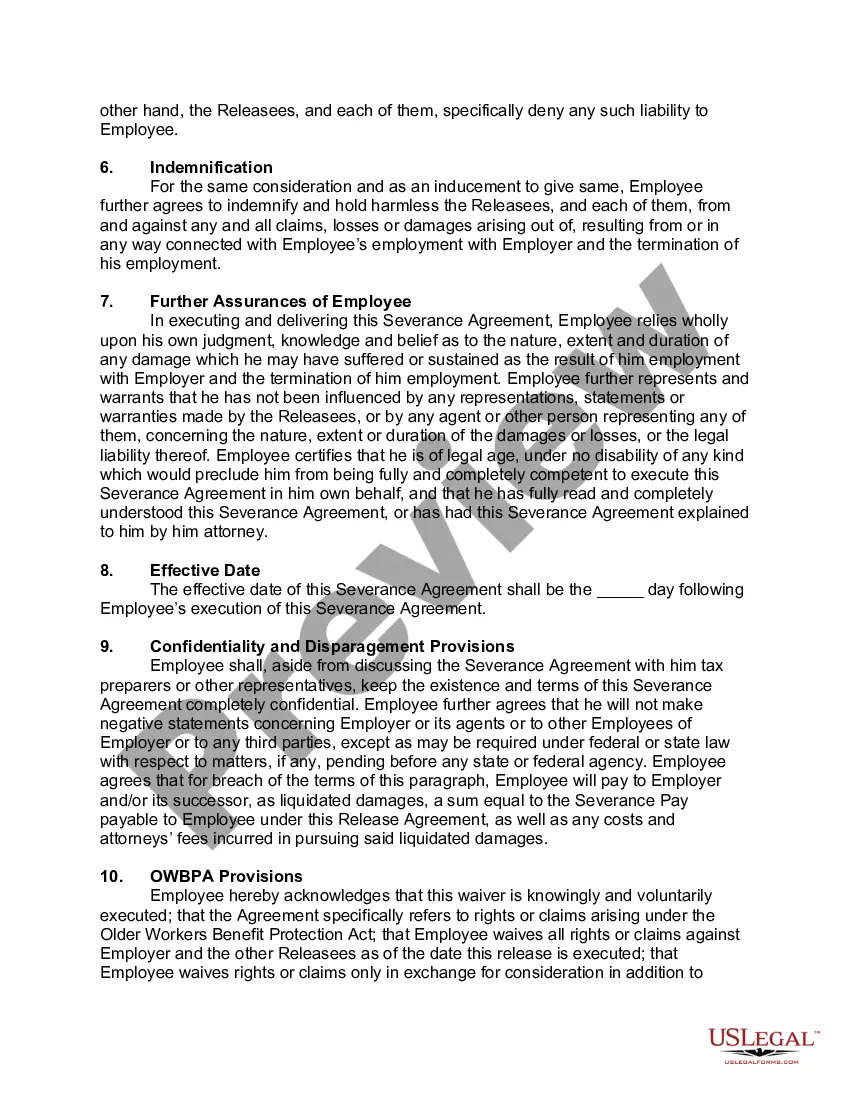
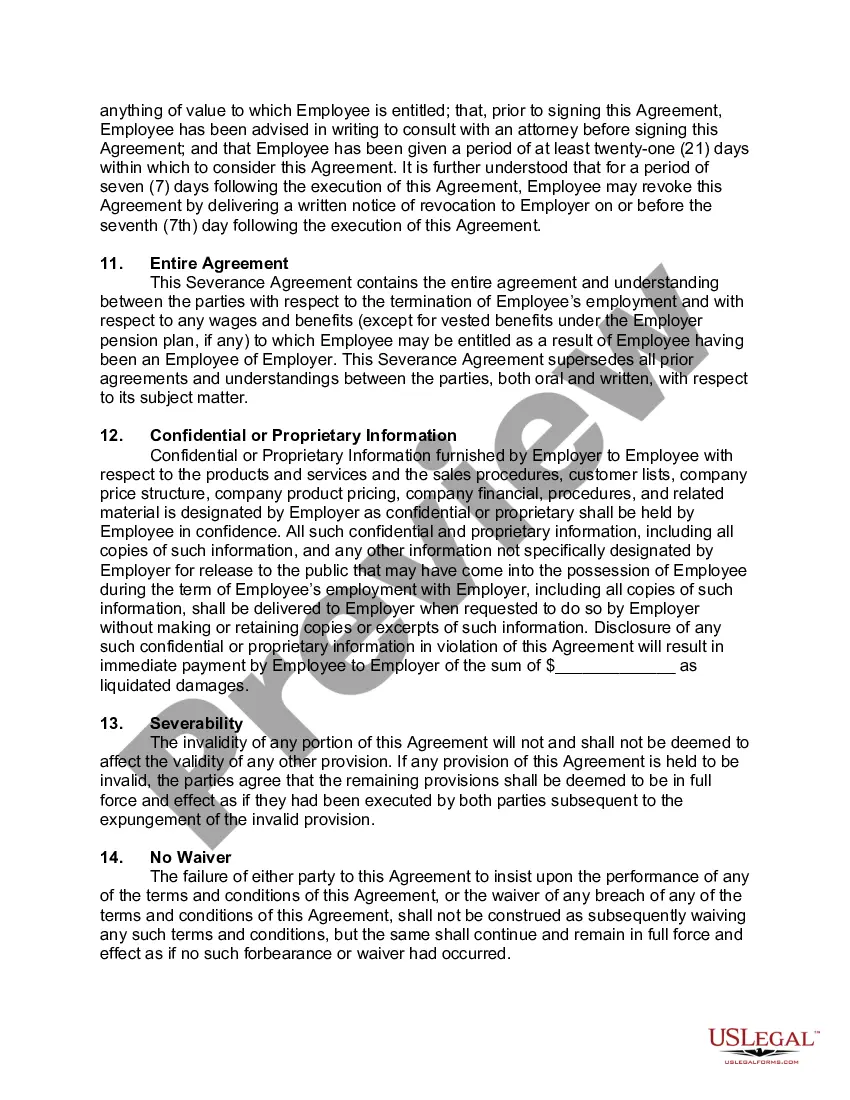
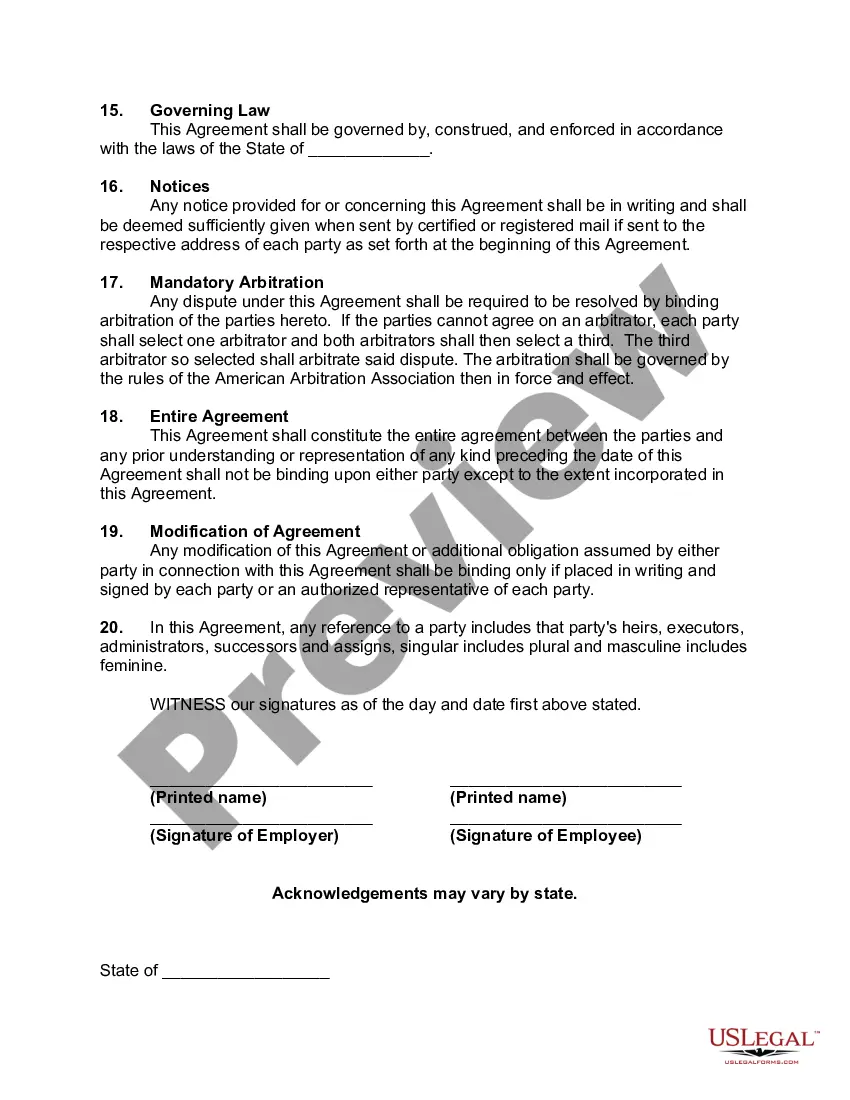
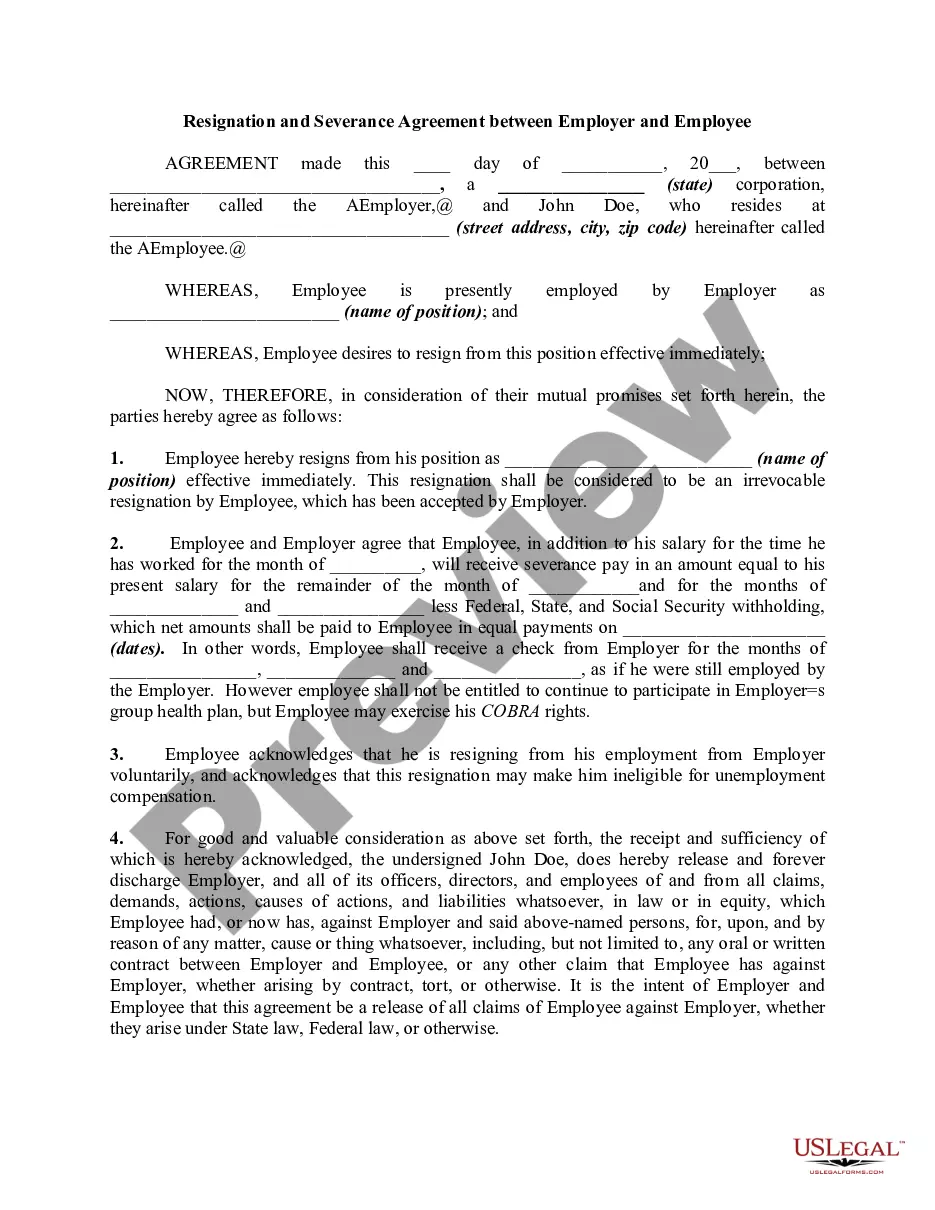
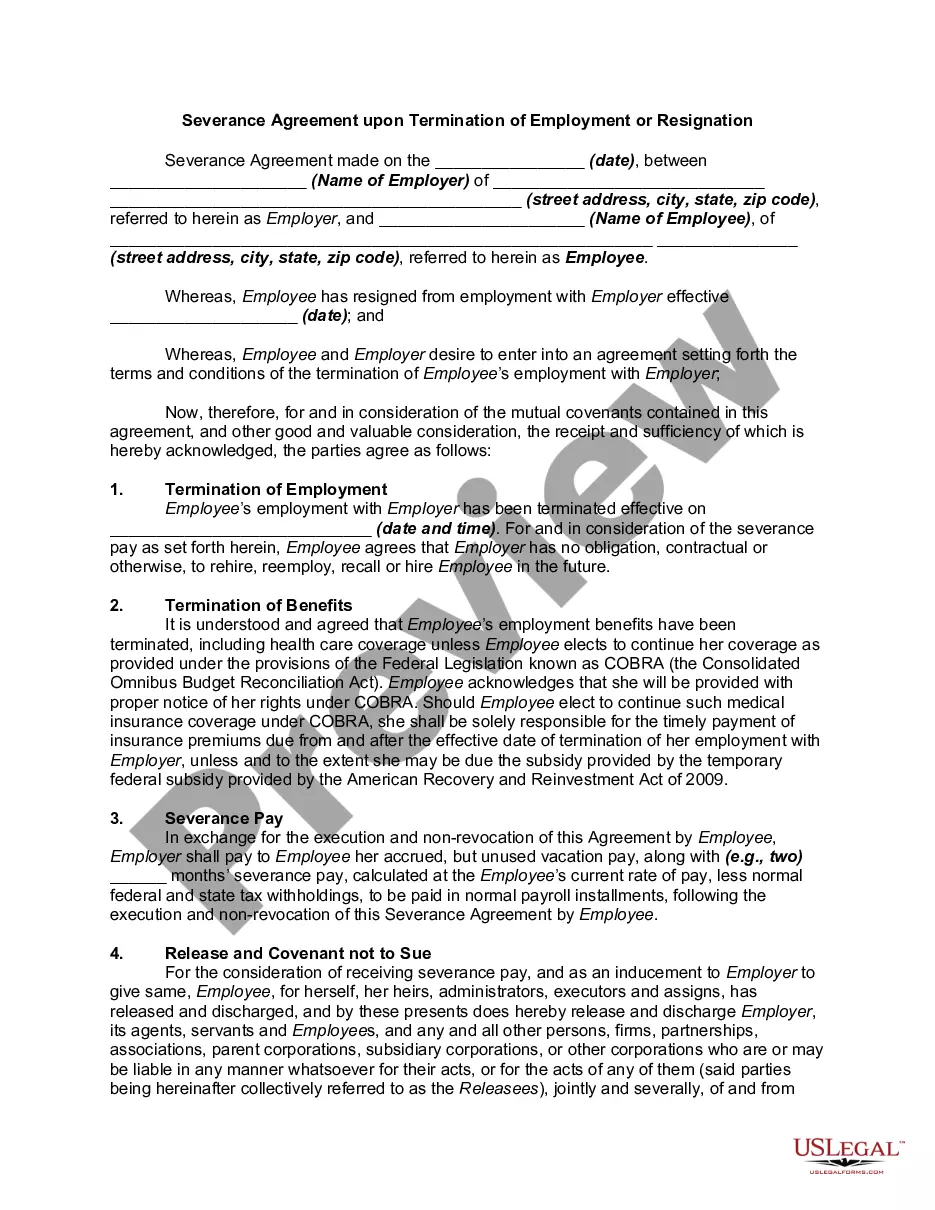
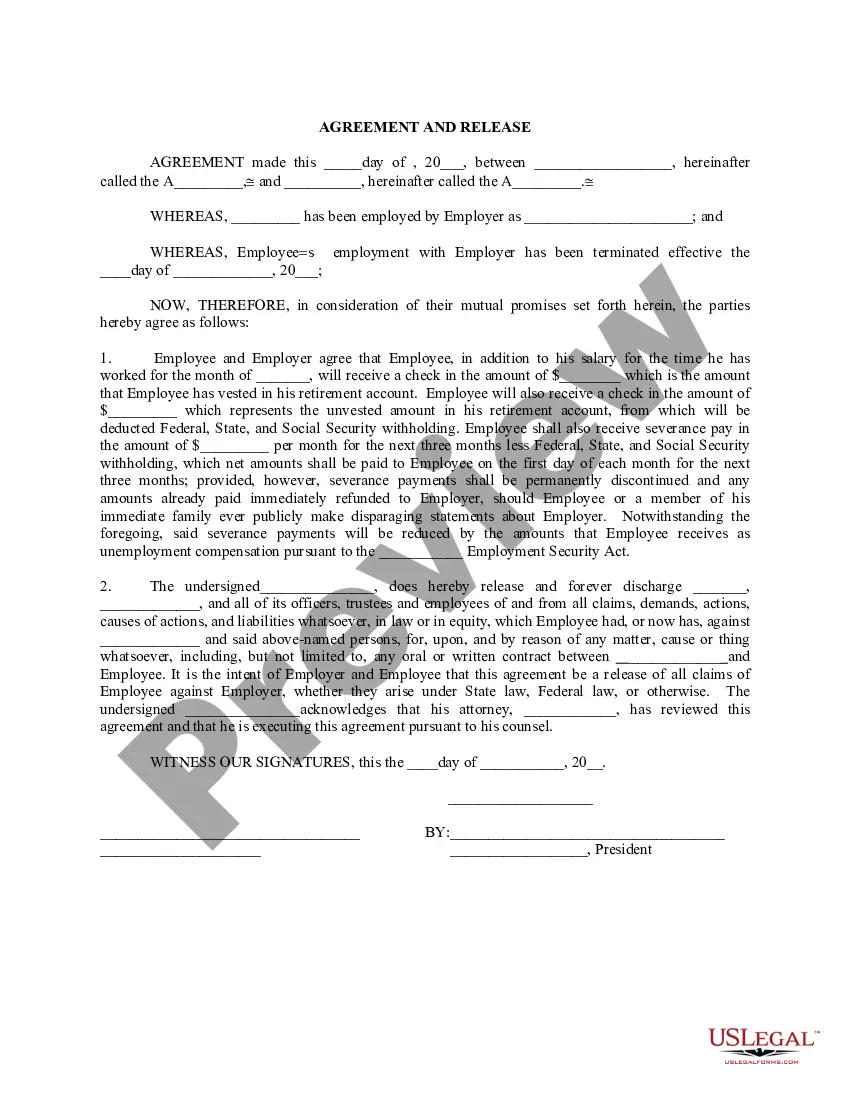
Get your form ready online
Our built-in tools help you complete, sign, share, and store your documents in one place.
Make edits, fill in missing information, and update formatting in US Legal Forms—just like you would in MS Word.
Download a copy, print it, send it by email, or mail it via USPS—whatever works best for your next step.
Sign and collect signatures with our SignNow integration. Send to multiple recipients, set reminders, and more. Go Premium to unlock E-Sign.
If this form requires notarization, complete it online through a secure video call—no need to meet a notary in person or wait for an appointment.
We protect your documents and personal data by following strict security and privacy standards.

Make edits, fill in missing information, and update formatting in US Legal Forms—just like you would in MS Word.

Download a copy, print it, send it by email, or mail it via USPS—whatever works best for your next step.

Sign and collect signatures with our SignNow integration. Send to multiple recipients, set reminders, and more. Go Premium to unlock E-Sign.

If this form requires notarization, complete it online through a secure video call—no need to meet a notary in person or wait for an appointment.

We protect your documents and personal data by following strict security and privacy standards.
Looking for another form?

How to fill out Severance Agreement Between Employee And Employer?
Whether for corporate reasons or for personal affairs, everyone must navigate legal matters at some stage in their lives.
Completing legal forms demands meticulous care, beginning with selecting the appropriate form template.
Once it is saved, you can fill out the form using editing software or print it and complete it manually. With an extensive US Legal Forms catalog available, you do not have to waste time searching for the proper template across the internet. Make use of the library’s straightforward navigation to find the suitable template for any situation.
- Acquire the template you require by utilizing the search feature or catalogue navigation.
- Review the form’s details to ensure it aligns with your situation, jurisdiction, and area.
- Click on the form’s preview to examine it.
- If it is not the correct document, return to the search function to locate the Severance Agreement Blank With 0 sample you need.
- Download the template once it fulfills your requirements.
- If you already possess a US Legal Forms account, simply click Log in to access previously saved templates in My documents.
- If you do not have an account yet, you can acquire the form by clicking Buy now.
- Choose the appropriate pricing option.
- Complete the account registration form.
- Select your payment method: use a credit card or PayPal account.
- Choose the document format you desire and download the Severance Agreement Blank With 0.
Form popularity
FAQ
The Executive shall not be entitled to any severance payments or benefits upon termination of the Employment Term. No Severance. In the event Executive voluntarily terminates his employment, he will not be entitled to Severance Benefits, pay in lieu of notice or any other such compensation.
Severance agreements must comply with relevant employment laws such as anti-discrimination laws, wage and hour regulations and workers' compensation provisions. An agreement containing provisions that contradict these laws may be considered invalid.
A severance agreement should include the following elements: The name of the employer and employee. The effective date of the agreement. The employment period of the outgoing employee. The severance pay amount. Terms of continuation of benefits. Employee waiver of legal claims (within reason)
The general practice is to try to get four weeks of severance pay for each year worked. Middle managers and executives usually receive a higher amount. Some executives, for example, may receive pay for more than a year. If your lump-sum severance payment is considerable, it could push you into a higher tax bracket.
The calculation behind the financial compensation offered in severance agreements varies from stingy to generous. Favorable severance agreements offer one month's worth of salary for every year of tenure with the company; while more frugal packages provide just one week's worth of salary for each year, experts said.