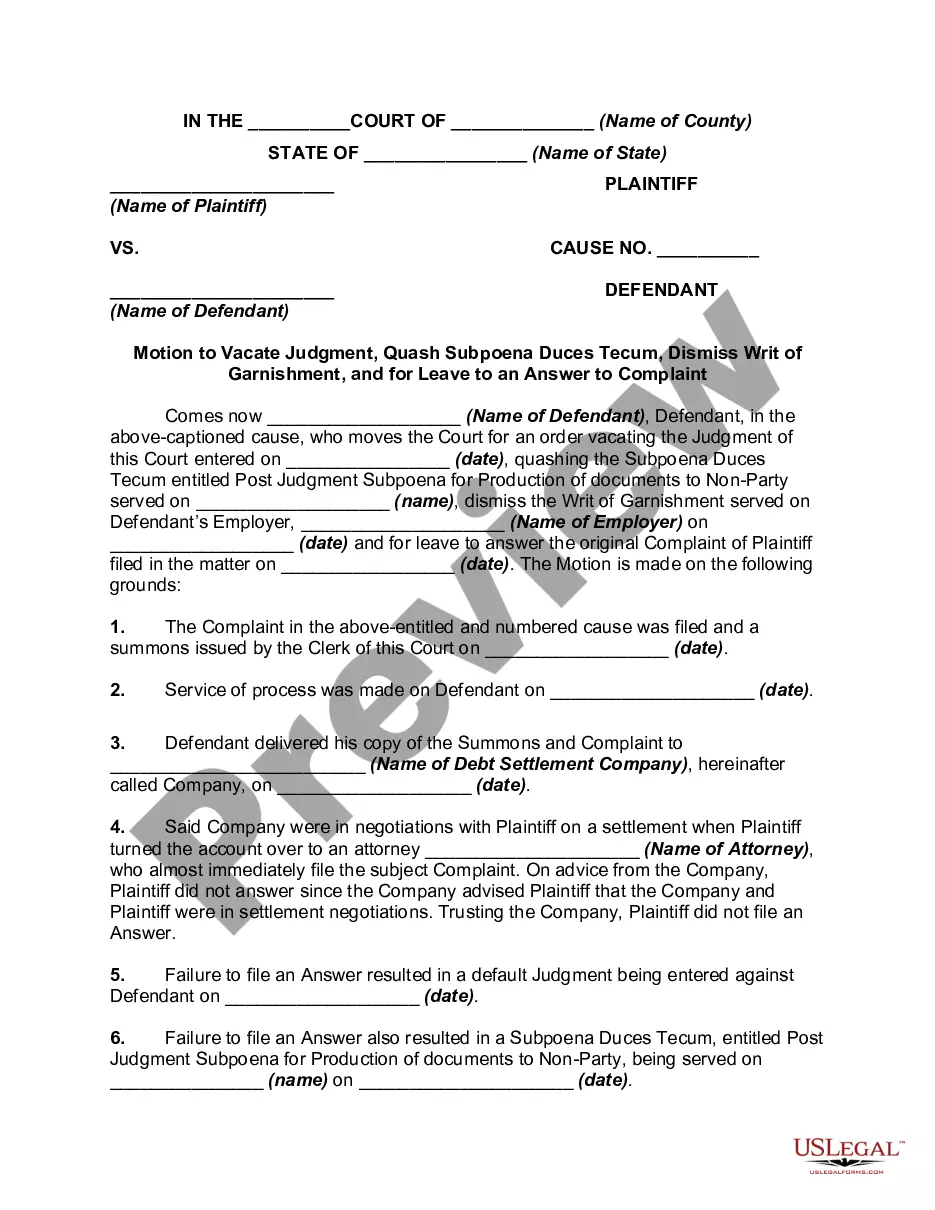
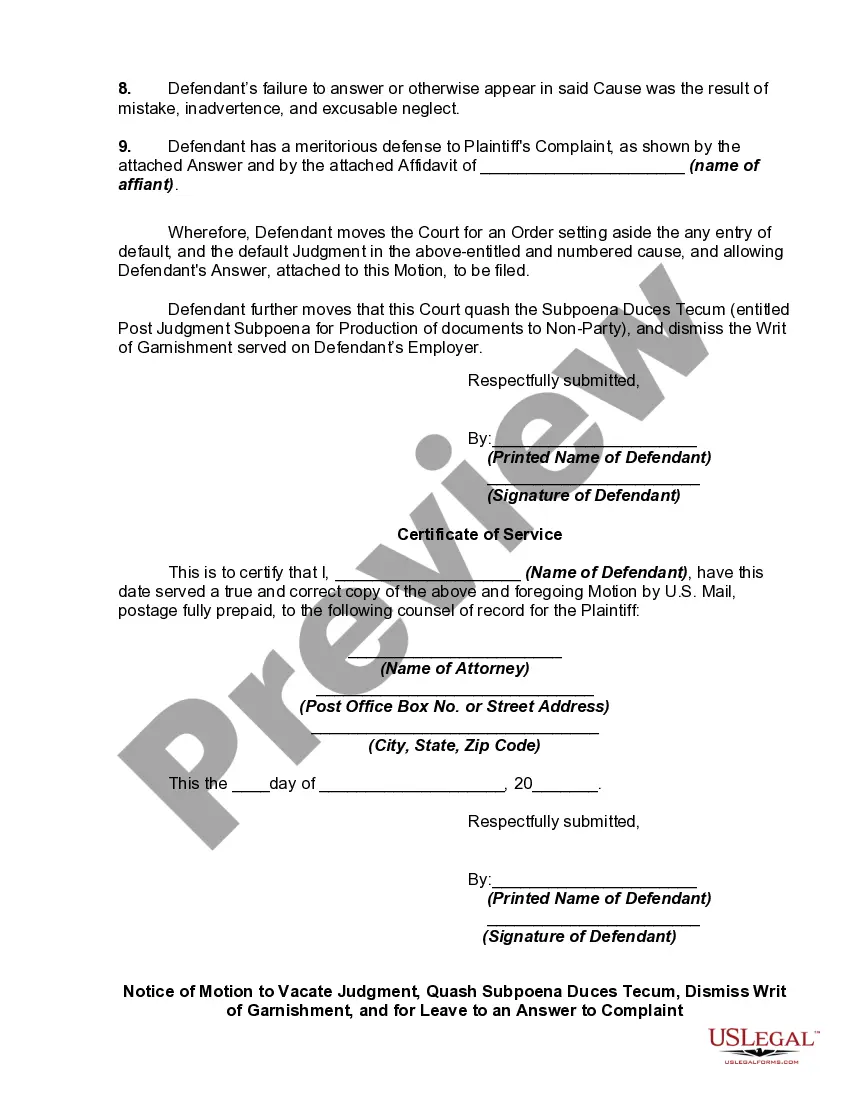
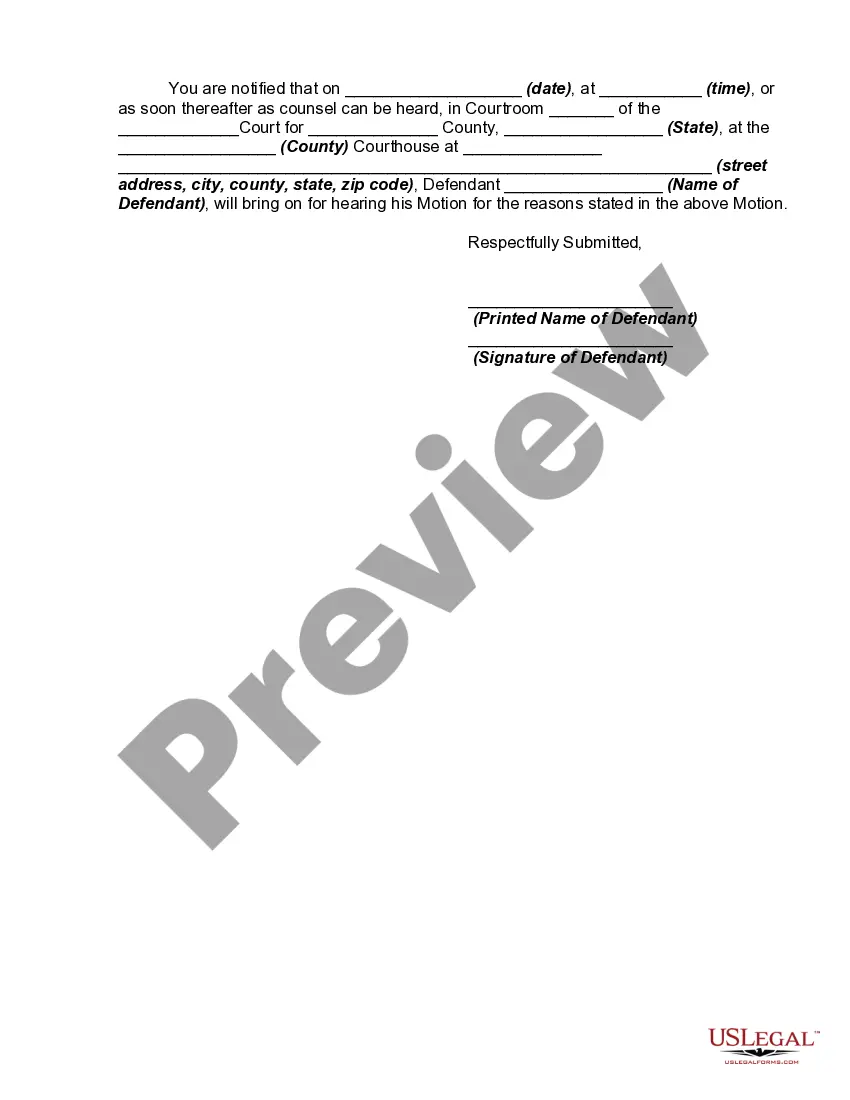
Motion To Vacate Judgment In Florida
Description
Get your form ready online
Our built-in tools help you complete, sign, share, and store your documents in one place.
Make edits, fill in missing information, and update formatting in US Legal Forms—just like you would in MS Word.
Download a copy, print it, send it by email, or mail it via USPS—whatever works best for your next step.
Sign and collect signatures with our SignNow integration. Send to multiple recipients, set reminders, and more. Go Premium to unlock E-Sign.
If this form requires notarization, complete it online through a secure video call—no need to meet a notary in person or wait for an appointment.
We protect your documents and personal data by following strict security and privacy standards.

Make edits, fill in missing information, and update formatting in US Legal Forms—just like you would in MS Word.

Download a copy, print it, send it by email, or mail it via USPS—whatever works best for your next step.

Sign and collect signatures with our SignNow integration. Send to multiple recipients, set reminders, and more. Go Premium to unlock E-Sign.

If this form requires notarization, complete it online through a secure video call—no need to meet a notary in person or wait for an appointment.

We protect your documents and personal data by following strict security and privacy standards.
Looking for another form?
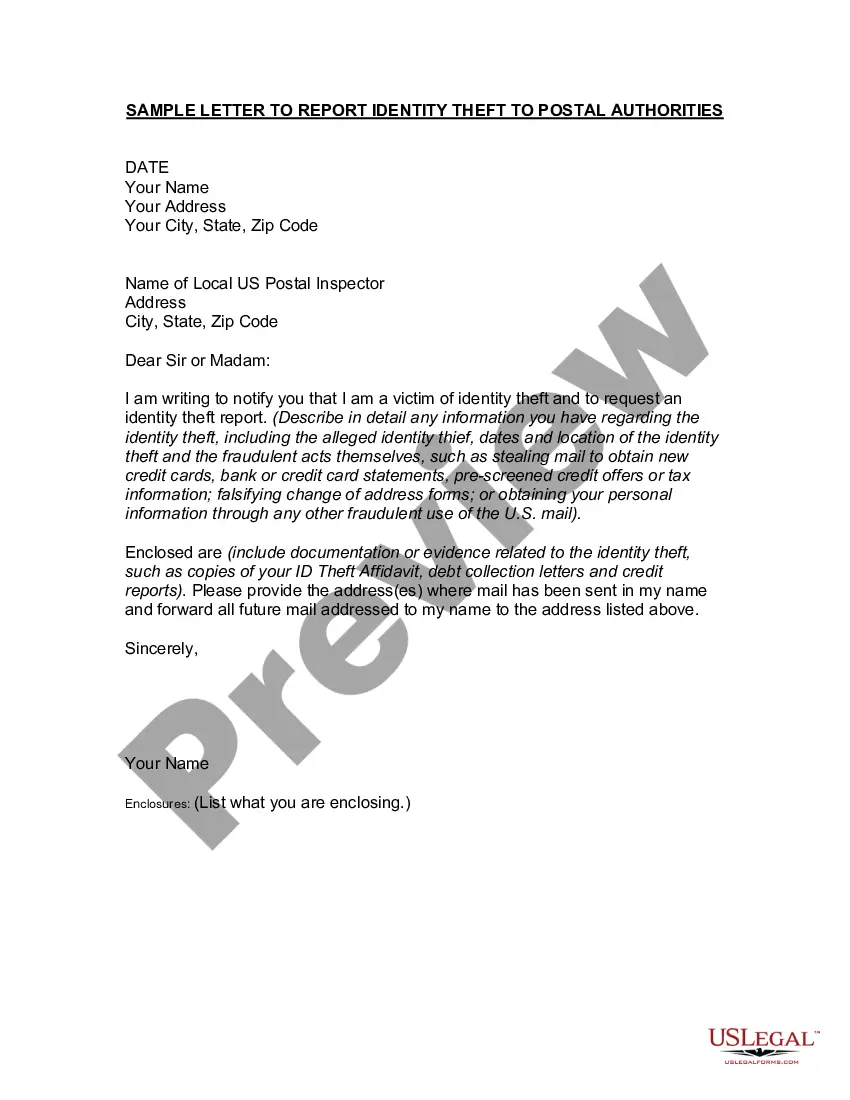




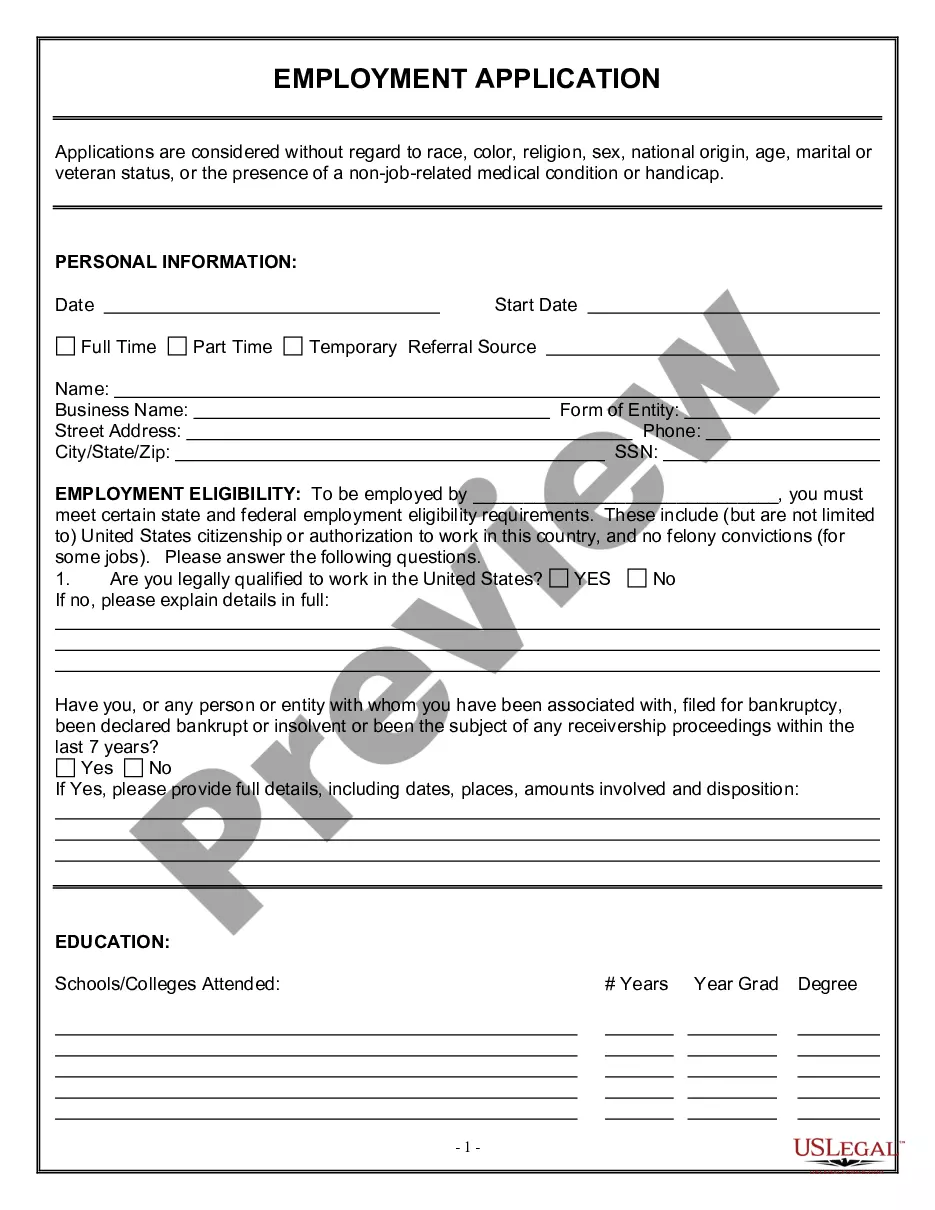

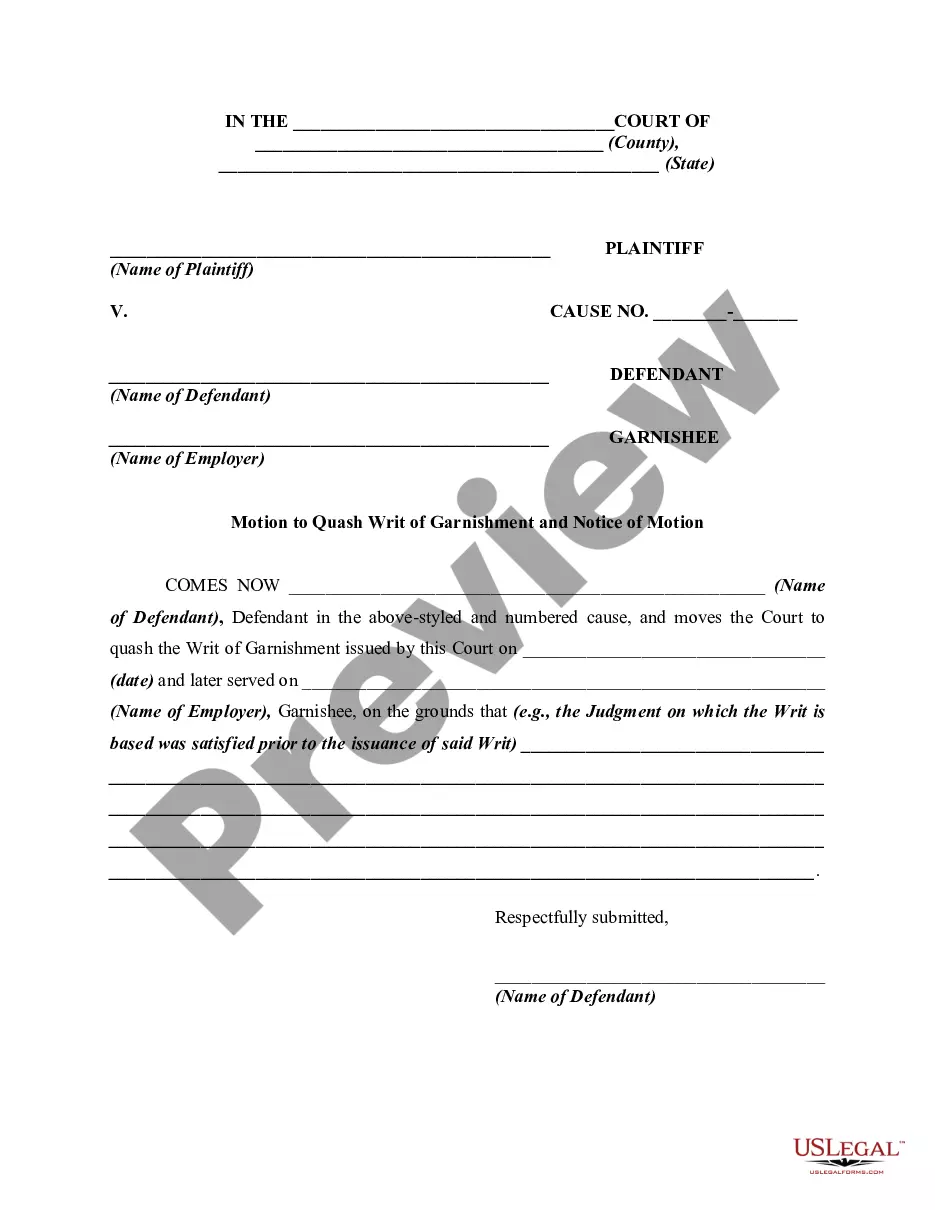
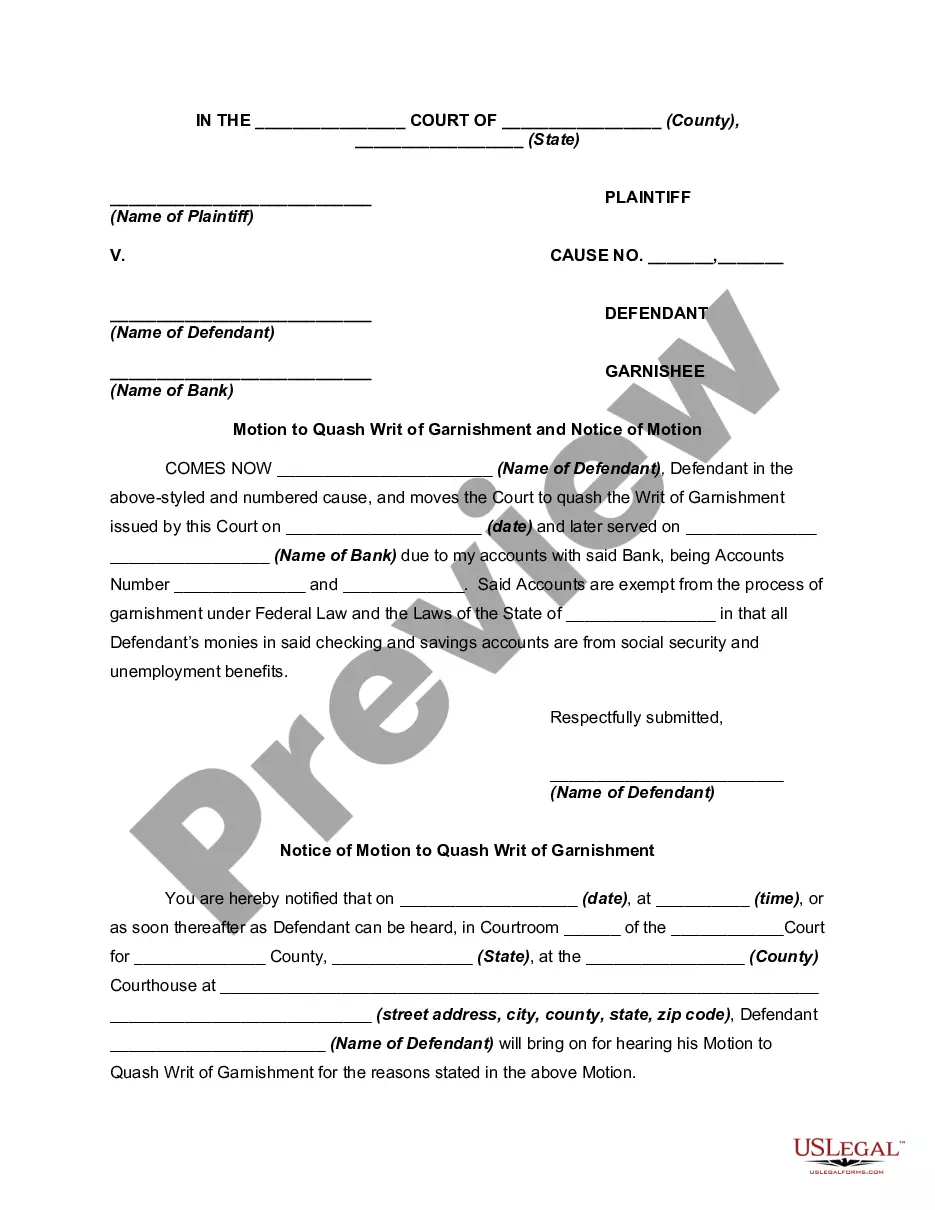
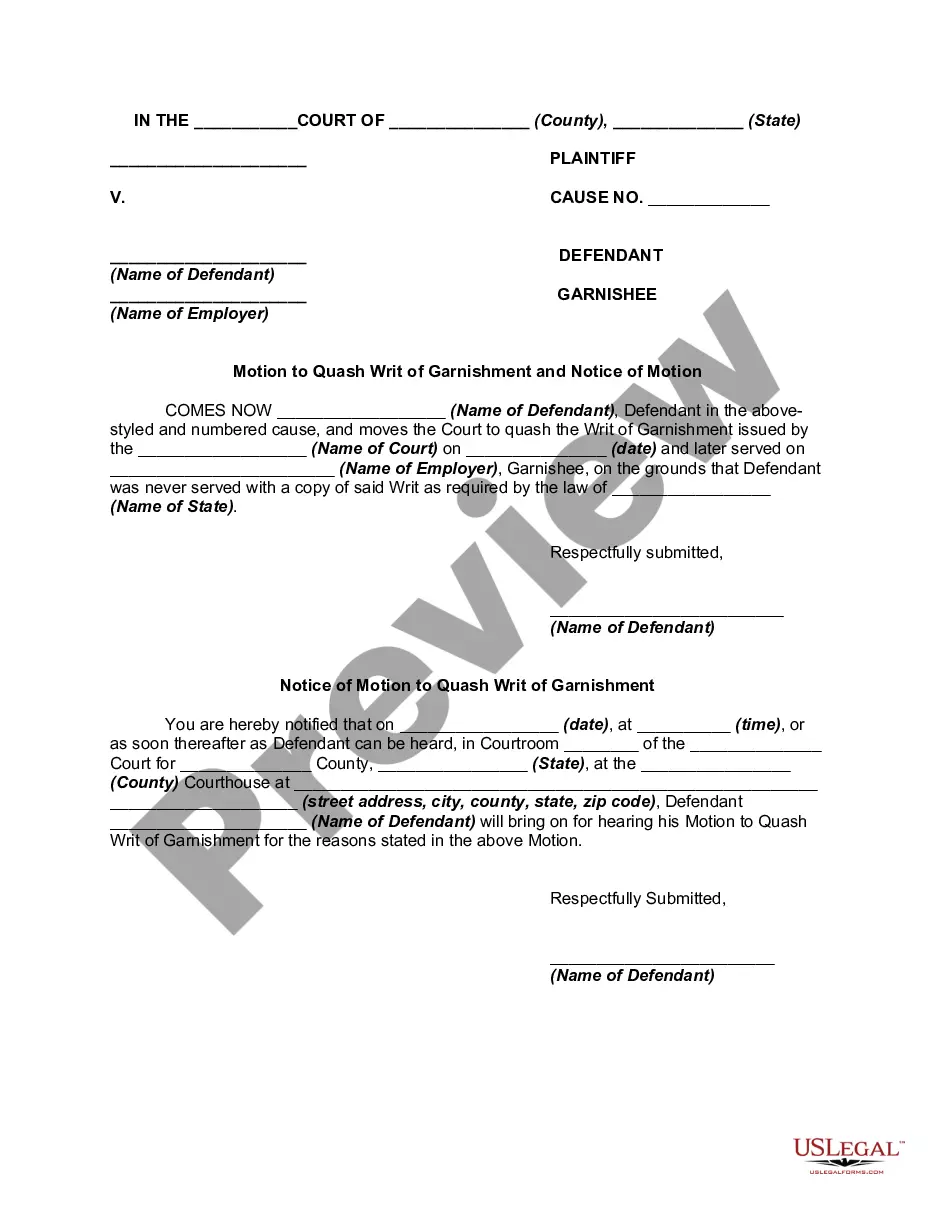
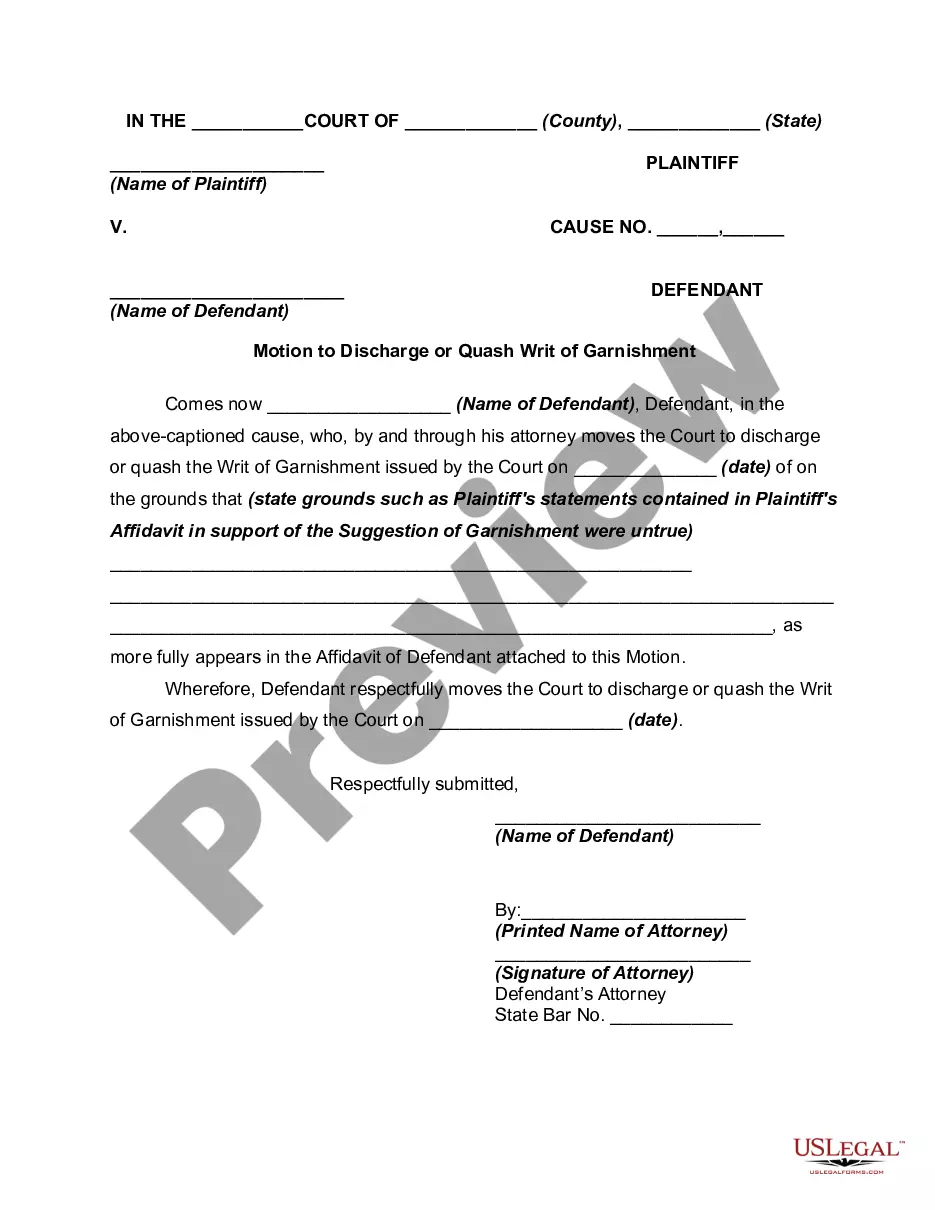
How to fill out Motion To Vacate Judgment, Quash Subpoena Duces Tecum, Dismiss Writ Of Garnishment, And For Leave To File An Answer To Complaint?
Whether for corporate objectives or for personal matters, everyone must address legal situations at some point in their lives.
Completing legal forms requires meticulous attention, starting from selecting the correct form template.
Decide on the document format you desire and download the Motion To Vacate Judgment In Florida. Once downloaded, you can fill out the form using editing software or print it and complete it by hand. With an extensive US Legal Forms catalog available, there's no need to waste time searching for the right template online. Utilize the library’s straightforward navigation to find the correct template for any scenario.
- For instance, if you select an incorrect variation of the Motion To Vacate Judgment In Florida, it will be denied when you submit it.
- Thus, it's crucial to have a reliable source of legal documents such as US Legal Forms.
- If you need to acquire a Motion To Vacate Judgment In Florida template, adhere to these simple steps.
- Obtain the template you require by using the search bar or catalog navigation.
- Review the form’s description to verify it suits your circumstances, state, and locality.
- Click on the form’s preview to inspect it.
- If it is the wrong form, return to the search feature to find the Motion To Vacate Judgment In Florida sample you need.
- Download the file if it matches your specifications.
- If you possess a US Legal Forms account, simply click Log in to access your previously stored documents in My documents.
- If you don't have an account yet, you can obtain the form by clicking Buy now.
- Choose the suitable pricing option.
- Complete the account registration form.
- Select your payment method: utilize a credit card or PayPal account.
Form popularity
FAQ
To effectively vacate a judgment in Florida, start by identifying the specific grounds under which you wish to file your motion. Subsequently, draft your motion with clear and concise arguments, ensuring you comply with the state's legal requirements. Utilizing platforms like U.S. Legal Forms can greatly assist you by providing user-friendly resources, guiding you through the process of vacating that judgment.
To file a motion to dismiss a judgment, you should prepare a written motion that explains your reasons for seeking the dismissal. Your motion should clearly outline any legal basis for arguing that the judgment is inappropriate or should not stand. Consider using resources like U.S. Legal Forms to access templates that can help streamline this process and ensure you address all necessary legal aspects.
Vacating a Florida Judgment Florida Rules of Civil Procedure 1.540 allows a defendant to vacate of judgment for numerous reasons including: mistake, inadvertence, surprise, excusable neglect, newly discovered evidence, the judgment is void or the judgment has been satisfied.
The original Motion to Vacate must be filed with the Clerk of the Circuit Court's Office, and courtesy copies must be sent the Child Support Hearing Officer and the Judge assigned to your case.
To vacate a Default, an individual must meet all elements of a 3 part test. The 3 elements include: Excusable Neglect: An individual does not respond due to a misunderstanding, clerical error, or human error. Meritorious Defense: The Individual must attach an Answer and Affirmative Defenses to their Motion to Vacate.
A common summary of the rules for setting aside (excusing) a default is frequently quoted by Florida appellate courts: A party attempting to set aside a clerk's default must demonstrate excusable neglect, a meritorious defense, and due diligence in order for the trial court to vacate the default.
On motion and upon such terms as are just, the court may relieve a party or a party's legal representative from a final judgment, decree, order, or proceeding for the following reasons: (1) mistake, inadvertence, surprise, or excusable neglect; (2) newly discovered evidence which by due diligence could not have been ...