Motion Judgment File Without Evidence
Description
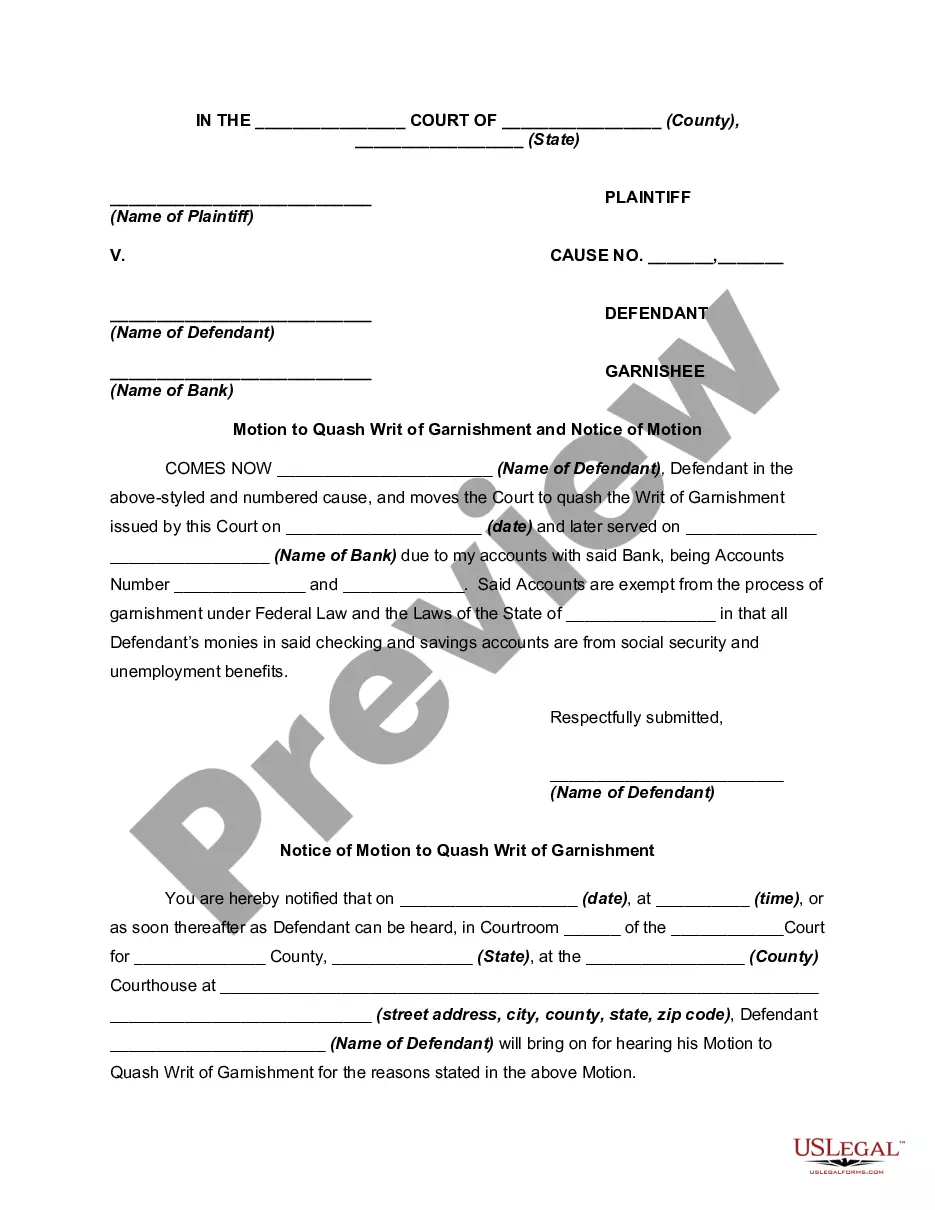
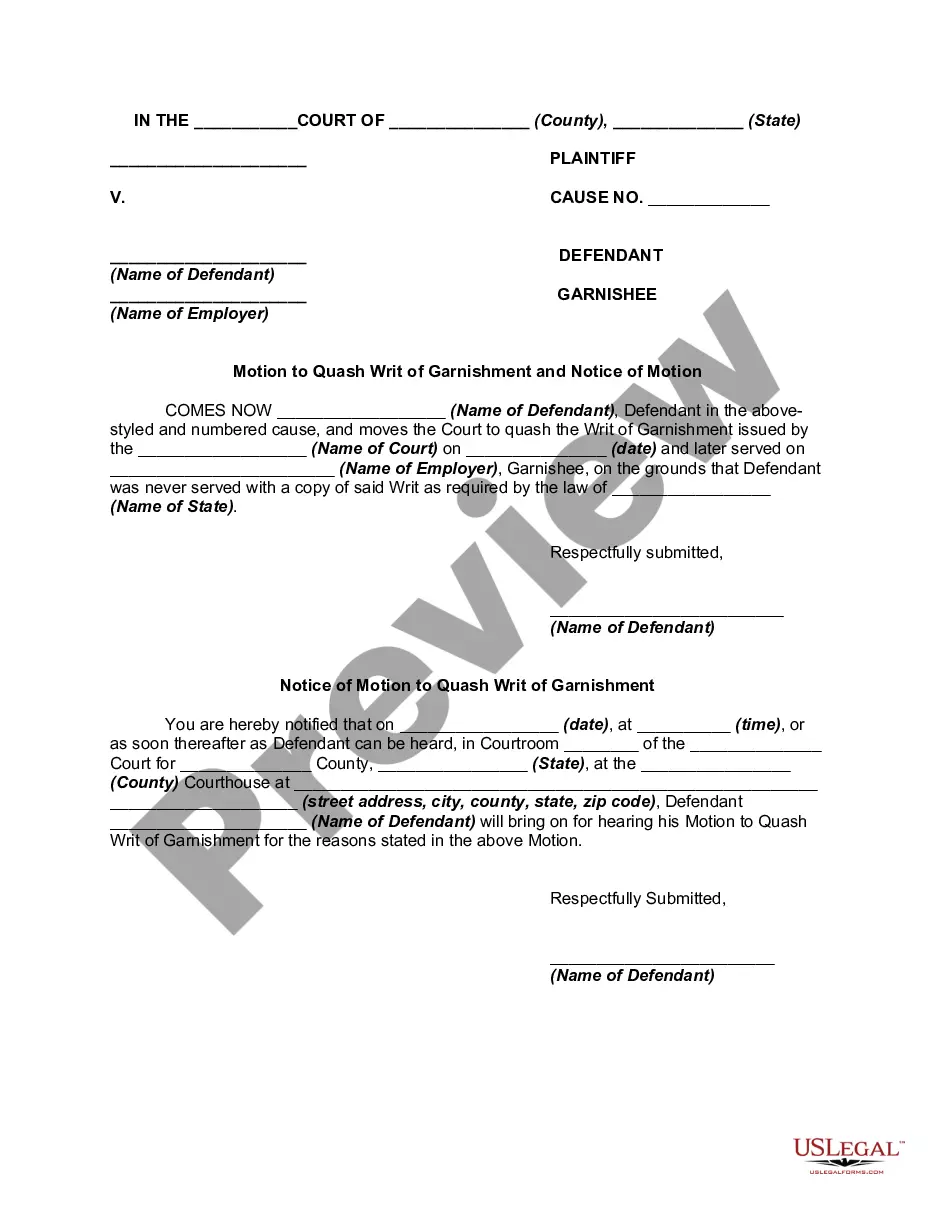
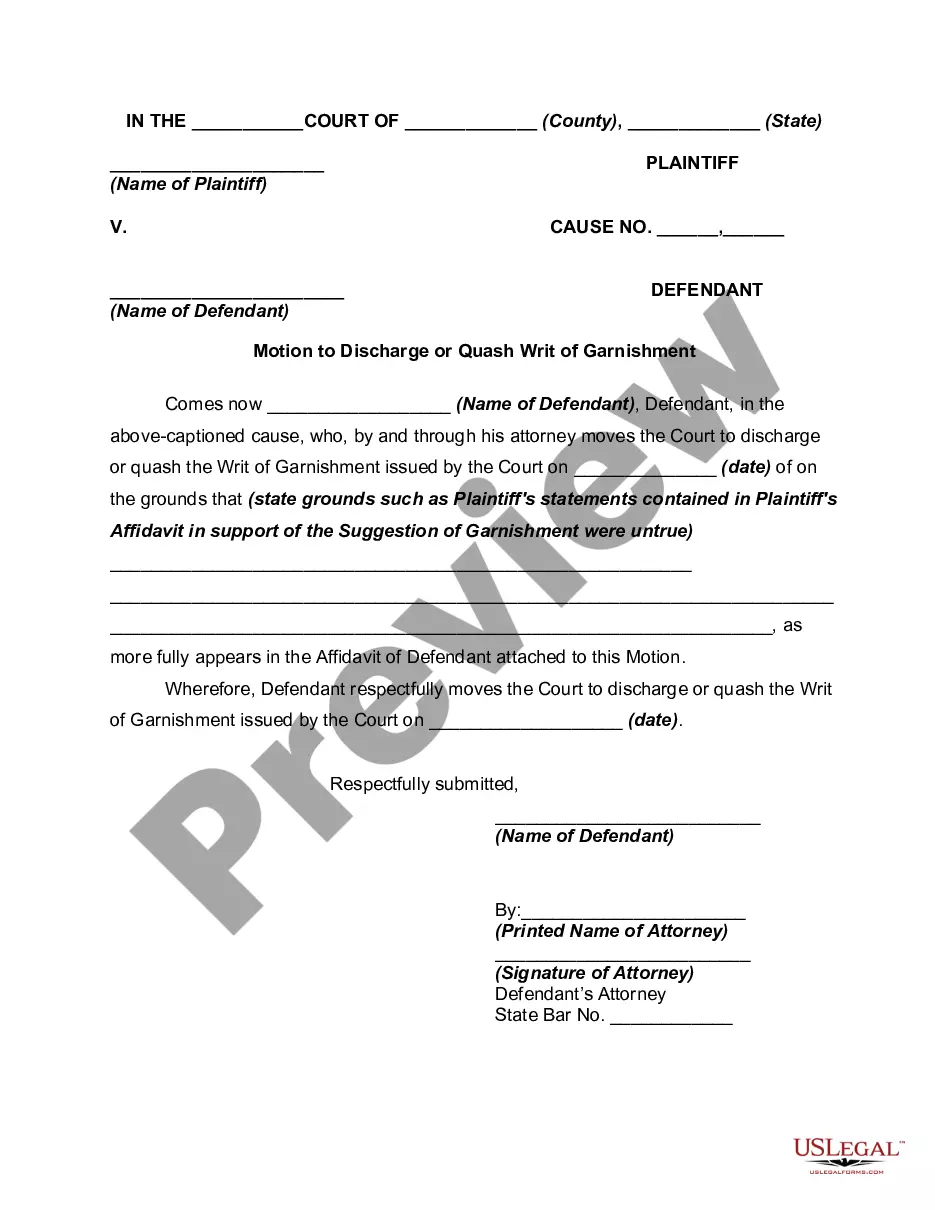
Get your form ready online
Our built-in tools help you complete, sign, share, and store your documents in one place.
Make edits, fill in missing information, and update formatting in US Legal Forms—just like you would in MS Word.
Download a copy, print it, send it by email, or mail it via USPS—whatever works best for your next step.
Sign and collect signatures with our SignNow integration. Send to multiple recipients, set reminders, and more. Go Premium to unlock E-Sign.
If this form requires notarization, complete it online through a secure video call—no need to meet a notary in person or wait for an appointment.
We protect your documents and personal data by following strict security and privacy standards.

Make edits, fill in missing information, and update formatting in US Legal Forms—just like you would in MS Word.

Download a copy, print it, send it by email, or mail it via USPS—whatever works best for your next step.

Sign and collect signatures with our SignNow integration. Send to multiple recipients, set reminders, and more. Go Premium to unlock E-Sign.

If this form requires notarization, complete it online through a secure video call—no need to meet a notary in person or wait for an appointment.

We protect your documents and personal data by following strict security and privacy standards.
Looking for another form?
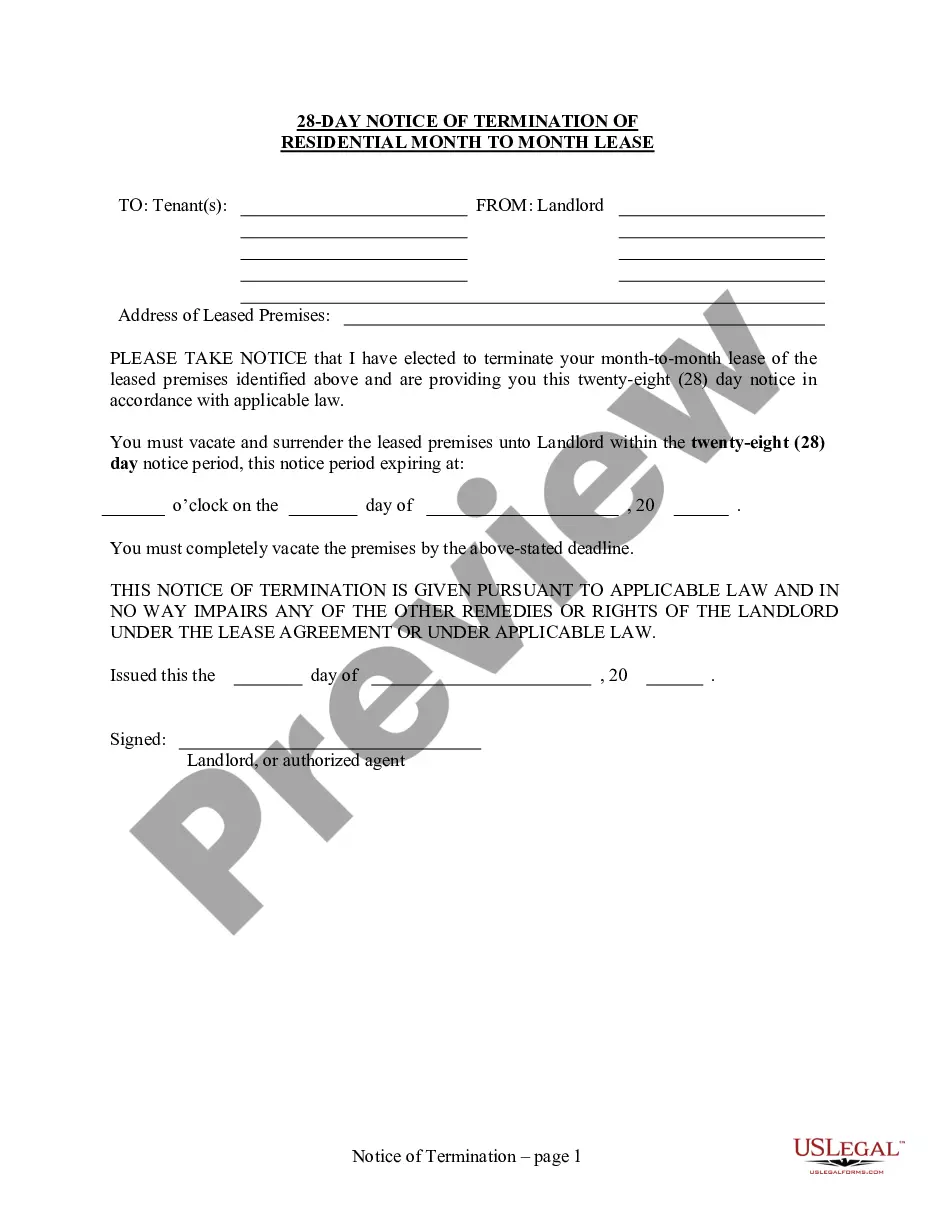






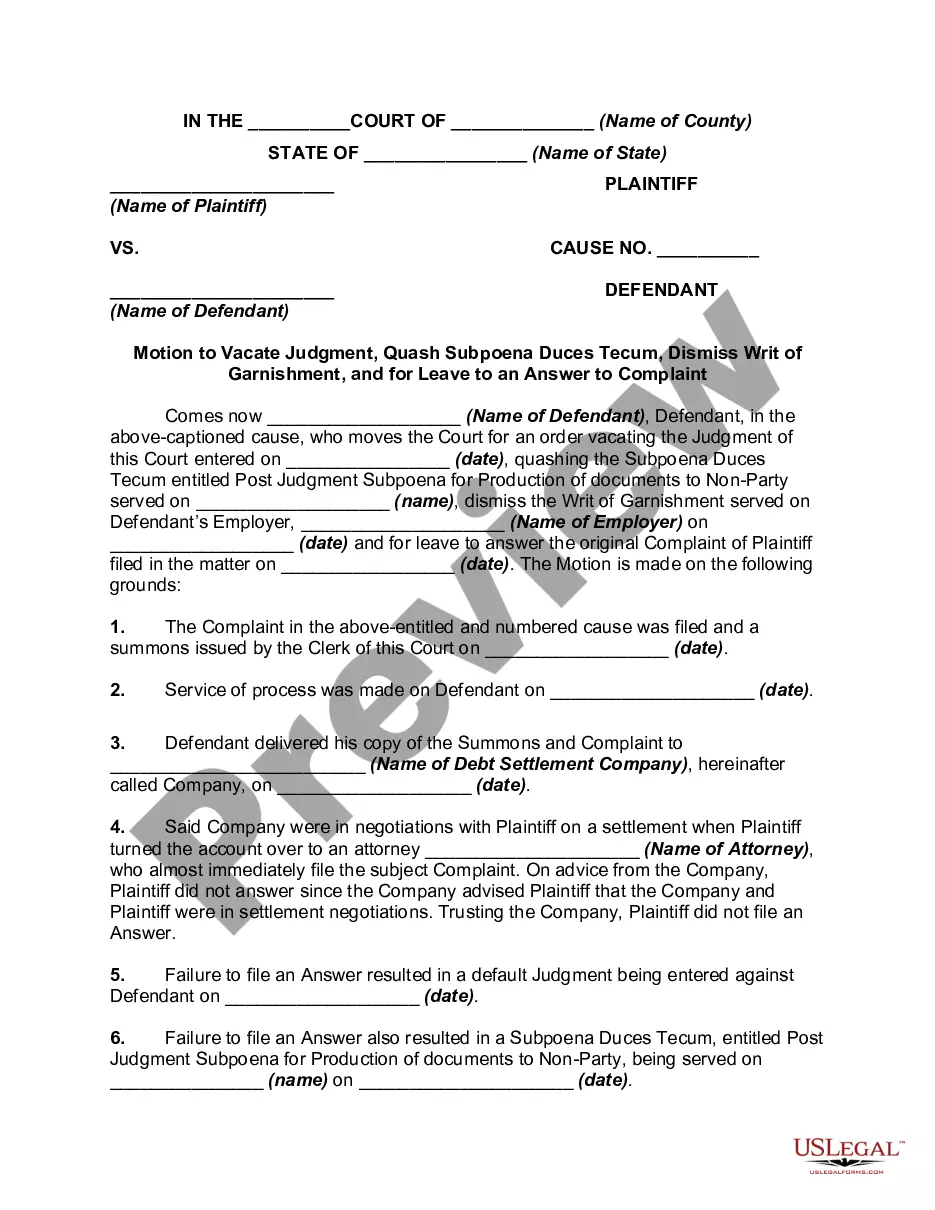
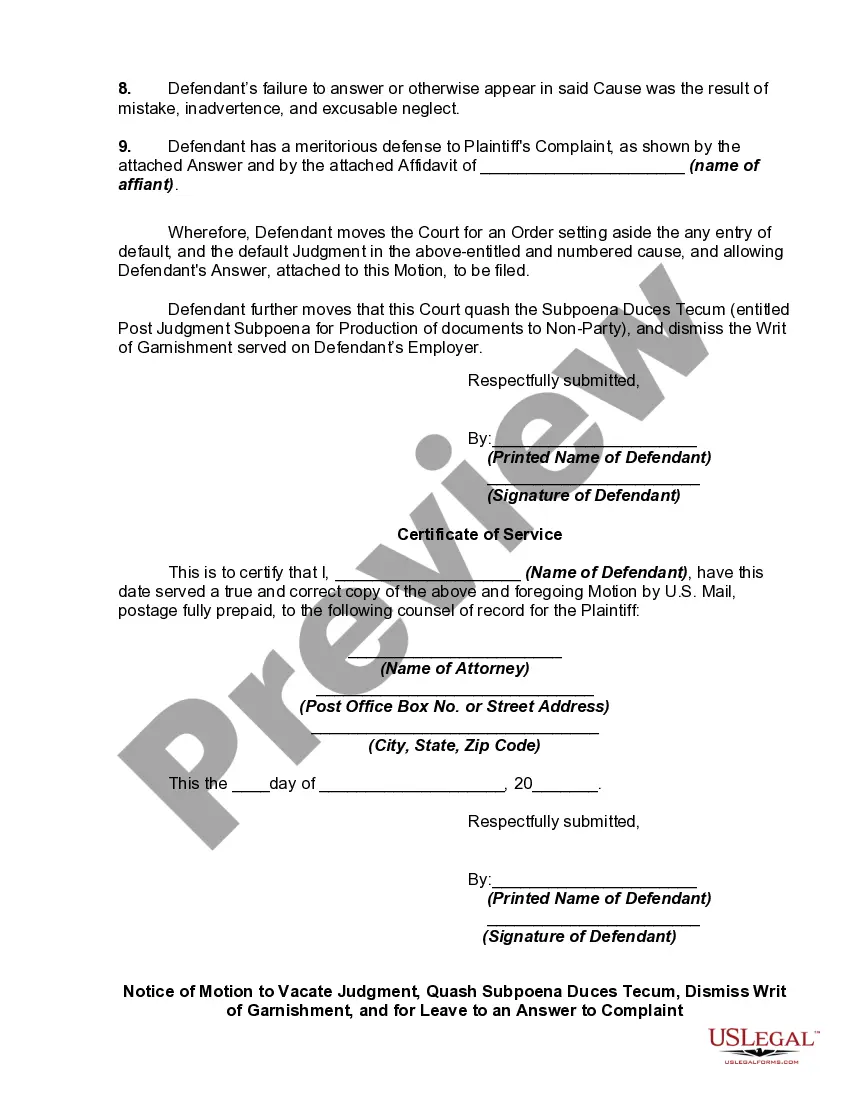
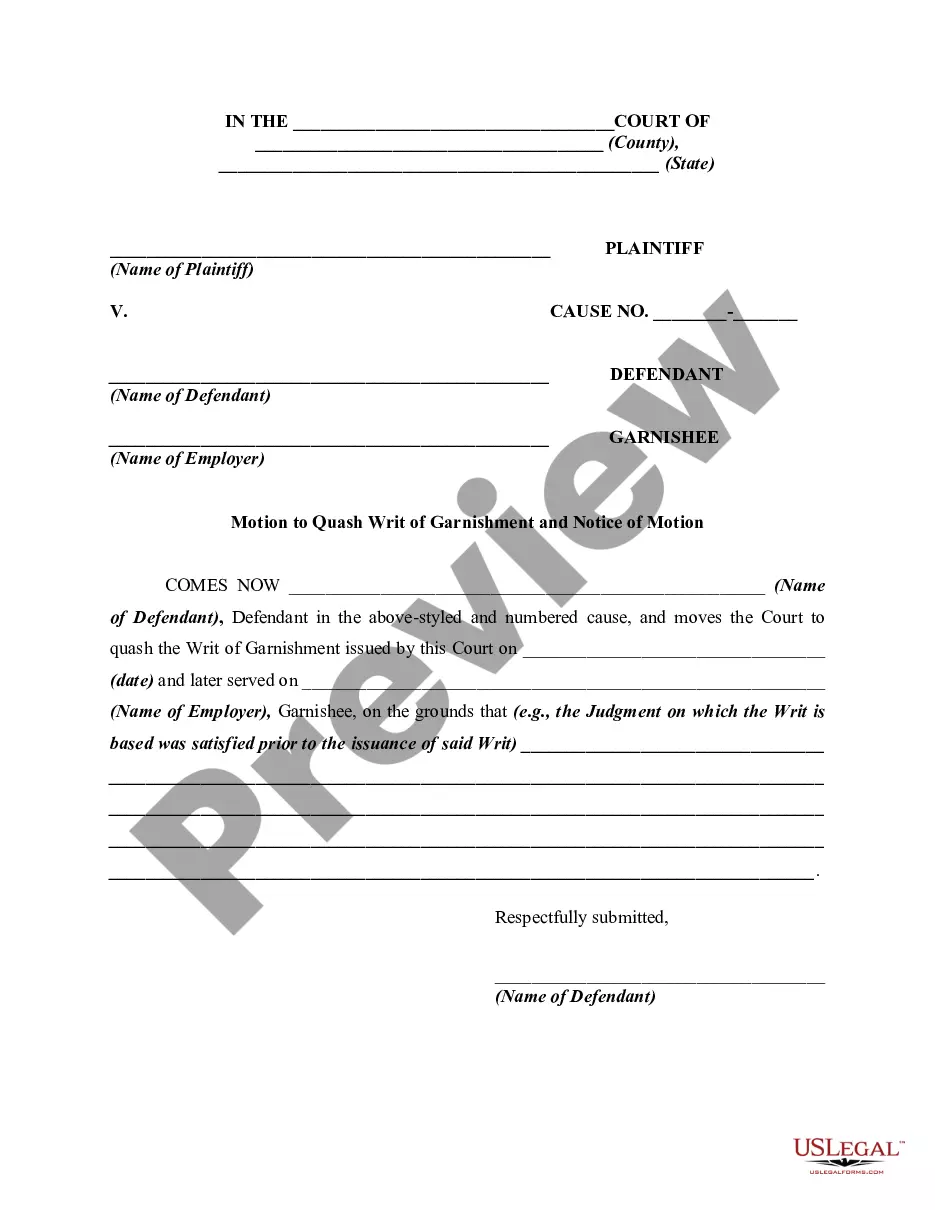
How to fill out Motion To Vacate Judgment, Quash Subpoena Duces Tecum, Dismiss Writ Of Garnishment, And For Leave To File An Answer To Complaint?
Securing a reliable source for accessing the latest and pertinent legal templates is half the battle of navigating bureaucracy. Locating the appropriate legal documents demands accuracy and meticulousness, which is why it is crucial to obtain samples of Motion Judgment File Without Evidence solely from trustworthy providers, like US Legal Forms. An incorrect template can squander your time and hinder the process you are facing. With US Legal Forms, you have minimal concerns. You can view and assess all the particulars regarding the document’s application and significance for your circumstances and in your jurisdiction.
Consider the following steps to complete your Motion Judgment File Without Evidence.
Once you have the document on your device, you can edit it using the editor or print it and fill it out manually. Eliminate the hassle associated with your legal paperwork. Explore the vast US Legal Forms library to find legal templates, verify their relevance to your situation, and download them instantly.
- Utilize the library navigation or search box to find your template.
- Examine the form’s details to determine if it aligns with the specifications of your jurisdiction.
- Check the form preview, if accessible, to confirm it is indeed the document you require.
- Return to the search and seek the correct document if the Motion Judgment File Without Evidence does not meet your needs.
- If you are certain about the form’s applicability, download it.
- If you are a registered user, click Log in to verify and access your selected templates in My documents.
- If you do not have an account yet, click Buy now to acquire the form.
- Choose the pricing plan that suits your needs.
- Proceed to registration to complete your purchase.
- Finalize your purchase by selecting a payment method (credit card or PayPal).
- Choose the file format for downloading Motion Judgment File Without Evidence.
Form popularity
FAQ
Writing a motion to exclude evidence involves outlining the reasons why certain evidence should not be considered in court. Start by drafting a motion judgment file without evidence, stating the specific evidence you want to exclude and the legal grounds for your request. Clearly explain how this evidence could unfairly prejudice the case or is otherwise inadmissible. Utilizing resources from uslegalforms can help streamline this process and ensure your motion meets court standards.
A motion for no evidence summary judgment is a request made to the court to rule in your favor because the opposing party lacks sufficient evidence to support their claims. This type of motion, often described in a motion judgment file without evidence, asserts that even if all factual disputes are resolved in favor of the opposing party, they still do not have enough evidence to win the case. Understanding how to effectively craft this motion can significantly improve your chances of success. Consider using platforms like uslegalforms for guidance in preparing your motion.
Typically, a motion requires evidence to support your claims; however, a motion judgment file without evidence can also be valid in specific circumstances. In such cases, you should clearly articulate the legal basis for your motion without needing additional evidence. Courts may consider the law or previous rulings to grant your motion, even in the absence of evidence. Be sure to check your jurisdiction's requirements to ensure compliance.
To make a motion, you must first prepare a written document outlining your request, known as a motion judgment file without evidence. This document should clearly state the relief you seek and the grounds for your motion. Ensure you follow the local court rules regarding formatting and filing procedures. Once your motion is complete, file it with the court and serve it to all parties involved in the case.
General format - each motion generally consists of a case caption, a title that briefly identifies the relief sought, a series of numbered paragraphs that explains -- in a logical way -- why you are entitled to that relief, a prayer for relief, a signature block, a certification that a copy of the motion was sent to ...
There are several different types of post-judgment motions, but the most common are motions for new trial, motions to vacate, and motions to set-aside. Motions for new trial, motions to vacate, and motions to set-aside are the three most common post-judgment motions.
Be as persuasive as possible as you write your motion in a sequential, logical format. Express your ideas clearly, and make sure you outline what steps are necessary and how they will help your case. Use facts of the case whenever you can to avoid baseless emotional appeals.
Examples of summary judgement motions John says that Linda ran a red light and caused the crash. John happens to have a video of Linda running the red light and crashing into him. John's attorney files a motion for summary judgment claiming that: There are no material facts that can be reasonably disputed.
A motion is an application to the court made by the prosecutor or defense attorney, requesting that the court make a decision on a certain issue before the trial begins. The motion can affect the trial, courtroom, defendants, evidence, or testimony. Only judges decide the outcome of motions.