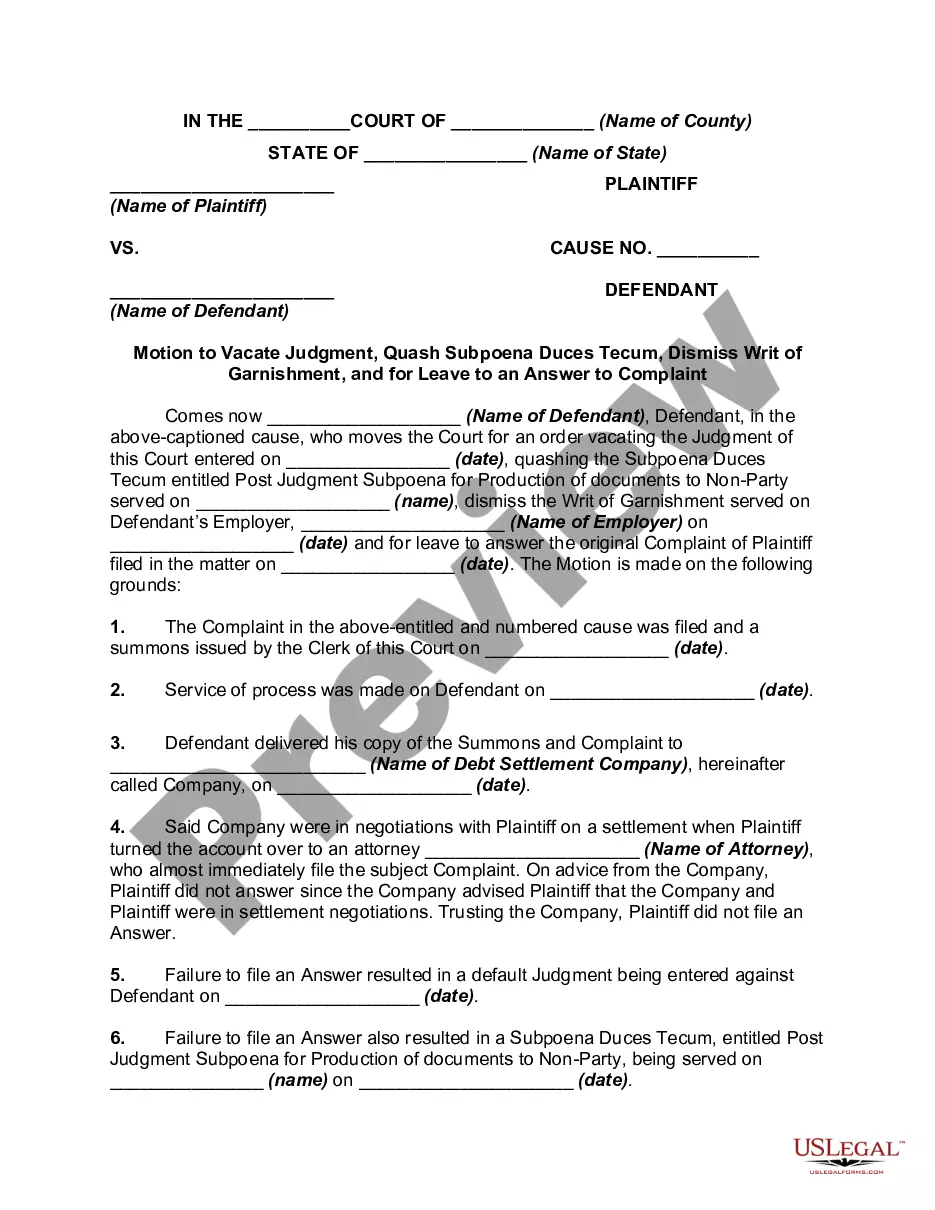
Motion Judgment Dismiss Without Trial
Description
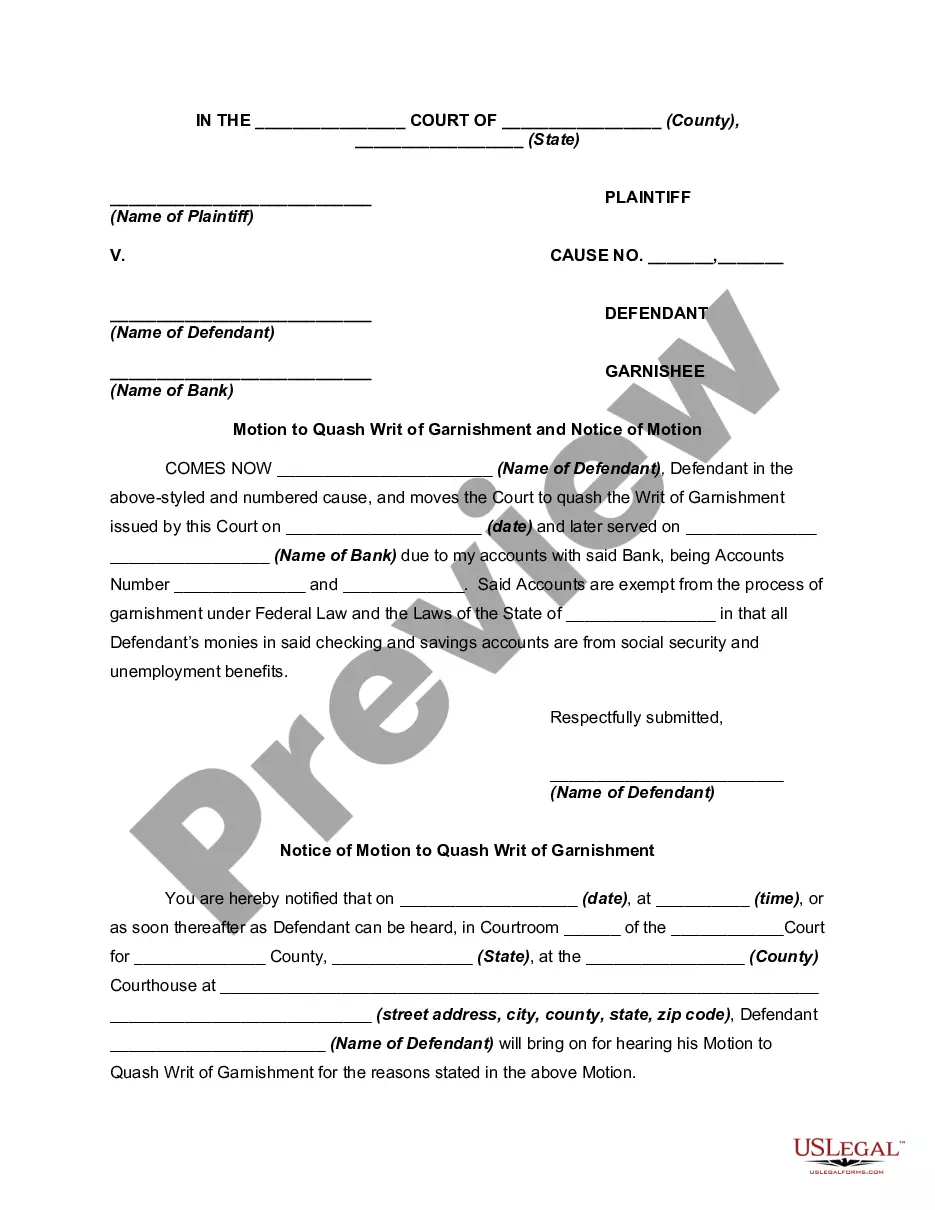
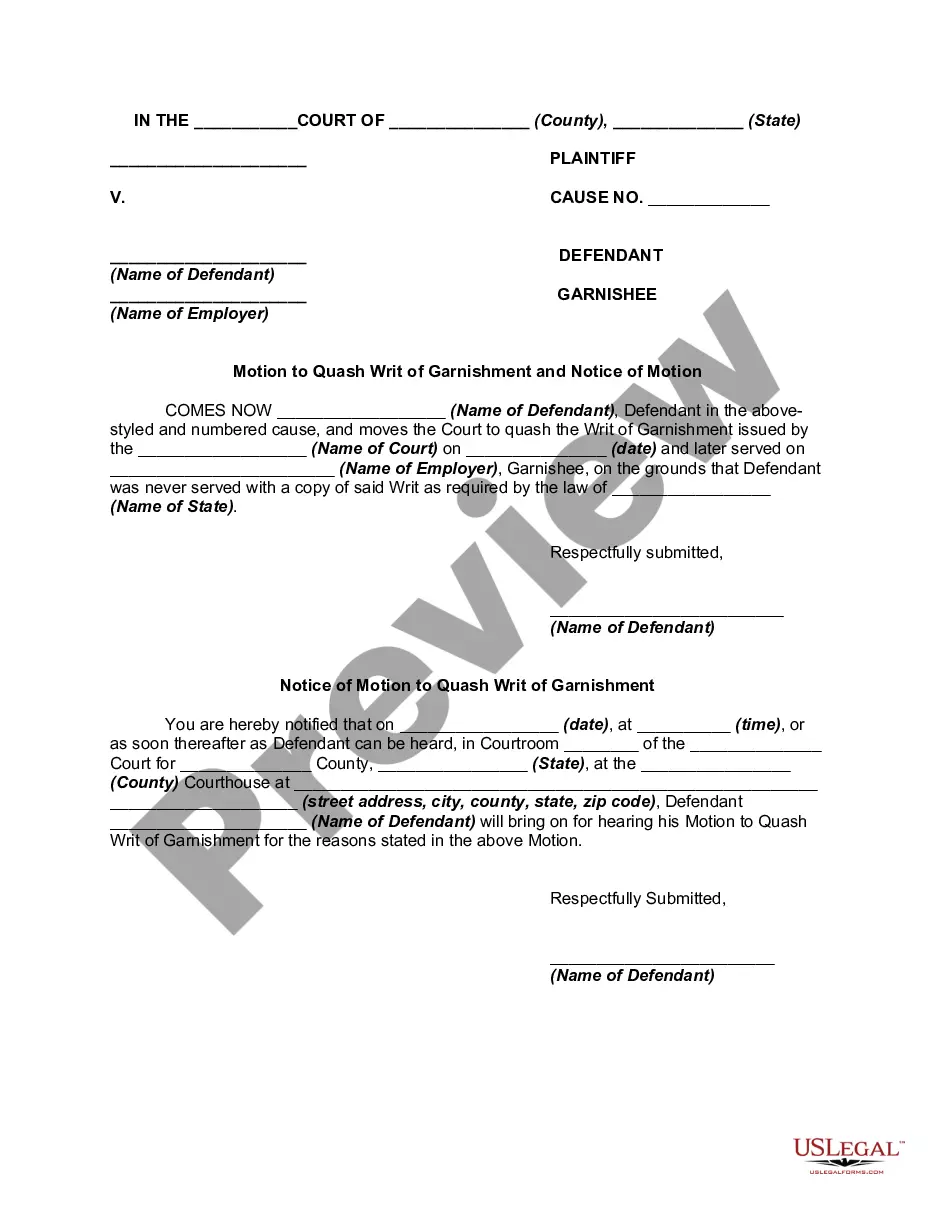
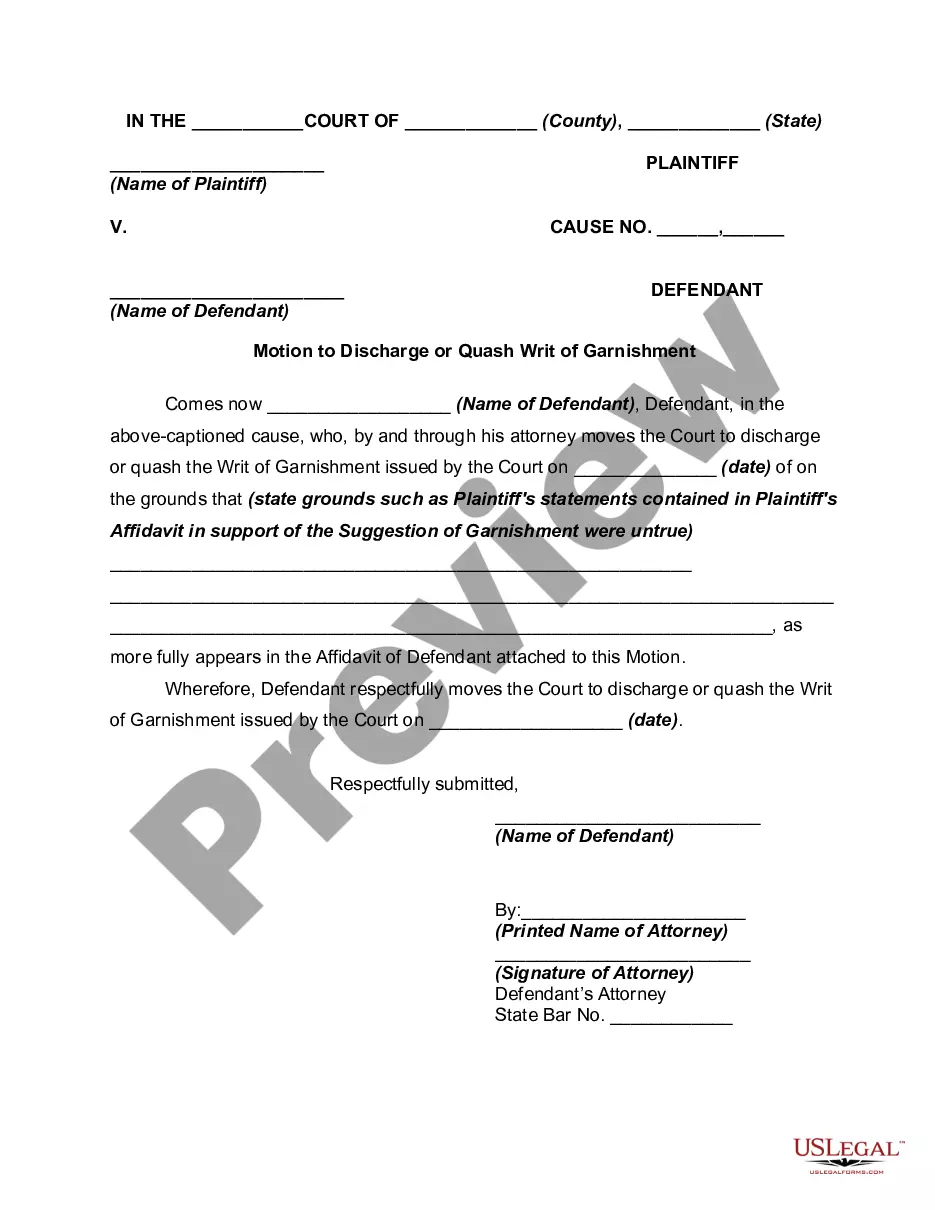
Get your form ready online
Our built-in tools help you complete, sign, share, and store your documents in one place.
Make edits, fill in missing information, and update formatting in US Legal Forms—just like you would in MS Word.
Download a copy, print it, send it by email, or mail it via USPS—whatever works best for your next step.
Sign and collect signatures with our SignNow integration. Send to multiple recipients, set reminders, and more. Go Premium to unlock E-Sign.
If this form requires notarization, complete it online through a secure video call—no need to meet a notary in person or wait for an appointment.
We protect your documents and personal data by following strict security and privacy standards.

Make edits, fill in missing information, and update formatting in US Legal Forms—just like you would in MS Word.

Download a copy, print it, send it by email, or mail it via USPS—whatever works best for your next step.

Sign and collect signatures with our SignNow integration. Send to multiple recipients, set reminders, and more. Go Premium to unlock E-Sign.

If this form requires notarization, complete it online through a secure video call—no need to meet a notary in person or wait for an appointment.

We protect your documents and personal data by following strict security and privacy standards.
Looking for another form?

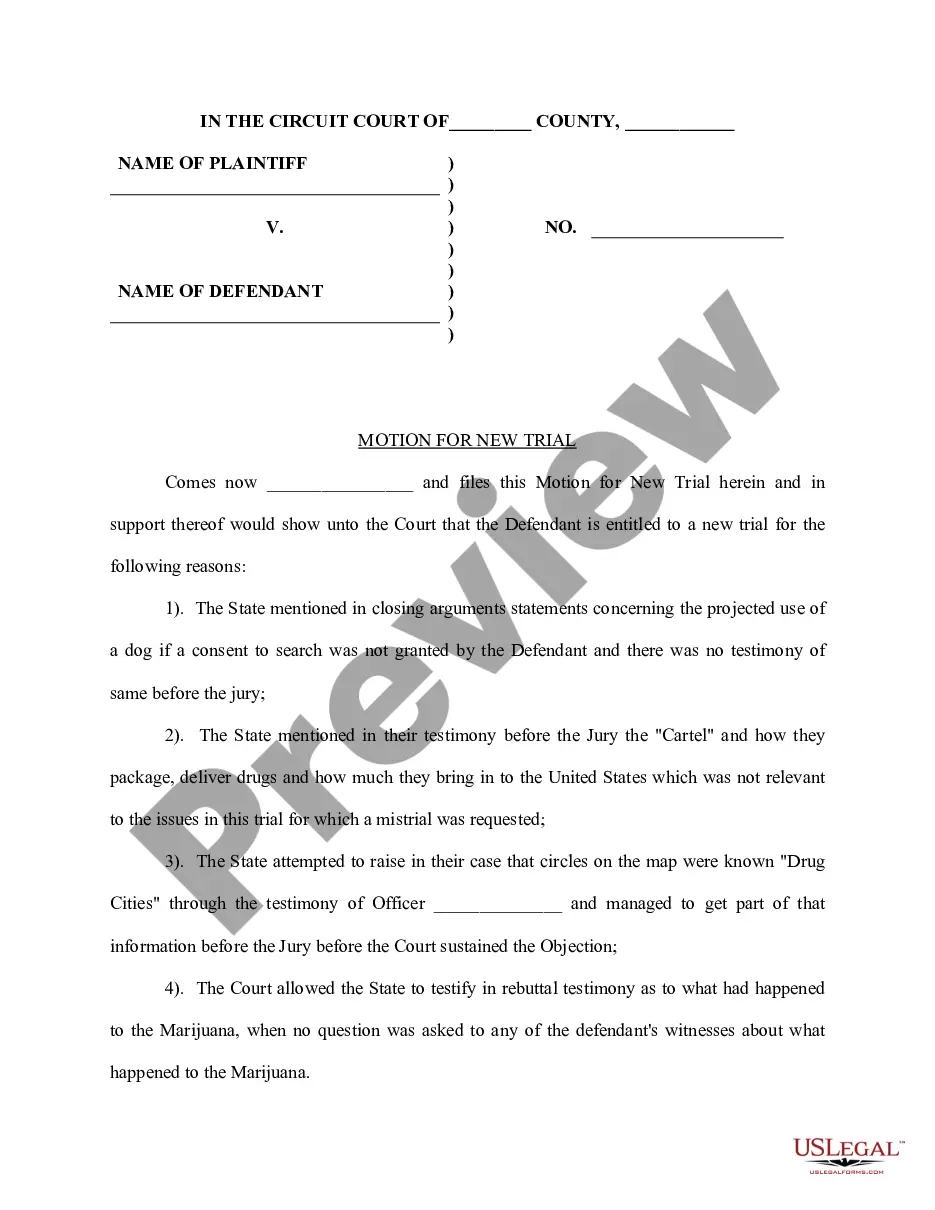

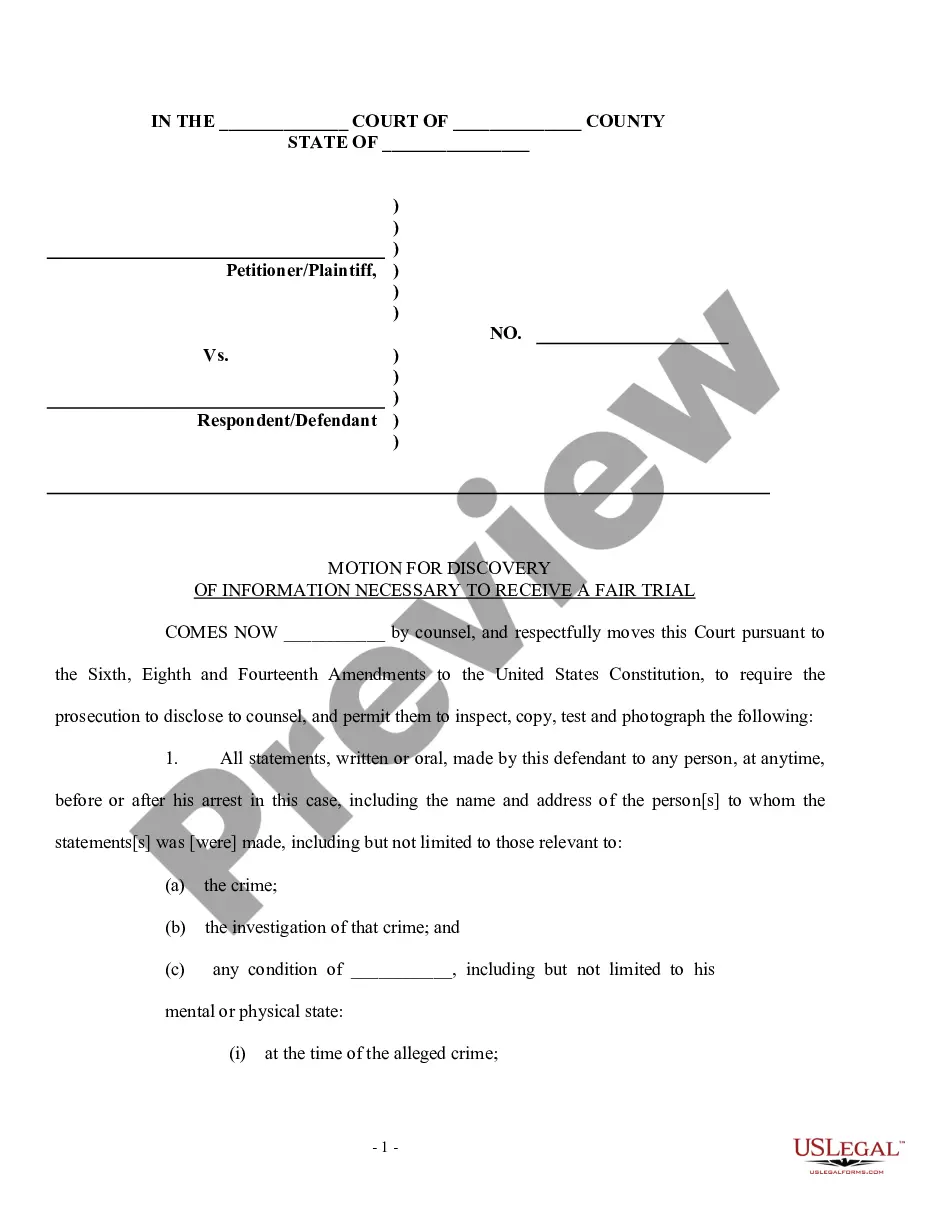

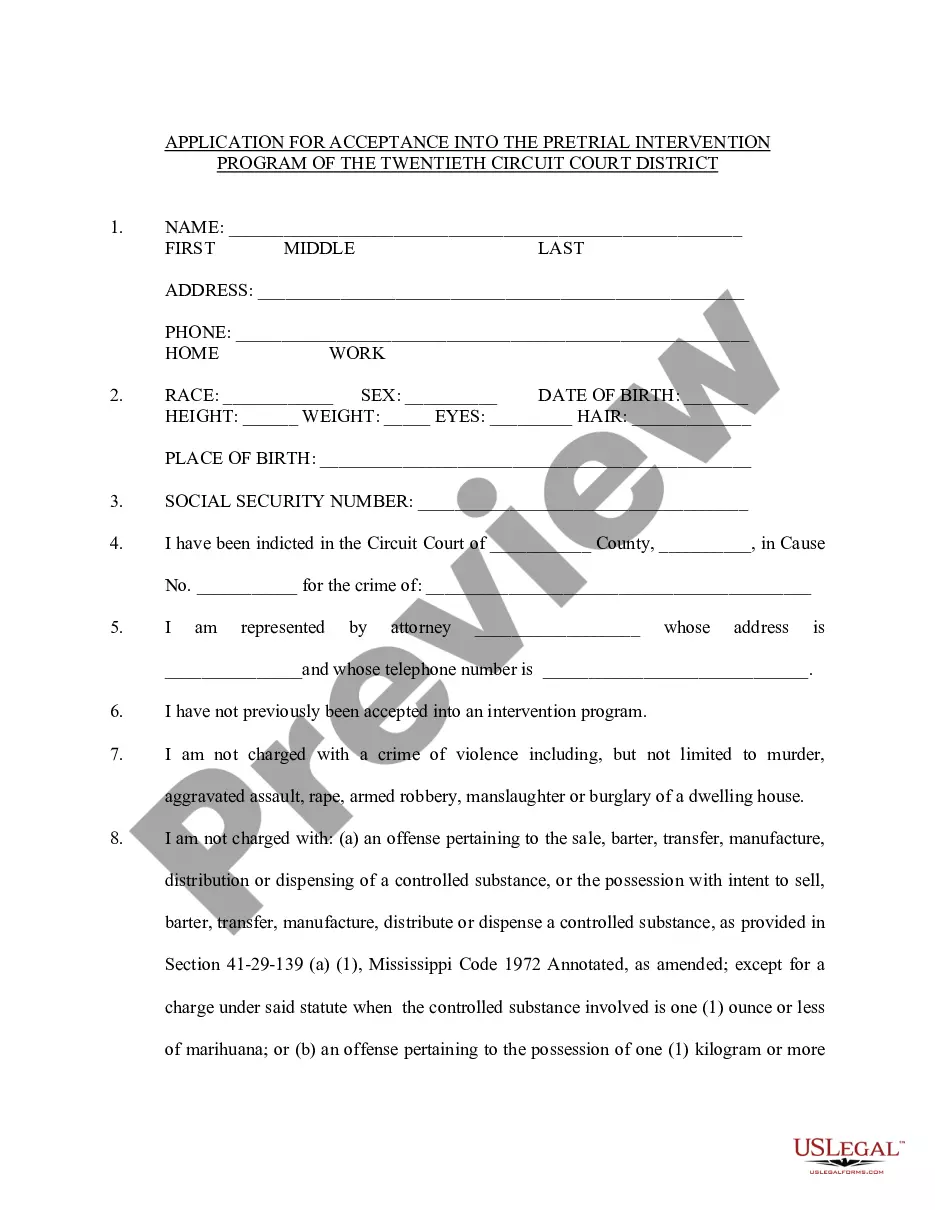
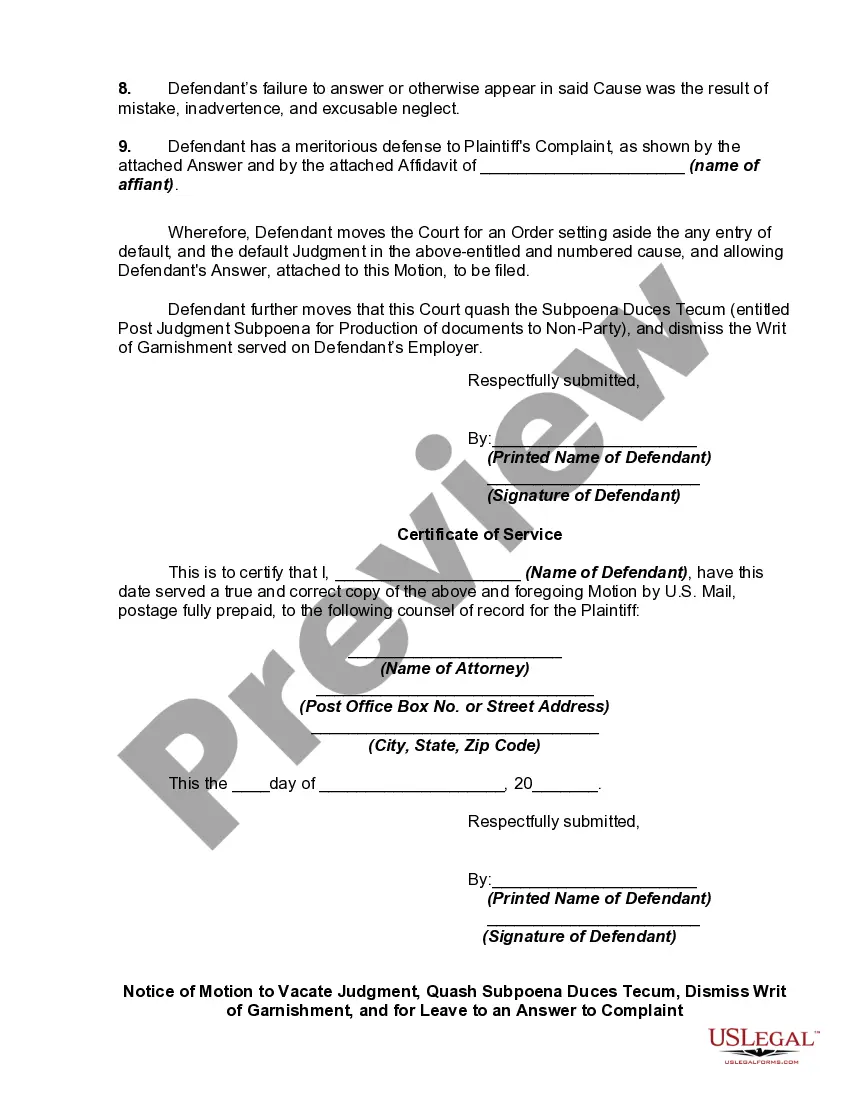
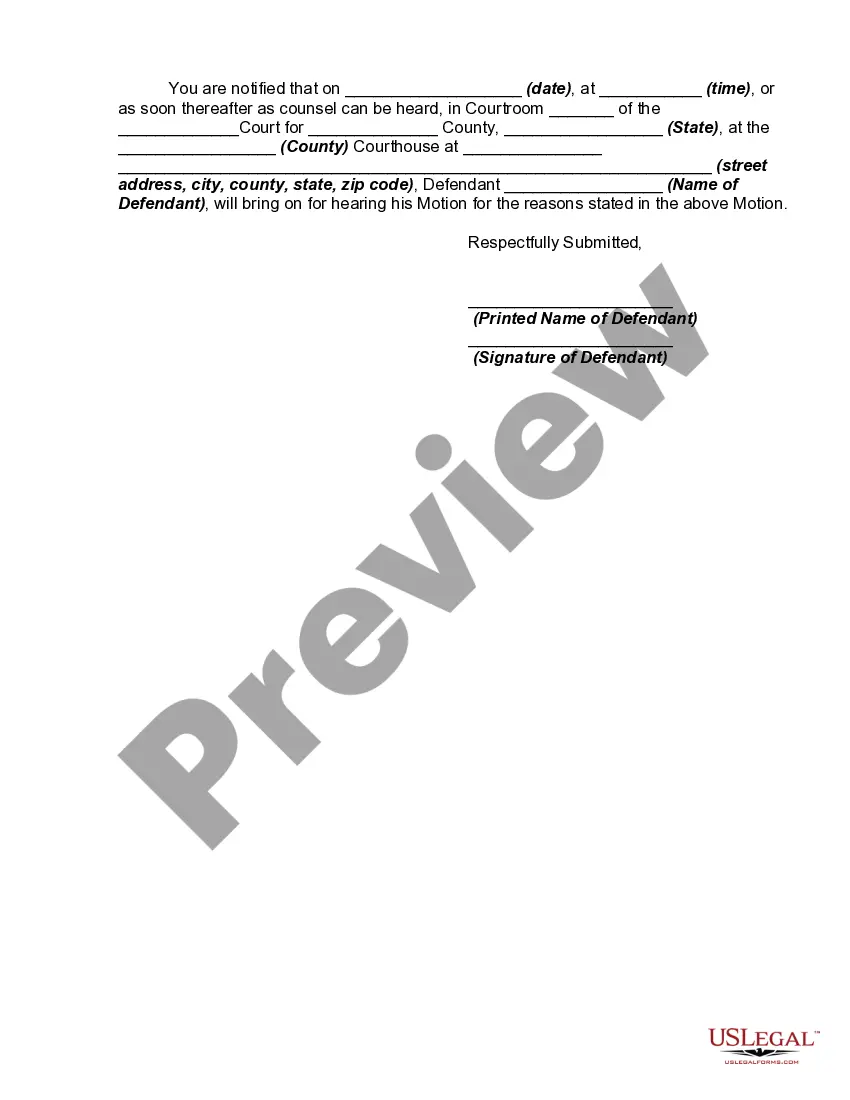
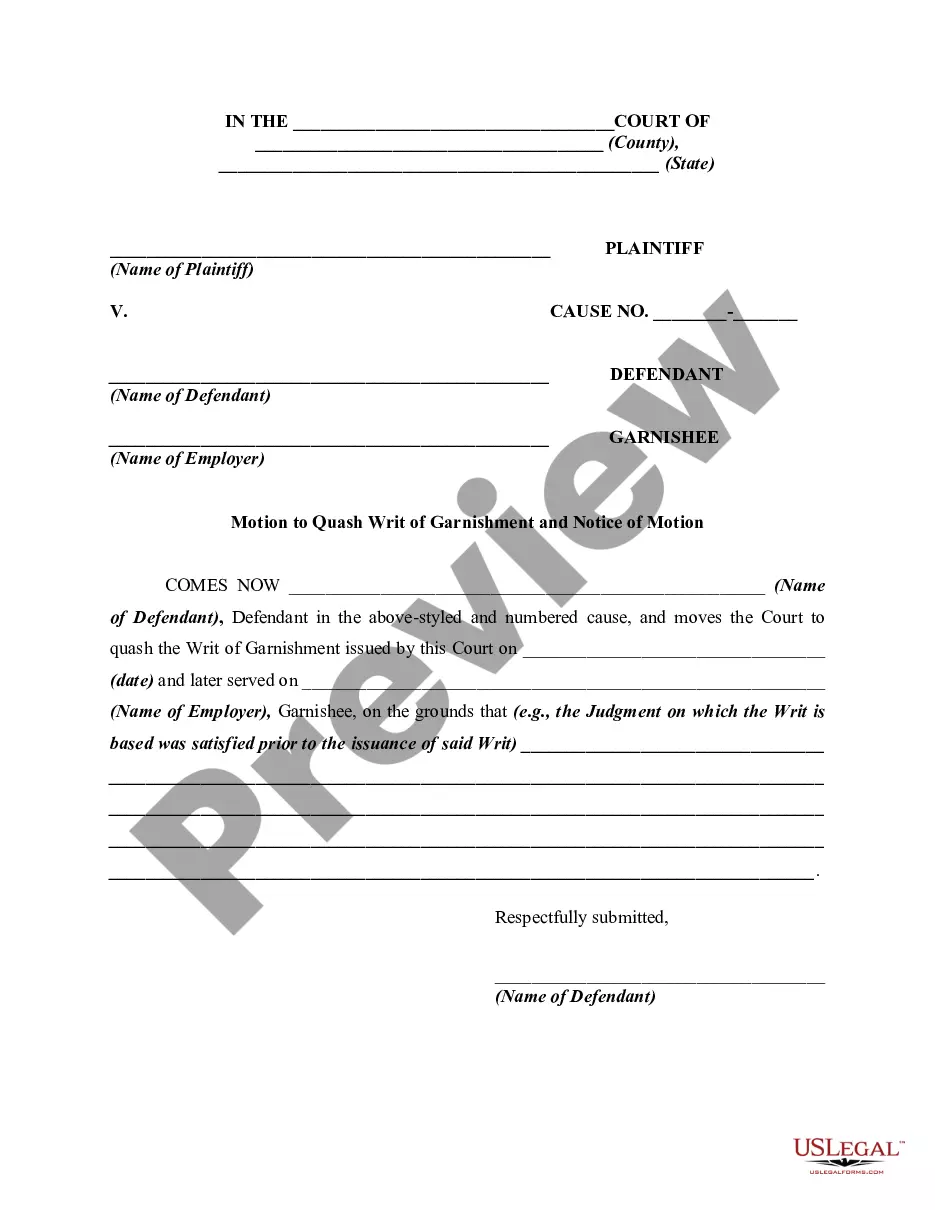
How to fill out Motion To Vacate Judgment, Quash Subpoena Duces Tecum, Dismiss Writ Of Garnishment, And For Leave To File An Answer To Complaint?
The Motion Judgment Dismiss Without Trial featured on this page is a reusable official template created by expert attorneys in accordance with federal and state laws and regulations.
For over 25 years, US Legal Forms has offered individuals, organizations, and legal experts more than 85,000 validated, state-specific forms for various business and personal situations. It represents the fastest, most direct, and most reliable method to access the documents you require, as the service ensures the utmost level of data security and anti-malware safeguarding.
Select the format you want for your Motion Judgment Dismiss Without Trial (PDF, Word, RTF) and store the sample on your device. Fill out and sign the documents. Print out the template to fill it out manually. Alternatively, utilize an online multifunctional PDF editor to swiftly and accurately complete and sign your form with an electronic signature. Download your documents once again. Use the same document again whenever necessary. Access the My documents tab in your profile to redownload any previously saved forms. Subscribe to US Legal Forms to have verified legal templates for every life situation at your fingertips.
- Search for the document you need and examine it.
- Browse the sample you searched and review it or check the form details to verify it meets your requirements. If it doesn’t, use the search bar to find the correct one. Click Buy Now after you have found the necessary template.
- Register and Log In.
- Choose a pricing plan that fits you and set up an account. Use PayPal or a credit card for a quick payment. If you already have an account, Log In and check your subscription to proceed.
- Obtain the editable template.
Form popularity
FAQ
Letters testamentary are documents that a probate court delivers to the executor of the deceased's estate to enforce the terms of the deceased person's will. A court can issue letters testamentary only to persons who are chosen as an executor in a will.
Probate is required for most estates in Oregon, and the type of probate process depends largely on the value of the assets that are in your name when you pass away.
An affidavit can be filed if the fair market value of the estate is $275,000 or less. Of that amount, no more than $200,000 can be attributable to real property and no more than $75,000 can be attributable to personal property.
Simple probates may cost around $2,000, but an average is closer to $3,000 - $5,000 (and up).
How do I get letters? Letters Testamentary or Letters of Administration are issued by the court, once the court has appointed you the Personal Representative of the estate. These documents authorize you to handle the claims, releases, transfers, and other issues in the estate.