Motion For Judgement Meaning
Description
Get your form ready online
Our built-in tools help you complete, sign, share, and store your documents in one place.
Make edits, fill in missing information, and update formatting in US Legal Forms—just like you would in MS Word.
Download a copy, print it, send it by email, or mail it via USPS—whatever works best for your next step.
Sign and collect signatures with our SignNow integration. Send to multiple recipients, set reminders, and more. Go Premium to unlock E-Sign.
If this form requires notarization, complete it online through a secure video call—no need to meet a notary in person or wait for an appointment.
We protect your documents and personal data by following strict security and privacy standards.

Make edits, fill in missing information, and update formatting in US Legal Forms—just like you would in MS Word.

Download a copy, print it, send it by email, or mail it via USPS—whatever works best for your next step.

Sign and collect signatures with our SignNow integration. Send to multiple recipients, set reminders, and more. Go Premium to unlock E-Sign.

If this form requires notarization, complete it online through a secure video call—no need to meet a notary in person or wait for an appointment.

We protect your documents and personal data by following strict security and privacy standards.
Looking for another form?



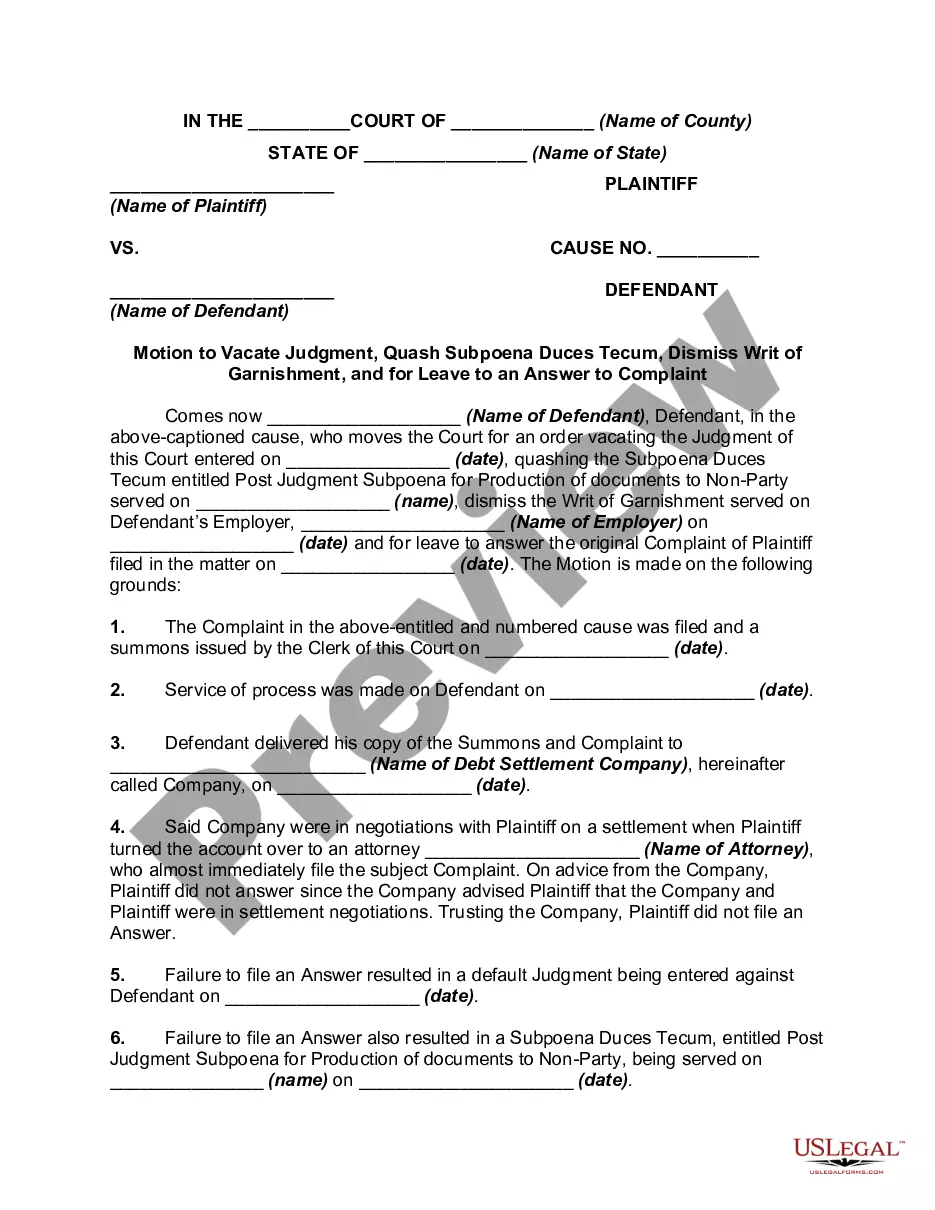
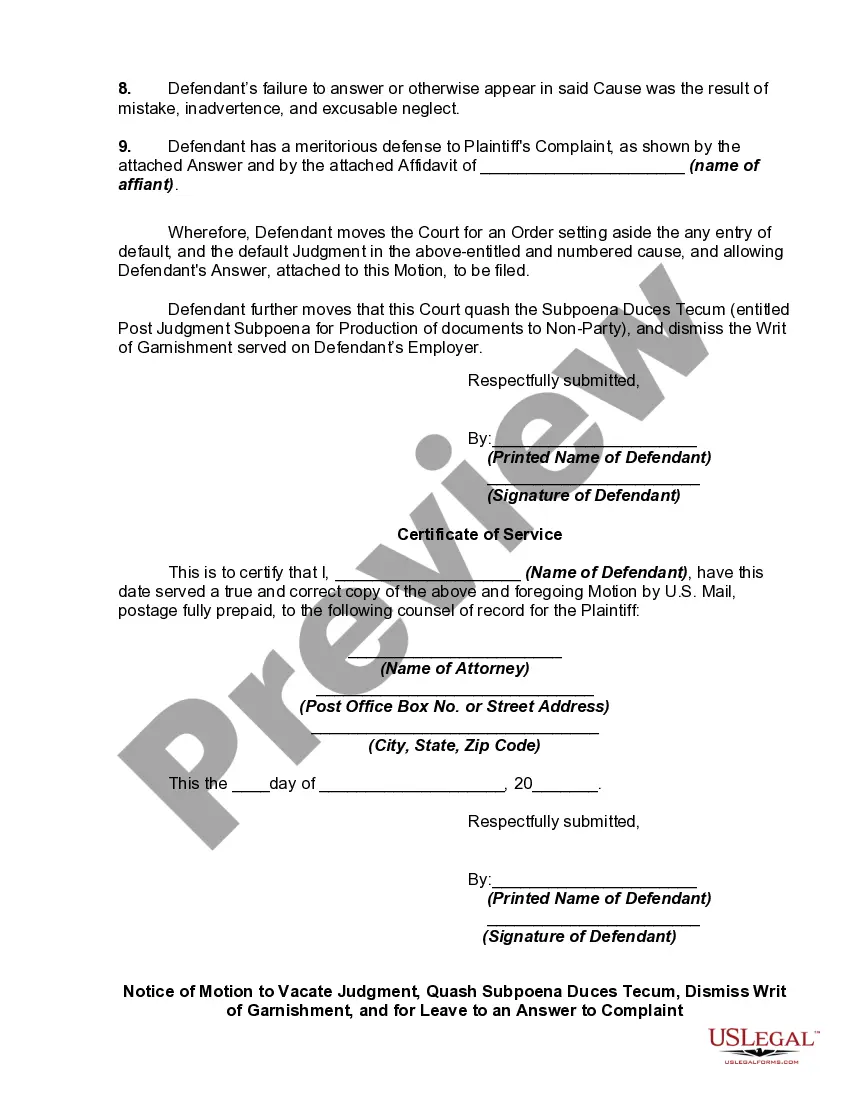
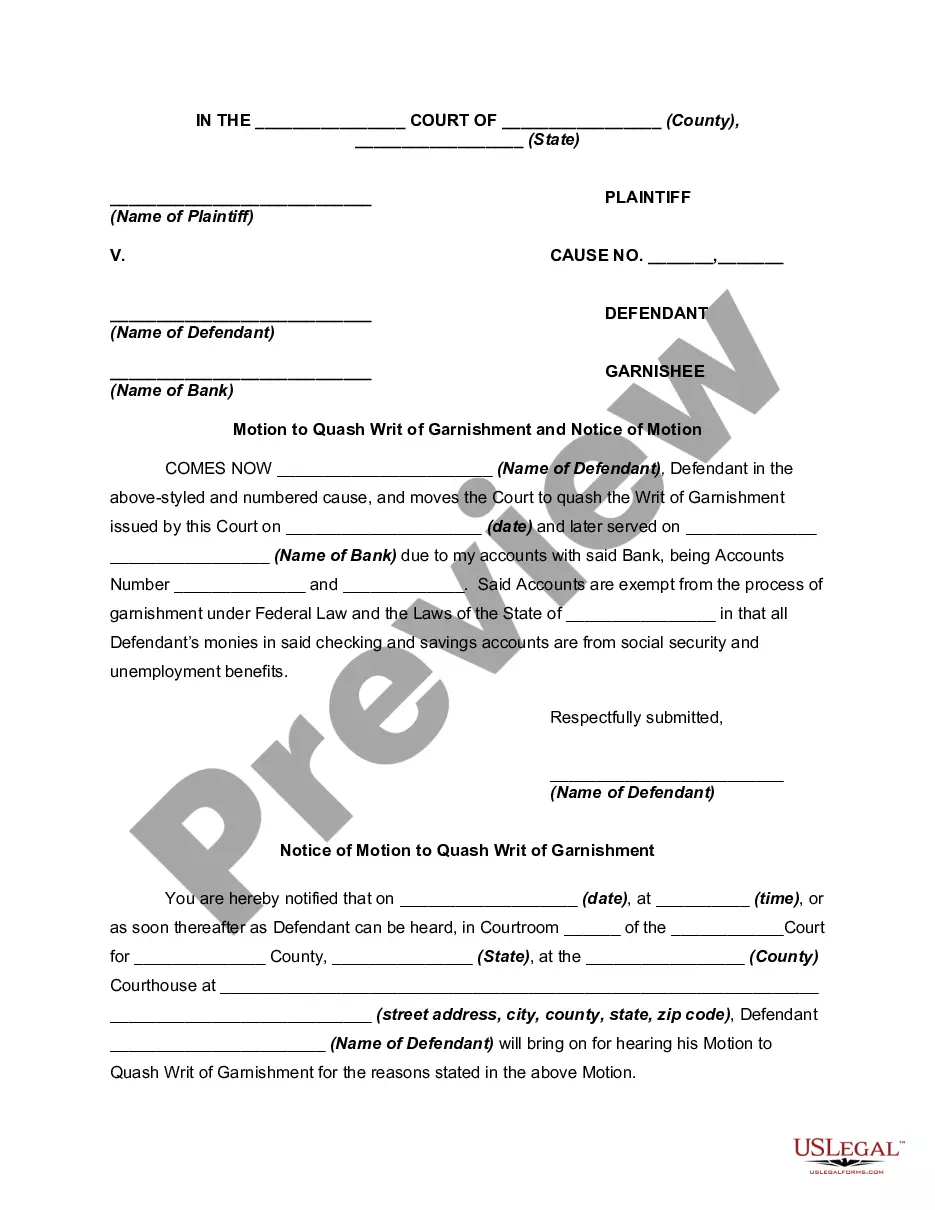
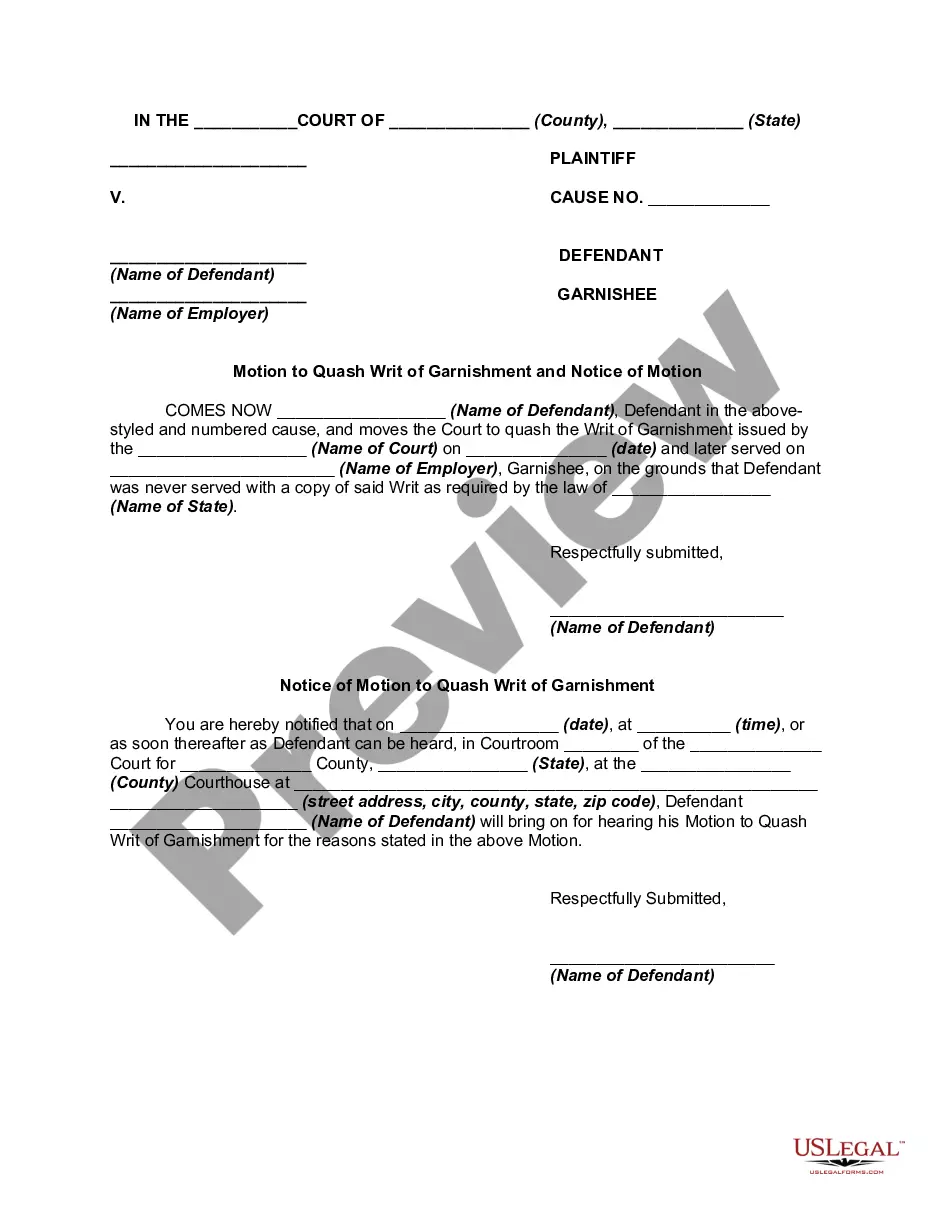
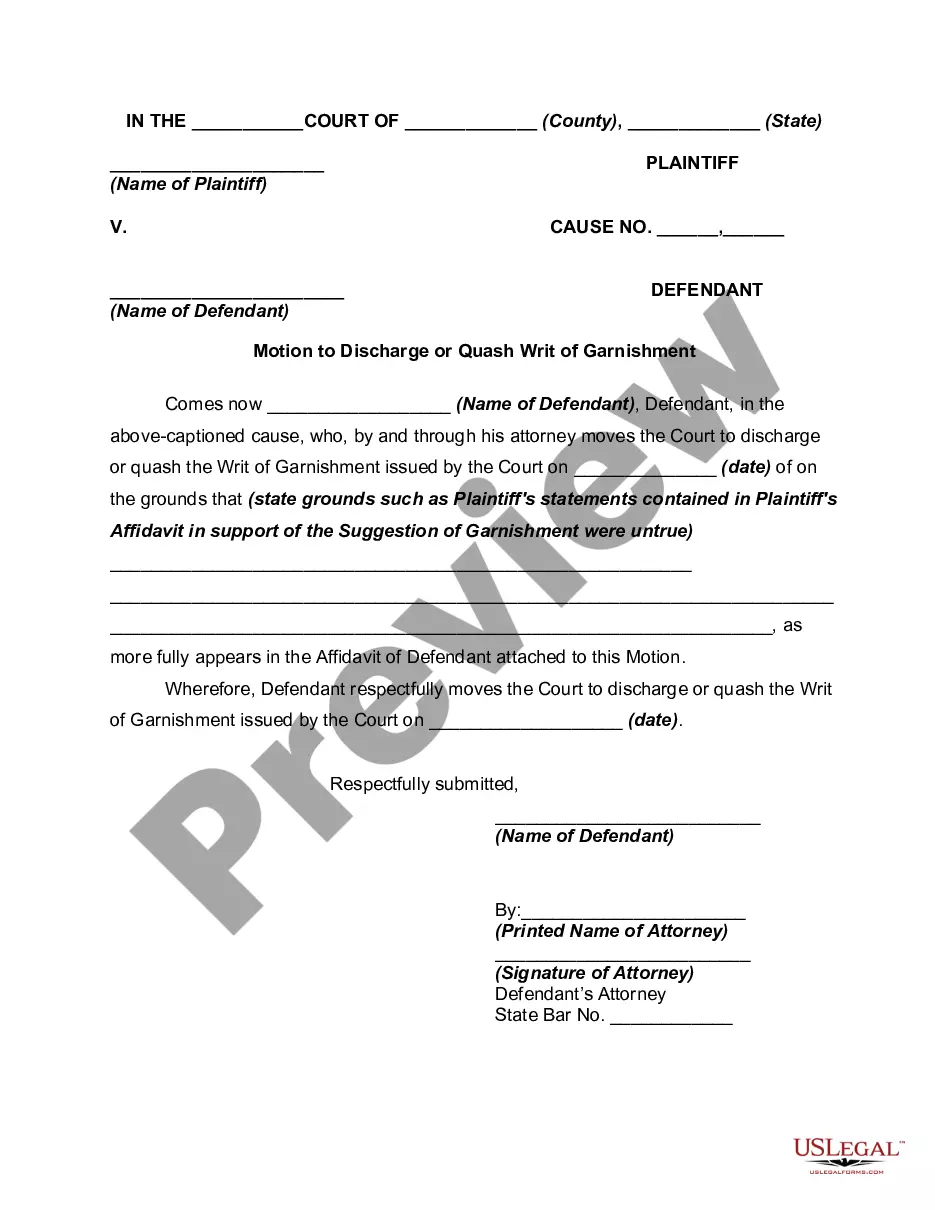
How to fill out Motion To Vacate Judgment, Quash Subpoena Duces Tecum, Dismiss Writ Of Garnishment, And For Leave To File An Answer To Complaint?
It’s well-known that one cannot become a legal authority in a single night, nor can one swiftly master how to draft a Motion For Judgement Meaning without a focused education.
Creating legal documents is a lengthy process that demands specific training and expertise.
So why not entrust the drafting of the Motion For Judgement Meaning to the experts.
If available, preview it and examine the supporting description to see if Motion For Judgement Meaning matches your requirements.
If you need a different template, begin your search again.
- With US Legal Forms, which boasts one of the most extensive collections of legal templates, you can find anything from court papers to workplace communication templates.
- We understand how vital it is to follow federal and local laws and regulations.
- That’s why, on our site, all templates are tailored to specific locations and current.
- Here’s how to get started with our platform and obtain the form you require in just minutes.
- Search for the document you need using the search bar at the top of the page.
Form popularity
FAQ
Placing judgment refers to the court's final decision in a legal case. It represents the formal outcome after considering all evidence and arguments presented by both sides. This decision determines the rights and obligations of the parties involved, making it a critical aspect of the legal process. Understanding the motion for judgement meaning can clarify the significance of reaching a final judgment.
Motion is the action of changing location or position. A force is any interaction that causes a change in motion, shape, or energy. A system possesses energy if it has the ability to do work. ( Work is done when a force causes a change in the energy of a system.)
The examples of motion include: running, cycling, jumping, swimming, eating, drinking, playing, writing, typing, moving cars, throwing ball. The examples of rest include: sleeping, sitting, standing, staring, lying, a fixed clock, bottle kept on a table, a stopped car.
There are several different types of post-judgment motions, but the most common are motions for new trial, motions to vacate, and motions to set-aside. Motions for new trial, motions to vacate, and motions to set-aside are the three most common post-judgment motions.
A motion for judgment notwithstanding the verdict (JNOV) is a motion asking the court to enter a judgment disregarding the verdict rendered by the jury. The motion argues that no reasonable jury could reach the verdict that the jury reached in the particular case.
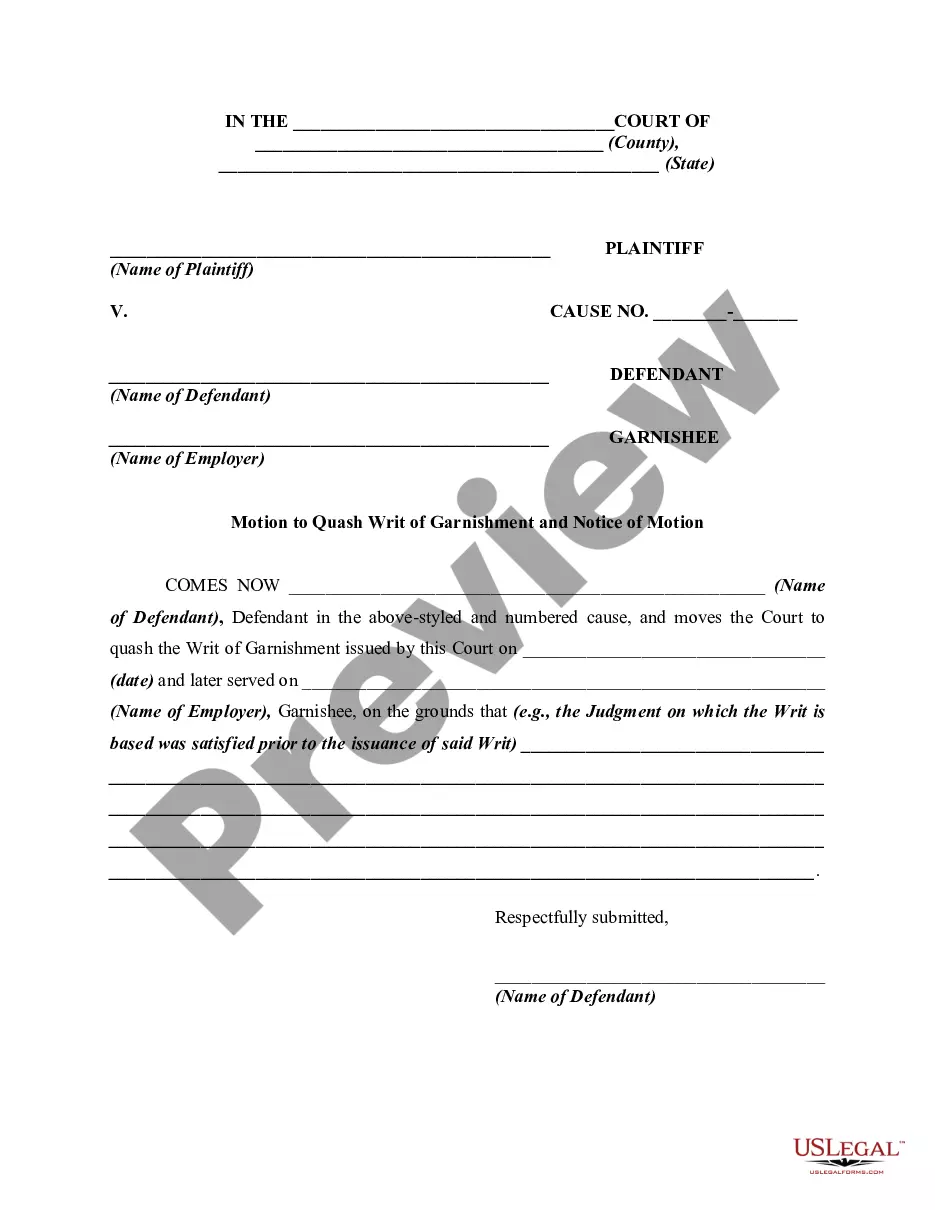
For example, a party can make a motion to ask to allow him or her not to give the other side the discovery that was asked for. If a party thinks that a subpoena asks for documents that have nothing to do with the case, or asks for too much information, the party can make a motion to quash the subpoena.