Court Judgment File For Credit
Description
Get your form ready online
Our built-in tools help you complete, sign, share, and store your documents in one place.
Make edits, fill in missing information, and update formatting in US Legal Forms—just like you would in MS Word.
Download a copy, print it, send it by email, or mail it via USPS—whatever works best for your next step.
Sign and collect signatures with our SignNow integration. Send to multiple recipients, set reminders, and more. Go Premium to unlock E-Sign.
If this form requires notarization, complete it online through a secure video call—no need to meet a notary in person or wait for an appointment.
We protect your documents and personal data by following strict security and privacy standards.

Make edits, fill in missing information, and update formatting in US Legal Forms—just like you would in MS Word.

Download a copy, print it, send it by email, or mail it via USPS—whatever works best for your next step.

Sign and collect signatures with our SignNow integration. Send to multiple recipients, set reminders, and more. Go Premium to unlock E-Sign.

If this form requires notarization, complete it online through a secure video call—no need to meet a notary in person or wait for an appointment.

We protect your documents and personal data by following strict security and privacy standards.
Looking for another form?








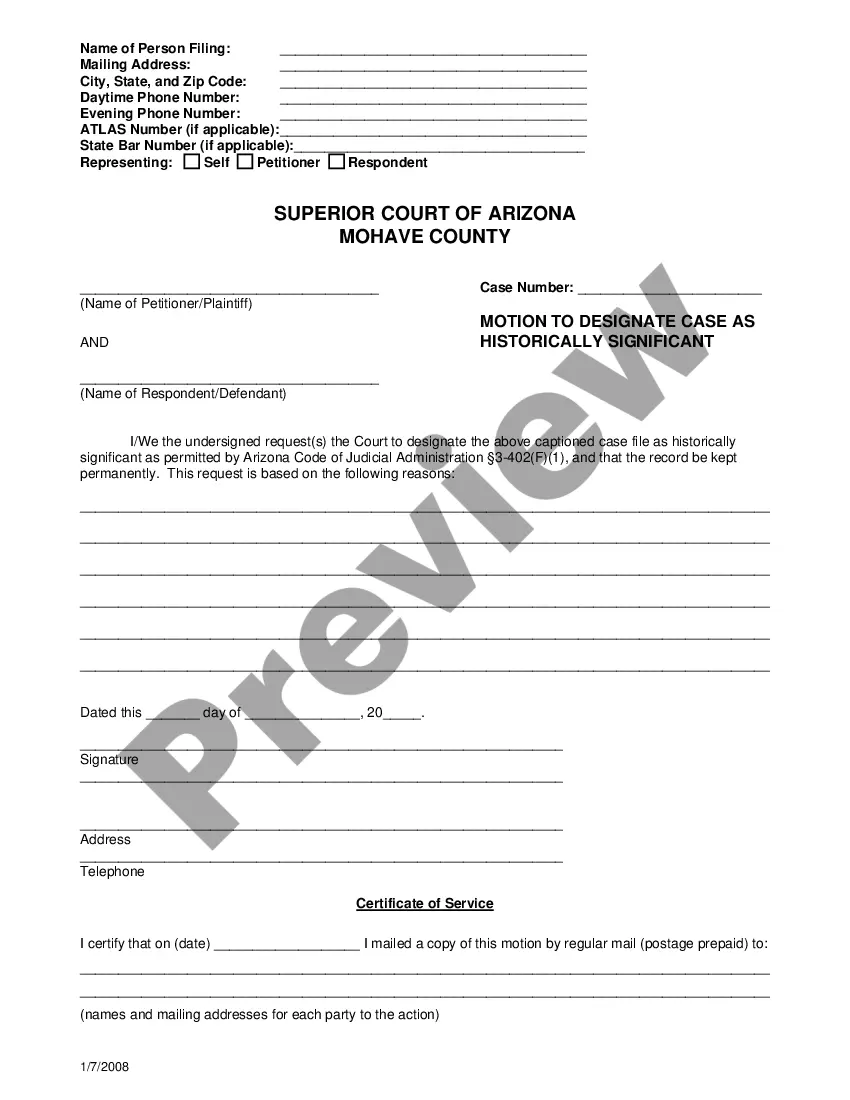
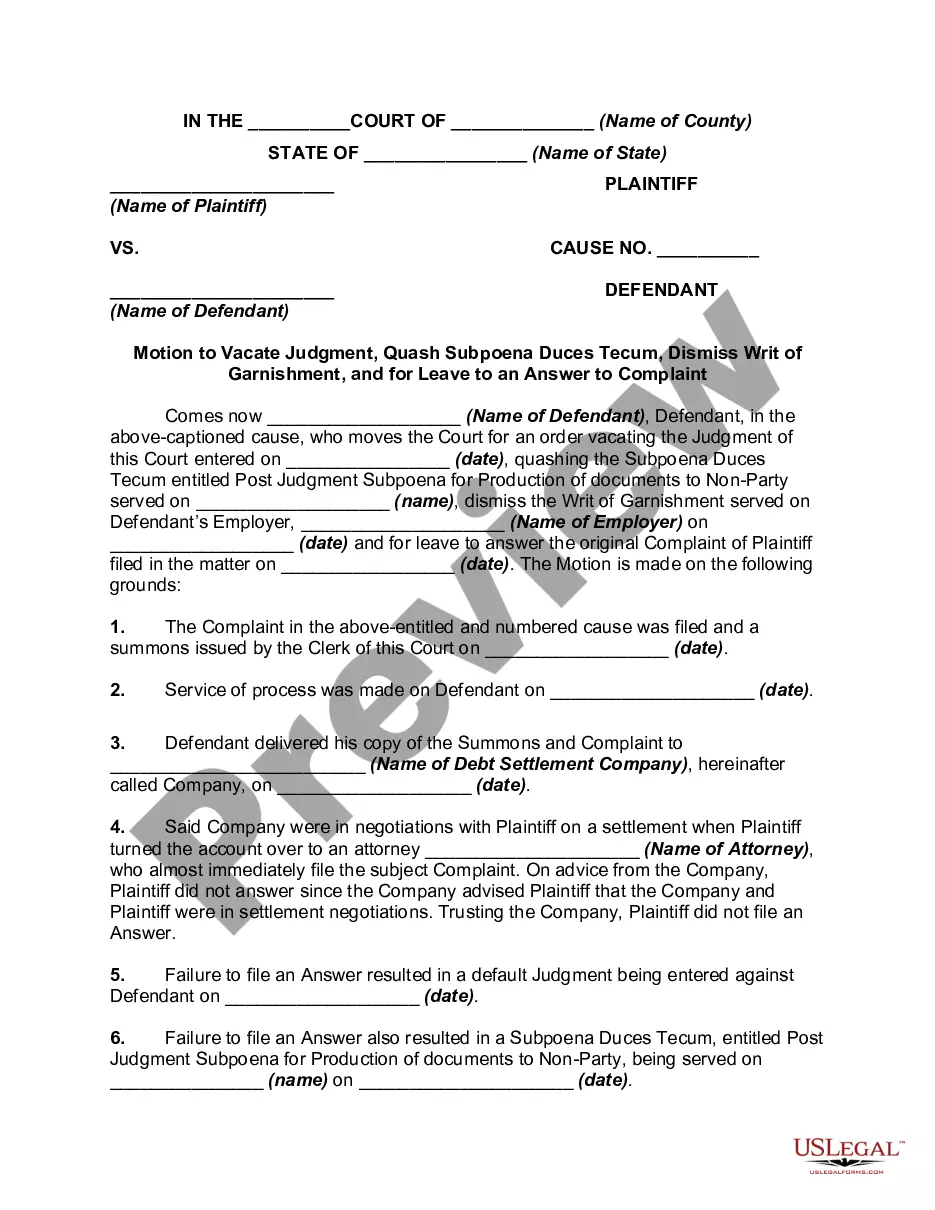
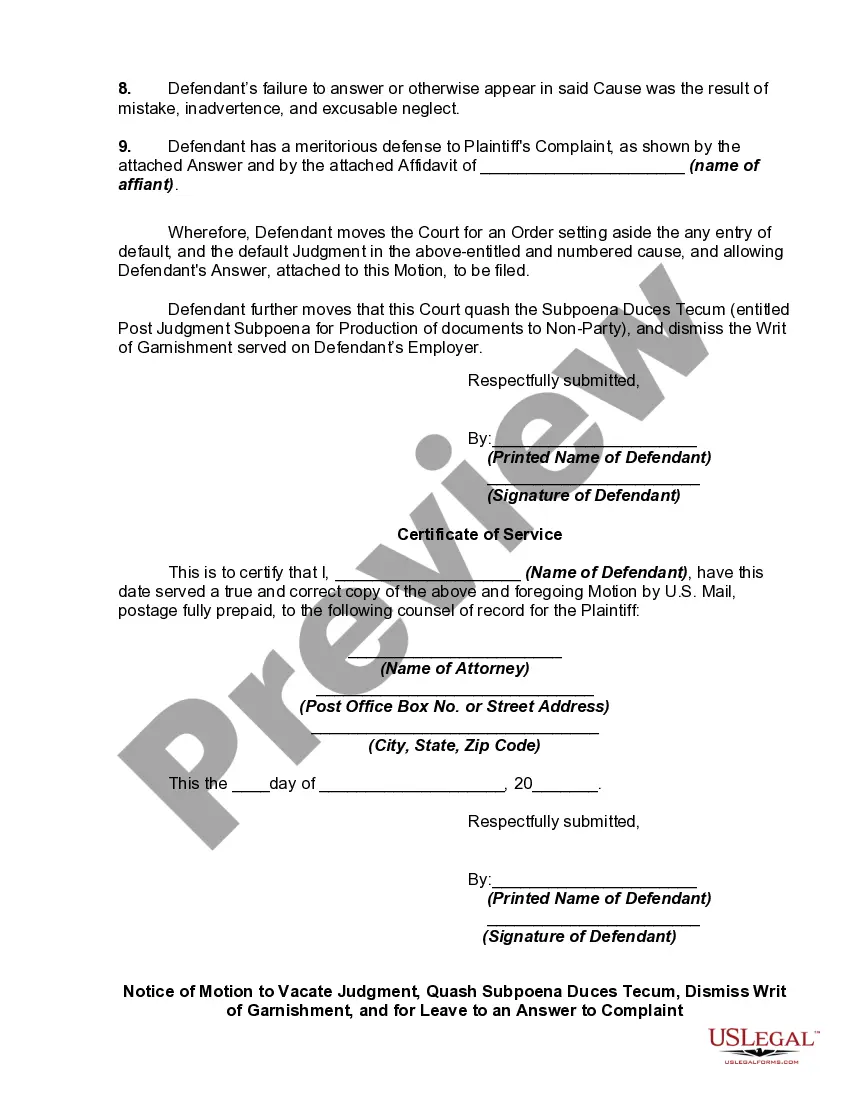
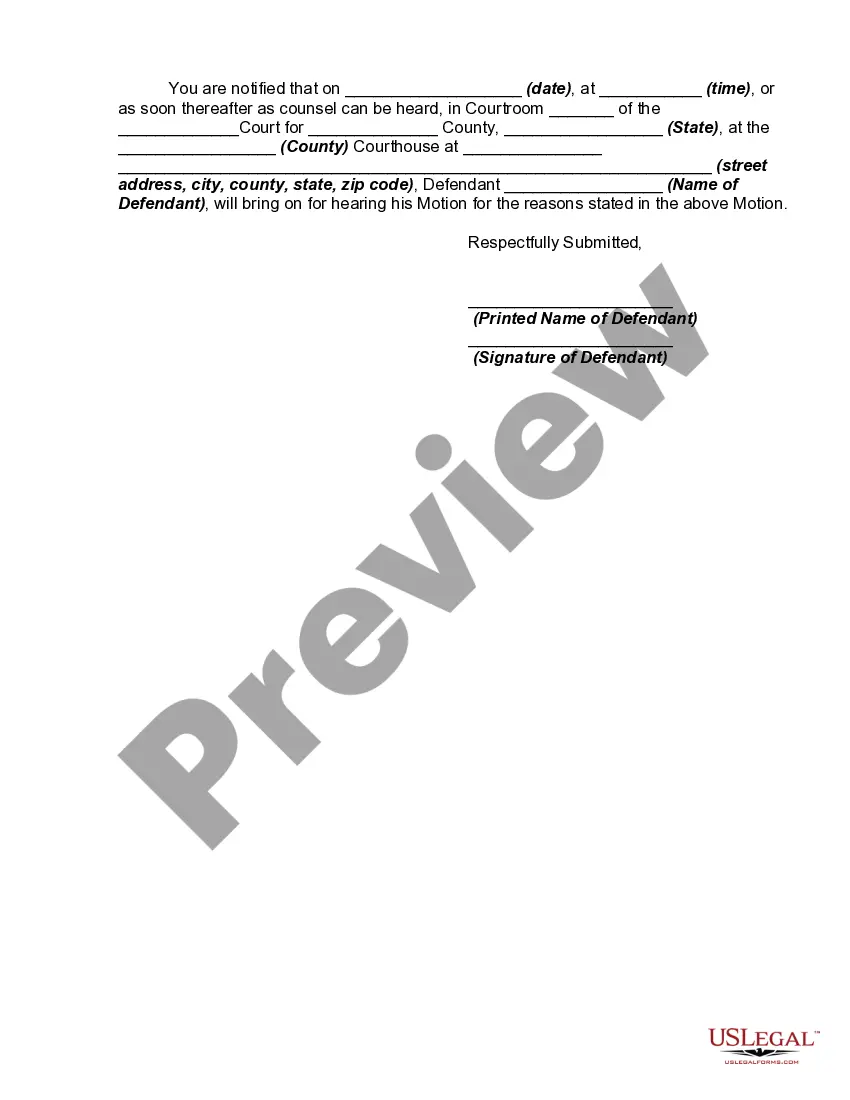
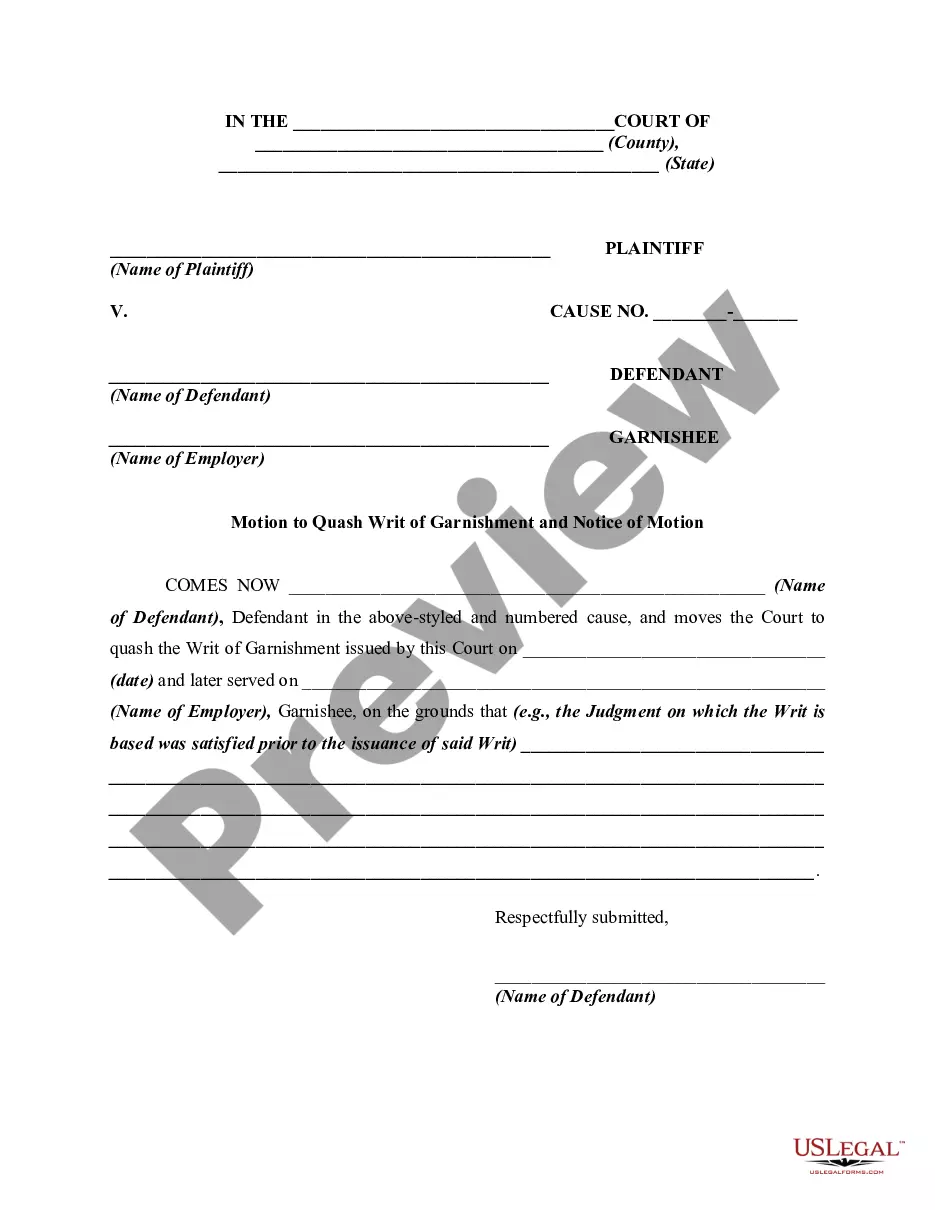
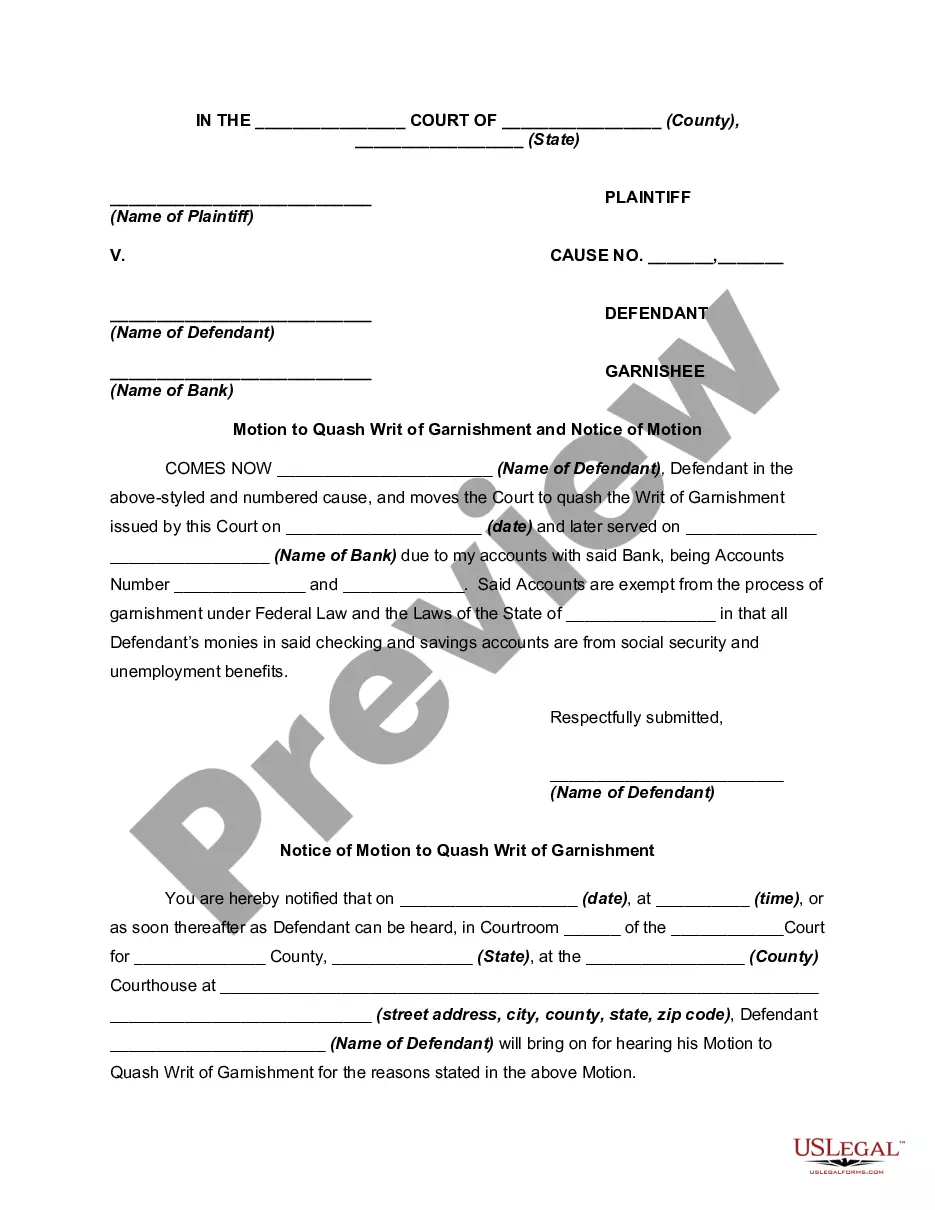
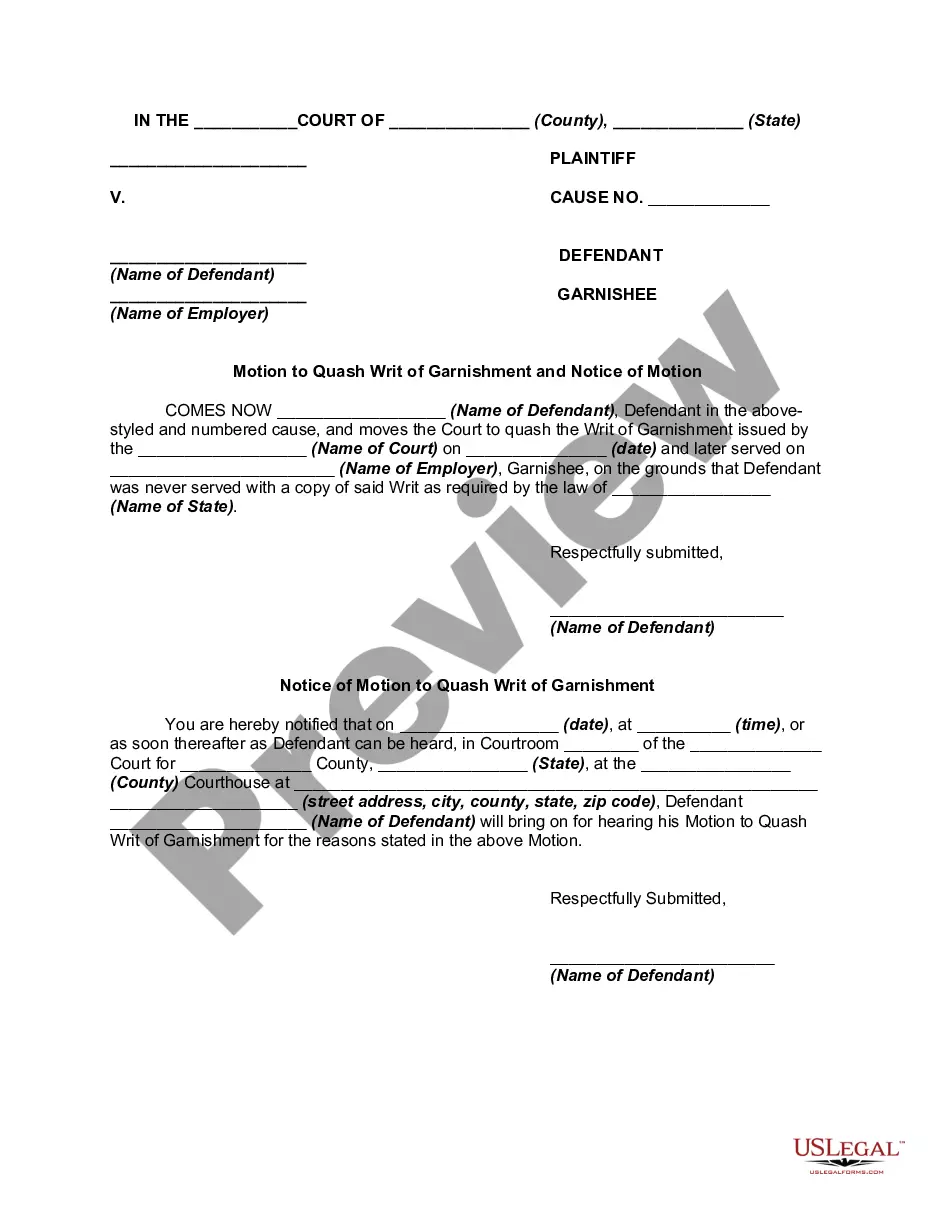
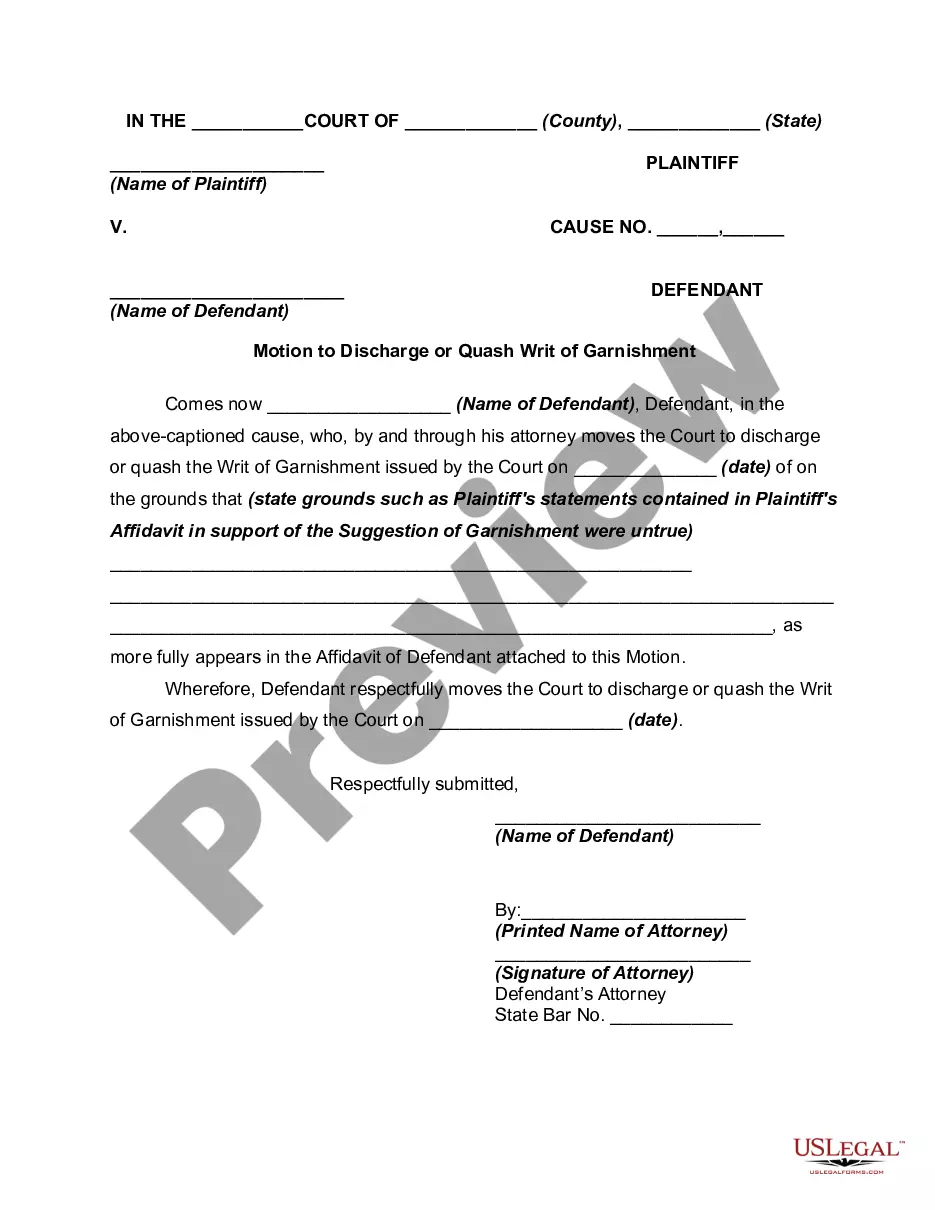
How to fill out Motion To Vacate Judgment, Quash Subpoena Duces Tecum, Dismiss Writ Of Garnishment, And For Leave To File An Answer To Complaint?
The Court Ruling Document For Credit displayed on this page is a reusable legal framework created by qualified attorneys in accordance with federal and state regulations. For over 25 years, US Legal Forms has supplied individuals, corporations, and lawyers with more than 85,000 certified, state-specific documents for any business and personal event. It is the fastest, easiest, and most reliable method to acquire the forms you require, as the service ensures bank-level data security and anti-malware safeguards.
Obtaining this Court Ruling Document For Credit will only require a few straightforward steps.
Register for US Legal Forms to have verified legal templates available for all of life's situations.
- Search for the document you require and verify it. Browse through the file you sought and preview it or review the form description to ensure it meets your requirements. If it does not, utilize the search bar to find the correct one. Click Buy Now once you have discovered the template you want.
- Register and Log In. Choose the pricing plan that fits your needs and create an account. Use PayPal or a debit/credit card for a quick payment. If you already possess an account, Log In and review your subscription to proceed.
- Acquire the editable template. Select the format you prefer for your Court Ruling Document For Credit (PDF, DOCX, RTF) and save the sample on your device.
- Complete and sign the document. Print the template to fill it out manually. Alternatively, use an online versatile PDF editor to quickly and accurately complete and sign your form with an electronic signature.
- Redownload your documents if needed. Utilize the same document again whenever required. Access the My documents tab in your profile to redownload any previously saved forms.
Form popularity
FAQ
A judgment on your credit refers to a legal decision made by a court that results in a formal ruling against you, typically due to unpaid debts. This judgment can appear on your credit report, impacting your credit score and making it harder to secure loans or credit cards. When a court issues a judgment, it often leads to a court judgment file for credit, which lenders view seriously. To manage or address these judgments, you can explore resources like US Legal Forms, which provides templates and guidance for handling court-related documents.
A judgment on your credit report is considered serious and can harm your creditworthiness. It suggests to lenders that you have failed to meet debt obligations, making it difficult to secure loans or favorable interest rates. To mitigate this impact, it is essential to manage your court judgment file for credit by paying off debts and improving your overall financial situation.
Yes, a County Court Judgment (CCJ) can significantly impact your credit rating. When a judgment is recorded, it suggests financial distress and can lower your credit score. Managing your court judgment file for credit responsibly can help rebuild your credit over time, especially by addressing any judgments promptly and effectively.
You cannot directly remove a judgment from your credit report, but you can work to have it marked as satisfied. Paying off the judgment can effectively improve your credit report status. Furthermore, using a reliable service, like USLegalForms, can help you understand the steps to take and ensure your court judgment file for credit is handled correctly.
Pay directly to the creditor Mail or deliver a check or money order to the Judgment Creditor. Make sure to keep proof of payment, such as your canceled check. Once the Judgment Creditor receives your payment, ask them to file the form Acknowledgment of Satisfaction of Judgment with the court within 14 days.
When a creditor desires to collect a debt from a debtor, they must first receive a judgment. There are several types of judgments that will suffice in this situation. The pretrial types of judgments are as follows: Confession of Judgment, Consent Judgment, Default Judgment.
Since judgments are not included in credit reports, they won't be factored into credit score calculations. However, judgments are a matter of public record, so potential lenders may choose to search for this information from sources other than the national credit bureaus as part of the application process.
A judgment is an official result of a lawsuit in court. In debt collection lawsuits, the judge may award the creditor or debt collector a judgment against you. You are likely to have a judgment entered against you for the amount claimed in the lawsuit if you: Ignore the lawsuit, or.
Once you have settled a judgment or reached an agreement to settle a debt, consider applying for a rescission of judgment to keep your name, and therefore your credit record, in the clear. Remember to notify the credit profiling companies when you clear your name so that they know to update their records.