Tennessee Commercial Contract for Contractor
Overview of this form
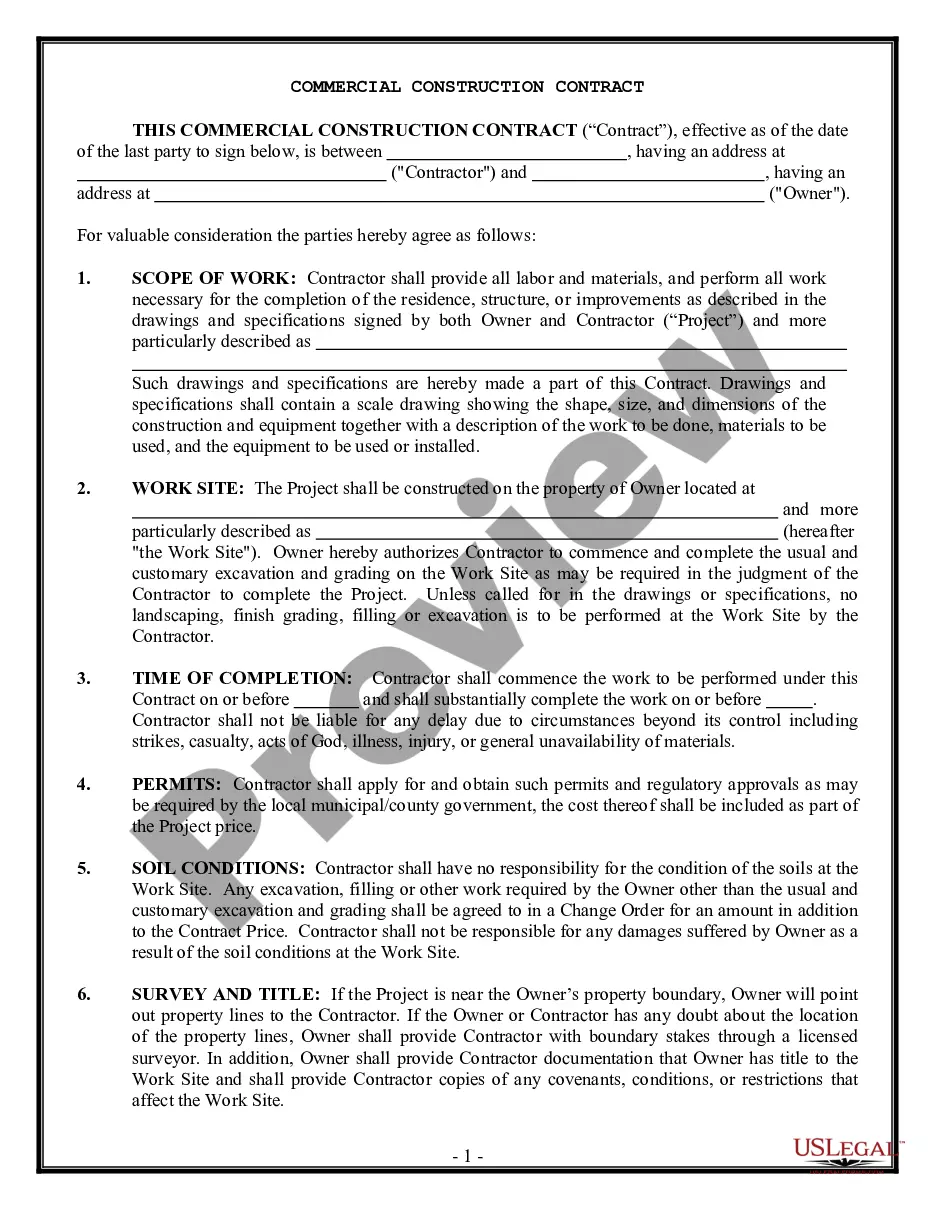
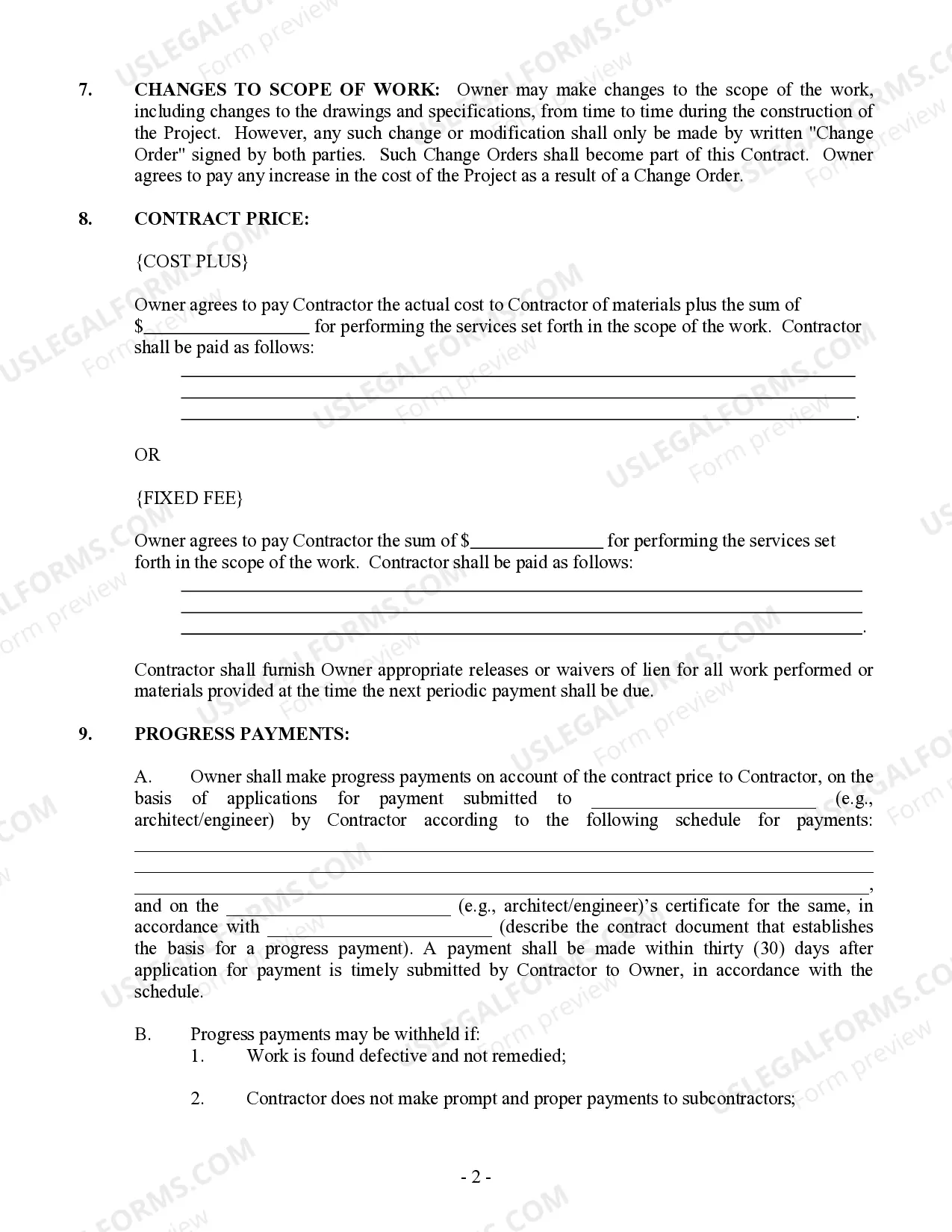
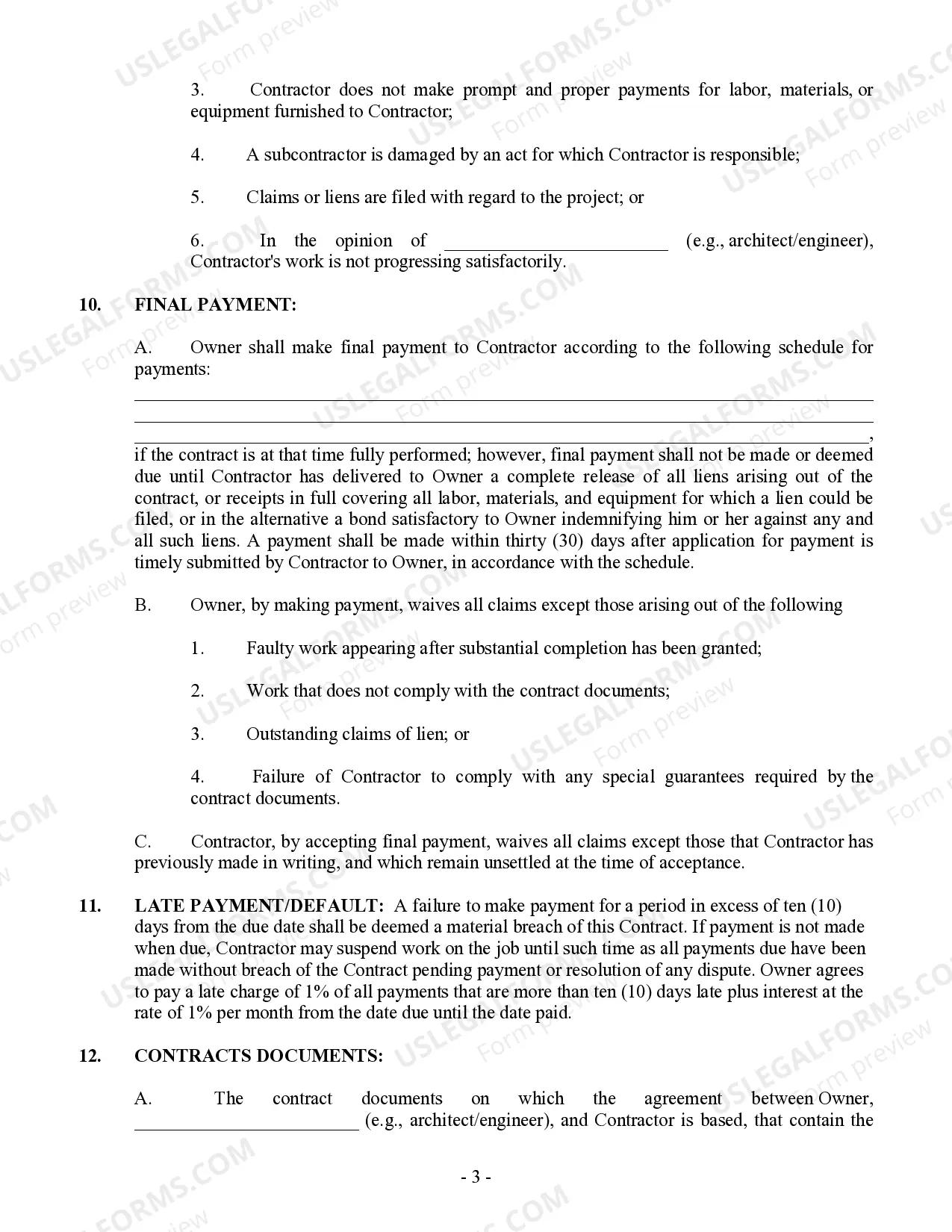
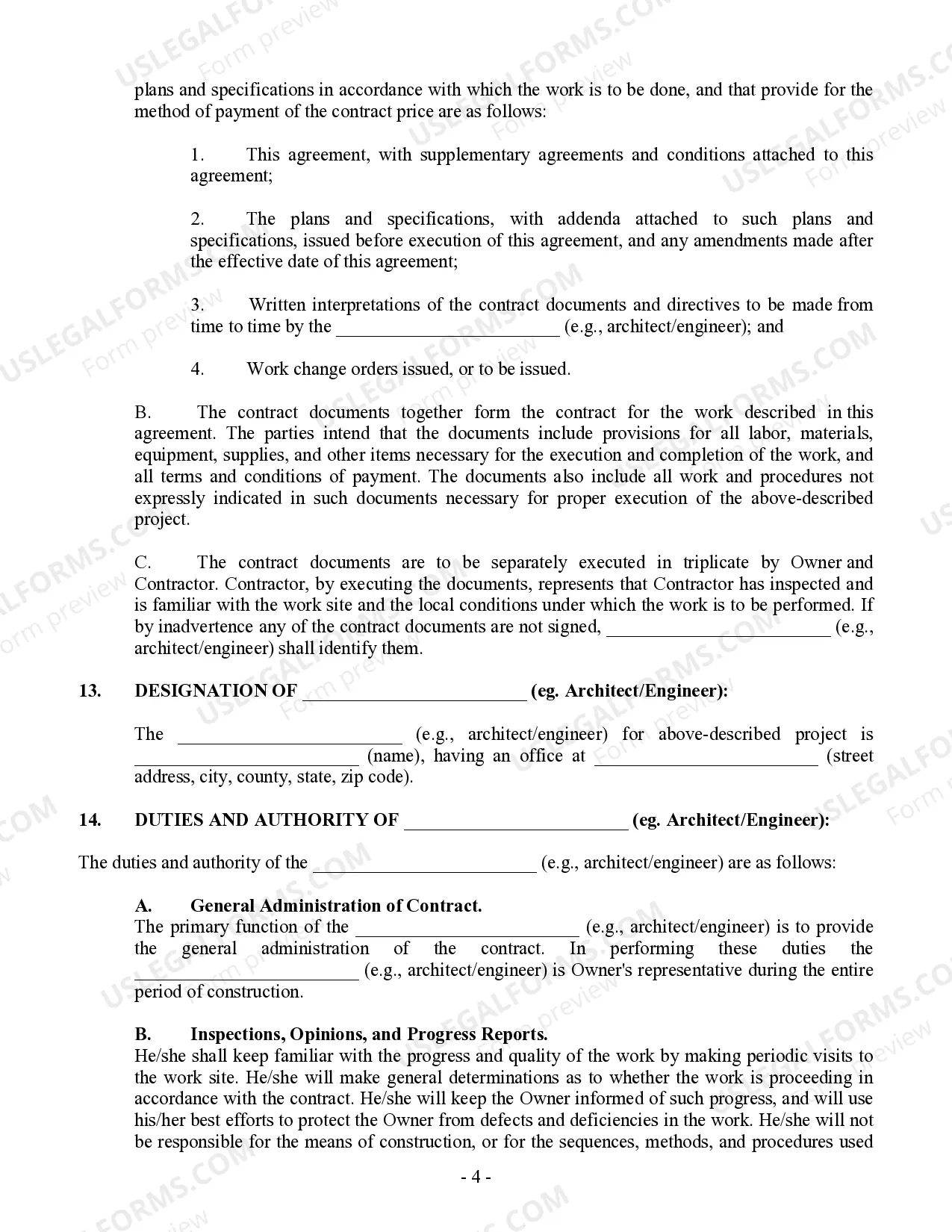
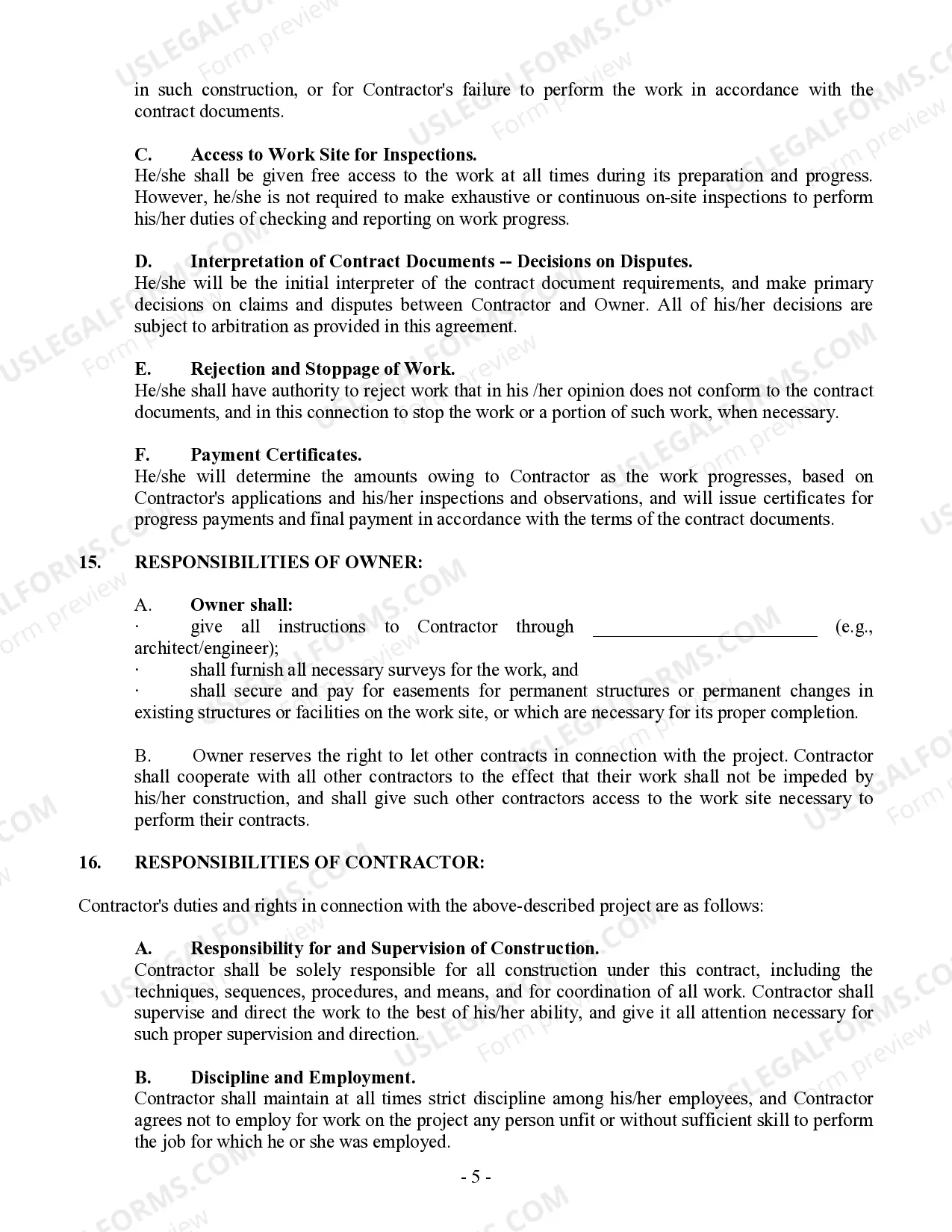
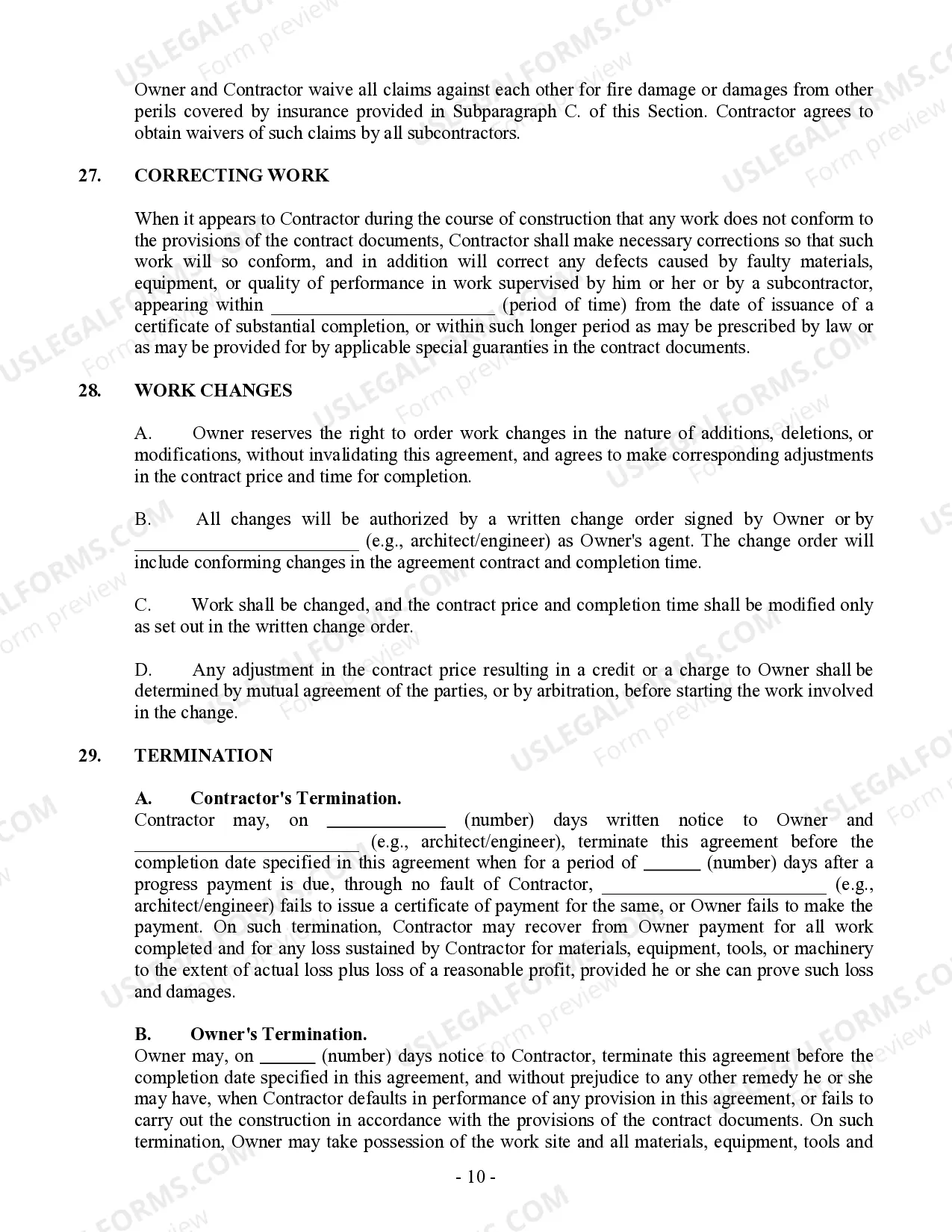
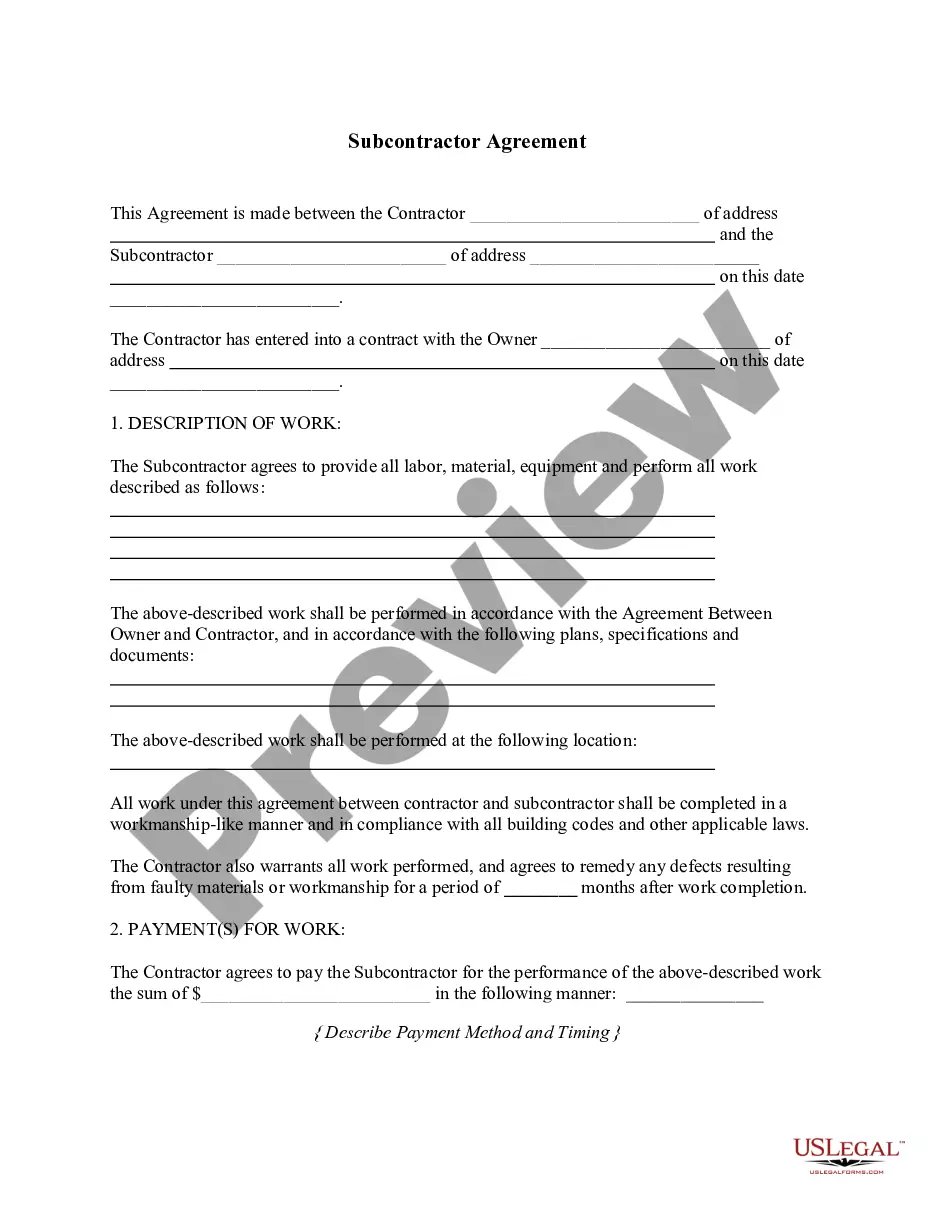
The Commercial Contract for Contractor is a legal document used between commercial contractors and property owners. This contract outlines the rights and responsibilities of both parties, ensuring clarity in payment arrangements and project execution. It is specifically tailored to meet the legal requirements of the State of Tennessee and covers crucial issues such as change orders, work site conditions, warranties, and insurance, making it distinct from other construction contracts by focusing on commercial projects.
Main sections of this form
- Work site details, including property location and conditions.
- Permitting obligations and who bears costs.
- Terms for progress and final payments, including causes for withholding payments.
- Responsibilities of both the contractor and the owner, including duties regarding subcontractors.
- Covenants for warranties and insurance requirements throughout the project's duration.
- Procedures for handling work changes and contract termination.


When to use this form
This form is suitable for commercial projects involving a contractor and property owner. Use this contract when you need to define payment structures (cost plus or fixed fee) and clarify roles and responsibilities for various aspects of a construction project. It is particularly valuable when significant changes in scope or costs may arise, helping to mitigate disputes in these areas.
Who needs this form
- Commercial contractors engaged in building or renovation projects.
- Property owners entering into agreements for construction services.
- Subcontractors involved in projects requiring clear contractual relationships.
- Legal professionals guiding clients in construction agreements.
Completing this form step by step
- Identify the parties involved by entering the full names and addresses of the contractor and the property owner.
- Specify the work site address where the project will take place.
- Outline the payment structure by selecting either cost plus or fixed fee, and include any details relevant to payment schedules.
- Detail the project scope, including any expected change orders and responsibilities regarding permits.
- Ensure both parties sign and date the document to validate the agreement.
Does this form need to be notarized?
This form does not typically require notarization unless specified by local law. It is advisable to verify with local regulations to ensure all legal requirements are met.
Get your form ready online
Our built-in tools help you complete, sign, share, and store your documents in one place.
Make edits, fill in missing information, and update formatting in US Legal Forms—just like you would in MS Word.
Download a copy, print it, send it by email, or mail it via USPS—whatever works best for your next step.
Sign and collect signatures with our SignNow integration. Send to multiple recipients, set reminders, and more. Go Premium to unlock E-Sign.
If this form requires notarization, complete it online through a secure video call—no need to meet a notary in person or wait for an appointment.
We protect your documents and personal data by following strict security and privacy standards.

Make edits, fill in missing information, and update formatting in US Legal Forms—just like you would in MS Word.

Download a copy, print it, send it by email, or mail it via USPS—whatever works best for your next step.

Sign and collect signatures with our SignNow integration. Send to multiple recipients, set reminders, and more. Go Premium to unlock E-Sign.

If this form requires notarization, complete it online through a secure video call—no need to meet a notary in person or wait for an appointment.

We protect your documents and personal data by following strict security and privacy standards.
Avoid these common issues
- Failing to specify the payment terms clearly, leading to disputes later.
- Neglecting to outline the responsibilities for obtaining permits.
- Not addressing potential changes in work scope through formal change orders.
- Omitting signatures from both parties, which can invalidate the contract.
Why complete this form online
- Convenience of filling out the form from anywhere without needing to visit a legal office.
- Editable fields allow for customization to meet the specific needs of your project.
- Reliable templates drafted by licensed attorneys, ensuring compliance with state laws.
- Immediate access to your completed document, expediting the process of securing agreements.
Legal use & context
- This contract is enforceable under Tennessee law, ensuring parties have legal recourse in case of a dispute.
- It includes essential clauses to protect both contractor and owner interests during project execution.
- Highlighting payment conditions helps prevent financial disputes related to construction costs.
Main things to remember
- The Commercial Contract for Contractor is tailored for construction projects in Tennessee.
- It provides crucial details on scope, payment, and responsibilities to minimize disputes.
- Using this form supports compliance with state laws and clear communication between parties.
Looking for another form?
Form popularity
FAQ
The Home Improvement license is required by law to perform remodeling to existing residential homes, where the cost is more than $3,000 to less than $25,000 ($25,000 and up require a "Contractor's" license).
Tennessee. A handyman in Tennessee is not required to hold a state license unless the job they are working on is worth more than $25,000. A home improvement license is required for remodeling jobs worth between $3,000 and $24,999.
Step 1 (Testing - Exam and Reciprocal Information) All must pass the "Business and Law" exam Step 2 (Financial Statement) Step 3 (Reference Letter and Insurance) Step 4 (Corporations. Step 5 (Application, Signatures, and Notarize) Step 6 (Submit Application & $250 fee)
A Tennessee contractor's license is required BEFORE bidding or offering a price, for projects $25,000 and up (includes materials and labor), as a prime (general) contractor; and also subcontractors performing electrical, mechanical, plumbing, HVAC, roofing and masonry are also required to be licensed as a contractor,
A homeowner of the residential property may perform work themselves ( individual use), without a contractor's license, as long as the residential structure is not open to the public; or for sale, lease or rent). Allowed one homeowner permit once every two (2) years.
A contract is a legally binding document that details the expectations and responsibilities of all parties involved in a home improvement project. It clarifies the goals of both homeowner and contractor, and it protects each party's rights regarding the project.
A Tennessee contractor's license is required BEFORE bidding or offering a price, for projects $25,000 and up (includes materials and labor), as a prime (general) contractor; and also subcontractors performing electrical, mechanical, plumbing, HVAC, roofing and masonry are also required to be licensed as a contractor,