Garnishment Vs Income Withholding Order
Description
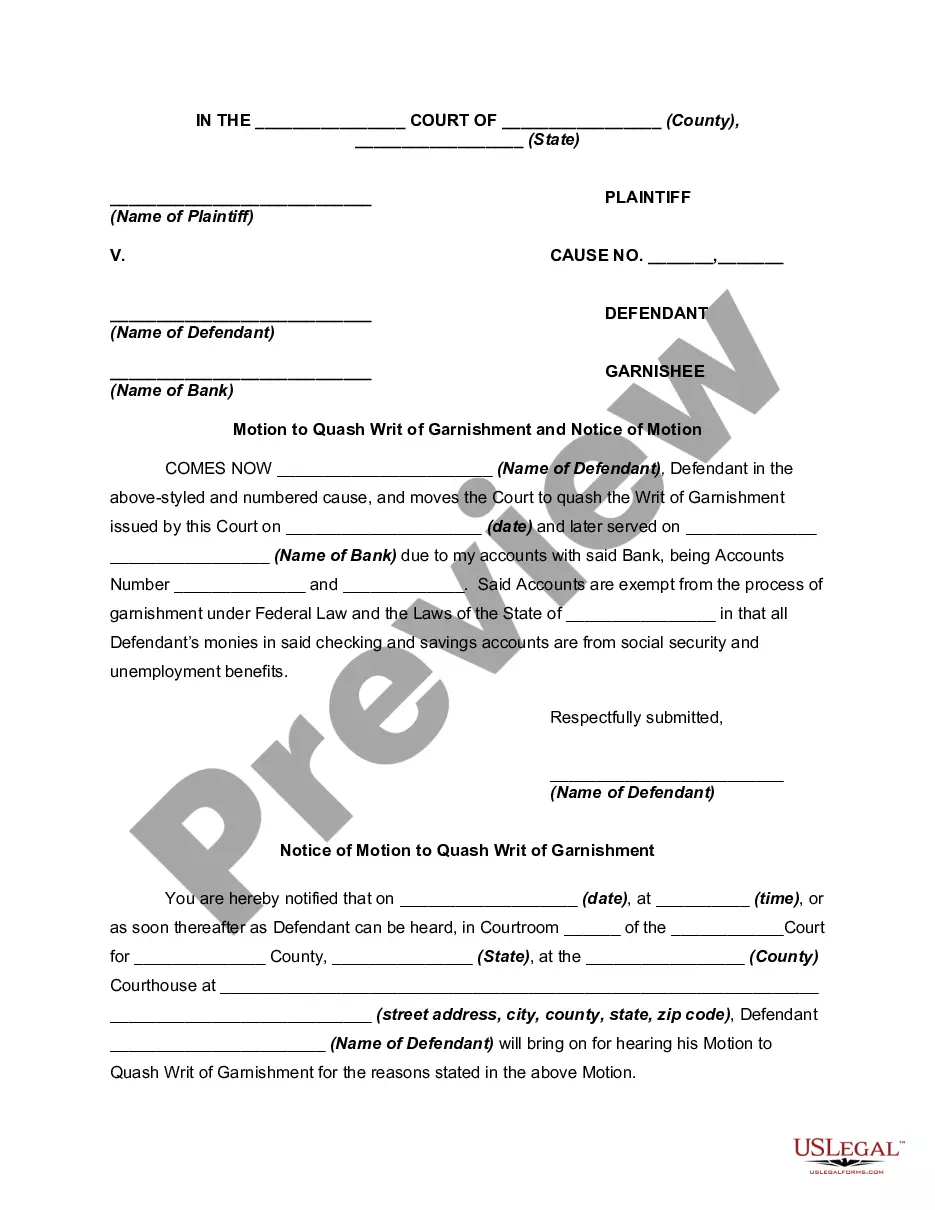
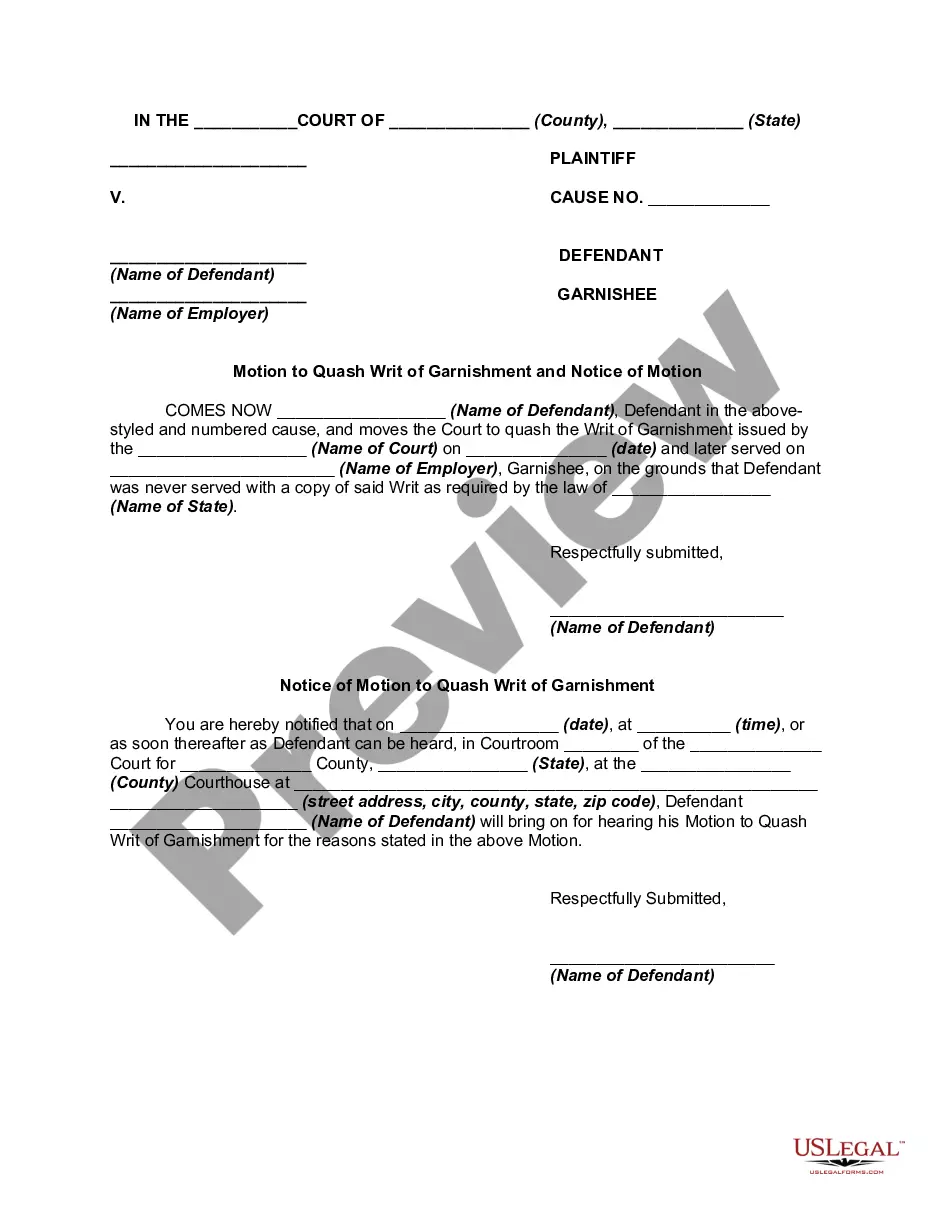
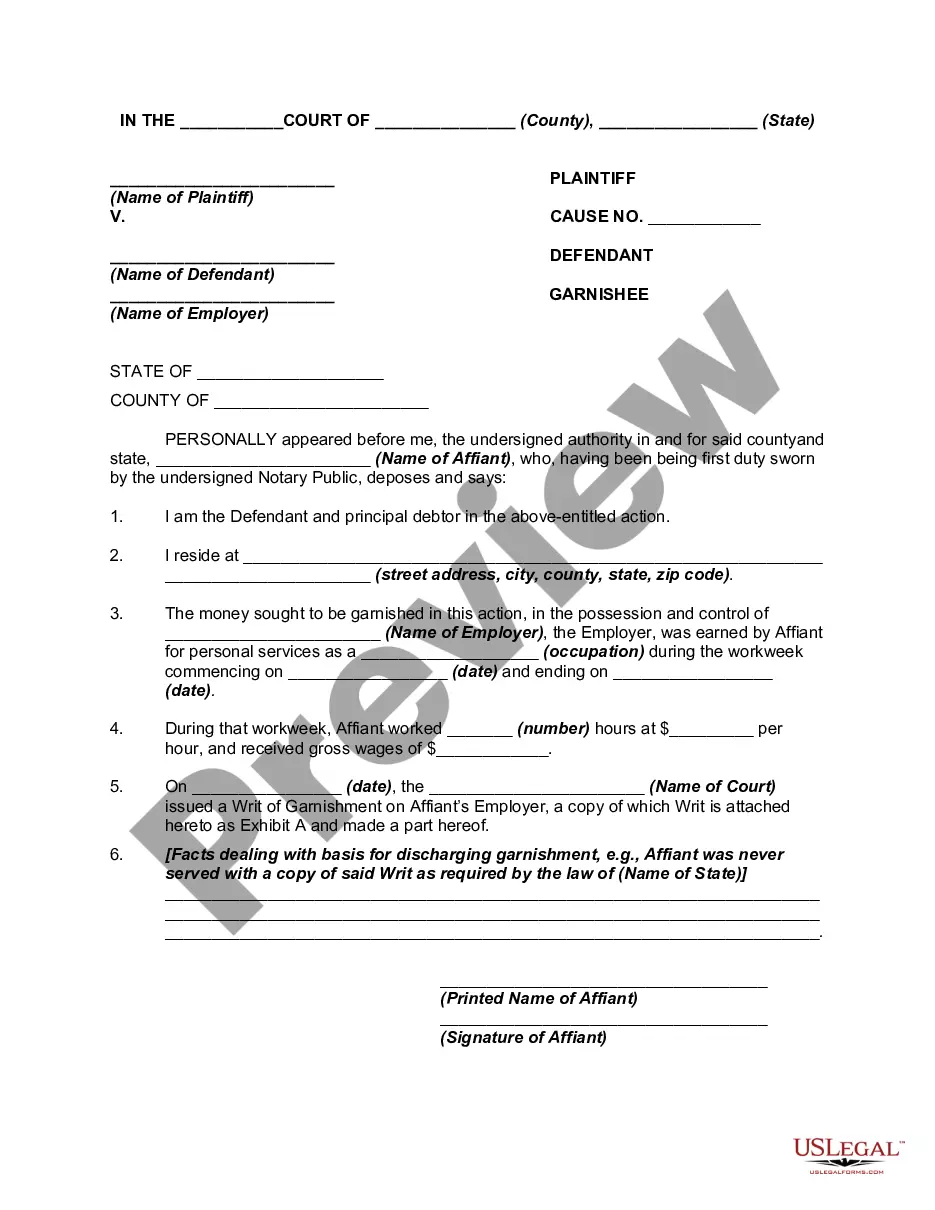
Get your form ready online
Our built-in tools help you complete, sign, share, and store your documents in one place.
Make edits, fill in missing information, and update formatting in US Legal Forms—just like you would in MS Word.
Download a copy, print it, send it by email, or mail it via USPS—whatever works best for your next step.
Sign and collect signatures with our SignNow integration. Send to multiple recipients, set reminders, and more. Go Premium to unlock E-Sign.
If this form requires notarization, complete it online through a secure video call—no need to meet a notary in person or wait for an appointment.
We protect your documents and personal data by following strict security and privacy standards.

Make edits, fill in missing information, and update formatting in US Legal Forms—just like you would in MS Word.

Download a copy, print it, send it by email, or mail it via USPS—whatever works best for your next step.

Sign and collect signatures with our SignNow integration. Send to multiple recipients, set reminders, and more. Go Premium to unlock E-Sign.

If this form requires notarization, complete it online through a secure video call—no need to meet a notary in person or wait for an appointment.

We protect your documents and personal data by following strict security and privacy standards.
Looking for another form?






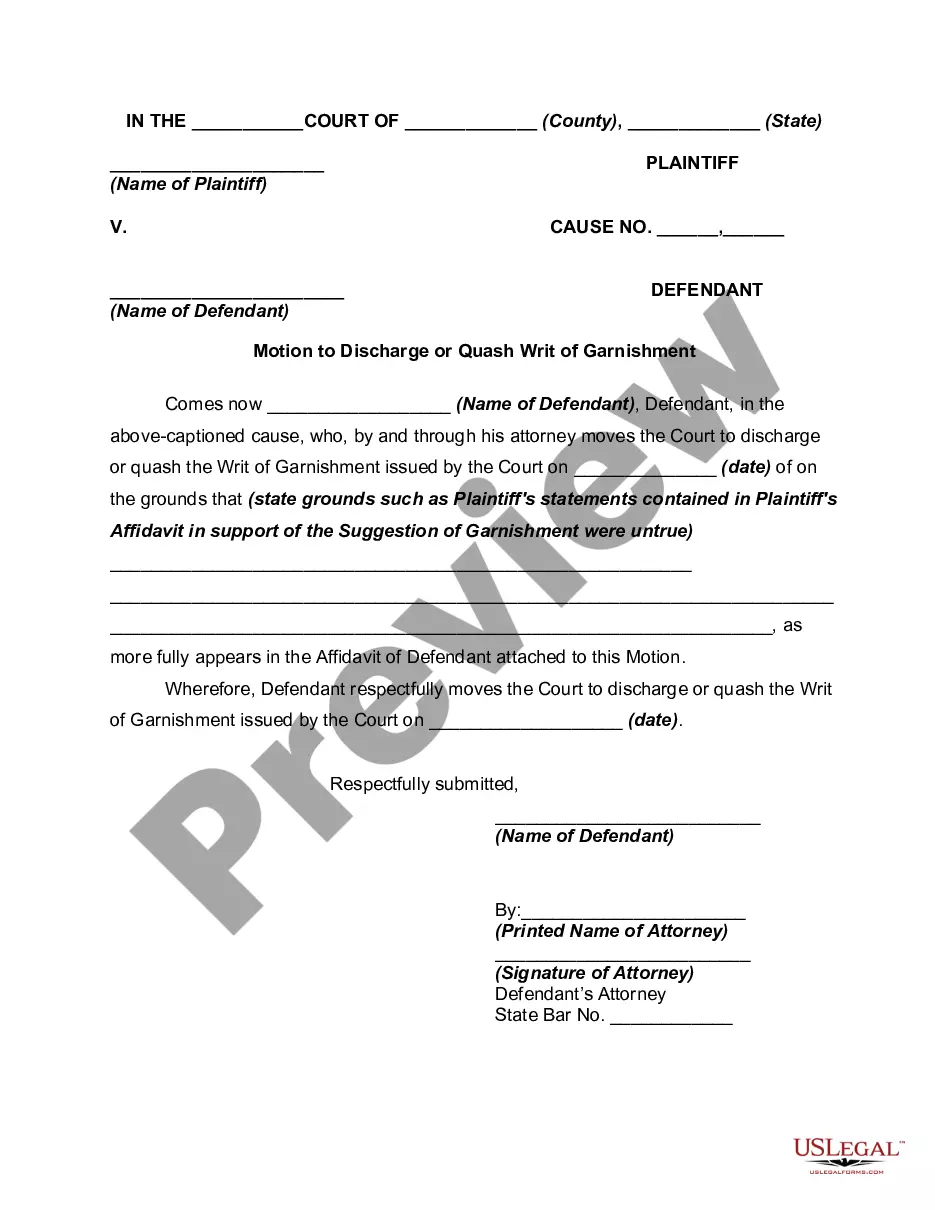
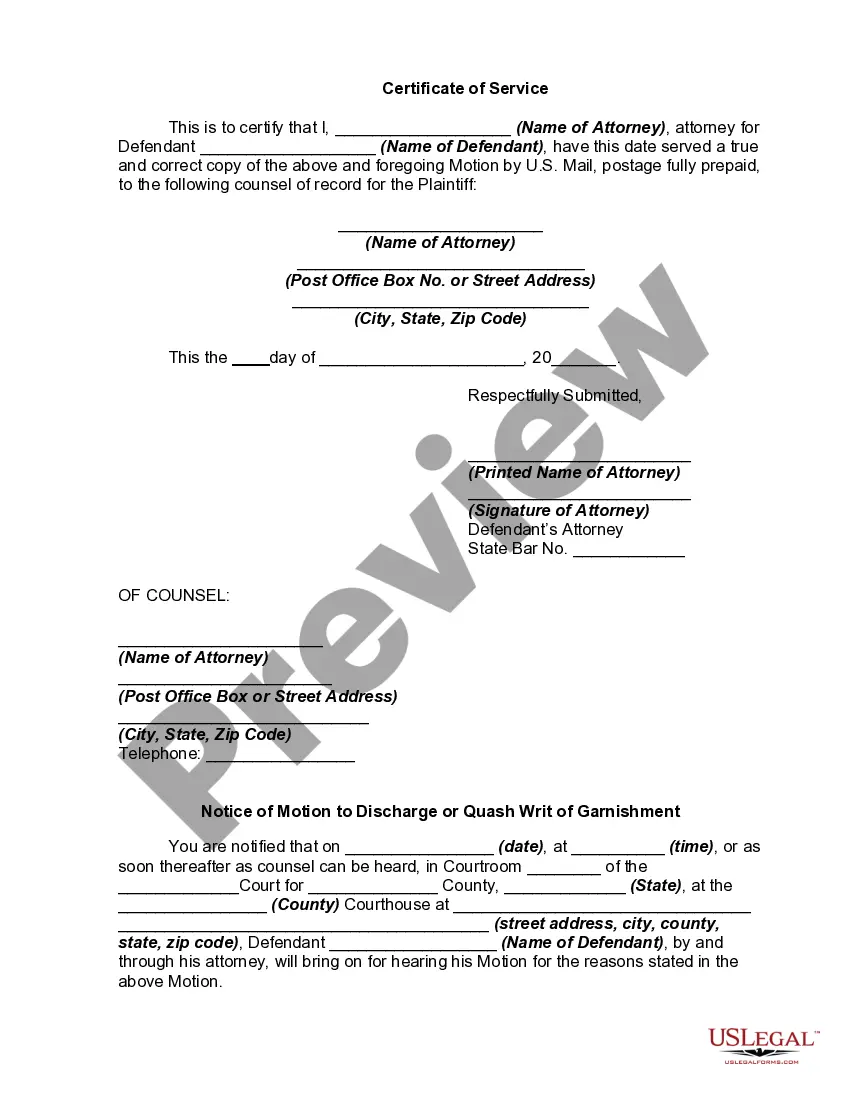
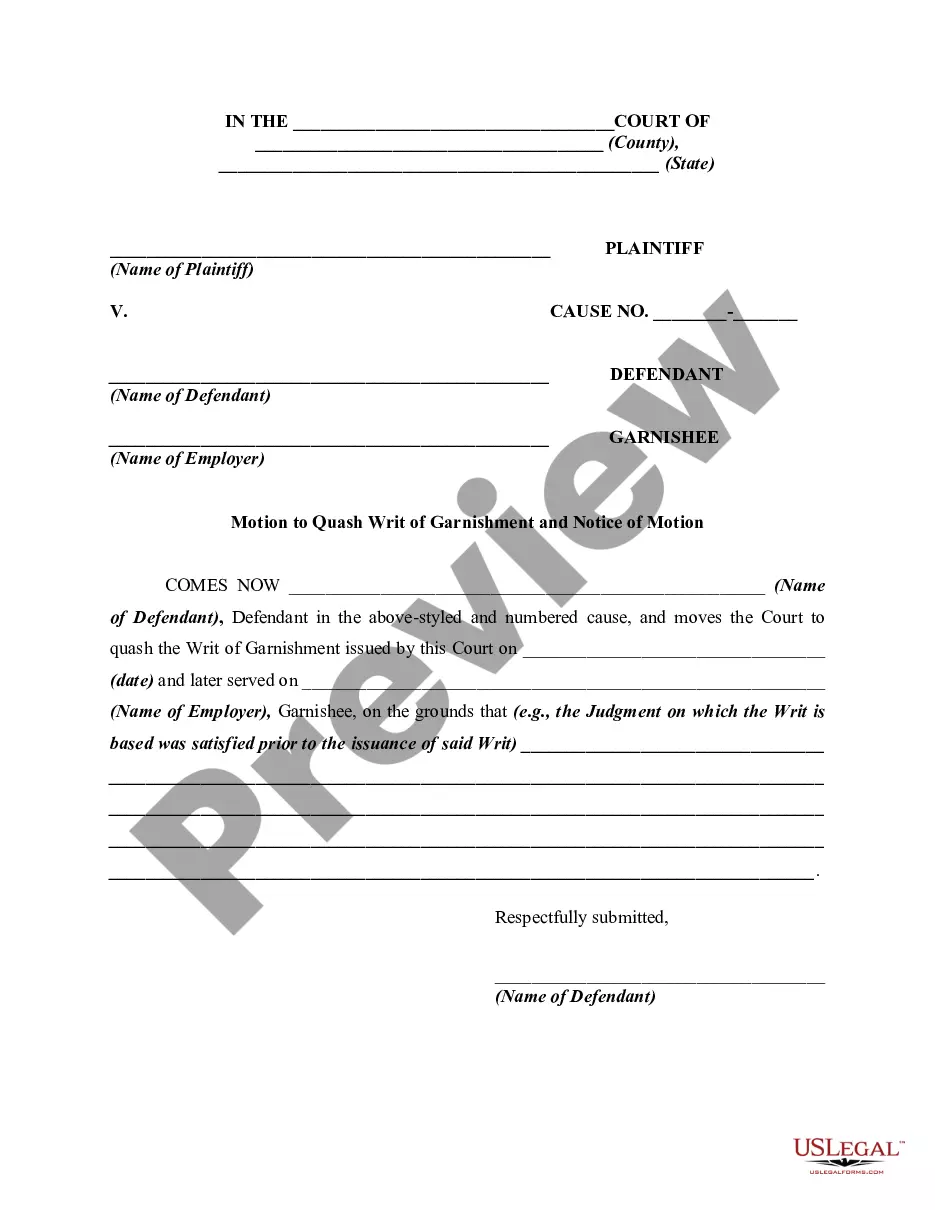
How to fill out Motion To Discharge Or Quash Writ Of Garnishment?
Handling legal documents and procedures can be a lengthy addition to your daily schedule.
Garnishment versus Income Withholding Order and similar forms generally require you to locate them and figure out how to fill them out correctly.
For this reason, regardless of whether you are managing financial, legal, or personal issues, having an extensive and user-friendly online repository of forms readily available will greatly assist you.
US Legal Forms is the leading online source of legal documents, featuring over 85,000 state-specific forms along with various tools that facilitate the effortless completion of your paperwork.
Simply Log In to your account, find Garnishment versus Income Withholding Order, and download it directly from the My documents section. You can also access forms you have saved previously.
- Explore the collection of relevant documents available with just a click.
- US Legal Forms offers state- and county-specific forms accessible at any time for download.
- Protect your document management processes with top-tier support that allows you to create any form in minutes without extra or hidden fees.
Form popularity
FAQ
The key difference is that a garnishment is used to allow creditors to contact your employer and take part of your wages from your paycheck, while a levy permits a creditor to withdraw funds from your bank account directly.
The IWO is the OMB-approved form (PDF) used for income withholding in tribal, intrastate, and interstate cases as well as all child support orders that were initially issued in the state on or after January 1, 1994, and all child support orders that were initially issued (or modified) in the state before January 1, ...
The EDD may issue an earnings withholding order to your employer for benefit overpayments if a summary judgment was filed. Your employer may withhold up to 20 percent of your wages and is required to submit the amount withheld to the EDD to comply with the order.
Paycheck deductions are amounts withheld from a worker's regular paycheck, often for things such as approved pension contributions or health care expenses. Wage garnishment allows a creditor who obtains a court order to require your employer to set aside part of your paycheck and send this directly to your creditor.
An earnings withholding order is a court-ordered legal document. It requires an employer to withhold up to 25 percent of an employee's wages. This money is paid to a creditor until the employee pays off their debt.