Distribution Of Assets Upon Dissolution
Description
Get your form ready online
Our built-in tools help you complete, sign, share, and store your documents in one place.
Make edits, fill in missing information, and update formatting in US Legal Forms—just like you would in MS Word.
Download a copy, print it, send it by email, or mail it via USPS—whatever works best for your next step.
Sign and collect signatures with our SignNow integration. Send to multiple recipients, set reminders, and more. Go Premium to unlock E-Sign.
If this form requires notarization, complete it online through a secure video call—no need to meet a notary in person or wait for an appointment.
We protect your documents and personal data by following strict security and privacy standards.

Make edits, fill in missing information, and update formatting in US Legal Forms—just like you would in MS Word.

Download a copy, print it, send it by email, or mail it via USPS—whatever works best for your next step.

Sign and collect signatures with our SignNow integration. Send to multiple recipients, set reminders, and more. Go Premium to unlock E-Sign.

If this form requires notarization, complete it online through a secure video call—no need to meet a notary in person or wait for an appointment.

We protect your documents and personal data by following strict security and privacy standards.
Looking for another form?









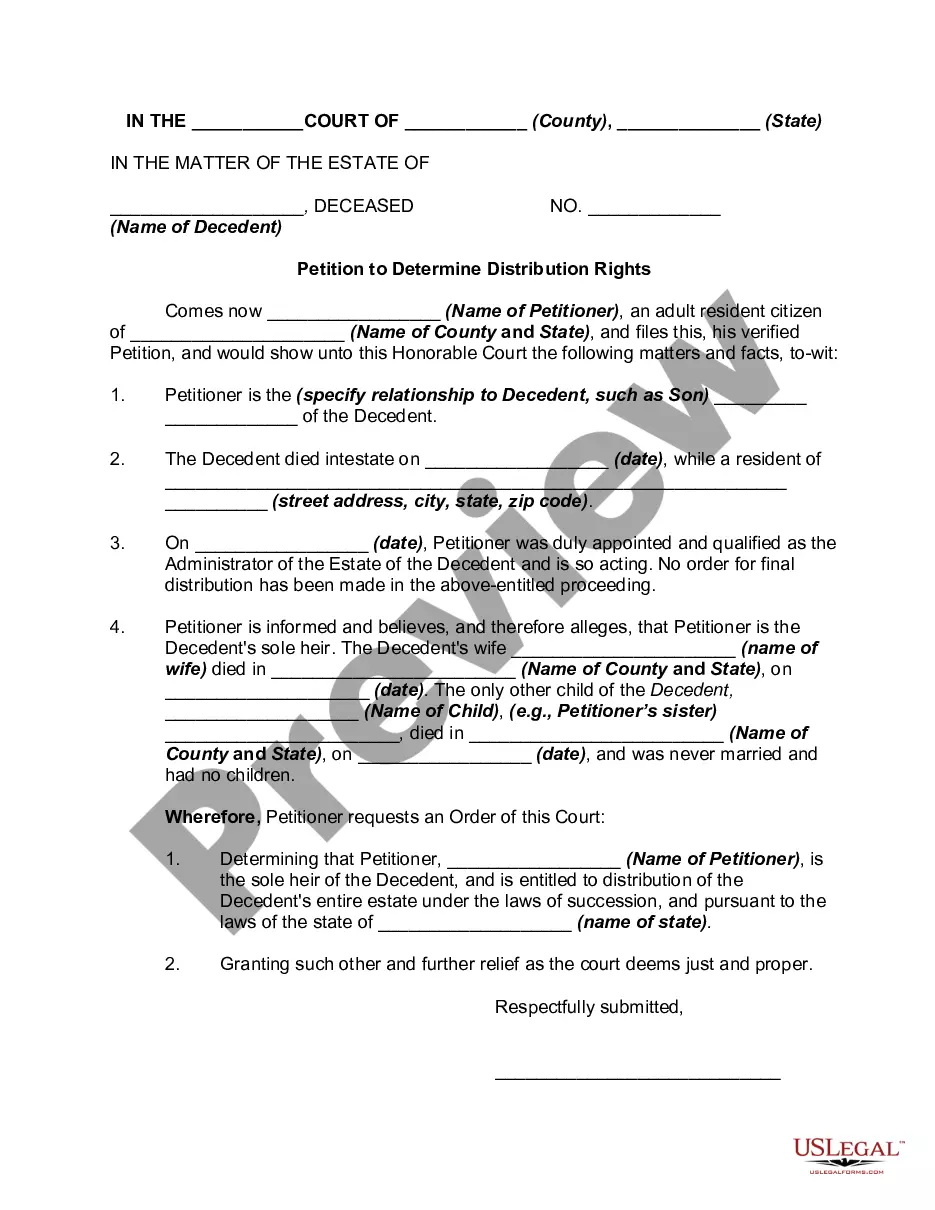
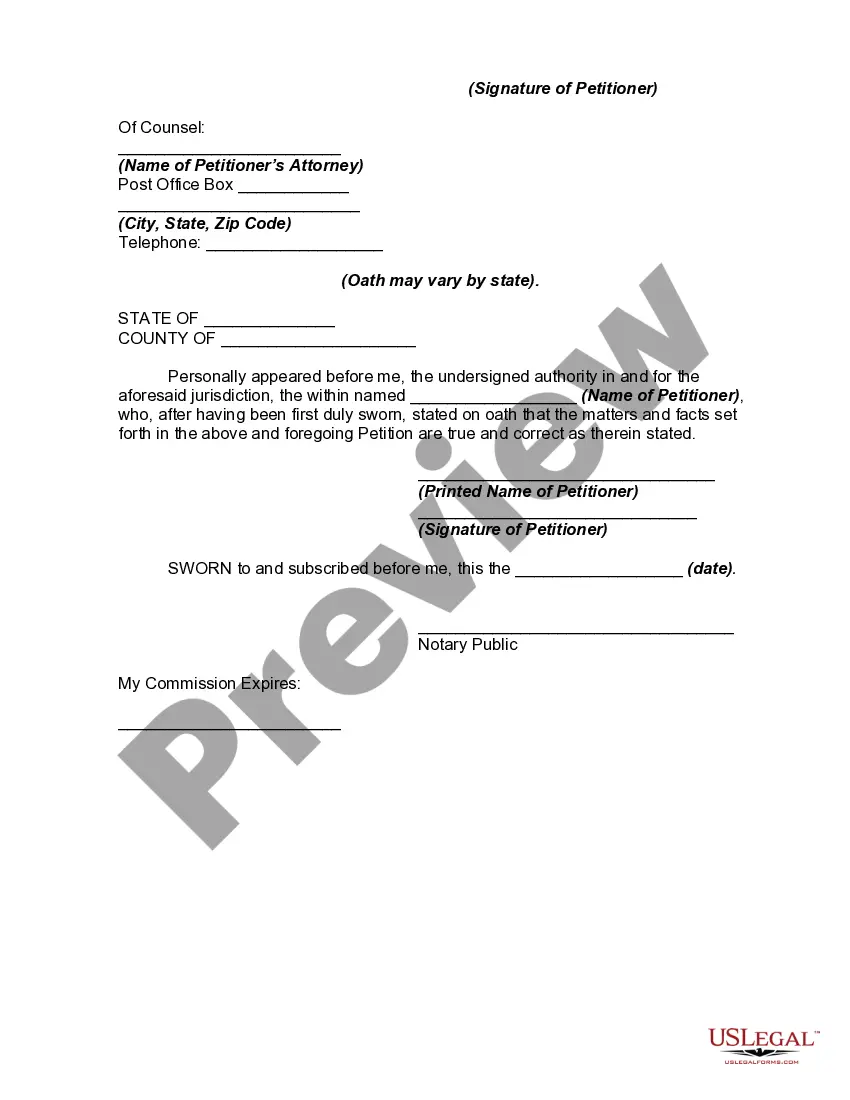
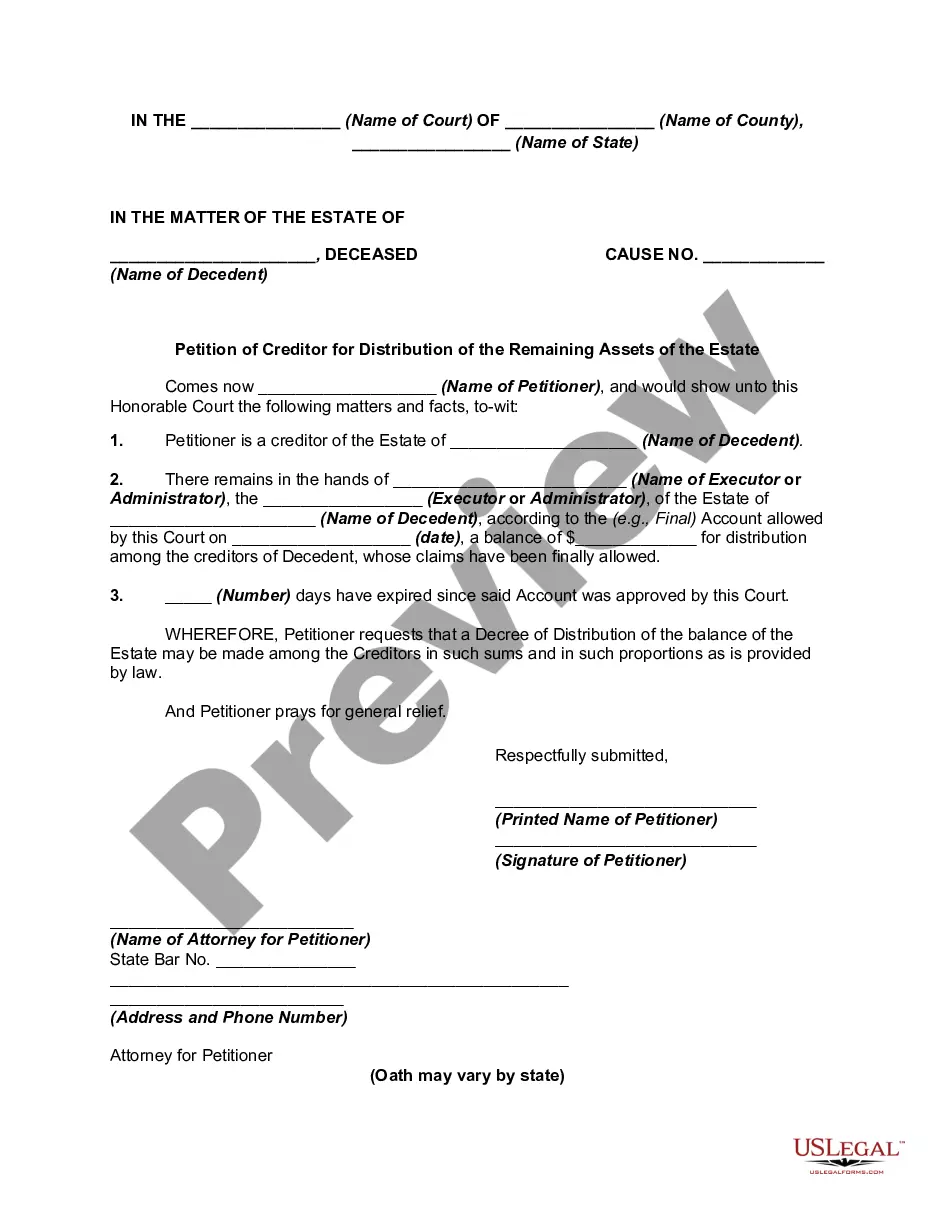
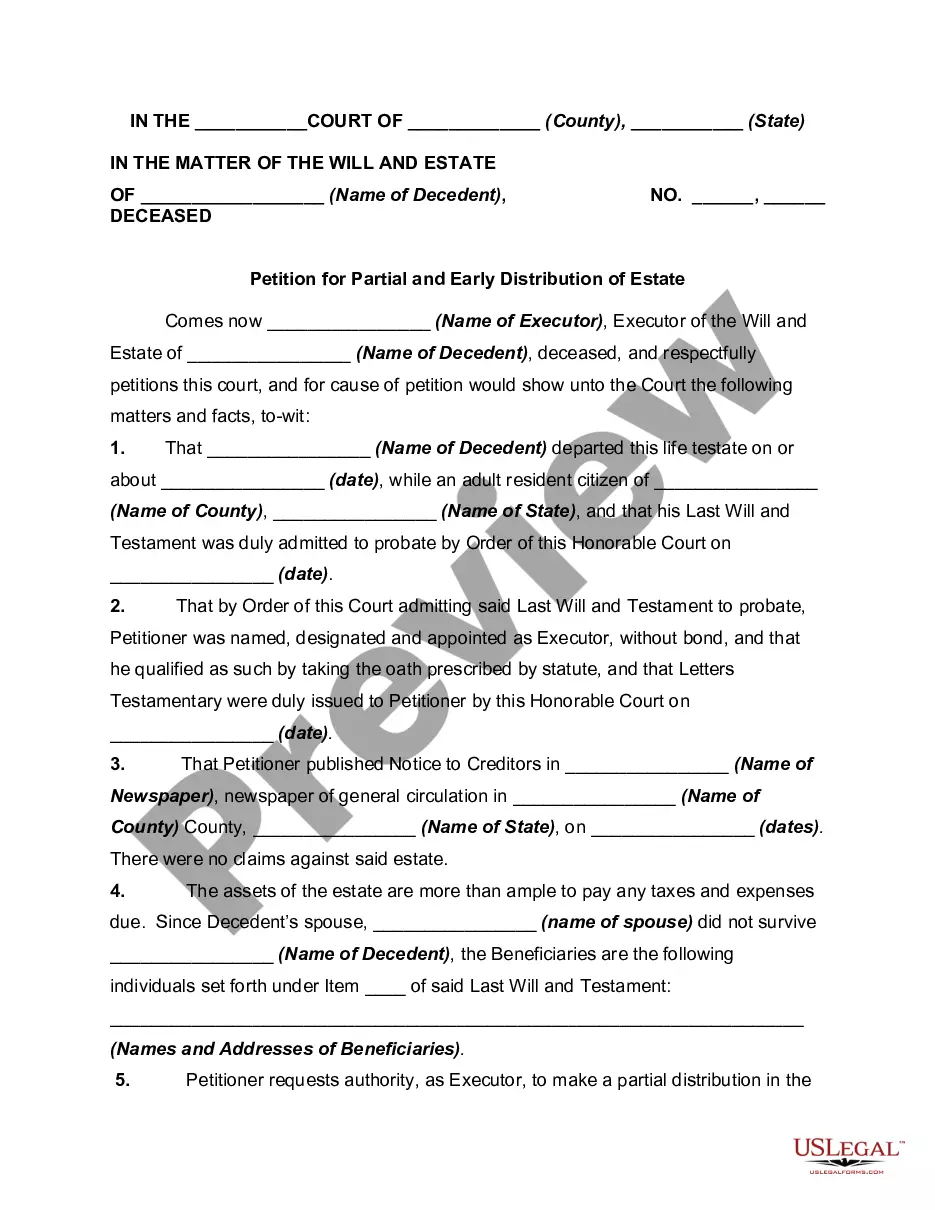
How to fill out Petition To Determine Distribution Rights Of The Assets Of A Decedent?
It’s widely acknowledged that you cannot transform into a legal expert instantly, nor can you quickly comprehend how to efficiently prepare Distribution Of Assets Upon Dissolution without a specialized background.
Compiling legal documents is a lengthy endeavor that necessitates specific training and expertise. So why not leave the task of preparing the Distribution Of Assets Upon Dissolution to the professionals.
With US Legal Forms, one of the broadest legal template collections, you can discover everything from court documents to templates for internal corporate communication.
If you require a different template, begin your search again.
Create a free account and select a subscription plan to purchase the form. Choose Buy now. Once the payment is completed, you can download the Distribution Of Assets Upon Dissolution, fill it out, print it, and send or mail it to the specified individuals or organizations.
- We recognize the importance of compliance and adherence to federal and state laws and regulations.
- That’s why, on our website, all templates are location-specific and current.
- Here’s how to start on our website and obtain the form you need in just minutes.
- Find the document you need using the search bar at the top of the page.
- Preview it (if this option is available) and read the supporting description to determine if Distribution Of Assets Upon Dissolution is what you’re searching for.
Form popularity
FAQ
The distribution of assets upon dissolution of a partnership involves several steps. First, all liabilities must be settled. After paying off debts, remaining assets are divided among partners according to their ownership percentages, unless the partnership agreement states otherwise. This process ensures fairness and transparency among partners, preventing disputes.
The distribution of assets upon dissolution for a nonprofit organization follows specific regulations. Typically, any remaining assets must be distributed to another nonprofit with a similar mission or purpose. This ensures that the assets continue to serve the community, thereby fulfilling the nonprofit's original intent, even after dissolution.
When a general partnership dissolves, the distribution of assets upon dissolution follows a specific order. First, all debts and liabilities of the partnership must be settled. Next, any remaining assets are distributed to the partners based on their respective ownership interests. Following this order ensures that the distribution is fair and legally compliant.
When a general partnership dissolves, the distribution of assets upon dissolution follows specific guidelines. First, all debts and obligations of the partnership must be settled. After that, any remaining assets are distributed among the partners based on their ownership interests, as outlined in the partnership agreement. Utilizing resources like UsLegalForms can streamline the process, ensuring a smooth transition and compliance with relevant laws.
Upon dissolution, assets must be liquidated or sold to fulfill outstanding debts and obligations of the business. After settling liabilities, the distribution of assets upon dissolution occurs, where remaining assets are divided among the partners or shareholders. This ensures that all parties receive their fair share in accordance with their agreements. For those seeking clarity on this process, US Legal Forms provides valuable templates and guidance.
The distribution of assets in a dissolution of partnership involves dividing the partnership's assets among partners based on their partnership agreement and contributions. Typically, liabilities are settled first, and any remaining assets are distributed according to the partners' ownership percentages. Understanding this process is crucial to ensure fair treatment among partners during dissolution. When you utilize US Legal Forms, you gain access to resources that can guide you through this complex procedure.
Must the employer keep the job open until I return? Although the Workers' Compensation Law provides that an employer cannot discharge or discriminate against you for exercising your rights under the Workers' Compensation Law, there is no specific requirement that an employer keep a job open while you are off work.
Generally, most Arizona employees traveling to or from work aren't eligible for workers' compensation under the ?coming-and-going rule.? This rule basically means that a worker going to or coming from work is not being paid during this time and the traveling isn't considered in the ?course of employment.? Therefore any ...
Arkansas Workers' Compensation Commission. Insurance Requirements: Most employers in Arkansas with three or more employees are required by law to have Workers' Compensation insurance coverage for their employees.
In general, the going and coming rule hinders a claimant from receiving workers' compensation benefits for an injury sustained while going to or returning to their place of employment. Compensation is not available if the injured worker did not perform employment services at the time of the accident.