Qtip Principal Donors Death Statement For 202
Description
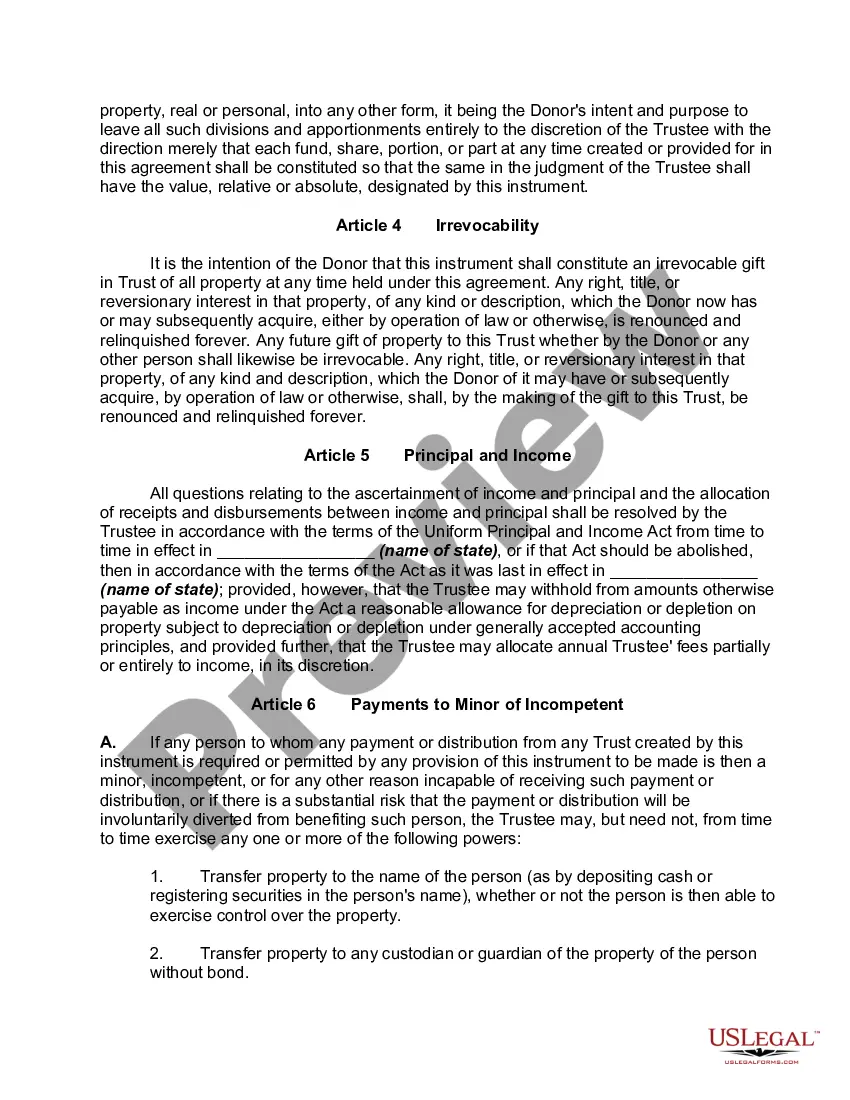
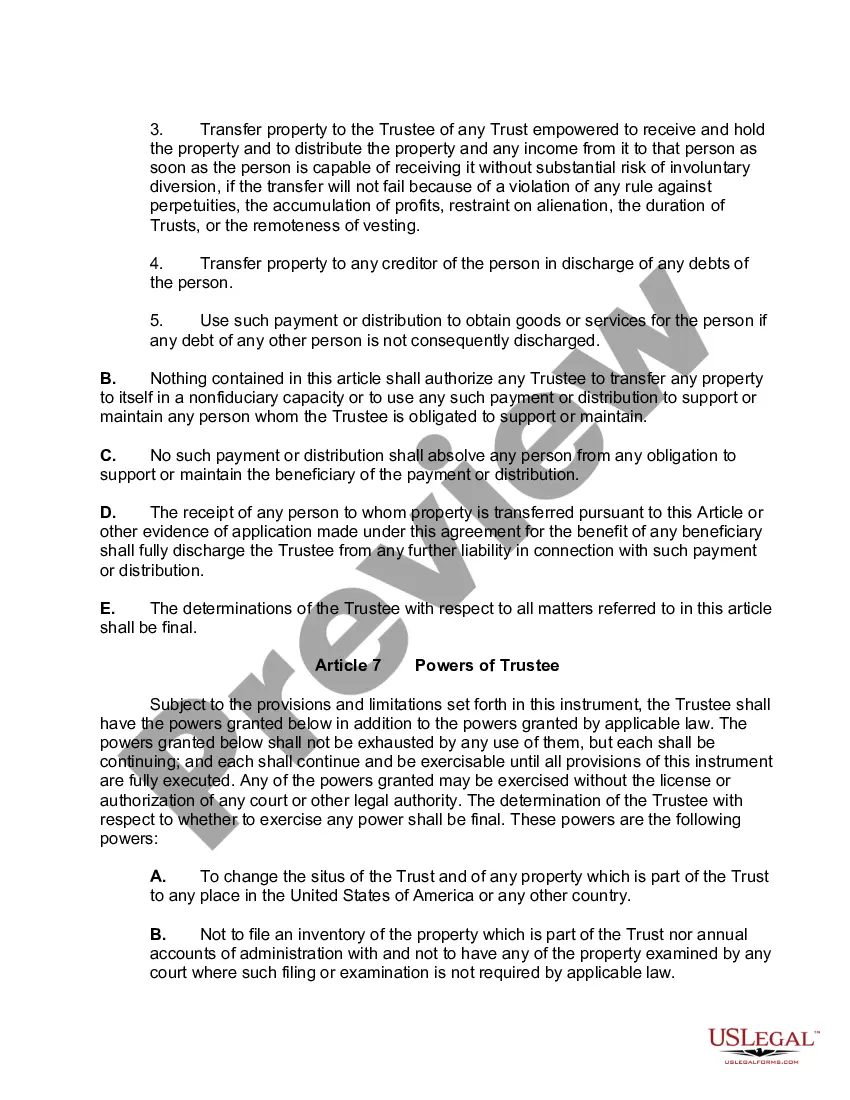
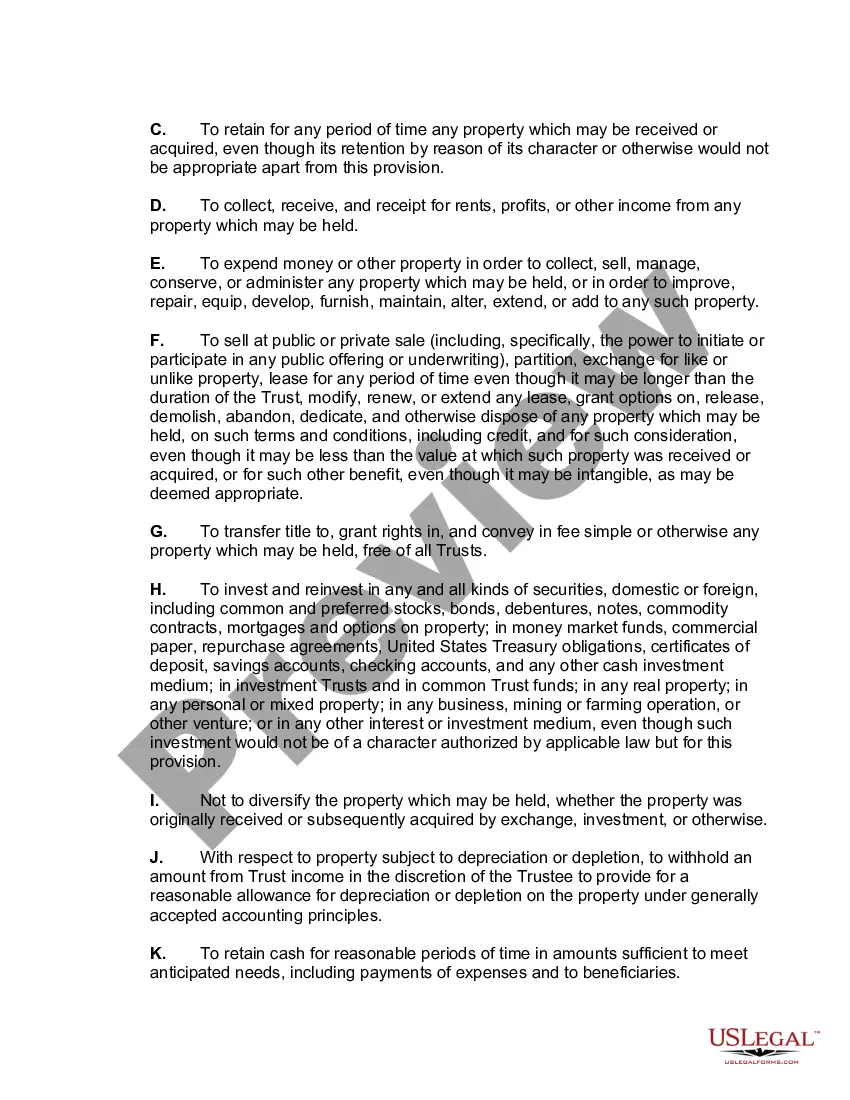
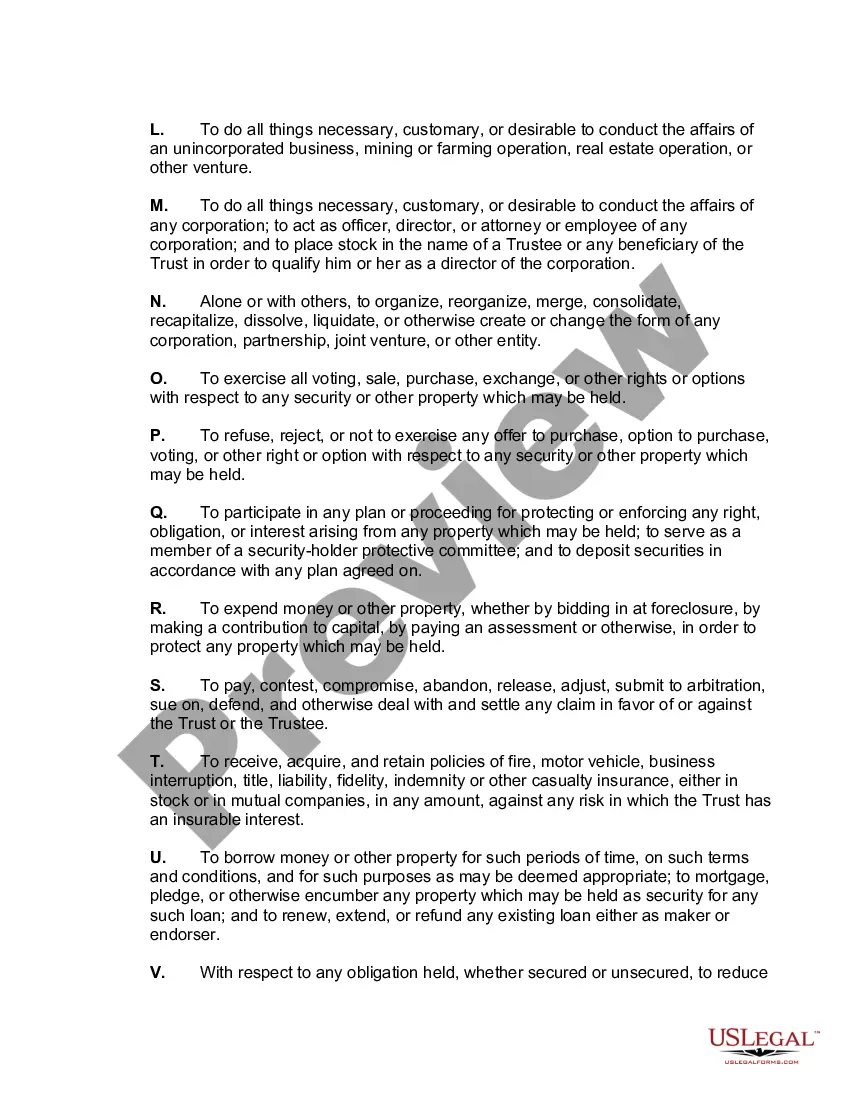

Get your form ready online
Our built-in tools help you complete, sign, share, and store your documents in one place.
Make edits, fill in missing information, and update formatting in US Legal Forms—just like you would in MS Word.
Download a copy, print it, send it by email, or mail it via USPS—whatever works best for your next step.
Sign and collect signatures with our SignNow integration. Send to multiple recipients, set reminders, and more. Go Premium to unlock E-Sign.
If this form requires notarization, complete it online through a secure video call—no need to meet a notary in person or wait for an appointment.
We protect your documents and personal data by following strict security and privacy standards.

Make edits, fill in missing information, and update formatting in US Legal Forms—just like you would in MS Word.

Download a copy, print it, send it by email, or mail it via USPS—whatever works best for your next step.

Sign and collect signatures with our SignNow integration. Send to multiple recipients, set reminders, and more. Go Premium to unlock E-Sign.

If this form requires notarization, complete it online through a secure video call—no need to meet a notary in person or wait for an appointment.

We protect your documents and personal data by following strict security and privacy standards.
Looking for another form?
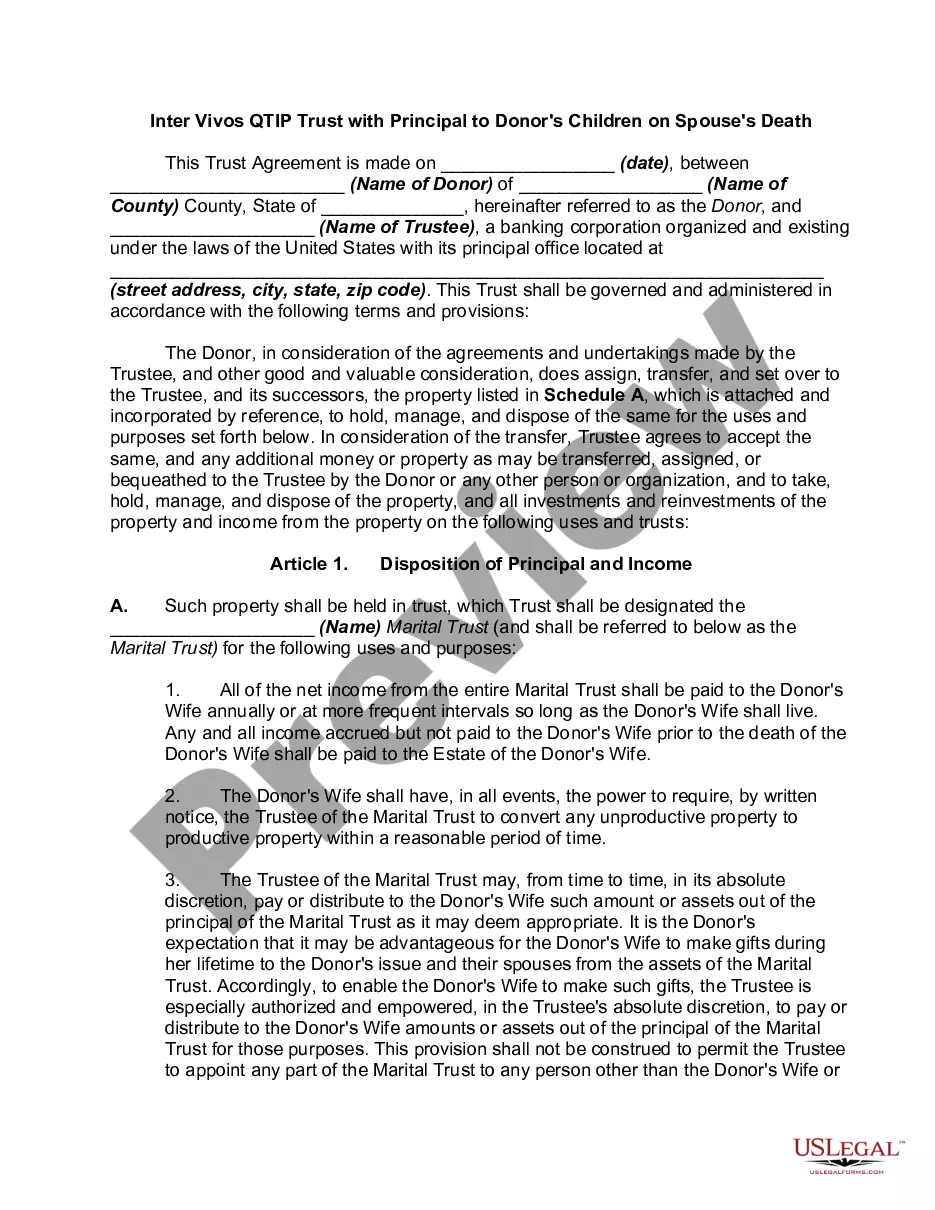
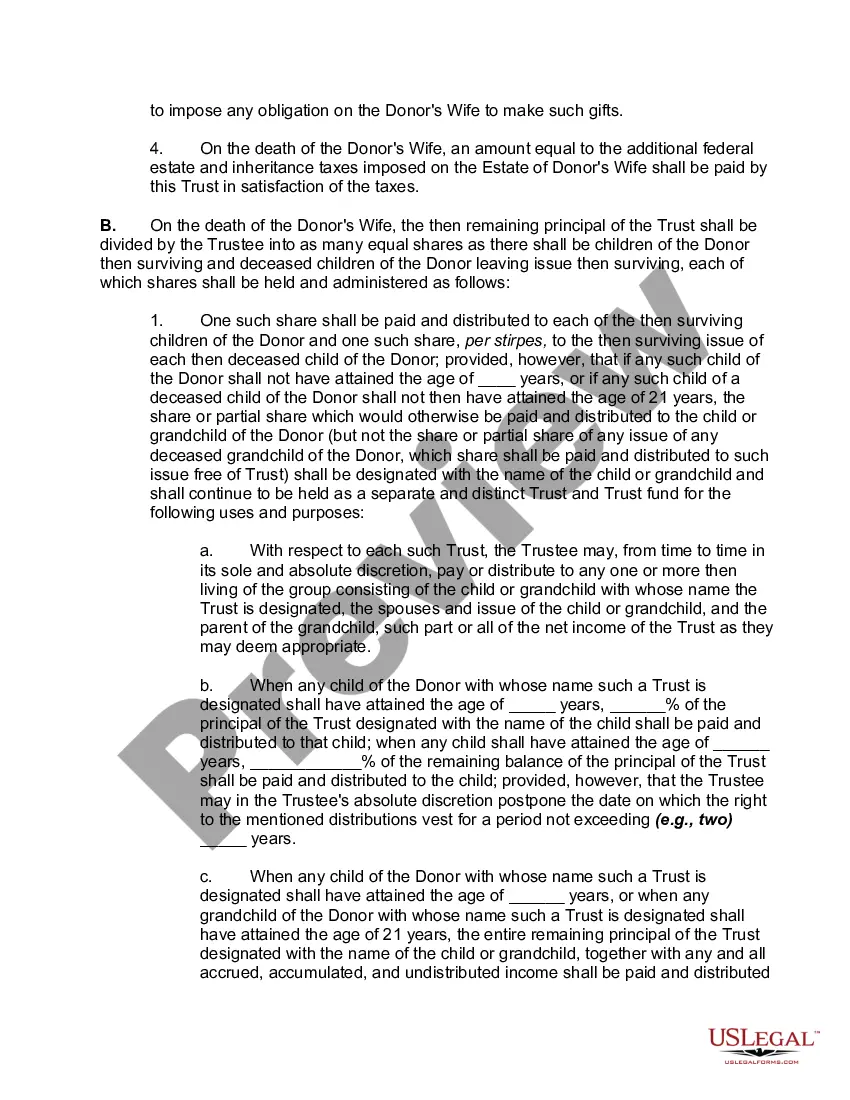
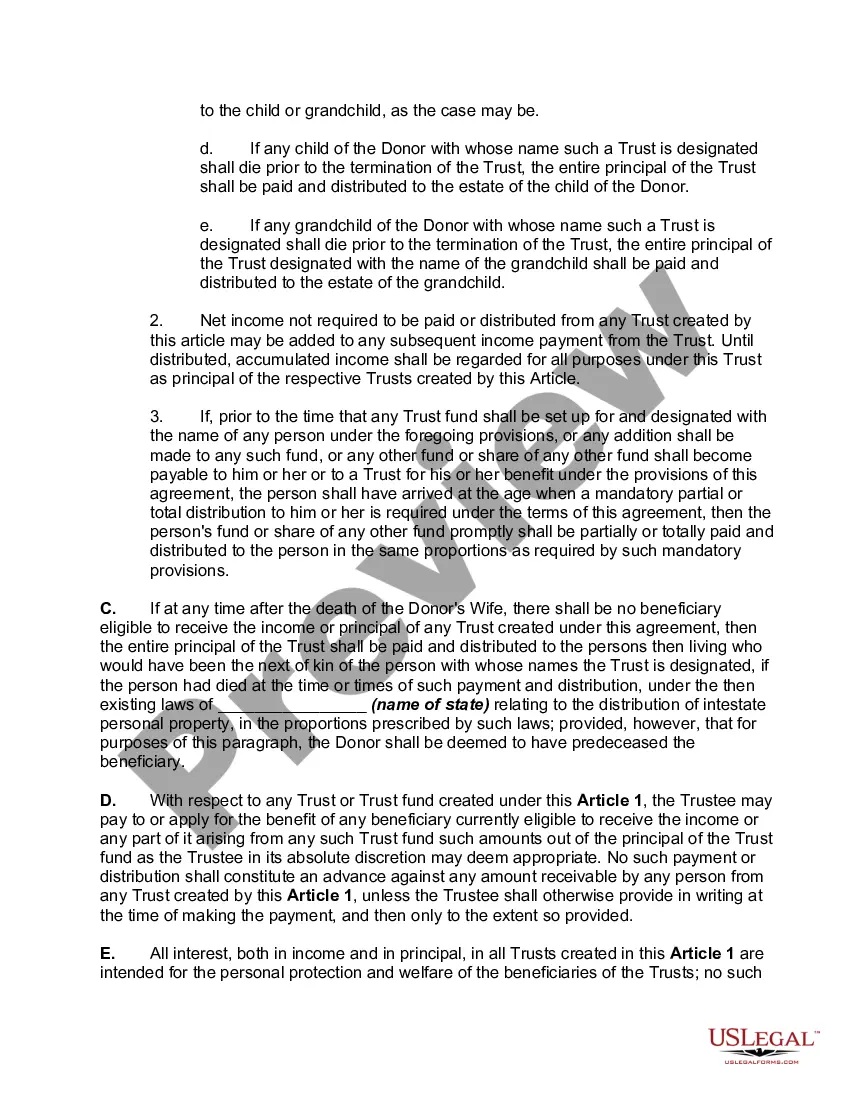
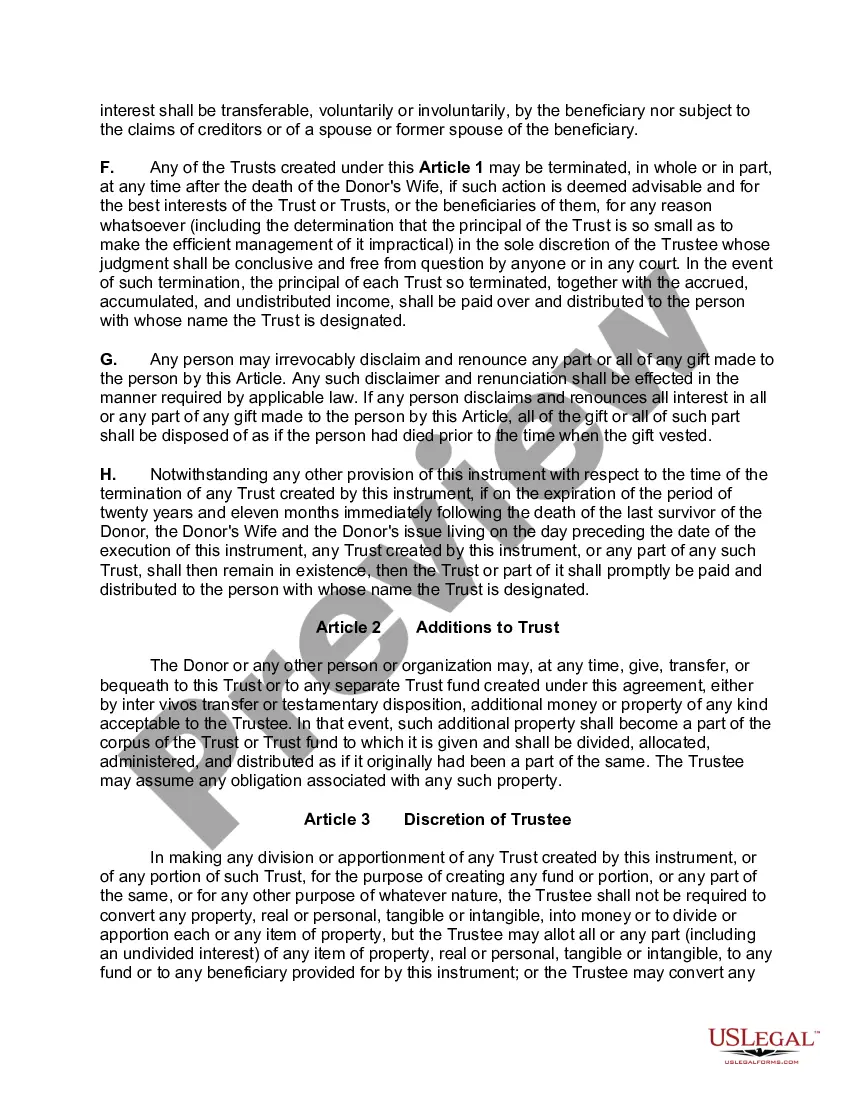
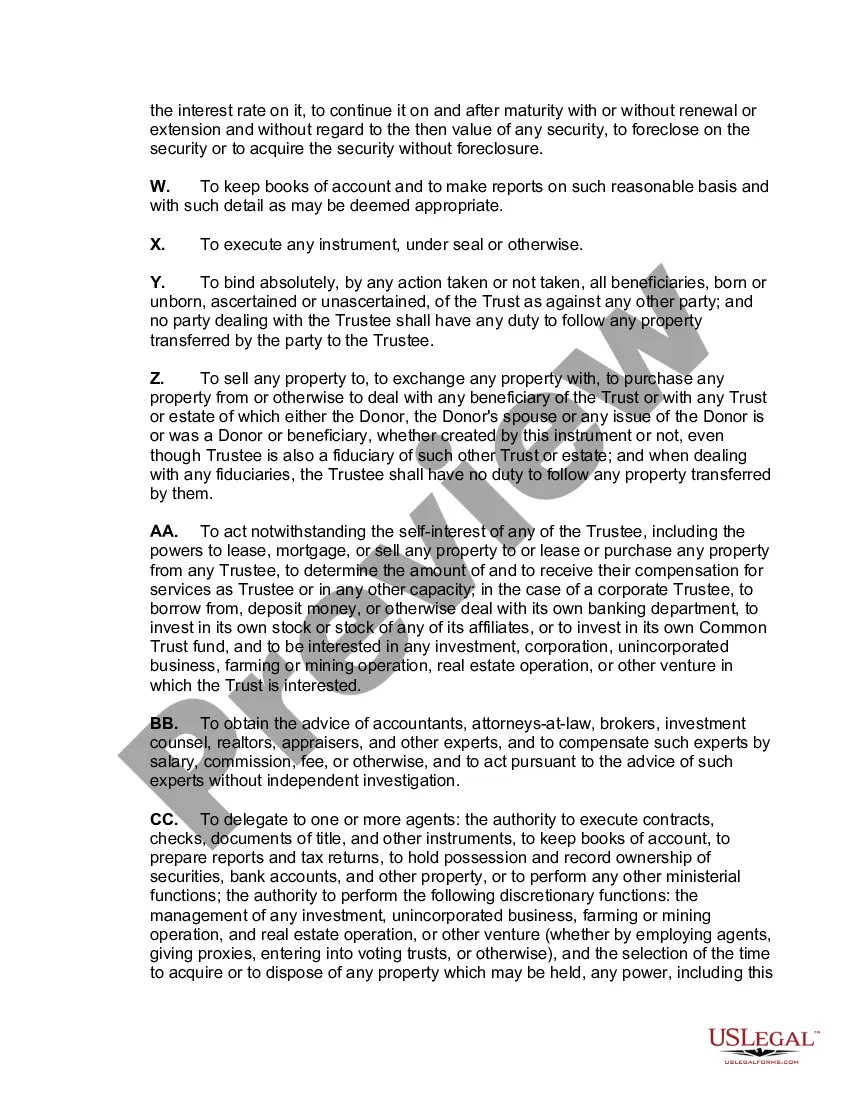
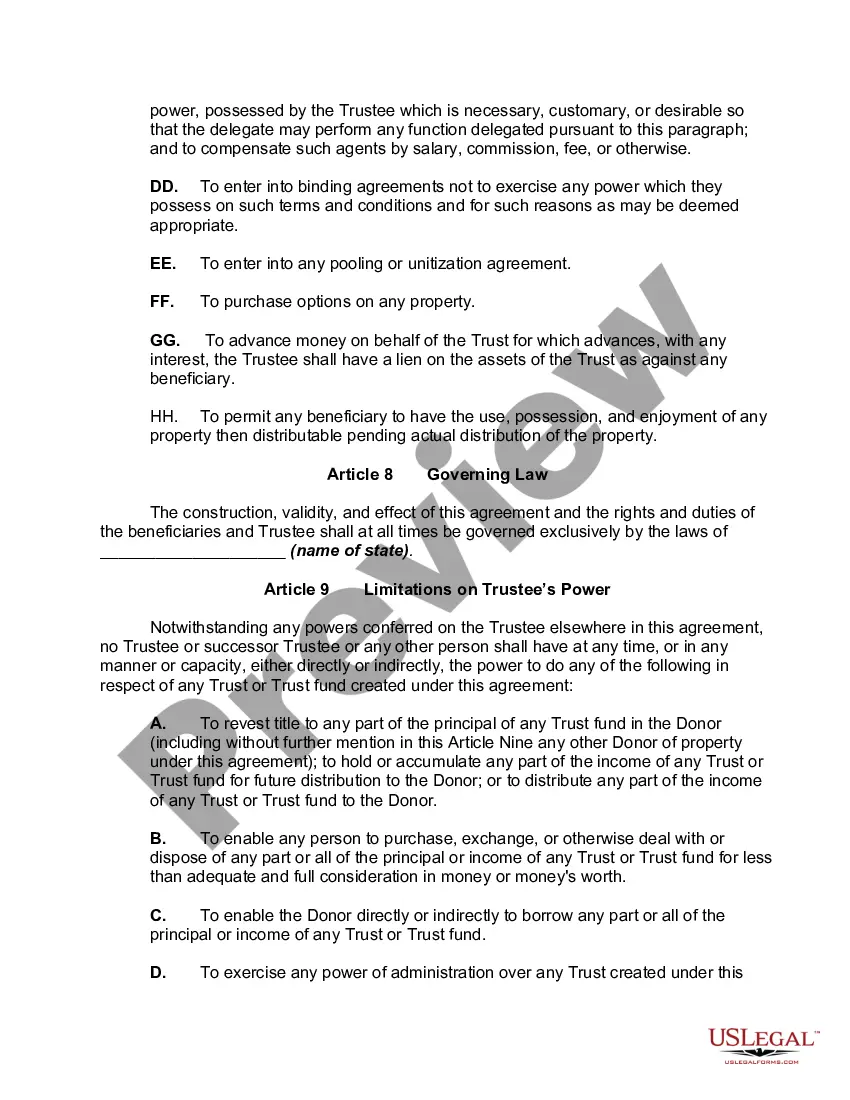
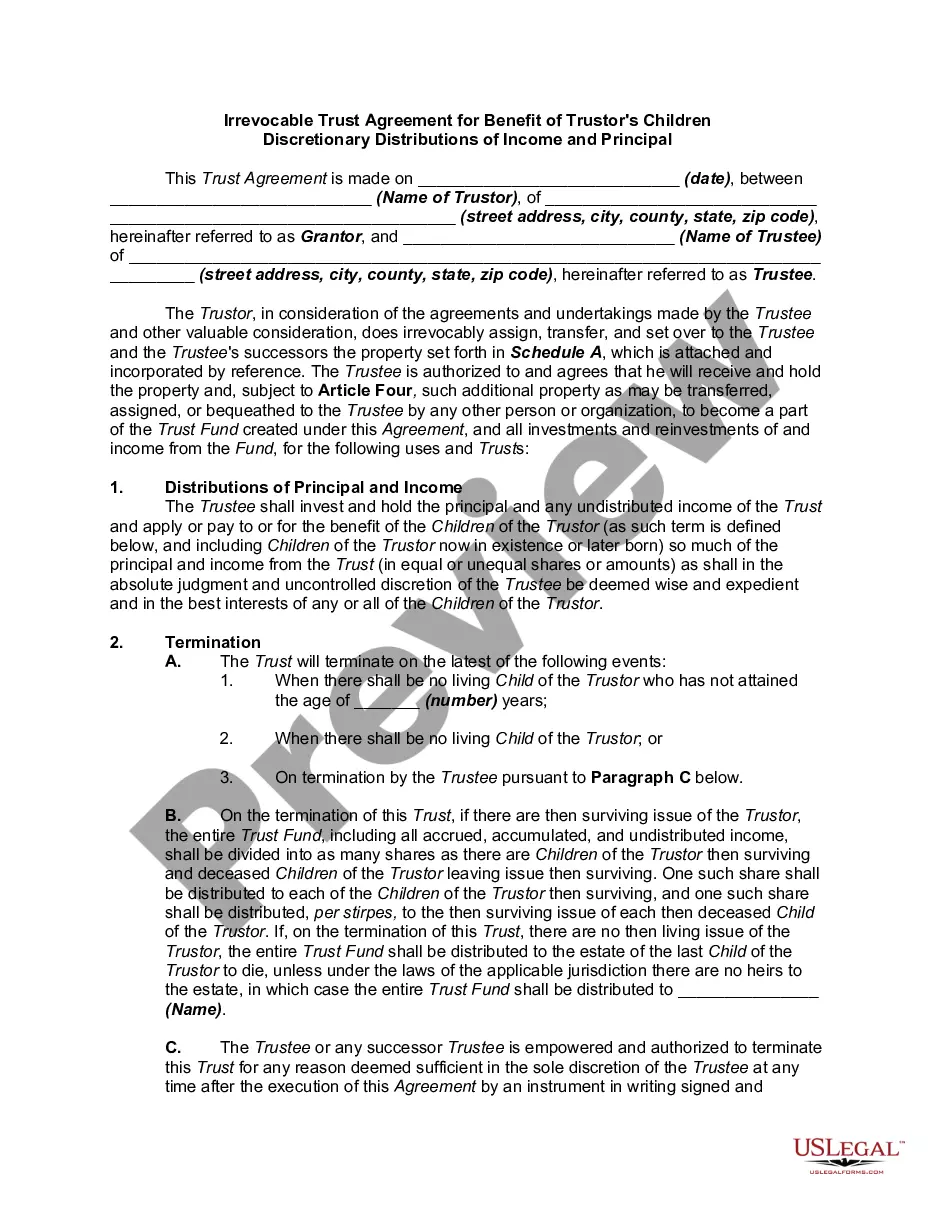
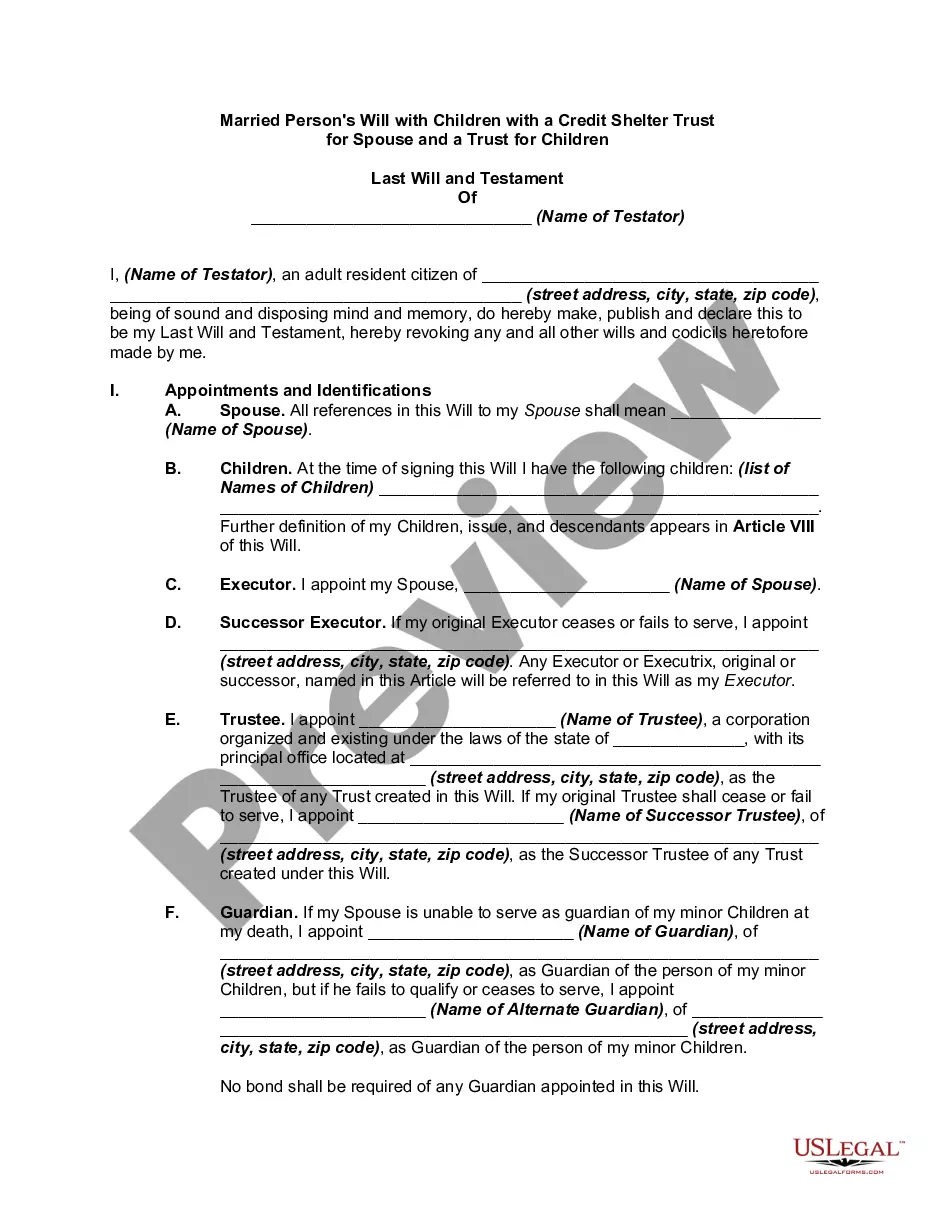
How to fill out Inter Vivos QTIP Trust With Principal To Donor's Children On Spouse's Death?
- If you are a returning user, log in to your account and download the required form by clicking the Download button. Ensure your subscription is active; renew if necessary according to your payment plan.
- For first-time users, begin by exploring the form descriptions and preview mode to confirm you've selected the appropriate document for your needs.
- If the form doesn’t meet your requirements, utilize the Search tab above to find the right template that accurately aligns with your local jurisdiction.
- Once you have found the document, click the Buy Now button to select a subscription plan and create your account to gain access to the library.
- Complete the purchase by entering your credit card details or logging in with your PayPal account for convenient payment options.
- Finally, download your form to your device, and you can easily find it in the My Forms section of your profile when needed.
In conclusion, US Legal Forms simplifies the process of accessing essential legal documents, offering a robust collection and expert assistance to ensure accuracy and compliance.
Start your journey with US Legal Forms today and experience the ease of managing your legal needs!
Form popularity
FAQ
Yes, a QTIP election can be made on a late-filed return under certain conditions. This includes submitting a request for a late election with an explanation of extenuating circumstances. To ensure that you comply with regulations, you can refer to the QTIP principal donors death statement for 202, which provides essential context for your actions.
Generally, you are required to file Form 706 if your gross estate exceeds the federal exemption limit set for the year. This includes estates that feature QTIP properties and other assets. If you are uncertain, assessing your situation in light of the QTIP principal donors death statement for 202 can clarify whether filing is necessary.
Form 4768 should be filed with the IRS either by mail or electronically, depending on your preferences. Be sure to reference the QTIP principal donors death statement for 202 when preparing this form. Additionally, you may want to consult the IRS website for the correct mailing address or electronic submission guidelines.
Individuals who do not exceed the annual gift exclusion amount generally do not need to file Form 709. This form is specifically for reporting gifts that surpass the limit. When considering the implications of the QTIP principal donors death statement for 202, understanding your gifting situation can clarify your filing requirements.
Failing to file Form 706 when required can lead to significant penalties. The IRS imposes a failure-to-file penalty, which can accrue daily based on the unpaid estate tax. To avoid unnecessary complications and ensure compliance, consult the QTIP principal donors death statement for 202 and seek guidance from professionals if needed.
Schedule G of Form 706 details the QTIP elections made for the estate. This schedule allows you to list the property that qualifies for the QTIP principal donors death statement for 202. Including this information accurately is crucial, as it affects estate tax calculations and reporting requirements for your individual situation.
You may need to file Form 706 if the gross estate exceeds the exemption threshold set by the IRS. This form includes the QTIP principal donors death statement for 202, which helps report the value of property passed on to beneficiaries. Filing Form 706 is essential for calculating any estate tax obligations, ensuring compliance with federal regulations.
Yes, you must report the sale of inherited property to the IRS. The QTIP principal donors death statement for 202 indicates how property is valued at the date of the donor's death. Even if the inherited property is sold, any gain realized during the sale must be reported, using the stepped-up basis provided by the value of the property at the time of death.
A QTIP trust does not avoid probate because the assets contained within it typically pass to beneficiaries at the surviving spouse's death. However, the assets held in trust may bypass some probate hurdles if properly structured. It’s important to ensure that your estate plan, including the Qtip principal donors death statement for 202, reflects your wishes to maximize efficiency and minimize delays in asset distribution.
A QTIP trust allows a surviving spouse to receive income from the trust while ensuring that the principal is distributed to other beneficiaries upon their death. For example, a trust may contain a family home or investments that generate income for the surviving spouse. This structure can provide financial support to the spouse while also fulfilling estate planning goals. Using a clear Qtip principal donors death statement for 202 can help organize these intentions.