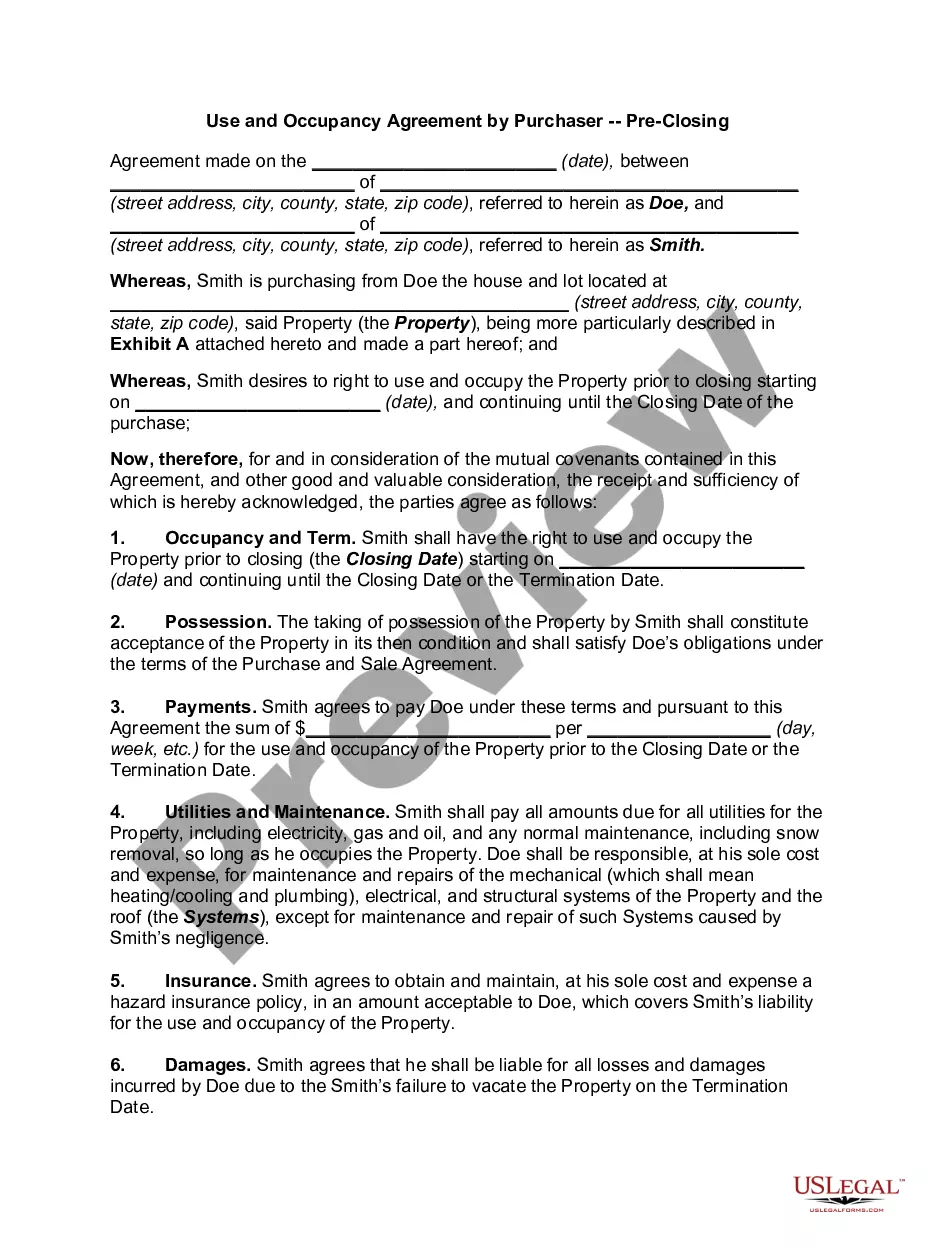
Agreement To Occupy Prior To Closing
Description
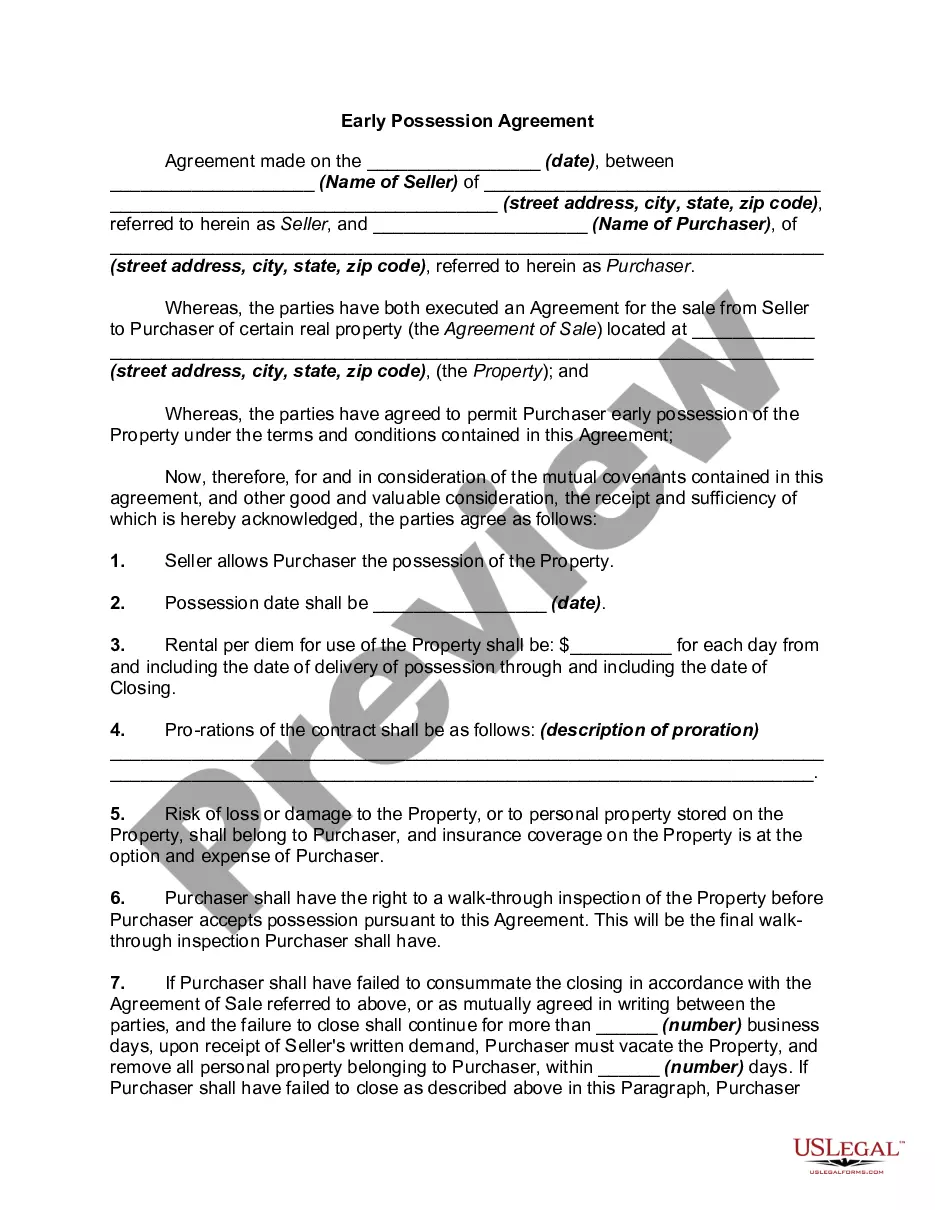
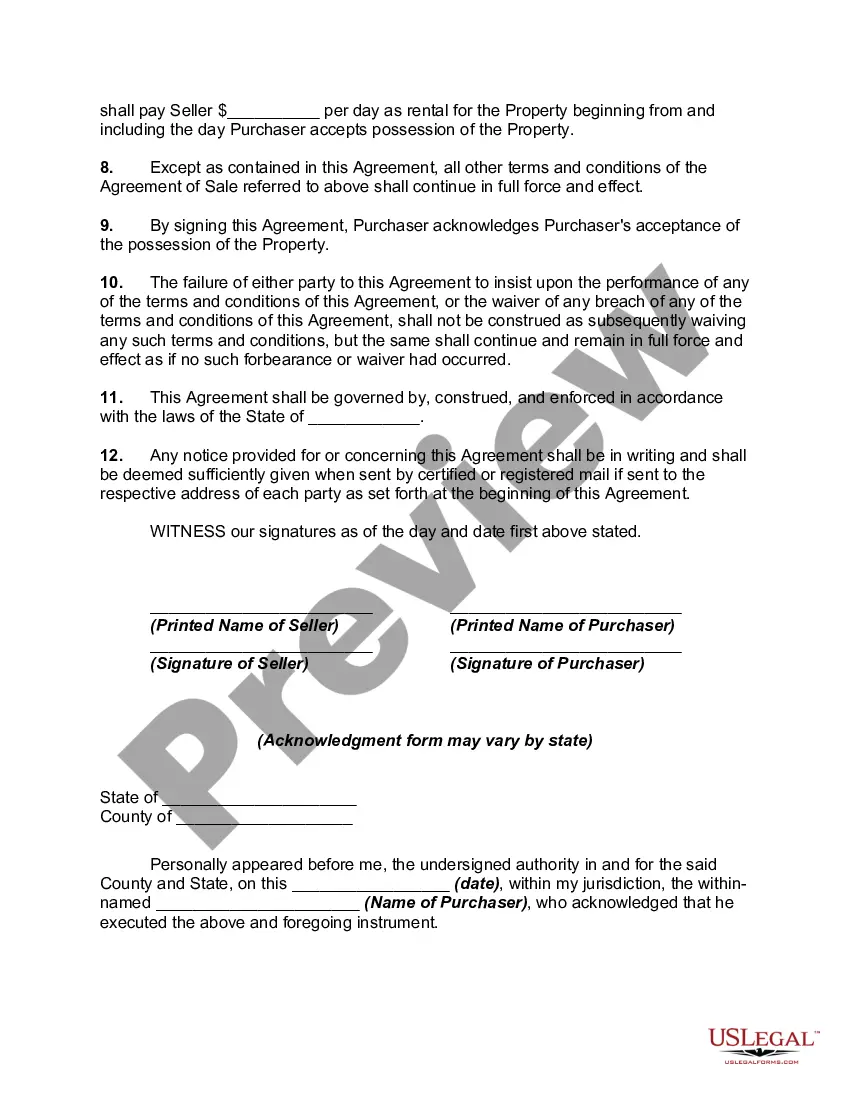
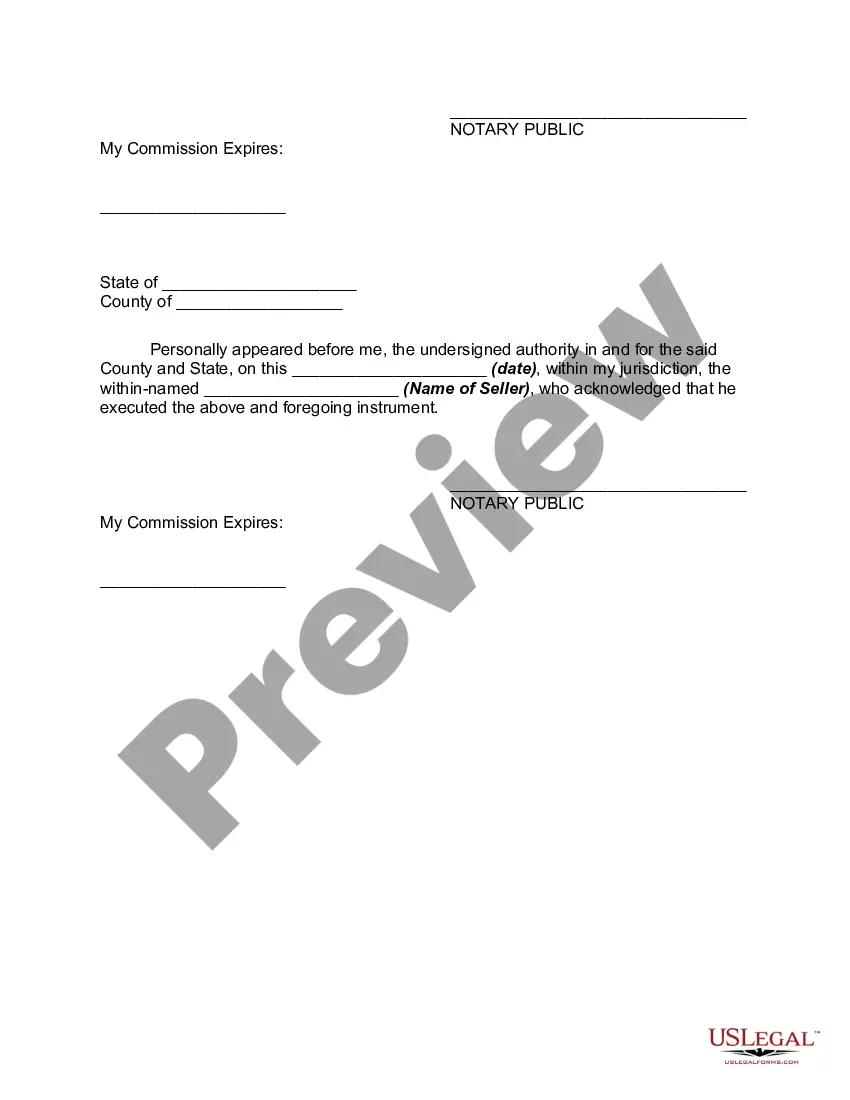
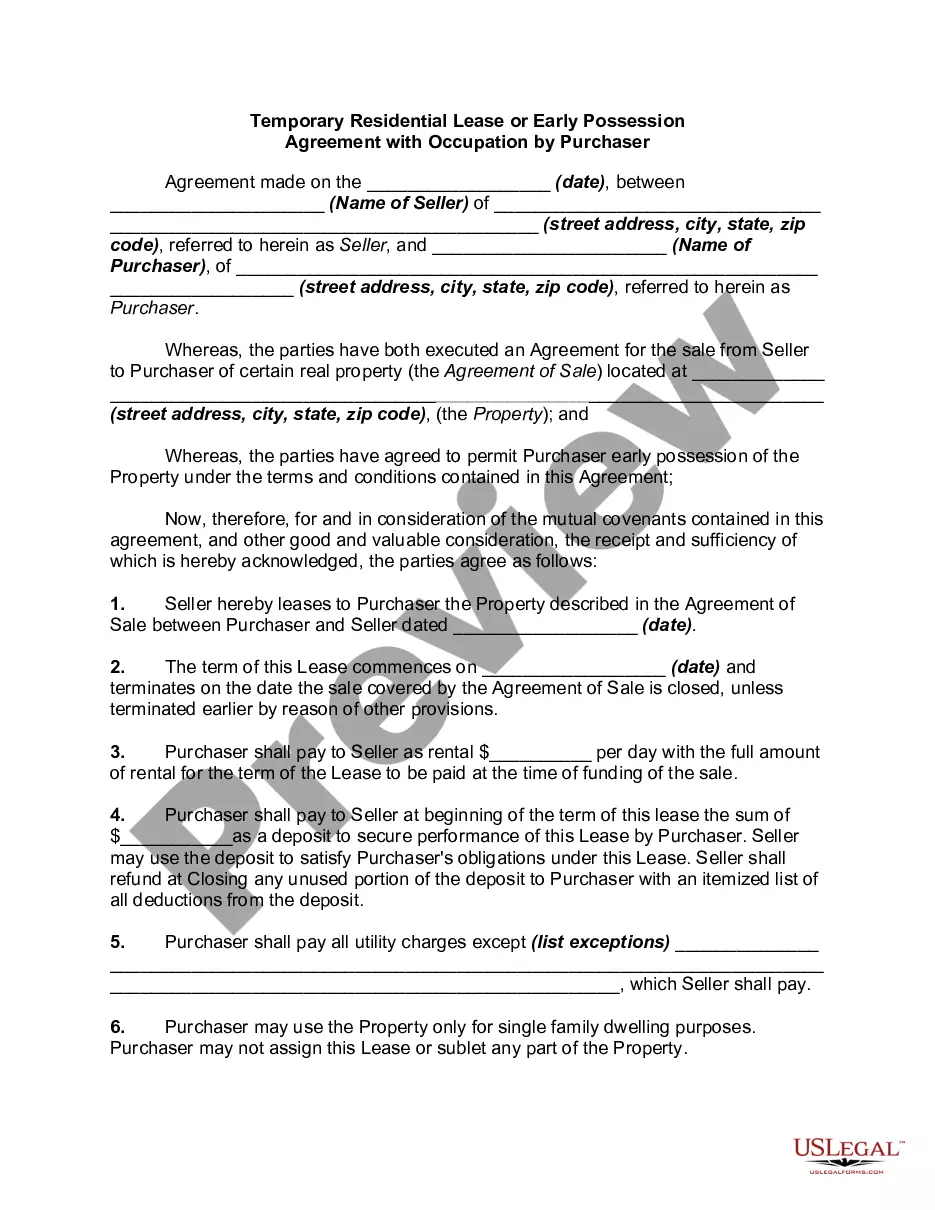
Get your form ready online
Our built-in tools help you complete, sign, share, and store your documents in one place.
Make edits, fill in missing information, and update formatting in US Legal Forms—just like you would in MS Word.
Download a copy, print it, send it by email, or mail it via USPS—whatever works best for your next step.
Sign and collect signatures with our SignNow integration. Send to multiple recipients, set reminders, and more. Go Premium to unlock E-Sign.
If this form requires notarization, complete it online through a secure video call—no need to meet a notary in person or wait for an appointment.
We protect your documents and personal data by following strict security and privacy standards.

Make edits, fill in missing information, and update formatting in US Legal Forms—just like you would in MS Word.

Download a copy, print it, send it by email, or mail it via USPS—whatever works best for your next step.

Sign and collect signatures with our SignNow integration. Send to multiple recipients, set reminders, and more. Go Premium to unlock E-Sign.

If this form requires notarization, complete it online through a secure video call—no need to meet a notary in person or wait for an appointment.

We protect your documents and personal data by following strict security and privacy standards.
Looking for another form?
How to fill out Early Possession Agreement?
Creating legal documents from the ground up can frequently be overwhelming.
Certain situations may require extensive research and significant financial investment.
If you are looking for a simpler and more affordable method of generating the Agreement To Occupy Prior To Closing or other documents without unnecessary complications, US Legal Forms is readily available to assist you.
Our online library of more than 85,000 current legal forms addresses nearly all aspects of your financial, legal, and personal affairs. With just a few clicks, you can quickly obtain state- and county-specific templates meticulously prepared by our legal professionals.
Examine the form preview and descriptions to ensure it is the document you need. Verify that the selected form meets the requirements of your state and county. Select the appropriate subscription plan to purchase the Agreement To Occupy Prior To Closing. Download the form, then complete, sign, and print it. US Legal Forms boasts a solid reputation and over 25 years of experience. Join us today and make the document completion process simple and efficient!
- Access our website whenever you require dependable services to swiftly locate and retrieve the Agreement To Occupy Prior To Closing.
- If you are a returning user and have previously established an account with us, just Log In to your account, find the template, and download it or re-download it anytime later from the My documents section.
- Not registered yet? No problem. It takes minimal time to sign up and explore the catalog.
- However, before proceeding to download the Agreement To Occupy Prior To Closing, consider these recommendations.
Form popularity
FAQ
An occupancy clause might state that the buyer is allowed to move into the property two weeks before closing under specified terms. This clause, outlined in the agreement to occupy prior to closing, usually includes details about rent, property condition, and any liabilities. Clearly defining these elements protects both buyer and seller during the occupancy period.
An occupancy prior to closing agreement allows buyers to take possession of a property before the transaction finalizes. This type of agreement includes specific terms regarding the use of the home, rental payments, and maintenance responsibilities. When you utilize an agreement to occupy prior to closing, it helps you settle into your new space while waiting for the official closing date. Platforms like uslegalforms can assist you in drafting this agreement to ensure it meets legal standards and protects your rights.
An occupancy agreement is a legally binding document that outlines the terms under which a buyer can occupy a property before closing. This agreement stipulates details such as the duration of occupancy, payment responsibilities, and rules for caring for the house. By negotiating an agreement to occupy prior to closing, you protect your interests while ensuring that all parties understand their obligations. It's a vital step in the buying process that promotes clarity and communication.
An occupancy agreement before closing is a legal document that allows buyers to take possession of a property before the official transfer of ownership. This type of arrangement clearly defines the terms, responsibilities, and duration of the buyer's occupancy. It serves to protect both the seller and buyer, ensuring clarity in expectations and obligations. Using an occupancy agreement prior to closing can minimize misunderstandings and foster a smoother transaction.
Allowing buyers to take possession before closing can lead to significant risks for both parties. If the buyer moves in, there is a chance they may treat the property as their own, which can complicate liability and insurance issues. Moreover, if the closing falls through for any reason, you may face difficulties in removing them from the property. Therefore, it is essential to have a clear and structured agreement to occupy prior to closing to protect everyone's interests.
An early occupancy clause is a provision within contracts that allows buyers to occupy the property before the official closing date. This clause usually comes with an Agreement to occupy prior to closing, which articulates the terms of the early move-in, including payment details and maintenance responsibilities.
Allowing buyers to take possession before closing can lead to significant risks for sellers. Issues may arise such as damage to the property or disagreements over property condition. Using an Agreement to occupy prior to closing can mitigate these risks by clearly defining the arrangements and responsibilities for both parties.
It is possible to move into a house before closing, but you should always proceed with caution. Securing an Agreement to occupy prior to closing is crucial, as it sets the rules for both parties during the period of early occupancy, ensuring that rights are protected and expectations are clear.
Yes, you can move in on the same day as closing, provided everything goes smoothly. However, confirm with all parties involved, including your lender and the seller. An Agreement to occupy prior to closing can also be necessary if elements need final adjustments before you fully take possession.
When a buyer moves into a house before closing, this is often referred to as early occupancy. An Agreement to occupy prior to closing serves as a legal contract that specifies the buyer's rights and obligations during this period, ensuring clarity for both the buyer and seller.