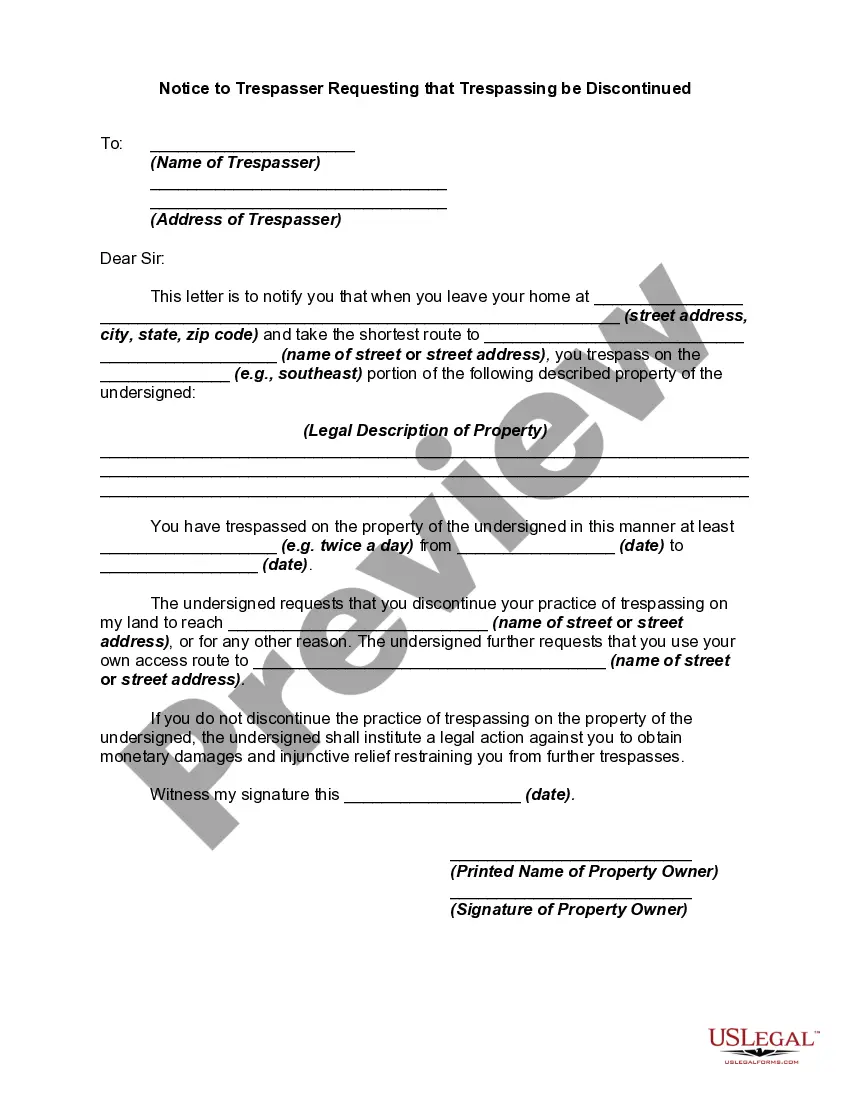
Trespasser Trespassing For The Right
Description
Get your form ready online
Our built-in tools help you complete, sign, share, and store your documents in one place.
Make edits, fill in missing information, and update formatting in US Legal Forms—just like you would in MS Word.
Download a copy, print it, send it by email, or mail it via USPS—whatever works best for your next step.
Sign and collect signatures with our SignNow integration. Send to multiple recipients, set reminders, and more. Go Premium to unlock E-Sign.
If this form requires notarization, complete it online through a secure video call—no need to meet a notary in person or wait for an appointment.
We protect your documents and personal data by following strict security and privacy standards.

Make edits, fill in missing information, and update formatting in US Legal Forms—just like you would in MS Word.

Download a copy, print it, send it by email, or mail it via USPS—whatever works best for your next step.

Sign and collect signatures with our SignNow integration. Send to multiple recipients, set reminders, and more. Go Premium to unlock E-Sign.

If this form requires notarization, complete it online through a secure video call—no need to meet a notary in person or wait for an appointment.

We protect your documents and personal data by following strict security and privacy standards.
Looking for another form?

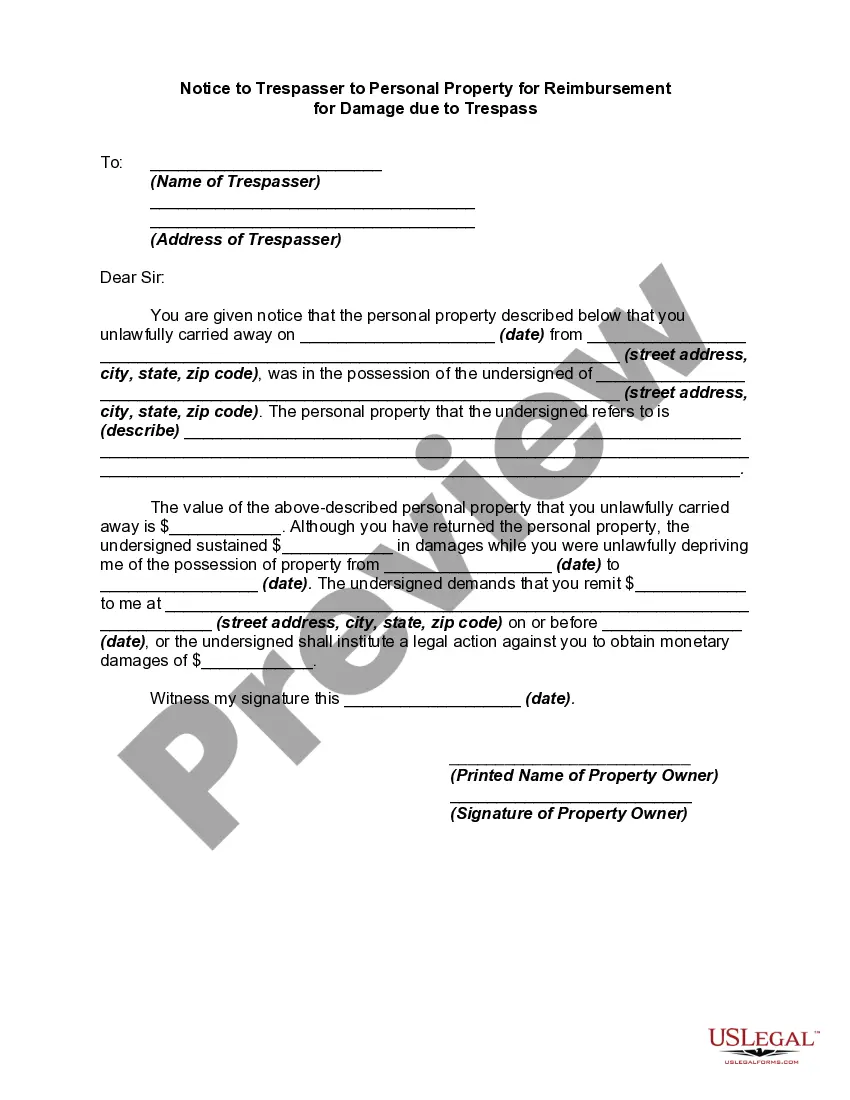
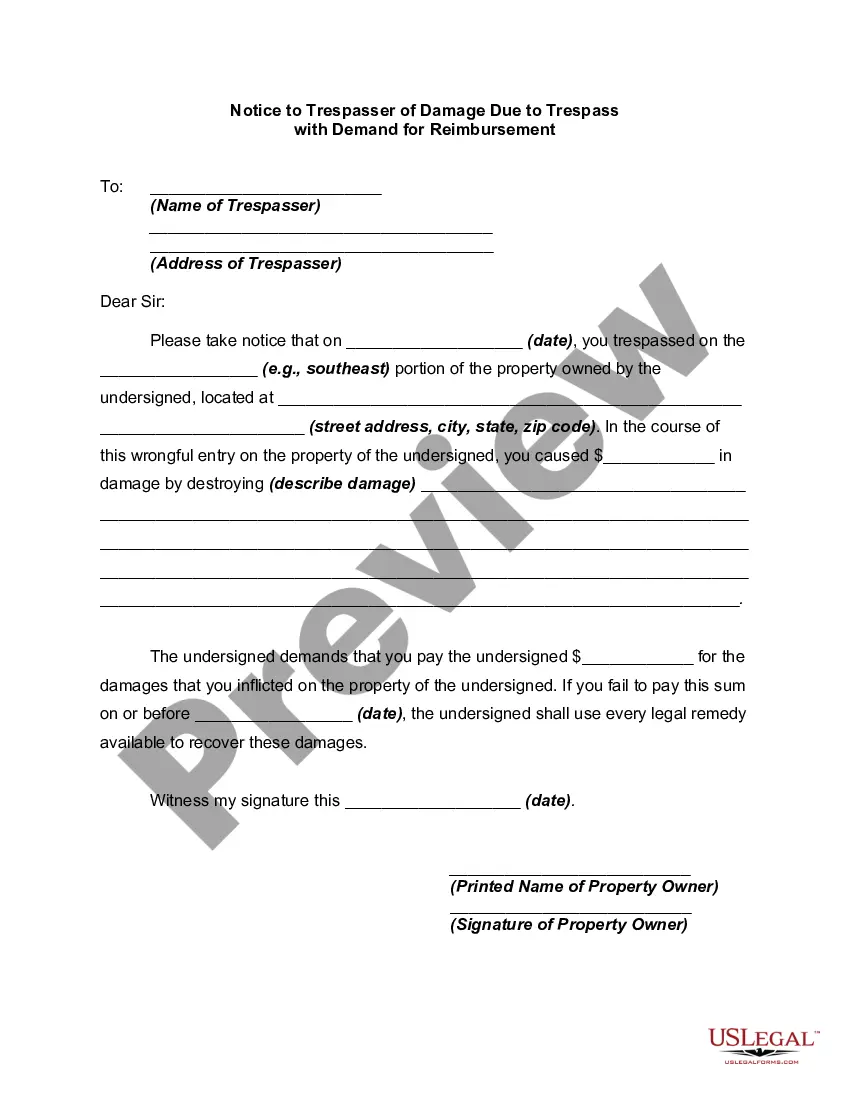
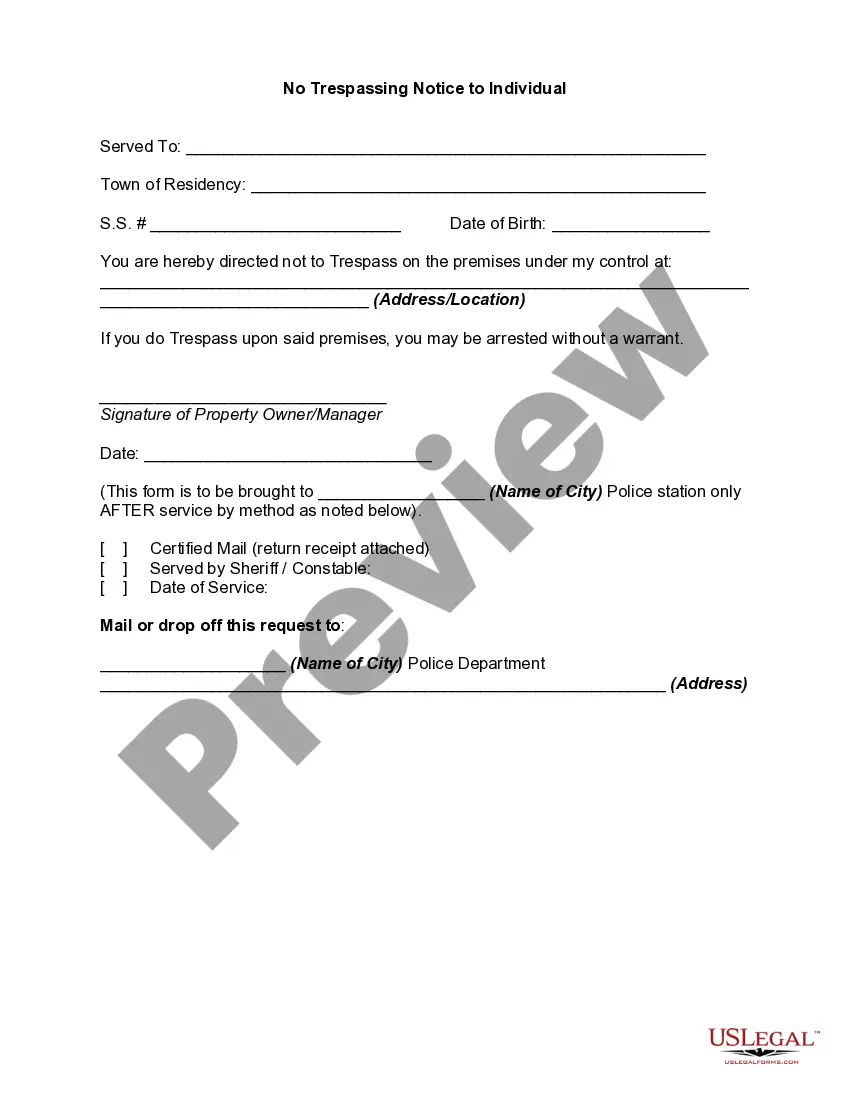
How to fill out Notice To Trespasser Requesting That Trespassing Be Discontinued?
- Log in to your US Legal Forms account. If you've used the service before, simply log in and ensure your subscription is active. If not, renew it based on your payment plan.
- Preview the form you need. Check the description to confirm it meets your requirements and aligns with your local jurisdiction.
- Search for alternative templates if necessary. If there's something amiss, utilize the Search tab to find the right form.
- Purchase the document. Click on the Buy Now button and select a subscription plan that fits your needs, registering for an account if it’s your first time.
- Complete your payment. Input your credit card details or use PayPal to finalize the subscription.
- Download your form. Save the document to your device to fill it out, and you can access it anytime via the My Forms section.
By following these straightforward steps, you can quickly obtain the legal forms you need, ensuring that you have the right documentation for your situation.
Take control of your legal needs today with US Legal Forms—visit their site to explore their extensive library and make the process easier.
Form popularity
FAQ
Minnesota trespassing laws outline the rights and responsibilities regarding property access. Trespassing is generally illegal without the landowner's consent, and different violations can result in civil or criminal penalties. For specific information on navigating trespasser trespassing for the right in Minnesota, it's wise to consult resources like uslegalforms, which can help clarify your options and rights.
You can indeed place no trespassing signs in your yard to indicate that entry is prohibited without permission. These signs serve to inform others of your property boundaries and help protect your rights as a property owner. Utilizing effective signage is a proactive approach to managing trespasser trespassing for the right.
Yes, you can stop someone from entering your property if they do so without your permission. Establishing clear boundaries and communicating them effectively can deter trespassers. Additionally, knowing your rights concerning trespasser trespassing for the right can equip you with the knowledge needed to handle unwanted visitors.
The two main types of trespass include trespass to land and trespass to chattels. Trespass to land involves entering someone else's property without permission, while trespass to chattels pertains to interfering with someone's personal property. Each type can pose legal challenges, especially concerning trespasser trespassing for the right, so understanding which applies can be crucial.
Private property refers to land owned by an individual or entity, while no trespassing signs indicate that unauthorized individuals cannot enter that property. Simply put, private property ownership means control over its use, and no trespassing signs enforce that control legally. If you're dealing with trespasser trespassing for the right, knowing these differences can empower property owners.
Criminal trespassing occurs when a person knowingly enters or remains on property without permission, with the intent to commit an unlawful act. Meanwhile, simple trespassing may not involve any criminal intent, but it still signifies a violation of property boundaries. Understanding the nuances between such forms of trespasser trespassing for the right can help you navigate legal situations more effectively.
To stop unwanted people on your property, start by enhancing security measures like fences, signage, and lighting. You might also consider using noise deterrents to discourage trespassing. If issues persist, documenting incidents and seeking legal advice can help you address the situation effectively.
To legally keep someone off your property, you should establish clear boundaries and formally inform potential trespassers. Posting no trespassing signs can solidify your position. Additionally, if necessary, legal instruments from uslegalforms can assist you in filing a complaint or obtaining a restraining order against repeat offenders.
While you can ask someone to leave your property, physical removal may not be advisable without legal backing. If someone refuses to leave, it's best to contact local law enforcement to handle the situation. This helps to ensure that your rights are protected, particularly in cases of trespassing.
You certainly have the right to tell someone to leave your property if they do not have permission to be there. It's important to communicate your boundaries clearly and calmly. If they refuse to leave, you can escalate the matter to legal authorities for further action regarding trespassing.