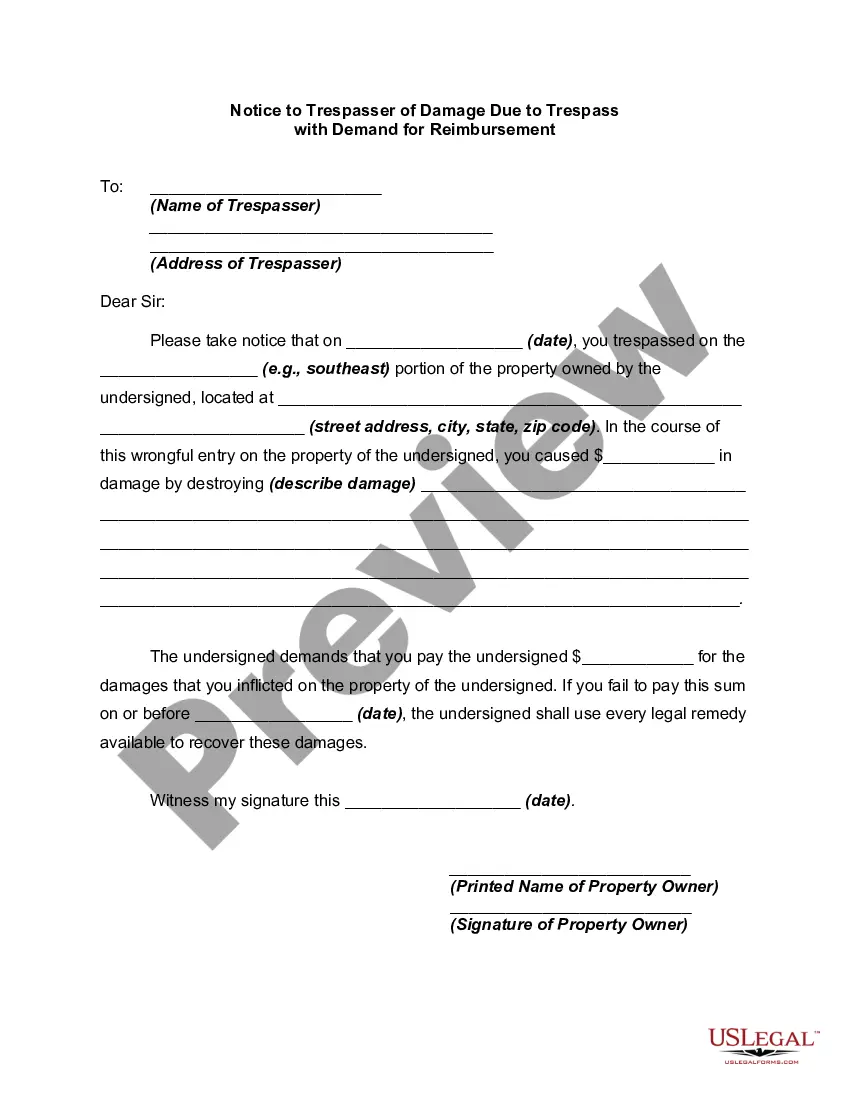
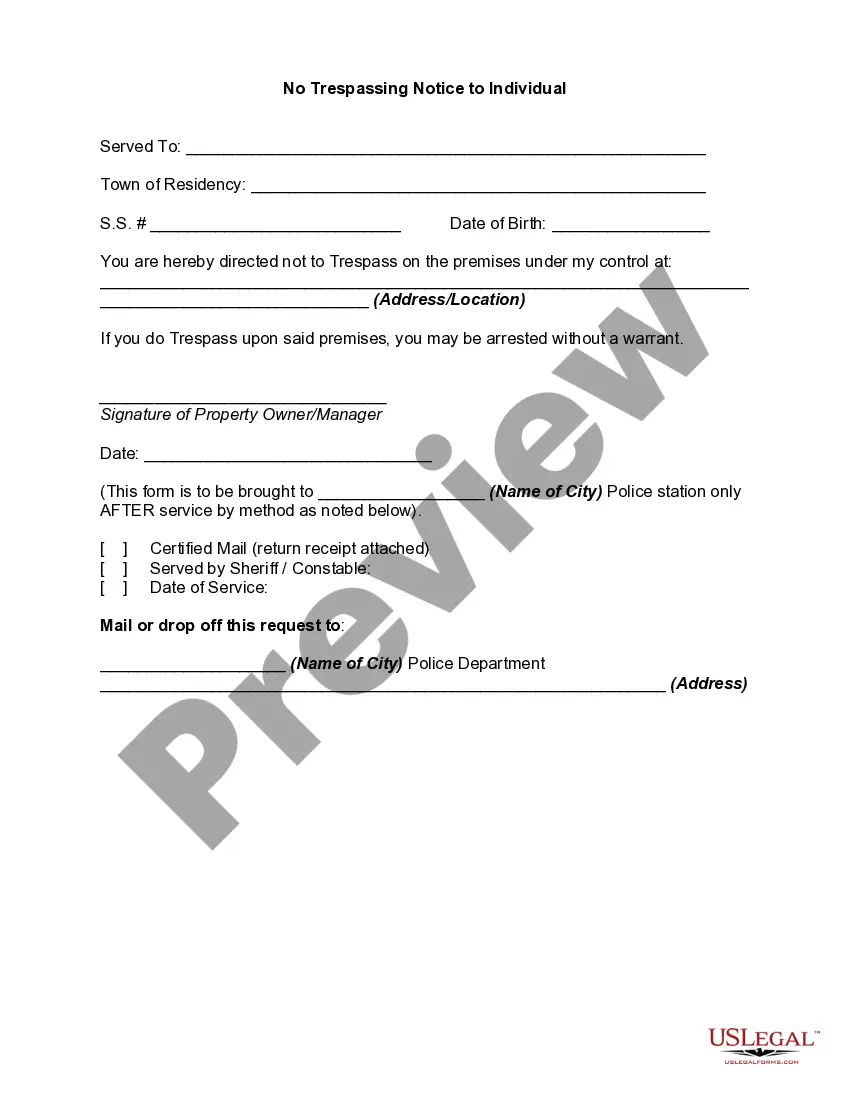
Trespasser Trespass With Without Notice
Description
Get your form ready online
Our built-in tools help you complete, sign, share, and store your documents in one place.
Make edits, fill in missing information, and update formatting in US Legal Forms—just like you would in MS Word.
Download a copy, print it, send it by email, or mail it via USPS—whatever works best for your next step.
Sign and collect signatures with our SignNow integration. Send to multiple recipients, set reminders, and more. Go Premium to unlock E-Sign.
If this form requires notarization, complete it online through a secure video call—no need to meet a notary in person or wait for an appointment.
We protect your documents and personal data by following strict security and privacy standards.

Make edits, fill in missing information, and update formatting in US Legal Forms—just like you would in MS Word.

Download a copy, print it, send it by email, or mail it via USPS—whatever works best for your next step.

Sign and collect signatures with our SignNow integration. Send to multiple recipients, set reminders, and more. Go Premium to unlock E-Sign.

If this form requires notarization, complete it online through a secure video call—no need to meet a notary in person or wait for an appointment.

We protect your documents and personal data by following strict security and privacy standards.
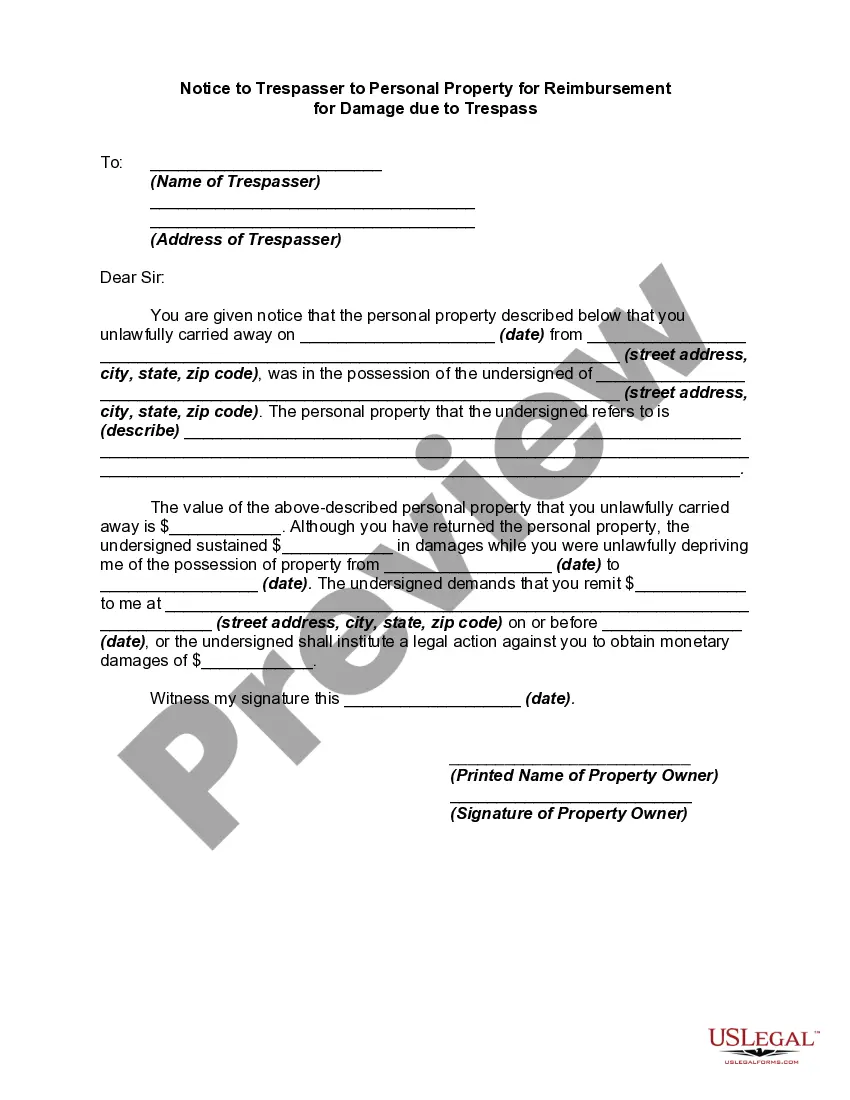
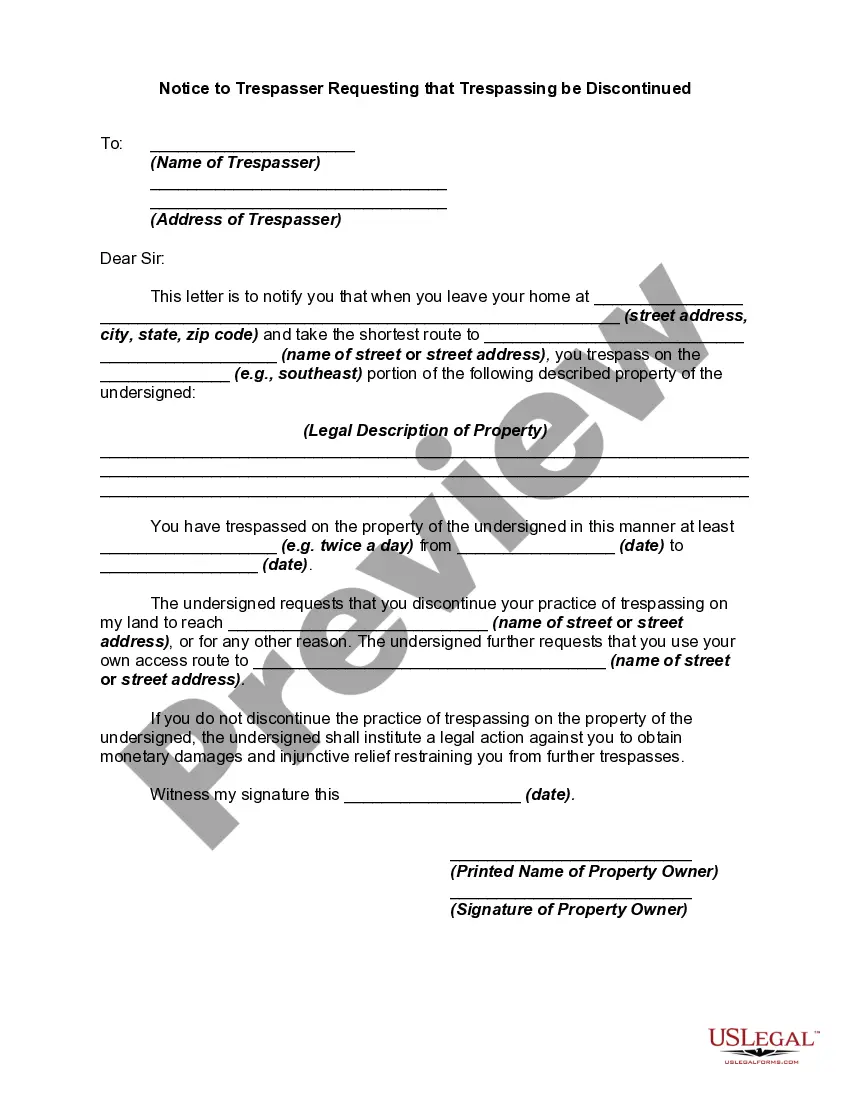
Looking for another form?


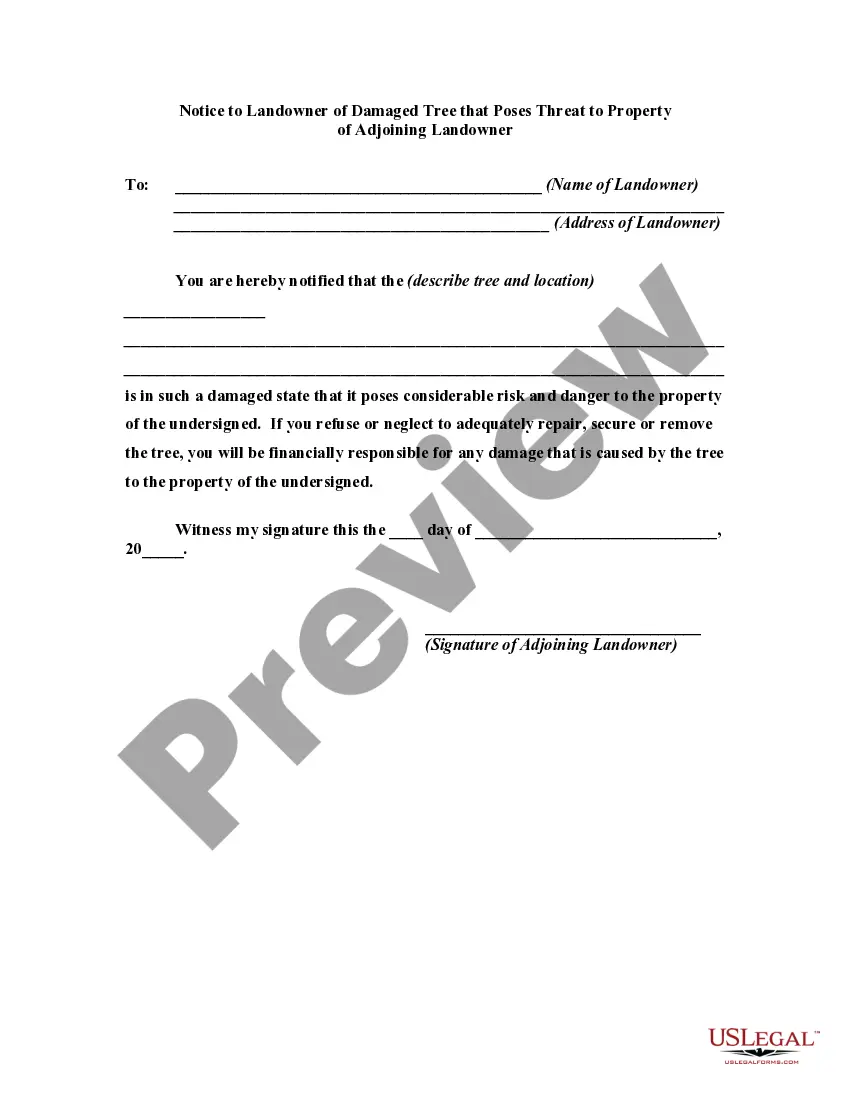
How to fill out Notice To Trespasser Of Damage Due To Trespass With Demand For Reimbursement?
Regardless of whether it's for corporate needs or personal dilemmas, everyone must confront legal matters at some point in their lives.
Completing legal forms requires meticulous focus, beginning with selecting the correct template.
With an extensive catalog from US Legal Forms available, you no longer need to waste time searching for the appropriate sample online. Utilize the library’s straightforward navigation to locate the suitable form for any situation.
- Obtain the sample you require via the search bar or catalog browsing.
- Review the form’s details to ensure it aligns with your situation, state, and area.
- Select the form’s preview to view it.
- If it is the incorrect document, return to the search tool to find the Trespasser Trespass With Without Notice template you require.
- Download the template if it fulfills your requirements.
- If you possess a US Legal Forms account, simply click Log in to access previously saved documents in My documents.
- If you do not have an account yet, you can acquire the form by clicking Buy now.
- Select the suitable pricing option.
- Fill out the account registration form.
- Choose your payment method: either a bank card or PayPal account.
- Select the document format you prefer and download the Trespasser Trespass With Without Notice.
- After downloading, you can complete the form using editing software or print it out and finish it manually.
Form popularity
FAQ
An innocent trespasser refers to someone who enters your property without permission, but without malicious intent. This individual may not be aware they are trespassing, which distinguishes them from those who trespass with intent to harm or steal. Understanding the concept of innocent trespassers is important, as legal outcomes can vary based on intent and notice. Engaging with platforms like US Legal Forms can provide you with the right legal information on handling both innocent and malicious trespassers.
To prove trespass there must be an intention to interfere with the right of possession, and this includes removing a part of land or property belonging to someone else. Even a minimal encroachment on someone's property may amount to trespass.
Ohio law doesn't allow you to harm or apprehend a trespasser simply because the person is on your property or might harm your property. The law, however, does allow you to use force against a trespasser to defend yourself or another person from imminent serious harm.
Further to this, a senior police officer has the power to order any person believed to be involved in aggravated trespass to leave the land; if they refuse to leave after being ordered to by police officer, or if they return to the land in question within a period of three months, this is an additional offence.
Notice To Quit & Possession Orders If the trespasser refuses to leave the property voluntarily, then the next stage is to serve the trespasser with a formal Notice to Quit, usually giving them one month's notice to vacate the property.
A letter threatening court action may be enough to stop the behaviour without you actually having to take it any further. If you wish to pursue it further, you could lodge a civil suit (a lawsuit alleging violations of civil law by the defendant) against the neighbour for nuisance, damages and trespass.