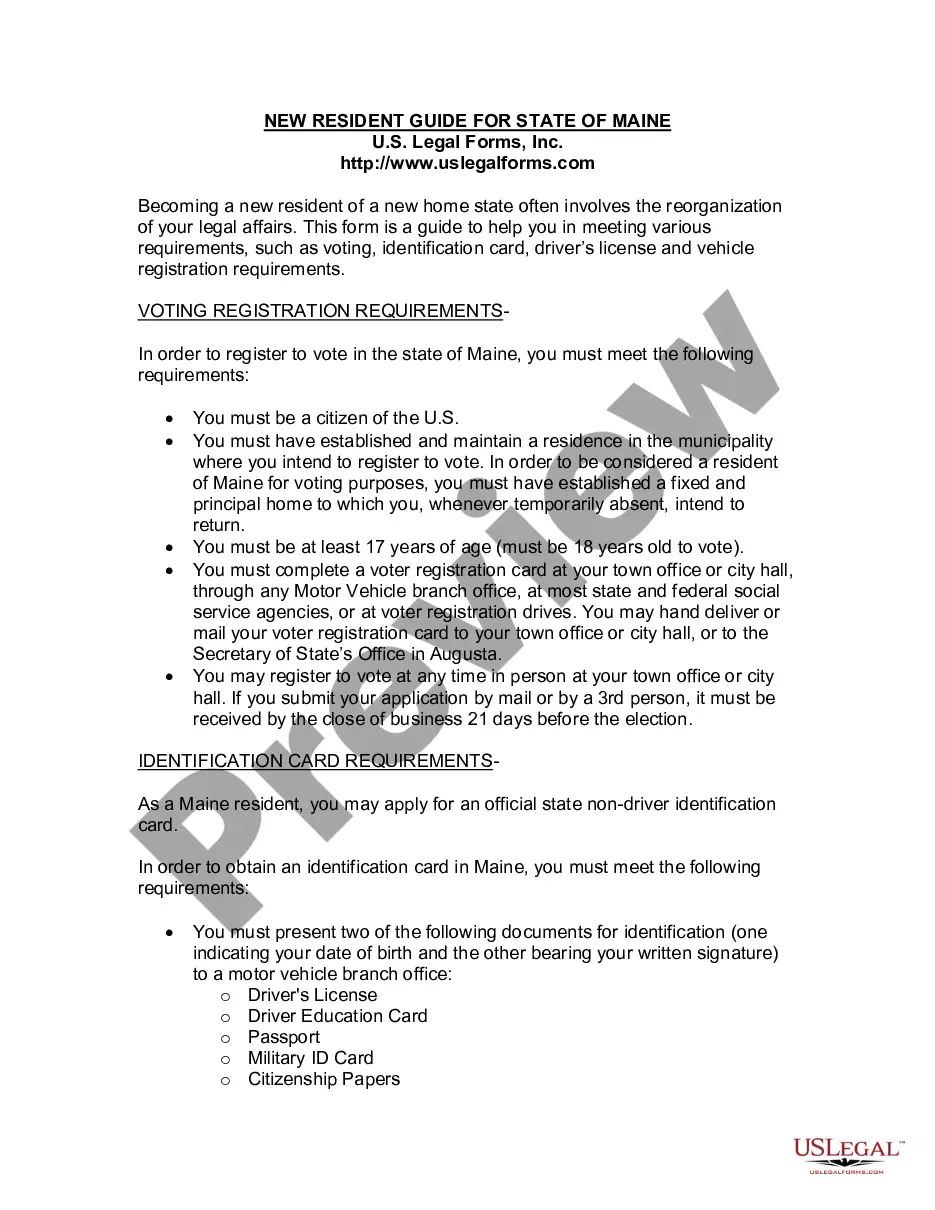
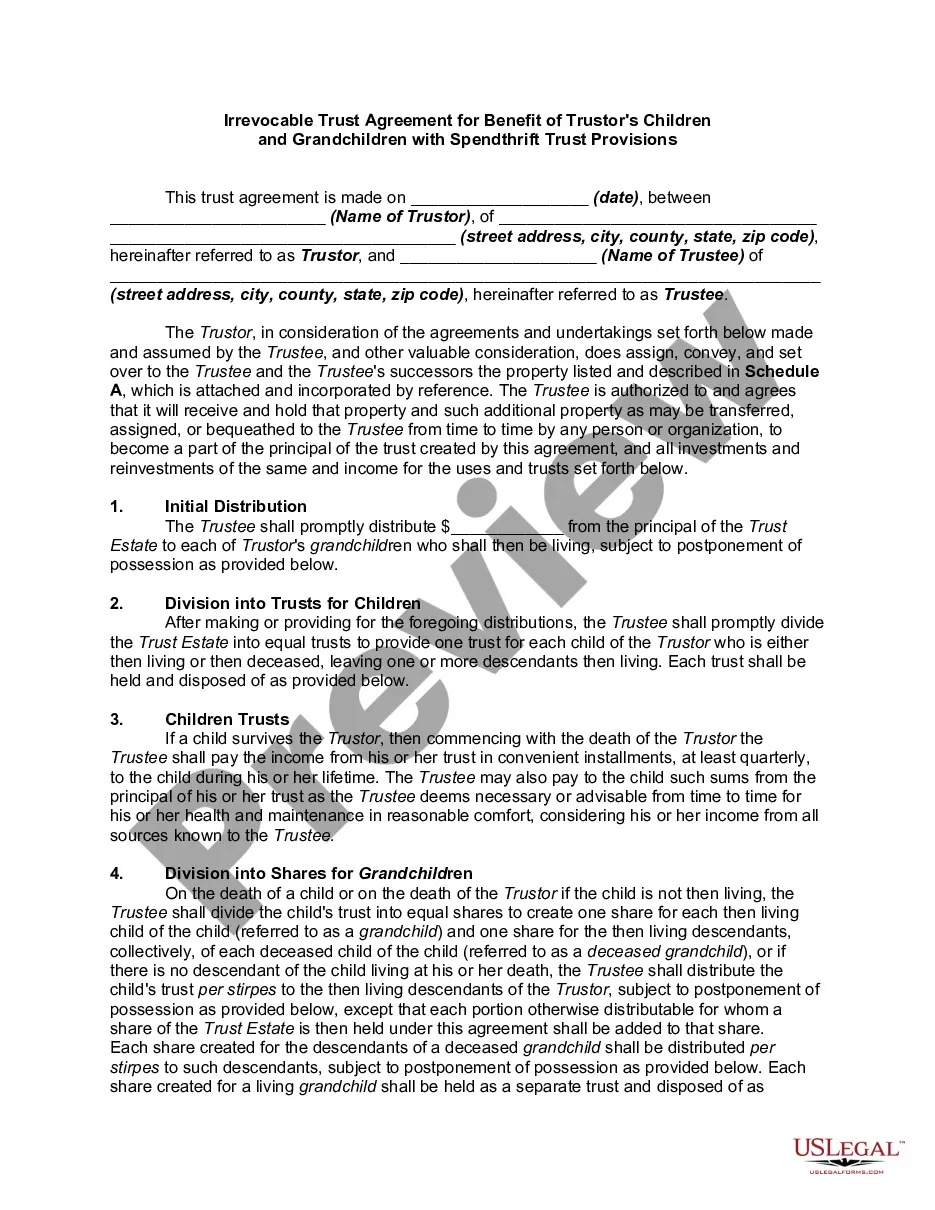
Irrevocable Trust Agreement With Grantor As Beneficiary
Description
Get your form ready online
Our built-in tools help you complete, sign, share, and store your documents in one place.
Make edits, fill in missing information, and update formatting in US Legal Forms—just like you would in MS Word.
Download a copy, print it, send it by email, or mail it via USPS—whatever works best for your next step.
Sign and collect signatures with our SignNow integration. Send to multiple recipients, set reminders, and more. Go Premium to unlock E-Sign.
If this form requires notarization, complete it online through a secure video call—no need to meet a notary in person or wait for an appointment.
We protect your documents and personal data by following strict security and privacy standards.

Make edits, fill in missing information, and update formatting in US Legal Forms—just like you would in MS Word.

Download a copy, print it, send it by email, or mail it via USPS—whatever works best for your next step.

Sign and collect signatures with our SignNow integration. Send to multiple recipients, set reminders, and more. Go Premium to unlock E-Sign.

If this form requires notarization, complete it online through a secure video call—no need to meet a notary in person or wait for an appointment.

We protect your documents and personal data by following strict security and privacy standards.
Looking for another form?
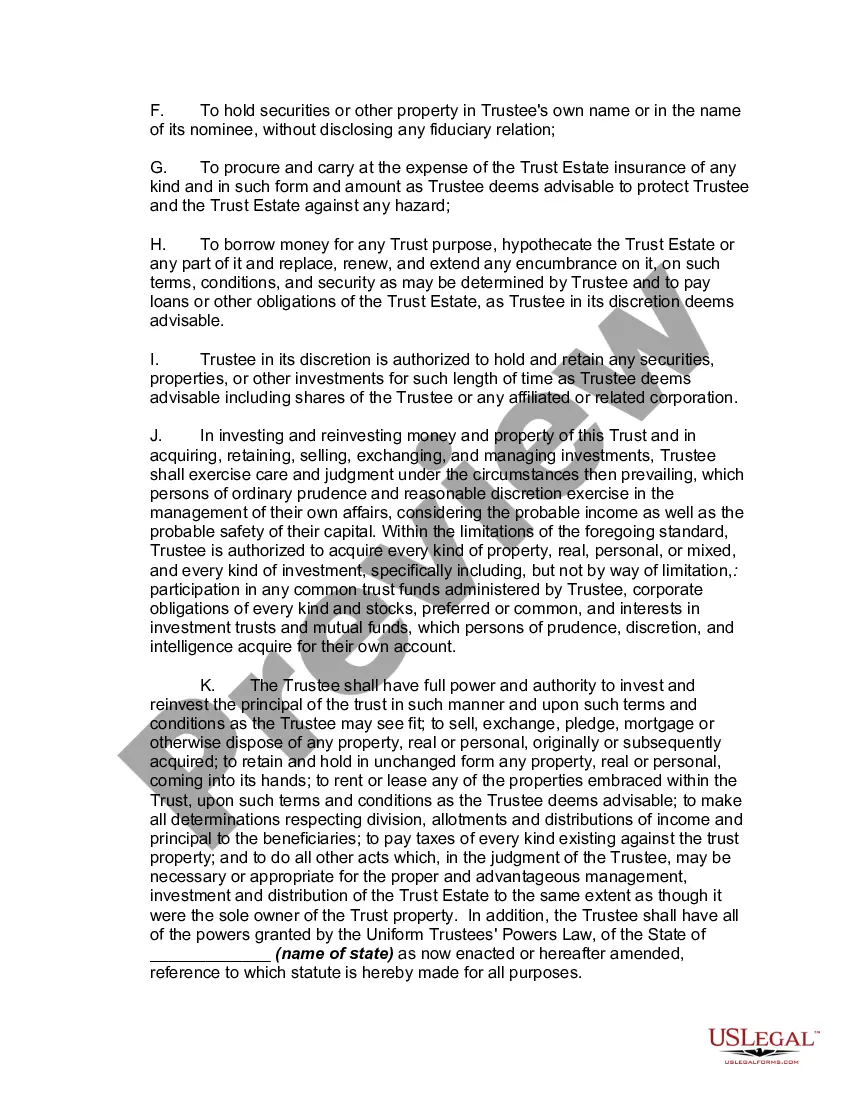
How to fill out Irrevocable Trust Agreement With Joint Trustors For Benefit Of Their Children With Spendthrift Trust Provisions?
There's no longer a requirement to squander time looking for legal papers to comply with your local state laws.
US Legal Forms has gathered all of them in one place and simplified their accessibility.
Our platform offers over 85k templates for various business and personal legal situations organized by state and intended use.
Use the Search field above to find another template if the current one does not fit your needs.
- All forms are properly crafted and validated for authenticity, so you can trust in securing a current Irrevocable Trust Agreement With Grantor As Beneficiary.
- If you are acquainted with our service and already possess an account, ensure your subscription is active before accessing any templates.
- Log In to your account, select the document, and click Download.
- You can also revisit all saved documents whenever necessary by accessing the My documents tab in your profile.
- If you haven't interacted with our service before, the procedure will require a few additional steps to finalize.
- Here's how new users can acquire the Irrevocable Trust Agreement With Grantor As Beneficiary from our collection.
- Carefully examine the page content to verify it has the sample you require.
- To do this, utilize the form description and preview options if available.
Form popularity
FAQ
The grantor is not the trustee but can be a beneficiary. This type of irrevocable trust is called a self-settled asset protection trust and will be discussed in more detail below.
Most people inherit assets from irrevocable trusts that only became irrevocable upon the creator's demise. In this situation, if you must pay taxes, they are levied at the same rate as any other type of inherited asset.
A grantor is the entity that establishes a trust and legally transfers control of those assets to a trustee, who manages it for one or more beneficiaries. In certain types of trusts, the grantor may also be the beneficiary, the trustee, or both.
Because with the irrevocable in- come-only trust we do not want the trust assets to be counted by Medi- caid as a resource to the Grantor- Beneficiary, the Grantor-Beneficiary is entitled to receive income only distributions from the trustin other words, the interest income from the trust assets.
The grantor (as an individual or couple) transfers their assets to an irrevocable trust. However, unlike other irrevocable trusts, the grantor can be the income beneficiary.