Creditor Write Off With A 1099
Description
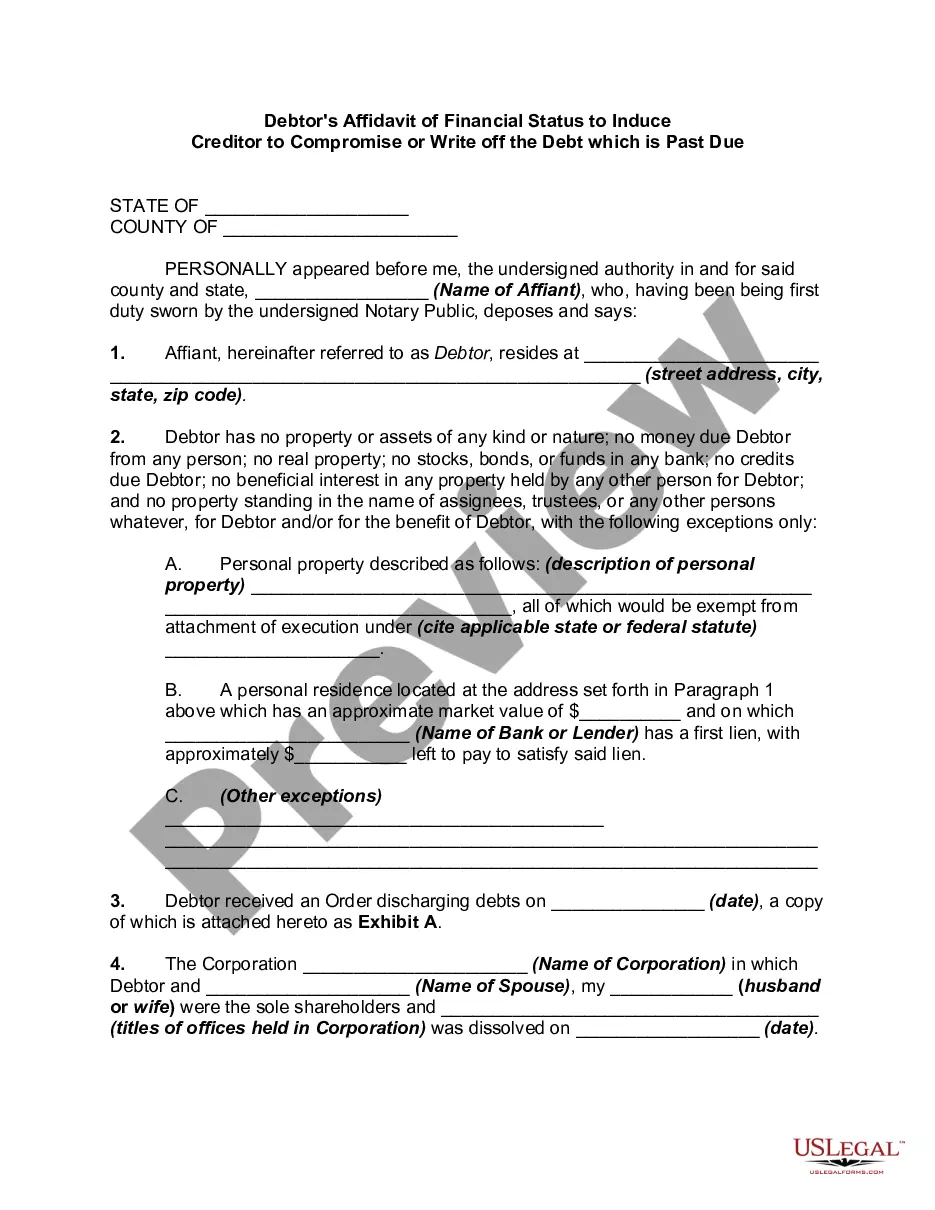
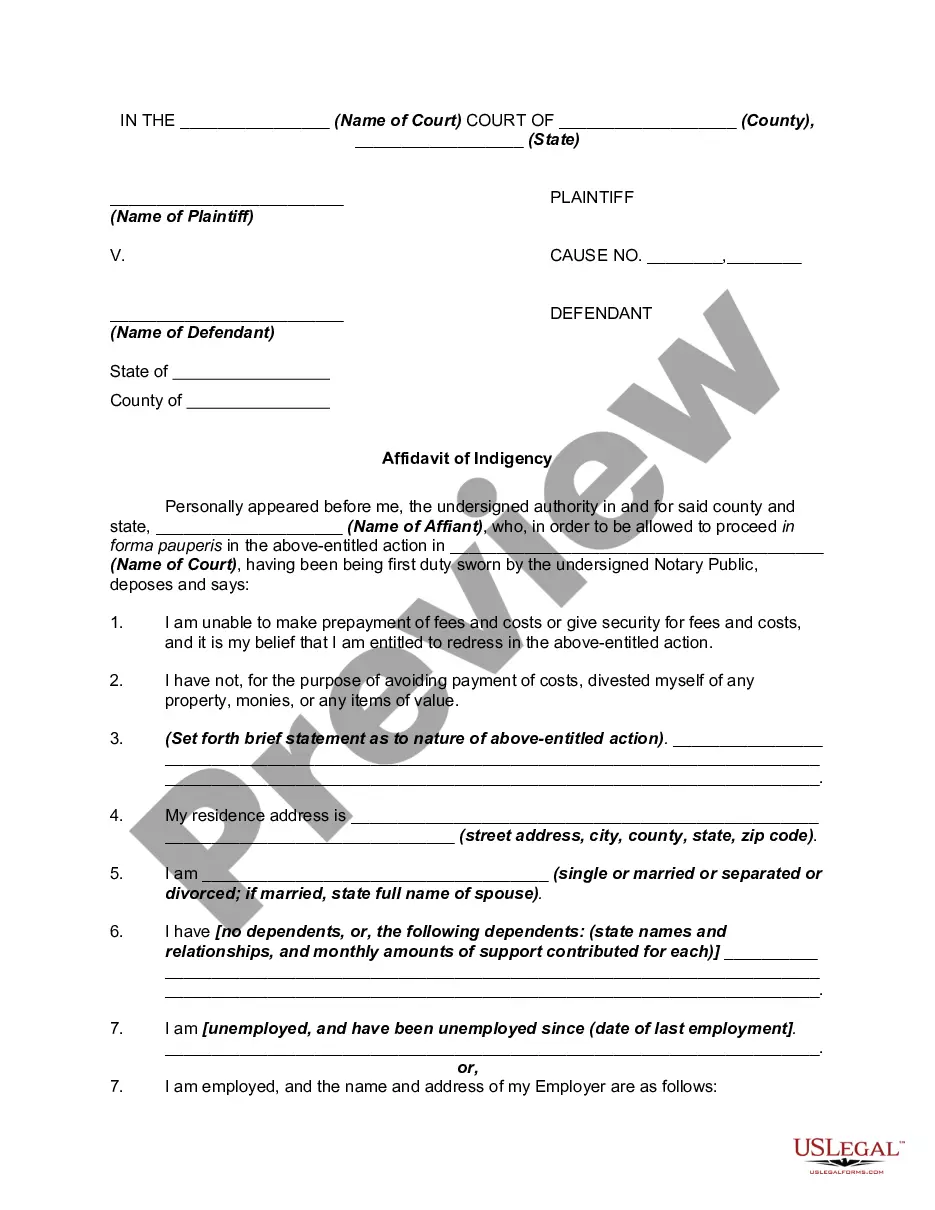
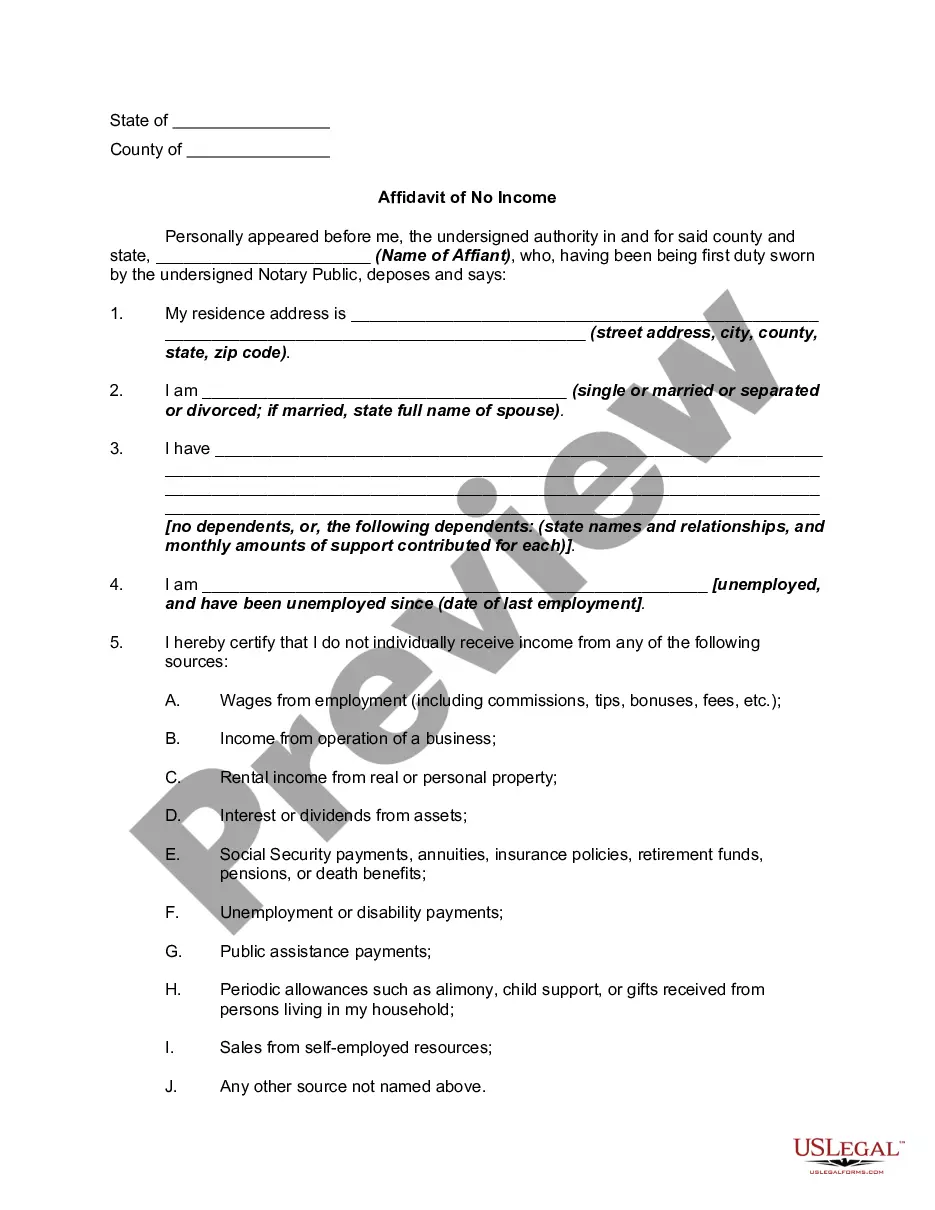
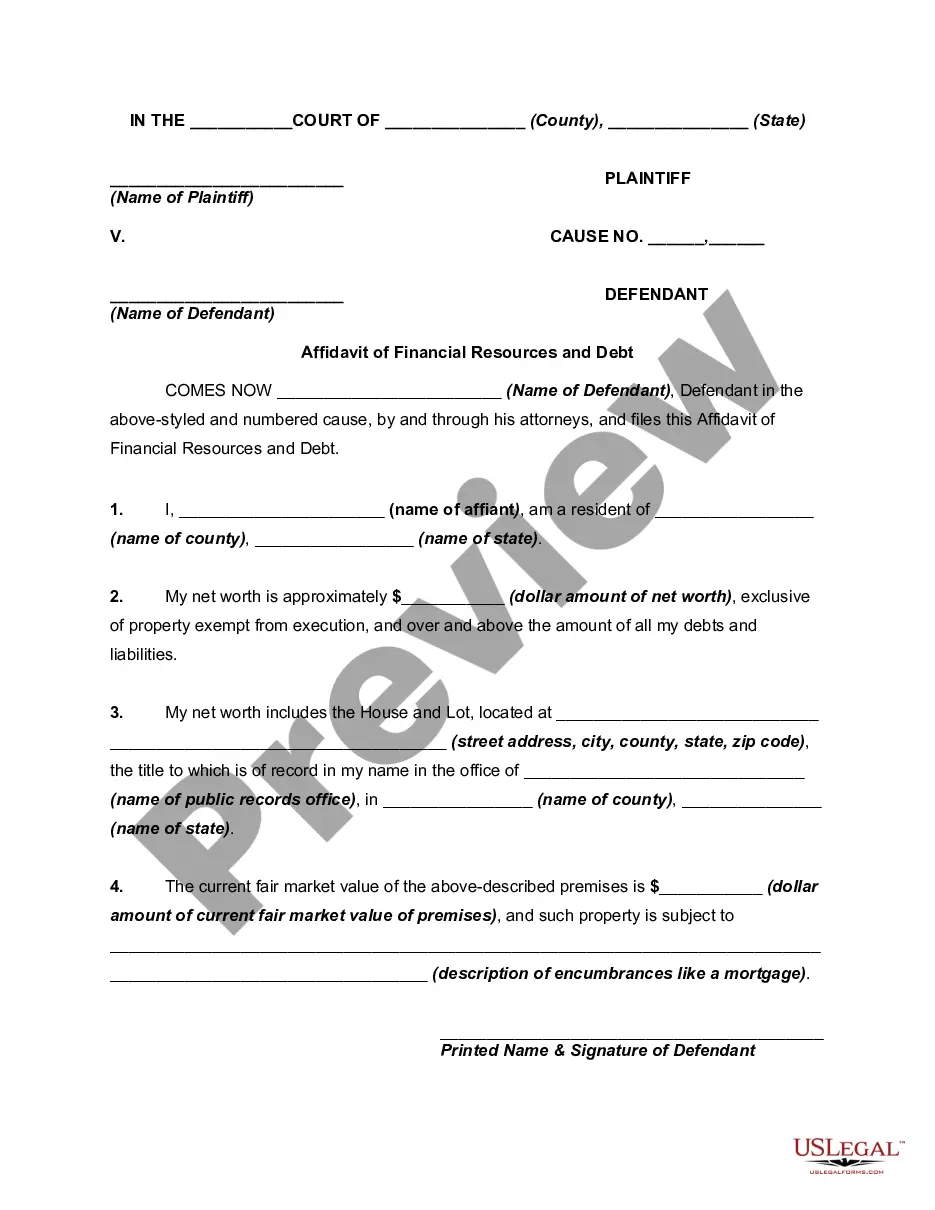

How to fill out Debtor's Affidavit Of Financial Status To Induce Creditor To Compromise Or Write Off The Debt Which Is Past Due - Assets And Liabilities?
Locating a reliable source to obtain the latest and pertinent legal templates is a significant part of dealing with bureaucracy.
Identifying the appropriate legal documents requires precision and carefulness, which is why it is essential to obtain samples of Creditor Write Off With A 1099 exclusively from trustworthy sources, such as US Legal Forms. An incorrect template can squander your time and hinder your current situation. With US Legal Forms, you have minimal concerns. You can access and review all the information regarding the document’s application and significance for your situation and in your state or county.
Eliminate the stress that comes with your legal documentation. Explore the comprehensive US Legal Forms catalog to find legal templates, verify their applicability to your situation, and download them immediately.
- Utilize the library navigation or search bar to locate your sample.
- Examine the form’s description to ensure it aligns with the criteria of your state and area.
- Preview the form, if possible, to confirm that it is the document you are looking for.
- Return to the search and find the correct template if the Creditor Write Off With A 1099 does not meet your requirements.
- If you are confident about the form’s applicability, download it.
- If you are an authorized user, click Log in to verify and access your chosen forms in My documents.
- If you do not yet have an account, click Buy now to acquire the form.
- Choose the pricing option that suits your needs.
- Proceed with the registration to complete your purchase.
- Finish your purchase by selecting a payment method (credit card or PayPal).
- Choose the file format for downloading Creditor Write Off With A 1099.
- Once you have the form on your device, you can edit it using the editor or print it and complete it manually.
Form popularity
FAQ
Box 1 - Date of the identifiable event. ... Box 2 - Amount of debt discharged. ... Box 3 - Interest, if included in box 2. ... Box 4 - Debt description. ... Box 5 - Check Here if the Debtor Was Personally Liable for Repayment of the Debt. ... Box 6 - Identifiable event code. ... Box 7 - Fair market value of property.
Ing to the IRS, nearly any debt you owe that is canceled, forgiven or discharged becomes taxable income to you. You should receive a Form 1099-C, "Cancellation of Debt," from the lender that forgave the debt.
After a debt is canceled, the creditor may send you a Form 1099-C, Cancellation of Debt showing the amount canceled and date of cancellation. Contact the creditor if you receive a 1099-C reflecting incorrect information.
If the lender can't collect the remaining debt from you, it may cancel the debt, which means the remaining $6,000 is reported on Form 1099-C. This amount is generally considered taxable income. Common reasons lenders send 1099-C forms include: Foreclosure.
File Form 1099-C for each debtor for whom you canceled $600 or more of a debt owed to you if: You are an applicable financial entity. An identifiable event has occurred.