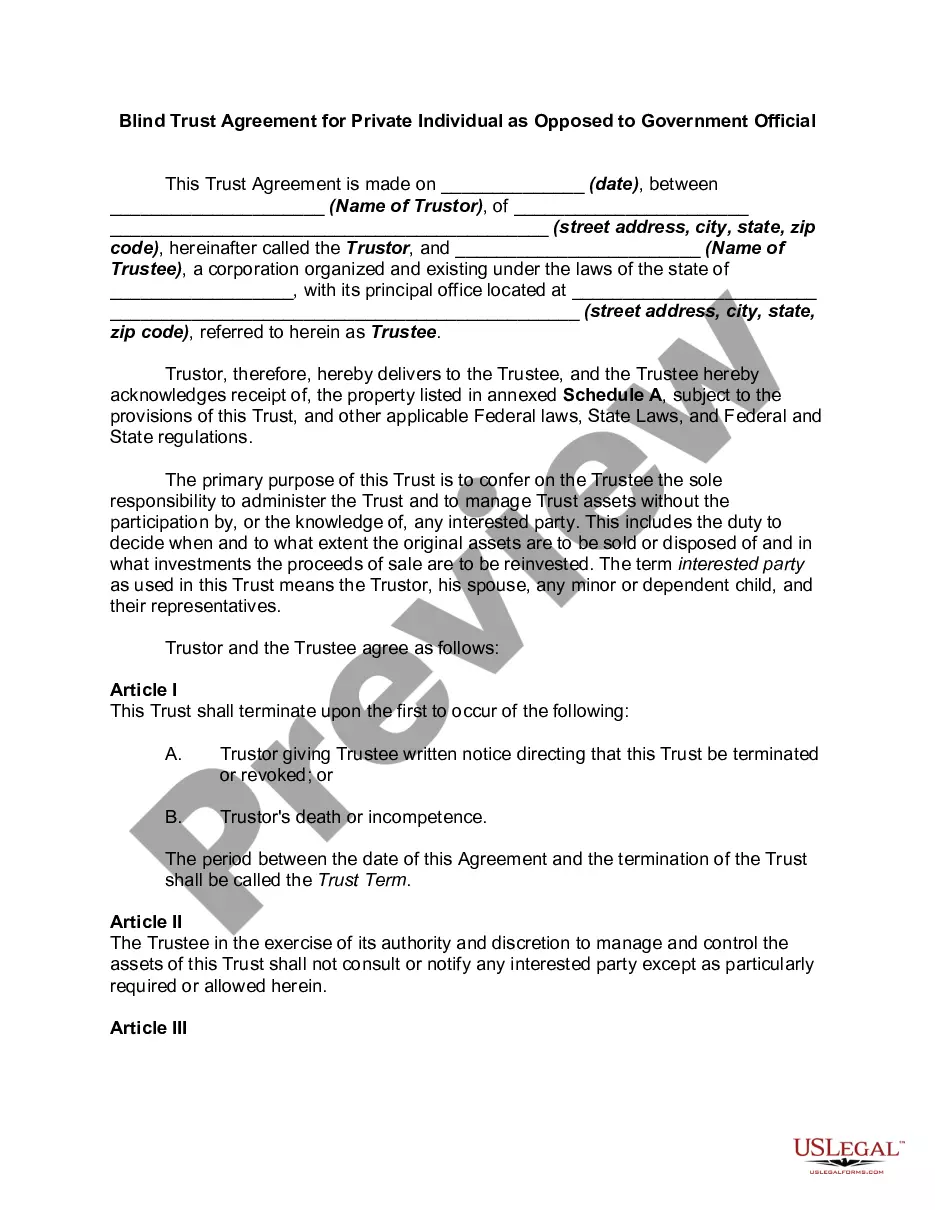
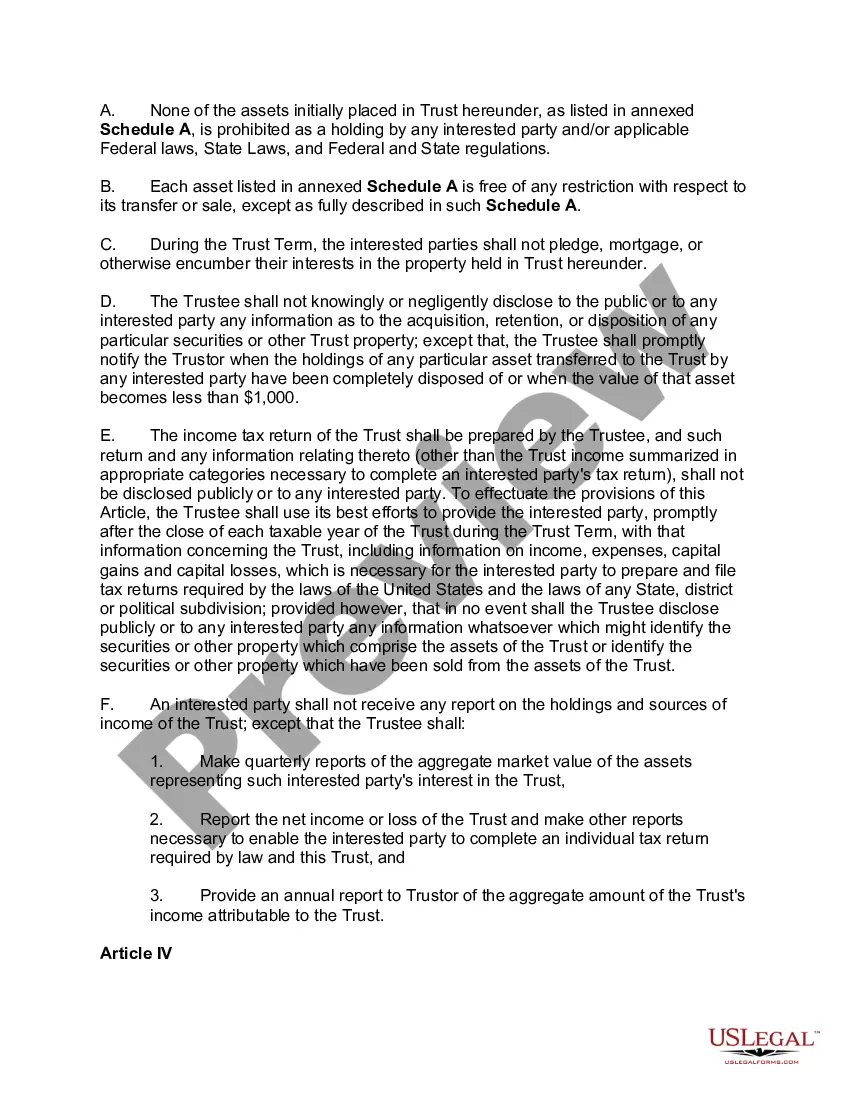
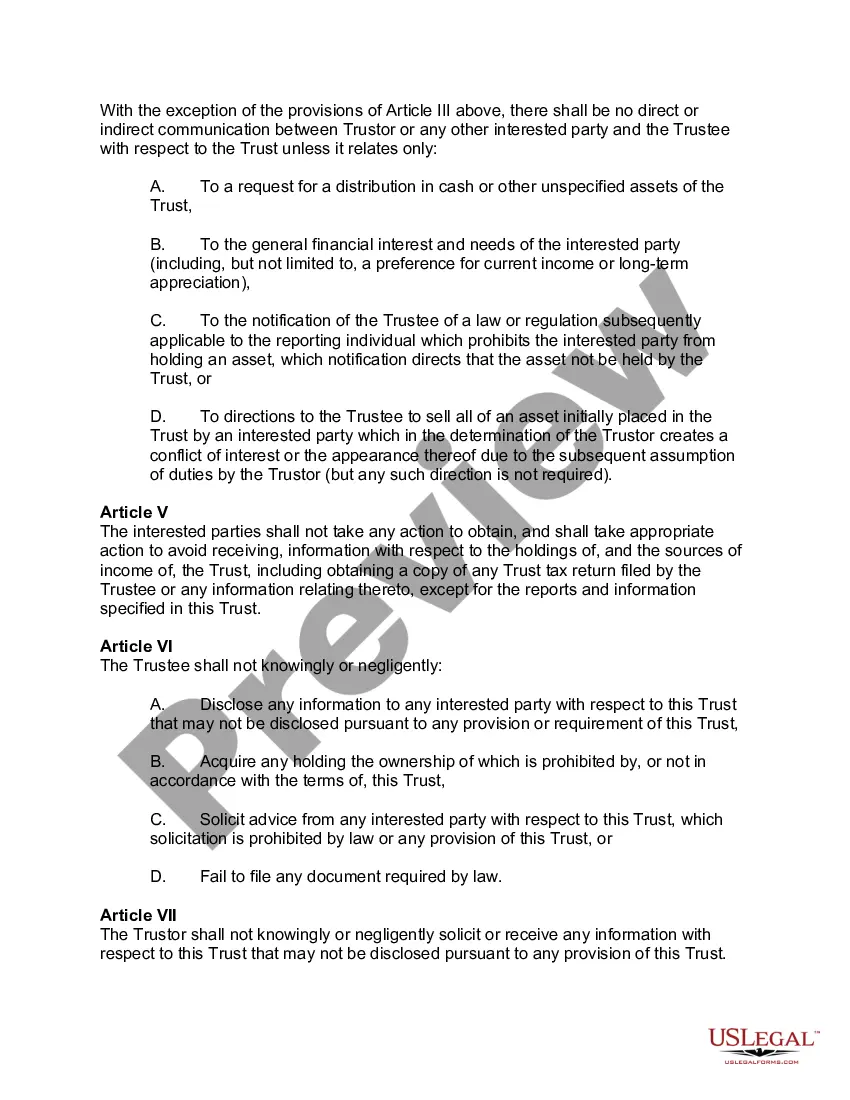
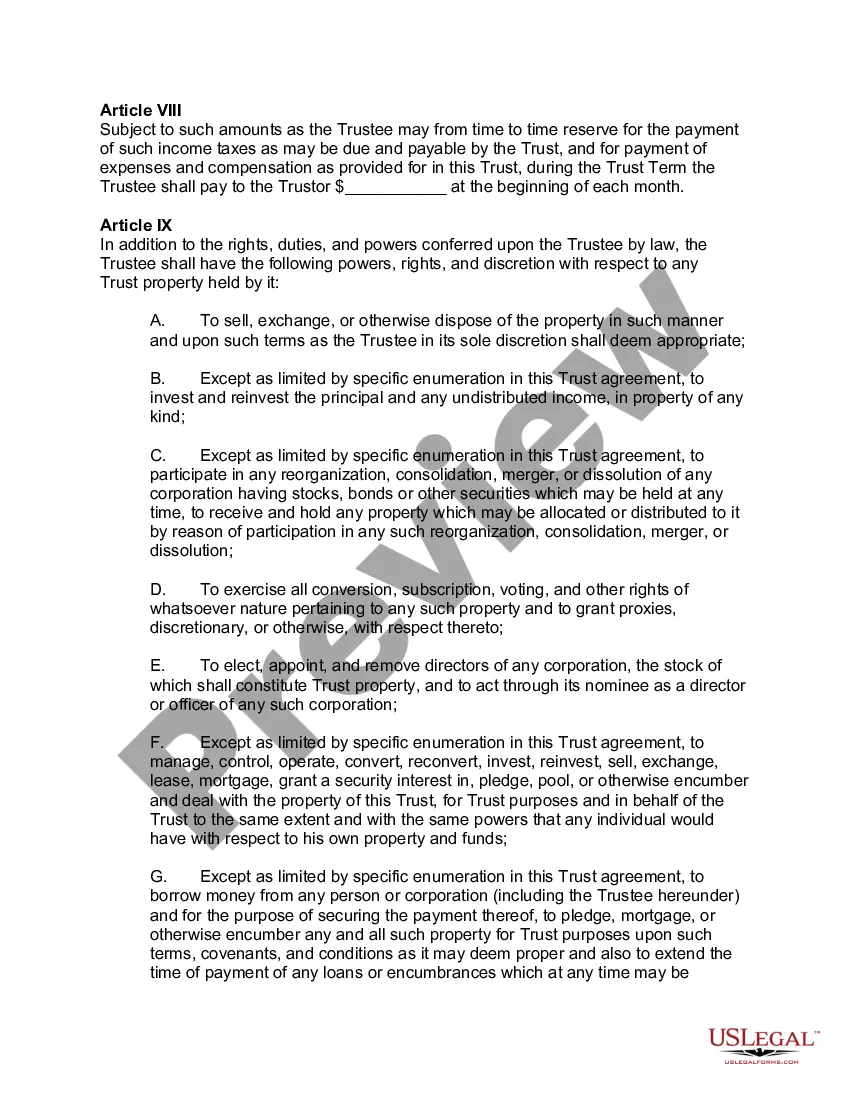
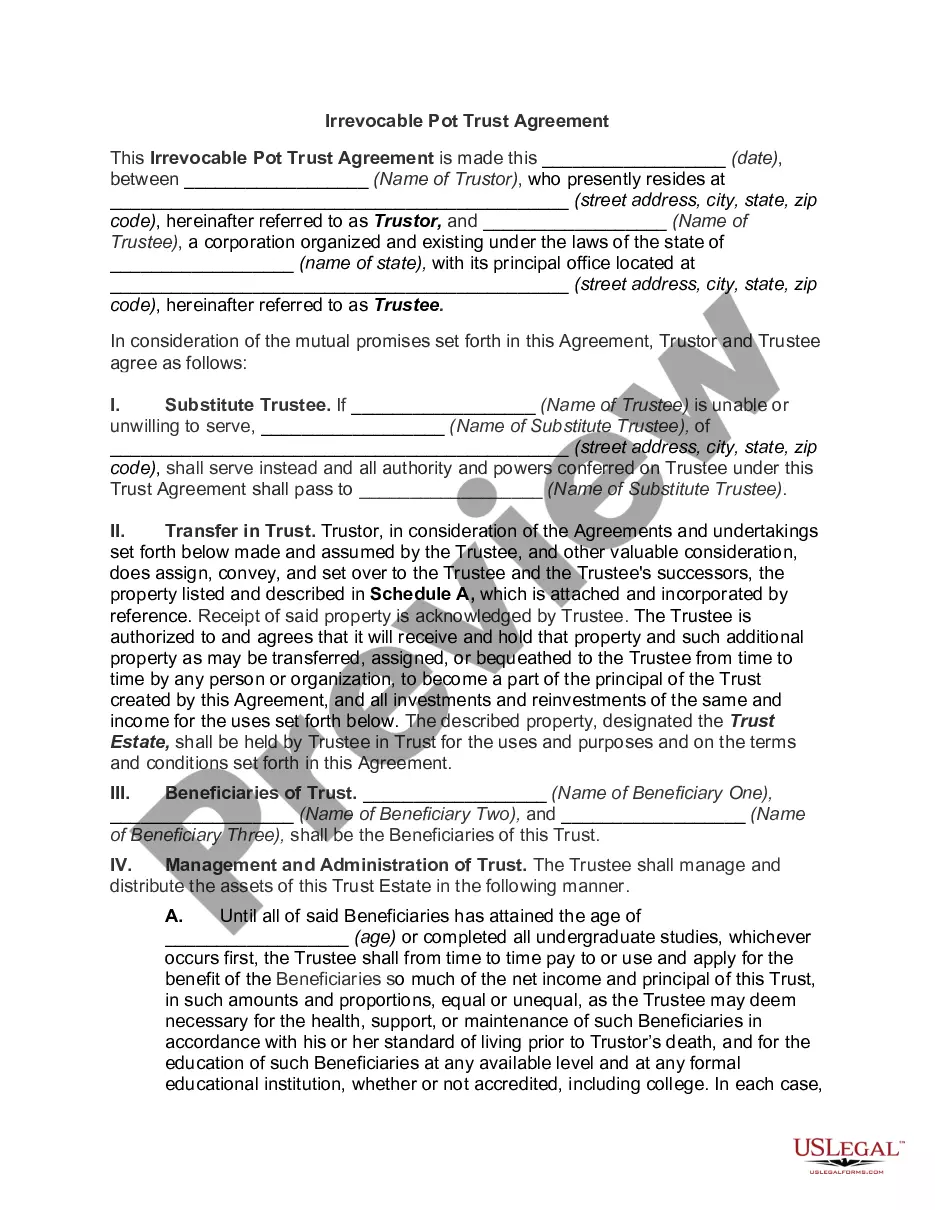
Blind Trust Sample For Lottery Winnings
Description
Get your form ready online
Our built-in tools help you complete, sign, share, and store your documents in one place.
Make edits, fill in missing information, and update formatting in US Legal Forms—just like you would in MS Word.
Download a copy, print it, send it by email, or mail it via USPS—whatever works best for your next step.
Sign and collect signatures with our SignNow integration. Send to multiple recipients, set reminders, and more. Go Premium to unlock E-Sign.
If this form requires notarization, complete it online through a secure video call—no need to meet a notary in person or wait for an appointment.
We protect your documents and personal data by following strict security and privacy standards.

Make edits, fill in missing information, and update formatting in US Legal Forms—just like you would in MS Word.

Download a copy, print it, send it by email, or mail it via USPS—whatever works best for your next step.

Sign and collect signatures with our SignNow integration. Send to multiple recipients, set reminders, and more. Go Premium to unlock E-Sign.

If this form requires notarization, complete it online through a secure video call—no need to meet a notary in person or wait for an appointment.

We protect your documents and personal data by following strict security and privacy standards.
Looking for another form?








How to fill out Blind Trust Agreement For Private Individual As Opposed To Government?
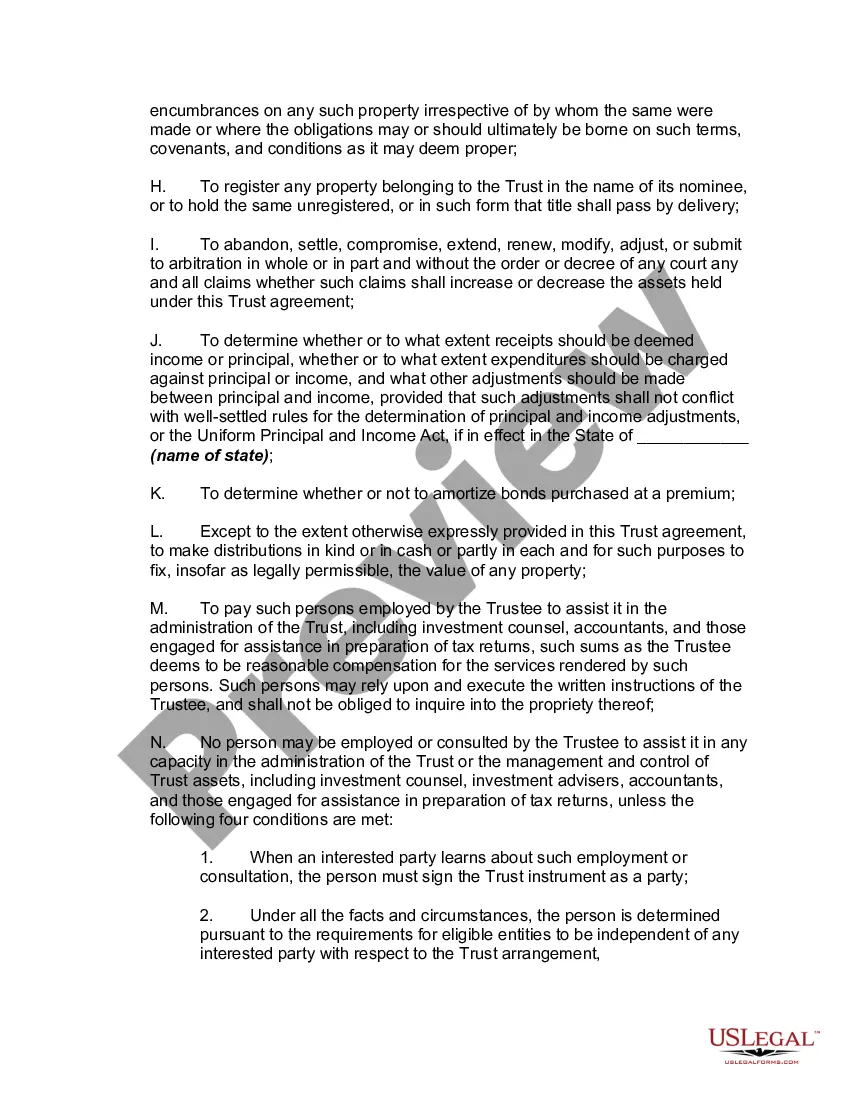
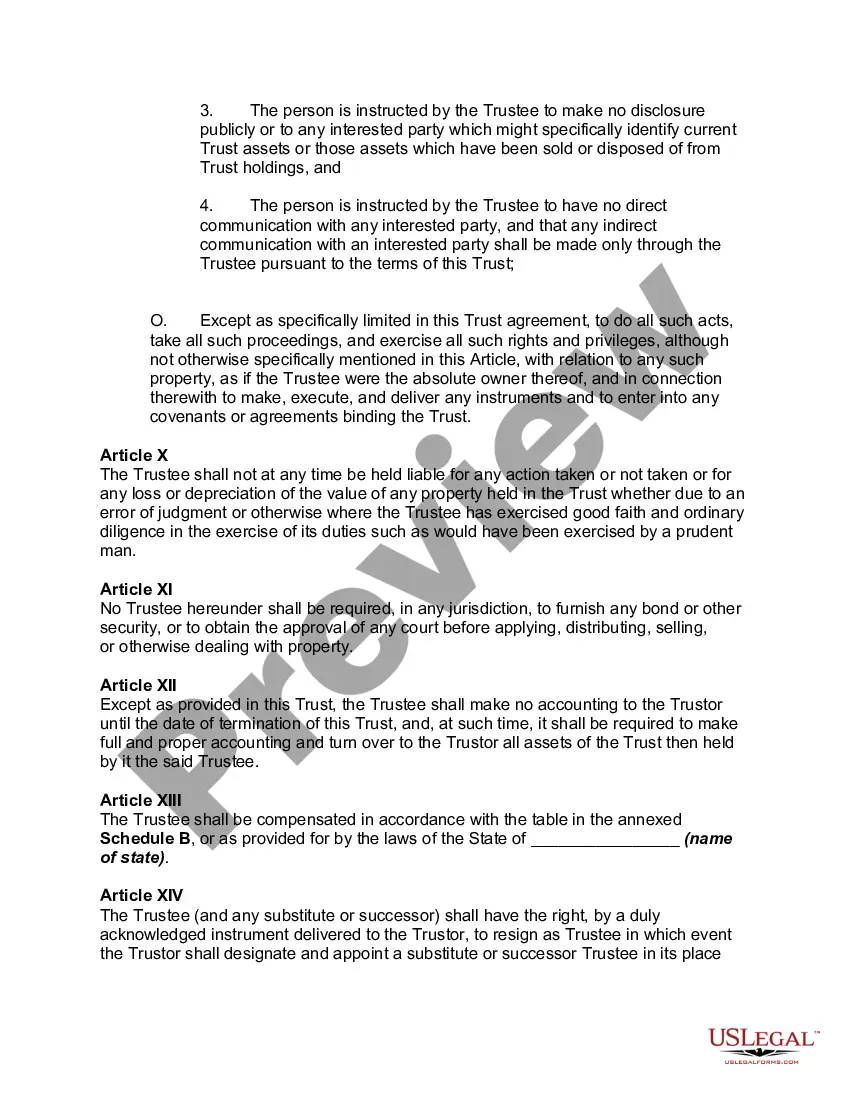
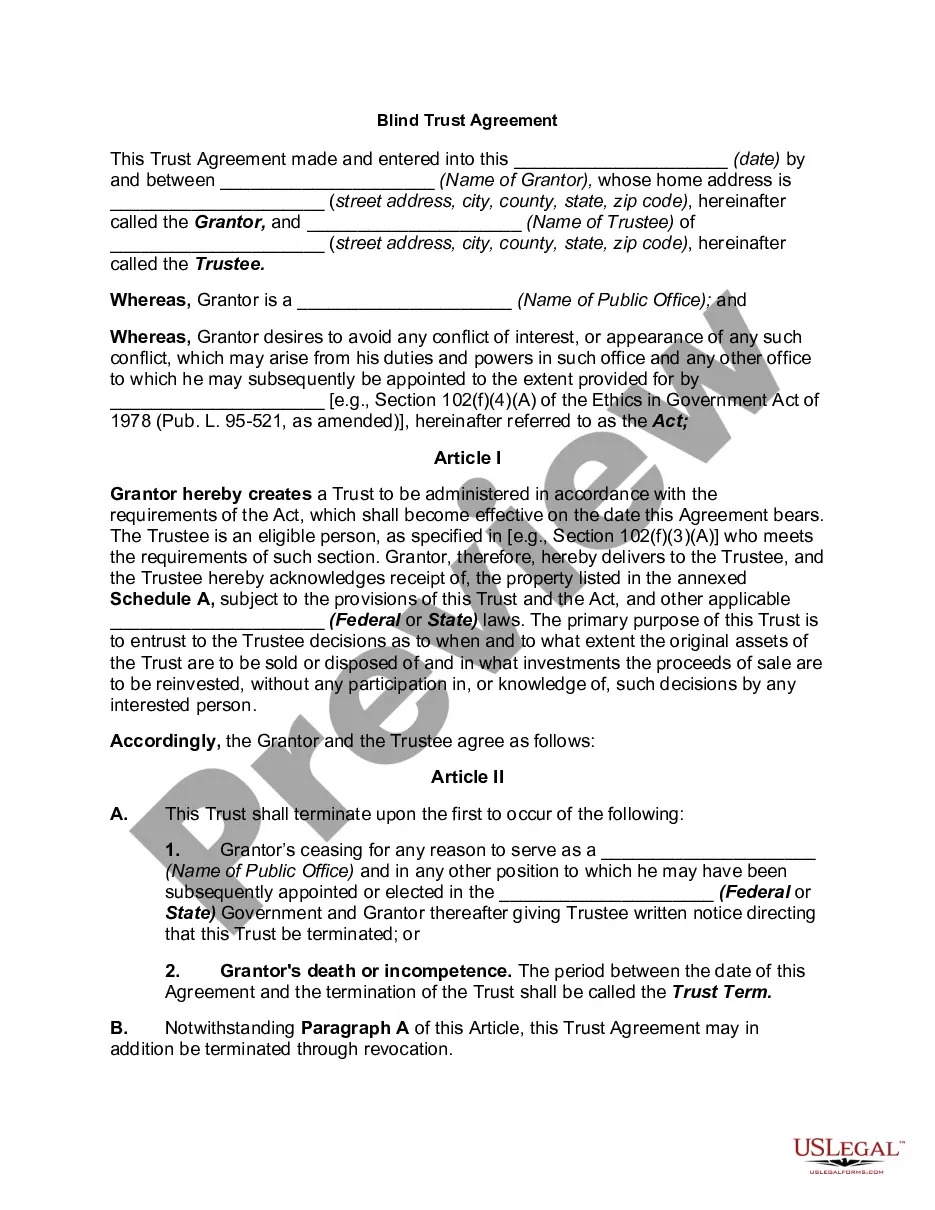
The Blind Trust Example For Lottery Gains you observe on this page is a versatile legal template crafted by experienced attorneys in accordance with federal and local laws.
For over 25 years, US Legal Forms has supplied individuals, businesses, and lawyers with more than 85,000 authenticated, state-specific documents for any professional or personal situation. It’s the fastest, easiest, and most dependable method to acquire the papers you require, as the service ensures the utmost level of data protection and anti-malware safeguards.
Subscribe to US Legal Forms to have verified legal templates for all of life’s scenarios at your fingertips.
- Search for the document you require and verify it.
- Browse through the sample you looked for and preview it or examine the form description to ensure it meets your needs. If it does not, use the search bar to find the appropriate one. Click Buy Now once you have found the template you require.
- Register and Log In.
- Choose the pricing plan that fits you and create an account. Use PayPal or a credit card for a swift payment. If you already possess an account, Log In and review your subscription to proceed.
- Acquire the fillable template.
- Select the format you desire for your Blind Trust Example For Lottery Gains (PDF, Word, RTF) and download the sample onto your device.
- Complete and sign the documents.
- Print the template to fill it out manually. Alternatively, utilize an online multifunctional PDF editor to swiftly and accurately fill out and sign your form with an eSignature.
- Redownload your documents.
- Utilize the same document again whenever necessary. Access the My documents tab in your profile to redownload any previously saved forms.
Form popularity
FAQ
Irrevocable Blind Trust: These often have more favorable tax implications as the trust is considered a separate tax entity. The grantor usually does not have tax liability for the income generated within the trust. However, the trust may be subject to income tax, and distributions to beneficiaries may also be taxed.
A blind trust is most common with public officials whose decisions can directly affect the financial markets, but another example would be creating a blind trust to hide its monetary value from an individual whose behavior and actions would change if they were privy to it.
An irrevocable trust, however, gives you greater asset protection. They protect lottery winnings and investments because the assets legally do not belong to you, and they benefit your family, as they are not subject to estate taxes.
How to Set Up a Blind Trust Gather the documentation for the assets that you want put into the blind trust. ... Appoint a trustee. ... Create the trust agreement. ... Sign the trust and have it notarized, taking care to follow any recording laws that your state has. Officially transfer the relevant assets into the trust.