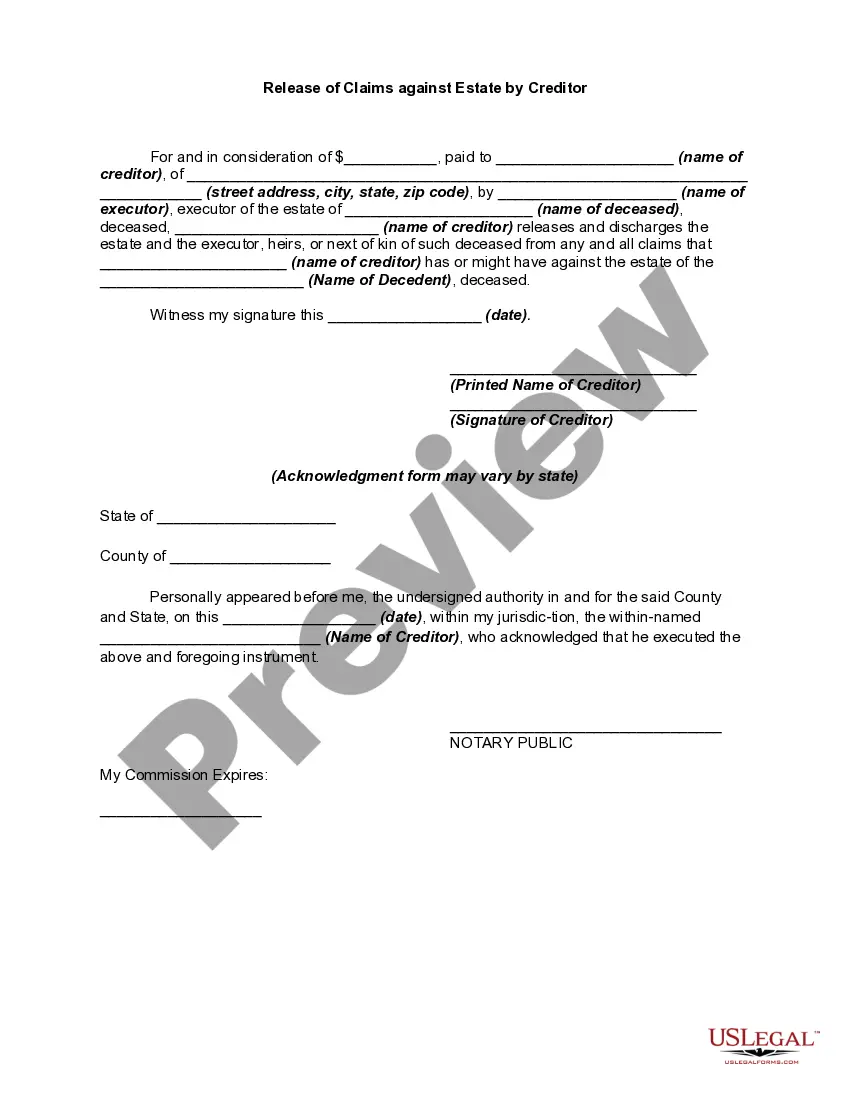
Executor Release Claims Without A Lawyer
Description
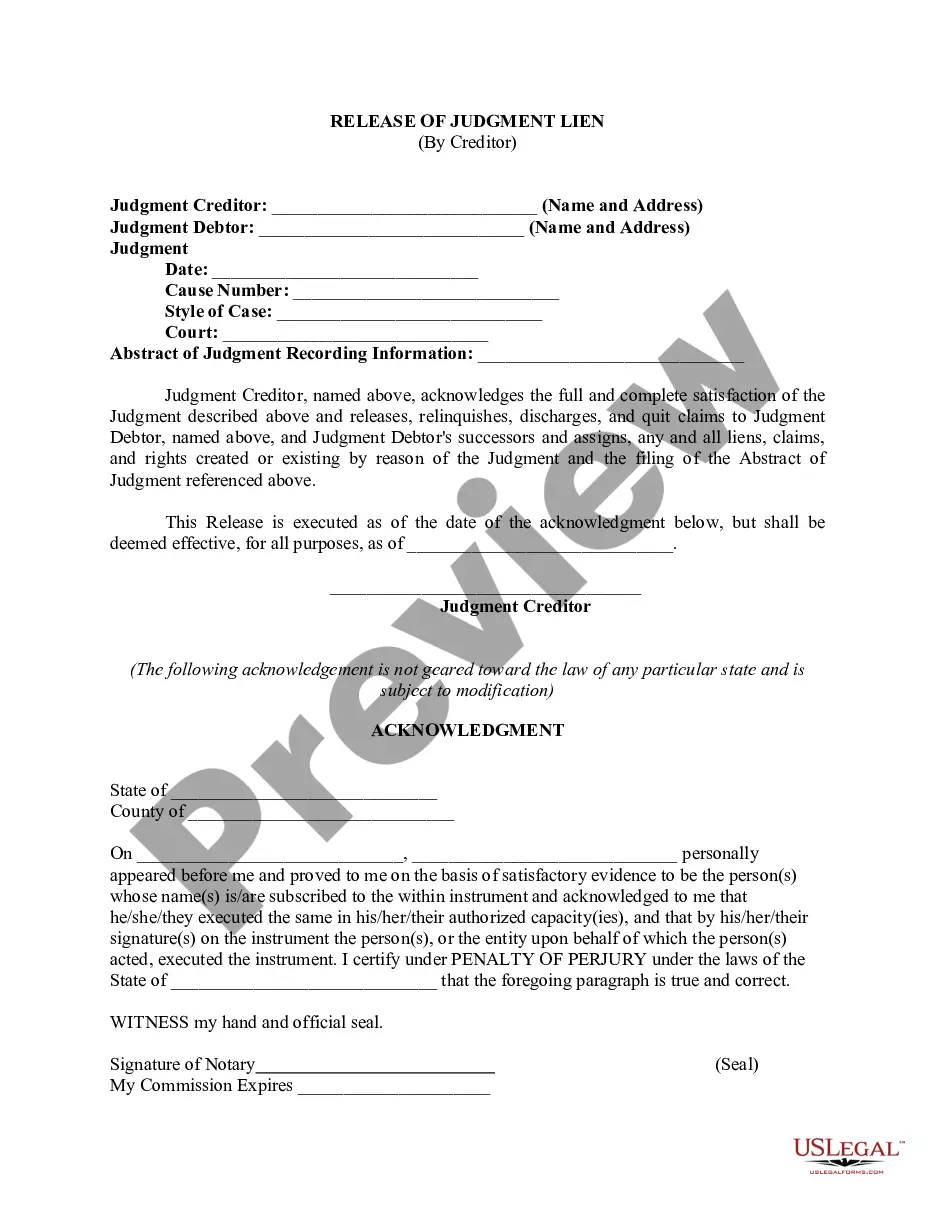
Get your form ready online
Our built-in tools help you complete, sign, share, and store your documents in one place.
Make edits, fill in missing information, and update formatting in US Legal Forms—just like you would in MS Word.
Download a copy, print it, send it by email, or mail it via USPS—whatever works best for your next step.
Sign and collect signatures with our SignNow integration. Send to multiple recipients, set reminders, and more. Go Premium to unlock E-Sign.
If this form requires notarization, complete it online through a secure video call—no need to meet a notary in person or wait for an appointment.
We protect your documents and personal data by following strict security and privacy standards.

Make edits, fill in missing information, and update formatting in US Legal Forms—just like you would in MS Word.

Download a copy, print it, send it by email, or mail it via USPS—whatever works best for your next step.

Sign and collect signatures with our SignNow integration. Send to multiple recipients, set reminders, and more. Go Premium to unlock E-Sign.

If this form requires notarization, complete it online through a secure video call—no need to meet a notary in person or wait for an appointment.

We protect your documents and personal data by following strict security and privacy standards.
Looking for another form?



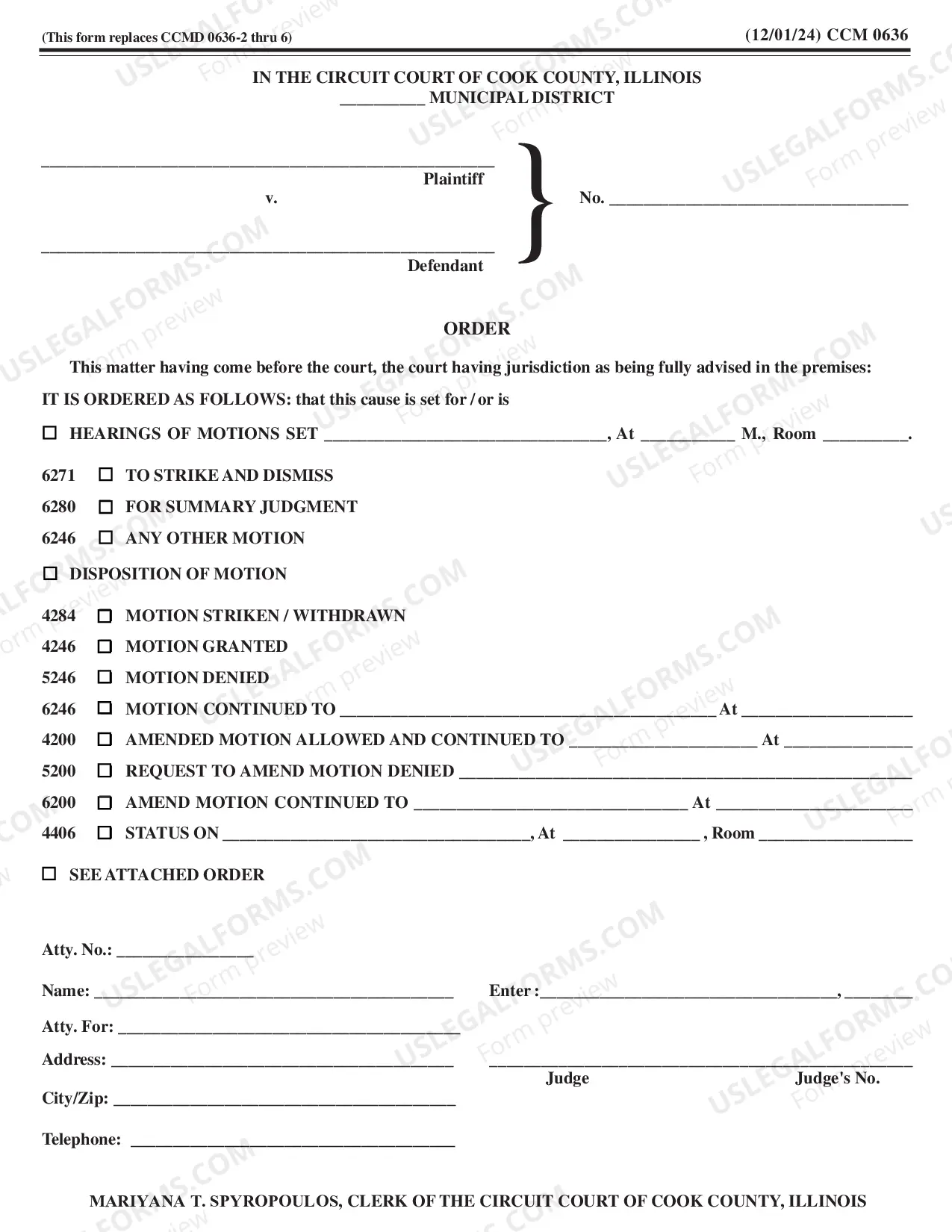



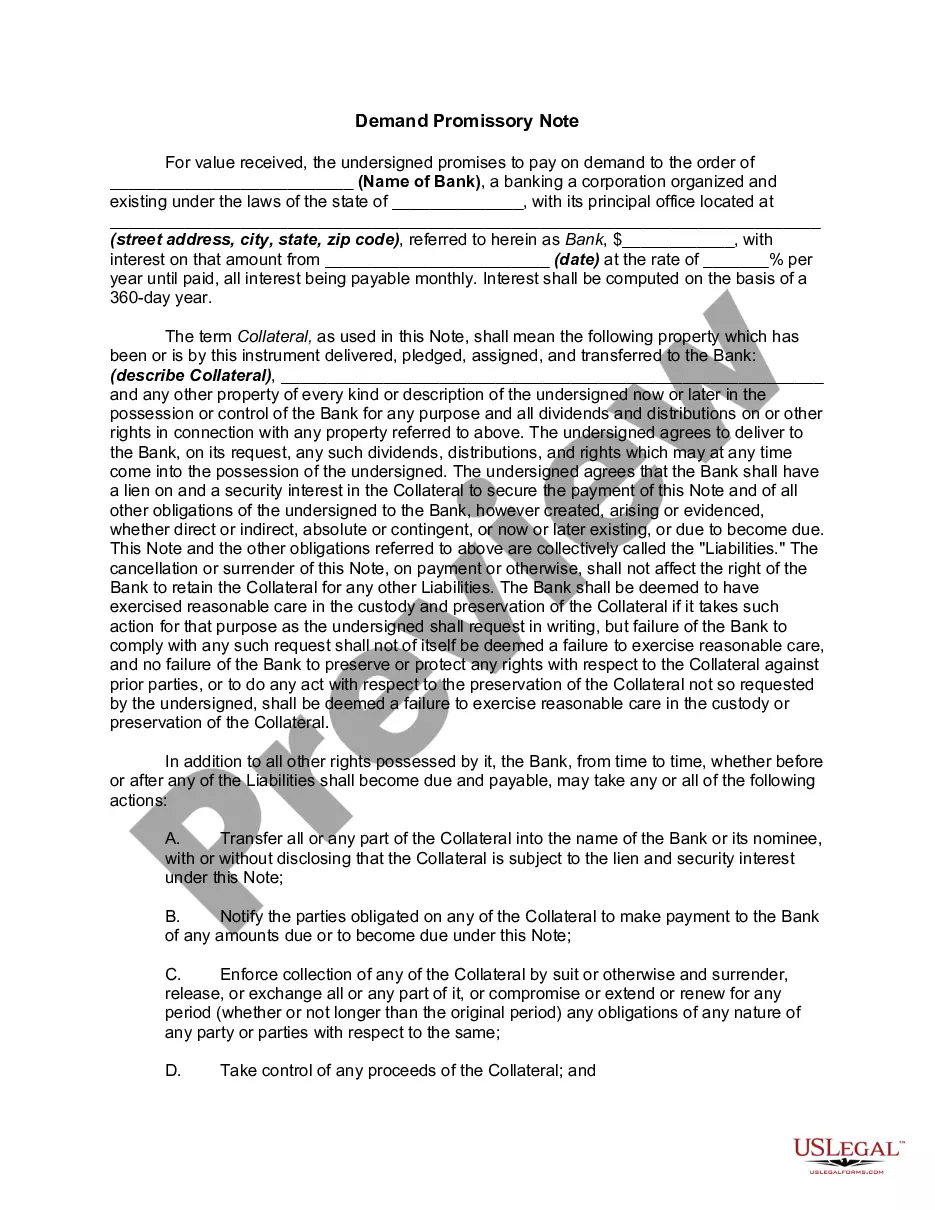
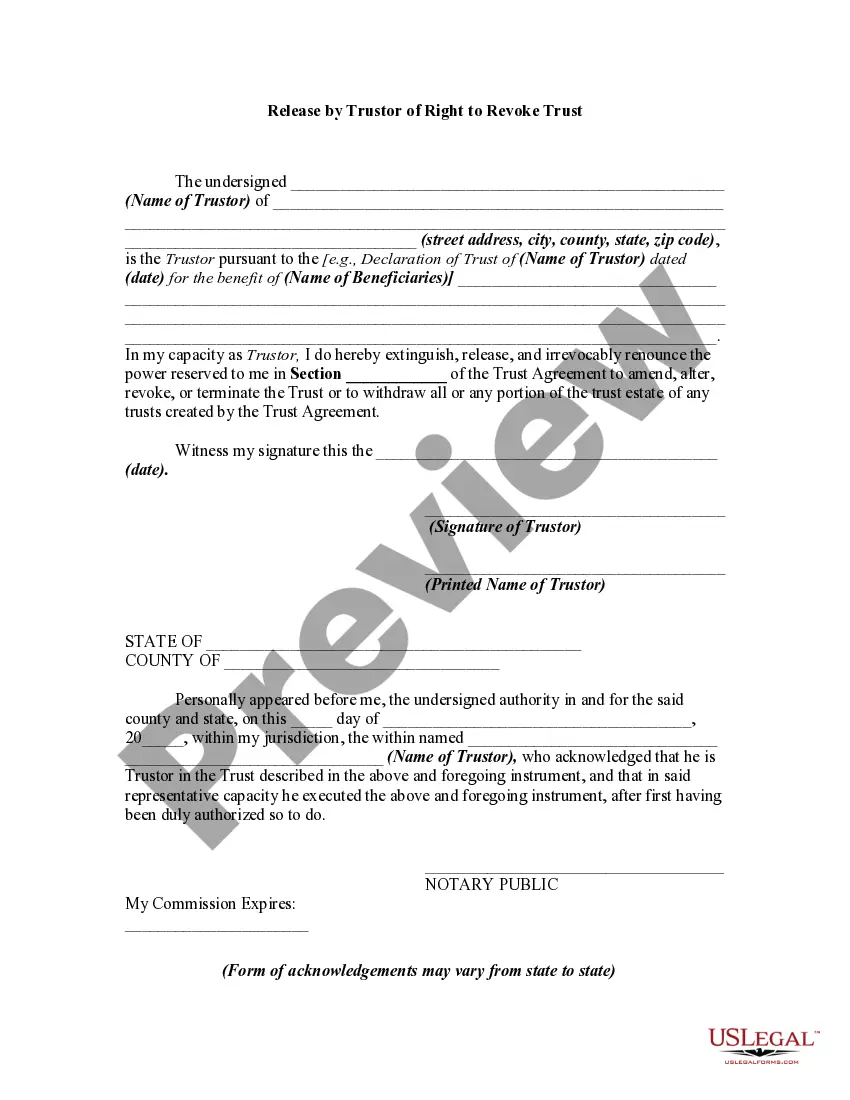
How to fill out Release Of Claims Against Estate By Creditor?
Legal management can be mind-boggling, even for experienced experts. When you are looking for a Executor Release Claims Without A Lawyer and don’t have the time to devote looking for the correct and up-to-date version, the processes might be stressful. A strong web form library could be a gamechanger for anyone who wants to take care of these situations successfully. US Legal Forms is a market leader in online legal forms, with more than 85,000 state-specific legal forms available at any moment.
With US Legal Forms, you can:
- Access state- or county-specific legal and business forms. US Legal Forms covers any demands you could have, from individual to enterprise documents, all-in-one spot.
- Employ innovative tools to finish and handle your Executor Release Claims Without A Lawyer
- Access a resource base of articles, guides and handbooks and materials related to your situation and requirements
Save time and effort looking for the documents you need, and make use of US Legal Forms’ advanced search and Preview tool to locate Executor Release Claims Without A Lawyer and download it. If you have a monthly subscription, log in to the US Legal Forms account, search for the form, and download it. Review your My Forms tab to see the documents you previously downloaded as well as to handle your folders as you can see fit.
Should it be the first time with US Legal Forms, make an account and have limitless use of all benefits of the platform. Here are the steps for taking after accessing the form you want:
- Confirm it is the right form by previewing it and reading through its information.
- Ensure that the sample is accepted in your state or county.
- Pick Buy Now when you are ready.
- Select a monthly subscription plan.
- Find the file format you want, and Download, complete, eSign, print out and send out your papers.
Enjoy the US Legal Forms web library, backed with 25 years of expertise and stability. Transform your daily papers managing in to a easy and intuitive process today.
Form popularity
FAQ
Keeping proper accounts An executor must account to the residuary beneficiaries named in the Will (and sometimes to others) for all the assets of the estate, including all receipts and disbursements occurring over the course of administration.
In the context of an estate, it means the beneficiaries agree to relinquish any claim they may have against the executor. When the estate falls short, however, demanding a release is good practice.
How To Make A Will Decide the type of will you'd like to make. ... Choose your executor. ... Select your beneficiaries and any specific gifts you'd like to leave. ... Designate a guardian for any dependent children and any pets. ... List any funeral and burial wishes. ... Print your will and get it properly signed and witnessed.
Serve the 210-day waiting period Once the grant of probate is issued, a 210-day waiting period must pass before the executor can distribute the estate, unless all beneficiaries consent or there is a court order.
There is a duty at common law and under the Trustee Act for estate trustees, executors, administrators, and guardians to keep complete and accurate accounts of the assets under their administration. A beneficiary is entitled, on notice, to inspect the accounts and any of the supporting documentation.