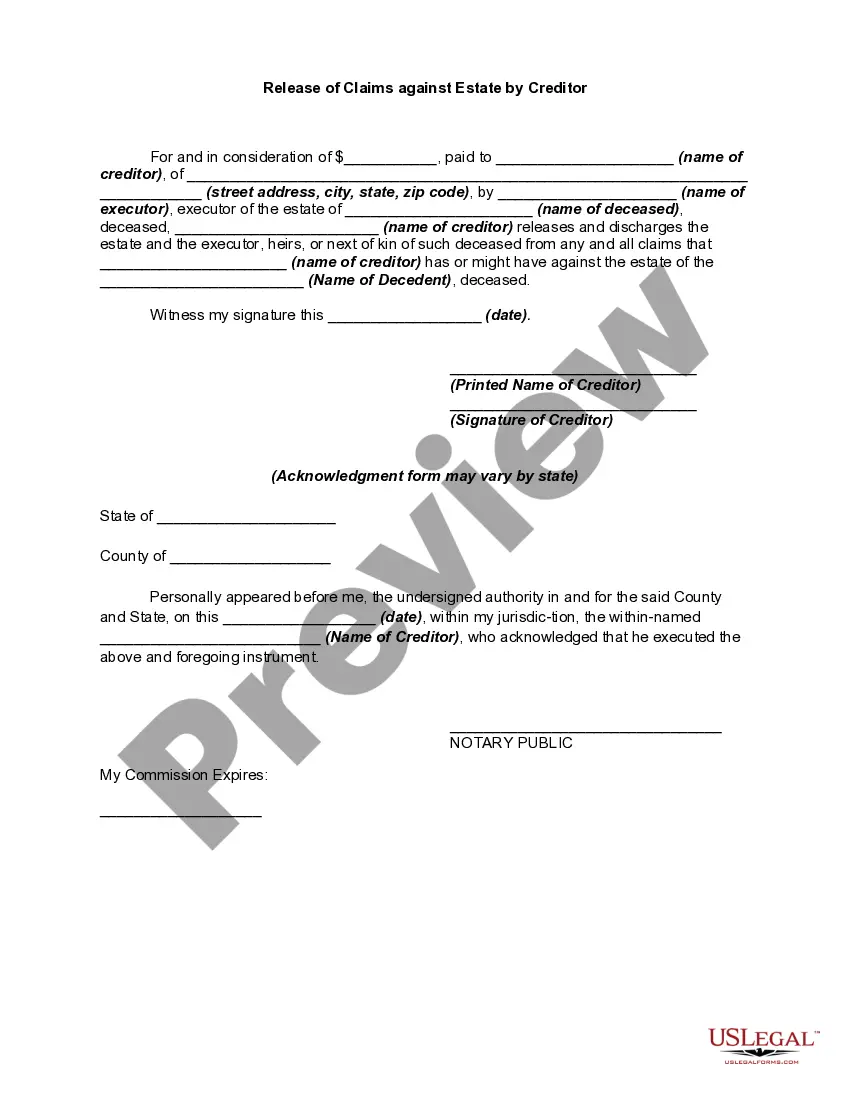
Estate Deceased Release With No Will
Description
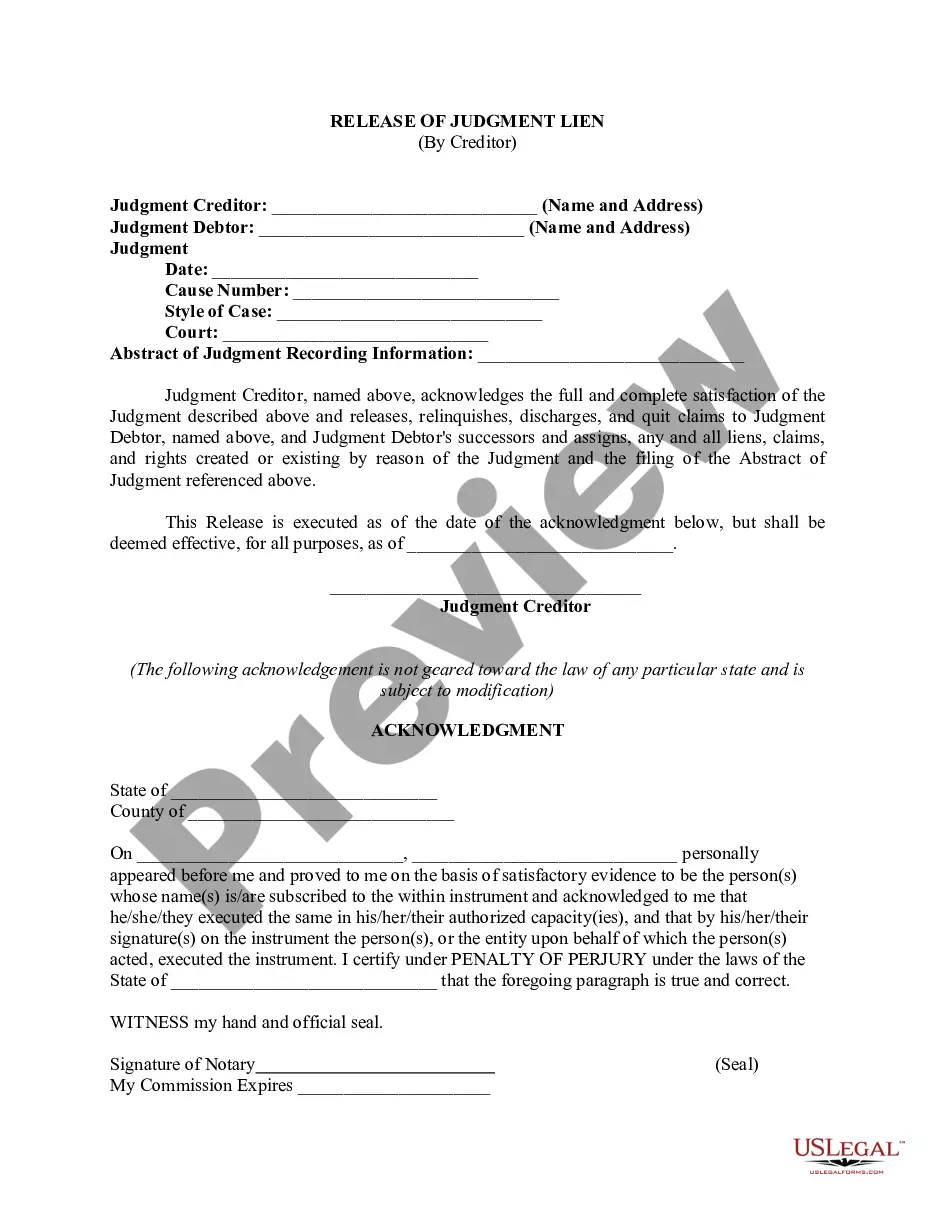
Get your form ready online
Our built-in tools help you complete, sign, share, and store your documents in one place.
Make edits, fill in missing information, and update formatting in US Legal Forms—just like you would in MS Word.
Download a copy, print it, send it by email, or mail it via USPS—whatever works best for your next step.
Sign and collect signatures with our SignNow integration. Send to multiple recipients, set reminders, and more. Go Premium to unlock E-Sign.
If this form requires notarization, complete it online through a secure video call—no need to meet a notary in person or wait for an appointment.
We protect your documents and personal data by following strict security and privacy standards.

Make edits, fill in missing information, and update formatting in US Legal Forms—just like you would in MS Word.

Download a copy, print it, send it by email, or mail it via USPS—whatever works best for your next step.

Sign and collect signatures with our SignNow integration. Send to multiple recipients, set reminders, and more. Go Premium to unlock E-Sign.

If this form requires notarization, complete it online through a secure video call—no need to meet a notary in person or wait for an appointment.

We protect your documents and personal data by following strict security and privacy standards.
Looking for another form?






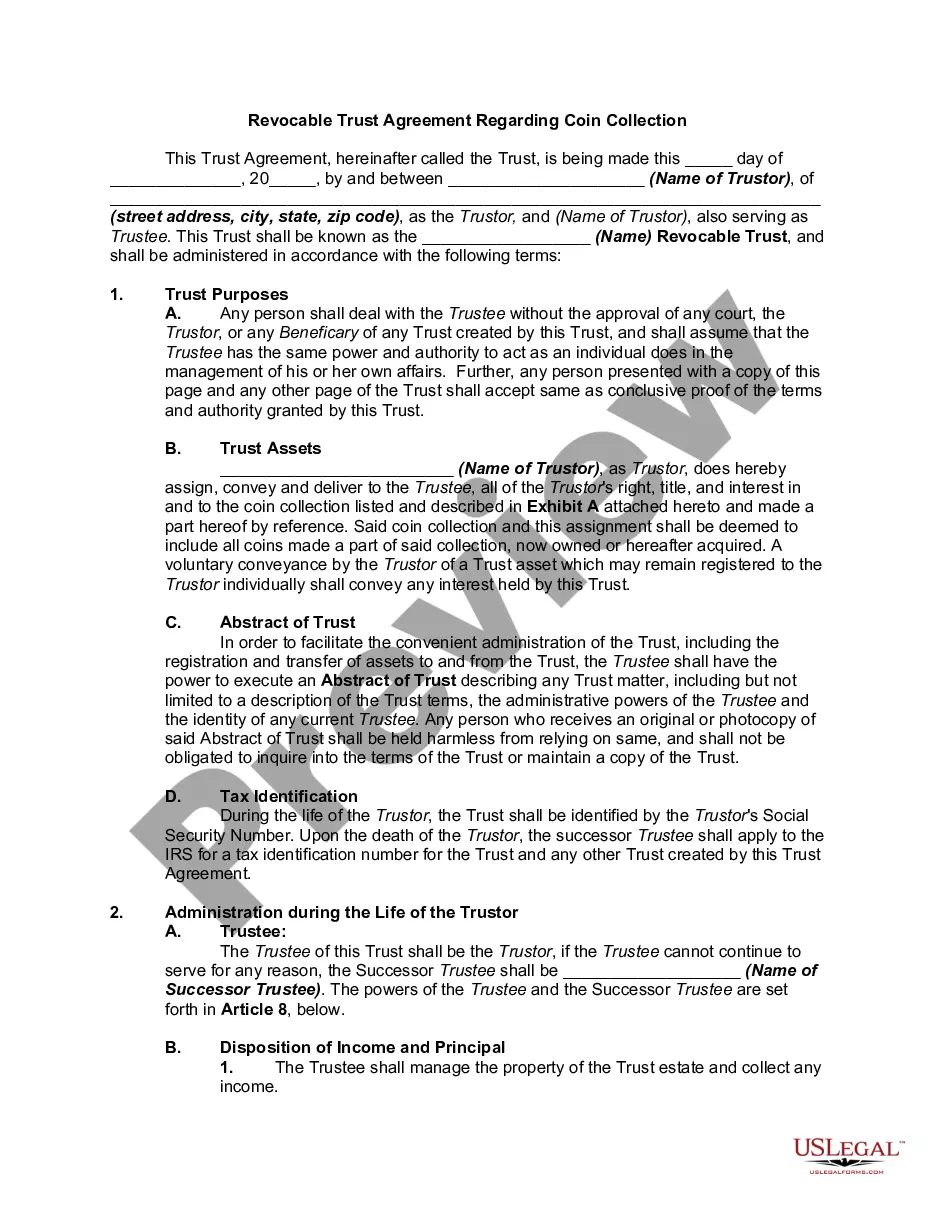


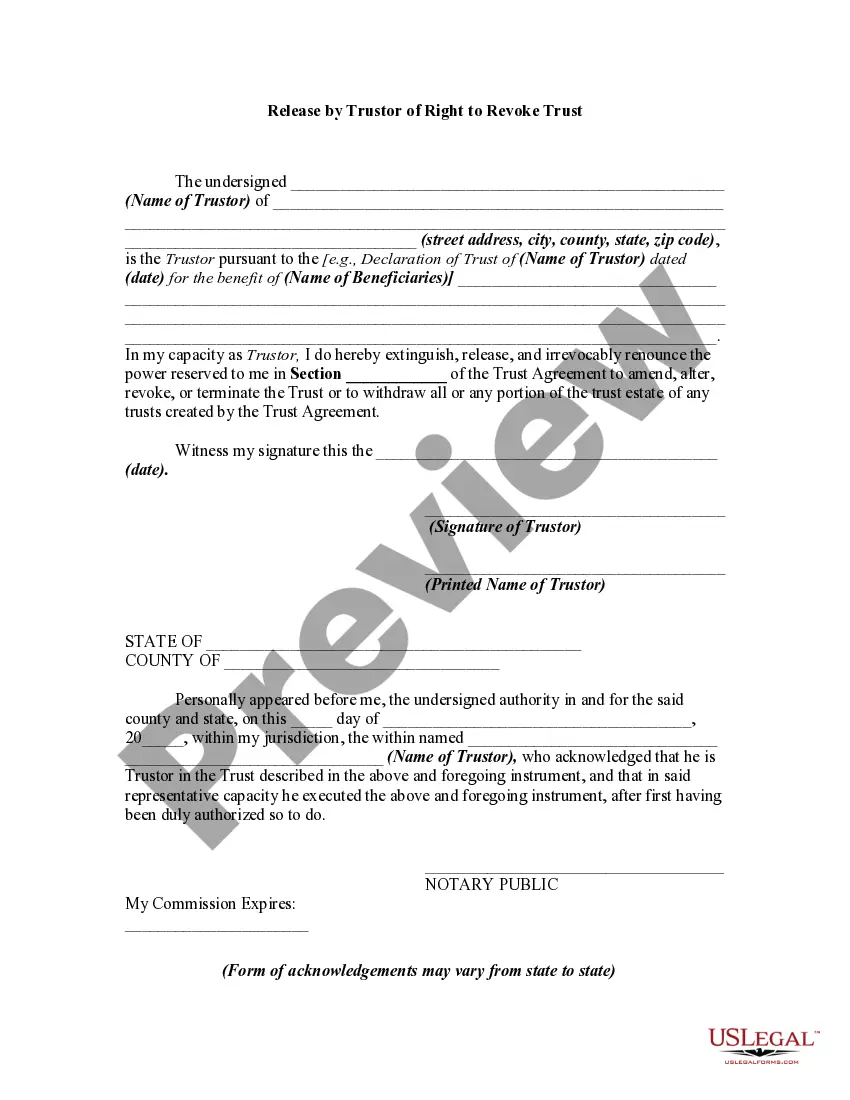
How to fill out Release Of Claims Against Estate By Creditor?
Engaging with legal documents and processes can be an arduous addition to your entire day.
Estate Deceased Release Without Will and similar forms often necessitate you to search for them and comprehend the optimal way to fill them out accurately.
For that purpose, whether you are managing financial, legal, or personal affairs, utilizing a complete and user-friendly online directory of forms readily available will be immensely beneficial.
US Legal Forms is the leading online platform for legal templates, featuring over 85,000 state-specific forms and a range of tools to assist you in completing your documents effortlessly.
If it's your first time using US Legal Forms, register and create your account in just a few minutes, gaining access to the form directory and Estate Deceased Release Without Will. Then, follow the steps below to finalize your form.
- Browse the collection of relevant documents accessible to you with just one click.
- US Legal Forms provides state- and county-specific forms available at any time for download.
- Protect your document management activities with a high-quality service that enables you to prepare any form in minutes without any extra or concealed fees.
Form popularity
FAQ
Without a named beneficiary, your life insurance proceeds become part of your estate. The life insurance proceeds get distributed ingly, along with the rest of your assets. Your estate may need to go through probate, which often charges substantial fees and could take a long time before reaching your heirs.
If a person dies without a will they are considered intestate "without a will". Therefore that person's property and estate is distributed ing to the state that is their home state. Real property is handled ing to state law. The distribution of all property is by relationship to the deceased.
Intestacy: Dying without a will In New Hampshire in the absence of a will, a surviving spouse inherits the entire estate unless the decedent and the spouse share descendants, in which case the spouse inherits the first $250,000 of the estate plus half the balance.
Though it can be a complex process, probate in New Hampshire is a state requirement to claim your inheritance when a loved one dies.
When a person dies without a will, their estate is called an intestate estate. It is the Administrator's responsibility, under the court's supervision, to ensure that the debts and assets of the estate are managed and distributed in ance with New Hampshire law.