Unincorporated Area
Description

Get your form ready online
Our built-in tools help you complete, sign, share, and store your documents in one place.
Make edits, fill in missing information, and update formatting in US Legal Forms—just like you would in MS Word.
Download a copy, print it, send it by email, or mail it via USPS—whatever works best for your next step.
Sign and collect signatures with our SignNow integration. Send to multiple recipients, set reminders, and more. Go Premium to unlock E-Sign.
If this form requires notarization, complete it online through a secure video call—no need to meet a notary in person or wait for an appointment.
We protect your documents and personal data by following strict security and privacy standards.

Make edits, fill in missing information, and update formatting in US Legal Forms—just like you would in MS Word.

Download a copy, print it, send it by email, or mail it via USPS—whatever works best for your next step.

Sign and collect signatures with our SignNow integration. Send to multiple recipients, set reminders, and more. Go Premium to unlock E-Sign.

If this form requires notarization, complete it online through a secure video call—no need to meet a notary in person or wait for an appointment.

We protect your documents and personal data by following strict security and privacy standards.
Looking for another form?

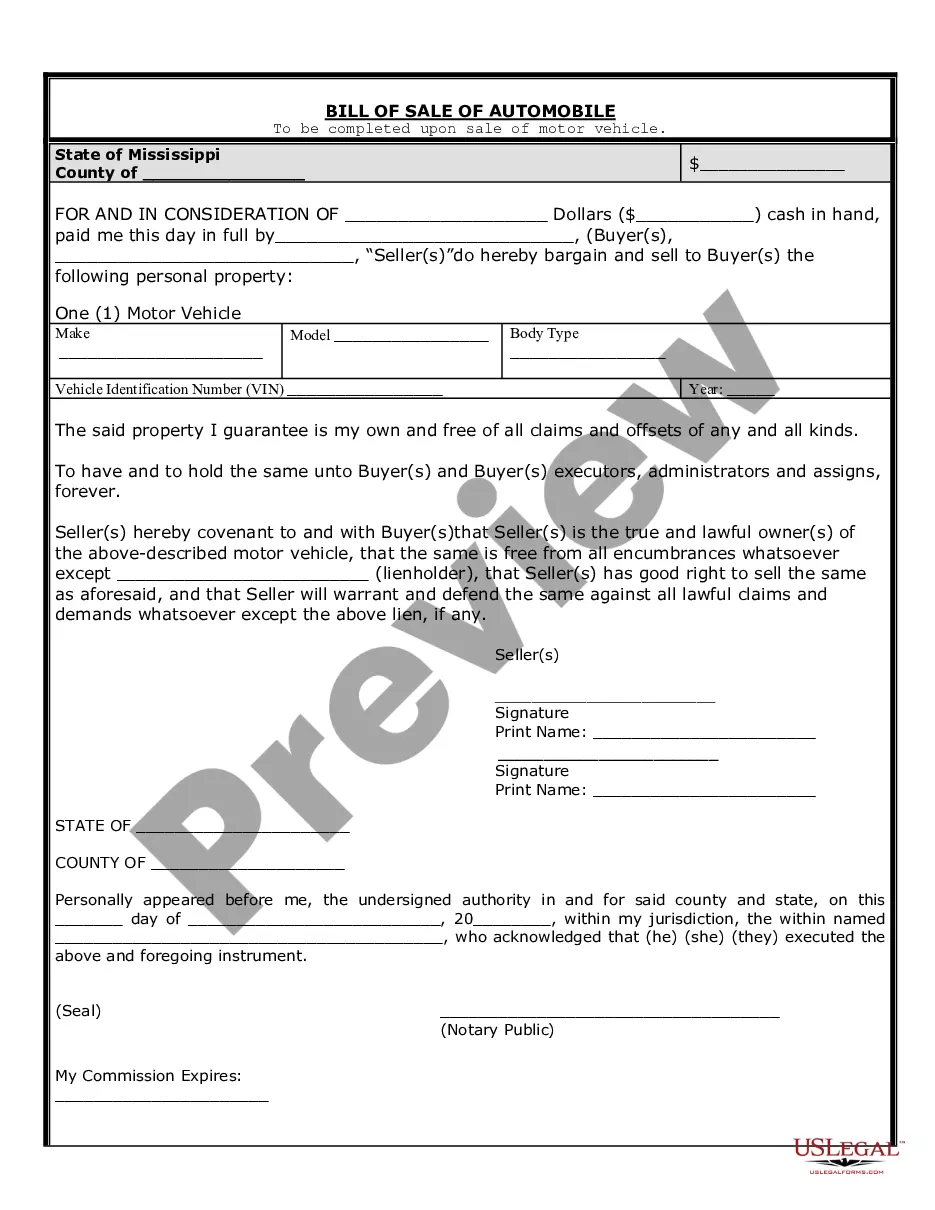


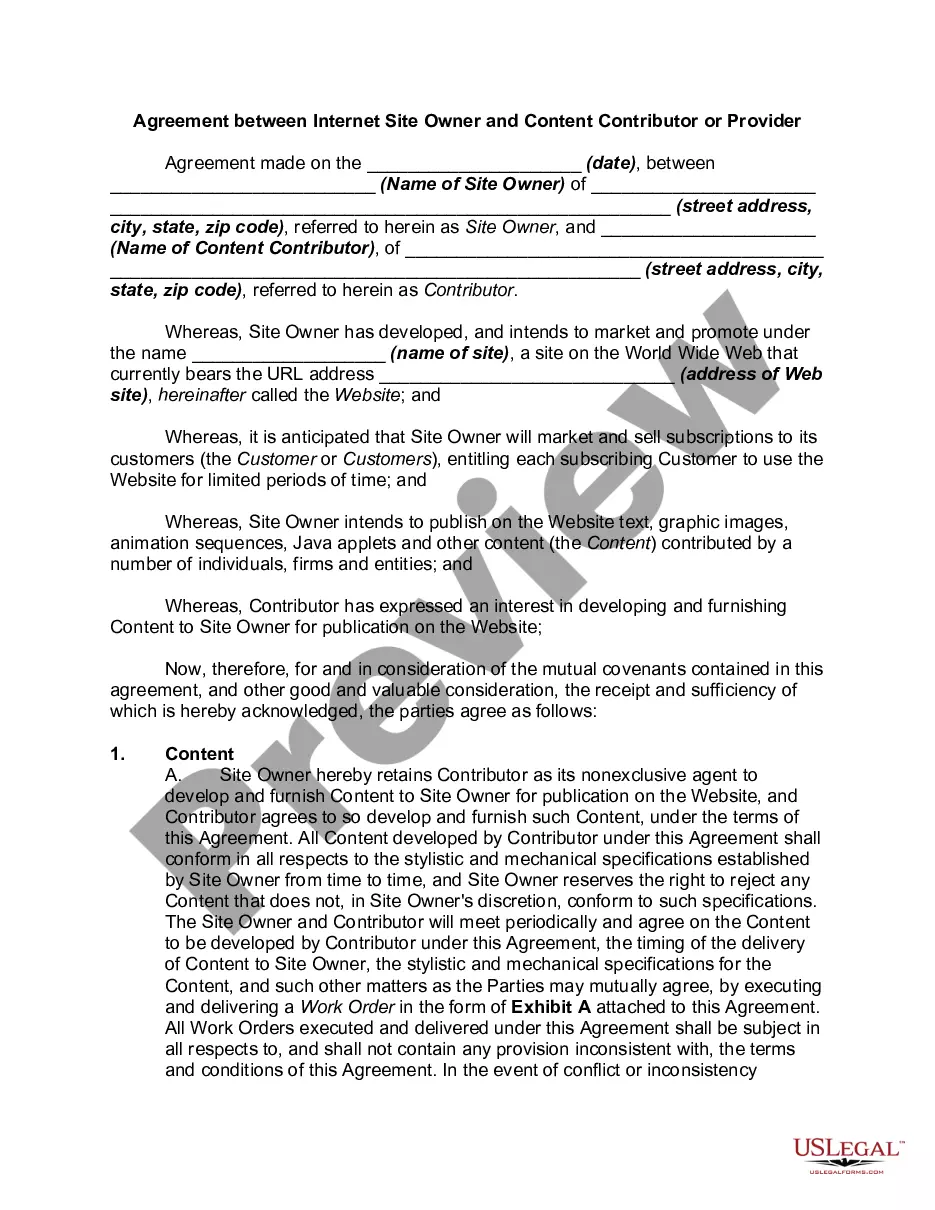

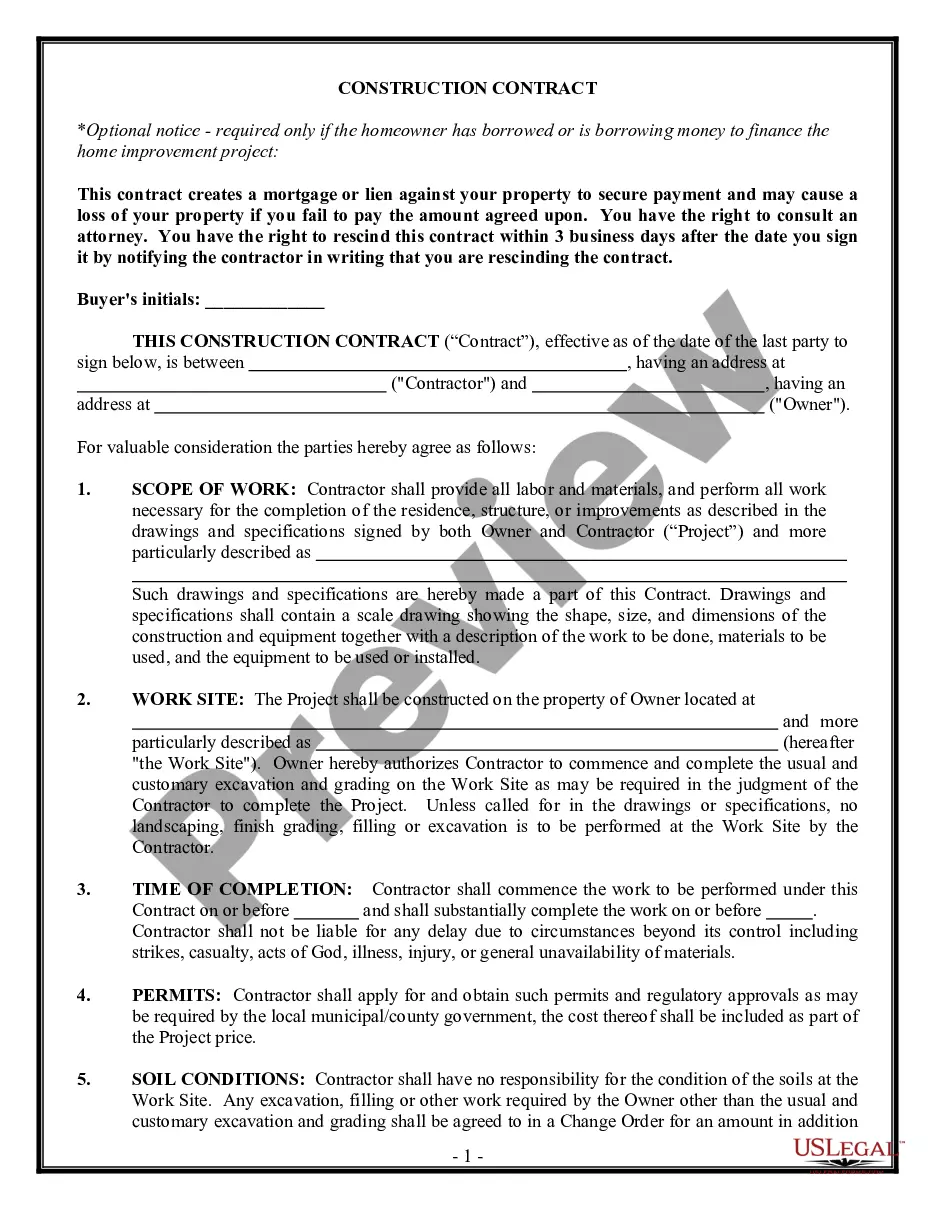


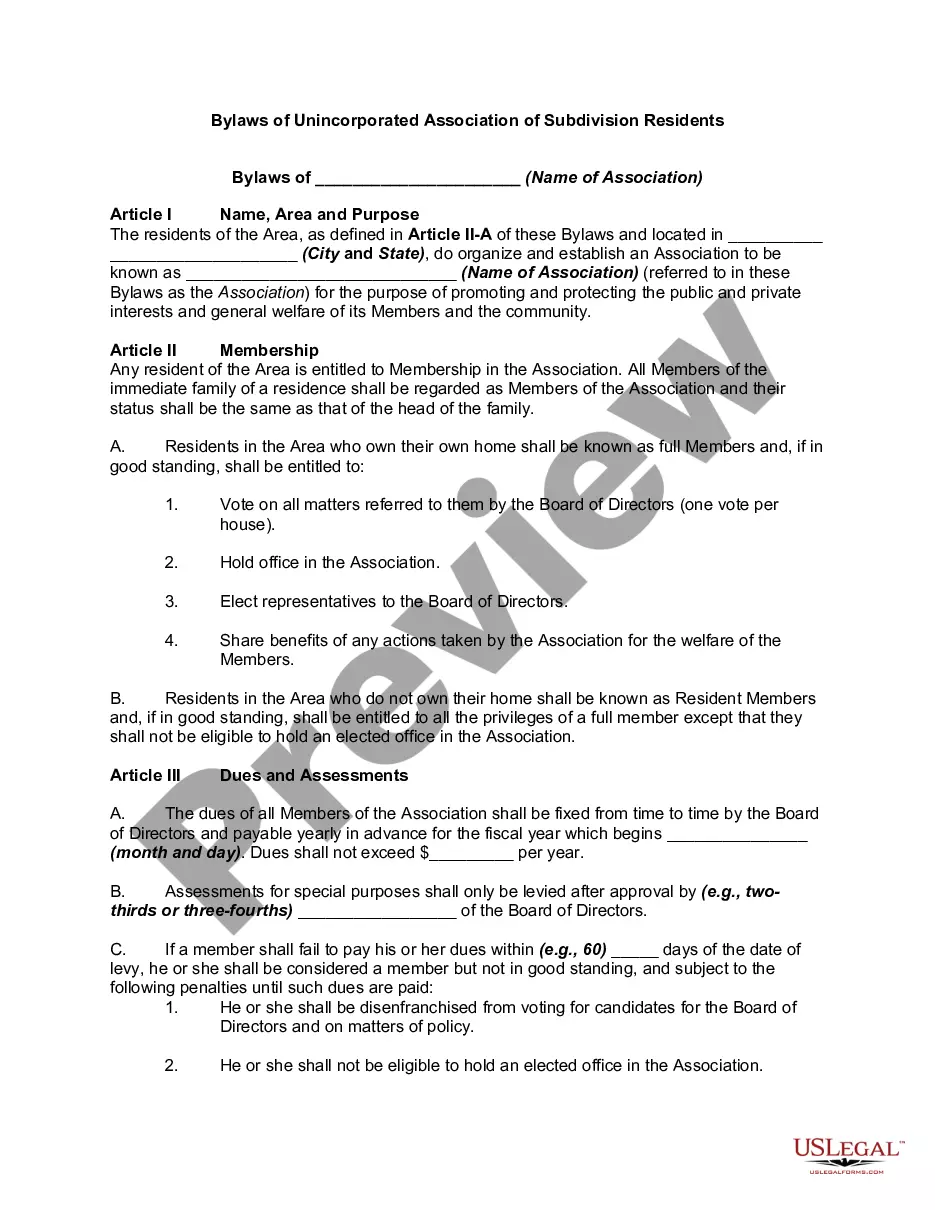
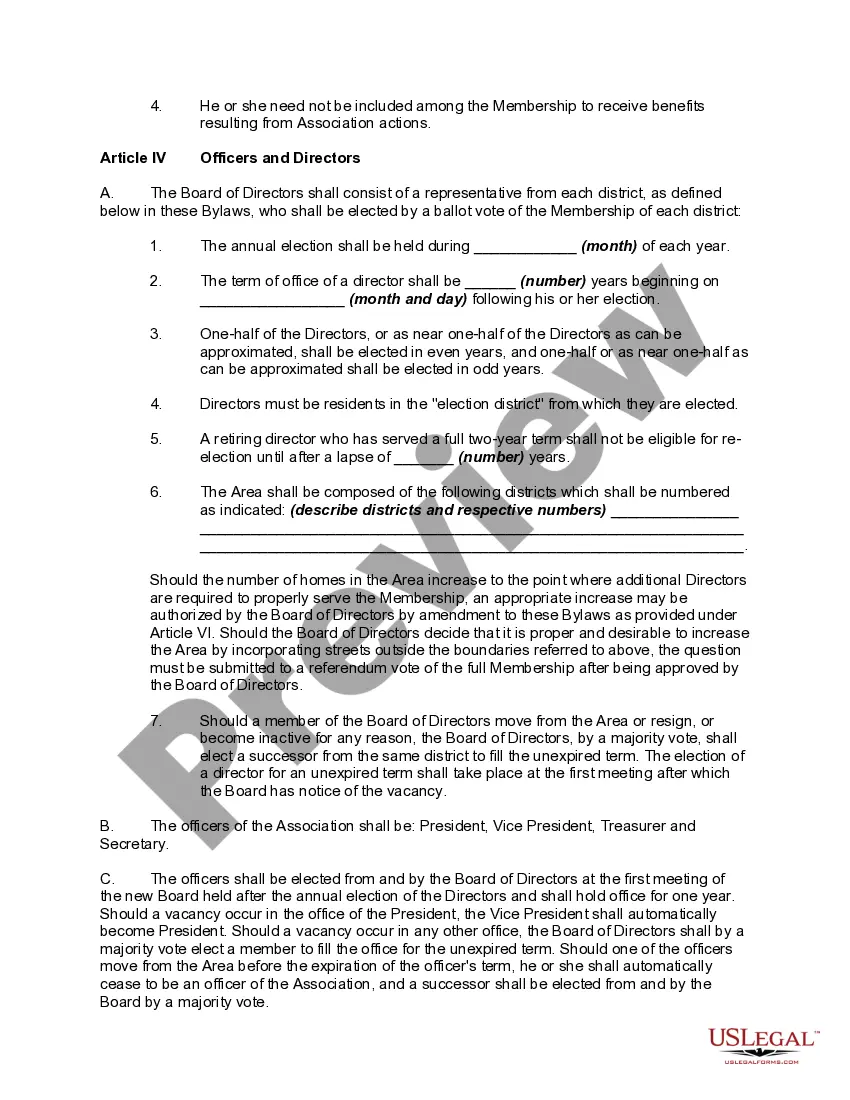
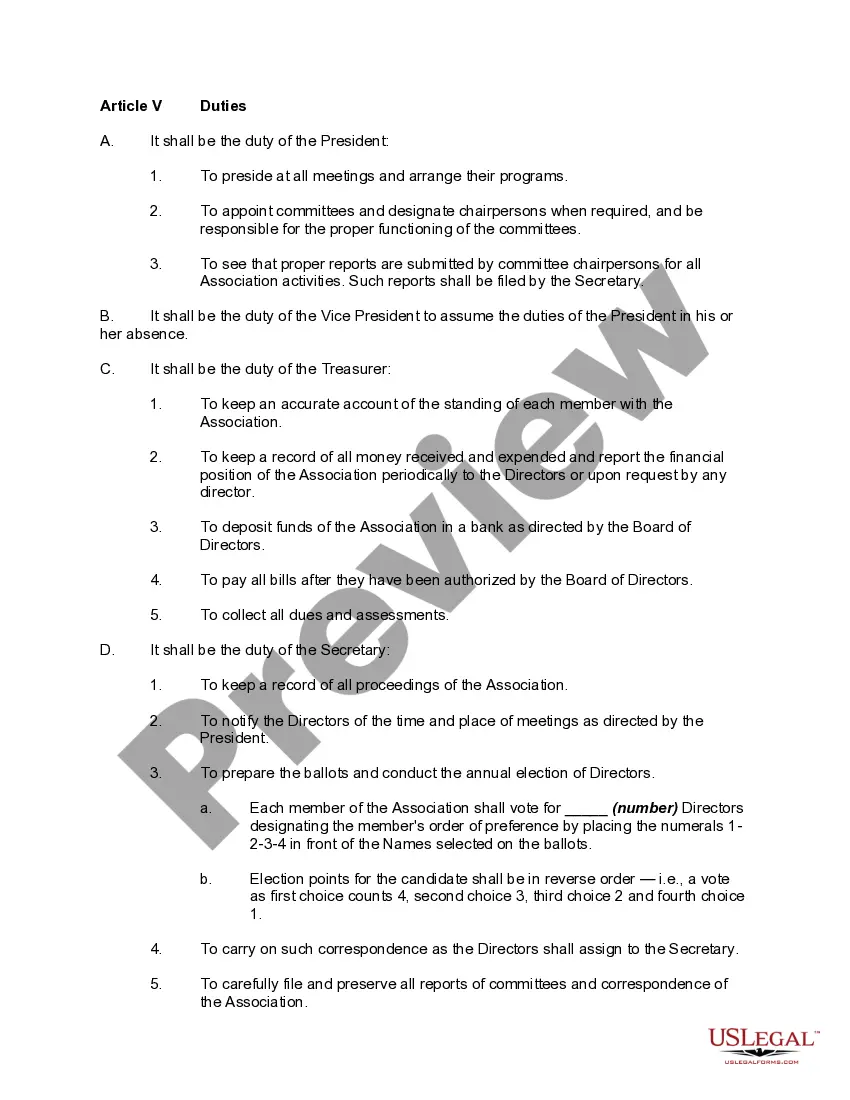
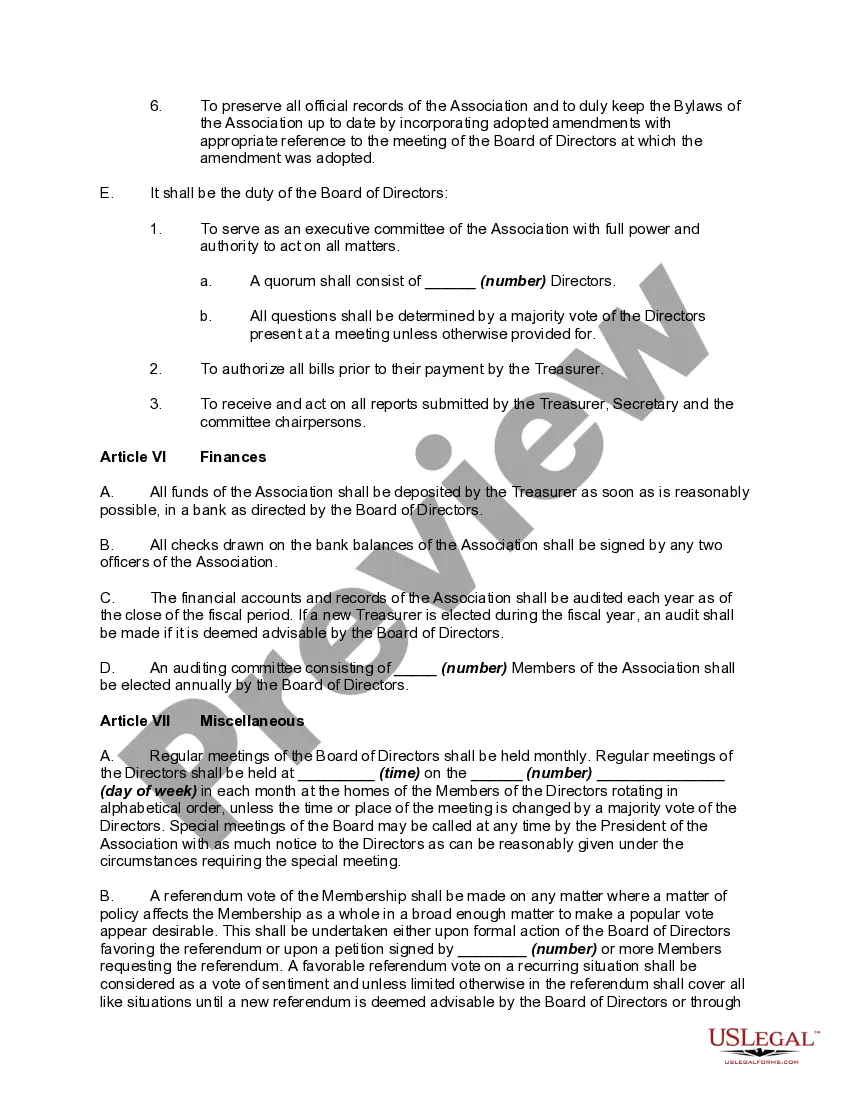
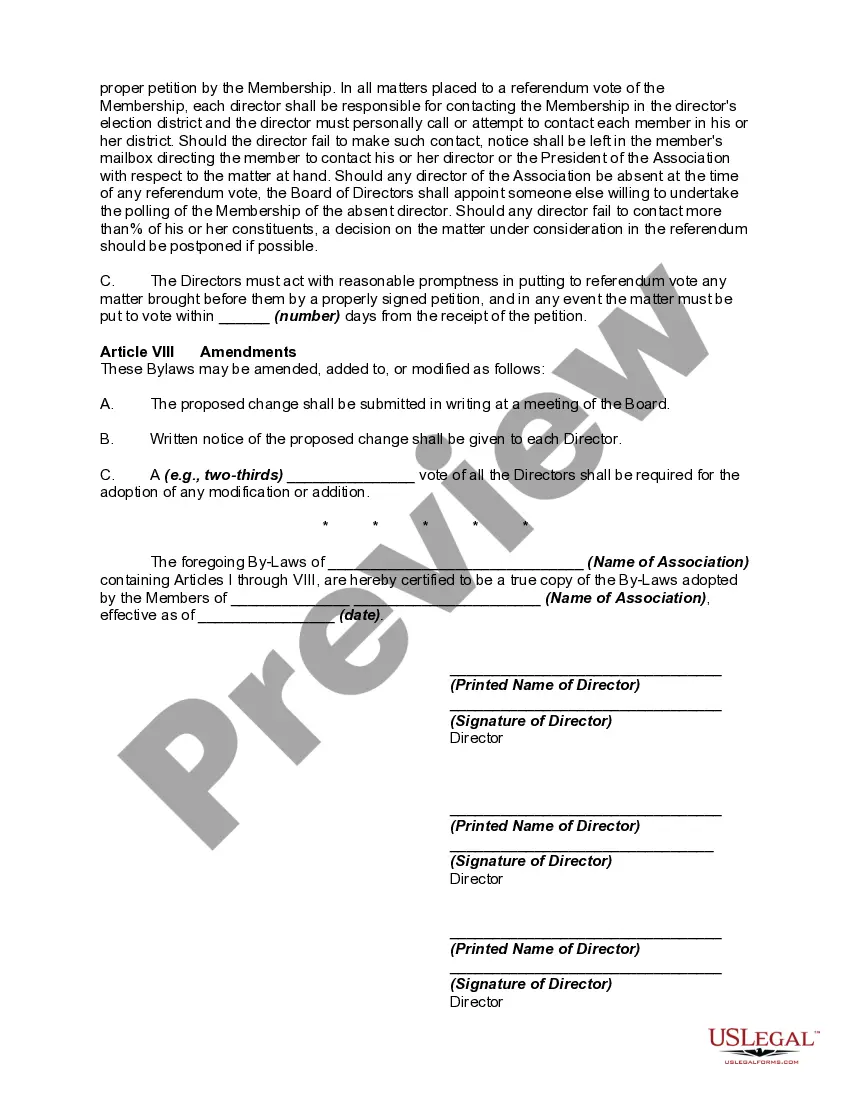
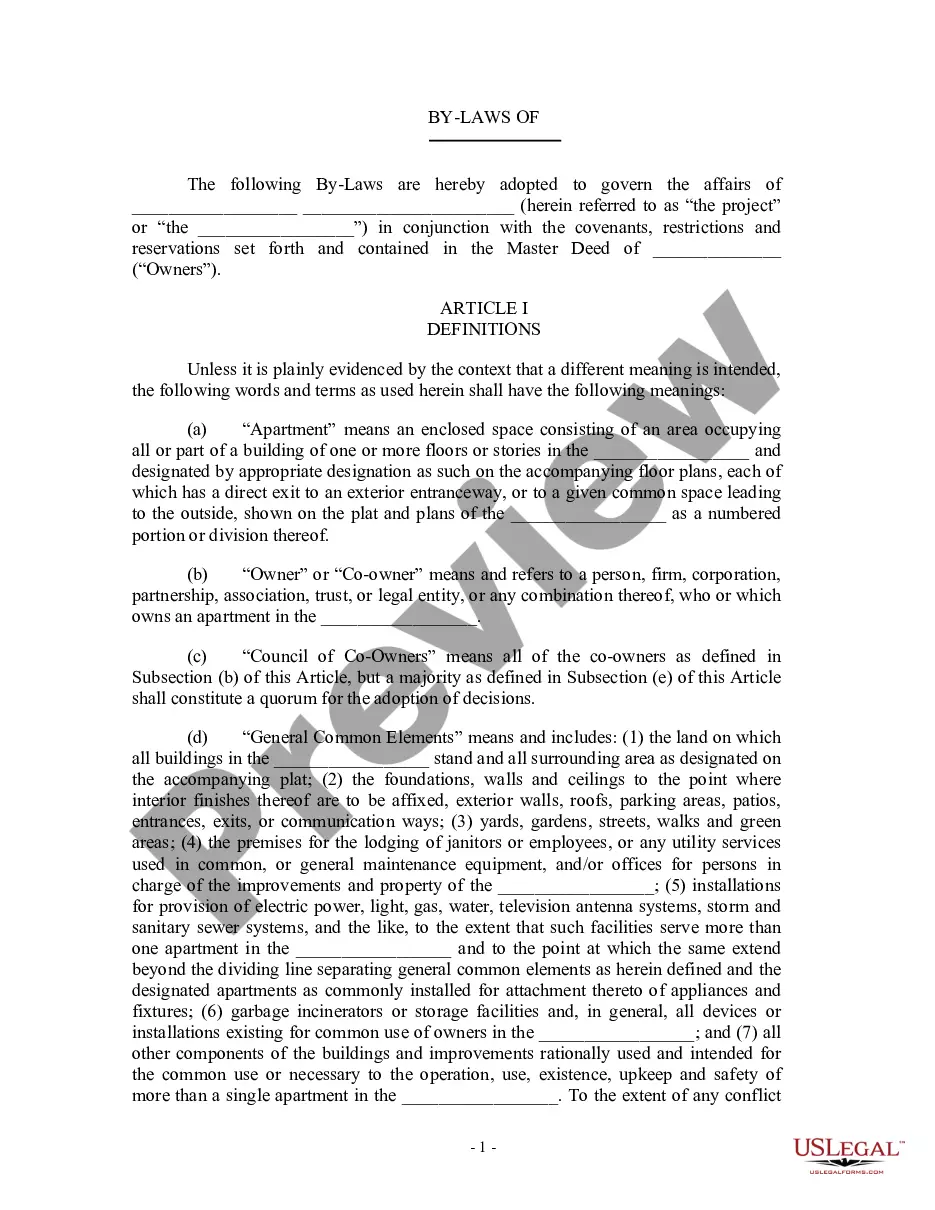
How to fill out Bylaws Of Unincorporated Association Of Subdivision Residents?
- Log in to your account on the US Legal Forms website. Ensure your subscription is active for continued access.
- For first-time users, explore the Preview mode and read the form descriptions to find the document that fits your requirements for the unincorporated area.
- If the selected form doesn't meet your standards, utilize the Search tab to locate another relevant template.
- Once you find the appropriate document, click the Buy Now button and select your preferred subscription plan. Creating an account is necessary for access.
- Complete your purchase using your credit card or PayPal to finalize the subscription.
- Download the template to your device. You can also access it anytime via the My Forms section of your profile for future needs.
US Legal Forms stands out with its robust collection of over 85,000 easily fillable legal documents, outpacing competitors in terms of value. Users can also connect with premium experts for guidance, ensuring their forms are completed accurately.
By following these steps, you can efficiently navigate US Legal Forms to obtain the necessary documentation for your unincorporated area needs. Start today and simplify your legal document creation process!
Form popularity
FAQ
An area becomes unincorporated when it is not governed by its own local municipal corporation. This process typically happens when a community votes against incorporation or decides to remain outside city limits to maintain local autonomy. In some cases, residents may prefer the simpler governance of an unincorporated area, where local regulations might be less stringent. If you need assistance in navigating the complexities of unincorporated areas, US Legal Forms offers resources and forms that can guide you through local regulations and requirements.
To live in an unincorporated area means simply not being part of a city or town with its own local government. Residents often find themselves under county jurisdiction, which can influence property rights and local governance. This setup allows for greater personal freedom in many aspects of life. Engaging with platforms like uslegalforms can help streamline the process of establishing your residence in an unincorporated area.
There are several benefits to living in an unincorporated area. One major advantage is the potential for lower taxes, as unincorporated regions often have fewer tax obligations compared to cities. Residents may also enjoy more space and a quieter environment, which can lead to a more peaceful lifestyle. Furthermore, living in an unincorporated area often means greater autonomy and fewer regulations.
Living in an unincorporated area comes with certain downsides. Residents may experience limited access to services, such as public transportation and waste management, which are often better in incorporated cities. Additionally, there may be fewer amenities and recreational options available. It’s important to weigh these factors against the benefits of an unincorporated area before deciding to move.
An unincorporated area is a region that lacks its own municipal government. Instead, it is governed directly by the county or state authorities. This structure can lead to fewer local laws and regulations, allowing residents more freedom in managing daily life. Understanding this can help you appreciate the unique dynamics of living in an unincorporated area.
A city might be unincorporated for several reasons. Often, this occurs when a community chooses not to incorporate itself as a municipality. By remaining unincorporated, residents may avoid additional taxes and regulations that often accompany city status. This decision reflects a desire for more local control and a simpler lifestyle in the unincorporated area.
Living in an unincorporated area means you are not situated within a city or town's formal boundaries. This status can provide you with more space and potentially lower taxes. However, it also means you might have less access to local services and amenities, so it's vital to consider what you value in a living environment.
Unincorporated areas can have disadvantages such as limited access to public services like sewer and trash collection. Residents may also experience fewer local regulations, which could impact the community's safety and welfare. It’s important to weigh these factors before moving to an unincorporated area.
Living in an unincorporated area may come with fewer amenities and services compared to incorporated areas. For instance, emergency services and public transportation might be less accessible. Additionally, residents often have to deal with less government oversight, which can lead to varying quality of services.
Unincorporated associations often have different tax obligations compared to incorporated entities. While they may not always be required to file tax returns, they should keep detailed financial records and consult a tax professional to determine their specific obligations. Understanding these rules can help avoid potential issues.